Polyol Price Trend and Forecast

UNSPC code: 12162007
|
Weekly Update
|
Historical Data Since 2015
|
Forecast for 2026

polyol Price Trends by Country

sgSingapore
saSaudi Arabia
inIndia
cnChina

Global polyol Spot Market Prices, Trend Analysis and Forecast

Price-Watch™ provides real-time price assessments and price forecasts for Polyol across top trading regions:

Polyol Regional Coverage Polyol Grade and Country Coverage Polyol Pricing Data Coverage Explanation
Asia Polyol Pricing Analysis Polyol (MW: 3000, Viscosity: 530 mPa.s, Hydroxyl No: 54.5–58.5) FOB at Jurong Port, Singapore Weekly Price Update on Polyol Real-Time Export Prices from Jurong Port, Singapore to Global Markets
Polyol (MW: 3000, Viscosity: 530 mPa.s, Hydroxyl No: 54.5–58.5) CIF at Nhava Sheva Port, India Importing from Singapore Weekly Price Update on Polyol Real-Time Import Prices at Nhava Sheva Port, India from Singapore
Polyol Ex-Mumbai Domestic Prices, India (MW: 3000, Viscosity: 530 mPa.s, Hydroxyl No: 54.5–58.5) Real-Time Weekly Price Update of Polyol Domestic Prices in Mumbai, India
Polymer Polyol (MW: 6000, Viscosity: <5000 mPa.s) FOB at Qingdao Port, China Weekly Price Update on Polyol Real-Time Export Prices from Qingdao Port, China to Global Markets
Flexible Polyol (MW: 2500–2800, Viscosity: 450–750 mPa.s) FOB at Qingdao Port, China Weekly Price Update on Polyol Real-Time Export Prices from Qingdao Port, China to Global Markets
Middle East Polyol Pricing Analysis Polyol (MW: 3000, Viscosity: 530 mPa.s, Hydroxyl No: 54.5–58.5) FOB at Jeddah Port, Saudi Arabia Weekly Price Update on Polyol Real-Time Export Prices from Jeddah Port, Saudi Arabia to Global Markets

Polyol Price Trend Q1 2026

During the first quarter of 2026, the global price of polyol has seen a tremendous increase as a result of strong market demand along with increasing feedstock costs. Polyol price trends continue to be bullish around the world in a variety of different markets. Month-to-month there have been significant sharp increases in polyol prices due to geopolitical tensions, supply disruptions and increased production costs linked to crude.

Singapore: Polyol Export prices FOB Jurong, Singapore; Molecular weight: 3000

In Q1-2026, Polyol prices in Singapore have increased significantly due to stronger regional demand and rising upstream costs. Polyol price trend in Singapore has reflected bullish sentiment supported by firm feedstock markets.

Polyol prices in Singapore have increased by 10.01% compared to the previous quarter, indicating strong market recovery. Producers have raised offers amid higher production costs and improved export inquiries. Supply conditions have tightened slightly due to increased regional demand. Buyers have remained active in securing volumes early in the quarter.

In Singapore, Polyol prices in March 2026 have increased by 26.21% compared to the previous month, driven by geopolitical tensions. Escalating conflict involving Iran, Israel, and the USA has disrupted supply expectations. Freight costs and crude-linked inputs have increased sharply.

Saudi Arabia: Polyol Export prices FOB Jeddah, Saudi Arabia; Molecular weight: 3000

There has been a mild rise in the Polyol prices in Saudi Arabia, as of the first quarter of 2026. This rise has been attributed to stable downstream demand and industrial use of the product. There has been a positive Polyol price trend in Saudi Arabia, owing to improvements in the market conditions and balanced inventory holdings among market players.

The Polyol prices in Saudi Arabia have increased by 2.97% for Q1 2026 relative to the previous quarter as there is adjustment in production levels and higher cost of feedstocks.

In Saudi Arabia, Polyol price in March 2026 have experienced an impressive hike of 25.53% against those in the previous month. This has been attributed to the geopolitical situation arising due to tension between Iran, Israel, and the United States.

India: Polyol Import prices CIF Nhava Sheva, India; Molecular weight: 3000

Polyol price in India has been significantly up in Q1 2026 due to increased import demand and rising prices internationally. Polyol prices have been on an upward trajectory in India due to rising bullish sentiments based on increased upstream costs and downstream consumption.

For instance, in Q1 2026, Polyol price trend in India have gone up by 9.56% compared to the preceding quarter because there has been robust growth in the import market, given that both automobile and construction industries have been gaining ground steadily, while the importers are buying more despite the higher landed cost.

In India, polyol price in March 2026 have shown a marked surge of 28.92% from February, given the heightened geopolitical risk arising from the Iran-Israel and USA tensions. There have been increased crude oil-linked costs and freight rates during this period, given the tension. This has led to increased inventory purchases in expectation of future increases in price.

India: Polyol Domestic prices Ex-Mumbai, India; Molecular weight: 3000

In Q1-2026, Polyol prices in India have increased sharply in the domestic market due to supply tightening. Polyol price trend in India has reflected strong upward pressure from rising input costs. Polyol prices in India have increased by 14.30% compared to the previous quarter, indicating significant domestic price surge.

Producers have raised prices amid higher feedstock and logistics costs. Demand from downstream industries has improved during the quarter. Inventory levels have remained controlled across domestic markets.

In India, Polyol prices in March 2026 have increased by 32.97% compared to the previous month due to geopolitical disruptions. Escalating tensions involving Iran, Israel, and the USA have impacted supply chains. Transportation costs have increased alongside crude oil prices. Buyers have accelerated purchases to avoid further cost escalation.

China: Polyol Export prices FOB Qingdao, China; Polymer Polyol, Molecular weight: 6000

According to Price-Watch™, in Q1-2026, Polyol prices in China have increased moderately supported by stable downstream demand. Polyol price trend in China has remained firm due to balanced supply conditions. Polyol prices in China have increased by 3.69% compared to the previous quarter, reflecting gradual market improvement.

Producers have maintained steady operating rates during the quarter. Demand from construction and manufacturing sectors has remained stable. Export activities have continued at a consistent pace.

In China, Polyol prices in March 2026 have increased by 29.87% compared to the previous month due to geopolitical tensions. The Iran-Israel and USA conflict has influenced crude oil and feedstock prices. Market participants have responded cautiously to rising costs. Inventory levels have remained manageable.

Polyol Price Trend Analysis: Q4 2025

In Q4-2025, global Polyol prices have remained mostly stable with slight regional variations. Polyol price trends have reflected balanced demand and steady feedstock costs. Quarterly changes have remained modest, while monthly movements have indicated minor corrections due to stable supply and cautious procurement activity.

Singapore: Polyol Export prices FOB Jurong, Singapore; Molecular weight: 3000

In Q4 2025, the Polyol price in Singapore have remained constant, backed by market equilibrium and sufficient supply of raw materials. The Polyol price trend in Singapore has followed a steady path driven by regular downstream consumption and stable supply trends. In Q4 2025, the prices of Polyols in Singapore have appreciated by 0.26%, showing an overall stable market where the purchase strategy has not fluctuated since there is enough stock and no issues within the supply chain. In Singapore, Polyol prices in December 2025 have experienced a 0.00% change from the preceding month, representing stable market sentiments. Manufacturing levels have been on par with steady downstream consumption in polyurethane applications, and export trends have been going well with stable regional demand and supply trends.

Saudi Arabia: Polyol Export prices FOB Jeddah, Saudi Arabia; Molecular weight: 3000

Moderate improvements in the Polyol prices in Saudi Arabia have been witnessed in the Q4 2025 period due to favorable conditions of demand and stable consumption within industrial production activities. The Polyol price trend in Saudi Arabia has been on an upward trend, due to improvements in demand for exports alongside supply that has been balanced by the producer companies based on market requirements. During Q4 2025, Polyol prices in Saudi Arabia have risen by 1.19% compared to the last quarter owing to stable prices for feedstock and sustained downstream demand. In Saudi Arabia, Polyol prices in December 2025 have fallen by 1.61% compared to the previous month because of reduced buyer enthusiasm in view of sufficient stock levels held in the market. Despite the reduction in prices in the current month, export volume has not changed due to consistent demand in both the construction and industrial segments.

India: Polyol Import prices CIF Nhava Sheva, India; Molecular weight: 3000

Polyol price trend in India has been characterized by stability in Q4 2025 for its imports segment due to strong demand and balance in supply-demand dynamics. Polyol price trend in India has indicated stable import segment, where stable downstream demand led to balance in pricing. In Q4 2025, Polyol price in India have risen by 0.08% when compared to last quarter due to steady import activity, supported by good demand in automotive and furniture segments. In India, Polyol prices in December 2025 in India have fallen by 0.65% when compared to last month due to some weakening in demand. Inventory situation at ports is healthy, and market players have adopted conservative purchasing policies, resulting in fall in prices in Q4 2025 towards the end.

India: Polyol Domestic prices Ex-Mumbai, India; Molecular weight: 3000

In Q4-2025, Polyol prices in India have declined in the domestic market due to oversupply conditions. Polyol price trend in India has reflected pricing pressure from ample local availability. Polyol prices in India have decreased by 2.98% compared to the previous quarter, indicating weakening domestic sentiment. Producers have faced competitive pricing pressures in the local market. Demand from downstream industries has remained moderate but insufficient to absorb supply. In India, Polyol prices in December 2025 have decreased by 0.35% compared to the previous month, reflecting continued soft demand. Buyers have negotiated lower prices amid comfortable inventory levels. Distribution channels have remained well supplied.

China: Polyol Export prices FOB Qingdao, China; Polymer Polyol, Molecular weight: 6000

In Q4-2025, Polyol prices in China have increased significantly driven by strong downstream demand. Polyol price trend in China has remained bullish due to tight supply conditions. Polyol prices in China have increased by 10.52% compared to the previous quarter, reflecting sharp market growth. Producers have operated at firm rates amid rising consumption. Demand from construction and automotive sectors has strengthened consistently. In China, Polyol prices in December 2025 have decreased by 1.22% compared to the previous month, indicating slight market correction. Buyers have adjusted procurement following earlier price surges. Inventory levels have improved marginally.

Polyol product prices in Q3 2025 showed mixed trends across major producers. Singapore recorded slight softness with a 0.86% decline, while Saudi Arabia saw a 2.80% rise amid stronger regional demand. India’s import and domestic Polyol prices remained mostly stable, showing minor fluctuations of 0.74% increase and 0.46% drop respectively. In China, Polymer Polyol and Flexible Polyol prices fell sharply by 8.62% and 4.35%, driven by weak export activity and subdued consumption.

Singapore: Polyol Export prices FOB Jurong, Singapore, Molecular weight 3000, Viscosity 530 mPa.s, Hydroxyl no 54.5–58.5.

In Q3 2025, Polyol prices in Singapore showed slight softness amid stable regional demand from furniture and insulation industries. Polyol price trend in Singapore was influenced by moderate feedstock cost variations, currency movement, and contract negotiations with Southeast Asian buyers. Market participants noted steady consumption in polyurethane applications, though international trade flow remained subdued.

According to the Price-Watch™, product prices in Q3 for Polyol in Singapore decreased by 0.86%. Polyol product prices in Singapore continued to reflect cautious procurement strategies among buyers. Despite easing raw material costs, manufacturers-maintained production discipline to optimize margins. Polyol prices in September 2025 signaled continued market balance supported by consistent downstream activity and controlled inventories.

Saudi Arabia: Polyol Export prices FOB Jeddah, Saudi Arabia, Molecular weight 3000, Viscosity 550–650 mPa.s, Hydroxyl no 53–59.

In Q3 2025, Polyol prices in Saudi Arabia recorded a mild increase amid sustained demand from construction and automotive sectors. Polyol price trend in Saudi Arabia was supported by resilient domestic consumption and steady feedstock availability. Export volumes to GCC regions showed marginal recovery as polyurethane foam makers resumed operations.

According to the Price-Watch™, product prices in Q3 for Polyol in Saudi Arabia rose by 2.80%. Improved downstream sentiment and logistical efficiency contributed to stronger market performance. Polyol product prices in Saudi Arabia reflected stable cost structures and balanced supply conditions. The Polyol prices in September 2025 indicated firm regional buying interest and inventory restocking, paving the way for steady pricing outlook into Q4 2025.

India: Polyol Import prices CIF Nhava Sheva, India, Molecular weight 3000, Viscosity 530 mPa.s, Hydroxyl no 54.5–58.5.

In Q3 2025, Polyol prices in India showed minor fluctuations amid steady consumption in construction, automotive, and furniture segments. Polyol price trend in India remained supported by consistent imports from Southeast Asia despite limited container availability. Market participants observed balanced supply-demand dynamics across key polyurethane end‑use industries.

According to the Price-Watch™, product prices in Q3 for Polyol in India increased by 0.74%. Polyol product prices in India remained close to prior quarter levels with minor procurement adjustments. Domestic blending activity and gradual industry recovery helped maintain price stability. Polyol prices in September 2025 pointed toward a cautious market sentiment with buyers maintaining lean inventories to manage cost risks effectively.

India: Polyol domestic prices Ex‑Mumbai, India, Molecular weight 3000, Viscosity 530 mPa.s, Hydroxyl no 54.5–58.5.

In Q3 2025, Polyol prices in India’s domestic market slightly declined amid ongoing production optimization and steady downstream operations. Polyol price trend in India’s local industry was affected by lower feedstock costs and moderate export inflows. Regional demand from furniture and insulation manufacturers sustained consumption during the quarter.

According to the Price-Watch™, product prices in Q3 for Polyol in India declined by 0.46%. Product prices in India reflected balanced supply conditions and consistent operational throughput. Currency movement and global freight adjustments also shaped domestic pricing behavior. Polyol prices in September 2025 held steady, indicating continued market equilibrium influenced by cautious buying and regional cost management.

China (Polymer Polyol): Polyol Export prices FOB Qingdao, China, Polymer Polyol (Molecular weight 6000, Viscosity <5000 mPa.s).

In Q3 2025, Polymer Polyol prices in China declined sharply due to slower domestic demand and export contraction. Polymer Polyol price trend in China reflected weakened feedstock support, subdued polyurethane consumption, and reduced downstream orders. Market conditions were influenced by oversupply and limited recovery in industrial foam applications.

According to the Price-Watch™, product prices in Q3 for Polymer Polyol in China fell by 8.62%. Product prices in China continued to exhibit downward momentum driven by reduced construction activity and cautious overseas buying.

Manufacturers in China operated at reduced output rates to stabilize inventories and manage excess supply pressure. Polymer Polyol prices in September 2025 suggested ongoing softness with limited prospects for a near‑term rebound.

China (Flexible Polyol): Polyol Export prices FOB Qingdao, China, Flexible Polyol (Molecular weight 2500‑2800, Viscosity 450‑750 mPa.s).

In Q3 2025, Flexible Polyol prices in China weakened moderately amid declining export demand and competitive regional supply. Flexible Polyol price trend in China was shaped by lower feedstock costs and inventory adjustments within foam production units. Market participants witnessed declining quotations as manufacturers aimed to retain export orders through price incentives.

According to the Price-Watch™, product prices in Q3 for Flexible Polyol in China decreased by 4.35%. Product prices in China reflected sustained softness across furniture and insulation applications. Steady raw material inflows and muted consumption continued to pressure local producers. Flexible Polyol prices in September 2025 highlighted market restraint and cautious procurement behavior among major downstream buyers.

According to PriceWatch, Polyol prices on an FOB Jurong basis in Singapore averaged USD 1,165 per metric ton in Q2 2025, showing a moderate rise of 2.01% from Q1 2025. On an FOB Jeddah basis in Saudi Arabia, prices moved higher to USD 1,070 per metric ton, registering a 6.36% increase compared to the previous quarter. However, in China, the PriceWatch data showed contrasting movements.

The price for Polymer Polyol (F3145P) averaged USD 1,206 per metric ton in Q2 2025, marking a 3.52% decline. Similarly, the Flexible Polyol (F3156D) grade from China was assessed at USD 1,081 per metric ton, down by 1.55% quarter-over-quarter. The global price trend in Q2 showed a mixed direction, reflecting regional market dynamics and varied feedstock availability.

The Q2 price trend was influenced by rising upstream costs in the Middle East and Southeast Asia, while manufacturing slowdowns in China capped gains. The global price trend displayed a bifurcated movement, with Middle Eastern and Southeast Asian suppliers maintaining higher pricing, while East Asian producers experienced slight corrections. The global Polyol market stayed cautiously optimistic, with sellers balancing between maintaining margins and preserving competitive positions amid shifting global trade flows. 

According to PriceWatch, Polyol prices on a CIF Nhava Sheva, India basis averaged USD 1,210 per metric ton in Q2 2025, reflecting a 1.51% increase compared to Q1 2025. Prices on an Ex-Mumbai basis stood at USD 1,495 per metric ton in Q2 2025, recording a 1.15% quarterly gain. The Indian price trend showed a stable yet firm upward movement as buyers responded to stronger end-use demand in foam and automotive segments.

The price trend followed global trends, closely mirroring changes in CIF offers from Singapore and the Middle East. Domestic producers adjusted prices, accordingly, maintaining alignment with international cost pressures. The Indian price trend exhibited minor upward movement throughout the quarter, supported by limited local production and consistent consumption.

The Indian market remained reliant on imports, with buyers seeking competitive deals amidst softening East Asian offers. Suppliers balanced between inventory management and demand-side anticipation to sustain price stability across the quarter. 

In Q1 2025, Singapore Polyol prices edged down further to $1,142/ton in Q1 2025, a 2.14% decrease from Q4. Sluggish demand recovery and cautious buying activity kept prices under pressure despite steady operations in key downstream applications. Saudi prices slipped to $1,006/ton, marking a 2.52% decrease.

Despite stable downstream operations, persistent market oversupply and cautious sentiment kept prices trending downward. Chinese Polyol F3145 continued to soften to $1,251/ton by 1.34%, reflecting tepid downstream activity. F3156 declined to $1,097/ton by 3.86% as oversupply and weak sentiment weighed on prices. 

In Q1 2025, prices declined further to $1,192/ton, a 3.01% decrease from the previous quarter. Despite stable operations in end-use sectors, buyer hesitancy and global price softness kept domestic levels under pressure. Indian Polyol market dropped to $ 1478 / MT in Q1 2025, marking a -4.65% decrease.  

Polyol Price Trend Analysis: Q4 2024

In Q4 2024, Singapore prices saw a significant drop to $1,167/ton, marking a 14.57% decrease. Weak export demand, ample inventories, and softening feedstock prices contributed to the steep decline across regional markets. Saudi Polyol Prices eased further to $1,032/ton in Q4 2024, down 2.64%.

The decline reflected continued pressure from weak export activity and conservative purchasing by downstream manufacturers. Chinese Polyol F3145 dropped to $1,268/ton by 6.35% under feedstock pressure and weak demand. F3156 saw a sharper fall to $1,141/ton by 7.61% amid high inventory and export challenges. 

In Q4 2024 Polyol Prices fell significantly to $1,229/ton, marking a 14.77% drop. Softer demand, higher inventories, and lower raw material costs led to a pronounced market correction. Indian Polyol decreased further to $1550 /MT in Q4 2024, down 6.74%. 

In Q3 2024, Singapore Polyol prices corrected to $1,366/ton in Q3 2024, a 4.54% decline. The dip followed easing supply constraints and slightly moderated demand from end-use sectors such as furniture and insulation. Saudi Arabian Polyol prices dropped sharply to $1,060/ton in Q3 2024, a 9.71% fall.

Softer regional demand and increased supply from local producers weighed heavily on the market during this period. Chinese Polyol F3145 eased to $1,354/ton by 1.17% due to limited market momentum. F3156 dipped to $1,235/ton by 0.96% as buying slowed despite stable output. 

In Q3 2024, Polyol prices dipped slightly to $1,442/ton in Q3 2024, down 3.03%. The correction followed easing supply constraints and more cautious purchasing behaviour from manufacturers. Indian Polyol fell to $1662/MT , a 5.68% decline. The drop was attributed to seasonal slowdowns and tightening global demand, despite India’s competitive positioning in the international market. 

In Q2 2024, Singapore Prices surged to $1,431/ton in Q2 2024, up 12.59% from the previous quarter. This sharp rise was driven by tight supply conditions, stronger regional demand, and increased input costs for raw materials like propylene oxide. Saudi Prices increased to $1,174/ton in Q2 2024, a 2.18% rise from Q1.

The uptick was supported by improved export demand and slightly firmer raw material costs, especially for propylene oxide. Chinese Polyol F3145 rose slightly to $1,370/ton by 1.18% on mild demand recovery. F3156 surged to $1,247/ton by 7.31% driven by tighter supply and increased construction sector activity. 

In Q2 2024, Prices surged to $1,487/ton in Q2 2024, a 12.65% jump. Tight regional supply and robust downstream demand, particularly in furniture and insulation, contributed to the sharp price escalation. Indian Polyol surged to $1762/ton in Q2 2024, marking a 5.76% increase. Continued global demand during this period. 

In Q1 2024, Polyol prices in Singapore rose to $1,271/ton, a 2.42% increase from $1,241/ton in Q4 2023. The rise was attributed to steady demand from the construction and automotive sectors, alongside slightly higher feedstock costs. Polyol prices in Saudi Arabia slightly declined to $1,149/ton in Q1 2024, down 0.43% from $1,154/ton in Q4 2023.

The marginal dip was due to stable feedstock availability and consistent demand from insulation and automotive sectors. Chinese Polyol F3145 slipped to $1,354/ton by 4.66% as market sentiment turned cautious. F3156 declined to $1,162/ton by 4.68% amid moderate demand and stable feedstock supply. 

In Q1 2024, Polyol prices in India increased to $1,320/ton, up 4.76%. The increase was fuelled by robust demand from the automotive and construction industries, along with rising feedstock costs. Indian Polyol saw a rise to $ 1666/MT in Q1 2024, reflecting a 13.57% increase from $1467/MT in Q4 2023.  

Technical Specifications of Polyol Price Trends

Product Description

Polyol is a multifunctional alcohol containing multiple hydroxyl groups, primarily used as a key raw material in polyurethane production. It reacts with di-isocyanates to form versatile polyurethane products, which can be flexible or rigid. Polyols contribute to the durability, flexibility, and insulating properties of foams used in mattresses, furniture, automotive parts, and insulation materials. They can be derived from petrochemical sources or renewable materials, offering tailored solutions for diverse industrial applications.

Identifiers and Classification:

  • CAS No – 9082-00-2
  • HS Code – 39072990
  • Molecular Weight (in gm/mol) – 2500 – 6000


Polyol Synonyms:

  • Polyether Polyol
  • Polyether Triol


Polyol Grades Specific Price Assessment:

  • Molecular weight: 3000, Viscosity: 530 mPa.s, Hydroxyl no: 54.5-58.5
  • Molecular weight: 3000, Viscosity: 550-650 mPa.s, Hydroxyl no: 53-59
  • Polymer Polyol, Molecular weight: 6000, viscosity: <5000 (mPa.s)
  • Flexible Polyol, Molecular Weight: 2500-2800, viscosity: 450-750 (mPa.s)


Polyol Global Trade and Shipment Terms

  • Quotation Terms (Product & Country Specific): 20-25 MT, 10-15 MT(India)
  • Packaging Type (Product & Country Specific): Flexi Tanks, Drums


Incoterms Referenced in Polyol Price Reporting

Shipping Term  Location  Definition 
FOB Jurong  Jurong, Singapore  Polyol Export price from Singapore 
FOB Jeddah  Jeddah, Saudi Arabia  Polyol Export price from Saudi Arabia 
CIF Nhava Sheva  Nhava Sheva, India  Polyol Import price in India from Singapore 
Ex- Mumbai  Mumbai, India  Domestically Traded Polyol price in Mumbai 
FOB Qingdao  Qingdao, China  Polyol Export price from China 

*Quotation Terms refers to the quantity range specified for the Polyol being quoted or offered in a commercial transaction.

**Packaging Type refers to standard packaging size commonly used for Polyol packing, ease of handling, transportation, and storage in industrial and commercial applications.

Key Polyol Manufacturers and their brands

Brand Name  Manufacturer 
ARCOL  Covestro 
VORANOL  Dow 
CARADOL  Shell 
WANOL  Wanhua 
WANELAST  Wanhua 
GENIX  GC Polyols 
KONIX  KPX chemical 

Polyol Industrial Applications

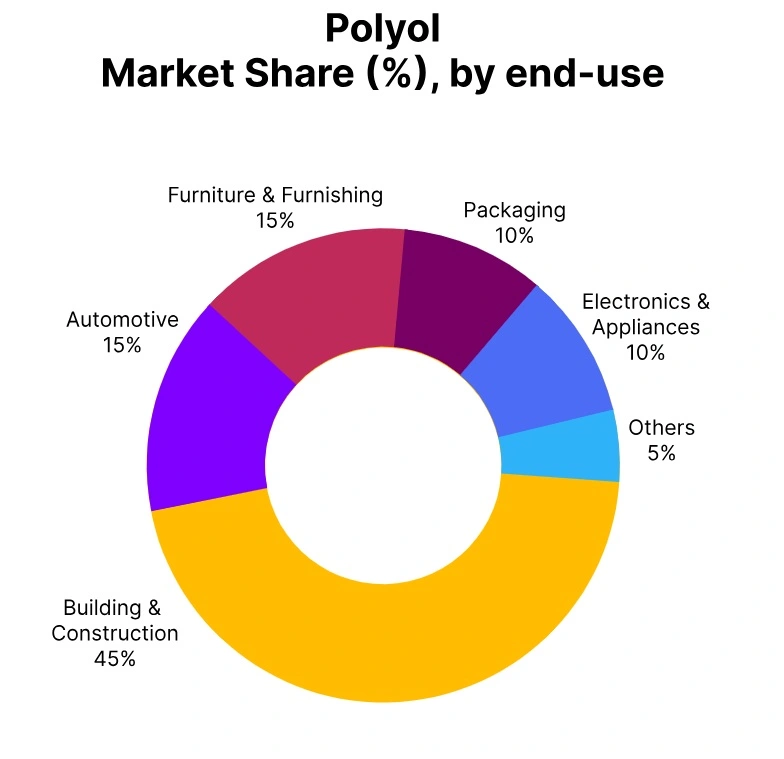
polyol market share end use

Historically, several events have caused significant fluctuations in Polyol prices

  • (2023-Present) Israel-Hamas Conflict: The ongoing conflict has led to regional disruptions and uncertainties that are affecting supply chains and pricing for various chemicals, including polyols. Geopolitical tensions often contribute to global market volatility. 
  • (2022-Present) Russia-Ukraine Conflict: The geopolitical conflict has disrupted European polyol production, leading to increased costs and significant global price volatility. 
  • (2021) Texas Winter Storm: Severe winter weather caused production halts in Texas, leading to temporary spikes in polyol prices due to supply shortages. 
  • (2020) COVID-19 Pandemic: The pandemic initially reduced demand due to decreased industrial activity but later caused a surge in demand, particularly for Slab stock Foams, leading to increased prices and market volatility. 
  • (2018-2019) U.S.-China Trade War: Trade tariffs and barriers during the trade war disrupted global supply chains, contributing to polyol price fluctuations due to increased costs and altered trade flows. 


These events underscore the Polyol market’s vulnerability to global disruptions and highlight the need for continuous monitoring of supply-demand dynamics. 

Why Price Watch™?

Price Watch™ is your trusted resource for tracking global polyol price trends. Our platform delivers real-time data and expert analysis, offering deep insights into the key factors driving price fluctuations in the polyol market. By monitoring critical events such as geopolitical tensions, supply chain disruptions, and economic shifts, Price Watch™ keeps you fully informed of market dynamics.

In addition, Price Watch™ provides detailed forecasts and updates on production capacities, enabling you to anticipate market changes and make well-informed decisions. With Price Watch™, you gain a competitive edge in understanding all the elements that influence polyol prices worldwide. Stay ahead of the curve with Price Watch’s™ reliable, accurate, and timely polyol market data.

Track Price Watch's™ polyol price assessment on a weekly basis since 2015 onwards, along with short-term forecasts, and get access to the detailed report in a downloadable format.

Polyol Market Price Trend published by Price Watch™ reflect prevailing spot market conditions, derived from independent research, verified trade inputs, and proprietary market intelligence as of the publication date. Prices are published on the specified Incoterm and represent indicative base market levels, exclusive of applicable taxes, VAT, duties, tariffs, and other statutory charges. Actual transaction values may vary depending on volume, credit terms, contractual structure, and other negotiated conditions. Market prices are inherently subject to volatility, liquidity dynamics, regulatory changes, and evolving trade activity. The information provided is for reference and benchmarking purposes only and does not constitute an offer, recommendation, or guarantee of transactional outcomes. Users should exercise independent commercial judgment and assess their specific contractual, regulatory, tax, and application requirements before making business decisions. Price Watch™ assumes no liability for decisions taken based on this information.

The pricing of polyol is influenced by several key factors, including the cost of raw materials such as propylene oxide, glycerine, and other feedstocks. Additionally, fluctuations in crude oil prices, supply-demand dynamics, production capacity, and regional market conditions play significant roles.

Environmental regulations and the push for sustainable materials can also impact pricing. Procurement heads should closely monitor these variables to make informed purchasing decisions.

Changes in raw material costs, particularly for feedstocks like propylene oxide and glycerine, directly affect polyol pricing trends. When raw material prices increase due to supply constraints or market volatility, polyol prices typically rise as producers pass on these costs.

Conversely, a decrease in raw material costs can lead to lower polyol prices. Procurement heads should regularly track raw material markets to anticipate potential pricing fluctuations and adjust their procurement strategies accordingly.

The price outlook for polyol is shaped by global supply-demand dynamics, raw material trends, and economic conditions. In the near term, procurement heads should expect potential price volatility influenced by changes in feedstock availability and production capacities.

To prepare for future cost changes, procurement teams should engage in strategic sourcing, consider long-term contracts with suppliers, and explore alternative suppliers to mitigate risks associated with price fluctuations and ensure stable supply.

Polyol is a key chemical used in producing polyurethanes for foams, coatings, adhesives, and sealants. Its price has directly impacted downstream industries like automotive, construction, furniture, and insulation. Variations in Polyol prices influence production costs and profitability. Price-Watch™ tracks these changes to support market insights.

Polyol prices vary across regions and grades depending on demand, feedstock costs, and supply conditions. Prices are typically quoted per metric ton and fluctuate frequently. Price-Watch™ provides real-time Polyol price updates across global markets.

Polyol price trends are influenced by feedstock costs like propylene oxide, crude oil, and energy prices. Demand from polyurethane industries, supply availability, plant operating rates, and logistics also impact pricing. Global trade flows and economic conditions further shape Polyol prices.

Major Polyol consumers include polyurethane foam manufacturers in furniture, automotive, and construction industries. Demand also comes from insulation, coatings, adhesives, sealants, and elastomers sectors. Packaging and refrigeration industries also contribute significantly. Price-Watch™ analyses demand trends across these industries.

Polyol is produced mainly from propylene oxide through polymerization processes. It is manufactured in large petrochemical complexes by global chemical producers. Different production technologies yield various Polyol types, including flexible, rigid, and polymer polyols.

Major Polyol exporters include China, the United States, South Korea, and Germany. Asian countries like Singapore and Thailand also play important roles in regional trade. Export volumes depend on production capacity, domestic demand, and feedstock availability. Price-Watch™ tracks these trade flows.

Supply generally meets demand, but temporary shortages can occur due to plant shutdowns or feedstock constraints. Logistics disruptions and sudden demand spikes may tighten availability. Price-Watch™ monitors such imbalances closely.

Polyol prices vary by grade such as flexible, rigid, and polymer polyols. Differences in molecular weight, viscosity, and application requirements influence pricing. Higher performance grades often command premium prices due to stricter specifications.

When demand rises sharply, Polyol prices typically increase due to tighter supply. Suppliers may prioritize contract buyers, while spot availability becomes limited. Buyers may face higher prices and longer lead times. Price-Watch™ captures these shifts in real time.

Energy costs significantly impact Polyol production expenses. Rising crude oil and natural gas prices increase feedstock costs like propylene oxide. Producers often pass these costs to buyers, raising Polyol prices.

Regional price differences arise from variations in production capacity, feedstock costs, and logistics expenses. Import dependence and local demand conditions also influence pricing. Regions with integrated petrochemical infrastructure often have lower prices.

Polyol price forecasts depend on feedstock trends, crude oil prices, and demand from polyurethane industries. Capacity expansions, plant shutdowns, and global trade dynamics also influence future pricing. Price-Watch™ provides detailed market forecasts.

Yes, accurate forecasts help businesses plan procurement, manage costs, and optimize inventory. Companies can make informed decisions based on expected market movements. Price-Watch™ supports strategic planning with reliable insights.

Global events like geopolitical tensions, trade disruptions, and plant outages affect supply chains and pricing. Crude oil fluctuations and shipping disruptions can cause price volatility. Price-Watch™ provides timely updates on such impacts.

Price-Watch™ gathers data from global market participants to provide accurate price assessments and reports. Its comprehensive coverage ensures transparency in Polyol market trends and pricing.