Polyvinyl Chloride (pvc) Compound Price Trend and Forecast

UNSPC code: 13111034
|
Weekly Update
|
Historical Data Since 2015
|
Forecast for 2026

polyvinyl chloride (pvc) compound Price Trends by Country

inIndia
vnVietnam
auAustralia

Global polyvinyl chloride (pvc) compound Spot Market Prices, Trend Analysis and Forecast

Price-Watch™ provides price assessments for Polyvinyl Chloride (PVC) Compound across top trading regions:

Asia-Pacific

  • PVC Compound General Purpose House wire Ex-Delhi, India
  • PVC Compound Hoses/Tubes CIF Melbourne (Vietnam), Australia
  • PVC Compound Hoses/Tubes FOB Haiphong, Vietnam


Note: In assessments structured as CIF [Importing Port] (Exporting Country), the country mentioned in brackets indicates the primary origin of supply (exporting country), while the named port refers to the destination port in the importing country. Other Incoterms (FOB, FD, EXW, etc.) should be interpreted in accordance with standard international trade definitions.

Polyvinyl Chloride (PVC) Compound Price Trend Q1 2026

In Q1 2026, the global Polyvinyl Chloride (PVC) Compound market has been showing a mixed price trend across key regions. In the APAC region, Australia has been witnessing a slight decline due to moderate demand and sufficient material availability, while Vietnam has been recording an overall increase within the range of 0.5–8%, supported by improved procurement activity and stable downstream consumption.

In India, prices have also been increasing within a similar range, driven by steady demand from construction, wire, and cable sectors along with improved trading activity. Overall, regional trends have remained varied, influenced by demand fluctuations and supply conditions.

In the last month of the quarter, prices have been increasing across most regions, supported by stronger buying interest and improved market sentiment, further strengthened by Middle East disruptions, particularly rising tensions between Iran and Israel, which created supply uncertainties and logistical challenges, leading to firmer pricing.

Australia: PVC Compound Import prices CIF Melbourne (Vietnam), Australia; Grade- Hoses/Tubes

In Q1 2026, PVC Compound price trend in Australia (CIF Melbourne from Vietnam), has declined slightly by approximately 0.5%, reflecting overall stable-to-soft market conditions despite steady demand from construction and cable sectors. PVC Compound price trend in Australia has been marginally downward, influenced by balanced import supply and controlled procurement activity during most of the quarter.

The market has been witnessing sufficient availability from Vietnam, while buyers have been aligning purchases with immediate requirements, limiting price fluctuations. Feedstock cost movements have been relatively stable initially, offering limited support to pricing dynamics. However, the overall quarter has been influenced by global disruptions, particularly in March.

In March 2026, PVC Compound prices in Australia have increased sharply by around 14.3% compared to February, driven by Middle East geopolitical tensions, which have disrupted crude and feedstock flows and increased freight costs. These disruptions have tightened supply availability and raised input costs, shifting the market toward a firmer tone toward the end of the quarter.

Vietnam: PVC Compound Export prices FOB Haiphong, Vietnam; Grade- Hoses/Tubes

In Q1 2026, PVC Compound price trend in Vietnam has remained nearly stable, increasing slightly by approximately 0.11%, reflecting balanced market conditions supported by steady export activity and stable production levels. PVC Compound price trend in Vietnam has been largely stable, influenced by consistent supply and moderate demand from regional buyers.

The market has been witnessing controlled procurement activity, with buyers have been maintaining need-based purchasing, while feedstock costs have been showing limited fluctuations during most of the quarter. Export availability has been sufficient, ensuring smooth trade flows. However, the overall quarter has been influenced by external disruptions toward the end.

In March 2026, PVC Compound prices in Vietnam have increased sharply by around 15.4% compared to February, driven by Middle East supply disruptions and logistical constraints, which have reduced feedstock availability and increased production and export costs, supporting a stronger price movement.

India: PVC Compound Domestically traded prices Ex-Delhi, India; Grade- General Purpose House wire

According to Price-Watch™, in Q1 2026, PVC Compound price trend in India has increased significantly by approximately 8.8%, reflecting strong upward momentum supported by rising input costs and tightening supply conditions. PVC Compound price trend in India has been upward, influenced by increased costs across the petrochemical value chain and steady demand from construction and industrial sectors.

The market has been witnessing controlled procurement activity, with buyers have been aligning purchases with immediate requirements amid rising price expectations. Feedstock availability has been tightening gradually, while domestic production has been adjusting to cost pressures.

In March 2026, PVC Compound prices in India have increased sharply by around 41.1% compared to February, driven by severe supply and cost disruptions. LPG shortages linked to the Middle East crisis have increased energy costs, while disruptions at the Strait of Hormuz and container shortages have delayed imports of Ethylene and VCM, tightening availability and reinforcing strong price increases.

Polyvinyl Chloride (PVC) Compound Price Trend Analysis: Q4 2025

In Q4 2025, the global Polyvinyl Chloride (PVC) Compound market has been showing a mixed price trend across key regions. In the APAC region, countries such as Vietnam and Australia have been witnessing a decline of around 5–7%, primarily due to moderate demand conditions and sufficient material availability.

In contrast, India has been recording a slight increase in prices, supported by steady demand from construction, wire, and cable applications along with stable trading activity. Market participants in India have continued to report consistent offtake, which has helped maintain upward pressure on prices.

Overall, the global PVC Compound market has been reflecting varied regional dynamics, influenced by demand fluctuations, supply conditions, and raw material cost trends across major markets.

Australia: PVC Compound Import prices CIF Melbourne (Vietnam), Australia; Grade- Hoses/Tubes

In Q4 2025, PVC Compound price trend in Australia (CIF Melbourne from Vietnam), has declined by approximately 5.7%, reflecting a reversal of the upward trend observed in the previous quarter as demand from construction and cable manufacturing sectors has moderated.

PVC Compound price trend in Australia has been downward, influenced by cautious procurement activity and easing cost pressures. The market has been witnessing reduced buying interest, with buyers have been limiting purchases amid sufficient inventory levels and balanced import availability from Vietnam.

Feedstock cost fluctuations have been offering limited support, while freight rates have been stabilizing compared to earlier levels, which has reduced overall cost pressure. Supply conditions have been remaining adequate, ensuring smooth availability across the market.

In December 2025, PVC Compound prices in Australia have been decreasing by around 1.0% compared to November, driven by slower trading activity and year-end demand slowdown, while overall market sentiment has been remaining soft.

Vietnam: PVC Compound Export prices FOB Haiphong, Vietnam; Grade- Hoses/Tubes

In Q4 2025, PVC Compound price trend in Vietnam has declined by approximately 7.3%, reflecting weakened export demand and reduced buying interest from regional markets. PVC Compound price trend in Vietnam has been downward, influenced by softening overseas inquiries and stable domestic supply conditions.

The market has been witnessing cautious trading activity, with buyers have been reducing procurement volumes amid sufficient inventory levels. Feedstock cost movements have been offering limited support, while consistent production levels have been ensuring adequate supply.

Export activity has been slowing compared to the previous quarter, which has further weighed on pricing dynamics. In December 2025, PVC Compound prices in Vietnam have been decreasing by around 1.2% compared to November, driven by subdued trading activity and lower demand from key importing markets, while overall market conditions have been remaining weak.

India: PVC Compound Domestically traded prices Ex-Delhi, India; Grade- General Purpose House wire

In Q4 2025, PVC Compound price trend in India has increased slightly by approximately 0.3%, reflecting stable market conditions supported by steady domestic demand from construction and industrial sectors. PVC Compound price trend in India has been relatively stable, influenced by balanced supply-demand fundamentals and consistent production activity.

The market has been witnessing controlled procurement, with buyers have been aligning purchases with immediate requirements while maintaining adequate inventory levels. Feedstock costs have been showing minor fluctuations, which has been providing limited direction to pricing, while domestic production has been ensuring sufficient availability.

In December 2025, PVC Compound prices in India have been decreasing by around 2.0% compared to November, driven by slower trading activity and year-end inventory adjustments, although the overall quarterly trend has remained stable with limited volatility.

In Q3 2025, the global Polyvinyl Chloride (PVC) Compound market has been showing an upward price trend, with prices have been increasing by around 3–5% across key regions. In the APAC region, countries such as Vietnam and India have been witnessing firm price growth, supported by stable demand from construction, wire, and cable applications.

Prices in Vietnam have been strengthening as domestic compounders have been facing higher raw material costs and robust local consumption. In India, market participants have been reporting steady offtake and healthy trading activity, which have been contributing to continuous price improvement.

The Australian market has been experiencing moderate increases, driven by limited supply and seasonal demand from infrastructure projects. Overall, the global PVC Compound market has been remaining firm, with regional variations having been influenced by production costs, raw material availability, and consistent downstream requirements.

Australia: PVC Compound Import prices CIF Melbourne (Vietnam), Australia, Grade Hoses/Tubes.

In Q3 2025, the PVC compound price trend in Australia has been showing a steady upward movement, with prices have been increasing by around 3.3% during the quarter. The market has been observing stable demand from construction and cable manufacturing sectors, which has been supporting this positive momentum.

Rising raw material costs in Vietnam and firm freight rates have been influencing the pricing structure. Despite moderate fluctuations in regional supply, market participants have been maintaining consistent trading activity.

In September 2025, the PVC Compound prices in Australia have witnessed a further 3.8% increase compared to the previous month, having been reflecting ongoing demand strength. Overall, the polyvinyl chloride compound market in Australia has been remaining firm, supported by stable supply conditions and sustained consumption across key industrial applications.

Vietnam: PVC Compound Export prices FOB Haiphong, Vietnam, Grade- Hoses/Tubes.

In Q3 2025, the PVC Compound price trend FOB Haiphong, Vietnam has been showing a firm upward movement, with prices have been ranging between USD 1150–1160/MT, reflecting a 5.0% increase during the quarter.

The market has been observing strong demand from regional buyers, supported by stable production activity and higher feedstock costs. Consistent export activity and firm inquiries from overseas markets have been influencing the pricing sentiment.

In September 2025, the PVC Compound prices in Vietnam have showed a further 1.0% rise compared to the previous month, having been driven by steady offtake and balanced supply conditions. Overall, the PVC Compound market in Vietnam has been remaining supported by sustained demand, favourable trade momentum, and steady raw material availability.

India: PVC Compound Domestically traded prices Ex-Delhi, India, Grade General Purpose House wire.

According to the Price-Watch™, in Q3 2025, the PVC compound price trend Ex-Delhi, India has been showing a steady upward movement, with prices have been increasing by around 2.7% during the quarter.

The market has been observing firm domestic demand from construction, cable, and industrial applications, which has been supporting this positive momentum. Rising raw material costs and consistent production activity have been influencing the pricing structure.

In September 2025, the PVC Compound prices in India have recorded a further 2.2% increase compared to the previous month, having been reflecting continued offtake and stable supply conditions. Overall, the PVC compound market in India has been remaining supported by strong domestic demand and balanced production capacity.

According to PriceWatch, In Vietnamese market of PVC Compound Hoses/Tubes experienced a decline of approximately 2.3% in Q2 2025. The product was evaluated at USD 1098 per metric ton on an FOB Haiphong basis. The PVC Compound Market continued to face pressure due to subdued activity in the manufacturing of tubing and industrial hoses. The price trend for PVC Compound exhibited a steady downward trajectory throughout April, May, and June. The price chart for PVC Compound reflected soft trading patterns, devoid of any significant fluctuations.

Buyers were cautious with new purchases owing to elevated inventory levels. Demand from essential applications such as irrigation and flexible conduit manufacturing remained weak. Suppliers adjusted their offers to maintain competitiveness against imported quantities. Raw material costs did not provide substantial support during the quarter.

Overall, the market was quiet, showing no notable signs of recovery. The price chart indicated a persistent downward bias. The market is likely to remain stagnant unless there is an improvement in construction or export demand in the third quarter. 

According to PriceWatch, In the Indian market, the prices of PVC Compound General Purpose House Wire experienced a decline of approximately 0.4% in the second quarter of 2025. The product was evaluated at USD 817 per metric ton on an Ex-Delhi basis. The PVC Compound Market faced slight pressure due to weak demand from the wire and cable sector.

Throughout April, May, and June, the price trend for PVC Compound exhibited mild softness. The price chart for PVC Compound indicated limited fluctuations within a narrow range. Buyers were cautious in their purchases due to high inventory levels of finished goods. Local suppliers maintained adequate stock levels to satisfy demand. Distributors offered modest discounts to stimulate spot transactions.

The market lacked strong catalysts and remained directionless during the quarter. Offers were adjusted slightly to ensure the flow of orders. The price chart did not indicate any significant recovery trend. The market may see improvement in the third quarter if there is an increase in infrastructure demand. 

In Q1 2025, the Vietnamese PVC Compound Hoses/Tubes market faced a more noticeable downturn, with prices dipping to 1124 USD/MT FOB Haiphong, marking a 6.82% quarter-on-quarter decline. The sharp drop was primarily driven by lower demand from the construction and infrastructure sectors, both domestically and regionally.

Additionally, the oversupplied PVC resin market in Asia particularly with increased Chinese exports at discounted rates intensified pricing competition. Feedstock VCM and ethylene prices remained under pressure due to abundant availability and moderate operating rates at crackers across Asia, further pushing down cost support for PVC producers. 

In Q1 2025, the market remained under pressure, with PVC compound General Purpose House wire prices slipping to 820 USD/MT Ex-Delhi, down 4.72% from the previous quarter. The decline was primarily driven by tepid demand across key converting sectors, including insulation, footwear soles, and consumer plastic goods, as most industry players adopted a wait-and-watch stance ahead of fiscal policy announcements.

Feedstock prices notably VCM and ethylene also exhibited relative softness due to oversupply conditions in the Asia-Pacific region, reinforcing bearish sentiment across the PVC value chain. 

Polyvinyl Chloride (PVC) Compound Price Trend Analysis: Q4 2024

In Q4 2024, PVC Compound Hoses/Tubes prices in Vietnam saw a slight decrease, reaching 1207 USD/MT FOB Haiphong, which represents a 0.85% drop compared to the third quarter. The market appeared largely stable but cautious, with buying activity slowing amid holiday season planning and year-end inventory balancing by manufacturers.

At the same time, VCM prices in Asia saw limited movement, providing no significant cost pressure. However, weak international demand for finished goods and slight corrections in crude oil and naphtha (key precursors for ethylene) added to the overall bearish sentiment. 

In Q4 2024, prices corrected slightly to 861 USD/MT Ex-Delhi, recording a 1.84% decline from Q3 levels. This adjustment followed the typical post-festival demand drop and an easing of feedstock pressure as global ethylene supply normalized.

Moreover, many buyers had already fulfilled their requirements in advance, leading to reduced market activity. The influx of imported PVC resin and compounds at competitive prices particularly from China and the Middle East further capped any significant price recovery. 

In Q3 2024, the Vietnamese PVC Compound Hoses/Tubes market began to show signs of softening, with FOB Haiphong prices reported at 1217 USD/MT FOB Haiphong, down 1.74% from Q2. This slight decline stemmed from subdued demand in both domestic and export-driven sectors, including construction and wire & cable manufacturing.

Although downstream activity remained relatively healthy, the market faced pressure from increased availability of cheaper PVC imports from neighbouring regions like China and South Korea, where oversupply and lower the costs of feedstock, especially ethylene and VCM, have continued to impact pricing trends in the region. 

In the Q3 2024, PVC compound General Purpose House wire prices increased to 877 USD per metric ton in Delhi, reflecting a rise of 4.27% compared to the second quarter. The rebound was supported by pre-festive season demand buildup, especially from the footwear, wire & cable, and flexible packaging industries.

Several manufacturers increased production in anticipation of Q4 consumption peaks. On the supply side, firming of VCM and ethylene prices globally driven by tighter supply conditions and increased cracker maintenance in some regions also contributed to a small rise in input expenses is leading to the increasing trend in prices. 

In Q2 2024, notable fluctuations were observed in the pricing trends of the PVC compound Hoses/Tubes market in Vietnam. During the initial two months of this quarter, prices increased; however, in the final month, they declined, leading to a stabilization in the market.

This stability can be attributed to PVC compound manufacturers who have decreased production in response to weak demand from the downstream construction industry. Additionally, converters and distributors are maintaining low inventory levels due to ongoing financial constraints. 

In Q2 2024 prices remained nearly flat at 841 USD/MT Ex-Delhi, dipping just 0.22% quarter-over-quarter. This marginal shift pointed to a market in stabilization, as downstream converters gradually ramped up operations after a period of destocking.

While feedstock availability particularly for VCM and ethylene remained steady, the lack of significant demand pulls from infrastructure or housing projects kept prices from rebounding. Domestic compounders operated cautiously, especially with import competition from Southeast Asian countries offering lower-cost PVC blends. 

In Q1 2024, the Vietnam PVC Compound Hoses/Tubes market faced a decline of 2%, attributed to decreased demand from the downstream construction sector, largely influenced by festivals such as the Lunar New Year, which negatively impacted product demand. On the other hand, the domestic supply of the product continued to be strong.

Additionally, the lack of strong cost support from feedstock prices for Ethylene and Chloride contributed to a reduction in production costs, thereby influencing the pricing trend of the product. 

In Q1 2024, the Indian PVC compound General Purpose House wire market opened on a softer note, with prices averaging 843 USD/MT Ex-Delhi, reflecting a 4.31% decline from the previous quarter. The drop was largely attributed to sluggish post-holiday demand in end-use sectors such as footwear, cables, and automotive interiors.

Although there was a temporary increase in activity associated with the onset of the festive season, PVC compound prices were negatively impacted by declining pricing trends in the base the resin (PVC suspension grade) experienced a minor reduction in the prices of VCM and ethylene feedstocks. Additionally, processors held back on bulk purchases amid expectations of further correction. 

Technical Specifications of Polyvinyl Chloride (pvc) Compound Price Trends

Product Description

Polyvinyl Chloride (PVC) Compound is a thermoplastic polymer composed of PVC resin blended with additives such as stabilizers, plasticizers, lubricants, and fillers. It exhibits excellent chemical resistance, high corrosion resistance, and stability against acids, alkalis, and most solvents. Physically, it shows high mechanical strength, good dimensional stability, adjustable hardness, impact resistance, and thermal stability. PVC Compound is produced by compounding PVC resin with additives through dry blending or melt mixing, followed by extrusion, molding, or calendering to achieve the desired form and characteristics.

Identifiers and Classification:

  • CAS No – 9002-86-2
  • HS Code – 39042200
  • Molecular Formula – NA
  • Molecular Weight[g/mol] – Around 50,000 to 200,000 g/mol.


Polyvinyl Chloride (PVC) Compound Synonyms:

  • PVC Compound


Polyvinyl Chloride (PVC) Compound Grades Specific Price Assessment:

  • General Purpose House wire Grade Price Trend
  • Hoses/Tubes Grade Price Trend


Polyvinyl Chloride (PVC) Compound Global Trade and Shipment Terms

  • Quotation Terms (Product & Country Specific):10-20MT
  • Packaging Type (Product & Country Specific):25 Kg Bag


Incoterms Referenced in Polyvinyl Chloride (PVC) Compound Price Reporting

Shipping Term  Location  Definition 
FOB Haiphong  Haiphong, Vietnam  PVC Compound Export price from Vietnam 
CIF Melbourne (Vietnam)  Melbourne, Australia  PVC Compound import price in Australia from Vietnam 
Ex-Delhi  Delhi, India  Domestically Traded PVC Compound price in Delhi 

*Quotation Terms refers to the quantity range specified for the PVC Compound being quoted or offered in a commercial transaction.

**Packaging Type refers to standard packaging size commonly used for PVC Compound packing, ease of handling, transportation, and storage in industrial and commercial applications.

Key Polyvinyl Chloride (PVC) Compound Manufacturers and their brands

Brand Name  Manufacturer 
NHMD417B  Nhat Huy Group – Green PVC Factory 
NA  Viet-Thai Plastchem Co., Ltd. (VTPC) 
NA  VKS Plastic Compound Pvt Ltd 
CG-18  KLJ Polymers 

Polyvinyl Chloride (pvc) Compound Industrial Applications

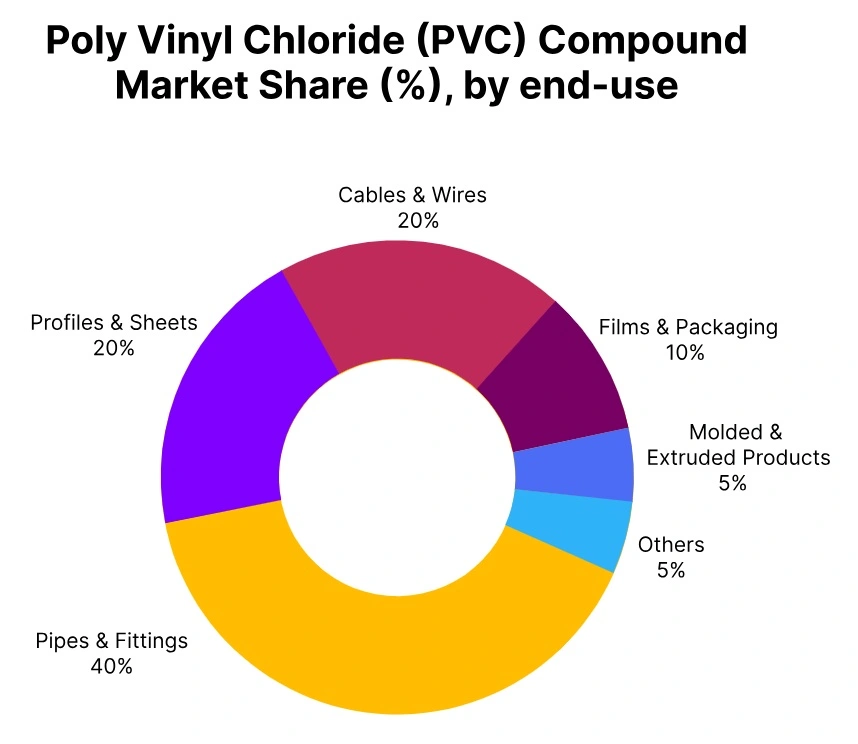
PVC compound market share end use

Historically, several events have caused significant fluctuations in Polyvinyl Chloride (pvc) Compound prices

  • Russia-Ukraine Conflict (2022-Present): The conflict disrupted energy supplies, especially natural gas and oil, which are crucial for the petrochemical industry. Europe, a major consumer of Russian energy, faced significant supply issues. The conflict impacted the availability and cost of energy and raw materials like Ethylene, which is derived from petrochemical processes. This led to increased production costs and supply disruptions in European PVC Compound markets. 
  • Global Energy Crisis (2021-2023): The global energy crisis, driven by high natural gas and crude oil prices, affected the production of various chemicals, including PVC Compound. PVC Compound production relies on petrochemical feedstocks, and the energy crisis made it more expensive to produce the necessary raw materials like Ethylene. This led to increased production costs and reduced output in many regions. 
  • COVID-19 Pandemic (2020-2022): The pandemic led to significant disruptions in global supply chains, causing widespread manufacturing shutdowns and labour shortages. Transportation logistics were severely affected, which resulted in production halts in the PVC compound industry. This disruption, combined with reduced demand from key sectors like construction, electrical insulation, automotive, contributed to fluctuations in PVC compound prices during this period. 

Why Price Watch™?

Price Watch™ is your trusted resource for tracking global polyvinyl chloride (pvc) compound price trends. Our platform delivers real-time data and expert analysis, offering deep insights into the key factors driving price fluctuations in the polyvinyl chloride (pvc) compound market. By monitoring critical events such as geopolitical tensions, supply chain disruptions, and economic shifts, Price Watch™ keeps you fully informed of market dynamics.

In addition, Price Watch™ provides detailed forecasts and updates on production capacities, enabling you to anticipate market changes and make well-informed decisions. With Price Watch™, you gain a competitive edge in understanding all the elements that influence polyvinyl chloride (pvc) compound prices worldwide. Stay ahead of the curve with Price Watch’s™ reliable, accurate, and timely polyvinyl chloride (pvc) compound market data.

Track Price Watch's™ polyvinyl chloride (pvc) compound price assessment on a weekly basis since 2015 onwards, along with short-term forecasts, and get access to the detailed report in a downloadable format.

Polyvinyl Chloride (pvc) Compound Market Price Trend published by Price Watch™ reflect prevailing spot market conditions, derived from independent research, verified trade inputs, and proprietary market intelligence as of the publication date. Prices are published on the specified Incoterm and represent indicative base market levels, exclusive of applicable taxes, VAT, duties, tariffs, and other statutory charges. Actual transaction values may vary depending on volume, credit terms, contractual structure, and other negotiated conditions. Market prices are inherently subject to volatility, liquidity dynamics, regulatory changes, and evolving trade activity. The information provided is for reference and benchmarking purposes only and does not constitute an offer, recommendation, or guarantee of transactional outcomes. Users should exercise independent commercial judgment and assess their specific contractual, regulatory, tax, and application requirements before making business decisions. Price Watch™ assumes no liability for decisions taken based on this information.

PVC compound is a formulated material made by blending polyvinyl chloride (PVC) resin with additives such as plasticizers, stabilizers, fillers, and lubricants to achieve specific performance properties. It is widely used in applications like pipes, cables, profiles, flooring, and medical products. Its price directly impacts manufacturing costs across construction, electrical, automotive, and consumer goods sectors. Price-Watch™ tracks PVC compound prices to help businesses stay informed about market movements and cost trends.

PVC compound prices vary by region, formulation type (rigid or flexible), and application requirements. Prices are usually quoted per metric ton and fluctuate based on raw material costs, additive pricing, and supply-demand balance. Price-Watch™ provides up-to-date price assessments across key global markets.

PVC compound prices are influenced by PVC resin costs, plasticizer prices (such as DOP/DINP), stabilizer costs, and operating rates. Demand from construction, wire & cable, and infrastructure sectors, along with export-import flows and logistics conditions, also play a key role. Seasonal construction activity and raw material volatility often lead to fluctuating price trends.

Major consumers include construction companies, wire and cable manufacturers, automotive component producers, packaging firms, and consumer goods manufacturers. Applications such as pipes, fittings, insulation materials, films, and flooring drive significant demand. Price-Watch™ tracks consumption trends across these sectors.

PVC compound is produced at compounding facilities where PVC resin is blended with additives under controlled processing conditions to achieve desired mechanical, thermal, and chemical properties. The material is then supplied in pellet or granule form for downstream processing.

China is one of the largest exporters of PVC compounds globally, followed by countries such as India, South Korea, and some Middle Eastern producers. Export volumes depend on compounding capacity, domestic consumption, and pricing competitiveness. Price-Watch™ monitors global trade flows and supply availability.

Overall supply of PVC compound is generally sufficient; however, temporary tightness can occur due to fluctuations in PVC resin availability, additive shortages, or logistics disruptions. Demand surges from construction and infrastructure projects can also create short-term imbalances.

PVC compound is available in multiple grades such as rigid (uPVC), flexible (plasticized PVC), flame-retardant, medical-grade, and cable-grade compounds. Prices differ based on formulation complexity, additive content, performance requirements, and end-use specifications. Price-Watch™ provides grade-wise price assessments for better market clarity.

When demand rises sharply often driven by construction activity or infrastructure projects prices may increase, supply can tighten, and lead times may extend. Buyers may also face limited availability in the spot market during peak demand periods.

PVC compound prices are largely driven by the cost of PVC resin along with key additives. Any rise in PVC resin or plasticizer prices increases overall production costs, which manufacturers typically pass on to buyers. Price-Watch™ analyses raw material–PVC compound price relationships to explain cost movements.

Regional prices vary due to differences in PVC resin availability, additive costs, energy prices, manufacturing capacity, freight rates, import duties, and local demand conditions. Regulatory standards and environmental policies can also impact pricing.

PVC compound price outlook depends on PVC resin trends, plasticizer market conditions, construction demand, and global economic factors. Capacity expansions and raw material supply stability also influence future price direction. Price-Watch™ publishes regular forecasts projecting price direction over the next 12 months.

Yes. Reliable forecasts help businesses plan procurement, optimize inventory, negotiate contracts, and manage raw material costs effectively. Price-Watch™ supports smarter purchasing decisions.

Global events such as crude oil fluctuations, supply chain disruptions, trade policy changes, and geopolitical tensions can impact PVC resin production, additive availability, and logistics, leading to price volatility in PVC compounds.

Price-Watch™ gathers data from producers, converters, traders, and buyers to publish transparent PVC compound price assessments, market reports, and forecasts, helping stakeholders stay ahead of market trends.