Purified Terephthalic Acid (pta) Price Trend and Forecast

UNSPC code: 13111039
|
Weekly Update
|
Historical Data Since 2015
|
Forecast for 2026

purified terephthalic acid (pta) Price Trends by Country

cnChina
aeUnited Arab Emirates
inIndia
beBelgium
nlNetherlands
bdBangladesh
trTurkey
vnVietnam
krSouth Korea
omOman

Global purified terephthalic acid (pta) Spot Market Prices, Trend Analysis and Forecast

Price Watch™ provides real-time price assessments and price forecasts for Purified Terephthalic Acid (PTA) across top trading regions: 

Purified Terephthalic Acid (PTA) Regional Coverage Purified Terephthalic Acid (PTA) Grade and Country Coverage Purified Terephthalic Acid (PTA) Pricing Data Coverage Explanation
Asia Purified Terephthalic Acid (PTA) Pricing Analysis Purified Terephthalic Acid (PTA) Purity: 99.9% FOB at Shanghai Port, China Weekly Price Update on Purified Terephthalic Acid (PTA) Real-Time Export Prices from Shanghai Port, China to Global Markets
Purified Terephthalic Acid (PTA) Purity: 99.9% FOB at Busan Port, South Korea Weekly Price Update on Purified Terephthalic Acid (PTA) Real-Time Export Prices from Busan Port, South Korea to Global Markets
Purified Terephthalic Acid (PTA) Purity: 99.9% Ex-Mumbai Domestic Prices, India Real-Time Weekly Price Update of Purified Terephthalic Acid (PTA) Domestic Prices in Mumbai, India
Purified Terephthalic Acid (PTA) Purity: 99.9% CIF Prices at Nhava Sheva Port, India, Importing from China Weekly Price Update on Purified Terephthalic Acid (PTA) Real-Time Import Prices at Nhava Sheva Port, India from China
Purified Terephthalic Acid (PTA) Purity: 99.9% CIF Prices at Chittagong Port, Bangladesh, Importing from China Weekly Price Update on Purified Terephthalic Acid (PTA) Real-Time Import Prices at Chittagong Port, Bangladesh from China
Purified Terephthalic Acid (PTA) Purity: 99.9% CIF Prices at Haiphong Port, Vietnam, Importing from China Weekly Price Update on Purified Terephthalic Acid (PTA) Real-Time Import Prices at Haiphong Port, Vietnam from China
Europe Purified Terephthalic Acid (PTA) Pricing Analysis Purified Terephthalic Acid (PTA) Purity: 99.9% CIF Prices at Izmir Port, Turkey, Importing from South Korea Weekly Price Update on Purified Terephthalic Acid (PTA) Real-Time Import Prices at Izmir Port, Turkey from South Korea
Purified Terephthalic Acid (PTA) Purity: 99.9% CIF Prices at Izmir Port, Turkey, Importing from China Weekly Price Update on Purified Terephthalic Acid (PTA) Real-Time Import Prices at Izmir Port, Turkey from China
Purified Terephthalic Acid (PTA) Purity: 99.9% FD Prices at Antwerp, Belgium Weekly Price Update on Purified Terephthalic Acid (PTA) Real-Time Export Prices at Antwerp, Belgium to European Markets
Purified Terephthalic Acid (PTA) Purity: 99.9% FD Prices at Rotterdam, Netherlands Weekly Price Update on Purified Terephthalic Acid (PTA) Real-Time Export Prices at Rotterdam, Netherlands to European Markets
Middle East Purified Terephthalic Acid (PTA) Pricing Analysis Purified Terephthalic Acid (PTA) Purity: 99.9% CIF Prices at Jebel Ali Port, United Arab Emirates, Importing from China Weekly Price Update on Purified Terephthalic Acid (PTA) Real-Time Import Prices at Jebel Ali Port, United Arab Emirates from China
Purified Terephthalic Acid (PTA) Purity: 99.9% CIF Prices at Salalah Port, Oman, Importing from China Weekly Price Update on Purified Terephthalic Acid (PTA) Real-Time Import Prices at Salalah Port, Oman from China

Note: In assessments structured as CIF [Importing Port] (Exporting Country), the country mentioned in brackets indicates the primary origin of supply (exporting country), while the named port refers to the destination port in the importing country. Other Incoterms (FOB, FD, EXW, etc.) should be interpreted in accordance with standard international trade definitions.

Purified Terephthalic Acid (PTA) Price Trend Q1 2026

The Global PTA pricing is exhibiting excellent growth in Q1 of 2026. The PTA price has risen in the range of 5%-18% in several areas around the world. The APAC region has had the most price increases in China, South Korea, and India due to the high demand for polyester and PET products as well as good flow of purchased products.

The main factors behind this increase are stable feedstock prices of para-xylene and the high demand for fibre and polymer production companies to purchase PTA. In European countries such as Belgium and the Netherlands, prices also have increased in value due to stable consumption and strong supply in their regions.

All the PTA markets experienced very positive momentum based on higher value for their feedstocks and greater levels of trade and consistent levels of demand in all major market segments, with supply consistent with the requirements of downstream industries.

China: PTA Export prices FOB Shanghai, China; Grade- Purity: 99.9%

In Q1 2026, PTA prices in China, FOB Shanghai, have increased by approximately 18.5%, reflecting strong upward momentum supported by rising para-xylene import costs and firm downstream demand from polyester and PET sectors. PTA price trend in China has been upward, influenced by higher feedstock costs and tightening global availability.

The market has been witnessing steady procurement activity, with buyers have been aligning purchases with production needs, while domestic supply has been relatively balanced during most of the quarter. In March 2026, PTA prices in China have increased sharply by around 18.7% compared to February, driven by delays in para-xylene imports from South Korea and rising feedstock costs amid Middle East disruptions.

Additionally, tighter global supply following plant shutdowns and increased export demand have further supported pricing. Costs of para-xylene have been rising consistently, which has been strengthening overall price levels and maintaining a firm market tone.

India: PTA Domestically traded prices Ex-Mumbai, India; Grade- Purity: 99.9%

In Q1 2026, PTA prices in India Ex-Mumbai, have increased by approximately 13.9%, reflecting strong cost-driven growth supported by tightening feedstock availability and firm import prices. PTA price trend in India has been upward, influenced by rising para-xylene costs and constrained supply conditions. The market has been witnessing cautious procurement activity, with buyers have been aligning purchases with immediate requirements amid rising price expectations.

In March 2026, PTA prices in India have increased sharply by around 30.6% compared to February, driven by significant supply disruptions. Delays in para-xylene shipments from Saudi Arabia through the Strait of Hormuz have reduced feedstock availability, while logistical uncertainties linked to Middle East tensions have restricted spot supplies.

Additionally, stronger demand from China has increased export offers, further elevating domestic prices. Overall, tightening feedstock availability and higher import costs have been sustaining strong upward pricing momentum.

Belgium: PTA Domestically traded prices FD Antwerp, Belgium; Grade- Purity: 99.9%

In Q1 2026, PTA prices in Belgium FD Antwerp, have increased by approximately 5.7%, reflecting firm market conditions supported by rising energy and feedstock costs across Europe. PTA price trend in Belgium has been upward, influenced by higher para-xylene costs and tightening regional supply. The market has been witnessing steady procurement activity, with buyers have been maintaining consistent purchasing amid stable downstream demand.

In March 2026, PTA prices in Belgium have increased sharply by around 12.2% compared to February, driven by escalating energy costs following disruptions in LNG supply linked to Middle East geopolitical tensions.

Constraints in gas flows and higher crude-linked input costs have increased para-xylene production expenses, while logistical disruptions have tightened feedstock availability. These factors have raised overall production costs and supported higher PTA prices, maintaining a firm market tone.

UAE: PTA Import prices CIF Jebel Ali (China), UAE; Grade- Purity: 99.9%

In Q1 2026, PTA prices in UAE, CIF Jebel Ali (China), have increased by approximately 17.8%, reflecting strong upward momentum driven by rising import costs and tightening supply conditions. PTA price trend in the UAE has been upward, influenced by higher para-xylene costs and steady demand from polyester producers.

The market has been witnessing active procurement activity, with buyers have been securing volumes amid rising price expectations. In March 2026, PTA prices in the UAE have increased sharply by around 19.9% compared to February, driven by major disruptions in Middle East supply chains.

Shipping constraints through the Strait of Hormuz have delayed imports from Asia, while rising freight and insurance costs have increased landed prices. Additionally, tighter regional availability and higher feedstock costs have reinforced strong price increases, supporting a firm market outlook.

Netherlands: PTA Domestically traded prices FD Rotterdam, Netherlands; Grade- Purity: 99.9%

In Q1 2026, PTA prices in Netherlands, FD Rotterdam, have increased by approximately 5.6%, reflecting firm market conditions supported by rising feedstock and energy costs. PTA price trend in the Netherlands has been upward, influenced by higher para-xylene costs and steady downstream demand from polyester and PET sectors.

The market has been witnessing balanced procurement activity, with buyers have been maintaining stable purchasing strategies. In March 2026, PTA prices in the Netherlands have increased sharply by around 11.9% compared to February, driven by increased energy costs linked to Middle East disruptions and constrained LNG supply.

Higher gas prices have raised para-xylene production costs, while logistical disruptions have tightened feedstock availability. These factors have increased overall production expenses and supported higher pricing, maintaining a firm market trend.

South Korea: PTA Export prices FOB Busan, South Korea; Grade- Purity: 99.9%

In Q1 2026, PTA prices in South Korea, FOB Busan, have increased by approximately 14.3%, reflecting strong growth supported by rising feedstock costs and tightening supply conditions. PTA price trend in South Korea has been upward, influenced by higher para-xylene costs and reduced refinery output. The market has been witnessing controlled procurement activity, with buyers have been aligning purchases with production requirements.

In March 2026, PTA prices in South Korea have increased sharply by around 22.3% compared to February, driven by disruptions in naphtha shipments through the Strait of Hormuz and reduced operating rates at major producers. Lower ethylene availability has impacted upstream production, while higher feedstock costs have increased PTA production expenses, reinforcing strong upward pricing momentum.

Bangladesh: PTA Import prices CIF Chittagong (China), Bangladesh; Grade- Purity: 99.9%

In Q1 2026, PTA prices in Bangladesh (CIF Chittagong from China), have increased by approximately 16.0%, reflecting strong import cost pressures and tightening regional supply. PTA price trend in Bangladesh has been upward, influenced by higher para-xylene costs and firm demand from polyester manufacturers. The market has been witnessing cautious procurement activity, with buyers have been aligning purchases with immediate requirements.

In March 2026, PTA prices in Bangladesh have increased sharply by around 18.8% compared to February, driven by Middle East disruptions that have delayed shipments from China and increased freight costs. Limited vessel availability and higher insurance charges have raised import costs, while tighter regional supply has supported stronger pricing, maintaining a firm market tone.

Turkey: PTA Import prices CIF Izmir (China), Turkey; Grade- Purity: 99.9%

In Q1 2026, PTA prices in Turkey (CIF Izmir from China), have increased by approximately 20.2%, reflecting strong upward movement supported by rising import costs and tightening supply conditions. PTA price trend in Turkey has been upward, influenced by higher para-xylene costs and steady demand from polyester sectors.

The market has been witnessing controlled procurement activity, with buyers have been aligning purchases with immediate requirements amid rising prices. In March 2026, PTA prices in Turkey have increased sharply by around 16.6% compared to February, driven by logistical disruptions linked to Middle East tensions.

Shipping delays and higher freight rates have increased landed costs, while constrained feedstock availability has supported further price increases, reinforcing a firm pricing trend.

Oman: PTA Import prices CIF Salalah (China), Oman; Grade- Purity: 99.9%

According to Price-Watch™, in Q1 2026, PTA prices in Oman, (CIF Salalah from China), have increased by approximately 16.9%, reflecting strong import-driven growth supported by rising feedstock costs and steady demand. PTA price trend in Oman has been upward, influenced by higher para-xylene costs and limited alternative supply sources.

The market has been witnessing active procurement activity, with buyers have been securing volumes amid tightening supply conditions. In March 2026, PTA prices in Oman have increased sharply by around 18.7% compared to February, driven by disruptions in shipping routes through the Strait of Hormuz.

Delays in cargo movements and increased freight costs have raised import prices, while constrained feedstock availability has supported further upward movement, maintaining a firm market tone.

Vietnam: PTA Import prices CIF Haiphong (China), Vietnam; Grade- Purity: 99.9%

Prices for PTA in Vietnam (CIF Haiphong from China) rose by approximately 17.7% in Q1 2026, reflecting a combination of strong import cost pressures and firm downstream demand. Price increases for PTA in Vietnam have followed an increasing trend due to the rise in the cost of para-xylene and the continued reduction in PCA supply from China.

The overall procurement activity in the market can be characterized as cautious due to the pressure on prices in the market with buyers continuously aligning their purchases to meet their production needs, and due to the continued rise in prices since January. In March, PTA prices in Vietnam have been up approximately 17.9% compared to February.

This is largely due to disruptions in the Middle East which have delayed shipping activity as well as creating additional freight rate pressures for vessels. The continued limited availability of vessels and increased insurance costs have created further upward pressure on landed prices and also create downward pressure on supply conditions and provide strong upward momentum for prices going forward.

Purified Terephthalic Acid (PTA) Price Trend Analysis: Q4 2025

The PTA global market is currently experiencing a decline (price fall of approximately 2%–4%). PTA prices have fallen in APAC due to weaker demand from the polyester and PET manufacturing industries.

All three major APAC PTA-producing countries (China, South Korea, and India) are experiencing a decrease in PTA price because purchasers are purchasing fewer amounts than normal, primarily because of continuing high prices for their feedstock (para-xylene), but PTA producers are using less para-xylene due to their own lower demand for PTA.

Additionally, decreases have also been reported in Europe (Belgium and the Netherlands) as a result of decreased consumption and balanced supply levels are being managed through production from regional refineries.

Overall, the Global PTA Market is experiencing weak conditions arising from moderate demand, steady production levels and limited trade activities across the major regions.

China: PTA Export prices FOB Shanghai, China; Grade- Purity: 99.9%

In Q4 2025, PTA prices in China, FOB Shanghai have declined by approximately 2.3%, reflecting a softer market environment influenced by moderate downstream demand from polyester and PET sectors. PTA price trend in China has been downward, driven by stable para-xylene costs and sufficient domestic supply levels.

The market has been witnessing cautious procurement activity, with buyers have been aligning purchases with immediate production needs, while inventory levels have been remaining comfortable across the quarter.

In December 2025, PTA prices in China have increased by around 3.6% compared to November, supported by improved downstream demand and slight firming in para-xylene costs. Production levels have been remaining stable, while balanced supply conditions have been limiting excessive volatility.

India: PTA Domestically traded prices Ex-Mumbai, India; Grade- Purity: 99.9%

In Q4 2025, PTA prices in India (Ex-Mumbai) have declined by approximately 4.9%, reflecting weak demand from polyester and textile sectors along with stable feedstock conditions. PTA price trend in India has been downward, influenced by sufficient para-xylene availability and cautious downstream consumption. The market has been witnessing limited procurement activity, with buyers have been maintaining need-based purchasing strategies amid adequate inventory levels.

In December 2025, PTA prices in India have increased by around 3.7% compared to November, supported by improved buying interest and slight recovery in feedstock costs. Domestic production has been remaining consistent, while supply conditions have been balanced across the market. Overall, the market has been reflecting a subdued tone during the quarter despite the temporary monthly improvement.

Belgium: PTA Domestically traded prices FD Antwerp, Belgium; Grade- Purity: 99.9%

In Q4 2025, PTA prices in Belgium (FD Antwerp) have declined by approximately 3.0%, reflecting weaker demand from polyester and PET industries despite relatively stable production conditions. PTA price trend in Belgium has been downward, influenced by moderate para-xylene costs and sufficient regional supply. The market has been witnessing cautious procurement activity, with buyers have been maintaining controlled purchasing volumes.

In December 2025, PTA prices in Belgium have declined further by around 0.6% compared to November, driven by slower downstream demand and reduced trading activity during the year-end period. Feedstock availability has been stable, while production levels have been consistent, which has been limiting price recovery. Overall, the market has been maintaining a soft tone.

UAE: PTA Import prices CIF Jebel Ali (China), UAE; Grade- Purity: 99.9%

In Q4 2025, PTA prices in UAE (CIF Jebel Ali from China) have declined by approximately 4.2%, reflecting weaker import demand and stable supply from China. PTA price trend in the UAE has been downward, influenced by sufficient availability and moderate downstream consumption. The market has been witnessing cautious procurement activity, with buyers have been limiting purchases amid adequate inventory levels.

In December 2025, PTA prices in the UAE have increased by around 3.8% compared to November, supported by higher import costs and improved downstream demand. Freight conditions have been relatively firm, while supply flows have been consistent, contributing to stable market conditions. Overall, the quarterly trend has remained soft despite the monthly increase.

Netherlands: PTA Domestically traded prices FD Rotterdam, Netherlands; Grade- Purity: 99.9%

In Q4 2025, PTA prices in the Netherlands (FD Rotterdam) have declined by approximately 2.9%, reflecting moderate demand conditions and stable feedstock costs across the European market. PTA price trend in the Netherlands has been downward, influenced by balanced supply and cautious procurement from downstream sectors. The market has been witnessing controlled purchasing activity, with buyers have been maintaining sufficient inventory levels.

In December 2025, PTA prices in the Netherlands have declined further by around 0.6% compared to November, driven by weaker demand and limited trading activity. Paraxylene costs have been stable, while production levels have been consistent, which has been restricting price recovery. Overall, the market has been maintaining a controlled and soft pricing environment.

South Korea: PTA Export prices FOB Busan, South Korea; Grade- Purity: 99.9%

In Q4 2025, PTA prices in South Korea, FOB Busan have declined by approximately 3.1%, reflecting moderate demand and stable feedstock conditions. PTA price trend in South Korea has been downward, influenced by sufficient para-xylene availability and balanced domestic production. The market has been witnessing cautious procurement activity, with buyers have been aligning purchases with immediate needs.

In December 2025, PTA prices in South Korea have increased by around 1.6% compared to November, supported by improved export demand and slightly firmer feedstock costs. Production levels have been stable, while supply conditions have been balanced, contributing to a controlled market environment. Overall, the quarterly trend has remained soft.

Bangladesh: PTA Import prices CIF Chittagong (China), Bangladesh; Grade- Purity: 99.9%

In Q4 2025, PTA prices in Bangladesh (CIF Chittagong from China) have declined by approximately 4.7%, reflecting weak import demand and sufficient supply from China. PTA price trend in Bangladesh has been downward, influenced by moderate downstream consumption and adequate inventory levels. The market has been witnessing cautious procurement activity, with buyers have been limiting purchases.

In December 2025, PTA prices in Bangladesh have increased by around 2.5% compared to November, supported by slightly higher import costs and improved buying interest. Supply flows have been consistent, while market activity has been measured, maintaining overall stability. Despite the monthly increase, the broader quarterly trend has remained soft.

Turkey: PTA Import prices CIF Izmir (China), Turkey; Grade- Purity: 99.9%

In Q4 2025, PTA prices in Turkey (CIF Izmir from China) have declined by approximately 3.2%, reflecting moderate demand and stable supply conditions. PTA price trend in Turkey has been downward, influenced by cautious procurement and sufficient inventory levels. The market has been witnessing limited purchasing activity, with buyers have been maintaining controlled procurement strategies.

In December 2025, PTA prices in Turkey have increased by around 6.2% compared to November, supported by higher import costs and improved downstream demand. Freight rates have been slightly firm, while supply availability has been stable, supporting the monthly increase. Overall, the quarterly trend has remained negative.

Oman: PTA Import prices CIF Salalah (China), Oman; Grade- Purity: 99.9%

In Q4 2025, PTA prices in Oman (CIF Salalah from China) have declined by approximately 2.6%, reflecting balanced supply conditions and moderate downstream demand. PTA price trend in Oman has been downward, influenced by stable import flows and sufficient availability. The market has been witnessing cautious procurement activity, with buyers have been maintaining need-based purchasing.

In December 2025, PTA prices in Oman have increased by around 3.4% compared to November, supported by improved import costs and slightly better demand conditions. Supply levels have been consistent, contributing to a stable market environment. Overall, the quarterly trend has remained soft.

Vietnam: PTA Import prices CIF Haiphong (China), Vietnam; Grade- Purity: 99.9%

In Q4 2025, PTA prices in Vietnam (CIF Haiphong from China) have declined by approximately 2.2%, reflecting moderate demand and steady import supply from China. PTA price trend in Vietnam has been downward, influenced by balanced supply-demand conditions and sufficient inventory levels.

The market has been witnessing cautious procurement activity, with buyers have been aligning purchases with immediate requirements. In December 2025, PTA prices in Vietnam have increased by around 3.4% compared to November, supported by improved downstream demand and slightly higher import costs. Supply flows have been consistent, maintaining stable availability. Overall, the quarterly trend has remained soft despite the monthly increase.

In Q3 2025, the global purified terephthalic acid (PTA) market has been experiencing moderate growth, with prices have been increasing by a range of 1–6% across key regions. In the APAC region, countries like China, South Korea, and India have been seeing steady demand from polyester and PET manufacturing sectors, resulting in price gains ranging between 1–5%.

This growth has been being supported by ongoing procurement from downstream polymer and fibre producers and stable feedstock availability. In Europe, markets such as Belgium and the Netherlands have been experiencing solid prices of about 5%, supported by steady demand and balanced supply from the refineries in the region.

In general terms, the PTA market across major regions has remained resilient, with some influences from para xylene feedstock costs, refinery run-rates, and regional trade flows. Market activity has generally been measured due to stable supply things, and downstream buyers active to secure their positions on products.

China: Purified terephthalic acid (PTA) Export prices FOB Shanghai, China, Grade- Purity: 99.9%.

According to Price-Watch™, in Q3 2025, Purified Terephthalic Acid (PTA) prices in China, FOB Shanghai, have been showing a positive market trend, with a 1.4% increase during the quarter, and prices having been ranging between 625–635 USD/MT. The purified terephthalic acid (PTA) price trend in China has been being driven by steady demand from polyester and fiber production sectors, where PTA has been serving as a key feedstock for polyester granules and PET resin.

Factors such as para-xylene feedstock costs, refinery throughput, and regional shipping logistics have been actively shaping the market. In September 2025, purified terephthalic acid (PTA) prices in China have been declining by 1.6% compared to the previous month, while balanced supply-demand conditions and consistent production levels have been supporting overall market stability.

India: Purified terephthalic acid (PTA) Domestically traded prices Ex-Mumbai, India, Grade- Purity: 99.9%.

According to Price Watch, in the third quarter of 2025, the Purified Terephthalic Acid (PTA) market in India has been experiencing a downward trajectory, with a decline of 5.94% in prices across the quarter.

PTA price trend in India has been dictated by moderate demand for polyester and fibre production, where purified terephthalic acid is been a vital feedstock for PET and textile applications. The costs for para-xylene, refinery throughput, and domestic trade logistics have affected the purified terephthalic acid (PTA) market.

PTA prices in India dropped by 1.6% over the course of September 2025 compared to the previous month, while production levels remained stable and the downstream has been proceeding with caution. Market activity has remained subdued in a balanced supply-demand balance.

Belgium: Purified terephthalic acid (PTA) Domestically traded prices FD Antwerp, Belgium, Grade- Purity: 99.9%.

In Q3 2025, Belgian PTA prices in FD Antwerp terms have increased by 5.4% over the quarter. The PTA price trend in Belgium has exhibited steady demand from polyester and PET-based production where purified terephthalic acid (PTA) acts as the fundamental feedstock for both resins and fibers and through to industrial applications.

Para-xylene prices, refining activity levels, and inter-regional trade flows have influenced the price pattern, while inventory near the distributor level has guided general activity through the quarter. In September 2025, purified terephthalic acid (PTA) prices in Belgium have increased by 2.4% over August, as polyester procurement activity by producers has continued.

Modest general local production, local availability of feedstock, and consistent demand has lent support to the PRI price level growth, while activity has remained cautious and steady.

UAE: Purified terephthalic acid (PTA) Import prices CIF Jebel Ali (China), UAE, Grade- Purity: 99.9%.

According to Price Watch, in Q3 2025, Purified Terephthalic Acid (PTA) prices in the UAE have been rising, with a 2.9% increase for the period. The PTA price trend in the UAE has reflected stable consumption from polyester and PET manufacturing activities, where purified terephthalic acid (PTA) has remained a key feedstock.

The costs of para-xylene feedstock, refinery production levels in China, logistics for shipping to Jebel Ali, and trade flows within the region have all contributed to influencing price, while local distributor withdrawals as inventory has affected the short-term market.

For September 2025, PTA prices in the UAE have increased by 1.4% month-on-month, due to the procurement activity from polyester producers and strategic stockpiling of purified terephthalic acid (PTA). Continued supply from China, stable exposure to regional consumer demand, and minimal outbound supply from alternative sources, has contributed to price gains, while activity levels in the market have remained subdued and balanced.

Netherlands: PTA Domestically traded prices FD Rotterdam, Netherlands, Grade- Purity: 99.9%.

In Q3 2025, Purified Terephthalic Acid (PTA) prices in the Netherlands, FD Rotterdam, continued to increase, reporting a quarterly increase of 5.2%. The stable price trend of PTA has been a result of continued demand in the European polyester and PET sectors where PTA has been a main feedstock for high performance resins and industrial polymers.

Regional refinery operating patterns and para-xylene pricing have been applying upward hardship on prices while freight and logistics moving from nearby ports have been affecting movement in the market. PTA prices in the Netherlands entered September 2025 with a 2.3% month-on-month increase as buyers have been tactically replenishing stock with constant production domestically.

Limited alternative sources of feedstocks and stable demand, downstream, for PTA have supported continued price increase, as well as supported the market, where activity under these conditions has continued on a cautious but firm trading sentiment.

South Korea: PTA Export prices FOB Busan, South Korea, Grade- Purity: 99.9%.

In Q3 2025, Purified Terephthalic Acid (PTA) prices in South Korea have been increasing, recording a 3.1% rise during the quarter. The PTA price trend has been reflecting steady consumption from polyester and PET manufacturing sectors, where PTA has been employed as a key feedstock.

Regional para-xylene feedstock costs, domestic refinery output, and shipping logistics from Busan have been influencing prices, while trading activity among local and international buyers has been shaping market dynamics.

In September 2025, PTA prices in South Korea have been declining by 2.1% month-on-month, as some buyers have been moderating purchases amid sufficient inventory levels. Consistent local production and balanced demand have been supporting overall market stability, while pricing sentiment has been remaining cautiously firm.

Bangladesh: PTA Import prices CIF Chittagong (China), Bangladesh, Grade- Purity: 99.9%.

In Q3 2025, Purified Terephthalic Acid (PTA) prices in Bangladesh have been rising, recording a 3.9% increase during the quarter. The PTA price trend in Bangladesh has been reflecting ongoing demand from polyester and PET manufacturers, where PTA has been serving as a key feedstock.

Para-xylene feedstock costs in China, shipping logistics to Chittagong, and regional trade flows have been influencing prices, while inventory management by distributors has been shaping market activity. In September 2025, PTA prices in Bangladesh have been showing a slight decrease month-on-month, as some buyers have been moderating procurement amid sufficient inventory levels.

Consistent supply from China, moderate domestic consumption, and balanced stock levels have been supporting overall market stability, while market activity has been staying measured amid stable supply-demand conditions.

Turkey: PTA Import prices CIF Izmir (China), Turkey, Grade- Purity: 99.9%.

In Q3 2025, Purified Terephthalic Acid (PTA) prices in Turkey have been rising slightly, recording a 0.5% increase during the quarter. The PTA price trend in Turkey has been reflecting moderate demand from polyester and PET manufacturers, where PTA has been serving as a primary feedstock.

Para-xylene feedstock costs in China, shipping logistics to Izmir, and regional trade dynamics have been influencing prices, while distributor inventory levels have been affecting short-term market activity.

In September 2025, PTA prices in Turkey have been declining by 3.0% month-on-month, as some buyers have been moderating procurement amid sufficient domestic stock. Steady supply from China, coupled with cautious downstream consumption, has been maintaining overall market stability, while trading activity has been staying measured and balanced.

Oman: PTA Import prices CIF Salalah (China), Oman, Grade- Purity: 99.9%.

In Q3 2025, Purified Terephthalic Acid (PTA) prices in Oman have been rising, recording a 3.3% increase during the quarter. The PTA price trend in Oman has been reflecting steady consumption from polyester and PET manufacturing sectors, where PTA has been serving as a primary feedstock.

Para-xylene feedstock costs in China, shipping logistics to Salalah, and regional trade flows have been actively influencing prices, while inventory levels maintained by local distributors have been shaping short-term market dynamics.

In September 2025, PTA prices in Oman have been increasing by 3.5% month-on-month, as downstream producers have been actively replenishing stocks amid stable domestic demand.

Consistent supply from China, limited alternative sourcing options, and cautious procurement strategies by regional buyers have been supporting overall price growth, while market activity has been remaining measured and balanced amid ongoing supply-demand stability.

Vietnam: PTA Import prices CIF Haiphong (China), Vietnam, Grade- Purity: 99.9%.

In Q3 2025, Purified Terephthalic Acid (PTA) prices in Vietnam, CIF Haiphong (China), have been rising, recording a 1.4% increase during the quarter. The PTA price trend in Vietnam has been reflecting steady demand from local polyester and PET manufacturers, where PTA has been serving as a critical feedstock.

Para-xylene feedstock costs in China, shipping logistics to Haiphong, and regional trade flows have been influencing prices, while inventory levels maintained by distributors have been shaping short-term market activity.

In September 2025, PTA prices in Vietnam have been declining by 1.5% month-on-month, as some buyers have been moderating procurement amid sufficient inventory levels. Consistent supply from China, balanced domestic demand, and measured downstream consumption have been supporting overall market stability, while trading activity has been remaining cautious yet steady.

According to PriceWatch, in the Chinese market, the prices of Purified Terephthalic Acid (PTA) with 99.9% purity experienced a decline of approximately 3.7% in the second quarter of 2025. The product was evaluated at USD 621 per metric ton on a FOB Shanghai basis. The PTA market exhibited weakness due to a lack of demand from the polyester and PET sectors.

The trend in PTA prices demonstrated a steady downward trajectory throughout April, May, and June. The PTA price chart reflected a soft market tone, showing no indications of a potential rebound. Buyers postponed procurement due to cautious sentiment and sluggish demand for finished goods.

Feedstock Paraxylene prices were decreased, which lowered production costs and affected the market of PTA. Inventory levels remained adequate across major storage hubs. Sellers gradually adjusted their offers to generate interest in a market that was moving slowly. The price chart indicated a lack of momentum. The market may continue to face pressure in the third quarter unless there is an improvement in polyester production.

According to PriceWatch, in the Indian market, the prices of Purified Terephthalic Acid (PTA) with 99.9% purity experienced a decline of approximately 4.9% in the second quarter of 2025. The product was evaluated at USD 816 per metric ton Ex-Mumbai. The PTA market exhibited a softening trend due to diminished demand from the polyester fiber and resin industries. Throughout April, May, and June, the PTA price trend remained negative.

The PTA price chart indicated a consistent downward trajectory, influenced by sluggish industrial activity. Buyers restricted their purchases considering high inventory levels and weak end-use consumption. Import parity decreased because of falling global benchmarks.

Prices for feedstock Paraxylene also remained weak, adding further pressure on costs. Spot trading activity diminished due to a decrease in buying momentum. The price chart showed no indications of a short-term recovery. The market may continue to be subdued in the third quarter unless there is a significant increase in polyester demand.

In Q1 2025, the Purified Terephthalate Acid (PTA) 99.9% purity market exhibited signs of marginal stabilization, with prices edging slightly lower to around 644 USD/MT FOB Shanghai (China), reflecting only a 0.37% decline from the previous quarter. This relatively flat movement signaled that the market was approaching a demand-supply equilibrium.

Polyester production gradually resumed post the Lunar New Year break, and the raw material cost curve showed signs of flattening. However, with macroeconomic uncertainties and only modest recovery in end-use industries like textiles and bottling, buyers remained cautious, preferring short-term contracts over bulk procurements.

In Q1 2025, the PTA 99.9% purity market showed early signs of recovery, with prices edging up to 858 USD/MT Ex-Mumbai, reflecting a 1.93% increase over the previous quarter. This mild rebound was driven by a gradual revival in demand post-year end and pre-budget stockpiling by converters.

The feedstock scenario also stabilized, with Paraxylene and Acetic Acid availability improving, which supported balanced production rates. However, overall sentiment remained cautious amid macroeconomic uncertainties and expectations of only a modest demand recovery in Q2.

Purified Terephthalic Acid (PTA) Price Trend Analysis: Q4 2024

In Q4 2024, PTA 99.9% purity prices in China continued their downward trajectory, declining by 8.58% to approximately 647 USD/MT FOB Shanghai. The ongoing weakness in feedstock PX prices and lackluster downstream performance across polyester yarns and fibers played a key role in the decline.

Furthermore, the year-end inventory management cycle and seasonal slowdown in textile manufacturing contributed to reduced purchasing activity. Despite some support from stabilized energy markets, subdued export orders and high stockpiles kept prices from rebounding.

In Q4 2024, PTA 99.9% purity prices plunged sharply to 842 USD/MT Ex-Mumbai, registering a steep 12.00% decline. The drop was primarily due to excess inventories, muted demand from the polyester segment, and competitive import alternatives, especially from countries like China and South Korea.

Furthermore, the slowdown at the end of the year, along with reduced seasonal textile production, contributed to a continued suppression of downstream demand. Market players adopted a cautious procurement strategy, further intensifying price pressure.

In Q3 2024, the Purified Terephthalic Acid (PTA) 99.9% purity market in China faced significant downward pressure, with prices falling sharply to around 708 USD/MT FOB Shanghai, marking a 10.21% decline from the previous quarter. This drop was primarily attributed to plummeting crude oil values, which affected the cost structure of PTA feedstocks such as Paraxylene (PX).

Additionally, sluggish polyester demand, especially from the textile and packaging sectors, further impacted PTA offtake. The market was also burdened by oversupply from domestic producers, as new capacities came online amidst already tepid demand.

In Q3 2024, with PTA 99.9% purity prices dipping further to 956 USD/MT Ex-Mumbai, a 4.05% decline from Q2. A combination of monsoon-related disruptions reduced industrial activity, and export market uncertainty further subdued domestic procurement. Despite stable operations at most PTA production units, oversupply conditions weighed heavily on prices.

In Q2 2024, the global PTA 99.9% purity market exhibited mixed trends, with China and India experiencing a bearish price movement, while South Korea and Europe saw a bullish trend. The downturn in China and India was attributed to lower feedstock costs, weak demand from sectors such as PET, polyester films, textiles, and packaging, coupled with ample supply.

High financing costs and decreased consumer spending are further depressed demand. Conversely, in Europe and South Korea, rising demand from downstream industries, particularly textiles and packaging, alongside increasing energy costs, labor expenses, and raw material prices, prompted producers to raise PTA prices to sustain profitability.

In Q2 2024, PTA 99.9% purity prices witnessed a correction, declining to 997 USD/MT Ex-Mumbai, marking a 4.19% drop. The decline was attributed to weakening demand in polyester yarn and film manufacturing, along with ample availability of PTA inventories in the domestic market. Additionally, softened global crude oil prices during the period impacted feedstock economics, easing upstream cost pressures.

In Q1 2024, the global Purified Terephthalic Acid (PTA) 99.9% purity market displayed mixed trends, influenced by rising prices of Paraxylene and Acetic acid, alongside strong demand from sectors like PET, polyester films, textiles, and packaging. However, prices fell in China, Belgium, and Germany due to ample supply in China, where new production capacity and high operating rates led to increased inventories and weakened demand.

The European PTA market faced weak demand from downstream industries, particularly the Polyethylene terephthalate (PET) and polyester sectors. This led to lower operating rates and reduced consumption of PTA.  In contrast, South Korea and India saw price increases, fueled by heightened consumer demand during the Lunar New Year festivities.

Q1 2024, the Indian Purified Terephthalic Acid (PTA) 99.9% purity market recorded a modest upward movement, with prices averaging 1040 USD/MT Ex-Mumbai, up by 2.56% from the previous quarter. This increase was supported by stable demand from the polyester and textile sectors, particularly in anticipation of the upcoming festive production cycles. The firm sentiment was also linked to slight tightening in feedstock supply chains, particularly for Paraxylene, which is a key upstream material for PTA.

Technical Specifications of Purified Terephthalic Acid (pta) Price Trends

Product Description

Purified Terephthalic Acid (PTA) is a key petrochemical intermediate produced from the oxidation of para-xylene. It is known for its high purity, consistent quality, and excellent crystallinity. PTA exhibits strong thermal stability and chemical resistance, making it a versatile material for a wide range of industrial applications. Its properties, including high whiteness and low impurity levels, ensure reliable performance in demanding environments, while its cost-effectiveness makes it a preferred choice in polyester and fiber production. PTA is highly adaptable, suitable for various polymerization processes and manufacturing methods.

Identifiers and Classification:

  • CAS No – 100-21-0
  • HS Code – 29173600
  • Molecular Formula – C8H6O4
  • Molecular Weight[g/mol] – 166.13 g/mol Lit


Purified Terephthalic Acid (PTA) Synonyms:

  • PTA
  • Terephthalic Acid
  • p-Phthalic Acid
  • 1,4-Benzenedicarboxylic Acid
  • p-Dicarboxybenzene,
  • p-Benzenedicarboxylic Acid


Purified Terephthalic Acid (PTA) Grades Specific Price Assessment:

  • Purity:99.9% Grade Price Trend


Purified Terephthalic Acid (PTA) Global Trade and Shipment Terms

  • Quotation Terms (Product & Country Specific): 25- 28MT,
  • Packaging Type (Product & Country Specific): 1100 Kg Bag


Incoterms Referenced in PTA Price Reporting

Shipping Term  Location  Definition 
FOB Busan  Busan, South Korea  PTA Export price from South Korea 
FOB Shanghai  Shanghai, China  PTA Export price from China 
CIF Chittagong (China)  Chittagong, Bangladesh  PTA import price in Bangladesh from China 
CIF Jabel Ali (China)  Jabel Ali, UAE  PTA import price in UAE from China 
CIF Nhava Sheva (China)  Nhava Sheva, India  PTA import price in India from China 
CIF Izmir (South Korea)  Izmir, Turkey  PTA import price in Turkey from South Korea 
CIF Salalah (China)  Salalah, Oman  PTA import price in Oman from China 
CIF Izmir (China)  Izmir, Turkey  PTA import price in Turkey from China 
CIF Haiphong (China)  Haiphong, Vietnam  PTA import price in Vietnam from China 
FD Antwerp  Antwerp, Belgium  Domestically Traded PTA price in Belgium 
FD Rotterdam  Rotterdam, Netherlands  Domestically Traded PTA price in Netherlands 
Ex-Mumbai  Mumbai, India  Domestically Traded PTA price in Mumbai 

*Quotation Terms refers to the quantity range specified for the PTA being quoted or offered in a commercial transaction.

**Packaging Type refers to standard packaging size commonly used for PTA packing, ease of handling, transportation, and storage in industrial and commercial applications.

Key Purified Terephthalic Acid (PTA) Manufacturers and their brands

Manufacturer 
Yangzi petrochemical 
Fujian Fuhaichuang Petrochemicals Co.,LTD 
Taekwang Industrial Co., Ltd 
Samnam Petrochemical Co.,LTD 
BP Zhuhai Chemical Co.,LTD 
Hyosung Chemical 
Formosa Plastics Group 
Jiangsu Honggang Petrochemical Co., Ltd. 
Ineos Aromatics 
Indorma Ventures Limited 
SK Petrochemicals 
Hanwha General Chemicals 
Hengli Petrochemical Co.LTD 
Reliance 
IOCL 

Purified Terephthalic Acid (pta) Industrial Applications

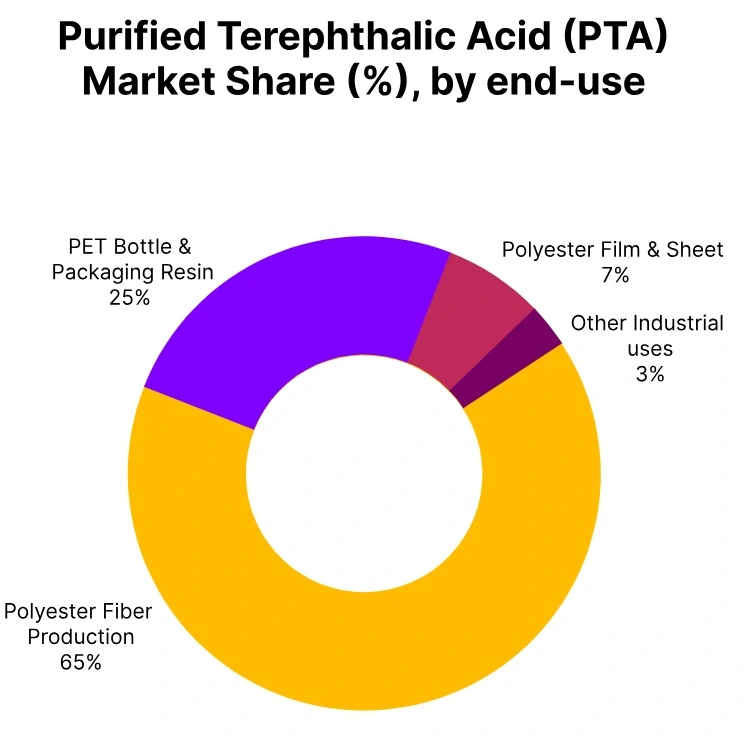
PTA market share end use

Historically, several events have caused significant fluctuations in Purified Terephthalic Acid (pta) prices

  • Russia-Ukraine Conflict (2022-Present): The conflict disrupted energy supplies, especially natural gas and oil, which are crucial for the petrochemical industry. Europe, a major consumer of Russian energy, faced significant supply issues. The conflict impacted the availability and cost of energy and raw materials like Paraxylene and Acetic acid which is derived from petrochemical processes. This led to increased production costs and supply disruptions in European PTA markets.
  • COVID-19 Pandemic (2020-2022): The pandemic led to significant disruptions in global supply chains, causing widespread manufacturing shutdowns and labour shortages. Transportation logistics were severely affected, which resulted in production halts in the PTA   industry. This disruption, combined with reduced demand from key sectors like PET, Polyester films, textile and packaging, contributed to fluctuations in PTA prices during this period.
  • U.S.-China Trade War (2018-2019): Tariffs on chemicals and textiles, including PTA   disrupted global trade flows, leading to price volatility due to supply chain uncertainties, especially between the U.S. and China.

Why Price Watch™?

Price Watch™ is your trusted resource for tracking global purified terephthalic acid (pta) price trends. Our platform delivers real-time data and expert analysis, offering deep insights into the key factors driving price fluctuations in the purified terephthalic acid (pta) market. By monitoring critical events such as geopolitical tensions, supply chain disruptions, and economic shifts, Price Watch™ keeps you fully informed of market dynamics.

In addition, Price Watch™ provides detailed forecasts and updates on production capacities, enabling you to anticipate market changes and make well-informed decisions. With Price Watch™, you gain a competitive edge in understanding all the elements that influence purified terephthalic acid (pta) prices worldwide. Stay ahead of the curve with Price Watch’s™ reliable, accurate, and timely purified terephthalic acid (pta) market data.

Track Price Watch's™ purified terephthalic acid (pta) price assessment on a weekly basis since 2015 onwards, along with short-term forecasts, and get access to the detailed report in a downloadable format.

Purified Terephthalic Acid (pta) Market Price Trend published by Price Watch™ reflect prevailing spot market conditions, derived from independent research, verified trade inputs, and proprietary market intelligence as of the publication date. Prices are published on the specified Incoterm and represent indicative base market levels, exclusive of applicable taxes, VAT, duties, tariffs, and other statutory charges. Actual transaction values may vary depending on volume, credit terms, contractual structure, and other negotiated conditions. Market prices are inherently subject to volatility, liquidity dynamics, regulatory changes, and evolving trade activity. The information provided is for reference and benchmarking purposes only and does not constitute an offer, recommendation, or guarantee of transactional outcomes. Users should exercise independent commercial judgment and assess their specific contractual, regulatory, tax, and application requirements before making business decisions. Price Watch™ assumes no liability for decisions taken based on this information.

The pricing of PTA is influenced by several key factors, including fluctuations in raw material costs (especially Paraxylene and Ethylene), production capacity and operational rates, global supply-demand dynamics, and geopolitical events. Additionally, market conditions in downstream sectors, such as textiles and packaging, significantly impact PTA pricing trends.

The textile industry is a major consumer of PTA, accounting for a significant portion of its demand for polyester production. When the textile sector experiences growth, it drives up the demand for PTA, which can lead to increased prices. Conversely, a slowdown in the textile market can result in reduced PTA demand and lower prices. Monitoring trends in textile production is crucial for anticipating PTA price movements.

Global supply chain stability is crucial for PTA pricing as disruptions can lead to shortages or excess inventory in the market. Events such as natural disasters, geopolitical tensions, or trade restrictions can impact the availability of raw materials and transportation logistics. Procurement heads should assess supply chain risks and develop contingency plans to mitigate potential price volatility in PTA.

PTA (Purified Terephthalic Acid) is a key petrochemical intermediate used primarily in the production of polyester fibres, PET resins, and films. It is produced through the oxidation of paraxylene (PX) and is a critical raw material in the polyester value chain. Its price directly impacts costs across textile, packaging, and beverage industries. Price-Watch™ tracks PTA prices to help businesses stay informed about market movements and cost trends.

PTA prices vary by region, contract structure, and delivery terms. Prices are typically quoted per metric ton and fluctuate based on feedstock costs, supply-demand balance, and crude-linked upstream trends. Price-Watch™ provides up-to-date price assessments across key global markets.

PTA prices are primarily influenced by paraxylene (PX) feedstock costs, plant operating rates, and demand from downstream polyester sectors. Market trends are also shaped by crude oil price movements, refinery-to-aromatics integration, export-import flows, and logistics conditions. Seasonal demand from textiles and PET packaging further contributes to price volatility.

Major consumers include polyester fibre manufacturers, PET resin producers, textile industries, and packaging companies. Applications such as apparel, home textiles, beverage bottles, and films account for the bulk of PTA demand. Price-Watch™ tracks consumption trends across these sectors.

PTA is produced at large-scale petrochemical complexes through the catalytic oxidation of paraxylene, followed by purification processes to achieve high-purity terephthalic acid suitable for polymer-grade applications.

China is one of the largest exporters of PTA globally, followed by countries such as South Korea, Taiwan, and India. Export volumes depend on integrated production capacity, domestic polyester demand, and regional price competitiveness. Price-Watch™ monitors global trade flows and supply availability.

PTA supply is generally sufficient due to significant capacity expansions, especially in Asia. However, temporary imbalances may occur due to plant shutdowns, maintenance turnarounds, or sudden demand shifts from the polyester sector. Price-Watch™ tracks these supply-demand dynamics.

PTA is primarily traded as polymer-grade material; however, quality variations can occur based on purity levels, 4-CBA content, and application requirements. Pricing differences may arise due to contractual terms, production technology, and supplier specifications. Price-Watch™ provides detailed market insights.

A sharp rise in demand typically driven by strong polyester fibre or PET production can tighten PTA supply, increase operating rates, and push prices upward. This may also lead to reduced spot availability and longer delivery timelines.

PTA pricing is not directly linked to polypropylene; instead, it is driven by paraxylene (PX) costs. Since PX is the primary feedstock, any increase in PX prices raises PTA production costs. Producers often pass these cost increases downstream to polyester manufacturers. Price-Watch™ analyses PX–PTA price correlations to explain cost movements.

Regional PTA prices vary due to differences in PX availability, production capacity, energy costs, logistics, and local polyester demand. Trade policies, freight rates, and currency fluctuations also influence pricing across regions.

PTA price outlook depends on PX feedstock trends, polyester demand growth, capacity additions, and global economic conditions. Crude oil volatility and refinery integration levels will continue to influence future price direction. Price-Watch™ provides forward-looking market forecasts.

Yes. PTA price forecasts help businesses manage raw material procurement, optimize inventory, and control production costs, especially for polyester and packaging manufacturers. Price-Watch™ supports strategic decision-making.

Global events such as crude oil price volatility, refinery disruptions, geopolitical tensions, and shipping constraints can affect PX supply and PTA production. These factors can lead to price fluctuations and supply uncertainties.

Price-Watch™ gathers data from producers, traders, and downstream users to publish transparent PTA price assessments, market reports, and forecasts, helping stakeholders stay ahead of market trends.