Recycled Polyethylene Terephthalate (r-pet) Price Trend and Forecast

UNSPC code: 13111063
|
Weekly Update
|
Historical Data Since 2015
|
Forecast for 2026
  • Commodity Pricing

recycled polyethylene terephthalate (r-pet) Price Trends by Country

usUnited States
deGermany
saSaudi Arabia
cnChina
inIndia
thThailand
idIndonesia

Global recycled polyethylene terephthalate (r-pet) Spot Market Prices, Trend Analysis and Forecast

Price Watch™ provides real-time price assessments and price forecasts for Recycled PET across top trading regions:

Recycled PET Regional Coverage Recycled PET Grade and Country Coverage Recycled PET Pricing Data Coverage Explanation
Asia Recycled PET Pricing Analysis Recycled PET Flakes (PVC < 50 PPM) FOB at Shanghai Port, China Weekly Price Update on Recycled PET Real-Time Export Prices from Shanghai Port, China to Global Markets
Post-consumer PET Bottle Bales Ex-Bhiwandi Domestic Prices, India Real-Time Weekly Price Update of Recycled PET Domestic Prices in Bhiwandi, India
Food Grade (Granules) Ex-Nagothane Domestic Prices, India Real-Time Weekly Price Update of Recycled PET Domestic Prices in Nagothane, India
Flakes (PVC < 30 PPM) Ex-Mumbai Domestic Prices, India Real-Time Weekly Price Update of Recycled PET Domestic Prices in Mumbai, India
Europe Recycled PET Pricing Analysis Post-consumer PET Bottle Bales FD Prices at Hamburg, Germany Weekly Price Update of Recycled PET Real-Time Export Prices from Hamburg, Germany to European Markets
Middle East Recycled PET Pricing Analysis Flakes (PVC < 50 PPM) Ex-Jeddah Domestic Prices, Saudi Arabia Real-Time Weekly Price Update of Recycled PET Domestic Prices in Jeddah, Saudi Arabia
North America Recycled PET Pricing Analysis Post-consumer PET Bottle Bales (Premium-grade) Ex-Los Angeles Domestic Prices, USA Real-Time Weekly Price Update of Recycled PET Domestic Prices in Los Angeles, USA

Note: In assessments structured as CIF [Importing Port] (Exporting Country), the country mentioned in brackets indicates the primary origin of supply (exporting country), while the named port refers to the destination port in the importing country. Other Incoterms (FOB, FD, EXW, etc.) should be interpreted in accordance with standard international trade definitions.

Recycled Polyethylene Terephthalate (R-PET) Price Trend Q1 2026

Mixed developments have been seen in Q1 2026 among the worldwide recycled PET product (R-PET) prices across the globe, with prices up moderately in some regions and down in others due to a dissimilarity between the availability of recycled PET feedstock and how much end users are purchasing recycled PET products.

This is due to the inconsistently collected rate of post-consumer PET beverage bottles regionally affecting the availability of the raw material (baled) for processing into R-PET product. For example, in Europe and the United States, lower demand from the packaging and textile industries has created downward pressure on R-PET prices, while increased demand and lower scrap availability have created upward support for R-PET prices in Asia and the Middle East.

The price point differential between Virgin PET and R-PET has also affected the purchasing decisions of companies for the two materials, with lower Virgin polymer prices in some regions resulting in less competitive recyclate. Continued sustainability regulations will help provide a long-term source of demand; however, short-term buying decisions are still made cautiously. In March 2026, the regional price movements are more divergent due to supply tightness and inventory corrections.

India: R-PET Food Grade (Granules) Ex-Nagothane, India

In Q1 2026, Recycled Polyethylene Terephthalate (R-PET) prices in India have increased by 4.08%, driven by improved demand from food-grade packaging and beverage industries along with tightening availability of PET bottle scrap. Collection rates have remained slightly constrained due to seasonal fluctuations, which has limited feedstock availability for recyclers. Additionally, steady demand for sustainable packaging solutions has supported consumption.

The price gap between virgin PET and recycled material has remained favorable, encouraging buyers to opt for R-PET. This has been reflected in R-PET prices in India and the strengthening R-PET price trend in India, indicating firm market conditions. Similarly, in the last month of the quarter, in March 2026, Recycled Polyethylene Terephthalate (R-PET) prices in India have increased by 3.10%, driven by improved demand and tighter scrap supply availability.

USA: R-PET Food Grade Pellets FOB Los Angeles, USA

In Q1 2026, Recycled Polyethylene Terephthalate (R-PET) prices in the USA have declined by 4.72%, primarily due to weak demand from packaging and textile sectors along with sufficient scrap availability. Collection rates have improved, leading to increased feedstock supply, which has pressured recyclate prices. Additionally, lower virgin PET prices have reduced the competitiveness of recycled material, impacting demand.

Buyers have remained cautious, leading to slower procurement activity. This has been reflected in R-PET prices in the USA and the weakening R-PET price trend in the USA, indicating soft market sentiment. Similarly, in the last month of the quarter, in March 2026, R-PET prices in the USA have declined sharply by 7.05%, driven by continued weak demand and excess supply.

Germany: R-PET Flakes (PVC <50 PPM) FD Hamburg, Germany

In Q1 2026, R-PET prices in Germany have declined significantly by 15.81%, driven by weak demand from packaging and textile industries alongside high inventory levels. Collection rates across Europe have improved, increasing scrap availability and exerting downward pressure on prices. Additionally, competitive pricing from virgin PET has reduced recyclate demand.

However, regulatory support for recycled content has continued to provide underlying market stability. This has been reflected in R-PET prices in Germany and the declining R-PET price trend in Germany, indicating oversupply conditions. Similarly, in the last month of the quarter, in March 2026, R-PET prices in Germany have increased by 1.54%, supported by short-term restocking and slight tightening in scrap availability.

Saudi Arabia: R-PET Flakes (PVC <50 PPM) Ex- Jeddah, Saudi Arabia

In Q1 2026, R-PET prices in Saudi Arabia have increased by 2.04%, supported by improving regional demand and limited scrap availability. Collection infrastructure has remained less developed compared to mature markets, leading to tighter feedstock supply. Demand from packaging and export markets has improved, supporting price levels.

Additionally, higher virgin PET prices have enhanced the attractiveness of recycled materials. This has been reflected in R-PET prices in Saudi Arabia and the strengthening R-PET price trend in Saudi Arabia, indicating firm conditions. Similarly, in the last month of the quarter, in March 2026, R-PET prices in Saudi Arabia have surged by 11.11%, driven by strong demand and tight scrap supply.

China: R-PET Flakes (PVC <50 PPM) FOB Shanghai, China

In Q1 2026, Recycled Polyethylene Terephthalate (R-PET) prices in China have declined slightly by 0.35%, reflecting balanced supply-demand conditions. Domestic collection rates have remained stable, ensuring sufficient feedstock availability. However, moderate demand from packaging and fiber sectors has limited upward price movement. The presence of competitively priced virgin PET has also influenced buying decisions.

This has been reflected in R-PET prices in China and the steady R-PET price trend in China, indicating stable conditions. Similarly, in the last month of the quarter, in March 2026, R-PET prices in China have increased by 5.75%, driven by improved demand and short-term tightening in scrap supply.

Thailand: R-PET Flakes (PVC <30 PPM) FOB Laem Chabang, Thailand

In Q1 2026, R-PET prices in Thailand have remained nearly stable with a slight decline of 0.05%, reflecting balanced demand and steady supply availability. Collection rates have remained consistent, ensuring adequate feedstock supply for recyclers. Demand from export markets has remained moderate, limiting price volatility.

This has been reflected in R-PET prices in Thailand and the stable R-PET price trend in Thailand, indicating equilibrium conditions. Similarly, in the last month of the quarter, in March 2026, R-PET prices in Thailand have increased by 7.27%, driven by improved export demand and tightening scrap availability.

Indonesia: Flakes (PVC <30 PPM) FOB Jakarta, Indonesia

According to Price-Watch™, in the first quarter of 2026, the prices for R-PET in Indonesia have remained fairly consistent with a decrease of only 0.05% because of the balance of supply and demand. Collection rates across the country have remained consistent, thereby providing a solid supply of feedstock.

The moderate volume of demand from the packing and textile industries has kept R-PET prices in Indonesia relatively unchanged and the trend of R-PET prices in Indonesia stable over the previous three months.

Furthermore, there has been a significant increase in R-PET prices in Indonesia during the final month of this quarter of March 2026, representing an increase of 6.98% as the result of increased demand and reduced availability of scrap materials.

Recycled Polyethylene Terephthalate (R-PET) Price Trend Analysis: Q4 2025

The global R-PET market has experienced a sustained bearish trend in Q4 2025, driven by subdued demand and improved availability of post-consumer PET scrap across major regions. Collection rates have increased following peak consumption seasons, particularly in Europe and North America, resulting in higher bale availability for recyclers.

At the same time, demand from key end-use sectors such as packaging, textiles, and food-grade applications has remained weak due to slow economic activity and cautious procurement behavior. Additionally, lower virgin PET prices have reduced the price competitiveness of recycled material, further impacting demand.

Feedstock costs have remained relatively stable, offering limited support. However, towards the end of the quarter, slight stabilization has been observed in select regions due to restocking activity and temporary tightening in scrap availability.

India: R-PET Food Grade (Granules) Ex-Nagothane, India

During Q4 2025, R-PET prices in India have declined by 6.19%, primarily due to moderate demand and sufficient availability of PET bottle scrap in the domestic market. Collection rates have improved following earlier consumption cycles, leading to adequate feedstock supply for recyclers. Demand from food-grade packaging and beverage sectors has remained stable but not strong enough to support prices, while buyers have adopted cautious procurement strategies.

Additionally, competitive pricing from virgin PET has reduced demand for recycled alternatives. This has been reflected in R-PET prices in India and the broader R-PET price trend in India, indicating balanced-to-oversupplied conditions. Similarly, in the last month of the quarter, In December 2025, R-PET prices in India have increased slightly by 0.37%, supported by restocking demand and minor tightening in scrap availability.

USA: R-PET Food Grade Pellets FOB Los Angeles, USA

During Q4 2025, R-PET prices in the USA have declined by 5.35%, driven by weak demand from packaging and textile industries along with sufficient scrap availability. Collection rates have remained strong, increasing feedstock supply and exerting downward pressure on recyclate prices. Additionally, lower virgin PET prices have reduced the competitiveness of recycled materials, leading to slower procurement activity.

Buyers have remained cautious amid sufficient inventories. This has been reflected in R-PET prices in the USA and the prevailing R-PET price trend in the USA, indicating soft market conditions. However, in the last month of the quarter, In December 2025, R-PET prices in the USA have increased by 1.86%, supported by restocking activity and slight improvement in demand.

Germany: R-PET Flakes (PVC <50 PPM) FD Hamburg, Germany

During Q4 2025, R-PET prices in Germany have declined sharply by 13.73%, primarily due to weak demand from packaging and fiber sectors and increased availability of PET scrap. Collection rates across Europe have improved significantly, leading to higher feedstock supply and downward pressure on prices. Additionally, competitive pricing from virgin PET has reduced recyclate demand, particularly in cost-sensitive applications.

Buyers have maintained cautious procurement strategies amid sufficient inventory levels. This has been reflected in R-PET prices in Germany and the broader R-PET price trend in Germany, indicating oversupply conditions. Similarly, in the last month of the quarter, In December 2025, R-PET prices in Germany have declined by 8.11%, driven by continued weak demand and high scrap availability.

Saudi Arabia: R-PET Flakes (PVC <50 PPM) Ex- Jeddah, Saudi Arabia

During Q4 2025, R-PET prices in Saudi Arabia have declined by 6.08%, driven by moderate demand and sufficient scrap availability in the regional market. Collection infrastructure has improved gradually, increasing feedstock supply for recyclers. Demand from packaging and export markets has remained steady but not strong enough to support prices.

Additionally, stable virgin PET prices have limited the attractiveness of recycled materials. This has been reflected in R-PET prices in Saudi Arabia and the prevailing R-PET price trend in Saudi Arabia, indicating balanced market conditions. Similarly, in the last month of the quarter, In December 2025, R-PET prices in Saudi Arabia have declined by 1.02%, due to weak demand and sufficient supply.

China: R-PET Flakes (PVC <50 PPM) FOB Shanghai, China

During Q4 2025, R-PET prices in China have declined by 1.71%, primarily due to sufficient domestic supply and moderate demand conditions. High collection rates and stable recycling operations have ensured adequate feedstock availability. Demand from packaging and textile sectors has remained stable but limited in growth, reducing upward pricing pressure.

Additionally, competitive pricing from virgin PET has influenced buying decisions. This has been reflected in R-PET prices in China and the broader R-PET price trend in China, indicating balanced-to-oversupplied conditions. Similarly, in the last month of the quarter, In December 2025, R-PET prices in China have declined by 1.31%, driven by weak demand and stable supply.

Thailand: R-PET Flakes (PVC <30 PPM) FOB Laem Chabang, Thailand

During Q4 2025, R-PET prices in Thailand have declined by 11.26%, driven by weak export demand and sufficient scrap availability. Collection rates have remained stable, ensuring consistent feedstock supply for recyclers. Demand from international buyers has remained subdued, particularly from key Asian markets, limiting price support.

Additionally, lower virgin PET prices have reduced recyclate competitiveness. This has been reflected in R-PET prices in Thailand and the prevailing R-PET price trend in Thailand, indicating oversupply conditions. Similarly, in the last month of the quarter, In December 2025, R-PET prices in Thailand have declined by 1.54%, due to weak export inquiries and sufficient supply.

Indonesia: R-PET Flakes (PVC <30 PPM) FOB Jakarta, Indonesia

During Q4 2025, R-PET prices in Indonesia have declined by 10.87%, primarily due to moderate demand and sufficient scrap availability. Collection rates have remained stable, ensuring consistent feedstock supply for recyclers. Demand from packaging and textile sectors has remained limited, while buyers have maintained cautious procurement strategies.

Additionally, stable virgin PET prices have reduced demand for recycled alternatives. This has been reflected in R-PET prices in Indonesia and the broader R-PET price trend in Indonesia, indicating balanced-to-oversupplied conditions. Similarly, in the last month of the quarter, In December 2025, R-PET prices in Indonesia have declined by 1.48%, driven by weak demand and adequate supply.

The global R-PET prices have shown mixed trends by region in Q3 2025. Recycled PET prices decreased in India, Saudi Arabia, and the USA, driven by low downstream packaging and recycling demand, plenty of supply, and limited trading activity. In contrast, R-PET prices in China and Germany increased driven by strong procurement and seasonal demand, as well as limited supply in some markets.

There have also been regional differences in recycled PET price trends due to differences in demand-supply situations, where some regions have been under price pressure due to weak consumption and others experienced an increase in the price of R-PET due to limited supply and strong procurement demand for sustainable packaging solutions.

India: Domestically traded Recycled PET (r PET) prices Ex-Nagothane, India, Grade – R-PET Food-Grade Granules.

According to PriceWatch, in Q3 2025, Recycled PET (r PET) prices in India have followed a downward price trend, reflecting a 2.9% decrease for food-grade granules. The decline has been driven by low demand from downstream packaging and recycling industries, alongside ample material availability and steady production.

Weak procurement activity and cautious buying behavior from converters have contributed to this downward movement. Overall, the Indian Recycled PET (r PET) price trend has been stabling in supply but subdued in consumption.

In September 2025, recycled PET prices in India decreased by 2.8%, affected by the US imposition of full tariffs on R-PET imports, disrupting trade flows. Exporters have rerouted cargoes to Europe but reduced international demand and up to 50% tariffs have caused bearish market sentiment, further pressuring R-PET prices in India.

USA: Domestically traded Recycled PET (r PET) prices Ex-Los Angeles, USA, Grade – R-PET Food-Grade Pellets.

According to PriceWatch, in Q3 2025, R-PET prices in the USA have exhibited a downward price trend, with prices for food-grade pellets ex-Los Angeles ranging between USD 1550-1600 per metric ton (MT), reflecting a 5.8% decrease. The decline has been driven by low demand from converters and the packaging sector, combined with abundant domestic supply and weak trading activity. Over supply and cautious procurement have further contributed to the downward pressure.

In September 2025, R-PET prices in the USA decreased to USD 1500/MT, declining by 3.0%, after the US imposed full tariffs on R-PET imports, disrupting trade flows from Asia. Reduced demand from exporters in India, Southeast Asia, and South Asia has created bearish market sentiment, impacting R-PET clear flake prices in Los Angeles.

Germany: Domestically traded Recycled PET (r PET) prices FD Hamburg, Germany, Grade – R-PET Food-Grade Pellets.

In Q3 2025, R-PET prices in Germany have followed an upward price trend, showing a 2.1% increase for food-grade pellets FD Hamburg. Prices have been supported by steady downstream demand from packaging industries, high procurement activity, and constrained supply. The R-PET price trend in Germany has been influenced by strong orders from converters seeking sustainable PET solutions and moderate import limitations.

However, in September 2025, Recycled PET (r PET) prices in Germany decreased by 0.9%, as the Southeast Asian and South Asian markets have faced a downturn after the US imposed full tariffs on R-PET imports. Disrupted trade flows and reduced demand for R-PET from exporters in Asia have led to a minor price adjustment in Hamburg, reflecting weaker international demand and bearish market sentiment.

Saudi Arabia: Domestically traded Recycled PET (r PET) prices Ex-Jeddah, Saudi Arabia, Grade – R-PET Flakes (PPM: 1-100).

According to PriceWatch, in the third quarter of 2025, R-PET pricing observed in Saudi Arabia has continued on its downward pricing trajectory, with R-PET flakes (PPM: 1-100) ex-Jeddah declining by 2.1%. A continued decline across the following months has resulted from low demand from downstream packaging and recycling market segments, abundant tonnages available, and a lack of returns/debt or trading at low price levels.

Consequently, supply-side pressures and very low demand conditions have resulted in slightly less downward movement, but still only trending down moderately. R-PET prices continued to decline in Q3 of 2025 as a result of low demand conditions stemming from the US imposing full tariffs on R-PET imports, likely disrupting trade lanes in India and the Southeast Asian markets.

In September 2025, Recycled PET (r PET) prices in Saudi Arabia decreased by 2.1%, resulting from significantly reduced demand, bearish market conditions, and decreased demand from the US market that added to the downward recycled PET price trend in Jeddah.

China: Recycled PET (r PET) Export prices FOB Shanghai, Shanghai, China, Grade – R-PET Flakes (PPM: 1-100).

According to PriceWatch, in Q3 2025, Recycled PET (r PET) prices in China have followed an upward price trend, reflecting a 4.0% increase for flakes (PPM: 1-100) FOB Shanghai. Prices have been driven by strong demand from domestic and export markets, tight supply conditions, and high procurement from downstream packaging and recycling industries.

The R-PET price trend in China has benefited from limited material availability and active engagement by converters seeking sustainable polyethylene terephthalate solutions. In September 2025, R-PET prices in China increased to USD 804/MT, rising by 2.9%.

Despite the downturn in Southeast Asian and South Asian markets due to US tariffs, China’s R-PET prices have increased due to supply constraints and rerouted cargoes from exporters, which have stabilized the market and supported price growth amid broader bearish conditions.

According to the PriceWatch, the U.S. R-PET Food Grade Pellets market experienced a 3.5% increase in prices during Q2, 2025. The average price for the quarter was recorded at USD 1672 per metric ton. This upward trend in the U.S. R-PET market was primarily driven by strong demand from the beverage and packaging industries, which rely heavily on R-PET for sustainable packaging solutions.

Additionally, the prices of R-PET Post-consumer PET Bottle Bales (Premium-grade) FOB Los Angeles and R-PET Flakes FOB Los Angeles also observed price increases during the same quarter, indicating a broader market trend. The tightening supply of high-quality post-consumer bales, essential for R-PET production, contributed to the upward pressure on prices.

Furthermore, increased collection costs and logistical challenges added to production expenses, further supporting the bullish trend in the U.S. R-PET market. As demand remains robust and supply constraints persist, this upward price trajectory is expected to continue in the near term. 

According to the PriceWatch, the Indian R-PET Food Grade (Granules) market experienced an approximately 3% increase in prices during Q2, 2025. The average price for the quarter was recorded at USD 1293 per metric ton. This price increase was primarily driven by a rise in demand for sustainable packaging solutions, particularly from the food and beverage sectors.

Additionally, higher raw material costs and increased recycling activities contributed to the upward pressure on prices. The strengthening demand for eco-friendly products, along with stricter regulations around plastic waste management, further boosted the market. Limited availability of high-quality recycled PET granules also played a role in the price increase.

Furthermore, during the same quarter, the prices of R-PET Post-consumer PET Bottle Bales Ex-Bhiwandi and R-PET Flakes Ex-Mumbai also observed price increases, reflecting a broader upward trend in the Indian R-PET market. The Indian R-PET market is experiencing this gradual price growth, and this trend is expected to continue in the near term as demand for sustainable packaging rises and supply conditions remain tight. 

Throughout Q1 2025, the R-PET market remained largely soft across key regions. In the USA, Post-consumer PET Bottle Bales (Premium-grade) FOB Los Angeles prices rose modestly by 0.8% from the previous quarter to an average of USD 577/MT as spring collection volumes stayed limited. Flakes FOB Los Angeles prices continued to slip slightly, reflecting cautious demand from downstream converters.

Food Grade Pellets FOB Los Angeles prices inched higher by 0.6% to USD 1615/MT amid steady offtake from food packaging industries. In Europe, Post-consumer PET Bottle Bales FD Hamburg prices fell by 2.4% to USD 571/MT due to persistent high inventories, while Food Grade Pellets FD Hamburg dropped by 1.3% to USD 1657/MT and Flakes FD Hamburg slipped by 1.6%.

In Saudi Arabia, Flakes Ex-Jeddah prices averaged USD 791/MT, showing a slight decline of 0.2%. In China, Flakes FOB Shanghai prices declined by 1.1% to USD 825/MT as demand stayed muted after the Chinese Lunar New Year festivities. 

Throughout Q1 2025, the R-PET market in India witnessed a mild recovery across major grades. Post-consumer PET Bottle Bales Ex-Bhiwandi prices increased by 3.0% on a quarter-on-quarter basis to an average of USD 512/MT, supported by improved collection activities and stable downstream demand.

Food Grade (Granules) Ex-Nagothane prices rose by 1.0% to USD 1257/MT amid steady offtake from the food and beverage packaging sector. Flakes Ex-Mumbai prices edged higher by 0.8% to USD 791/MT as recyclers saw consistent buying interest following the festive season restocking. 

Recycled Polyethylene Terephthalate (R-PET) Price Trend Analysis: Q4 2024

During Q4 2024, the R-PET market displayed a mixed performance across the global market. In the USA, Post-consumer PET Bottle Bales (Premium-grade) FOB Los Angeles prices edged up by 1.5% to USD 572/MT as colder weather limited collection rates.

Flakes FOB Los Angeles prices posted a marginal decrease, while Food Grade Pellets FOB Los Angeles prices rose by 1.2% to USD 1606/MT supported by consistent demand from the beverage sector.

In Europe, Post-consumer PET Bottle Bales FD Hamburg prices dropped sharply by 7.7% to USD 585/MT, reflecting an oversupply situation. Food Grade Pellets FD Hamburg prices decreased by 6.0% to USD 1678/MT, and Flakes FD Hamburg fell by 1.2%.

Middle East-origin Flakes Ex-Jeddah prices dropped by 2.1% to USD 793.33/MT due to softer export activity, while in China, Flakes FOB Shanghai prices improved by 1.2% to USD 834/MT driven by year-end restocking. 

During Q4 2024, the Indian R-PET market recorded a slight correction in prices amid slower year-end demand. Post-consumer PET Bottle Bales Ex-Bhiwandi prices declined by 3.3% to USD 497/MT due to abundant availability and weaker collection rates.

Food Grade (Granules) Ex-Nagothane prices softened by 2.0% to USD 1244/MT, reflecting reduced order volumes from converters. Similarly, Flakes Ex-Mumbai prices decreased by 2.8% to USD 785/MT as overall market activity slowed toward the end of the calendar year. 

Throughout Q3 2024, the R-PET market showed mixed trends across key markets. In the USA, Post-consumer PET Bottle Bales (Premium-grade) FOB Los Angeles prices averaged USD 564/MT, declining sharply by 20.3% quarter on quarter amid weaker collection and reduced recycler demand.

Flakes FOB Los Angeles prices remained largely stable, while Food Grade Pellets FOB Los Angeles prices held flat at USD 1586/MT with steady consumption from the packaging sector. In Europe, Post-consumer PET Bottle Bales FD Hamburg prices fell by 10.5% to USD 633/MT, pressured by high inventories, while Food Grade Pellets FD Hamburg prices rose by 6.9% to USD 1785/MT driven by robust demand.

Flakes FD Hamburg prices also gained by 8.2%. In Saudi Arabia, Flakes Ex-Jeddah prices dropped by 4.6% to USD 810/MT due to improved local supply. Meanwhile, Flakes FOB Shanghai prices edged up by 1.0% as buyers prepared for the upcoming holiday season. 

In the third quarter of 2024, the Indian R-PET market exhibited a varied trend across its different segments. Post-consumer PET Bottle Bales Ex-Bhiwandi prices averaged USD 514/MT, witnessing a fall of 2.5% compared to the previous quarter due to monsoon-related collection challenges.

Food Grade (Granules) Ex-Nagothane prices remained relatively stable with a marginal drop of 0.5% to USD 1270/MT, while Flakes Ex-Mumbai prices increased by 3.3% to USD 808/MT, driven by solid export orders and demand from sheet manufacturers. 

In Q2 2024, the R-PET market saw a more pronounced price increase, rising by 9.5% in North America. This surge was primarily driven by heightened demand from the packaging industry, bolstered by the seasonal uptick in consumer goods and packaging requirements during the summer months. Simultaneously, Germany’s R-PET market also experienced rising prices due to a perfect storm of supply constraints, increased production costs, and strong demand across multiple sectors.

A significant contributor to the price rise was the shortage of post-consumer bales, which are essential for R-PET production. The tightening supply of bales left suppliers with little choice but to raise their rates to compensate for the shortfall. 

Throughout Q2 2024, the R-PET market in India remained firm across most grades. Post-consumer PET Bottle Bales Ex-Bhiwandi prices rose by 2.7% to USD 527/MT supported by improved collection activities post-monsoon. Food Grade (Granules) Ex-Nagothane prices increased by 1.4% to USD 1276/MT due to sustained demand from domestic converters.

Flakes Ex-Mumbai prices climbed by 2.2% to USD 782/MT following stronger end-use sector demand and marginally tighter supplies. 

In Q1 2024, the US R-PET market experienced a bullish trend, with the price of Recycled Polyethylene Terephthalate (R-PET) Flakes increasing by approximately 6.2%. Despite softer demand from key downstream sectors such as textiles and bottle manufacturing, the market held steady, benefiting from a well-balanced supply and demand dynamic.

Manufacturers adopted a cautious stance in the spot market, where trading activity remained subdued, reflecting broader uncertainty in consumption patterns. The early part of the year saw industry players navigating these challenges, but the R-PET market remained resilient, maintaining its price stability in the face of shifting demand dynamics. 

In Q1 2024, the Indian R-PET market showed a stable to firm trend. Post-consumer PET Bottle Bales Ex-Bhiwandi prices posted a 1.0% quarterly increase to USD 513/MT amid steady domestic recycling activities. Food Grade (Granules) Ex-Nagothane prices slightly softened by 0.2% to USD 1259/MT owing to cautious downstream buying. Meanwhile, Flakes Ex-Mumbai prices rose significantly by 5.7% to USD 765/MT supported by healthy domestic and export demand. 

Technical Specifications of Recycled Polyethylene Terephthalate (r-pet) Price Trends

Product Description

Recycled Polyethylene Terephthalate (R-PET) is a thermoplastic polymer obtained by recycling post-consumer or post-industrial Polyethylene Terephthalate (PET) waste, primarily used beverage bottles and packaging materials. It retains the excellent strength, clarity, and chemical resistance of virgin PET while offering significant environmental benefits through reduced carbon footprint and lower energy consumption.

R-PET exhibits good tensile strength, dimensional stability, and impact resistance, making it suitable for various industrial and consumer applications. Due to its sustainability, cost-effectiveness, and versatile processing capability, R-PET is widely used across packaging, textiles, and engineering sectors.

Identifiers and Classification:

  • CAS No: 25038-59-9
  • HS Code: 39076990


Recycled Polyethylene Terephthalate (R-PET) Synonyms:

  • Recycled Polyethylene Terephthalate
  • Recycled PET
  • Regenerated PET
  • Reprocessed PET
  • Secondary PET Resin
  • Post-consumer Recycled PET (PCR PET)


Recycled Polyethylene Terephthalate (R-PET) Grades Specific Price Assessment:

  • Post-consumer PET Bottle Bales
  • Food Grade (Granules)
  • Flakes (PPM: 1-30)
  • Post-consumer PET Bottle Bales (Premium-grade)
  • Flakes (PPM: 1-50)
  • Food Grade Pellets
  • Flakes (PPM: 1-100)


Recycled Polyethylene Terephthalate (R-PET) Global Trade and Shipment Terms

  • Quotation Terms (Product & Country Specific): 25-28 MT,
  • Packaging Type (Product & Country Specific): Bale- 1000 Kg Bag, Food Grade (Granules/Pellets)- 1100 Kg Bag, Flakes-25 Kg Bag


Incoterms Referenced in R-PET Price Reporting

Shipping Term  Location  Definition 
Ex-Bhiwandi  Bhiwandi, India  R-PET Domestically traded price in Bhiwandi 
Ex-Nagothane  Nagothane, India  R-PET Domestically traded price in Nagothane 
Ex-Mumbai  Mumbai, India  R-PET Domestically traded price in Mumbai 
Ex-Los Angeles  Los Angeles, USA  R-PET Domestically traded price in USA 
FD Hamburg  Hamburg, Germany  R-PET Domestically traded price in Germany 
Ex-Jeddah  Jeddah, Saudi Arabia  R-PET Domestically price in Saudi Arabia 
FOB Shanghai  Shanghai, China  R- PET Export price from China 

*Quotation Terms refers to the quantity range specified for the R-PET being quoted or offered in a commercial transaction.

**Packaging Type refers to standard packaging size commonly used for R-PET packing, ease of handling, transportation, and storage in industrial and commercial applications.

Key Recycled Polyethylene Terephthalate (R-PET) Manufacturers

Manufacturer 
Global Plastic 
NUTEC América 
GP Recycling 
Jairam Plastic Industries 
Srichakra 
Masab Plastic Factory Co. 
Eastern Horse Plastic Factory 
Reliance 
Indorama 
Veolia Huafei 
Sorema line (Fujian) 
Zhejiang Haili Environmental Protection Technology Co., Ltd. 
Hainan Yisheng (via Rongsheng Petrochemical) 
Plastipak Holdings Inc. 

Recycled Polyethylene Terephthalate (r-pet) Industrial Applications

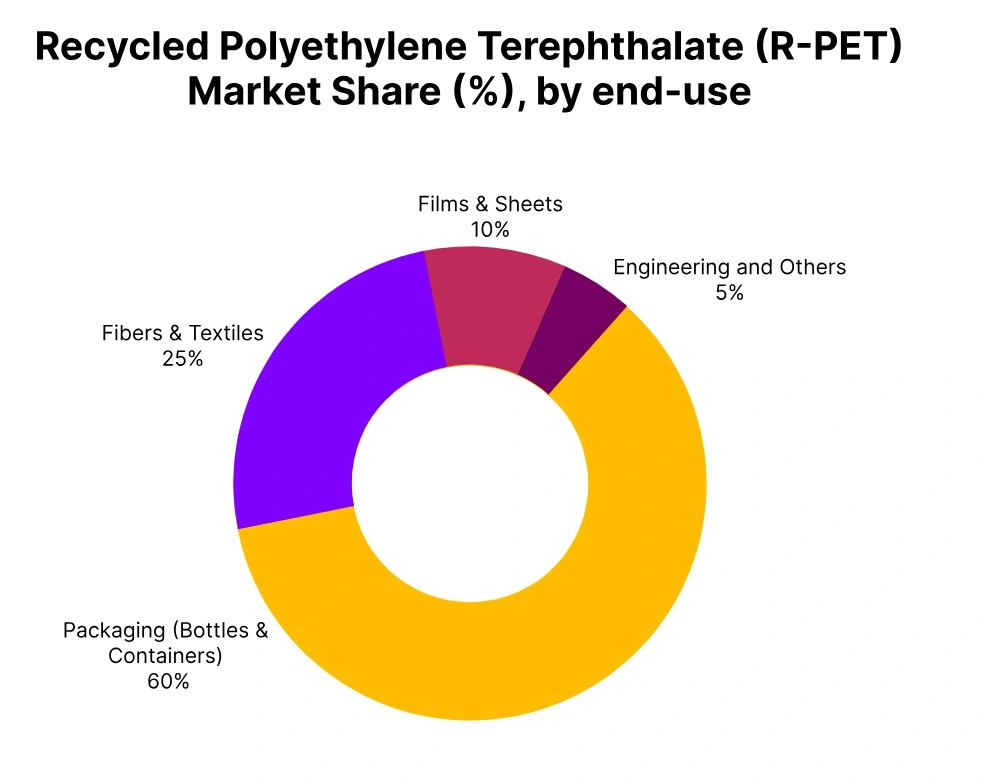
R-PET market share end use

Historically, several events have caused significant fluctuations in Recycled Polyethylene Terephthalate (r-pet) prices

  • European Union’s Recycling Mandates (2021-2025): The EU’s 2025 mandate, requiring 25% recycled content in plastic bottles and higher targets for other packaging, has been driving up demand for R-PET, placing upward pressure on prices as producers seek more recycled material to meet these new requirements. 
  • Global Shipping and Freight Rate Surges (2021-2022): The pandemic-induced global shipping container shortages, port congestion, and supply chain disruptions in 2021 caused freight rates to surge, leading to higher transportation costs. This pushed R-PET prices higher as shipping expenses for imports and exports increased. 
  • Suez Canal Blockage (March 2021): The blockage of the Suez Canal in March 2021 disrupted global shipping and supply chains, including the transport of R-PET and its raw materials. This caused delays and contributed to price volatility in the R-PET market. 
  • Oil Price Fluctuations (Various Years): Oil price changes have historically impacted R-PET prices. In 2020, during the COVID-19 pandemic, falling oil prices reduced the cost of virgin PET, making R-PET less competitive. Conversely, rising oil prices in 2021 contributed to an increase in R-PET prices as the cost of virgin PET climbed. 
  • COVID-19 Pandemic (2020-2021): The COVID-19 pandemic caused widespread disruptions in global supply chains, including the recycling sector. Lockdowns, labour shortages, and a slowdown in production led to reduced supply of post-consumer bales, which contributed to price increases for R-PET in 2020 and 2021. 
  • China’s Plastic Waste Import Restrictions (2018-2019): In 2018, China imposed strict restrictions on importing plastic waste, including post-consumer bales, causing a global supply shortage for R-PET production. This led to a significant surge in R-PET prices due to limited material availability and increased competition for recycled content. 

Why Price Watch™?

Price Watch™ is your trusted resource for tracking global recycled polyethylene terephthalate (r-pet) price trends. Our platform delivers real-time data and expert analysis, offering deep insights into the key factors driving price fluctuations in the recycled polyethylene terephthalate (r-pet) market. By monitoring critical events such as geopolitical tensions, supply chain disruptions, and economic shifts, Price Watch™ keeps you fully informed of market dynamics.

In addition, Price Watch™ provides detailed forecasts and updates on production capacities, enabling you to anticipate market changes and make well-informed decisions. With Price Watch™, you gain a competitive edge in understanding all the elements that influence recycled polyethylene terephthalate (r-pet) prices worldwide. Stay ahead of the curve with Price Watch’s™ reliable, accurate, and timely recycled polyethylene terephthalate (r-pet) market data.

Track Price Watch's™ recycled polyethylene terephthalate (r-pet) price assessment on a weekly basis since 2015 onwards, along with short-term forecasts, and get access to the detailed report in a downloadable format.

Recycled Polyethylene Terephthalate (r-pet) Market Price Trend published by Price Watch™ reflect prevailing spot market conditions, derived from independent research, verified trade inputs, and proprietary market intelligence as of the publication date. Prices are published on the specified Incoterm and represent indicative base market levels, exclusive of applicable taxes, VAT, duties, tariffs, and other statutory charges. Actual transaction values may vary depending on volume, credit terms, contractual structure, and other negotiated conditions. Market prices are inherently subject to volatility, liquidity dynamics, regulatory changes, and evolving trade activity. The information provided is for reference and benchmarking purposes only and does not constitute an offer, recommendation, or guarantee of transactional outcomes. Users should exercise independent commercial judgment and assess their specific contractual, regulatory, tax, and application requirements before making business decisions. Price Watch™ assumes no liability for decisions taken based on this information.

The price of R-PET is primarily influenced by several key factors. One of the most significant is the cost of Ethylene, which is derived from crude oil and naphtha. As oil prices fluctuate, so does the cost of PET production. In addition, supply and demand dynamics play a crucial role. When industries like packaging, textiles, and construction experience higher demand for R-PET, prices tend to rise, whereas an oversupply of recycled material can lead to price reductions. Other factors affecting pricing include logistics issues, such as shipping disruptions, port congestion, or high freight rates, which can increase transportation costs. Regional market conditions—including economic growth, local regulations, and recycling infrastructure—also have an impact on price fluctuations.

Procurement managers can secure the best price for R-PET by adopting several strategies. First, staying informed about global market trends and price forecasts is essential to anticipate price movements. Long-term contracts can help lock in favorable prices and mitigate price volatility. Additionally, purchasing in bulk allows for negotiating better rates with suppliers. Diversifying suppliers across multiple regions can also offer competitive advantages, reduce reliance on a single source, and help manage risks associated with price fluctuations or supply disruptions.

Global events can have a significant impact on R-PET prices. Geopolitical tensions and natural disasters can disrupt supply chains, leading to shortages and higher prices. Similarly, fluctuations in crude oil prices—a key raw material in PET production—can directly influence R-PET pricing. Economic events, such as a global recession or shifts in demand from major industries, can also drive prices up or down. For instance, a slowdown in manufacturing during an economic downturn could reduce demand for R-PET, lowering prices, while a surge in consumer demand or supply chain issues may result in price hikes. It’s crucial for procurement managers to monitor these global developments to anticipate and adapt to market changes.

R-PET (Recycled Polyethylene Terephthalate) is a sustainable plastic made from recycled PET waste such as used bottles and packaging. It is widely used in packaging, textiles, and food-grade applications. Its price impacts production costs and sustainability targets for many industries. Price-Watch™ tracks R-PET prices to help businesses stay informed about market movements and cost trends.

R-PET prices fluctuate based on region, grade, and market conditions, influenced by feedstock availability (such as PET bottle scrap), recycling costs, freight rates, and demand from packaging and textile industries. Prices are typically quoted per metric ton and vary with supply-demand balance. Price-Watch™ provides up-to-date price assessments across key global markets.

R-PET prices are influenced by PET scrap availability, recycling capacity, demand for sustainable materials, and regulations promoting recycled content. Global supply-demand dynamics, feedstock price fluctuations, and environmental policies play key roles. Recent trends show increasing demand due to sustainability initiatives and circular economy goals.

Major consumers of R-PET include the packaging industry, beverage companies, and textile manufacturers. Packaging, especially bottles and food containers, accounts for the largest share, followed by polyester fiber applications. Price-Watch™ tracks consumption trends across these sectors.

R-PET is produced by collecting, sorting, cleaning, and recycling post-consumer PET waste such as bottles and containers. The material is then processed into flakes, pellets, or fibers for reuse in various applications.

Major exporters of R-PET include countries such as Germany, the United States, the Netherlands, and Asian recycling hubs like China and India. Export volumes vary depending on recycling capacity, feedstock availability, domestic demand, and environmental regulations. Price-Watch™ monitors global trade flows and supply availability.

Supply of R-PET can be tight due to limited availability of high-quality PET scrap and increasing demand driven by sustainability commitments. Collection efficiency, recycling infrastructure, and regulations significantly impact supply levels. Price-Watch™ closely tracks supply-demand balances to highlight potential shortages or oversupply situations.

R-PET is available in multiple grades such as food-grade pellets, bottle-to-bottle grade, fiber grade, and sheet grade. Prices vary based on purity, contamination levels, intrinsic viscosity (IV), processing technology, and end-use requirements. Price-Watch™ provides grade-wise price assessments for better market clarity.

When demand rises sharply, often driven by regulatory mandates or sustainability commitments from brands, prices tend to increase, availability tightens, and buyers may face limited supply in the market. Price-Watch™ captures these shifts in real time.

PET bottle scrap is the primary feedstock for R-PET. Any increase in scrap prices or collection costs directly raises recycling costs, which recyclers may pass on to buyers. Price-Watch™ analyses scrap-R-PET price correlations to explain cost movements.

Regional prices vary due to differences in recycling infrastructure, availability of PET scrap, labor and energy costs, government regulations, freight rates, and local demand for recycled materials. Price-Watch™ tracks regional differentials to highlight pricing gaps across markets.

The R-PET price outlook depends on trends in PET scrap availability, recycling capacity expansions, regulatory policies on recycled content, brand sustainability commitments, and overall global economic conditions. Price-Watch™ publishes regular forecasts projecting price direction over the next 3 months.

Yes. Reliable forecasts help buyers plan procurement, meet sustainability targets, manage inventory, negotiate contracts, and control production costs. Price-Watch™ forecasts support smarter purchasing and budgeting decisions.

Events such as changes in recycling regulations, trade policies, waste import/export restrictions, energy price volatility, or geopolitical tensions can affect scrap availability, recycling rates, and global trade flows, leading to fluctuations in R-PET prices. Price-Watch™ provides timely updates on such market-moving events.

Price-Watch™ gathers data from recyclers, producers, converters, traders, and buyers to publish transparent R-PET price assessments, market reports, and forecasts, helping stakeholders stay ahead of market trends.