Red Phosphorus Price Trend and Forecast

Weekly Update
|
Historical Data Since 2015
|
Forecast for 2026

red phosphorus Price Trends by Country

cnChina
inIndia
aeUnited Arab Emirates
usUnited States

Global red phosphorus Spot Market Prices, Trend Analysis and Forecast

Price-Watch™ provides price assessments for Red Phosphorus across top trading regions:

Asia-Pacific

  • Phosphorus Content: 98% FOB Shanghai, China
  • Phosphorus Content: 98% FOB Nhava Sheva, India
  • Phosphorus Content: 98% Ex – Bhiwandi, India


North America

  • Phosphorus Content: 98% CIF Houston (India), USA


Middle East & Africa

  • Phosphorus Content: 98% CIF Jebel Ali (India), United Arab Emirates


Note: In assessments structured as CIF [Importing Port] (Exporting Country), the country mentioned in brackets indicates the primary origin of supply (exporting country), while the named port refers to the destination port in the importing country. Other Incoterms (FOB, FD, EXW, etc.) should be interpreted in accordance with standard international trade definitions.

Red Phosphorus Price Trend Q1 2026

During Q1 2026, Red Phosphorus prices across all monitored global markets have exhibited a broadly bullish reversal from the mixed Q4 2025 performance, driven by geopolitical uncertainties surrounding the USA-Israel vs Iran conflict which have introduced supply chain caution and elevated energy and logistics costs across Red Phosphorus production and distribution networks.

China has recorded the most pronounced quarterly FOB appreciation, while Indian domestic and export markets have posted moderate gains. CIF import markets in the UAE and USA have recorded more contained quarterly appreciation reflecting the partial moderating influence of logistics and procurement dynamics.

All markets have recorded positive monthly movements in March 2026. The Red Phosphorus price trend across all monitored regions has reflected the gradual but progressive influence of geopolitical supply chain disruptions and recovering downstream demand throughout the quarter.

China: Red Phosphorus Export Prices FOB Shanghai, China, Phosphorus Content 98%

In Q1 2026, Red Phosphorus price in China has recorded the most pronounced quarterly appreciation among all monitored markets at approximately 5.56%, driven by geopolitical uncertainties surrounding the USA-Israel vs Iran conflict which have introduced supply chain caution and elevated energy costs across Chinese Red Phosphorus production facilities, alongside recovering downstream demand from flame retardant, safety match, and chemical sectors sustaining firmer export pricing throughout the quarter.

The Red Phosphorus price trend in China has reflected improving export market conditions where rising production economics and consistent international procurement have supported upward FOB Shanghai pricing momentum. Red Phosphorus prices in China have remained firmly supported throughout the quarter as consistent export demand has sustained upward price momentum.

In March 2026, Red Phosphorus price in China has risen by around 4.80%, as continued geopolitical supply chain caution and recovering downstream demand sustained upward support to FOB Shanghai Red Phosphorus pricing during the month.

India: Red Phosphorus Export and Domestic Prices FOB Nhava Sheva and Ex-Bhiwandi, India, Phosphorus Content 98%

In Q1 2026, Red Phosphorus price in India has recorded moderate positive quarterly gains across both monitored price points, with Ex-Bhiwandi domestic pricing rising by approximately 4.08% and FOB Nhava Sheva export pricing gaining approximately 3.94%, driven by geopolitical uncertainties surrounding the USA-Israel vs Iran conflict which have introduced supply chain caution and elevated energy costs across Indian Red Phosphorus production facilities, alongside steady downstream demand from flame retardant, safety match, and chemical manufacturing sectors.

The Red Phosphorus price trend in India has reflected a gradually tightening market where rising production economics and consistent export demand have supported upward pricing momentum across both domestic ex-works and export price points. Red Phosphorus prices in India have remained broadly supported throughout the period.

In March 2026, Red Phosphorus prices in India have risen modestly, with Ex-Bhiwandi gaining approximately 5.12% and FOB Nhava Sheva increasing by around 4.95%, as continued geopolitical supply chain disruptions and firm downstream demand sustained upward pricing momentum during the month.

UAE: Red Phosphorus Imported Prices CIF Jebel Ali from India, UAE, Phosphorus Content 98%

In Q1 2026, Red Phosphorus price in the UAE has recorded a moderate increase of approximately 2.53%, reflecting the passthrough of firming Indian FOB prices into the UAE import market under CIF Jebel Ali terms as geopolitical uncertainties surrounding the USA-Israel vs Iran conflict have elevated Indian production economics and supported recovering export pricing throughout the quarter.

The Red Phosphorus price trend in the UAE has been shaped by the transmission of Indian export price recovery into CIF Jebel Ali import valuations, with downstream demand from chemical and industrial sectors sustaining procurement activity despite modestly elevated import costs. Red Phosphorus prices in the UAE have remained broadly supported throughout the period.

In March 2026, Red Phosphorus price in the UAE has risen by around 4.75%, as continued Indian FOB price appreciation driven by geopolitical supply chain disruptions transmitted into UAE CIF Jebel Ali import valuations during the month.

USA: Red Phosphorus Imported Prices CIF Houston from India, USA, Phosphorus Content 98%

According to Price-Watch™, in Q1 2026, Red Phosphorus price in the USA has recorded the most contained quarterly appreciation among all monitored markets at approximately 1.84%, reflecting the marginal passthrough of modestly firming Indian FOB prices into the US import market under CIF Houston terms, with competitive supply dynamics and measured downstream demand from flame retardant and chemical sectors limiting the full extent of origin-side cost transmission throughout the quarter.

The Red Phosphorus price trend in the USA has reflected a broadly stable import market environment where recovering Indian export pricing has transmitted only partially into US CIF Houston import valuations, with buyers retaining moderate negotiating leverage amid adequate supply availability.

Red Phosphorus prices in the USA have remained broadly stable with limited upward momentum throughout the period. In March 2026, Red Phosphorus price in the USA has risen by around 3.53%, as continued Indian FOB price appreciation driven by geopolitical supply chain disruptions transmitted into US CIF Houston import valuations during the month.

Red Phosphorus Price Trend Analysis: Q4 2025

During Q4 2025, Red Phosphorus prices across all monitored global markets have presented a broadly mixed trend, with Indian FOB and domestic ex-works markets posting modest positive quarterly gains while Chinese FOB pricing has remained near-flat to marginally negative and CIF import markets in the UAE and USA have recorded moderate quarterly declines.

The divergent quarterly performance has reflected varying supply and demand dynamics across producing and consuming regions, with Indian producers maintaining stable pricing amid consistent export demand while Chinese pricing has come under mild downward pressure from competitive market conditions.

December 2025 has brought broadly positive monthly movements across most markets. The Red Phosphorus price trend across all monitored regions has reflected broadly balanced global market fundamentals with moderate regional divergence throughout the quarter.

China: Red Phosphorus Export Prices FOB Shanghai, China, Phosphorus Content 98%

In Q4 2025, Red Phosphorus price in China has recorded a near-flat marginal decline of approximately 0.43%, as broadly competitive domestic market conditions and moderate international demand have contained meaningful upward price movement in FOB Shanghai export pricing throughout the quarter.

The Red Phosphorus price trend in China has reflected a broadly balanced export market environment where adequate domestic production capacity has met international procurement demand without notable supply tightening. Red Phosphorus prices in China have remained largely stable throughout the period.

In December 2025, Red Phosphorus price in China has recovered modestly by around 2.97%, as year-end procurement activity and improving downstream demand from flame retardant and chemical sectors provided upward support to FOB Shanghai Red Phosphorus pricing during the month.

India: Red Phosphorus Export and Domestic Prices FOB Nhava Sheva and Ex-Bhiwandi, India, Phosphorus Content 98%

In Q4 2025, Red Phosphorus price in India has posted modest positive quarterly gains across both monitored price points, with FOB Nhava Sheva export pricing rising by approximately 0.94% and Ex-Bhiwandi domestic pricing gaining approximately 0.72%, driven by stable downstream demand from flame retardant, safety match, and chemical manufacturing sectors sustaining consistent procurement activity throughout the quarter.

The Red Phosphorus price trend in India has reflected a broadly balanced domestic and export market where adequate supply availability and steady downstream demand have supported mild positive pricing momentum. Red Phosphorus prices in India have remained broadly supported throughout the period.

In December 2025, Red Phosphorus prices in India have risen modestly, with FOB Nhava Sheva gaining approximately 2.20% and Ex-Bhiwandi increasing by around 2.14%, as steady year-end downstream procurement sustained upward pricing support during the month.

UAE: Red Phosphorus Imported Prices CIF Jebel Ali from India, UAE, Phosphorus Content 98%

In Q4 2025, Red Phosphorus price in the UAE has recorded a moderate quarterly decline of approximately 3.02%, reflecting competitive import pricing conditions from Indian origins and moderate downstream demand from chemical and industrial sectors that have weighed on CIF Jebel Ali import valuations throughout the quarter.

The Red Phosphorus price trend in the UAE has been shaped by competitive Indian export pricing transmitting into UAE import valuations, with buyers maintaining cautious procurement amid a broadly favorable supply cost environment. Red Phosphorus prices in the UAE have remained under contained downward pressure throughout the period.

In December 2025, Red Phosphorus price in the UAE has edged marginally higher by around 0.51%, as recovering Indian export pricing and year-end procurement activity provided limited upward support to UAE CIF Jebel Ali import valuations during the month.

USA: Red Phosphorus Imported Prices CIF Houston from India, USA, Phosphorus Content 98%

In Q4 2025, Red Phosphorus price in the USA has recorded the steepest quarterly decline among all monitored markets at approximately 3.54%, driven by competitive Indian export pricing and subdued downstream demand from flame retardant and chemical manufacturing sectors weighing on CIF Houston import valuations throughout the quarter.

The Red Phosphorus price trend in the USA has reflected a broadly oversupplied import market environment where favorable Indian export pricing and adequate supply availability have provided buyers with significant negotiating leverage. Red Phosphorus prices in the USA have remained under sustained mild downward pressure throughout the period.

In December 2025, Red Phosphorus price in the USA has remained near-flat with a marginal decline of around 0.13%, as near-stable Indian export pricing and subdued year-end procurement kept US CIF import valuations essentially unchanged during the month.

In Q3 2025, the global Red Phosphorus market exhibited a slightly soft to stable trend, shaped by balanced supply and muted downstream demand from flame retardant, fertilizer additive, and chemical intermediate sectors. In East Asia, export prices remained largely steady as production and inventory levels were well-aligned with moderate export inquiries from key destinations.

South Asia experienced mild downward movement in domestic and export markets, with buyers adopting cautious procurement strategies amid sufficient stock availability. The Middle East also saw slight price easing as demand from pigment and flame-retardant industries remained subdued despite consistent supply from South Asia. Overall, the market-maintained equilibrium through the quarter, with stable operations and restrained trading activity keeping price movements limited.

China: Red Phosphorus Exported price in China, Phosphorus Content: 98%.

In Q3 2025, Red Phosphorus prices in China have remained almost flat, pressured by stable downstream demand in flame retardant and chemical intermediate applications. FOB Shanghai prices have ranged between USD 5500–5700 per metric ton, declining marginally by –0.22%.

In September 2025, Red Phosphorus prices in China have decreased by 1.03% compared to August 2025. Suppliers have cited balanced inventory levels and moderate export inquiries from Europe and Southeast Asia. Production rates have held steady, with mills adjusting output minimally to maintain market equilibrium, supporting a stable Red Phosphorus price trend in China.

India: Red Phosphorus Domestically Traded price in India, Phosphorus Content: 98%.

In Q3 2025, Red Phosphorus prices in India have eased slightly amid subdued demand from flame retardant and fertilizer additive sectors. Ex-Bhiwandi prices have fallen by 2.24% to USD 6200–6500 per metric ton, while export-oriented FOB Nhava Sheva values have dropped –2.18% to USD 6400–6800.

In September 2025, Red Phosphorus prices in India have decreased by 0.20% compared to the previous month. Producers have managed stable operating rates, and buyers have maintained cautious procurement amid adequate stocks. Market activity has been measured as both domestic and export buyers have awaited firmer demand signals, reflecting the Red Phosphorus price trend in India.

United Arab Emirates: Red Phosphorus Imported price in UAE from India, Phosphorus Content: 98%.

In Q3 2025, Red Phosphorus prices in the UAE have softened due to weaker buying from flame retardant and pigment manufacturers. CIF Jebel Ali prices have ranged between USD 6500–7400 per metric ton, marking a decline of 6.62%. In September 2025, Red Phosphorus prices in the UAE have declined by 0.69% compared to August 2025.

Importers have noted steady shipments from India, but cautious downstream consumption has limited purchase volumes. Freight and logistics have remained stable, contributing little support to pricing and shaping the Red Phosphorus price trend in UAE.

United States: Red Phosphorus Imported price in USA from India, Phosphorus Content: 98%.

According to PriceWatch, In Q3 2025, Red Phosphorus prices in the USA have declined under pressure from moderate demand in electronics and pigment sectors. CIF Houston prices have ranged from USD 6700–7600 per metric ton, reflecting a quarterly drop of 6.37%. In September 2025, Red Phosphorus prices in the USA have decreased by 1.14% compared to the previous month.

Import availability has stayed consistent, but buyers have maintained selective procurement amid sufficient inventories and subdued end-use consumption. Freight conditions have been stable, resulting in limited price recovery during the period, illustrating the Red Phosphorus price trend in the USA.

Red Phosphorus witnessed a mixed pricing pattern through Q2 2025. Red Phosphorus prices initially rose in April, buoyed by strong international demand, particularly from the USA and UAE. This early-quarter uptick was supported by limited spot availability and firm export orders from pyrotechnic and flame-retardant industries. However, moving into May and June, prices in China showed a declining trend despite continued interest from export destinations.

The softening domestic industrial demand, combined with easing logistical pressures and increased producer output, contributed to the downward revision. In contrast, demand from the USA and UAE remained robust through the quarter, supported by seasonal applications and inventory buildup ahead of mid-year manufacturing cycles.

This created a divergence between China’s domestic pricing sentiment and that of key import markets. Despite easing prices toward quarter-end, Chinese exports continued to flow steadily. According to PriceWatch, Red Phosphorus prices were assessed at USD 5520/MT FOB Shanghai, by the end of Q2 2025.

Red Phosphorus prices in India remained on an upward trajectory through most of Q2 2025, driven primarily by strong demand from the agrochemical and pyrotechnics sectors. The quarter opened with heightened procurement from pesticide manufacturers in anticipation of pre-monsoon agricultural activity. Additionally, the match and fireworks industries in western India showed signs of revival during April and May, leading to sustained buying interest.

Despite the sharp surge in FOB Nhava Sheva prices, downstream markets like Ex-Bhiwandi began showing resistance by June due to inventory saturation and tightening working capital flows. While the global market remained relatively balanced, the Indian export front benefited from limited Chinese supply due to stricter environmental norms.

However, the moderation in domestic offtake toward June signalled a possible correction ahead. Nonetheless, Q2 closed with Red Phosphorus prices still elevated compared to Q1 levels. According to PriceWatch, Red Phosphorus prices were assessed at USD 6768/MT FOB Nhava Sheva, by the end of Q2 2025.

In Q1 2025, Red Phosphorus prices in China exhibited a mixed trajectory, shaped by variable demand across domestic and international markets. January saw a moderate price increase, driven by improved consumption from local manufacturers, particularly in the electronics and chemical sectors. However, February experienced a downturn as weak buying interest from key export destinations especially the UAE dampened momentum.

In March, prices recovered modestly, supported by active restocking from buyers in the USA ahead of anticipated seasonal demand. Despite these fluctuations, the market remained relatively balanced due to stable supply levels. The quarter closed at USD 5600/MT FOB China, reflecting cautious optimism among traders and end users.

Red Phosphorus prices in India maintained a consistent upward trend in Q1 2025. January and February experienced steady price increases, supported by strong domestic demand and active restocking. March 2025 saw further gains due to tight supply and robust buying interest from export markets as the procurements gained momentum. Red Phosphorus prices in the quarter end stood at USD 6574/MT Ex – Bhiwandi.

Red Phosphorus Price Trend Analysis: Q4 2024

Red Phosphorus prices in China followed a steady downward trajectory throughout Q4 2024, primarily influenced by an oversupplied market and subdued export activity. In October and November, the lack of strong international demand particularly from key buyers in the UAE and USA led to excess inventory, pushing prices lower. This bearish sentiment persisted into December, further pressured by aggressive pricing from competitors and limited spot market activity.

Despite stable domestic production, sluggish global procurement and unattractive margins discouraged bulk purchasing. With no significant supply disruptions or demand spikes, prices continued to slide. The quarter concluded with Red Phosphorus assessed at USD 5560/MT FOB China, marking a weak close to the year.

Q4 2024 witnessed fluctuating trends in Red Phosphorus prices in India. October faced a decline due to weak demand and ample supply. However, November 2024 saw a sharp rebound in Red Phosphorus prices, driven by renewed international demand, particularly from Southeast Asia. December continued this bullish momentum amid year-end stockpiling. The quarter closed with Red Phosphorus prices stood at USD 6683/MT FOB Nhava Sheva.

Red Phosphorus prices in China experienced slight volatility in Q3 2024. July recorded a price increase supported by higher demand from the electronics sector, but August and September saw decreasing prices amid weak demand from international markets, especially in the USA. Moreover, steady supply conditions in the UAE further pressured prices. After the conclusion of 3rd quarter, Red Phosphorus prices were assessed at at USD 5835/MT FOB China.

In Q3 2024, Red Phosphorus prices in India maintained a strong upward trajectory. July and August witnessed heightened demand, particularly from the electronics sector, driven by seasonal manufacturing cycles and increased production of flame retardant materials. This surge in consumption kept prices buoyant. In September, the bullish momentum continued as buyers engaged in strategic restocking ahead of anticipated year-end demand.

Although supply from the Nhava Sheva port remained stable, it was effectively absorbed by the high offtake, preventing downward pressure. Market sentiment remained optimistic, and consistent buying interest supported price gains. The quarter concluded at USD 6514/MT Ex-Bhiwandi, signaling continued strength.

The second quarter showed a continuation of the fluctuating trend for Red Phosphorus in China. Red Phosphorus prices rose in April as demand from the chemical sector increased amidst increased procurement activities, but the subsequent months saw a decline due to ample supply and limited buying interest from key markets like the UAE and USA. This downward pressure was attributed to subdued industrial activity in these regions. The 2nd quarter closed with Red Phosphorus prices stood at USD 5850/MT FOB China.

Red Phosphorus prices in India experienced notable volatility during Q2 2024. April saw an uptick in prices, supported by improved procurement from the chemical and industrial sectors. However, in May, the market corrected as sufficient inventory levels and lukewarm buying interest led to a decline. June brought a turnaround as supply tightened due to logistical issues and fewer overseas shipments, which reignited upward price momentum.

The interplay of inconsistent demand and fluctuating availability created uncertainty, prompting cautious buying strategies across end-user industries. The quarter ultimately closed with a modest gain, reaching USD 6522/MT FOB Nhava Sheva, reflecting balanced but reactive market behaviour.

Red Phosphorus prices in China exhibited mixed trends during Q1 2024. January witnessed an increase driven by rising domestic demand and supply concerns. However, February saw a decline, primarily due to stable supply conditions and lower purchasing interest. March further experienced a dip, reflecting weak downstream demand in the electronics and chemical industries. The 1st quarter concluded with Red Phosphorus prices at USD 6010/MT FOB China.

In Q1 2024, Red Phosphorus prices in India reflected a mixed trend influenced by fluctuating demand and stable supply conditions. January began on a positive note with strong domestic demand, especially from the chemical and pyrotechnics sectors, driving prices upward. However, February and March saw a reversal, with international demand weakening due to lower import interest and competitive global offers.

This external pressure, combined with steady supply from key ports like Nhava Sheva, resulted in oversupply concerns that weighed down prices. Overall, despite the initial surge, the quarter ended on a softer note with prices closing at USD 6354/MT Ex-Bhiwandi.

Technical Specifications of Red Phosphorus Price Trends

Product Description

Red Phosphorus is a stable, non-toxic allotrope of elemental phosphorus obtained by heating white phosphorus under controlled, oxygen-free conditions. It appears as a reddish-purple, amorphous powder distinguished by its excellent thermal stability and low reactivity under normal environments. It is non-volatile and resistant to spontaneous ignition and offers enhanced safety and handling properties. Its chemical stability and reduced environmental impact make it a preferred form of phosphorus for use in controlled and sustainable industrial processes.

Identifiers and Classification:

  • CAS No – 7723-14-0
  • HS code– 28047000
  • Molecular Formula – P
  • Molecular Weight[g/mol] – 30.97


Red Phosphorus – Synonyms:

• Amorphous Phosphorus
• Phosphorus, Red
• Stabilized Phosphorus
• Non-Volatile Phosphorus
• Allotropic Red Phosphorus
• RP (commonly used abbreviation in industry)

Red Phosphorus Grades Specific Price Assessment:

  • Phosphorus Content: 98%


Red Phosphorus Global Trade and Shipment Terms

  • Quotation Terms (Product & Country Specific): 10- 15 MT
  • Packaging Type (Product & Country Specific): 200 Kg Drum


Incoterms Referenced in Red Phosphorus Price Reporting

Shipping Term  Location  Definition 
FOB Shanghai  Shanghai, China  Red Phosphorus export price from China 
FOB Nhava Sheva  Nhava Sheva, India  Red Phosphorus export price from India 
Ex-Bhiwandi  Bhiwandi, India  Domestically traded Red Phosphorus price in Bhiwandi 
CIF Jebel Ali (India)  Jebel Ali, United Arab Emirates  Red Phosphorus import price in UAE from India 
CIF Houston (India)  Houston, USA  Red Phosphorus import price in USA from India 

Quotation Terms refers to the quantity range specified for the Red Phosphorus being quoted or offered in a commercial transaction.

Packaging Type refers to standard packaging size commonly used for Red Phosphorus packing, ease of handling, transportation, and storage in industrial and commercial applications.

Key Red Phosphorus Manufacturers

Manufacturer 
United Phosphorus Ltd (UPL) 
Prasol Chemicals Ltd. 
Mepco – The Metal Powder Company Ltd. 
Star Chemicals (Bombay) Pvt. Ltd. 
Hubei Xingfa Chemical Group Co., Ltd. 
Nippon Chemical Industrial Co., Ltd. 
ICL Group Ltd. 

Red Phosphorus Industrial Applications

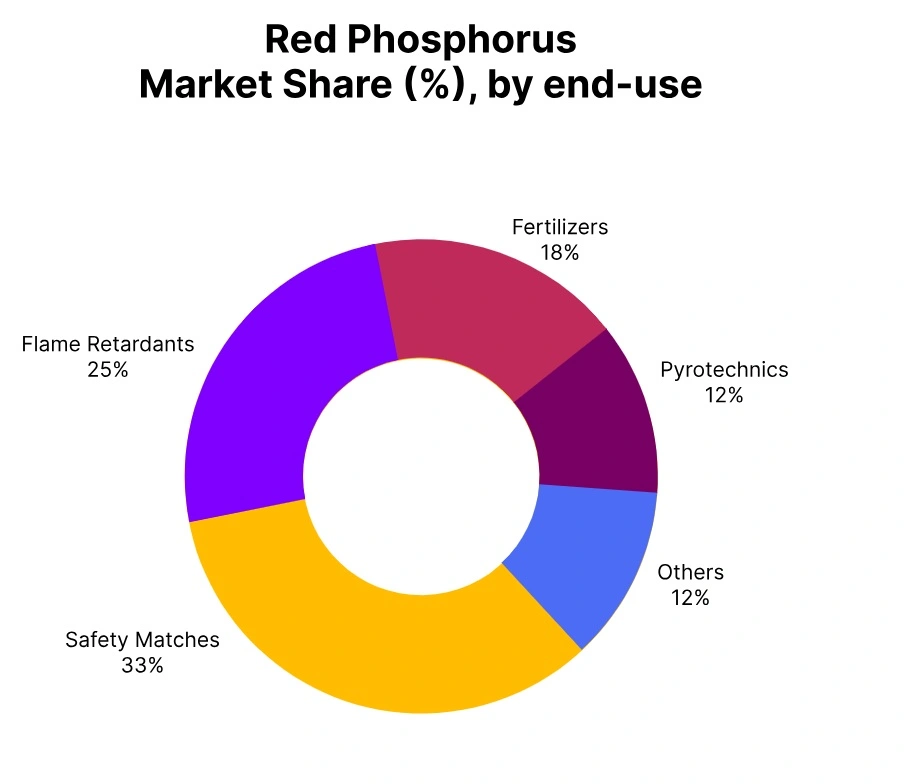
red phosphorus market share end use

Historically, several events have caused significant fluctuations in Red Phosphorus prices

Global Supply Chain Disruptions (2020-Present): The COVID-19 pandemic led to factory shutdowns and transportation delays, causing supply shortages and price volatility in the red phosphorus market.
Environmental Regulations (2015-2023): Stricter regulations on phosphorus production in various countries have impacted supply, leading to increased production costs and price hikes.
Geopolitical Tensions (2018-2020): Trade tensions between major economies affected the flow of raw materials and pricing dynamics, creating instability in the red phosphorus market.

These events highlight the red phosphorus market’s sensitivity to various global factors, emphasizing the need for ongoing monitoring of supply and demand trends.

Why Price Watch™?

Price Watch™ is your trusted resource for tracking global red phosphorus price trends. Our platform delivers real-time data and expert analysis, offering deep insights into the key factors driving price fluctuations in the red phosphorus market. By monitoring critical events such as geopolitical tensions, supply chain disruptions, and economic shifts, Price Watch™ keeps you fully informed of market dynamics.

In addition, Price Watch™ provides detailed forecasts and updates on production capacities, enabling you to anticipate market changes and make well-informed decisions. With Price Watch™, you gain a competitive edge in understanding all the elements that influence red phosphorus prices worldwide. Stay ahead of the curve with Price Watch’s™ reliable, accurate, and timely red phosphorus market data.

Track Price Watch's™ red phosphorus price assessment on a weekly basis since 2015 onwards, along with short-term forecasts, and get access to the detailed report in a downloadable format.

Red Phosphorus Market Price Trend published by Price Watch™ reflect prevailing spot market conditions, derived from independent research, verified trade inputs, and proprietary market intelligence as of the publication date. Prices are published on the specified Incoterm and represent indicative base market levels, exclusive of applicable taxes, VAT, duties, tariffs, and other statutory charges. Actual transaction values may vary depending on volume, credit terms, contractual structure, and other negotiated conditions. Market prices are inherently subject to volatility, liquidity dynamics, regulatory changes, and evolving trade activity. The information provided is for reference and benchmarking purposes only and does not constitute an offer, recommendation, or guarantee of transactional outcomes. Users should exercise independent commercial judgment and assess their specific contractual, regulatory, tax, and application requirements before making business decisions. Price Watch™ assumes no liability for decisions taken based on this information.

The pricing of Red Phosphorus is influenced by several factors, including global supply and demand dynamics, the availability and cost of raw materials (primarily white phosphorus), and production costs. Regulatory restrictions on the use and transportation of Red Phosphorus due to its hazardous nature can also impact prices.

Additionally, fluctuations in energy prices, geopolitical events, and the economic conditions of major producing countries, such as China and the United States, play a critical role in shaping Red Phosphorus prices. Understanding these factors is essential for procurement heads to make informed purchasing decisions.

Procurement heads can forecast Red Phosphorus price trends by analyzing historical price data, monitoring global supply and demand shifts, and keeping track of changes in regulatory policies and raw material availability.

Regularly consulting industry reports, engaging with market analysis services, and staying informed about geopolitical events affecting major producers can also aid in accurate price forecasting. This proactive approach helps in better planning, budgeting, and decision-making in procurement strategies.

Sustainability certifications and environmental regulations can significantly impact Red Phosphorus pricing. As stricter environmental policies are enforced, manufacturers may face higher production costs to comply with sustainability standards, leading to price increases. Moreover, a growing demand for eco-friendly and responsibly produced chemicals may result in premium pricing for Red Phosphorus that meets sustainability criteria.

For procurement heads, understanding these implications is crucial as it aligns with corporate sustainability goals and consumer preferences. While the initial costs may be higher, sourcing sustainably produced Red Phosphorus can enhance a company’s reputation and open up new business opportunities.

Red Phosphorus is an allotrope of phosphorus widely used in industrial applications such as safety matches, flame retardants, chemicals, and certain specialty manufacturing processes. It is also used in agrochemicals and some defense-related applications under strict regulations.

Because it is a sensitive and controlled industrial chemical in many countries, its price significantly impacts match manufacturing, chemical production, and specialty material costs. Price-Watch™ tracks Red Phosphorus prices to help businesses stay informed about market movements, regulatory impacts, and global supply-demand conditions.

Red Phosphorus prices vary widely depending on purity, application grade, regulatory environment, and regional availability. It is typically priced per kilogram or per metric ton in bulk industrial trade. Prices are influenced by raw phosphorus availability, energy costs, production restrictions, and demand from match, chemical, and flame-retardant industries.

Due to regulatory controls, pricing can also vary significantly between domestic and export markets. Price-Watch™ provides updated Red Phosphorus price assessments across key global markets.

Red Phosphorus market trends are driven by demand from safety match manufacturing, flame retardants, and specialty chemical industries. Prices are influenced by white phosphorus production costs, energy prices, environmental regulations, and industrial demand cycles.

Government controls and safety regulations also play a major role in supply availability. Recent trends show periodic volatility due to regulatory tightening and supply chain constraints.

The largest consumers of Red Phosphorus include the safety match industry, flame retardant manufacturers, and chemical intermediates producers. It is also used in certain agrochemical formulations and specialty industrial applications.

Due to its controlled nature, demand is concentrated in a limited number of regulated industries with strict compliance requirements. Price-Watch™ tracks demand across these sectors.

Red Phosphorus is produced by heating white phosphorus under controlled conditions, causing it to convert into a more stable, non-toxic allotrope. The process requires specialized industrial facilities due to the hazardous nature of white phosphorus. It is then purified and processed into powder or granular form for industrial use.

Major producers and exporters of Red Phosphorus include China, India, and some European countries with regulated chemical manufacturing facilities. China remains a dominant supplier due to large-scale phosphorus production capacity. Export availability depends heavily on government regulations, environmental policies, and industrial demand. Price-Watch™ monitors global trade flows and supply restrictions.

Global supply of Red Phosphorus is generally sufficient but tightly controlled due to regulatory and safety considerations. Supply disruptions can occur due to production limits, environmental restrictions, or export controls. Because production is linked to white phosphorus availability, any upstream constraint can impact global supply. Price-Watch™ closely tracks supply-demand balance and regulatory developments.

Red Phosphorus is available in different purity grades depending on its application, such as match-grade, industrial-grade, and high-purity specialty grades. Prices vary based on purity level, particle size, moisture content, and regulatory compliance requirements. Higher purity grades used in specialized applications command premium pricing due to stricter production controls. Price-Watch™ provides grade-wise price insights.

When demand rises sharply—especially from match or flame-retardant industries—prices tend to increase due to limited production capacity and regulatory constraints. Supply shortages may occur, leading to longer delivery times and tighter availability in spot markets. Producers often prioritize long-term contracts over spot sales during such periods. Price-Watch™ captures these market shifts in real time.

Red Phosphorus production depends on white phosphorus, which is derived from phosphate rock processing. Energy-intensive production methods and strict safety measures significantly impact costs. Any increase in energy prices, phosphate rock costs, or processing expenses directly affects Red Phosphorus pricing. Price-Watch™ analyzes these cost drivers to explain market movements.

Regional price differences arise due to variations in production capacity, regulatory restrictions, export controls, transportation costs, and industrial demand. Countries with strict chemical regulations may have limited supply, leading to higher prices. Import-dependent regions often face additional freight and compliance costs.

The price outlook depends on industrial demand, regulatory policies, phosphate supply, and energy costs. Tight environmental regulations may restrict supply, supporting higher prices, while stable production could balance markets. Demand from flame retardant industries also influences long-term trends. Price-Watch™ publishes regular forecasts projecting Red Phosphorus price direction over the next 12 months.

Yes, price forecasts are valuable for manufacturers in match production, chemicals, and flame retardants. They help with procurement planning, cost control, contract negotiation, and inventory optimization. Forecasting also helps manage risks related to regulatory changes and supply constraints. Price-Watch™ provides actionable market intelligence for better decision-making.

Global events such as regulatory changes, environmental policies, geopolitical tensions, and export restrictions can significantly impact Red Phosphorus supply chains. Since production is concentrated in limited regions, any disruption can quickly tighten global availability. Energy crises and raw material shortages also influence pricing. Price-Watch™ provides timely updates on such market-moving developments.

Price-Watch™ collects data from chemical producers, distributors, industrial users, and global trade networks to publish transparent Red Phosphorus price assessments, market reports, and forecasts. This helps industry participants stay ahead of market trends and make informed procurement decisions.