Raw Silk Price Trend and Forecast

UNSPC code: 11151702
|
Weekly Update
|
Historical Data Since 2015
|
Forecast for 2026
  • Commodity Pricing

raw silk Price Trends by Country

cnChina
usUnited States
vnVietnam
deGermany
inIndia

Global raw silk Spot Market Prices, Trend Analysis and Forecast

Price Watch™ provides real-time price assessments and price forecasts for Silk across top trading regions: 

Silk Regional Coverage Silk Grade and Country Coverage Silk Pricing Data Coverage Explanation
Asia-Pacific Silk Pricing Analysis Mulberry Raw Silk 3A (20/22D) FOB Prices at Shanghai Port, China Weekly Price Update on Mulberry Raw Silk 3A (20/22D) Real-Time Export Prices from Shanghai Port, China to Global Markets
Mulberry Raw Silk 3A (20/22D) CIF Prices at Haiphong Port, Vietnam, Importing from China Weekly Price Update on Mulberry Raw Silk 3A (20/22D) Real-Time Import Prices at Haiphong Port, Vietnam from China
Mulberry Raw Silk 3A (20/22D) CIF Prices at Nhava Sheva Port, West India, Importing from China Weekly Price Update on Mulberry Raw Silk 3A (20/22D) Real-Time Import Prices at Nhava Sheva Port, West India from China
North America Silk Pricing Analysis Mulberry Raw Silk 3A (20/22D) CIF Prices at Houston Port, USA, Importing from China Weekly Price Update on Mulberry Raw Silk 3A (20/22D) Real-Time Import Prices at Houston Port, USA from China
Europe Silk Pricing Analysis Mulberry Raw Silk 3A (20/22D) CIF Prices at Houston Port, USA, Importing from China Weekly Price Update on Mulberry Raw Silk 3A (20/22D) Real-Time Import Prices at Houston Port, USA from China

Raw Silk Price Trend Q1 2026

In Q1 2026, global raw silk prices have been trending upward, driven by steady international demand and supply reliance on China. China’s 3A (20/22D) exports have risen +1–2 % quarter‑on‑quarter, supporting firm pricing in key importing regions. India, USA, Vietnam, and Germany have seen import price increases of +1–4 %, reflecting sustained mill demand and strategic sourcing from China.

Overall, the market has been exhibiting stable yet slightly volatile pricing, as global demand has been balancing with evolving supply dynamics. The quarter has highlighted the continued dominance of China in global raw silk trade and the critical role of imports in supporting textile production worldwide.

China: Raw Silk Export prices FOB Shanghai, China; Grade- 3A (20/22D) Grade

According to Price-Watch™ , in Q1 2026, Raw Silk Export price trend in China has been hovering higher, supported by steady international demand for quality silk amid a gradually recovering global textile market. In March 2026, raw silk 3A (20/22D) prices in China have been recording a slight pullback month on month, indicating some recent softening possibly due to seasonal supply upticks and subdued buying activity from key importing markets.

China continues to hold a dominant position in global raw silk production and exports, with its industry accounting for a substantial share of world supply, although overall consumption has moderated compared with historical peaks as producers adjust output and inventories.

Broader market reports point to a stable yet slowly expanding silk market driven by sustained apparel demand and premium textile applications, even as longer term growth prospects remain modest.

Overall, the Grade 3A raw silk segment is exhibiting stable yet slightly volatile pricing, shaped by a combination of supply adjustments, seasonal factors, and evolving international trade patterns.

USA: Raw Silk import prices CIF Houston, USA; Grade- 3A (20/22D) Grade

In Q1 2026, raw silk import price trend in USA has been rising by about 1.04% compared with Q4 2025, reflecting continued cost pressure on CIF shipments. In March 2026, raw silk 3A (20/22D) prices in China have been declining modestly, with broader industrial deflationary trends affecting manufacturing costs. These Chinese price movements have been influencing US import pricing, as China remains the world’s largest silk producer and exporter.

US nonfuel import prices have been increasing, indicating that broader import cost trends are rising overall. Despite the China price dip, US raw silk costs have been holding near stable levels due to steady demand from textile manufacturers. Ongoing trade policy tensions and evolving tariff investigations have been adding uncertainty to China–US trade flows, potentially affecting landed costs of Chinese imports.

Global market forecasts have been showing modest growth in raw silk demand, supporting firm pricing momentum. Overall, raw silk CIF prices have been exhibiting stable yet slightly upward trends over the quarter, with external cost factors playing a key role.

Vietnam: Raw Silk import prices CIF Haiphong, Vietnam; Grade- 3A (20/22D) Grade

In Q1 2026, Vietnam’s CIF raw silk imported price trend has been showing a steady upward trend, with prices having been rising by about +1% quarter on quarter, reflecting consistent import demand and ongoing support from textile production activity.

However, in March, Raw silk 3A (20/22D) prices in Vietnam have been softening by around 1.40% month on month, indicating that short-term buying activity and cost pressures have been easing toward the end of the quarter.

This trend has been unfolding amid broader developments in Vietnam’s textile sector, where raw material imports for textiles, garments, and footwear have been increasing, with China remaining the dominant supplier, even though monthly shipment flows have been experiencing fluctuations.

The mid-quarter divergence has been highlighting that while overall demand fundamentals have been stable, short-term volatility has been influencing import pricing.

Taken together, these movements have been reflecting a market that has been balancing between sustained silk demand and temporary softness in supply-side conditions, illustrating the evolving dynamics of Vietnam’s import-dependent silk industry in early 2026.

Germany: Raw Silk import prices CIF Hamburg, Germany; Grade- 3A (20/22D) Grade

In Q1 2026, Germany has been predominantly sourcing raw silk from China, which remains the principal supplier for high-end textile production. Raw silk price trend in Germany from China have increased by 1.09% compared with Q4 2025, supported by sustained European demand for premium fibres.

However, in March 2026, Raw silk 3A (20/22D) prices in Germany have declined by approximately 1.32%, driven by easing upstream costs in China, slower domestic production growth, and short-term logistical adjustments affecting shipments.

These developments have continued to influence Germany’s CIF pricing, alongside freight and insurance cost fluctuations from Asian ports. Global sourcing trends have been gradually shifting, with manufacturers exploring alternative suppliers such as India to diversify supply chains and reduce dependency on a single source.

EU–China trade dialogues have been shaping import stability, while European buyers have maintained strategic procurement to ensure uninterrupted supply for luxury and high-end fabrics. Overall, in Q1 2026, Germany’s raw silk imports from China have exhibited stable yet moderately upward pricing trends, underpinned by resilient demand, evolving supply dynamics, and broader global market shifts.

India: Raw Silk import prices CIF Nhava Sheva, India; Grade- 3A (20/22D)

In Q1 2026, India’s CIF raw silk import price trend from China has been showing a solid upward trend, having been rising about +4 % quarter on quarter, reflecting sustained upstream demand from mills even as global conditions shift. In March 2026, Raw silk 3A (20/22D) prices in India have been moderating slightly, having been increasing by around +0.60 % month on month, indicating that short term buying activity has been easing as import flows and cost expectations adjust.

This movement has been occurring amid broader industry developments that have been shaping India’s raw silk landscape: India has been remaining one of the world’s largest consumers of raw silk alongside China, and data shows India’s raw silk consumption and import dependence have been significant even while global production and trade patterns evolve.

Meanwhile, the Indian textile sector has been gaining prominence as a global sourcing hub with buyers diversifying supply chains, which has been influencing how importers manage cost, quality, and timing of raw material shipments. Taken together, these trends have been reflecting a market where import demand has been staying robust but short term price dynamics have been subject to supply and trade fluctuations in early 2026.

Raw Silk Price Trend Analysis: Q4 2025

In Q4 2025, Raw Silk prices across key markets, including China, the U.S., Germany, Vietnam, and India, have recorded a steady increase of around 2–3% during the quarter. The upward trend has been driven by consistent seasonal demand, limited availability of premium-grade silk, and strategic adjustments in supply chains. Higher logistics and freight costs also have contributed to elevated import prices in international markets.

Overall, the global silk market has demonstrated resilience and moderate growth, supported by strong demand from fashion, luxury apparel, and home textile sectors, with positive near-term prospects despite potential macroeconomic and logistical challenges.

China: Raw Silk Export prices FOB Shanghai, China; Grade- 3A (20/22D) Grade

According to Price-Watch™ , in Q4 2025, Raw Silk export price trend in China has been showing a modest upward trend, with a 0.3% increase for the quarter, reflecting a market that has been adjusting to stable demand and controlled supply. In December 2025, raw silk 3A (20/22D) prices in China have been showing a -0.4% month-on-month change, indicating a slight softening as the quarter closes.

The market has been experiencing moderate export activity, driven by cautious overseas orders and seasonal stocking ahead of Chinese New Year preparations, which has been shaping shipment schedules and inventory management. Furthermore, global buyers have been monitoring market signals closely, resulting in measured purchase volumes.

Overall, raw silk prices have been fluctuating in a narrow range, as producers have been managing supply while maintaining quality standards, keeping the market relatively stable despite external uncertainties.

USA: Raw Silk import prices CIF Houston, USA; Grade- 3A (20/22D) Grade

In Q4 2025, Raw Silk import price trend USA has been showing a mild upward trend, with a 0.2% increase for the quarter, reflecting steady demand from U.S. textile and luxury apparel manufacturers and firm logistics costs that have been supporting CIF values. In December 2025, Raw Silk 3A (20/22D) price in USA have been showing a -0.5% month on month change, indicating slight easing toward the end of the quarter.

Prices have been hovering near previous levels, as buyers have been balancing imports amid global supply chain pressures and cautious order patterns. The market has been influenced by seasonal demand tied to Christmas and year end sourcing, which has been shaping shipment schedules and inventory planning in Q4.

Additionally, cost pressures from freight and tariff considerations have been affecting landed costs in the U.S. market. Overall, raw silk import prices have been fluctuating in a narrow range, as U.S. buyers have been monitoring global silk supply signals carefully, keeping purchasing measured despite external uncertainties.

Germany: Raw Silk import prices CIF Hamburg, Germany; Grade- 3A (20/22D) Grade

In Q4 2025, Raw Silk price trend Germany has been largely stable, with no meaningful change for the quarter, indicating that the German market has been absorbing import costs without volatile swings. In December 2025, Raw silk 3A (20/22D) prices have been showing a -0.4% month on month change, pointing to a slight easing as the quarter closes.

The European freight landscape has been showing mixed signals, with spot and contract road freight rates diverging and domestic transport demand remaining subdued in Germany, reflecting weaker overall economic activity that has been pressuring logistics costs. Seasonal factors tied to holiday shipments and Christmas related container shipping demand have been supporting some rate resilience, especially on Asia–Europe ocean lanes heading into the year end.

However, broader capacity and logistics shifts including increased inland freight offers alongside constrained vehicle availability have shaped freight cost dynamics throughout Q4. Overall, raw silk import prices have been fluctuating in a narrow range, as German buyers have been balancing landed cost pressures with cautious purchasing strategies in a careful demand environment.

Vietnam: Raw Silk import prices CIF Haiphong, Vietnam; Grade- 3A (20/22D) Grade

In Q4 2025, Raw Silk prices in Vietnam has been showing a modest upward trend, with a 0.3% increase for the quarter, indicating that import demand has been steady despite broader market pressures. In December 2025, Raw silk 3A (20/22D) prices in Vietnam have been showing a -0.4% month on month change, suggesting a slight easing as the quarter comes to an end. Vietnam’s textile and garment sector has been navigating external challenges, including heightened tariff pressures from key markets such as the US that have been affecting input costs and buying patterns.

The import market has been influenced by strategic stocking ahead of the Lunar New Year production cycle, which has been shaping shipment schedules and inventory planning. Domestic industry efforts to strengthen silk supply chains, including partnerships to boost raw silk availability for craft and textile hubs, have been supporting material access and long term resilience. Overall, raw silk import prices have been fluctuating in a narrow range, as buyers have been balancing imported cost pressures with stable consumption demand.

India: Raw Silk import prices CIF Nhava Sheva, India; Grade- 3A (20/22D)

In Q4 2025, Raw Silk prices in India (Grade 3A, 20/22D) have been exhibiting an upward trajectory, with a 2.5% increase for the quarter, reflecting sustained demand from India’s textile and apparel manufacturing sector. In December 2025, Raw silk 3A (20/22D) prices in India have been registering a 1.0% month-on-month increase, indicating continued cost pressure toward the quarter-end.

The price movement has been influenced by seasonal and festival-driven procurement, as mills have been securing raw silk inventory ahead of Diwali and the peak wedding season, which traditionally has been driving higher off-take and strategic stocking. Additionally, CIF landed costs have been impacted by currency rate fluctuations, while freight rates on key Asia–India shipping corridors have been firming due to year-end logistics demand and constrained container availability.

Overall, the market has been operating within a tight price band, as Indian importers have been optimizing procurement strategies to balance currency, freight, and supply-side pressures while ensuring uninterrupted raw material availability.

In Q3 2025, Raw Silk prices across key markets, including China, the U.S., Germany, Vietnam, and India, have recorded a steady increase of around 2–3% during the quarter. The upward Raw Silk price trend has been driven by consistent seasonal demand, limited availability of premium-grade silk, and strategic adjustments in supply chains. Higher logistics and freight costs also have contributed to elevated import prices in international markets.

Overall, the global silk market has demonstrated resilience and moderate growth, supported by strong demand from fashion, luxury apparel, and home textile sectors, with positive near-term prospects despite potential macroeconomic and logistical challenges.

USA: Raw Silk import prices CIF Houston, USA, Grade- 3A (20/22D) Grade.

In Q3 2025, Raw Silk imports from China to the U.S. have recorded a steady increase of around 2% over the previous quarter. The raw silk price trend in the U.S. has been upward. In September 2025, raw silk prices in the U.S. have been assessed approximately USD 60,000/MT, marking a 0.2% month-on-month rise from August. This growth has been driven by sustained demand from U.S. textile and luxury apparel manufacturers and limited availability of premium-grade silk.

Higher logistics and freight costs from China to Houston also have contributed to the firmness in CIF values. Overall, the market has remained stable to bullish, supported by ongoing demand from high-end fashion and home textile sectors, although short-term fluctuations in import pricing may occur due to variations in freight rates and currency movements.

Germany: Raw Silk import prices CIF Hamburg, Germany, Grade- 3A (20/22D) Grade.

In Q3 2025, Raw Silk imports from China to Germany have recorded a steady increase of around 2% over the previous quarter. The raw silk price trend in Germany has been upward. In September 2025, raw silk prices in Germany have been assessed approximately USD 60,000 /MT, marking a 0.2% month-on-month rise from August.

This growth has been supported by strong and consistent demand from European textile and luxury apparel manufacturers, active restocking ahead of the winter production season, and limited availability of premium silk.

Higher freight and insurance costs from China to Hamburg also have contributed to elevated CIF values. Overall, the market has remained positive and bullish, underpinned by sustained demand for high-quality and sustainable silk products across Europe, although short-term fluctuations may occur due to logistics costs and macroeconomic uncertainties.

China: Raw Silk Export prices FOB Shanghai, China, Grade- 3A (20/22D) Grade.

In the third quarter of 2025, China’s raw silk price trend saw a modest quarter-on-quarter increase of approximately 2%. Prices of raw silk in China have increased steadily. Prices of raw silk in China reached approximately USD 59,600-59,800/MT in September 2025, representing a month-on-month increase of 0.2% compared to August.

This growth has been facilitated by continued seasonal demand from many of the main export markets including the USA and the EU and China’s continued focus on improving production efficiency and scale.

Growth in mulberry cultivation and improvements in silkworm strains have underscored China’s strong position as the world’s largest supplier, accounting for the bulk of global cocoon and raw silk production. The sustained rise in the global market for high-quality and sustainable textiles suggests that pricing will remain stable. Continued strong demand and supply strategies stem the effect of any short-term supply and or pricing changes.

Vietnam: Raw Silk import prices CIF Haiphong, Vietnam, Grade- 3A (20/22D) Grade.

During the third quarter of 2025, Raw Silk imports from China to Vietnam experienced a consistent uptick of about 2% compared to the prior quarter. In Vietnam, the Raw silk price trend showed an upward trajectory.

The pricing for raw silk in Vietnam reached an approximate range of USD 59,700 – 59,900/MT in September 2025, with an increase of about 0.2% when compared to August. Early in Q3, the continued growth in prices can be attributed to many factors, such as seasonal demand in advance of production, strategic supply chain work by exporters and importers, and beneficial currency movement.

Vietnam has maintained a strong role in the raw silk market, exporting large volumes of high-quality silk to countries, such as India. Overall, Q3 2025 showed a resilient silk market, with slight growth, and if domestic consumption remains stable, and supply is managed throughout production, the upward pricing trend from Q3 into Q4 may continue to develop.

India: Raw Silk import prices CIF Nhava Sheva, India, Grade- 3A (20/22D).

According to Price-Watch, during the third quarter of 2025, raw silk imports from China to India have experienced a positive trend of around 4% from the previous quarter. The Raw Silk price trend in India has also been positive in Q3 2025.

In September 2025, the raw silk price in India assessed in the range of USD 60,200–60,500/MT, representing an increase of 1% month-over-month. The price increase has been driven by consistent demand from textile mills, organized port supply in addition to seasonal demand as well as supply chain management.

Although there has been slightly decreased production of domestic raw silk, imports from China have played a pivotal role in meeting market requirements. Overall, the Indian silk import market has demonstrated stability and resilience during Q3 2025 showing moderate growth and stability, with the continued sales price increase trend expected to continue in the near term.

In Q2 2025, Raw Silk 3A prices demonstrated a recovery and bullish bias, averaging 58601 USD/MT, up from Q1 +2.28%. The rebound was particularly evident in May and June, driven by resurgent demand from textile exporters and seasonal restocking in key markets. April remained relatively stable as buyers awaited clarity on international orders, but by May, stronger buying from the U.S. and EU pushed prices upward.

June saw peak quarterly levels, supported by constrained supplies from primary Chinese mills and active export shipments. The quarter overall reflects positive momentum, indicating growing confidence among traders and an expectation of steady demand moving into Q3. Supply chain management and global consumption patterns remain crucial factors influencing market dynamics.

According to the PriceWatch, during Q2 2025, Raw Silk 3A (20/22D) CIF India prices recovered slightly to 58776 USD/MT, up 2.25% from Q1 2025, as domestic industrial activity picked up and import demand improved. Seasonal restocking by textile manufacturers contributed to market stabilization.

Supply from key exporting regions remained steady, supporting orderly trading. Buyers adopted measured strategies to manage procurement costs while ensuring production continuity. Overall, the quarter indicated cautious optimism, with market participants closely monitoring supply-demand dynamics and global economic developments.

According to PriceWatch, Raw Silk 3A FOB Shanghai prices experienced a mild correction in Q1 2025, averaging 57293 USD/MT, slightly lower than Q4 2024 levels -5.34%. January began with relatively firm prices, but February saw a moderate decline due to subdued international demand and cautious buying from U.S. and European markets.

In March, prices stabilized as Chinese producers moderated supply in response to renewed inquiries from key importing regions. The quarter overall reflected a consolidation phase, with market participants carefully monitoring global consumption trends and inventory levels. Q1 2025 highlighted a balanced market sentiment, shaped by production adjustments and buyer prudence, signalling cautious optimism for the upcoming quarter.

According to the PriceWatch, during Q1 2025, Raw Silk 3A (20/22D) CIF India averaged 574881USD/MT, marking a 5.29% decline from Q4 2024. Weakening demand from domestic textile mills and abundant supply in Indian ports exerted downward pressure.

Market participants prioritized selective procurement and inventory management, focusing on price-sensitive buying. Global economic concerns further tempered market optimism. Overall, the quarter displayed a bearish sentiment with cautious trading and strategic sourcing.

Raw Silk Price Trend Analysis: Q4 2024

According to the PriceWatch, Q4 2024 Raw Silk 3A FOB Shanghai prices recorded an average price of 60525 USD/MT, marking a bearish phase with a decline of -3.33% from Q3 2024. October prices showed a brief uptick due to pre-holiday orders, but November and December saw steady declines as market demand softened.

Competition from synthetic alternatives and cautious inventory management by buyers contributed to weaker price momentum. Exporters focused on strategic shipments, leading to a stabilization of prices toward year-end. The quarter reflected market caution and price correction after mid-year highs.

According to the PriceWatch, During Q4 2024, Raw Silk 3A (20/22D) CIF India prices declined to 60690 USD/MT, down 3.25% from Q3 2024. Slower domestic demand and competitive offerings from Chinese exporters pressured the market. Importers adopted a cautious approach, anticipating further price adjustments.

Supply-side factors, including smooth port operations and sufficient inventories, contributed to a softer tone. Despite the decline, export-driven demand and seasonal procurement helped prevent a sharper drop. The quarter reflected a consolidation phase with strategic recalibration by buyers and sellers.

According to the PriceWatch, During Q3 2024, Raw Silk 3A prices averaged around 62609 USD/MT, lightly up 1.05% from Q2 2024, showing mixed trends. July and August maintained relative stability due to steady orders from international buyers, but September experienced a notable decline caused by softening demand in key markets.

Global economic uncertainty and cautious consumer spending contributed to the downward adjustment. Seasonal factors and moderate production output helped mitigate sharper declines. The quarter highlighted the market’s sensitivity to both demand fluctuations and macroeconomic conditions.

According to the PriceWatch, during Q3 2024, Raw Silk 3A (20/22D) CIF India prices edged up to 62730 USD/MT, marking a 0.94% increase from the previous quarter, driven by moderate seasonal demand and consistent sourcing from domestic mills. Buyers prepared for upcoming production cycles, while supply from key exporting regions remained steady.

Market participants exhibited controlled optimism, balancing inventory planning with price sensitivity. Overall, the quarter saw moderate volatility but maintained a broadly stable market environment, with no significant disruptions in supply or demand.

According to the PriceWatch, Q2 2024 saw a consolidation phase in Raw Silk 3A prices, with an average of approximately 61959 USD/MT, down -4.29% from Q1 2024. While export demand remained steady, subdued buying from downstream manufacturers led to moderate price corrections.

April and May prices were stable, but June saw a slight easing as markets adjusted inventories following Q1 gains. External factors, including currency fluctuations and cautious global trade sentiment, influenced the slower pace of price growth. Overall, the quarter reflected a balance between supply and demand with limited volatility.

During Q2 2024, Raw Silk 3A (20/22D) CIF India prices softened to 62143 USD/MT down 4.28% from Q1 2024. Improved supply flows and easing logistics pressures influenced market dynamics, while buyer sentiment remained cautious. Importers and mills moderated their purchases, and seasonal factors alongside ongoing demand from export-oriented units provided some support. The quarter reflected a balanced market where supply and demand forces were largely in equilibrium. Traders focused on optimizing procurement to align with production needs.

According to the PriceWatch, In Q1 2024, Raw Silk 3A FOB Shanghai prices averaged around 64736 USD/MT, showing a moderate upward trend of +3.69% from Q1 2023. Strong demand from textile manufacturers in the U.S. and Europe, coupled with limited availability of high-grade silk, supported the market.

Prices peaked in March due to seasonal replenishment and cautious export strategies by Chinese suppliers. Despite the bullish trend, market participants remained wary of potential supply chain disruptions and raw material volatility. Overall, Q1 demonstrated resilience in prices amid stable global trade conditions and positive buying sentiment.

According to PriceWatch, during Q1 2024, Raw Silk 3A (20/22D) CIF India prices averaged 64925 USD/MT, reflecting a 3.76% increase from Q1 2023. Strong import demand from domestic textile mills, coupled with constrained supply from China, supported prices. Market participants remained cautious amid global economic uncertainties but continued sourcing strategically to maintain production schedules. Steady international orders and limited domestic availability helped sustain price levels. Overall, the quarter exhibited stable trading with underlying bullish sentiment in the market.

Technical Specifications of Raw Silk Price Trends

Product Description

Raw Silk is a high-quality natural filament yarn obtained from the cocoons of the Bombyx mori silkworm, which feeds exclusively on mulberry leaves. It is prized in the textile industry for its smooth texture, natural lustre, and strength, making it ideal for premium fabrics.

Retaining its natural sericin coating, raw silk offers enhanced durability and a luxurious hand feel. Additionally, its eco-friendly and biodegradable nature makes it a sustainable choice for modern textile applications.

Identifiers and Classification:

  • HS Code – 50020010


Raw Silk Synonyms:

  • Silk Fibroin
  • Bombyx Mori Silk
  • Mulberry Silk
  • Unprocessed Silk
  • Greige Silk (or “Grey Silk”)
  • Silk Yarn
  • Sericin-coated Silk


Raw Silk Grades Specific Price Assessment:

  • Mulberry Raw Silk 3A (20/22D) Price Trend


Raw Silk Global Trade and Shipment Terms

  • Quotation Terms (Product & Country Specific): 1-2 MT
  • Packaging Type (Product & Country Specific): 50–60 Kg of hanks


Incoterms Referenced in Raw Silk Price Reporting

Shipping Term  Location  Definition 
FOB China  Shanghai, China  Raw Silk Export price from China 
CIF Hamburg (China)  Hamburg, Germany  Raw Silk import price in Germany from China 
CIF Nhava Sheva (China) Nhava Sheva, India  Raw Silk import price in India from China 
CIF Houston (China)  Houston, USA  Raw Silk import price in USA from China 
CIF Haiphong (China)  Haiphong, Vietnam  Raw Silk import price in Vietnam from China 

*Quotation Terms refers to the quantity range specified for the Raw Silk being quoted or offered in a commercial transaction.

**Packaging Type refers to standard packaging size commonly used for Raw Silk packing, ease of handling, transportation, and storage in industrial and commercial applications.

Key Raw Silk Manufacturers

Manufacturer 
Shanghai Silk Group Co., Ltd. 
Wujiang First Textile Co., Ltd. 
Zhejiang Jiaxin Silk Corp., Ltd. 
Hangzhou Wensli Silk Culture Co., Ltd. 

Raw Silk Industrial Applications

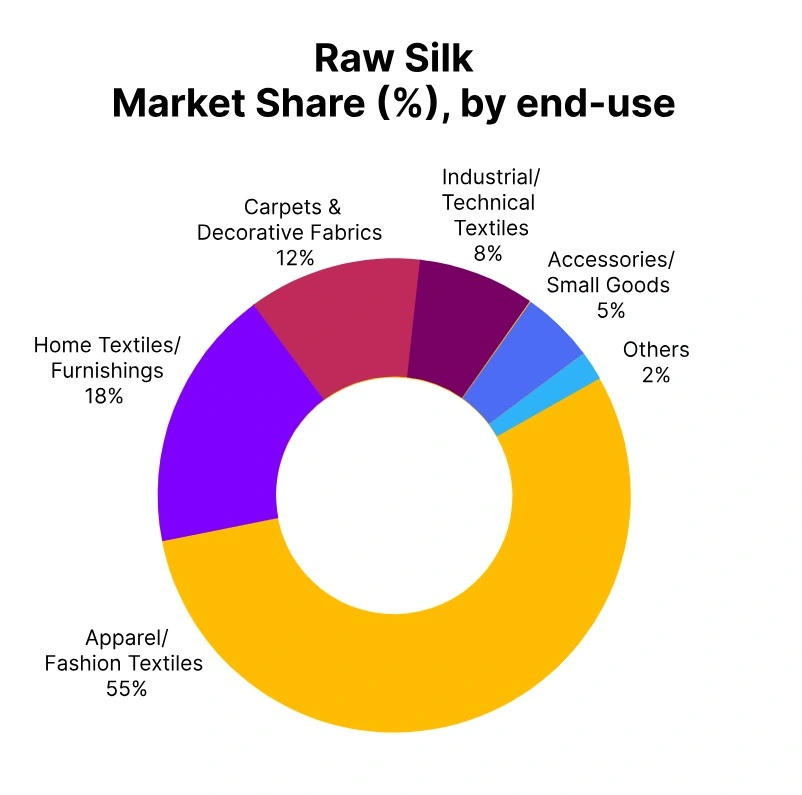
raw silk market share end use

Historically, several events have caused significant fluctuations in Raw Silk prices

Fluctuating Demand from Textile and Apparel Industries (2021–2022): Following the initial pandemic disruptions, the years 2021–2022 saw a resurgence in demand for silk from luxury textile and apparel industries. International buyers sought high-quality raw silk for fashion, home textiles, and traditional garments, which put upward pressure on prices. At the same time, supply chains were still recovering from previous disruptions, creating a mismatch between demand and availability. Raw silk prices surged in many key markets as mills prioritized fulfilling higher-margin orders. Seasonal production patterns, coupled with limited cocoon output, contributed to further price volatility. Market participants had to adjust to rapidly changing demand patterns, which caused short-term spikes and corrections. Overall, the interplay of recovering demand and constrained supply shaped price trends during this period.

Global Trade Tensions and Export Restrictions (2020): In 2020, the outbreak of the COVID-19 pandemic caused widespread disruption in global trade and logistics. Silk-producing regions in China implemented lockdowns, restricting labour availability for cocoon harvesting and silk processing. Additionally, export restrictions and delayed shipments created bottlenecks in international supply chains. Raw silk prices experienced sharp fluctuations as buyers struggled to secure material amidst uncertain supply. The pandemic also led to a temporary drop in demand from apparel manufacturers due to global economic slowdown, adding complexity to price movements. This combination of restricted supply and shifting demand caused unprecedented volatility in the raw silk market. Exporters had to strategically manage shipments, further influencing market prices.

Supply Disruptions Due to Natural Calamities (2018–2019): During 2018–2019, major silk-producing regions in China and India experienced severe flooding and other adverse weather conditions. These natural calamities damaged mulberry crops, which are essential for silkworm rearing, leading to a significant reduction in cocoon production. The shortage of cocoons directly impacted raw silk output, creating a tight supply situation in the market. Consequently, raw silk prices surged as mills competed for limited material. Small-scale farmers and local suppliers were particularly affected, further exacerbating supply constraints. The instability also caused uncertainty among international buyers who relied on consistent supply. Overall, natural disasters in these years were a key driver of price volatility in the raw silk market.

Why Price Watch™?

Price Watch™ is your trusted resource for tracking global raw silk price trends. Our platform delivers real-time data and expert analysis, offering deep insights into the key factors driving price fluctuations in the raw silk market. By monitoring critical events such as geopolitical tensions, supply chain disruptions, and economic shifts, Price Watch™ keeps you fully informed of market dynamics.

In addition, Price Watch™ provides detailed forecasts and updates on production capacities, enabling you to anticipate market changes and make well-informed decisions. With Price Watch™, you gain a competitive edge in understanding all the elements that influence raw silk prices worldwide. Stay ahead of the curve with Price Watch’s™ reliable, accurate, and timely raw silk market data.

Track Price Watch's™ raw silk price assessment on a weekly basis since 2015 onwards, along with short-term forecasts, and get access to the detailed report in a downloadable format.

Raw Silk Market Price Trend published by Price Watch™ reflect prevailing spot market conditions, derived from independent research, verified trade inputs, and proprietary market intelligence as of the publication date. Prices are published on the specified Incoterm and represent indicative base market levels, exclusive of applicable taxes, VAT, duties, tariffs, and other statutory charges. Actual transaction values may vary depending on volume, credit terms, contractual structure, and other negotiated conditions. Market prices are inherently subject to volatility, liquidity dynamics, regulatory changes, and evolving trade activity. The information provided is for reference and benchmarking purposes only and does not constitute an offer, recommendation, or guarantee of transactional outcomes. Users should exercise independent commercial judgment and assess their specific contractual, regulatory, tax, and application requirements before making business decisions. Price Watch™ assumes no liability for decisions taken based on this information.

Several factors impact the pricing of Raw Silk 3A (20/22D), including cocoon availability, silk yield, and quality of mulberry leaves for silkworm rearing. Seasonal variations, production capacity in major silk-producing regions like China and India, and labour costs also influence prices. Additionally, supply chain disruptions, export regulations, and fluctuations in international demand from the textile and apparel industries can drive price volatility. Natural events such as floods or droughts in key producing regions further affect production and pricing.

Raw Silk pricing is highly sensitive to changes in cocoon supply and quality. A shortage of high-quality cocoons can increase production costs for silk mills, driving up yarn prices. Conversely, surplus production or reduced demand can lead to price declines. Other factors, such as transportation delays and seasonal availability of silkworms, also affect the final cost of Raw Silk. Monitoring these trends helps buyers and manufacturers plan procurement strategies and manage costs effectively.

Currently, Raw Silk 3A (20/22D) prices have shown moderate fluctuations due to seasonal supply changes and international demand variations. Buyers can optimize sourcing by securing contracts during periods of stable supply, diversifying suppliers across multiple regions, and monitoring market trends closely. Understanding seasonal production patterns, export restrictions, and global textile demand can help procurement teams make informed decisions and maintain cost-efficiency while ensuring consistent material quality.

Raw Silk is the unprocessed fibre obtained from silkworm cocoons, serving as the key raw material for high-value textiles and luxury garments. Its price is important because it directly impacts manufacturing costs, profit margins, and retail pricing in the silk industry. Raw silk prices are influenced by supply-demand dynamics, seasonal production, trade conditions, freight costs, and currency fluctuations, making them a critical indicator for both domestic and global market. Price Watch™ tracks Raw Silk prices to help businesses stay informed about market movements and cost trends.

Raw Silk prices vary by grade, origin, and delivery terms (FOB/CIF). Prices fluctuate based on supply-demand dynamics, seasonal production cycles, and logistics or currency costs. Price Watch™ provides up-to-date price assessments across key global silk markets, enabling buyers and manufacturers to monitor trends and plan procurement effectively.

The Raw Silk market has been showing a stable to modestly upward trend, with prices fluctuating within a narrow range in most key markets. Prices are affected by supply-demand dynamics, seasonal cocoon production, festival or peak manufacturing demand, freight costs, and currency rate movements, as well as global trade conditions and buyer sentiment.

The textile and apparel industry is the largest consumer of Raw Silk, using it for luxury fabrics, sarees, suits, and high-end garments. Other significant buyers include the home textiles sector (for upholstery, curtains, and bedding), fashion and designer brands, and the handicraft or traditional craft sector, which relies on silk for embroidery, weaving, and specialty products.

Raw Silk primarily comes from silkworm cocoons, which are cultivated in sericulture farms. The leading producing countries include China, India, Vietnam, Germany, and the USA, which supply most of the global raw silk. Other notable producers include Brazil, Uzbekistan, and some African nations, where silk farming supports both domestic textile industries and exports.

China is the largest exporter of Raw Silk, supplying most of the global market. Its dominance is supported by well-established sericulture infrastructure, large-scale cocoon production, and advanced silk processing facilities, enabling it to meet demand across major import markets like India, the USA, and Europe. Price Watch™ monitors global trade flows and supply availability.

The global Raw Silk supply has been generally sufficient to meet demand, but availability can fluctuate seasonally due to factors like cocoon production cycles, climate conditions, and sericulture yields. While most major markets have been able to source required quantities, temporary supply constraints or increased festival and fashion-season demand can lead to short-term price pressures. Price Watch™ closely monitors supply-demand balances to identify potential shortages or oversupply situations.

Raw Silk is graded based on fibre length, fineness, colour, and purity, with common grades like 3A, 4A, and 5A. Higher grades, such as 3A, command premium prices due to superior texture, strength, and uniformity, while lower grades are suited for blended or industrial uses. Prices also vary with origin, processing quality, and market demand. Price Watch™ provides grade-wise price assessments for better market clarity.

A sudden surge in demand for Raw Silk typically drives market prices higher due to constrained supply. This can create short-term shortages and increased CIF or FOB landed costs, especially when freight rates or currency fluctuations add additional pressure. Price Watch™ captures these shifts in real time.

Cocoon production and sericulture factors directly affect Raw Silk costs, as variations in silkworm yields, rearing conditions, and cocoon quality influence raw material availability and pricing. Seasonal fluctuations, climate conditions, and disease outbreaks can further impact supply, creating short-term cost pressures in the silk market. Price Watch™ analyses Raw Silk price correlations to explain cost movements and market trends.

Regional price differences for Raw Silk arise from variations in production costs, quality, and local supply-demand, as well as freight, duties, and currency fluctuations. Price Watch™ tracks regional differentials to highlight pricing gaps across markets.

The forecast for Raw Silk prices indicates a stable to moderately upward trend, supported by steady demand, seasonal procurement, and controlled supply. Prices may experience short-term fluctuations due to factors such as festival demand, freight costs, and currency rate movements. Price Watch™ publishes regular forecasts projecting price direction over the next 12 months.

Yes. Reliable forecasts help buyers plan procurement, manage inventory, negotiate contracts, and control packaging costs. Price Watch™ forecasts support smarter purchasing and budgeting decisions.

Global events such as climate disruptions, trade policy changes, or economic slowdowns directly impact Raw Silk supply and prices. Such events can disrupt cocoon production, alter export-import flows, and affect freight and currency costs, leading to short-term market volatility. Price Watch™ provides timely updates on such market-moving events.

Price Watch™ gathers data from producers, converters, traders, and buyers to publish transparent raw silk price assessments, market reports, and forecasts, helping stakeholders stay ahead of market trends.