
Sodium Chlorite Price Trend and Forecast

UNSPC code: 12352302
|
Weekly Update
|
Historical Data Since 2015
|
Forecast for 2026

sodium chlorite Price Trends by Country

cnChina
inIndia
vnVietnam
brBrazil
usUnited States
idIndonesia
phPhilippines

Global sodium chlorite Spot Market Prices, Trend Analysis and Forecast

Price-Watch™ provides real-time price assessments and price forecasts for Sodium Chloride (NaCl) across top trading regions: 

Sodium Chloride (NaCl) Regional Coverage Sodium Chloride (NaCl) Grade and Country Coveragesodium chlorite Sodium Chloride (NaCl) Pricing Data Coverage Explanation
Asia
Sodium Chloride (NaCl) Pricing Analysis
Sodium Chloride (NaCl) Industrial Grade (Powder) (99%) Ex-Vadodara Domestic Prices, India Real-Time Weekly Price Update of Sodium Chloride (NaCl) Domestic Prices in Delhi, India
Sodium Chloride (NaCl) Industrial Grade (Uncrushed) Ex-Vadodara Domestic Prices, India Real-Time Weekly Price Update of Sodium Chloride (NaCl) Domestic Prices in Delhi, India
Sodium Chloride (NaCl) Industrial Grade (Vacuum Dried) FOB Prices at Xiamen Port, Vietnam Weekly Price Update on Sodium Chloride (NaCl) Real-Time Export Prices from Xiamen Port, Vietnam to Global Markets
North America
Sodium Chloride (NaCl) Pricing Analysis
Sodium Chloride (NaCl) Industrial Grade (Vacuum and Open Pan Salt) FOB Prices at Houston Port, USA Weekly Price Update on Sodium Chloride (NaCl) Real-Time Export Prices from Houston Port, USA to Global Markets

Note: In assessments structured as CIF [Importing Port] (Exporting Country), the country mentioned in brackets indicates the primary origin of supply (exporting country), while the named port refers to the destination port in the importing country. Other Incoterms (FOB, FD, EXW, etc.) should be interpreted in accordance with standard international trade definitions.

Sodium Chlorite Price Trend Q1 2026

Sodium Chlorite price levels witnessed an appreciable rise in the sodium chlorite price trend in Q1 of 2026. This has been attributable to consistent downstream application demand from the sectors of water treatment, disinfection products, and bleaching in textiles.

As for China, it has been a notable exporter country while India, USA, Vietnam, Brazil, Indonesia, and the Philippines have been among the importing nations, which have fluctuating prices due to their import dependency and disrupted shipping logistics.

Generally, there has been a notable improvement of prices in most regions in relation to the prices seen in the prior quarter due to changes in shipping costs and consumption demands.

There has also been an increase in prices during March 2026 as compared to February 2026 due to rising freight prices and shortage in supply. The global geopolitical tensions among Israel, USA, and Iran have also been influential factors in the market.

China: Sodium Chlorite Export Prices FOB Shanghai, China; Grade- (31%) Industrial Grade

The Q1 2026 Sodium Chlorite price in China experienced an upward trend, fuelled by firm demand from water treatment, disinfection, and sanitation, and textile bleaching industries. The Q1 2026 sodium chlorite price trend in China experienced a moderately bullish relative to Q4 2025, with an increment of about 2.1% as demand improves and production continues to be stable.

Moreover, In China Sodium Chlorite price in March 2026 experienced an increase of about 6.1% compared to the last month due to limited supply. Geopolitical conflicts arising between Israel, the United States, and Iran, as well as the possible closure of the Strait of Hormuz, affected the trade environment relative to Q4 2025.

India: Sodium Chlorite Import prices CIF JNPT, India; Grade- (31%) Industrial Grade

Sodium Chlorite price in India for Q1 2026 has seen considerable volatility due to high import costs from China and robust consumption across the water treatment, disinfectants and sanitizers, and textile bleaching industries. Sodium chlorite price trend in India has been quite bullish during Q1 2026 compared to the previous quarter, with a 7.4% rise despite logistic challenges and escalating shipping expenses.

Moreover, in India Sodium Chlorite price in March 2026 has escalated by 20.1% versus the preceding month owing to tight supplies and greater purchasing activity by end-users. Geopolitical issues among Israel, the US, and Iran, as well as the threat of closing the Strait of Hormuz, have affected trade dynamics compared to the previous quarter.

USA: Sodium Chlorite Import Prices CIF Houston, USA; Grade- (31%) Industrial Grade

During Q1 2026, there has been a slight rise in Sodium Chlorite price in the United States. The rise in the cost of Sodium Chlorite has been attributed to stable imports from China and constant demand in water treatment and disinfectant applications. There has been an improvement in sodium chlorite price trend in the United States, rising by 1% after experiencing declines.

Furthermore, in the United States Sodium Chlorite price in March 2026 have increased by 5.7% in comparison to the preceding month, with the increase due to reduced supplies and high logistic costs. The geopolitical tension between Israel, the United States, and Iran, as well as worries about the Strait of Hormuz, continue to affect import trends.

Vietnam: Sodium Chlorite Import prices CIF Haiphong, Vietnam; Grade- (31%) Industrial Grade

In Q1 2026, Sodium Chlorite price in Vietnam has shown a steady increase, supported by consistent imports from China and firm demand from water treatment, disinfectants and sanitization, and textile sectors. The sodium chlorite price trend in Vietnam has remained moderately positive compared to the previous quarter, rising by 2% due to stable consumption patterns and controlled inventory levels.

Furthermore, in Vietnam Sodium Chlorite price in March 2026 has increased by 5.8% compared to the previous month, driven by higher import costs and logistical challenges. Geopolitical tensions involving Israel, the US, and Iran, and potential Strait of Hormuz disruptions have influenced supply sentiment compared to the previous quarter.

Brazil: Sodium Chlorite Import prices CIF Santos, Brazil; Grade-(31%) Industrial Grade

In Q1 2026, Sodium Chlorite price in Brazil has displayed mixed movement, impacted by fluctuating import volumes from China and variable demand from water treatment and textile bleaching industries. The sodium chlorite price trend in Brazil has remained slightly weak compared to the previous quarter, declining by 2% amid sufficient inventories and cautious purchasing.

However, in Brazil Sodium Chlorite price in March 2026 has rebounded sharply by 11.1% compared to the previous month due to tightening supply and increased freight rates. Ongoing geopolitical tensions involving Israel, the US, and Iran and concerns over Strait of Hormuz closure have affected global trade flows compared to the previous quarter.

Indonesia: Sodium Chlorite Import prices CIF Jakarta, Indonesia; Grade-(31%) Industrial Grade

In Q1 2026, Sodium Chlorite price in Indonesia has shown a slight upward trend, supported by steady imports from China and demand from disinfectants, water treatment, and textile sectors. The sodium chlorite price trend in Indonesia has remained stable compared to the previous quarter, increasing by 1% due to balanced supply-demand conditions.

Moreover, in Indonesia Sodium Chlorite price in March 2026 has increased by 6% compared to the previous month, driven by higher freight rates and limited cargo availability. Geopolitical tensions involving Israel, the US, and Iran and concerns regarding Strait of Hormuz closure have impacted supply chains compared to the previous quarter.

Philippines: Sodium Chlorite Import prices CIF Manila, Philippines; Grade-(31%) Industrial Grade

According to Price-Watch™, in Q1 2026, Sodium Chlorite price in Philippines has experienced a gradual increase, supported by consistent imports from China and firm demand from water treatment and sanitization sectors. The sodium chlorite price trend in Philippines has remained stable compared to the previous quarter, rising by 1% amid steady market fundamentals.

Additionally, in Philippines Sodium Chlorite price in March 2026 has increased by 5.7% compared to the previous month due to rising import costs and logistical constraints. Ongoing geopolitical tensions involving Israel, the US, and Iran, along with concerns over Strait of Hormuz closure, have influenced supply dynamics compared to the previous quarter.

Sodium Chlorite Price Trend Analysis: Q4 2025

In Q4 of 2025, there have been some varying pricing dynamics observed for Sodium Chlorite in significant regions. In China, the pricing for the product has been relatively stable on the back of continued demand from the industries in terms of sanitation, textiles, etc. On the other hand, the dynamics in India and the US have seen a slight dip in pricing on the back of changes in demand for the product in terms of imports into China, although continued demand locally has helped keep prices stable. Brazil has seen a correction in pricing after robust imports, while Indonesia and the Philippines have seen gradual market stability through continued imports and industrial demand.

China: Sodium Chlorite Export Prices FOB Shanghai, China; Grade- (31%) Industrial Grade

Sodium Chlorite price in China in Q4 2025 has experienced a rise by 2% when compared to the previous quarter, showing a relatively steady increase. Despite the price fluctuations due to varying demand for water treatment, disinfectants and sanitizers, as well as bleaching and textiles usage, Sodium Chlorite price trend in China has been consistent. In China, Sodium Chlorite price in December 2025 has been a 1.7% fall comparison to the preceding month due to the decline in production expenses and stock adjustment.

India: Sodium Chlorite Import prices CIF JNPT, India; Grade- (31%) Industrial Grade

Sodium Chlorite price in India in the fourth quarter of 2025 have seen a 1% rise when compared with those of the third quarter due to reduced imports from China. Sodium Chlorite price trend in India has been affected by consistent usage in applications such as water purification, disinfection and sanitization, as well as bleaching and textiles. Reduced imports have been offset by the demand in the industrial sector and the sanitation industry, sustaining prices. In India, Sodium Chlorite price in December 2025 have fallen by 0.8% relative to the preceding month due to stock revaluations and careful planning of shipment. Price trends will continue to be monitored based on the export volumes from China and local industrial demand.

USA: Sodium Chlorite Import Prices CIF Houston, USA; Grade- (31%) Industrial Grade

In the fourth quarter of 2025, Sodium Chlorite price in the United States have reduced by 1%, owing to weak imports from China. Sodium Chlorite price trend in the US has been affected by stable demand for its uses in water treatment, disinfectants and sanitation, and textile bleaching. In the USA, Sodium Chlorite price in December 2025 have declined by 7.3% compared to the last month due to inventory management and delays in shipments. Continued monitoring of export quantities from China and consumption in industries in the coming quarter is expected to affect pricing.

Vietnam: Sodium Chlorite Import prices CIF Haiphong, Vietnam; Grade- (31%) Industrial Grade

In Q4 2025, Sodium Chlorite price in India has decreased by 1% compared to the previous quarter, reflecting softer import demand from China. The Sodium Chlorite price trend in India has been influenced by steady consumption in water treatment, disinfectants and sanitization, and bleaching and textile applications. Despite lower imports, industrial and sanitation sector demand has helped sustain prices. In India, Sodium Chlorite prices in December 2025 have declined by 0.8% compared to the previous month, following inventory adjustments and cautious shipment scheduling. Continued monitoring of Chinese export volumes and domestic industrial consumption is expected to guide price trends in the next quarter, highlighting sensitivity to global supply fluctuations.

Brazil: Sodium Chlorite Import prices CIF Santos, Brazil; Grade-(31%) Industrial Grade

In Q4 2025, Sodium Chlorite price in Brazil has decreased by 12% compared to the previous quarter, reflecting a correction after strong Q3 imports from China. The Sodium Chlorite price trend in Brazil has been influenced by fluctuations in industrial demand for water treatment, disinfectants and sanitization, and textile bleaching. In Brazil, Sodium Chlorite prices in December 2025 have decreased by 5.6% compared to the previous month, following cautious inventory adjustments and slower import shipments. Monitoring Chinese export performance and domestic sector demand will continue to be crucial in guiding price trends in the next quarter.

Indonesia: Sodium Chlorite Import prices CIF Jakarta, Indonesia; Grade-(31%) Industrial Grade

In Q4 2025, Sodium Chlorite price in Indonesia has increased by 2% compared to the previous quarter, reflecting stable import flows from China. The Sodium Chlorite price trend in Indonesia has been influenced by strong demand in water treatment, disinfectants and sanitization, and textile bleaching applications. Industrial and chemical sector requirements have helped support prices. In Indonesia, Sodium Chlorite prices in December 2025 have decreased by 2% compared to the previous month, following minor inventory rebalancing and shipment adjustments. Continued monitoring of Chinese export consistency and domestic sector demand is expected to influence price trends in the upcoming quarter.

Philippines: Sodium Chlorite Import prices CIF Manila, Philippines; Grade-(31%) Industrial Grade

In Q4 2025, Sodium Chlorite price in Philippines has increased by 1% compared to the previous quarter, reflecting gradual recovery in imports from China. The Sodium Chlorite price trend in Philippines has been shaped by stable consumption for water treatment, disinfectants and sanitization, and bleaching in textile applications. Market stability has been maintained despite regional logistical adjustments. In Philippines Sodium Chlorite prices in December 2025 have declined by 1.5% compared to the previous month, reflecting minor shipment delays and careful inventory management. Ongoing observation of Chinese export volumes and local industrial requirements is expected to guide price movements in the next quarter.

In Q3 2025, global sodium chlorite prices observed mixed trends across key markets. China and Vietnam were both 4% higher as downstream demand improved and supply tightened. India was 7% higher after a previous decline due to monsoon related water treatment requirements that typically takes place during monsoon season. Sodium chlorite price trend in Brazil saw the largest increase of 23% benefit from industrial recovery after elections and the rising cost of imports.

Indonesia had a mild gain of 2% due to stable imports and public sector demand. The USA and the Philippines both declined in price by 1% and 2% respectively because of weaker than anticipated industrial activity and large inventories. Overall, Sodium Chlorite prices were determined by shifts in regional demand, supply, currency fluctuations, and logistical issues.

China: Sodium Chlorite Export Prices FOB Shanghai, China, Grade- (31%) Industrial Grade.

In the third quarter of 2025, sodium chlorite prices in China increased 4% from the prior quarter, reversing the 4% decrease we saw in the previous quarter. Sodium chlorite price trend in China also benefited from a modest recovery in downstream demand from the paper manufacturing, textile, and water treatment sectors. Additionally, improving export activity and a minimal tightening of domestic supply due to increased environmental regulations supported upward pricing momentum.

While raw material costs remained largely stable, diminished operational rates of producers contributed to supply-side pressures. Overall, sodium chlorite prices in September 2025 showed this positive price trend, supporting expectations for a cautiously optimistic assessment of prices. Export performance and industrial consumption will continue to drive prices in the first quarter of 2026.

India: Sodium Chlorite Import prices CIF JNPT, India, Grade- (31%) Industrial Grade.

According to Price-Watch™, in the third quarter of 2025, Sodium Chlorite prices in India experienced a positive rebound and retook control following a 7% decline in Q2 as a result of renewed demand from the water treatment industry and paper manufacturing sector. Following stronger monsoon activity, the water purification requirement increased which promoted consumption of Sodium Chlorite.

Sodium Chlorite price trend in India showed an overall stable supply and moderate logistical efficiencies within the upstream supply chains out of China. However, minor delays in inland distribution did create some intermittent pricing pressure.

The price for Sodium Chlorite remained firm as the quarter closed in September 2025 which indicated sustained demand. Looking ahead into fall, downstream recovery in the textile and processing sectors could help provide further direction for pricing through Q4.

USA: Sodium Chlorite Import Prices CIF Houston, USA, Grade- (31%) Industrial Grade.

In Q3 2025, the Sodium Chlorite price in the United States declined slightly from the previous quarter, down 1% before taxes and shipping. In the context of domestic service contracts, purchasers cited weakened purchasing activity from the mild seasonal downturn in the textile and paper manufacturing industries. Sodium Chlorite price trends in Q3 were also exacerbated by high inventory levels and cautious restocking by import purchases.

While citing stable CIF price levels from Chinese market sources, domestic demand was soft, resulting in mild pricing adjustments. September 2025 marked a monthly Sodium Chlorite price low in the US marketplace coinciding with downstream demand.

The water treatment sector nevertheless provided a consistent baseline of support. In Q4, with improved public sector procurement and expected increases in industrial usage, slight price adjustments would be anticipated.

Vietnam: Sodium Chlorite Import prices CIF Haiphong, Vietnam, Grade- (31%) Industrial Grade.

In Q3 2025, Sodium Chlorite prices in Vietnam increased by 4%. This upward price movement was attributed to consistent import demand and strong activity in the textile and water treatment industries. During Q3, pricing activity improved compared to Q2’s pricing, where prices were relatively stagnant.

In Q3, more projects for water treatment came online, which improved market activity. Sodium Chlorite price trend in Vietnam continued to be supported by steady CIF values received from China and healthy distributor margins. Supply remains tight despite the strengthening of the Vietnamese dong against the yuan, due to limited Chinese production.

In September 2025, the price of Sodium Chlorite was consistent with a high for the quarter, indicating a flattening of cost increases. In the future, the direction of prices for Q4 will depend on further reliance on imports and how well projects in infrastructure are implemented.

Brazil: Sodium Chlorite Import prices CIF Santos, Brazil, Grade-(31%) Industrial Grade.

In the third quarter of 2025, Brazil experienced a sizable increase in the price of Sodium Chlorite, which rose by 23% from second quarter levels. The increase in Sodium Chlorite price was a consequence of higher industrial consumption, particularly in paper and textile manufacturing, which recovered following the stability created by the elections to increase activity.

Additionally, shipping costs increased due to both higher prices and fewer vessels coming from China, resulting in higher costs for imported Sodium Chlorite. Also relevant to the price trends for Sodium Chlorite in Brazil were currency volatility and changes in import policies.

The price of Sodium Chlorite in Brazil ground to a quarterly high in September 2025, reflecting tightening supply and increasingly active buyers. If inventory shortages continue, producers in Brazil are likely to sustain elevated prices in quarter 4 unless imports pick up significantly.

Indonesia: Sodium Chlorite Import prices CIF Jakarta, Indonesia, Grade-(31%) Industrial Grade.

In Q3 2025, Sodium Chlorite price in Indonesia increased moderately by 2%, supported by steady demand from water treatment and paper manufacturing industries. Imports from China remained consistent, maintaining cost competitiveness despite currency fluctuations. The Sodium Chlorite price trend in Indonesia was shaped by strong public sector orders for sanitation and water purification initiatives.

Additionally, seasonal monsoon-related concerns drove preventative stockpiling. Sodium Chlorite price in September 2025 reflected these dynamics, closing the quarter on a firm note. While local demand showed resilience, logistical delays at ports briefly disrupted supply continuity. Market participants expect Q4 to remain balanced with moderate price support from industrial buyers.

Philippines: Chlorite Import prices CIF Manila, Philippines, Grade-(31%) Industrial Grade.

In Q3 2025, Sodium Chlorite price in the Philippines declined slightly by 2% compared to Q2, amid softer buying activity in the textile and paper processing segments. The Sodium Chlorite price trend in the Philippines followed a downward trajectory as distributors faced excess inventory carried over from the previous quarter. Import costs from China remained stable, but local demand contraction influenced margins.

Sodium Chlorite price in September 2025 dipped further due to aggressive destocking by regional suppliers. The water treatment sector provided moderate support; however, overall consumption was lackluster. Looking forward, price stability in Q4 will depend on infrastructure funding and industrial output recovery.

According to PriceWatch, In Q2 2025, sodium chlorite prices in China averaged approximately 553 per metric ton, reflecting a 4% decline from the previous quarter. This price drop was mainly attributed to weakened demand across major end-use sectors, including water treatment, paper manufacturing, and textiles. The water treatment industry, the largest consumer, experienced reduced activity due to seasonal factors and stricter environmental policies.

At the same time, paper and textile manufacturers saw decreased production levels, influenced by lower export demand and elevated energy expenses. Furthermore, consistent raw material supply and enhanced production efficiencies supported the downward pressure on prices. Overall, the Chinese sodium chlorite market underwent a moderate downturn, driven by a temporary mismatch between supply and demand during the quarter.

According to PriceWatch, In Q2 2025, the price of sodium chlorite in India stood at USD 611 per ton, marking a 7% decrease compared to the previous quarter. This decline was attributed to reduced demand and stable supply conditions. The sodium chlorite market witnessed slower procurement activity from major end-use industries, particularly the water treatment, paper, and textile sectors.
These industries exhibited cautious purchasing behavior amid fluctuating raw material costs and uncertain economic conditions. The water treatment sector, a primary consumer, showed subdued demand due to lower industrial water processing operations.

Similarly, the paper and textile industries reduced their consumption, contributing to the overall price drop. The softened market sentiment and balanced inventories further exerted downward pressure on sodium chlorite prices during this quarter, reflecting a shift from the relatively higher pricing seen earlier in the year.

In Q1 2025, sodium chlorite prices in China dropped by 3%, reaching   579 USD per ton compared to the previous quarter. This chemical is extensively used across industries such as water treatment, paper manufacturing, and textile production. In water treatment, it plays a key role in disinfection and purification.

In paper manufacturing, it acts as a bleaching agent, ensuring high-quality, bright paper products. In the textile industry, sodium chlorite is used for fabric bleaching. The price decrease may have been influenced by market fluctuations, affecting the cost structures and procurement decisions of these industries.

In Q1 2025, sodium chlorite prices in India decreased by 3%, reaching $659 USD per ton compared to Q4 2024. This decline was driven by a slight drop in demand from major industries such as water treatment, paper manufacturing, and textile manufacturing.

Sodium chlorite was used for disinfection and purification in water treatment, served as a bleaching agent to improve paper quality in paper manufacturing, and was crucial for fabric bleaching in the textile industry. The 3% price drop reflected this reduced demand, which affected procurement strategies and cost management in these sectors.

Sodium Chlorite Price Trend Analysis: Q4 2024

In Q4 2024, sodium chlorite prices in China fell to 596 USD per ton, marking a 6% decrease from Q3 2024. The decline was driven by reduced demand across key sectors, including water treatment, paper manufacturing, and textile manufacturing. With less need for sodium chlorite in these industries, procurement levels dropped, leading to a decrease in prices.

As a result, companies adjusted their purchasing strategies to accommodate the lower demand. This reduction in consumption impacted the overall market, contributing to the price drop and shifting the cost dynamics within these industries.

In Q4 2024, sodium chlorite prices in India decreased by 5%, reaching 676 USD per ton compared to Q3 2024. This decline was driven by a reduction in demand from key industries, including water treatment, paper manufacturing, and textile manufacturing. In water treatment, sodium chlorite has been used for disinfection and purification.

In paper manufacturing, it served as a bleaching agent to enhance paper quality. In textile manufacturing, it continued to be employed for fabric bleaching. The 5% price decrease reflected the weakening demand, which influenced procurement strategies and cost planning for these industries.

In Q3 2024, sodium chlorite prices in China reached 631 USD per ton, showing a 9% increase from Q2 2024. This rise was primarily due to stronger demand from key industries, including water treatment, paper manufacturing, and textile manufacturing. The boost in demand led to higher procurement costs, impacting industry pricing strategies.

As industries sought to secure supplies, the increased competition for sodium chlorite contributed to its price hike. This upward trend in pricing reflected the market’s response to growing consumption and the need for this chemical in critical manufacturing and treatment processes.

In Q3 2024, sodium chlorite prices in India increased by 11%, reaching $708 USD per ton compared to Q2 2024 This price hike was driven by stronger demand from key industries, including water treatment, paper manufacturing, and textile manufacturing. In water treatment, sodium chlorite was used for disinfection and purification processes.

In paper manufacturing, it served as a bleaching agent to enhance paper quality. In textile manufacturing, sodium chlorite was employed for fabric bleaching. The 11% increase reflected the rising demand from these industries, influencing procurement decisions and cost structures.

In Q2 2024, sodium chlorite prices in China dropped to 578 USD per ton, marking a 2% decrease from Q1 2024. This decline was linked to lower demand across major industries such as water treatment, paper manufacturing, and textile manufacturing. In water treatment, sodium chlorite has been used for disinfection and purification.

In paper manufacturing, it had served as a bleaching agent to improve paper quality. In textile manufacturing, it had been utilized for fabric bleaching. The reduction in demand contributed to the price drop, impacting procurement strategies and cost structures within these industries.

In Q2 2024, sodium chlorite prices in India decreased by 0.4%, reaching 640 USD per ton compared to Q1 2024. This slight price reduction was influenced by stable demand from key industries, including water treatment, paper manufacturing, and textile manufacturing. In water treatment, sodium chlorite continued to be used for disinfection and purification processes.

In paper manufacturing, it acted as a bleaching agent to improve the quality of paper products. In textile manufacturing, it was employed for fabric bleaching. Despite the minor price decline, the demand in these sectors remained steady, influencing procurement strategies across industries.

In Q1 2024, sodium chlorite prices in China were   589 USD per ton, reflecting a 1% decrease compared to the previous quarter. The chemical was widely used across several industries, particularly in water treatment, paper manufacturing, and textile manufacturing. In water treatment, sodium chlorite was employed for disinfection and purification.

In paper manufacturing, it served as a bleaching agent, helping produce bright, high-quality paper products. In the textile industry, sodium chlorite was used for fabric bleaching. The price decrease likely resulted from market fluctuations, impacting the cost structures and procurement decisions of these industries.

In Q1 2024, sodium chlorite prices in India increased to 643 USD per ton, marking a 4% rise compared to the previous quarter. This price increase was driven by higher demand from key industries such as water treatment, paper manufacturing, and textile manufacturing. In water treatment, sodium chlorite was used for disinfection and purification processes.

In paper manufacturing, it served as a bleaching agent to enhance paper quality. In textile manufacturing, it was employed for fabric bleaching. The price increase reflected the growing demand from these sectors, influencing procurement strategies and cost structures in these industries.

Technical Specifications of Sodium Chlorite Price Trends

Product Description

Sodium Chlorite is a yellowish, water-soluble chemical used primarily as a disinfectant, bleach, and in water treatment processes. It is commonly used in producing chlorine dioxide for industrial applications. Feedstock for sodium chlorite includes sodium hydroxide and chlorine dioxide, produced through electrochemical processes.

Identifiers and Classification:

  • CAS No – 7758-19-2
  • HS Code – 28289030
  • Molecular Formula – NaClO2
  • Molecular Weight (in gm/mol) – 90.438 g/mol


Sodium Chlorite Synonyms:

  • Chlorous Acid
  • Sodium Salt
  • Textone


Sodium Chlorite Grades Specific Price Assessment:

  • Industrial Grade (31%)


Sodium Chlorite Global Trade and Shipment Terms

  • Quotation Terms: 25-28 MT (Export-Import)
  • Packaging Type: IBC Drum (1250) (Export-Import)


Incoterms Referenced in Sodium Chlorite Price Reporting

Shipping Term  Location  Definition 
FOB Shanghai  Shanghai, China.  Sodium Chlorite Export Price from China. 
CIF JNPT (China)  JNPT, India.  Sodium Chlorite import price in India from China. 
CIF Santos (China)  Santos, Brazil.  Sodium Chlorite import price in Brazil from China. 
CIF Haiphong (China)  Haiphong, Vietnam.  Sodium Chlorite import price in Vietnam from China. 
CIF Jakarta (China)  Jakarta, Indonesia.  Sodium Chlorite import price in Indonesia from China. 
CIF Houston (China)  Houston, USA.  Sodium Chlorite import price in USA from China. 
CIF Manila (China)  Manila, Philippines  Sodium Chlorite import price in Philippines from China. 

*Quotation Terms refers to the quantity range specified for the Sodium Chlorite being quoted or offered in a commercial transaction.

**Packaging Type refers to standard packaging size commonly used for Sodium Chlorite packing, ease of handling, transportation, and storage in industrial and commercial applications.

Key Sodium Chlorite Manufacturers

Manufacturers 
Huiya Envirotech 
Shandong Pulisi Chemical  
Shandong Gaomi Gaoyuan Chemical Co., Ltd 

Sodium Chlorite Industrial Applications

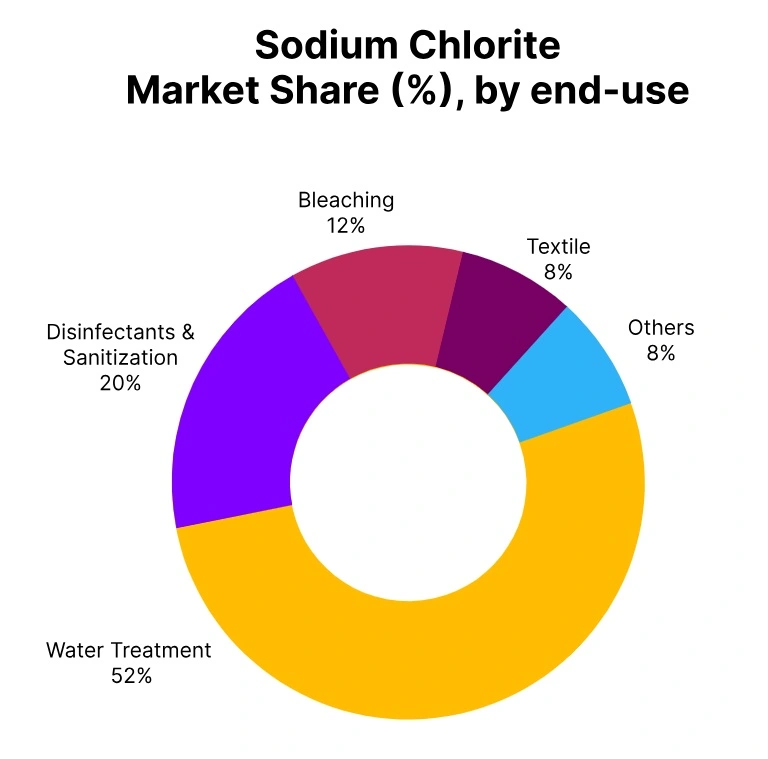
sodium chlorite market share end use

Historically, several events have caused significant fluctuations in Sodium Chlorite prices

  • Russia-Ukraine Conflict (2022): The conflict has disrupted the supply of key raw materials required for producing sodium chlorite. This has led to increased production costs as suppliers face challenges in sourcing and transporting materials. With the war affecting logistics in Eastern Europe, shipping routes have become unreliable. Increased transportation costs due to rerouted shipments or delays have contributed to higher prices for sodium chlorite.
  • Texas Winter Storm (2021): The extreme cold weather caused many chemical production facilities in Texas to shut down or operate at reduced capacity. As Texas is a key producer of sodium chlorite, these interruptions led to decreased supply and increased prices. The storm caused significant disruptions in the natural gas supply, which is crucial for the energy-intensive production of chemicals, including sodium chlorite. Increased energy costs due to shortages contributed to higher production expenses.
  • COVID-19 Pandemic (2020):  As the pandemic prompted heightened awareness of hygiene and disinfection, demand for sodium chlorite as a disinfectant soared. This spike in demand led to significant price increases as suppliers struggled to keep up. The demand for safe drinking water and effective treatment solutions also contributed to the increased consumption of sodium chlorite.
  • Geopolitical Tensions (2018-2019): The tariffs and trade barriers imposed during the U.S.-China trade conflict impacted the global supply chain for chemicals, including sodium chlorite. Increased tariffs on raw materials and intermediate goods raised production costs for manufacturers. Fluctuations in energy prices due to geopolitical tensions affected the production of sodium chlorite, which is energy-intensive. Rising energy costs directly influenced overall production expenses, leading to higher prices for end products.
  • Shale Gas Boom (2010): The surge in shale gas production led to a dramatic decrease in natural gas prices. Since the production of sodium chlorite is energy-intensive, lower energy costs reduced overall production expenses for manufacturers.
  • Global Financial Crisis (2008-2009): As businesses faced financial uncertainty, demand for many chemical products, including sodium chlorite, declined. Industries such as construction and manufacturing scaled back operations, leading to lower overall consumption of chemicals. In response to decreased demand, manufacturers reduced production levels. This led to an oversupply of sodium chlorite in the market, further driving down prices.
  • Hurricane Katrina (2005): The hurricane caused significant damage to production facilities, transportation networks, and distribution channels in the Gulf Coast region, disrupting the supply of sodium chlorite and its raw materials. Flooding and debris hindered transportation, leading to delays in shipments of both raw materials and finished products. This resulted in temporary shortages in the market.


These events underscore the Sodium Chlorite market’s vulnerability to global disruptions and highlight the need for continuous monitoring of supply-demand dynamics.

Why Price Watch™?

Price Watch™ is your trusted resource for tracking global sodium chlorite price trends. Our platform delivers real-time data and expert analysis, offering deep insights into the key factors driving price fluctuations in the sodium chlorite market. By monitoring critical events such as geopolitical tensions, supply chain disruptions, and economic shifts, Price Watch™ keeps you fully informed of market dynamics.

In addition, Price Watch™ provides detailed forecasts and updates on production capacities, enabling you to anticipate market changes and make well-informed decisions. With Price Watch™, you gain a competitive edge in understanding all the elements that influence sodium chlorite prices worldwide. Stay ahead of the curve with Price Watch’s™ reliable, accurate, and timely sodium chlorite market data.

Track Price Watch's™ sodium chlorite price assessment on a weekly basis since 2015 onwards, along with short-term forecasts, and get access to the detailed report in a downloadable format.

Sodium Chlorite Market Price Trend published by Price Watch™ reflect prevailing spot market conditions, derived from independent research, verified trade inputs, and proprietary market intelligence as of the publication date. Prices are published on the specified Incoterm and represent indicative base market levels, exclusive of applicable taxes, VAT, duties, tariffs, and other statutory charges. Actual transaction values may vary depending on volume, credit terms, contractual structure, and other negotiated conditions. Market prices are inherently subject to volatility, liquidity dynamics, regulatory changes, and evolving trade activity. The information provided is for reference and benchmarking purposes only and does not constitute an offer, recommendation, or guarantee of transactional outcomes. Users should exercise independent commercial judgment and assess their specific contractual, regulatory, tax, and application requirements before making business decisions. Price Watch™ assumes no liability for decisions taken based on this information.

The pricing of Sodium Chlorite is influenced by several key factors, including raw material costs, production methods, and demand in various industries. Fluctuations in the prices of precursor chemicals, energy costs, and transportation expenses also play significant roles. Additionally, regional supply and demand dynamics, regulatory changes, and market competition can affect pricing trends. Understanding these factors can help procurement heads make informed decisions.

To secure competitive pricing for Sodium Chlorite, it’s essential to establish strong relationships with reliable suppliers and explore multiple sourcing options. Conducting regular market analysis and monitoring supply chain dynamics can provide insights into pricing trends. Additionally, negotiating long-term contracts or bulk purchase agreements may lead to cost savings. Staying informed about industry developments and potential regulatory changes can also help anticipate price fluctuations.

Purchasing Sodium Chlorite in bulk offers several advantages, including reduced per-unit costs, which can lead to significant savings over time. Bulk buying also ensures a more stable supply, minimizing the risk of shortages that could disrupt operations. Additionally, it allows procurement heads to negotiate better terms and conditions with suppliers. Furthermore, storing larger quantities can help organizations respond swiftly to increased demand or unexpected projects, enhancing overall operational efficiency.

Sodium Chlorite is a white to slightly yellow crystalline chemical compound primarily used as a precursor for generating chlorine dioxide, a powerful disinfectant and bleaching agent. It plays a crucial role in water treatment, pulp and paper bleaching, textile processing, and sanitation applications. The price of Sodium Chlorite significantly influences the cost structure of these downstream industries, especially in sectors like municipal water purification, healthcare sanitation, and industrial cleaning. As a result, fluctuations in Sodium Chlorite pricing can directly impact operational expenses and product pricing for manufacturers and service providers worldwide. Price-Watch™ tracks these prices to help businesses and consumers understand and stay updated with market trends.

Sodium Chlorite prices vary by region. Prices are typically quoted per metric ton and change based on supply, demand, feedstock costs, and energy prices. Price-Watch™ provides real-time price assessments across different global markets to help buyers and sellers make informed decisions.

Sodium Chlorite prices fluctuate due to variations in raw material costs (primarily Sodium Chlorate and reducing agents used in its production), as well as energy and electricity prices, which play a significant role in its manufacturing process. Market dynamics are strongly influenced by demand from key end-use industries such as water treatment, pulp and paper, textiles, and healthcare sanitation, where Sodium Chlorite is widely used for chlorine dioxide generation. Production capacity utilization, plant shutdowns, and environmental regulations related to chemical handling and water treatment chemicals also impact supply levels and pricing. Additionally, transportation and logistics costs, trade policies, and import-export dynamics contribute to regional price variations.

The largest consumers of Sodium Chlorite are municipal and industrial water treatment facilities, where it is used to generate chlorine dioxide for disinfection and purification. The pulp and paper industry is another major buyer, utilizing Sodium Chlorite for bleaching processes that improve paper quality while meeting environmental standards. Price-Watch™ analyses demand patterns across all these industries.

Sodium Chlorite is produced primarily from Sodium Chlorate through a chemical reduction process, typically using reducing agents such as sulfur dioxide, hydrogen peroxide, or methanol under controlled conditions. The process converts Sodium Chlorate into Sodium Chlorite, which is then purified, crystallized, and dried for commercial use. It is manufactured in specialized chemical plants, often integrated with chlor-alkali or chlorate production facilities to ensure a steady supply of raw materials.

Sodium Chlorite trade is influenced by production capacity, regional demand, and the availability of upstream raw materials such as Sodium Chlorate. China is the largest exporter of Sodium Chlorite globally, supported by its extensive chemical manufacturing base and cost-competitive production. The United States and several European countries, including Germany and France, also contribute significantly to exports, serving both regional and international markets. Other Asian countries, such as Japan and South Korea, play important roles in supplying high-purity Sodium Chlorite for specialized applications. Price-Watch™ tracks production levels, export flows and trade patterns to help businesses understand global supply chains and identify sourcing opportunities.

Global supply of Sodium Chlorite generally keeps pace with demand, supported by steady production from integrated chemical facilities. However, regional imbalances can occur due to plant shutdowns, maintenance activities, or disruptions in the supply of key raw materials such as Sodium Chlorate. Price-Watch™ monitors these supply-demand imbalances to alert the market about potential shortages or surpluses.

Sodium Chlorite is available in multiple grades that vary based on purity, concentration, and intended application, which directly affects pricing. Industrial grade Sodium Chlorite is the most commonly used and is suitable for applications such as water treatment, pulp and paper bleaching, and textile processing. Higher-purity grades, including technical and high-purity grades, are used in sensitive applications like food processing, healthcare sanitation, and specialty chemical production. Price-Watch™ provides separate price assessments for each grade to ensure market transparency.

When demand for Sodium Chlorite rises sharply such as during heightened water treatment campaigns, public health emergencies, or increased industrial bleaching activity prices usually increase. Suppliers often prioritize long-term contract customers, while spot buyers may face limited availability, longer lead times, or higher premiums to secure immediate supply. Price-Watch™ captures these market dynamics in real-time.

Energy is a major cost component in Sodium Chlorite production because the chemical conversion of Sodium Chlorate to Sodium Chlorite is highly energy-intensive, requiring electricity, heat, and sometimes steam. When electricity or fuel costs rise, manufacturers typically pass these higher expenses on to buyers, increasing Sodium Chlorite prices.

Additionally, the cost of key raw materials like Sodium Chlorate is itself influenced by energy prices, especially in regions where chlorate is produced via electrochemical processes. Price-Watch™ analyses in its price assessments & market reports.

Sodium Chlorite prices vary by region due to differences in local production capacity, availability and cost of raw materials (primarily Sodium Chlorate), energy prices, and transportation and logistics expenses. Import/export dynamics, regional regulatory requirements, and the strength of local demand from water treatment, pulp and paper, and sanitation industries also influence pricing.

Regions with limited local production or higher shipping and handling costs typically experience higher prices, whereas areas with integrated chemical production facilities, abundant raw materials, and lower energy costs tend to have more competitive pricing. Seasonal demand fluctuations and emergency-driven consumption spikes can further amplify regional price variations. Price-Watch™ tracks prices across all major regions to highlight these differences.

The outlook for Sodium Chlorite prices depends on several factors, including trends in raw material costs (primarily Sodium Chlorate), energy prices, and production capacity utilization. Additional influences include plant maintenance schedules or shutdowns, expansions in manufacturing facilities, and regional supply-demand balances.

Price-Watch™ regularly publishes detailed forecasts that project price movements for the next 12 months based on comprehensive analysis of supply additions, demand growth in key industries, seasonal patterns, and macroeconomic indicators. Our forecasts help businesses anticipate market conditions and plan accordingly.

Absolutely. Accurate forecasting allows you to time your purchases better, negotiate contracts more effectively, and budget more accurately. If Price-Watch™ forecasts predict a price increase in three months, you might choose to stock up now or lock in long-term contracts at current rates, potentially saving thousands of dollars.

Global events such as natural disasters, trade disputes, factory accidents, raw material supply disruptions, or economic downturns can significantly affect Sodium Chlorite production, distribution, and pricing. For example, floods or hurricanes near chemical plants, force majeure declarations at major Sodium Chlorite or Sodium Chlorate facilities, or disruptions in electricity supply can create temporary shortages and push prices upward. Price-Watch™ provides timely alerts when such events affect the market.

Price-Watch™ collects data from manufacturers, distributors, and buyers worldwide to publish regular price assessments, market reports, and forecasts. Our transparent methodology and comprehensive coverage make us a trusted source for understanding fair pricing and market trends in the Sodium Chlorite industry.