Sodium Silicate Price Trend and Forecast

UNSPC code: 12352300
|
Weekly Update
|
Historical Data Since 2015
|
Forecast for 2026

sodium silicate Price Trends by Country

cnChina
inIndia
idIndonesia
phPhilippines
vnVietnam
arArgentina

Global sodium silicate Spot Market Prices, Trend Analysis and Forecast

Price Watch™ provides real-time price assessments and price forecasts for Sodium Silicate across top trading regions:

Sodium Silicate Regional Coverage Sodium Silicate Grade and Country Coverage Sodium Silicate Pricing Data Coverage Explanation
Asia Sodium Silicate Pricing Analysis Sodium Silicate Industrial Grade (Powder, 120 Mesh Size) FOB Prices at Shanghai Port, China Weekly Price Update on Sodium Silicate Real-Time Export Prices from Shanghai Port, China to Global Markets
Sodium Silicate Industrial Grade (Alkaline (2.1–2.3), Glass) FOB Prices at JNPT Port, India Weekly Price Update on Sodium Silicate Real-Time Export Prices from JNPT Port, India to Global Markets
Sodium Silicate Industrial Grade (Powder, 120 Mesh Size) CIF Prices at Jakarta Port, Indonesia, Importing from China Weekly Price Update on Sodium Silicate Real-Time Import Prices at Jakarta Port, Indonesia from China
Sodium Silicate Industrial Grade (Powder, 120 Mesh Size) CIF Prices at Manila Port, Philippines, Importing from China Weekly Price Update on Sodium Silicate Real-Time Import Prices at Manila Port, Philippines from China
Sodium Silicate Industrial Grade (Powder, 120 Mesh Size) CIF Prices at Haiphong Port, Vietnam, Importing from China Weekly Price Update on Sodium Silicate Real-Time Import Prices at Haiphong Port, Vietnam from China
South America Sodium Silicate Pricing Analysis Sodium Silicate Industrial Grade (Powder, 120 Mesh Size) CIF Prices at Buenos Aires Port, Argentina, Importing from China Weekly Price Update on Sodium Silicate Real-Time Import Prices at Buenos Aires Port, Argentina from China


Note: In assessments structured as CIF [Importing Port] (Exporting Country), the country mentioned in brackets indicates the primary origin of supply (exporting country), while the named port refers to the destination port in the importing country. Other Incoterms (FOB, FD, EXW, etc.) should be interpreted in accordance with standard international trade definitions.

Sodium Silicate Price Trend Q1 2026

In Q1 2026, the price of Sodium Silicate in the international market has seen a fall at the beginning of the quarter due to cheaper feedstocks, abundant supplies, and restrained purchases in light of low demand from downstream sectors. The negotiations in the international market have been stable for the most part of the quarter due to restrained purchases because buyers expected prices to fall even more.

However, prices in the global market of Sodium Silicate have shown an uptrend towards the end of the quarter owing to rising feedstock prices, tightened supplies, and logistics issues in the global market. The uptrend in Sodium Silicate price in the international market has been an indication of improving sentiments in the global market and cautious restocking activity by the buyers. In March 2026, the price of Sodium Silicate in the international market has gone up on account of supply disruptions due to the Iran–USA war.

China: Sodium Silicate Export prices FOB Shanghai, China, Grade- Industrial Grade (Powder, 120 Mesh Size)

During the first quarter of 2026, Sodium Silicate prices in China has experienced a decline within the first few weeks, largely driven by low methanol feedstock prices, abundant supply, and stable negotiations between suppliers and consumers.

On the other hand, the prices have experienced an increase over the past month amid higher feedstock costs, constrained spot availability, logistics issues that hindered the flow of goods, and conservative buying behaviour from end-users who expect further price hikes.

The Sodium Silicate price trend in China in the first quarter of 2026 shows a steady recovery amid firm fundamentals. As per reports in China, Sodium Silicate price in March 2026 increase by 6%. This has been attributed to the impact of the Iran and USA war on the supply chain, creating logistical disruptions.

India: Sodium Silicate Export prices FOB JNPT, India, Grade- Industrial Grade (Alkaline (2.1-2.3), Glass)

The Sodium Silicate prices in India (FOB), for Q1 2026, started at a lower level due to weak feedstock prices, an abundant product supply, and restrained buying as buyers awaited a clear pricing signal. A balanced market environment has been maintained in the first half of the quarter amid stable supplies and negotiations.

However towards the end of the quarters, prices experiencedharp gains because of stronger feedstock prices, favorable demand sentiments, and restocking in anticipation of future increases. This quarter, the Sodium Silicate price trend in India exhibited an overall improvement trend alongside price volatility.

In India, Sodium Silicate prices in March 2026 have risen by approximately 2% because of supply issues resulting from the Iran-USA war. Disruption in cargo shipments led to faster purchases, contributing to the increase in prices.

Indonesia: Sodium Silicate Imported prices CIF Jakarta (China), Indonesia, Grade- Industrial Grade (Powder,120 Mesh Size)

During the first quarter of 2026, there has been an increase in Sodium Silicate price in Indonesia due to robust China FOB trends, consistent imports, and buyers’ hesitation since they expected an increase in prices. During this period, negotiations have been taking place, and supply chain and shipping rates kept affecting market conditions.

Towards the H2 of the quarter, the prices started increased because of rising feedstock methanol, tight supply conditions, and stable downstream applications. Overall, Sodium Silicate price trend in Indonesia has been steadily on the rise because of gradual restocking activities, along with rising market sentiments.

In Indonesia, Sodium Silicate price in March 2026 has increased by 5.5% because of tight import supply due to the Iran-USA war. The delay in shipment times and firm offers from suppliers have led to an increase in Sodium Silicate prices in Indonesia.

Philippines: Sodium Silicate Imported prices CIF Manila (China), Philippines, Grade- Industrial Grade (Powder,120 Mesh Size)

In Q1 2026, Sodium Silicate prices in Philippines increased at the start of the quarter, supported by firm China FOB offers, steady import demand, and cautious buying as participants anticipated further upward movement. Supply remained relatively balanced, though ongoing negotiations and intermittent supply chain disruptions influenced overall market activity. As the quarter progressed, prices continued to rise, driven by improving methanol feedstock values, tighter cargo availability, and stable downstream demand.

The Sodium Silicate price trend in Philippines showed a steady upward trajectory, with gradual restocking and firmer sentiment supporting the increase. In Philippines, Sodium Silicate prices in March 2026 increased by around 5.5% due to tighter import flows and persistent logistics disruptions. Delays in shipments and firm supplier pricing encouraged buyers to secure volumes quickly, pushing prices higher.

Vietnam: Sodium Silicate Imported prices CIF Haiphong (China), Vietnam, Grade- Industrial Grade (Powder,120 Mesh Size)

In Q1 2026, Sodium Silicate prices in Vietnam increased at the start of the quarter, supported by firm China FOB offers, steady import demand, and cautious buying as participants anticipated further upward movement. Supply remained manageable, though ongoing negotiations and occasional logistics delays influenced market activity. As the quarter progressed, prices continued to move higher, driven by improving methanol feedstock values, tighter import availability, and stable downstream demand.

The Sodium Silicate price trend in Vietnam showed a consistent rise, with gradual restocking and firmer sentiment supporting the upward shift. In Vietnam, Sodium Silicate prices in March 2026 increased by around 4.5% due to supply disruptions linked to global trade uncertainties. Shipment delays and limited cargo availability prompted quicker procurement, pushing prices higher.

Argentina: Sodium Silicate Imported prices CIF Buenos Aires (China), Argentina, Grade- Industrial Grade (Powder,120 Mesh Size)

According to Price-Watch™, in Q1 2026, Sodium Silicate prices in Argentina increased steadily, supported by firm China FOB offers and a continued upward trend in the Chinese export market. Buyers remained cautious, securing volumes selectively amid expectations of further price firming, while elevated freight rates and intermittent supply chain disruptions impacted import availability. Ongoing negotiations between buyers and sellers, along with some fluctuations in methanol feedstock costs, shaped overall sentiment, though occasional adequate supply limited sharper spikes.

The Sodium Silicate price trend in Argentina reflected a gradual rise with moderate stability under balanced demand conditions. In Argentina, Sodium Silicate prices in March 2026 increased by around 12% due to supply disruptions linked to global trade uncertainties. Tight cargo availability and higher freight pressure led buyers to secure volumes quickly, pushing prices higher.

Sodium Silicate Price Trend Analysis: Q4 2025

The Sodium Silicate prices in the international market for Q4 2025 have started increasing in the initial stages of the quarter owing to strong cost supports for feedstocks, tightening in supply situations, and conservative buyer behavior as the downstream sectors expected further price hikes. Trade activities and periodic logistics disruptions have affected the flow of trades, whereas the rising freight expenses has posed challenges to the importer market. Over the course of the quarter, prices have kept rising owing to logistical bottlenecks, positive demand sentiments, and low stock availability in the respective regions. The price direction of the Sodium Silicate in the international market showed a firm stance for the quarter as the strong cost supports and supply issues has prevented any correction in prices. In December 2025, the Sodium Silicate prices in the international market have witnessed a decline due to weakening in the feedstocks’ cost and increased supply. Soft demand and lack of urgency among buyers have impacted the price levels towards the later part of the quarter.

China: Sodium Silicate Export prices FOB Shanghai, China, Grade- Industrial Grade (Powder, 120 Mesh Size)

Sodium Silicate price in China in the early weeks of Q4 2025 has been favorable, characterized by an increase in prices due to increased prices of feedstock, tight supply and ongoing negotiations between the buyers and sellers in the market. Prices have gone up because of the caution exercised by the end-user industries in purchasing and in anticipation of increasing prices in the market. Nevertheless, in Q4 2025, prices have continued rising owing to the disruption in logistics channels and the rise in production costs while the logistics have been faced by some problems that have been limiting movement in the market. Buyers have been proactive and prudent, advancing their purchases to save on higher prices. Sodium Silicate price trend in China in Q4 2025 has experienced a steady increase. In China, Sodium Silicate price in December 2025 has dropped significantly by 6.5%. This has been caused by the drop in the prices of methanol feedstock and by the rise in the supply.

India: Sodium Silicate Export prices FOB JNPT, India, Grade- Industrial Grade (Alkaline (2.1-2.3), Glass)

Sodium Silicate prices in India (FOB) witnessed an increase at the start of Q4 2025 owing to strong feedstock prices for methanol, limited supply, and cautious purchasing due to expectations of further increases in prices in the coming months. Disruptions in the supply chain and ongoing discussions between buyers and suppliers have also impacted the prevailing sentiment in the market. The prices have seen an upward trend over the course of the quarter due to rising manufacturing expenses, sporadic logistics issues, and consistent demand from downstream industries. Sodium Silicate price trend in India during Q4 2025 saw an overall upward trend with some volatility throughout the quarter. In India, Sodium Silicate price in December 2025 increased by about 1.5%, mainly attributed to increased methanol feedstock prices and persistent logistic disruptions. With minimal vessel movements and consistent demand, it encouraged buyers to purchase more volumes, leading to the increase in prices.

Indonesia: Sodium Silicate Imported prices CIF Jakarta (China), Indonesia, Grade- Industrial Grade (Powder,120 Mesh Size)

Sodium Silicate price in Indonesia during Q4 2025 have risen at the start of the quarter, buoyed by the robust China FOB prices, conservative buying amid expectations of additional price increases, and discussions between buyers and sellers. Despite plentiful supply, logistical challenges and fluctuating transportation rates have has some effect on the mood and prices. Throughout the quarter, prices have been rising due to sustained import requirements, solid supplier quotations, and limited product availability despite plentiful inventories. Sodium Silicate price trend in Indonesia has shown a positive trend, with restocking activities and growing confidence boosting prices. In Indonesia, Sodium Silicate prices in December 2025 have fallen by about 6%, owing to lower methanol feedstock costs and plentiful product supply. Weaker buyer demand and relaxed discussions have also contributed to the price decline.

Philippines: Sodium Silicate Imported prices CIF Manila (China), Philippines, Grade- Industrial Grade (Powder,120 Mesh Size)

In Q4 2025, Sodium Silicate prices in Philippines increased at the start of the quarter, supported by firm China FOB offers, cautious buying as participants anticipated further upward movement, and active negotiations across the market. Supply remained comfortable overall, though intermittent logistics disruptions and freight volatility influenced sentiment and kept prices on the firmer side. As the quarter progressed, prices continued to rise, driven by steady import demand, firm supplier positioning, and gradual tightening in spot availability despite ample inventories. The Sodium Silicate price trend in Philippines showed a stable upward trajectory, with measured restocking and improved market confidence supporting the increase. In Philippines, Sodium Silicate prices in December 2025 declined by around 6%, pressured by softer methanol feedstock trends and sufficient product availability. Muted demand and slower negotiations further weighed on pricing, leading to a short-term correction.

Vietnam: Sodium Silicate Imported prices CIF Haiphong (China), Vietnam, Grade- Industrial Grade (Powder,120 Mesh Size)

In Q4 2025, Sodium Silicate prices in Vietnam increased at the start of the quarter, supported by firm China FOB offers, cautious buying as participants anticipated further upward movement, and continued negotiations between buyers and sellers. Supply conditions remained comfortable overall, though intermittent logistics disruptions and freight uncertainties influenced market activity and kept sentiment firm. As the quarter progressed, prices continued to move higher, driven by steady import demand, firm supplier offers, and slight tightening in cargo availability despite adequate inventories. The Sodium Silicate price trend in Vietnam showed a consistent rise, with gradual restocking and improved confidence supporting the upward shift. In Vietnam, Sodium Silicate prices in December 2025 declined by around 6%, pressured by softer methanol feedstock values and sufficient product availability. Slower procurement activity and eased negotiations further weighed on prices, leading to a temporary dip.

Argentina: Sodium Silicate Imported prices CIF Buenos Aires (China), Argentina, Grade- Industrial Grade (Powder,120 Mesh Size)

In Q4 2025, Sodium Silicate prices in Argentina declined steadily, influenced by softer China FOB offers and a noticeable easing in freight costs that improved import economics. Buyers remained cautious, securing volumes only as needed amid expectations of further price corrections, while stable supply conditions and better cargo availability supported market balance. Ongoing negotiations between buyers and sellers, along with some moderation in methanol feedstock costs, shaped overall sentiment, though ample supply conditions prevented any sharp rebounds. The Sodium Silicate price trend in Argentina reflected a gradual decline with moderate stability under balanced demand conditions. In Argentina, Sodium Silicate prices in December 2025 declined by around 10.5% due to reduced freight rates and improved cargo availability. Softer feedstock trends and cautious purchasing further weighed on prices, keeping the market under pressure.

In the third quarter of 2025, the Sodium Silicate market experienced a slight decrease, with prices moving down approximately 4–8%. This decrease has been primarily due to weaker demand from major downstream segments, including detergents, water treatment, and construction, along with a good supply in major manufacturing regions.

Overall, the capacity utilization remained mostly unchanged, and prices have been under additional pressure from slow industrial activity and a more cautious approach to purchasing end-users. Looking ahead to the next quarter, some uptick in industrial consumption and stable supply fundamentals are expected to provide some price sentiment stabilization.

China: Sodium Silicate Export prices FOB Shanghai, China, Grade- Industrial Grade (Powder, 120 Mesh Size).

Sodium Silicate FOB prices have gone down moderately in China in Q3, 2025. In September 2025, Sodium Silicate prices in China have been assessed at USD 400-500/MT. The price trend in China have largely affected by underlying fluctuations in raw material costs including silica and soda ash amid generally stable plant availability and operations from market leading production areas.

Softer demand from downstream sectors (detergents, water treatment and construction) contributed to the overall sentiment in the space. Barring these impacts, balanced supply and some sustained export activity offered robust rationale to avoid sharper market declines.

India: Sodium Silicate Export prices FOB JNPT, India, Grade- Industrial Grade (Alkaline (2.1-2.3), Glass).

In Q3 2025, FOB prices of Sodium Silicate in India decreased modestly, with prices in September 2025 assessed at USD 250–300/MT. This price trend has largely been a result of mixed raw material pricing for silica and soda ash, and steady operation rates in domestic production hubs. Lower demand from downstream sectors, including detergents, water treatment, and construction, added modest pressure to market sentiment. However, balanced supply and steady export activity mitigated declines.

Indonesia: Sodium Silicate import prices CIF Jakarta, China, Grade Industrial Grade (Powder, 120 Mesh Size).

In Q3 2025, Sodium Silicate imports into Indonesia reflected a moderate downward trend, with Sodium Silicate prices in September 2025 ranging between USD 440–500/MT. The market movement has largely been influenced by FOB price trends from major supplying countries, coupled with fluctuations in raw material costs such as silica and soda ash. Softer demand from downstream sectors including detergents, water treatment, and construction contributed to mild pressure on market sentiment.

Philippines: Sodium Silicate import prices CIF Izmir, Turkey, Grade- Industrial Grade (Powder, 120 Mesh Size).

In Q3 2025, Sodium Silicate imports into the Philippines reflected a moderate downward trend, with Sodium Silicate prices in September 2025 ranging between USD 440–500/MT. The market movement has largely been influenced by FOB price trends from China, coupled with fluctuations in raw material costs such as silica and soda ash. Soft demand from downstream sectors including detergents, water treatment, and construction contributed to mild pressure on market sentiment.

Vietnam: Sodium Silicate import prices CIF Haiphong, Vietnam, Grade- Industrial Grade (Powder, 120 Mesh Size).

Sodium Silicate imports into Vietnam have slipped moderately during Q3 2025, with September prices seen around USD 420–480/MT. The Sodium silicate market has mostly moved in line with Chinese export offers, though shifts in silica and soda ash costs have added some unevenness to pricing.

Demand from detergent, construction, and water treatment industries has stayed weak, leaving trade sentiment flat. Overall, the quarter has shown how closely Vietnam’s market has remained tied to regional trends and raw material costs.

Argentina: Sodium Silicate import prices CIF Buenos Aires, Grade- Industrial Grade (Powder, 120 Mesh Size).

According to Price-Watch™, in Q3 2025, Sodium Silicate shipments from China to Argentina experienced a mild downward correction, with September 2025 prices assessed between USD 530–590/MT. The market has been shaped by trends in Chinese FOB pricing and periodic fluctuations in key raw materials such as silica and soda ash.

Demand from downstream applications, including detergents, water treatment, and construction, remained subdued, placing moderate pressure on prices. However, consistent import volumes and adequate port stocks helped prevent sharper declines.

According to PriceWatch, In Q2 2025, Sodium Silicate price trend in the Chinese market registered a minimal decline of 0.46%, settling at USD 434 per metric ton. This slight decrease indicated a largely balanced market, where production levels and end-user demand remained relatively steady. Downstream sectors such as detergents, pulp & paper, and construction materials maintained consistent operational activity but showed no significant increase in consumption.

Export demand stayed moderate, with no major uptick from key markets like Southeast Asia and the Middle East. Although some producers explored the possibility of marginal price hikes citing stable input costs particularly soda ash market acceptance remained low due to ample availability and cautious procurement strategies.

Overall, the Sodium Silicate market in China during Q2 reflected a range-bound trend, shaped by flat overseas demand, stable raw material prices, and buyer hesitancy amid uncertain global economic signals. 

According to PriceWatch, In Q2 2025, Sodium Silicate price trend in the Indian market held steady at USD 265 per metric ton, showing no change from the previous quarter. This price stability was underpinned by a consistent equilibrium between domestic supply and demand. Key downstream sectors such as detergents, construction, and pulp & paper maintained regular operations, though purchasing activity remained conservative amid broader economic uncertainties and lackluster industrial growth.

Distributors and end-users continue to adopt short cycle buying strategies to manage working capital efficiently and avoid inventory buildup. Furthermore, limited fluctuations in international pricing particularly from key suppliers like China contributed to a stable import cost environment.

Overall, the Indian Sodium Silicate market in Q2 was marked by a cautious yet balanced sentiment, supported by steady production levels, predictable consumption trends, and minimal pricing pressure from both domestic and global fronts.

Sodium Silicate prices declined by 2.24% in Q1 2025, settling at USD 436/MT, continuing the downward trend in the new year. The extended Lunar New Year holidays and financial year-end considerations led to slower procurement from both domestic and international buyers.

Additionally, the absence of significant disruptions in raw material supply allowed producers to maintain output, adding further pressure to already elevated inventory levels. With demand still recovering gradually and buyers remaining cautious, the market continued to exhibit weak fundamentals through the first quarter. 

Prices saw a marginal dip of 1.12%, reaching USD 265/MT in Q1 2025. The decline was primarily due to a slow start to the year, with extended plant maintenance shutdowns and holiday-related lulls across the industrial landscape. Weaker-than-expected demand from both domestic and export markets added further pressure.

Additionally, a slight drop in soda ash prices and easing of freight rates allowed producers to lower their offers. As a result, the quarter concluded with a subdued market tone and limited upward momentum.

Sodium Silicate Price Trend Analysis: Q4 2024

The market witnessed a sharper correction in Q4 2024, with prices dropping by 8.04% to USD 446/MT. This steep decline was largely attributed to seasonal weakness, with industrial output slowing down ahead of the year-end holidays. Downstream sectors such as paper manufacturing and ceramics saw reduced production runs, contributing to lower offtake.

Moreover, feedstock costs softened amid declining soda ash values, reducing overall production expenses and prompting sellers to adjust prices downward. High domestic inventories and tepid export demand further compounded the bearish sentiment across the market. 

In Q4 2024, prices inched up slightly by 0.37% to USD 268/MT. This minimal increase was driven by modest restocking activity and seasonal demand from the adhesives and packaging sectors ahead of the year-end.

Feedstock costs remained flat, but slight improvements in export sentiment provided mild support to FOB values. However, the overall price environment remained soft, as manufacturers prioritized volume over margins amid cautious downstream buying and international competition. 

Prices declined further by 3.96% in Q3 2024, falling to USD 485/MT, driven by weak market fundamentals. Despite the seasonally strong period for construction and insulation materials, actual demand lagged expectations due to reduced infrastructure investments and a slowdown in real estate development.

Additionally, oversupply concerns persisted, with several manufacturers operating at high capacities to maintain cash flow, further intensifying competition. Export inquiries remained limited, and international buyers continued to source from alternative low-cost regions, diminishing China’s pricing power in the global market. 

Sodium Silicate prices remained unchanged at USD 267/MT in Q3 2024, reflecting a balance between stable downstream demand and ample supply. The market found some support from consistent orders in construction chemicals and textiles, but overall price movements were muted.

Most manufacturers operated at regular production levels, and inventories were well-managed. On the export front, no major disruptions or incentives shifted the pricing dynamics, leading to a relatively stagnant quarter from a pricing standpoint. 

In Q2 2024, Sodium Silicate prices dipped marginally by 0.98%, reaching USD 505/MT. The market attempted to stabilize following Q1’s sharp drop, as demand slowly recovered across the adhesives, textile processing, and construction industries. However, high inventory levels and competitive pricing from smaller regional producers kept the market under pressure.

While feedstock prices remained relatively flat, producers refrained from raising offers significantly, as buyers were still exercising caution amid a fragile recovery. As a result, pricing remained subdued with limited volatility throughout the quarter. 

In Q2 2024, prices saw a marginal decline of 1.11%, settling at USD 267/MT. The market experienced a modest recovery in demand from the construction and detergent sectors; however, competition among local producers and excess supply capped any significant price increase.

Despite improved weather conditions supporting infrastructure activity, exporters faced pricing pressure due to increased freight costs and competitive offers from other regions, keeping FOB prices subdued. The quarter ended with cautious optimism, though oversupply concerns persisted. 

Prices declined by 6.42% in Q1 2024, settling at USD 510/MT, amid sluggish post-holiday recovery in downstream sectors. The Chinese New Year holidays led to reduced industrial operations, while several construction and detergent manufacturers delayed purchases, waiting for prices to bottom out.

Moreover, abundant domestic supply combined with declining raw material costs particularly for soda ash and sand reinforced a bearish outlook in the market. Export activity also softened during this period due to shipping delays and weak international demand, reinforcing downward pressure on prices. 

Prices of Sodium Silicate(lumps) corrected by 5.92%, falling to USD 270/MT in Q1 2024, primarily due to lower post-holiday industrial activity and subdued export demand. The slowdown was also influenced by extended Holi-related shutdowns and weak off-take from packaging and adhesive industries.

Additionally, falling input costs, especially for soda ash, allowed producers to offer more competitive rates to encourage buying. The sentiment remained bearish overall, with buyers delaying procurement in anticipation of further softening in prices. 
 

Technical Specifications of Sodium Silicate Price Trends

Product Description:

Sodium silicate, commonly known as water glass, is an inorganic compound made from sodium oxide and silica. It is typically produced by reacting silica sand with sodium carbonate or sodium hydroxide at high temperatures. Sodium silicate has various applications in industries ranging from construction to detergents and paper manufacturing.

Identifiers and Classification:

  • CAS No – 1344-09-8
  • HS Code – 28391900
  • Molecular Formula – (Na2O)x·SiO2
  • Molecular Weight[g/mol] – 122.063


Sodium Silicate Synonyms:

  • Silicate of Soda
  • Sodium Metasilicate
  • Sodium Silicate Glass
  • Water Glass
  • Sodium Silicate
  • Soluble glass
  • Sodium sesquisilicate


Sodium Silicate Grades Specific Price Assessment:

  • Industrial Grade (Powder, 120 Mesh Size)
  • Industrial Grade (Alkaline(2.1-2.3), Glass)


Sodium Silicate Global Trade and Shipment Terms

  • Quotation Terms (Product & Country Specific): 25-28 MT
  • Packaging Type (Product & Country Specific): 25 kg Bags, 1250kg Jumbo bags


Incoterms Referenced in Sodium Silicate Price Reporting

Shipping Term  Location  Definition 
FOB Shanghai  Shanghai, China  Sodium Silicate Export price from China 
FOB JNPT  Mumbai, India  Sodium Silicate Export price from India 
CIF Jakarta (China)  Jakarta, Indonesia  Sodium Silicate import price in Indonesia from China 
CIF Manila (China)  Manila, Philippines  Sodium Silicate import price in Philippines from China 
CIF Haiphong (China)  Haiphong, Vietnam  Sodium Silicate import price in Vietnam from China 
CIF Buenos Aires (China)  Buenos Aires, Argentina  Sodium Silicate import price in Argentina from China 

*Quotation Terms refers to the quantity range specified for the Sodium Silicate being quoted or offered in a commercial transaction.

**Packaging Type refers to standard packaging size commonly used for Sodium Silicate packing, ease of handling, transportation, and storage in industrial and commercial applications.

Key Sodium Silicate Manufacturers

Manufacturer 
Qingdao Dongyue Sodium Silicate Co., Ltd.  
Linyi Xidi Auxiliary Co., Ltd.  
Luoyang Qihang Chemical Industrial Co., Ltd.  
Flute Global India  
Ankit Silicate 

Sodium Silicate Industrial Applications

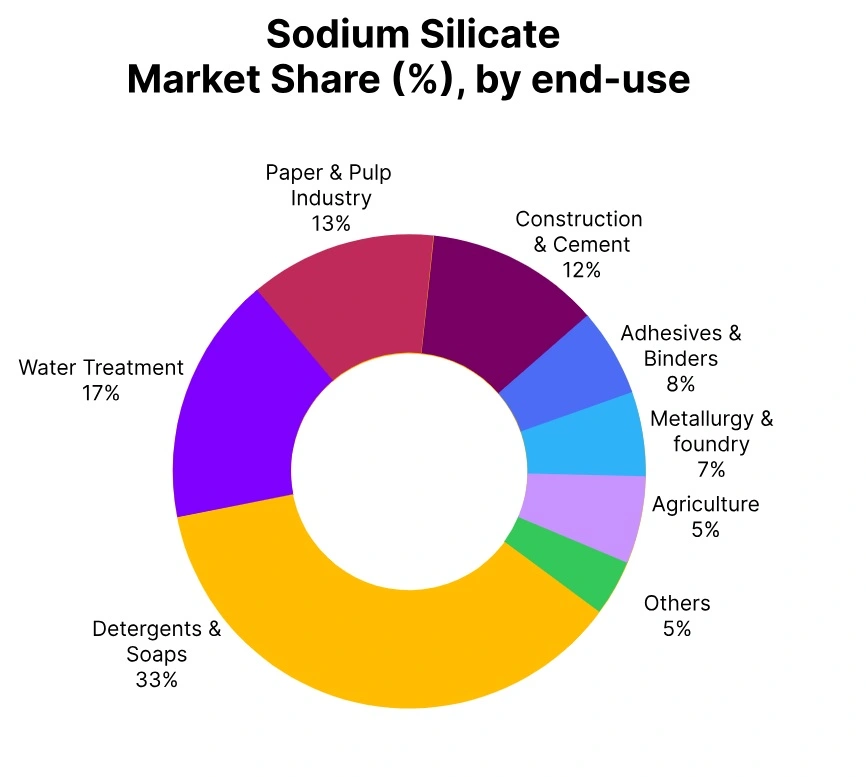
sodium silicate market share end use

Historically, several events have caused significant fluctuations in Sodium Silicate prices

  • 2020: COVID-19 Pandemic: The pandemic had a profound impact on supply chains worldwide, including sodium silicate production. Lockdowns and disruptions in logistics affected raw material availability and slowed production across many regions. Additionally, demand from key industries fluctuated due to economic uncertainty, causing significant volatility in sodium silicate prices. At times, reduced supply resulted in price increases, while weaker demand in some sectors led to short-term price declines. 
  • 2018-2019: Environmental Regulations in China: China, being one of the largest producers of sodium silicate, implemented stringent environmental regulations during these years. The government shut down several factories or forced them to upgrade equipment to reduce emissions. This led to a drop in global supply, tightening availability, and driving up sodium silicate prices. With limited alternatives, global buyers faced higher costs, particularly in sectors like detergents and adhesives. 
  • 2017: Raw Material Price Hikes: In 2017, rising prices of raw materials essential for sodium silicate production, such as soda ash (sodium carbonate), caused significant price hikes. Additionally, increasing energy costs, especially natural gas, added to the production expenses. Soda ash prices are closely tied to natural gas costs, so fluctuations in the energy sector impacted sodium silicate pricing globally. 
  • 2015-2016 Economic Slowdown: Global economic slowdown during this period led to reduced demand for sodium silicate, particularly from the construction and manufacturing sectors. This caused a temporary dip in prices as production capacity exceeded demand. 


These events underscore the Sodium Silicate market’s vulnerability to global disruptions and highlight the need for continuous monitoring of supply-demand dynamics.

Why Price Watch™?

Price Watch™ is your trusted resource for tracking global sodium silicate price trends. Our platform delivers real-time data and expert analysis, offering deep insights into the key factors driving price fluctuations in the sodium silicate market. By monitoring critical events such as geopolitical tensions, supply chain disruptions, and economic shifts, Price Watch™ keeps you fully informed of market dynamics.

In addition, Price Watch™ provides detailed forecasts and updates on production capacities, enabling you to anticipate market changes and make well-informed decisions. With Price Watch™, you gain a competitive edge in understanding all the elements that influence sodium silicate prices worldwide. Stay ahead of the curve with Price Watch’s™ reliable, accurate, and timely sodium silicate market data.

Track Price Watch's™ sodium silicate price assessment on a weekly basis since 2015 onwards, along with short-term forecasts, and get access to the detailed report in a downloadable format.

Sodium Silicate Market Price Trend published by Price Watch™ reflect prevailing spot market conditions, derived from independent research, verified trade inputs, and proprietary market intelligence as of the publication date. Prices are published on the specified Incoterm and represent indicative base market levels, exclusive of applicable taxes, VAT, duties, tariffs, and other statutory charges. Actual transaction values may vary depending on volume, credit terms, contractual structure, and other negotiated conditions. Market prices are inherently subject to volatility, liquidity dynamics, regulatory changes, and evolving trade activity. The information provided is for reference and benchmarking purposes only and does not constitute an offer, recommendation, or guarantee of transactional outcomes. Users should exercise independent commercial judgment and assess their specific contractual, regulatory, tax, and application requirements before making business decisions. Price Watch™ assumes no liability for decisions taken based on this information.

Energy costs play a significant role in the pricing of sodium silicate since its production involves high-temperature processes, such as melting raw materials like silica and soda ash in furnaces. Fluctuations in electricity and fuel prices can directly influence the cost of manufacturing sodium silicate, leading to price variations.

As energy costs increase, manufacturers may pass these costs onto buyers, raising the overall price of sodium silicate. Monitoring global energy trends is essential for procurement heads to anticipate potential price changes and plan accordingly.

Sodium silicate prices are heavily influenced by demand from key industries such as construction, paper and pulp, detergents, and water treatment. During periods of strong demand, such as during construction booms or increased manufacturing activities, sodium silicate prices can rise due to heightened competition for available supply.

Conversely, a downturn in these industries may lead to lower prices as supply outstrips demand. Procurement heads should track trends in these sectors to better predict pricing movements and adjust their sourcing strategies.

Long-term price trends for sodium silicate are shaped by several factors, including raw material availability, energy prices, environmental regulations, and advances in production technologies. Sustainable practices and the shift toward greener manufacturing processes may increase production costs in the short term but contribute to more stable pricing over time. To mitigate pricing volatility, procurement teams can negotiate long-term contracts with suppliers, diversify sourcing from multiple regions, and explore partnerships with producers investing in energy-efficient and sustainable production methods.

Sodium Silicate is a widely used industrial chemical, valued for its role as a binding and stabilizing agent in many applications. It is commonly used in detergents, construction materials, water treatment, and paper manufacturing. Known for its versatility and alkaline properties, Sodium Silicate plays an important role across industries such as construction, chemicals, and textiles.

Its pricing often has a direct impact on production costs, especially in sectors where it is used in large volumes. Price-Watch™ tracks these prices to help businesses and consumers understand and stay updated with market trends.

Prices for Sodium Silicate differ by location. Prices vary according to supply, demand, feedstock costs, and energy prices and are usually expressed per metric ton. Price-Watch™ provides real-time price assessments across different global markets to help buyers and sellers make informed decisions.

Sodium Silicate prices usually move in line with changes in key raw materials like silica and soda ash, along with shifts in energy costs that affect overall production. Market sentiment is also influenced by plant operating rates and demand from downstream sectors such as detergents, construction, water treatment, and paper, where Sodium Silicate is widely used.

Sodium Silicate sees strong demand from industries such as construction, detergents, and chemicals, where it is widely used as a binder, adhesive, and stabilizing agent. It also has steady consumption in water treatment and paper manufacturing due to its ability to control pH and improve processing efficiency.

Beyond these uses, many chemical and specialty manufacturers rely on Sodium Silicate in different formulations and production processes. Its importance mainly comes from its versatility, making it a key input across a wide range of industrial applications. Price-Watch™ analyses demand patterns across all these industries.

Sodium silicate is produced by the high-temperature fusion of silica sand, which is typically sourced from natural quartz. In this process, sand and soda ash are melted together under extreme thermal conditions, forming a clear, glass-like material. The final product is then dissolved and further processed to achieve the desired chemical purity and stability.

Sodium Silicate trade is mainly shaped by regional supply-demand dynamics and the availability of key raw materials like silica sand and soda ash. Countries like China and India lead production and exports, thanks to their robust chemical manufacturing base.

Export flows are driven by demand from sectors like detergents, construction, and water treatment, while factors like energy costs, environmental regulations, and plant maintenance can significantly shift global supply and pricing trends for all producers. Price-Watch™ tracks production levels, export flows and trade patterns to help businesses understand global supply chains and identify sourcing opportunities.

While local shortages occasionally pop up from plant shutdowns, feedstock issues, especially with soda ash and silica sand—shipping delays, or short-term demand shifts from downstream sectors, the market mostly stays balanced. Supply might tighten up briefly during scheduled maintenance or surprise production outages at key facilities.

Prices also tend to climb whenever production costs rise or the price of raw materials starts to move higher. Price-Watch™ monitors these supply-demand imbalances to alert the market about potential shortages or surpluses.

Sodium Silicate prices vary mainly based on the weight ratio and physical state, as these factors determine how well it works for specific industrial uses. It is commonly traded as a liquid solution, solid lumps, or fine powder. Higher-ratio grades, with precise silica-to-alkali levels and lower impurity content, typically command a premium since they are essential for sensitive applications like specialty chemicals, catalysts, and high-end detergents.

Price differences are largely driven by these chemical specs and the unique needs of each industry. Price-Watch™ provides separate price assessments for each grade to ensure market transparency.

Sodium Silicate prices typically move higher when demand strengthens across downstream sectors such as detergents, construction materials, water treatment, and paper manufacturing. During such periods, spot buyers may face tighter availability, longer lead times, or firmer offers, while suppliers often prioritize long-term contract commitments.

The availability and cost of key feedstocks, particularly soda ash and silica sand, along with plant operating rates, logistics, and energy-intensive furnace costs, can influence production flexibility and, in turn, shape overall pricing trends. Price-Watch™ captures these market dynamics in real-time.

Energy is a massive cost driver in Sodium Silicate production, especially during the high-heat fusion of sand and soda ash, which requires extreme temperatures and constant furnace operation. As a result, any spike in natural gas, electricity, or heavy fuel costs is often reflected in higher market prices as manufacturers pass on these heavy expenses. Global energy market shifts also influence the cost of raw materials, particularly soda ash, which is energy-intensive to refine.

Changes in mining and furnace economics, along with broader utility trends, can therefore have a direct impact on Sodium Silicate manufacturing costs and final pricing. This is why prices in regions with cheaper energy and integrated petrochemical feedstocks tend to be lower, a correlation that Price-Watch™ analyses in its price assessments & market reports.

Sodium Silicate prices across regions are influenced by factors such as the availability and cost of key feedstocks like silica, soda ash, energy prices, and transportation and logistics expenses. Import-export dynamics, plant operating rates, and the strength of demand from downstream industries such as detergents, construction, and papermaking also play an important role in shaping regional pricing.

Prices tend to be more competitive in regions with integrated chemical infrastructure and easier access to feedstocks, while areas with limited local production or higher logistics costs often see comparatively firmer price levels. Price-Watch™ tracks prices across all major regions to highlight these differences.

The outlook for the Sodium Silicate market depends on several factors, including energy costs, capacity additions, and scheduled plant maintenance or shutdowns. Feedstock pricing trends—particularly for soda and silica—along with demand growth from key end-use industries such as detergents, construction, papermaking, and sealants, will continue to shape market direction. Regional supply-demand balances, trade flows, and logistics costs also play an important role in determining pricing trends.

In addition, environmental regulations, plant operating rates, and broader macroeconomic conditions influencing industrial activity are expected to guide the overall trajectory of the Sodium Silicate market. Price-Watch™ regularly publishes detailed forecasts that project price movements for the next 12 months based on comprehensive analysis of supply additions, demand growth in key industries, seasonal patterns, and macroeconomic indicators. Our forecasts help businesses anticipate market conditions and plan accordingly.

Absolutely. Accurate forecasting allows you to time your purchases better, negotiate contracts more effectively, and budget more accurately. If Price-Watch™ forecasts predict a price increase in three months, you might choose to stock up now or lock in long-term contracts at current rates, potentially saving thousands of dollars.

Events that disrupt the production or movement of Sodium Silicate—such as natural disasters, trade tensions, plant accidents, feedstock shortages, or economic slowdowns—can lead to supply imbalances and price volatility. Market conditions are also influenced by shifts in demand from key downstream sectors, transportation constraints, and unplanned shutdowns or force majeure situations at major production facilities, often linked to maintenance or environmental compliance requirements.

Uncertainty in the market can increase during broader global disruptions, including pandemics or trade-related challenges, which affect the availability of soda ash and silica sand as well as the smooth flow of mineral-based chemicals across regions. Price-Watch™ provides timely alerts when such events affect the market.

Price-Watch™ collects data from manufacturers, distributors, and buyers worldwide to publish regular price assessments, market reports, and forecasts. Our transparent methodology and comprehensive coverage make us a trusted source for understanding fair pricing and market trends in the Sodium Silicate industry.