Stainless Steel Hot Rolled (hr) Plate Price Trend and Forecast

UNSPC code: 47131503
|
Weekly Update
|
Historical Data Since 2015
|
Forecast for 2026
  • Commodity Pricing

stainless steel hot rolled (hr) plate Price Trends by Country

cnChina
inIndia
usUnited States
deGermany
myMalaysia
thThailand
vnVietnam

Global stainless steel hot rolled (hr) plate Spot Market Prices, Trend Analysis and Forecast

Price-Watch’s most active coverage of Stainless Steel HR Plate price assessment:


Asia-Pacific

  • Stainless Steel HR Plate 304/2B-5mm, FOB Shanghai, China
  • Stainless Steel HR Plate 304/2B-5mm, Ex-Mumbai, India


North America

  • Stainless Steel HR Plate 304/2B-5mm, Del Alabama, USA


Europe

  • Stainless Steel HR Plate 304/2B-5mm, FD Willich, Germany


Note:
In assessments structured as CIF [Importing Port] (Exporting Country), the country mentioned in brackets indicates the primary origin of supply (exporting country), while the named port refers to the destination port in the importing country. Other Incoterms (FOB, FD, EXW, etc.) should be interpreted in accordance with standard international trade definitions.

Stainless Steel HR Plate Price Trend Q4 2025

In the fourth quarter of 2025, the global stainless steel HR Plate market showed mild declines overall, driven by steady nickel costs, softer industrial orders, and balanced mill schedules across regions. China and Germany faced pricing pressure from high inventories and export competition, while the USA held flat amid stable demand. India saw a slight dip due to seasonal factors, reflecting cautious buyer activity in a steady but softening landscape.

Stainless Steel HR Plate 304/2B-5mm, FOB Shanghai, China

According to Price-Watch™ , The price trend of stainless-steel HR Plate in China declined by 1.5% in Q4 2025, mainly due to excess stock buildup at coastal warehouses and weak orders from chemical equipment makers. Mills cut production runs for 304 and 316 grades amid low power quotas in key provinces, adding to supply overhang. Nickel pig iron availability stayed ample, limiting cost support, while exports to Southeast Asia slowed on anti-dumping probes.

Heavy plate users in heavy machinery deferred buys awaiting policy clarity. Stainless steel HR Plate prices in China fell by -0.1% in December 2025 as year-end destocking faltered with mills prioritizing contracts over spot sales. Traders offered small discounts to clear 304L lots, but demand from rail and shipbuilding stayed muted. Stable alloy inputs prevented sharper drops, steadying the close.

Stainless Steel HR Plate 304/2B-5mm, Ex-Mumbai, India

The price trend of stainless-steel HR Plate in India declined by 0.8% in Q4 2025, linked to post-monsoon slowdowns in fabrication and competition from cheap imports via Mundra ports. Domestic producers like Jindal held firm on 304 sheets but conceded on thicker 316L plates amid buyer pushbacks. Scrap recycling rates rose, easing raw material needs, yet festive pauses curbed offtake from pharma tanks.

Localized duties offered minor shields without reversing sentiment. Stainless steel HR Plate prices in India fell by -0.8% in December 2025 with prolonged holiday lulls hitting vessel and tank inquiries. Service centers trimmed promotions to move 10-20mm gauges, facing thin trading volumes. Budget expectations kept speculators sidelined, extending the mild correction.

Stainless Steel HR Plate 304/2B-5mm, Del Alabama, USA

The price trend of stainless-steel HR Plate in the USA held flat in Q4 2025, balancing steady aerospace pulls with softer construction bids under high rates. Outokumpu and Acerinox allocations firmed for Q1, offsetting scrap volatility in Midwest hubs. Section 232 quotas curbed Asian flows, aiding domestic gauge availability. Energy sector plates saw selective strength absent broader lifts.

Stainless steel HR Plate prices in the USA fell by -0.6% in December 2025 as end-user caution grew ahead of fiscal shifts. Distributors covered essentials only, pressuring merchant quotes on 304 and duplex lines. Tariff renewals propped floors, muting downside momentum.

Stainless Steel HR Plate 304/2B-5mm, FD Willich, Germany

The price trend of stainless-steel HR Plate in Germany declined by 0.9% in Q4 2025, from sluggish auto supplier calls and high energy levies squeezing ThyssenKrupp margins on 1.4301 grades. EU import licensing tightened flows from India, yet channel stocks exceeded norms post-maintenance. Alloy surcharges eased slightly versus flat carbon, with chemical tanks deferring amid recession fears. Regional fabricators favored CRC alternatives selectively.

Stainless steel HR Plate prices in Germany fell by -0.9% in December 2025 amid festive halts and mill holiday idles curbing fresh offers. Buyers locked minimal volumes for January continuity, thinning spot liquidity. Euro weakness aided minor export bids, tempering the slide.

Stainless Steel Hot Rolled (HR) Plate Price Trend Analysis: Q4 2025

In Q3 2025, the global stainless steel hot rolled plate market displayed a mixed trend, with overall sentiment remaining cautious amid uneven demand recovery across industrial and construction sectors. Stable raw material costs and adequate supply kept pricing largely restrained, while import competition limited upward movement.

Marginal restocking activity toward the quarter’s end provided brief support, but overall market momentum stayed subdued. By September, prices showed only minor fluctuations, reflecting a balanced yet cautiously optimistic outlook for the near term.

USA: Stainless Steel Hot Rolled Plate Prices EX Alabama, USA, Grade- 304/2B-5mm.

According to Price-Watch, The Stainless Steel Hot Rolled Plate price trend in the USA rose by 1.14% in Q3 2025, supported by firm demand from heavy machinery manufacturing, energy sector projects, and defense-related procurement. Tight domestic supply due to mill maintenance schedules contributed to upward price movement.

Strength in specific regional markets helped offset mixed demand from other sectors, while imports remained limited compared to historical levels. Stainless Steel Hot Rolled Plate prices in the USA edged up marginally by 0.03% in September 2025, reflecting stable market conditions and marginal procurement activity from distributors aiming to keep inventories balanced ahead of Q4, with overall sentiment remaining largely neutral.

Germany: Stainless Steel Hot Rolled Plate Domestic prices FD- Willich, Germany, Grade- 304/2B-5mm.

The Stainless Steel Hot Rolled Plate price trend in Germany declined by 1.39% in Q3 2025, as weakened demand from automotive and industrial equipment sectors combined with competitive import offers from neighboring European markets kept prices under downward pressure. Domestic mills-maintained production pace but faced challenges in export competitiveness amid fluctuating currency rates and softer global demand.

However, Stainless Steel Hot Rolled Plate prices in Germany rose marginally by 0.17% in September 2025, aided by short-term restocking from select industrial consumers and improved orders from fabrication businesses, although the increase remained modest given the overall sluggish market environment in the later stages of the quarter.

China: Stainless Steel Hot Rolled Plate Export prices FOB Shanghai, China, Grade- 304/2B-5mm.

According to Price-Watch, in China, the Stainless Steel Hot Rolled Plate price trend in Q3 2025 exhibited a decrease of 1.54%, primarily due to weak demand from construction, machinery, and shipbuilding markets impacting slowing production from domestic mills resulting in oversupply despite some spot buying.

For exports, a lower volume of overseas orders along with competitiveness challenges around currency added to lackluster demand, which created downward pressure on pricing. Stable raw material costs offered little support, while buyer’s sentiments remained cautious from spot buying and speculative forward purchases leading into Q4 market conditions.

In September 2025, SS HR Plate prices in China decreased by 0.61% due to the impact of the seasonal ease in demand, coupled with continued reduced buying from distributors to manage their inventories, while preparing for potentially softened demand moving into the New Year.

India: Stainless Steel Hot Rolled Plate Plate Domestic prices EX-Mumbai, India, Grade- 304/2B-5mm.

According to Price-Watch, the Stainless Steel Hot Rolled Plate price trend in India decreased by 1.52% in Q3 2025, driven by subdued consumption from the engineering and fabrication industries as well as infrastructure projects moving at a slower pace. Imports from Asian suppliers added price pressure, forcing domestic producers to offer competitive rates despite stable production costs.

Limited growth in manufacturing activity prevented any recovery in demand. Stainless Steel Hot Rolled Plate prices in India increased by 0.59% in September 2025, supported by restocking ahead of festive season requirements and select large-scale project procurements, which provided a mild boost to spot transactions despite the broader market’s cautious sentiment.

According to PriceWatch, In Q2 2025, stainless steel HR plate prices in China decreased from $1,856 per metric tonne in Q1 to $1,834 per metric tonne in Q2, a 1.19% decline. This drop reflects ongoing oversupply, muted construction and manufacturing demand, and limited export opportunities. Despite some government stimulus for infrastructure, downstream consumption remained weak, and Chinese mills continued to operate at high capacity, contributing to inventory build-up.

Export demand was also constrained by global trade frictions and competition from other Asian suppliers. As a result, producers were often forced to lower prices to maintain sales volumes, keeping the overall market under pressure throughout the quarter. 

In the United States, stainless steel HR plate prices rose by 1.66% in Q2. The US market was buoyed by strong demand from energy, defense, and heavy equipment sectors, as well as ongoing infrastructure initiatives. Domestic mills benefited from trade protections and limited foreign competition, allowing them to implement price increases.

Higher raw material and energy costs were also passed on to buyers. The combination of robust end-user demand and supply-side discipline made the US one of the strongest stainless HR plate markets globally in Q2 2025. 

In Germany, stainless steel HR plate prices increased by 0.74% in Q2. The German market saw modest gains, supported by stable demand from engineering, machinery, and process industries, along with higher input costs.

While competition from imports and cautious buying behavior persisted, local producers benefited from their reputation for high-quality products and the gradual recovery of industrial activity in Europe. Anticipation of further trade measures to protect the regional market also contributed to a firmer price environment, resulting in a slight but steady quarterly increase. 

According to PriceWatch, Indian stainless steel HR plate prices edged down a 0.14% decrease from approximately $2,219 per metric tonne in Q1 to $2,216 per metric tonne in Q2. The Indian market remained relatively stable, supported by steady demand from infrastructure, engineering, and process industries.

While there was some downward pressure from global trends and mild corrections in raw material costs, robust domestic consumption and limited import competition helped prevent a sharper decline. The rupee’s stability and ongoing government investment in infrastructure projects provided a floor for prices, ensuring only a marginal quarterly decrease. 

The first quarter of 2025 opened with Chinese stainless steel HR plate prices experiencing a decline to $1856/MT, FOB Shanghai for the quarter as against $1873/MT, FOB Shanghai in Q4 2024, primarily attributed to post-holiday inventory adjustments and cautious buyer sentiment following the Chinese New Year period, as manufacturers worked through accumulated stock levels amid subdued immediate demand.

The US market demonstrated resilience with modest price improvements, reflecting optimistic market sentiment driven by anticipated infrastructure spending and renewed industrial confidence in the new year. Germany maintained its positive trajectory with continued price strengthening, indicating robust European demand and stable supply conditions that supported buyer confidence.

In contrast, the Indian market witnessed price corrections after sustained growth in previous quarters, suggesting a natural market adjustment as prices normalized following extended upward momentum. The quarter overall reflected a mixed global landscape with regional markets responding to their respective seasonal patterns and local economic conditions. 

The first quarter of 2025 brought a price correction to India’s stainless steel HR plate market, with prices declining to USD 2256/MT, representing a decrease from USD 2262/MT from the previous quarter’s peak levels. This moderation followed the typical post-festive season adjustment pattern as demand normalized after the Q4 2024 consumption surge.

Despite the quarterly decline, market fundamentals remained sound with sustained underlying demand from key industrial sectors. The price correction was viewed as a healthy market adjustment rather than a fundamental weakness, with industry participants maintaining cautiously optimistic outlook for the remainder of 2025 based on government infrastructure commitments and improving economic indicators. 

Stainless Steel Hot Rolled (HR) Plate Price Trend Analysis: Q4 2024

In Q4 2024, The fourth quarter of 2024 HR Plate presented a divergent picture across global stainless steel HR plate markets. Chinese prices showed upward movement after three quarters of stability, potentially reflecting seasonal demand patterns or supply-side adjustments. The US market experienced a reversal from its recovery trend, with prices declining despite earlier positive momentum, possibly due to inventory corrections or seasonal demand fluctuations.

Germany saw price moderation after the strong gains in previous quarters, indicating market normalization and potential demand-supply rebalancing. India continued its steady upward trajectory with further price increases, demonstrating the market’s underlying strength and sustained demand growth. The quarter highlighted the regional variations in market dynamics as different economies responded to varying domestic and international factors. 

Q4 2024 

India’s stainless steel HR plate market concluded 2024 on a strong note, with prices reaching USD 2262/MT, marking a significant increase from Q3 2024 levels. This substantial price appreciation reflected peak demand conditions driven by year-end project completions and pre-buying activities ahead of anticipated price increases.

The festive season consumption surge, combined with robust construction and manufacturing activities, created favourable market conditions. Strong export demand and limited domestic supply availability further supported the upward price momentum, positioning the Indian market as one of the best-performing regions globally during this period. 


The third quarter of 2024 HR Plate continued the positive momentum observed in the previous quarter, with most markets showing further price strengthening. China maintained its consistent pricing pattern, reflecting well-balanced market fundamentals and steady production levels. The US market sustained its recovery path with continued price improvements, driven by enhanced manufacturing activity and improved economic indicators.

Germany recorded the most significant price gains during this period, indicating strong European demand and possible supply constraints. India followed the global trend with moderate price increases, supported by ongoing industrialization and construction sector growth. Q3 2024 represented a period of synchronized global market strengthening. 

Q3 2024 

The third quarter of 2024 sustained India’s positive market trajectory, with stainless steel HR plate prices advancing to USD 2238/MT, representing a gain from the previous quarter. This continued price appreciation reflected strong domestic consumption patterns and robust economic activity across multiple sectors.

The festive season preparation drove additional demand from consumer goods and automotive sectors, while ongoing infrastructure development projects maintained steady consumption levels. Raw material cost pressures and supply chain optimization efforts also contributed to the price strengthening, indicating a well-balanced market environment with healthy demand-supply dynamics. 

The second quarter of 2024 SS HR Plate marked a period of gradual market recovery and stabilization across key regions. Chinese stainless steel HR plate prices remained remarkably stable, indicating mature market conditions and consistent demand patterns. The US market showed signs of recovery with modest upward price movements, suggesting improved industrial activity and restocking by end-users.

Germany experienced notable price appreciation during this quarter, reflecting strengthening European demand and potential supply chain adjustments. The Indian market maintained its steady trajectory with slight price increases, supported by robust domestic consumption and infrastructure development activities. The quarter overall demonstrated improved market sentiment compared to Q1. 

Q2 2024 

India’s stainless steel HR plate market demonstrated recovery momentum in the second quarter of 2024, with prices rising to USD 2227/MT, marking an increase from USD 2220/MT from Q1 2024 levels. This upward movement signalled renewed market confidence as industrial activity picked up pace and infrastructure projects gained traction.

The price recovery was supported by improved domestic demand from key consuming sectors including automotive, construction, and heavy engineering industries. Favorable monsoon predictions and government infrastructure spending commitments further bolstered market sentiment, creating a positive environment for sustained demand growth. 

The first quarter of 2024 witnessed a mixed performance across major stainless steel HR plate markets globally. The Chinese market maintained relative stability with minimal price fluctuations, reflecting steady domestic demand and controlled supply conditions. In contrast, the US market experienced significant downward pressure, with prices declining substantially from the previous quarter’s levels, indicating potential oversupply conditions or weakened industrial demand.

Germany showed modest price corrections during this period, while the Indian market demonstrated resilience with marginal price changes, suggesting balanced supply-demand dynamics in the region. Overall, Q1 2024 reflected a period of market adjustment following the previous quarter’s trends. 


Q1 2024 

The first quarter of 2024 witnessed a marginal decline in India’s stainless steel HR plate market, with prices settling at USD 2220/MT, down from Q4 2023. This modest price correction reflected typical post-festive season adjustments as demand normalized following the December holiday period.

The Indian market demonstrated resilience despite global economic uncertainties, with the decline primarily attributed to temporary inventory corrections and cautious purchasing patterns among end-users. Manufacturing sectors showed steady demand, while construction activities maintained their momentum, providing underlying support to the market fundamentals. 

Technical Specifications of Stainless Steel Hot Rolled (hr) Plate Price Trends

Product Description

Stainless steel hot rolled (HR) plate is a flat-rolled product manufactured by hot rolling stainless steel slabs at high temperatures. This process produces plates with excellent mechanical strength, good weldability, and uniform surface finish, making them suitable for structural, industrial, and fabrication applications.

Identifiers and Classification:

  • HS Code – 721921


Stainless Steel HR Plate Grades Specific Price Assessment:

  • Stainless Steel HR Plate 304/2B-5mm Price Trend


Stainless Steel HR Plate Global Trade and Shipment Terms

  • Quotation Terms (Product & Country Specific): 15-20 MT, 28-30 MT and 50-60 MT
  • Packaging Type (Product & Country Specific): Container


Incoterms Referenced in Stainless Steel HR Plate Price Reporting

Shipping Term  Location  Definition 
FOB Shanghai  China  Stainless Steel HR Plate Export price from China 
Del Alabama  USA  Imported Stainless Steel HR Plate price in USA 
FD Willich  Germany  Export Stainless Steel HR Plate price from Germany 
EX-Mumbai  India  Domestically Traded Stainless Steel HR Plate price in India 

*Quotation Terms refers to the quantity range specified for the Stainless-Steel HR Plate being quoted or offered in a commercial transaction.

**Packaging Type refers to standard packaging size commonly used for Stainless Steel HR Plate packing, ease of handling, transportation, and storage in industrial and commercial applications.

Key Stainless-Steel HR Plate Manufacturers

Manufacturer 
Outokumpu   
Jindal Stainless   
Acerinox   
POSCO Stainless   
Thyssenkrupp   
Baosteel 
Tsingshan Holding Group   
Nippon Steel Corporation   

Stainless Steel Hot Rolled (hr) Plate Industrial Applications

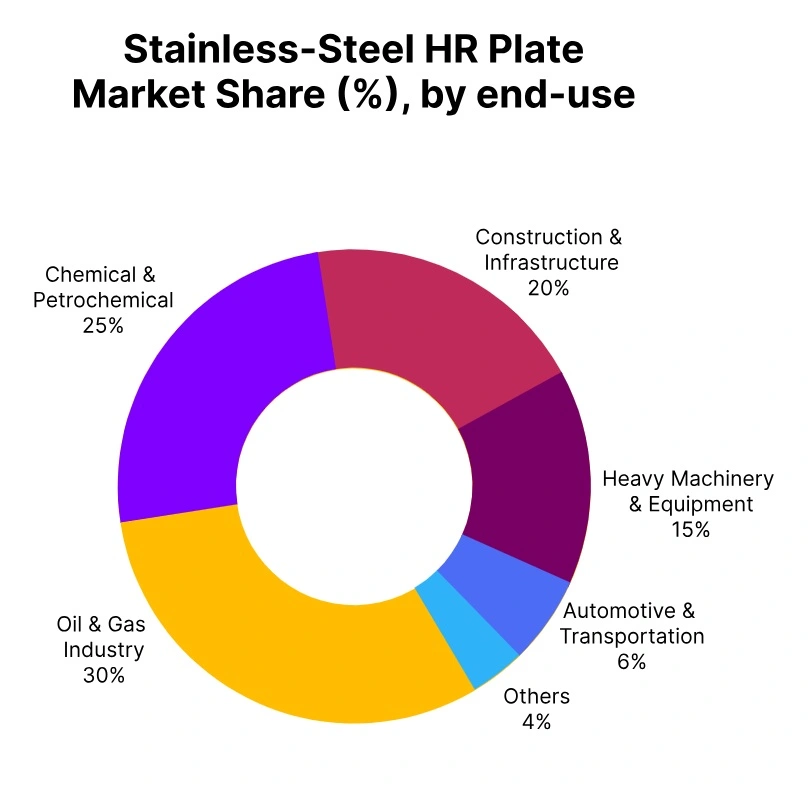
Stainless Steel HR Plate Market Share end Use

Historically, several events have caused significant fluctuations in Stainless Steel Hot Rolled (hr) Plate prices

  • Raw Material and Energy Price Surge (2021-2022): The global energy crisis, particularly the surge in natural gas and electricity prices during 2021-2022, directly impacted the production costs of stainless steel. High energy prices affected the operations of major steel mills, driving up production costs, which were subsequently reflected in the final prices of stainless steel HR plates.  
  • Raw Material Price Volatility: Fluctuations in the prices of key raw materials such as nickel and chromium played a significant role in influencing stainless steel prices. Nickel, in particular, saw large price swings, with prices climbing in 2019. 
  • Global Supply Chain Disruption (2022): The war in Ukraine and other geopolitical tensions disrupted supply chains, leading to price volatility in various commodities, including stainless steel HR plate. 
  • COVID-19 Pandemic (2019-2020): The global pandemic led to a significant decline in demand for stainless steel HR plate-intensive industries, such as steelmaking and automotive manufacturing, causing prices to plummet. 
  • Global Economic Downturn (2019-2020): The global economic slowdown, particularly in sectors like steel and automotive, led to reduced demand for stainless steel HR plate, resulting in lower prices. 


These events underscore the
stainless steel HR plate market’s vulnerability to global disruptions and highlight the need for continuous monitoring of supply-demand dynamics.
 

Why Price Watch™?

Price Watch™ is your trusted resource for tracking global stainless steel hot rolled (hr) plate price trends. Our platform delivers real-time data and expert analysis, offering deep insights into the key factors driving price fluctuations in the stainless steel hot rolled (hr) plate market. By monitoring critical events such as geopolitical tensions, supply chain disruptions, and economic shifts, Price Watch™ keeps you fully informed of market dynamics.

In addition, Price Watch™ provides detailed forecasts and updates on production capacities, enabling you to anticipate market changes and make well-informed decisions. With Price Watch™, you gain a competitive edge in understanding all the elements that influence stainless steel hot rolled (hr) plate prices worldwide. Stay ahead of the curve with Price Watch’s™ reliable, accurate, and timely stainless steel hot rolled (hr) plate market data.

Track Price Watch's™ stainless steel hot rolled (hr) plate price assessment on a weekly basis since 2015 onwards, along with short-term forecasts, and get access to the detailed report in a downloadable format.

Stainless Steel Hot Rolled (hr) Plate Market Price Trend published by 𝐏𝐫𝐢𝐜𝐞 𝐖𝐚𝐭𝐜𝐡™ reflect prevailing spot market conditions, derived from independent research, verified trade inputs, and proprietary market intelligence as of the publication date. Prices are published on the specified Incoterm and represent indicative base market levels, exclusive of applicable taxes, VAT, duties, tariffs, and other statutory charges. Actual transaction values may vary depending on volume, credit terms, contractual structure, and other negotiated conditions. Market prices are inherently subject to volatility, liquidity dynamics, regulatory changes, and evolving trade activity. The information provided is for reference and benchmarking purposes only and does not constitute an offer, recommendation, or guarantee of transactional outcomes. Users should exercise independent commercial judgment and assess their specific contractual, regulatory, tax, and application requirements before making business decisions. 𝐏𝐫𝐢𝐜𝐞 𝐖𝐚𝐭𝐜𝐡™ assumes no liability for decisions taken based on this information.

The price of Stainless-Steel HR plate (SSHR) is influenced by several key factors, including:

1. Raw Material Costs

Prices of Nickel, Chromium, and Iron fluctuate based on market demand and supply.

Nickel is especially volatile and significantly impacts SS 304 pricing.

2. Market Demand and Supply

High demand from industries like construction, automotive, and manufacturing raises prices.

Supply chain disruptions (e.g., raw material shortages, logistics issues) can increase costs.

3. Production Costs

Energy costs, including electricity and fuel for steel production.

Labor costs in manufacturing and processing.

Technology and automation level in the production process.

4. Global Economic Conditions

Inflation, interest rates, and currency exchange rates impact raw material imports and pricing.

Trade policies, tariffs, and duties imposed by different countries.

5. Quality and Specifications

Grade of steel (e.g., 304, 316, 430) affects cost due to different compositions.

Thickness, width, and surface finish (No.1, 2B, HRAP) also determine price.

6. Freight and Logistics Costs

Transportation costs for shipping raw materials and finished coils.

Availability of containers and shipping routes.

7. Government Regulations and Taxes

Import/export duties, anti-dumping duties, and environmental compliance costs.

Certification requirements (ISO, ASTM) affecting production expenses.

8. Seasonal and Regional Variations

Prices may fluctuate based on regional demand-supply dynamics.

Seasonal demand from industries like construction can cause price hikes.

PriceWatch, a leading procurement intelligence firm, offers a comprehensive suite of tools and services to help you effectively track Stainless Steel HR plate prices.

Some of the key benefits of using PriceWatch include:

 Real-time Data: Access to up-to-date market intelligence and data on commodity supply chains.

Expert Analysis: Insights from industry experts to interpret market trends and identify potential risks.

Risk Assessment: Tools to assess supply chain vulnerabilities and develop mitigation strategies.

Benchmarking: Comparisons of Stainless-Steel HR plate prices and sourcing practices to optimize procurement decisions.

Supplier Intelligence: Detailed information on suppliers, including their financial health, production capacity, and sustainability practices.

Stainless Steel HR Plate is hot-rolled plate made from corrosion-resistant alloys like 304, 316, or duplex grades, used for heavy-duty fabrication. Its price affects industries like chemical processing, construction, and heavy machinery. 𝐏𝐫𝐢𝐜𝐞 𝐖𝐚𝐭𝐜𝐡™ tracks these prices to help businesses and consumers understand and stay updated with the market trends.

Stainless Steel HR Plate prices vary by region and market conditions. Prices are typically quoted per metric ton or per pound and fluctuate based on global supply, import/export flows, industrial demand, and currency exchange rates. 𝐏𝐫𝐢𝐜𝐞 𝐖𝐚𝐭𝐜𝐡™ provides real-time price assessments across different global markets to help buyers and sellers make informed decisions.

Prices fluctuate due to nickel and chromium costs, stainless slab availability, mill maintenance, and demand from chemicals, oil & gas, and construction. Exchange rates, logistics costs, and global economic conditions also influence trends.

Major consumers include chemical equipment, oil & gas, power generation, heavy fabrication, shipbuilding, and infrastructure. 𝐏𝐫𝐢𝐜𝐞 𝐖𝐚𝐭𝐜𝐡™ analyses demand patterns across all these industries.

Stainless Steel HR Plate is produced by hot-rolling slabs from electric arc furnaces or AOD refining, using nickel-chrome-moly alloys, followed by heat treatment and pickling for surface quality.

China is the world’s largest exporter, followed by Taiwan, South Korea, Japan, and India. Export volumes vary with domestic policies, environmental regulations, and international demand. 𝐏𝐫𝐢𝐜𝐞 𝐖𝐚𝐭𝐜𝐡™ tracks production levels, export flows and trade patterns to help businesses understand global supply chains and identify sourcing opportunities.

Supply generally meets demand, but disruptions may occur due to alloy shortages, rolling mill outages, or spikes in heavy industry orders. 𝐏𝐫𝐢𝐜𝐞 𝐖𝐚𝐭𝐜𝐡™ monitors these supply-demand imbalances to alert the market about potential shortages or surpluses.

Grades include austenitic (304/316), ferritic (430), martensitic (410), duplex (2205), and high-strength like 17-4PH; prices vary by alloy content, thickness (3-100mm), and corrosion resistance needs. 𝐏𝐫𝐢𝐜𝐞 𝐖𝐚𝐭𝐜𝐡™ provides separate price assessments for each grade to ensure market transparency.

When demand rises, for example: from refinery expansions or chemical plant builds, prices typically climb. Suppliers may prioritize certain customers, and lead times can extend. 𝐏𝐫𝐢𝐜𝐞 𝐖𝐚𝐭𝐜𝐡™ captures these market dynamics in real-time.

Stainless HR Plate production is energy intensive in melting, rolling, and annealing. Rising electricity, natural gas, or coal costs often get passed on to buyers. This is why prices in regions with cheaper electricity tend to be lower, a correlation that 𝐏𝐫𝐢𝐜𝐞 𝐖𝐚𝐭𝐜𝐡™ analyses in its price assessments & market reports.

Regional variations arise from import dependency, shipping costs, currency fluctuations, and local demand. 𝐏𝐫𝐢𝐜𝐞 𝐖𝐚𝐭𝐜𝐡™ tracks prices across all major regions to highlight these differences.

Forecasts depend on production capacity, Chinese export policies, industrial demand, and macroeconomic factors. 𝐏𝐫𝐢𝐜𝐞 𝐖𝐚𝐭𝐜𝐡™ regularly publishes detailed forecasts that project price movements for the next 12 months based on comprehensive analysis of supply additions, demand growth in key industries, seasonal patterns, and macroeconomic indicators. Our forecasts help businesses anticipate market conditions and plan accordingly.

Yes. Accurate forecasts allow businesses to optimize purchasing, negotiate contracts, and manage inventories. If 𝐏𝐫𝐢𝐜𝐞 𝐖𝐚𝐭𝐜𝐡™ forecasts predict a price increase in three months, you might choose to stock up now or lock in long-term contracts at current rates, potentially saving thousands of dollars.

Events such as Chinese export restrictions, mill shutdowns, environmental regulations, or economic shocks can cause supply shortages and price volatility. 𝐏𝐫𝐢𝐜𝐞 𝐖𝐚𝐭𝐜𝐡™ provides timely alerts when such events affect the market.

𝐏𝐫𝐢𝐜𝐞 𝐖𝐚𝐭𝐜𝐡™ collects data from manufacturers, distributors, and buyers worldwide to publish regular price assessments, market reports, and forecasts. Our transparent methodology and comprehensive coverage make us a trusted source for understanding fair pricing and market trends in the Stainless Steel HR Plate industry.