Steel Beam Price Trend and Forecast

UNSPC code: 30101704
|
âźł Weekly Update
|
Historical Data Since 2015
|
Forecast for 2026
  • Commodity Pricing

steel beam Price Trends by Country

usUnited States
gbUnited Kingdom
cnChina

Global steel beam Spot Market Prices, Trend Analysis and Forecast

Steel Beam Price Trend Q3 2025

In Q3 2025, Steel Beam has shown mixed market trend globally with average prices falling around 1.08% since last quarter. Demand has been uneven across various regions. Some regions showed balanced demand supported by construction industry, while other regions saw weaker demand driven by slower construction activity.

In this quarter localised demand for construction/infrastructure projects in Southeast Asia and MEA supported some price stability. On the other hand, prices in some parts of Europe and North America softened due to overcapacity and soft demand. The cost of raw materials has been remained stable during the quarter, but uncertainty in the wider steel market added to a weaker outlook.

USA

Steel Beam EX-Illinois, USA, Q235 300*300mm.

In the United States, Steel Beam prices declined by approximately 1.76% compared to the previous quarter in the third quarter of 2025 due to moderate demand from the non-residential construction and infrastructure sectors. Project delays, tighter budgets, and cautious procurement from the downstream buyers contributed to the overall softness in the market.

On the other hand, input costs such as scrap and energy remained relatively firm. Increased domestic availability and competitive pricing among regional mills placed additional downward pressure on prices. Overall, the market sentiment leaned mildly bearish, prompting producers to scale back output in certain areas to prevent further oversupply.

In September 2025, Steel Beam prices in the U.S. edged down by around 0.74%, driven by stable but subdued demand conditions and adequate supply levels. Despite the short-term softness, expectations remain cautiously optimistic for Q4, supported by anticipated project restarts and public infrastructure spending initiatives.

UK

Steel Beam FD Sheffield, UK, Q235 300*300mm.

In Q3 2025, the Steel beam price trend in the United Kingdom declined by approximately 1.23% compared to the previous quarter, amid subdued activity in the commercial construction and infrastructure sectors. Market conditions were affected by cautious spending, slower project approvals, and ongoing economic uncertainty, which led to restrained procurement across the supply chain.

Although raw material prices and energy costs remained largely stable, persistent competition among domestic suppliers and adequate inventory levels contributed to the downward pressure. Steel Beam prices in the UK edged down marginally by around 0.01% in September 2025, reflecting steady supply and muted demand without any significant pricing momentum.

China

Steel Beam FOB Shanghai, China, Q235 300*300mm.

In the third quarter of 2025, the Steel beam price trend in China fell 2.31% from the previous quarter, primarily due to reduced activity in end-use markets of construction, infrastructure and fabrication. The combination of low procurement activity by downstream contractors and moderated export orders contributed to the price weakness.

While the price of raw materials and energy remained stable, oversupply in certain grades as well as increased competition between domestic mills, added downward price pressure in the market. Overall, the market displayed a mildly bearish sentiment, with suppliers adjusting output levels and managing inventories for balance.

In September 2025, Steel Beam prices fell 0.97% due to moderate domestic demand and steady industrial activity. Ample supply levels and stable production contributed to the marginal downward adjustment.

As a whole, the Steel Beam market in China reflected a largely stable price trend with mild softening in the 3rd quarter of 2025 underpinned by expectations of gradual stabilization in the 4th quarter as project activity and downstream demand appear to be recovering.

Steel Beam Price Trend Analysis: Q2 2025

According to the PriceWatch, In Q2 2025, steel beam prices declined by $478.10 per metric ton, marking a 2.5% drop from the previous quarter. This continued downward movement reflects ongoing softness in demand, possibly influenced by subdued construction activity, delayed infrastructure spending, or global economic uncertainty. The cumulative effect of back to back quarterly declines suggests that the market is still adjusting to oversupply or reduced project pipelines.

While the price drop remains moderate, it may signal the need for producers to reevaluate output levels and pricing strategies. For buyers, the sustained decrease offers more favorable purchasing conditions, but it also raises questions about the broader health of demand in the steel consuming sectors.

According to the PriceWatch, In Q1 2025, steel beam prices experienced a mild decline of $490.38 per metric ton, representing a 1.35% decrease from the previous quarter. This modest drop indicates a relatively stable market, with slight downward pressure likely due to seasonal slowdowns in construction activity and lingering caution in the global economy.

While the decrease is less severe than in previous quarters, it suggests that demand has yet to fully rebound despite the Q4 2024 price recovery. The steel industry may still be navigating excess inventory or adjusting to more conservative purchasing behaviours, while buyers benefit from marginally lower input costs heading into the new fiscal year.

Steel Beam Price Trend Analysis: Q4 2024

According to the PriceWatch, In Q4 2024, the steel beam market reversed its downward trend, posting a price increase of $497.10 per metric ton, equivalent to a 3.17% rise from the previous quarter. This rebound suggests renewed demand momentum, possibly driven by end of year construction activity, infrastructure project acceleration, or restocking by distributors anticipating future price hikes.

After two consecutive quarters of decline, this moderate uptick may also reflect stabilization in raw material costs and improved market sentiment. While still below peak levels seen earlier in the year, the increase signals a potential recovery phase, offering cautious optimism for producers while prompting buyers to reassess timing for future purchases.

According to the PriceWatch, In Q3 2024, steel beam prices continued their downward trajectory, dropping by $481.81 per metric ton, a significant 9.44% decrease from the previous quarter. This sharper decline indicates mounting pressure on the market, likely due to softening global demand, particularly in construction and industrial sectors, coupled with a possible oversupply from earlier production surges.

The cumulative effect of consecutive quarterly price drops may signal broader economic caution or shifts in investment patterns. For buyers, the trend offered more competitive procurement opportunities, while producers faced growing challenges in maintaining profitability, potentially prompting production cuts or strategic reassessments in the coming quarters.

According to the PriceWatch, In Q2 2024, the steel beam market saw a substantial price decline of $532.06 per metric ton, representing a 5.31% decrease from the previous quarter. This drop indicates a shift in market dynamics, likely driven by easing supply chain pressures, reduced demand in key construction and manufacturing sectors, or a correction following the price surge in Q1.

The notable percentage decrease suggests that supply outpaced demand or that global economic factors, such as lower raw material costs or slower infrastructure spending, influenced pricing. For buyers, this presented a more favourable cost environment, while producers may have faced tighter margins and potential inventory adjustments.

According to the PriceWatch, In Q1 2024, the steel beam market experienced a notable price increase of $561.91 per metric ton, marking a 3.07% rise compared to the previous quarter. This upward trend reflects tightening supply chains, elevated raw material costs, and sustained demand from key sectors such as construction and infrastructure development.

The moderate yet significant percentage increase suggests that while market fundamentals remain relatively stable, external pressures such as energy prices or logistical challenges may be influencing cost structures. Buyers and contractors faced higher input costs, potentially impacting project budgets and timelines, while producers benefited from improved margins amid steady demand.

Technical Specifications of Steel Beam Price Trends

Product Description

A steel beam is a structural element made from steel, designed to support loads and resist bending. Common shapes include I-beams (also known as H-beams or universal beams), T-beams, and wide flange beams. Steel beams are fabricated using hot-rolling or welding processes and are critical components in building frameworks, bridges, and other infrastructure. Their high strength-to-weight ratio, ductility, and durability make them ideal for supporting vertical and horizontal loads in construction.

Identifiers and Classification:

  • HS Code – 721631

Steel Beam Synonyms: –

  • I-beam
  • H-beam
  • Universal Beam (UB)
  • Wide Flange Beam (WFB)

Steel Beam Grades Specific Price Assessment:

  • Steel Beam Q235 300*300mm Price Trend
  • Steel Beam 8*8-inch. Price Trend

Steel Beam Global Trade and Shipment Terms

* Quotation Terms (Product & Country Specific): 15-18MT, 200-300 MT

** Packaging Type (Product & Country Specific): Container

Incoterms Referenced in Steel Beam Price Reporting

Shipping Term  Location  Definition 
FOB Shanghai  Shanghai, China  Steel Beam Export price from China 
EX Illinois   Illinois, USA  Domestically Traded Steel Beam price in USA 
FD Sheffield   Sheffield, UK  Domestically Traded Steel Beam price in UK 

*Quotation Terms refers to the quantity range specified for the Steel Beam being quoted or offered in a commercial transaction.

**Packaging Type refers to standard packaging size commonly used for Steel Beam packing, ease of handling, transportation, and storage in industrial and commercial applications.

Key Steel Beam Manufacturers

Manufacturer 
Wanzhi Steel 
Sunnyda House 
ESC Steel Structures 
Siskin Steel & Supply Company, Inc. 
Steelo Ltd 
Tennant Metallurgical Group Ltd 

Steel Beam Industrial Applications

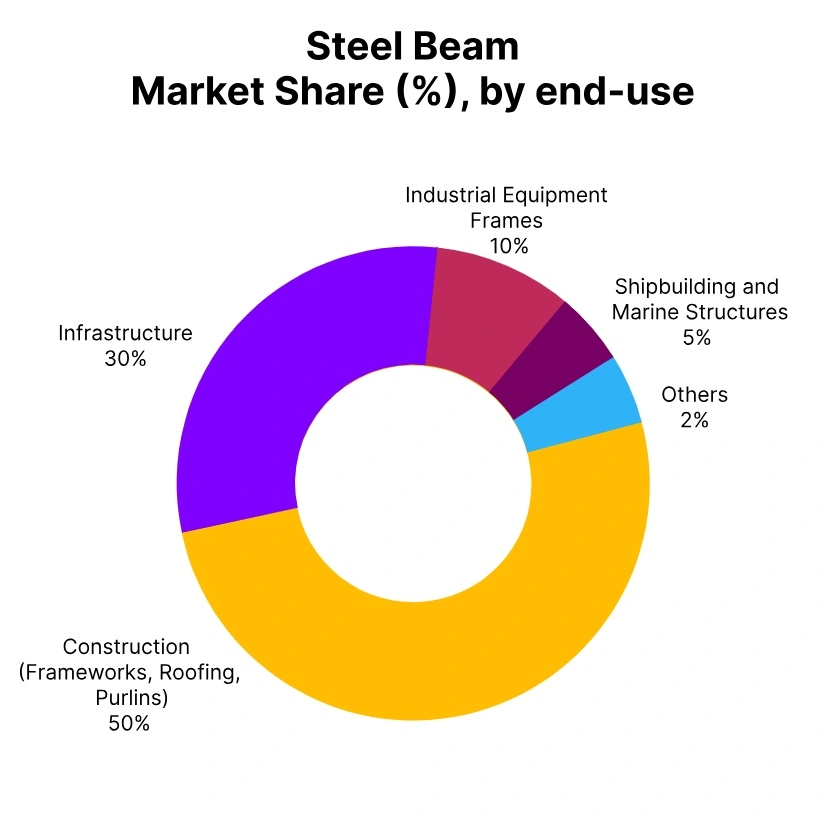
steel beam market share end use

Historically, several events have caused significant fluctuations in Steel Beam prices

  • Raw Material Cost Volatility (2021–2023):
    The costs of essential steel making inputs such as iron ore, scrap steel, and coking coal experienced significant fluctuations. These cost changes directly impacted the production expense of steel beams, resulting in price instability across various markets.
  • Construction and Infrastructure Demand (2020–2022):
    Post pandemic recovery efforts fuelled a global surge in construction activity, especially in infrastructure and large scale commercial projects. This increased the demand for steel beams critical components in structural frameworks contributing to sustained price growth during this period.
  • Trade Policies and Tariffs (2018–2022):
    Trade tensions, including U.S. Section 232 tariffs and similar measures by other countries, reshaped global trade flows for steel products. These policies affected import costs and domestic competition, influencing steel beam pricing dynamics across multiple regions.
  • Global Supply Chain Disruptions (2020–2021):
    COVID-19 induced supply chain bottlenecks ranging from port closures to labour shortages disrupted the availability of steel beams. Delays in fabrication, transportation, and delivery caused regional shortages, placing upward pressure on prices.

Why PriceWatch?

PriceWatch is your trusted resource for tracking global steel beam price trends. Our platform delivers real-time data and expert analysis, offering deep insights into the key factors driving price fluctuations in the steel beam market. By monitoring critical events such as geopolitical tensions, supply chain disruptions, and economic shifts, PriceWatch keeps you fully informed of market dynamics.

In addition, PriceWatch provides detailed forecasts and updates on production capacities, enabling you to anticipate market changes and make well-informed decisions. With PriceWatch, you gain a competitive edge in understanding all the elements that influence steel beam prices worldwide. Stay ahead of the curve with PriceWatch’s reliable, accurate, and timely steel beam market data.

Track PriceWatch's steel beam price assessment on a weekly basis since 2015 onwards, along with short-term forecasts, and get access to the detailed report in a downloadable format.

Data Collection and Sources​

  • Real-Time Market Data: We gather information from global exchanges, industry reports, and proprietary sources to provide timely and accurate assessments.
  • On-the-Ground Intelligence: We incorporate insights from producers, suppliers, and end users across key production regions to offer a comprehensive view of market dynamics.
  • Supply Chain Monitoring: We track the availability and cost of raw materials to evaluate supply conditions and price pressures.

Event Tracking and Impact Analysis​

  • Geopolitical Tensions: We monitor political and economic events that impact supply chains and the flow of Steel Beam production.
  • Market Demand Shifts: Our analysis considers global shifts in industrial and consumer demand, particularly in sectors like automotive, electronics, and renewable energy.

Production Capacity and Supply Analysis

  • Current Production Monitoring: We assess operational Steel Beam production facilities and their output levels.
  • Future Capacity Projections: We forecast future production capabilities, factoring in technological advancements and production expansions.

Demand Forecasting

  • Sectoral Demand Analysis: We evaluate demand from major sectors such as automotive catalysts, renewable energy, and electronics.
  • Regional Demand Dynamics: We assess demand from key markets and regions, especially the Netherlands, and the USA, and their impact on global pricing.

Pricing Model Development

  • Dynamic Pricing Models: Our pricing models incorporate real time data, historical trends, and market projections.
  • Scenario Analysis: We perform scenario based forecasting, assessing potential market conditions under various economic, geopolitical, and technological developments.

Reporting and Client Support

  • Comprehensive Reports: We provide actionable insights, forecasting, and detailed analysis of current and future price trends.
  • Ongoing Support: PriceWatch delivers continuous updates and expert advice tailored to your business needs.

Steel Beam Market Price Trend provided by PriceWatch is a base price and excludes VAT/Taxes, discounts, or offers. The information herein is accurate to the best of our knowledge as of the date indicated and is provided solely for the convenience of our customers as a reference for steel beam. PriceWatch disclaims any warranties or representations regarding the accuracy of results derived from this information. It is the sole responsibility of the user to assess the suitability of the product for their specific application. This document does not constitute an endorsement to use the product in violation of any applicable patent rights.

• Raw Material Costs – The prices of essential inputs like iron ore, coking coal, and scrap steel directly impact the cost of producing steel beams. Fluctuations in these raw materials are a major driver of beam pricing.

• Manufacturing and Processing Costs – The energy consumption, labour wages, equipment maintenance, and technological efficiency at rolling mills and fabrication plants influence how much it costs to produce steel beams.

• Market Supply and Demand – Pricing is sensitive to the balance between supply and demand, especially from industries such as construction, infrastructure development, shipbuilding, and heavy engineering that heavily utilize steel beams.

• Global Market Conditions – Changes in global steel output, export volumes, and pricing dynamics in dominant steel producing countries (like China, India, and the U.S.) often have a ripple effect on local steel beam prices.

• Logistics and Distribution Costs – Steel beams are heavy and often oversized, making transportation costs including fuel prices, freight charges, and handling fees a significant part of the final price.

• Trade Policies and Tariffs – Import/export duties, anti dumping measures, and regional trade agreements can influence steel beam prices by either restricting supply or opening cheaper international sourcing.

• Currency Exchange Rates – As both raw materials and finished beams are traded globally, changes in currency exchange rates can alter costs, especially when purchasing internationally sourced products.

The availability and cost of raw materials such as high carbon steel and alloy coatings directly affect Steel beam production costs and pricing.

Steel Beam prices generally rise with inflation, as the cost of inputs such as iron ore, coal, energy, labor, and transportation typically increase. Inflation can also drive up construction and infrastructure spending especially through government stimulus or capital investment which boosts demand for steel beams. This combination of higher production costs and sustained or growing demand tends to put upward pressure on steel beam prices during inflationary periods.

PriceWatch offers a range of tools and services to track commodity prices effectively:

Real Time Data: Access market intelligence and data on global Steel Beam supply chains.

Expert Analysis: Insights into market trends and potential risks.

Risk Assessment: Tools to evaluate supply chain vulnerabilities.

Benchmarking: Compare Steel Beam prices and sourcing practices.

Supplier Intelligence: Information on supplier reliability and financial health.