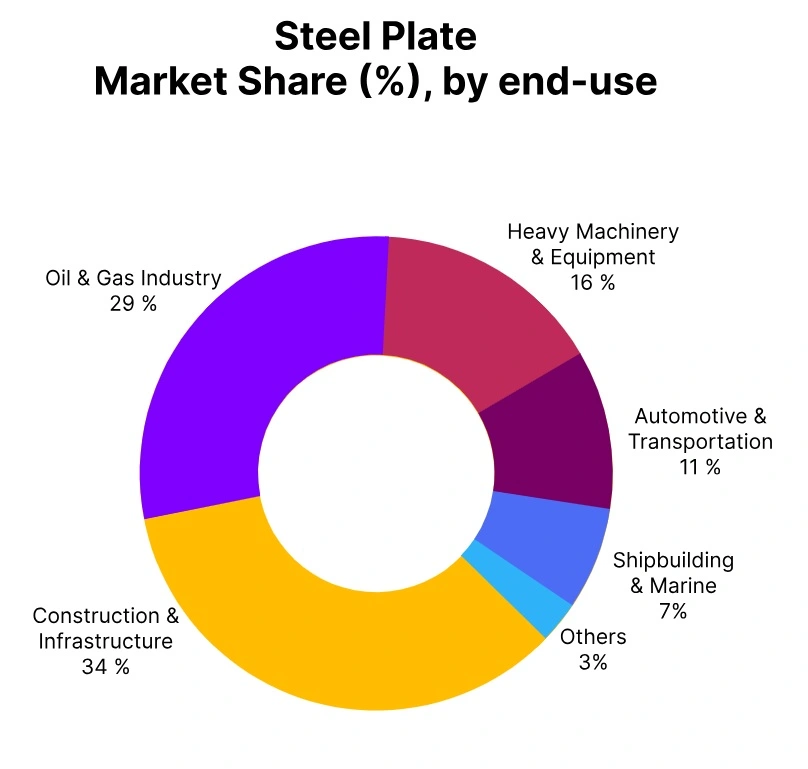
Price-Watch™ provides real-time price assessments and price forecasts for Steel plate across top trading regions:
| Steel Plate Regional Coverage |
Steel Plate Grade and Country Coverage | Steel Plate Pricing Data Coverage Explanation |
|
Asia-Pacific Steel Plate Pricing Analysis
|
Steel Plate SS400 10mm FOB at Shanghai port, China | Weekly Price Update on Steel Plate Real-Time Export Prices from Shanghai port, China to Global Markets |
| Steel Plate IS2062 – 16mm Ex-Mumbai Domestic Prices, India | Real-Time Weekly Price Update of Steel Plate Domestic Prices in Mumbai, India | |
| Europe Steel Plate Pricing Analysis | Steel Plate DC01 1.00mm FD Prices at Sheffield, United Kingdom | Weekly Price Update Stainless- Steel Plate Real-Time Export Prices at Sheffield, United Kingdom to European Markets |
| North America Steel Plate Pricing Analysis | Steel Plate SAE 1008 1.0mm Ex-Alabama, USA Domestic Prices, India | Real-Time Weekly Price Update of Steel Plate Domestic Prices in Alabama, USA |
Steel Plate Price Forecasts & Market Foresight Q3 2026
Outlook: Stable to slightly Bearish
Confidence: High
Heavy Steel Plate market valuations are projected to follow a decoupled, highly segmented trajectory across global markets during Q3 2026, shaped by capital expenditure cycles, trade barriers, and divergent heavy manufacturing output.
In North America, prices are expected to hold a firm baseline, sustained by active Section 232 trade protections, controlled Electric Arc Furnace (EAF) operating rates, and sustained off-take from defense, bridge building, and energy infrastructure projects.
Across Europe, the market is set for a mid-quarter transition; while strict import safeguard quotas and high carbon/energy production overheads provide price support, summer maintenance closures and sluggish heavy engineering activity will limit aggressive mill price increases.
In Asia, persistent property sector sluggishness and monsoon-related construction pauses across southern regions will constrain spot liquidity, though strong shipyard order backlogs and wind-tower manufacturing will establish a structural price floor.
Global Steel Plate Market Overview by Region (July–September 2026)
| Country | Grade/ Incoterm | Outlook |
| China | Steel Plate, SS400 10mm, FOB Shanghai | Slightly Bearish |
| India | Steel Plate, IS2062 – 16mm, Ex-Mumbai | Slightly Bearish |
| USA | Steel Plate SAE 1008 1.0mm, Ex Alabama | Slightly Bullish |
| UK | Steel Plate DC01 1.00mm, FD Sheffield, UK | Slightly Bullish |
*Steel Plate Forecast represents an analytical assessment based on information available at the time of publication. Actual market prices may vary due to unforeseen operational, regulatory, geopolitical, or economic developments.
Explore the Complete Price Watch™ Steel Plate Forecast
Access comprehensive Steel Plate market intelligence, including a 3-Month Rolling Forecast, 12-Month Price Forecast, forward price curves, country-wise market outlooks, procurement insights, and monthly forecast updates.
Explore Price Watch™ Steel Plate Forecasts
What’s Included
The 3-Month Forecast (Updated Monthly)
It reflects changes in feedstock costs, energy prices, producer operating rates, plant outages, inventory levels, trade flows, freight rates, regional demand, and geopolitical developments affecting the global Steel Plate market.
The 12-Month Forecast (Published Annually)
It provides a strategic outlook based on expected capacity additions, supply-demand balances, feedstock economics, macroeconomic conditions, industrial production trends, trade policies, seasonal demand patterns, and long-term supply chain developments, supporting procurement, budgeting, and strategic planning.
Our Proprietary Hybrid Forecasting Model Evaluates:
- Feedstock & production economics
- Plant operating rates & outages
- Inventory and supply-demand balance
- Regional trade flows & freight
- Import-export dynamics
- Macroeconomic & geopolitical developments
Track Steel Plate Supply Disruptions in Real Time
As geopolitical risks continue to reshape global supply chains, stay ahead of the events that drive price movements by monitoring plant shutdowns, maintenance turnarounds, force majeure events, logistics bottlenecks, trade restrictions, and operational disruptions before they impact Steel Plate markets.
Access the Price Watch™ GIO Tracker
Steel Plate Price Trend Q2 2026
In Q2 2026, the global Steel Plate market demonstrated elevated regional divergence, influenced by shifting trade protections, domestic infrastructure spending, and local supply-demand dynamics.
The Steel Plate Price Index posted substantial quarterly gains in North America and South Asia, propelled by robust heavy machinery fabrication, expanding defense/energy sectors, and tight domestic mill lead times.
In Western Europe and the UK, structural supply adjustments and impending trade defense measures provided firm baseline support. Conversely, major East Asian markets experienced modest quarterly price growth, as structural real estate headwinds and elevated domestic mill output tempered broader industrial manufacturing gains.
Heavy-gauge plate applications maintained steady consumption across bridge construction, shipbuilding, and industrial equipment. Overall, the Steel Plate Price Chart highlights a second quarter characterized by strong Western pricing power contrasted with cautious, range-bound conditions across East Asian manufacturing hubs.
China: Steel Plate, SS400 10mm, FOB Shanghai, China
The Steel Plate price trend in China increased by 1.5% in Q2 2026, supported by steady off-take from shipbuilding, heavy machinery manufacturing, and renewable energy equipment fabrication.
Moderate growth in export deliveries to regional markets provided an additional outlet for primary plate production during April and May. However, lingering real estate headwinds and elevated domestic crude steel output limited broader pricing leverage, keeping quarterly price expansion modest.
Mill operating rates remained high, which gradually accumulated inventory buffers across major distribution hubs. In June 2026, Steel Plate prices in China declined by 0.7% as the mid-summer seasonal slowdown, high temperatures, and widespread monsoon rains hindered outdoor construction and engineering activities.
Downstream fabricators restricted procurement to immediate operational requirements, avoiding speculative spot buying. Facing mounting stock levels and softening finished steel margins, traders offered spot price concessions to stimulate cash flow through the month.
India: Steel Plate, IS2062 – 16mm, Ex-Mumbai, India
The Steel Plate price trend in India surged by 8.3% in Q2 2026, driven by intense government infrastructure investments, heavy industrial equipment manufacturing, and expanding capital expenditure across the energy sector.
Primary steel producers operated at near-peak utilization rates, leveraging strong order backlogs to pass on elevated coking coal and raw material costs. Rapid growth in rail infrastructure, defense production, and commercial construction created a tight domestic supply environment, driving significant quarterly price appreciation.
In June 2026, Steel Plate prices in India slipped by 0.5% as the early arrival of seasonal monsoon rains began to slow down heavy outdoor construction and infrastructure work. Downstream fabricators and engineering firms temporarily scaled back spot purchases to manage working capital and digest existing stock buffers.
Despite the minor monthly pullback, primary mills maintained disciplined distribution allocations, preventing deeper price degradation across major industrial trading centers.
USA: Steel Plate SAE 1008 1.0mm, Ex Alabama, USA
The Steel Plate price trend in the USA rallied sharply by 10.4% in Q2 2026, backed by robust demand from bridge construction, energy infrastructure, defense, and heavy equipment manufacturing. Strict trade defense enforcement and limited foreign import arrivals allowed domestic plate mills to extend delivery lead times and execute multiple rounds of price hikes.
Service centers maintained disciplined stocking strategies, matching purchases strictly with strong end-user order flow, which reinforced domestic pricing strength throughout the quarter. In June 2026, Steel Plate prices in the USA advanced by 3.7% as domestic mills successfully implemented additional price increases amid tight spot cargo availability.
Extended mill delivery schedules and lean distributor inventories forced buyers to accept higher transaction prices to guarantee prompt material delivery. Continued strength in heavy manufacturing and infrastructure fabrications ensured that positive pricing momentum accelerated through the end of the second quarter.
UK: Steel Plate DC01 1.00mm, FD Sheffield, UK
The Steel Plate price trend in the UK advanced by 5.0% in Q2 2026, supported by steady demand from structural engineering, defense, and industrial equipment fabrication. Market sentiment is further reinforced by government announcements regarding tightened trade safeguards and quota reductions scheduled for mid-year.
Domestic distributors gradually adjusted offer prices upward to reflect higher replacement costs and anticipated import constraints, sustaining a steady upward trajectory throughout the three-month period.
In June 2026, Steel Plate prices in the UK rose by 0.5% as buyers secured prompt-loading material ahead of the new trade measure implementation. Import arrivals slowed in anticipation of tighter quota caps, allowing local steel stockholders to hold firm on quote valuations.
While overall industrial demand remained measured, tight spot availability and rising trade-defense-driven replacement costs kept monthly prices firmly on a positive trajectory.