Tertiary Butyl Alcohol Price Trend and Forecast

UNSPC code: 12352001
|
Weekly Update
|
Historical Data Since 2015
|
Forecast for 2026

tertiary butyl alcohol Price Trends by Country

jpJapan
cnChina
inIndia
vnVietnam

Global tertiary butyl alcohol Spot Market Prices, Trend Analysis and Forecast

Price-Watch™ provides real-time price assessments and price forecasts for Tertiary Butyl Alcohol across top trading regions:

Tertiary Butyl Alcohol Regional Coverage Tertiary Butyl Alcohol Grade and Country Coverage Tertiary Butyl Alcohol Pricing Data Coverage Explanation
Asia Tertiary Butyl Alcohol Pricing Analysis Tertiary Butyl Alcohol Industrial Grade (99.5%) FOB Prices at Shanghai Port, China Weekly Price Update on TBA Real-Time Export Prices from Shanghai Port, China to Global Markets
Tertiary Butyl Alcohol Industrial Grade (99.5%) FOB Prices at Tokyo Port, Japan Weekly Price Update on TBA Real-Time Export Prices from Tokyo Port, Japan to Global Markets
Tertiary Butyl Alcohol Industrial Grade (99.5%) CIF Prices at Haiphong Port, Vietnam (Importing from China) Weekly Price Update on TBA Real-Time Import Prices at Haiphong Port, Vietnam from China
Tertiary Butyl Alcohol Industrial Grade (99.5%) CIF Prices at Nhava Sheva Port, India (Importing from China) Weekly Price Update on TBA Real-Time Import Prices at Nhava Sheva Port, India from China


Note:
In assessments structured as CIF [Importing Port] (Exporting Country), the country mentioned in brackets indicates the primary origin of supply (exporting country), while the named port refers to the destination port in the importing country. Other Incoterms (FOB, FD, EXW, etc.) should be interpreted in accordance with standard international trade definitions.

Tertiary Butyl Alcohol Price Trend Q1 2026

The Tertiary Butyl Alcohol price in international markets has appreciated significantly in Q1 2026 owing to robust demand from sectors such as automobiles, coatings, and chemicals amid high production in anticipation of the end of the financial year. In line with this trend, the Tertiary Butyl Alcohol price has experienced a significant rise of 8.7% in FOB and CIF markets owing to increased demand and tight supply situation for the period under review.

In international markets, there have been significant hikes in Tertiary Butyl Alcohol prices in March 2026 amounting to 18.2%, attributed mainly to seasonality effects coupled with geopolitical issues affecting the prices of crude oil and thus feeding material prices. Under such circumstances, there have been notable production cost pressures, which have been accompanied by tight supply situations due to shortage of materials.

China: Tertiary Butyl Alcohol Export prices FOB Shanghai, China; Grade- Industrial (99.5%)

According to Price-Watch™, in Q1 2026, Tertiary Butyl Alcohol price in China experiened an uptrend due to increased demand in the automotive and coatings sectors especially at the beginning of the quarter. The Tertiary Butyl Alcohol price trend in China shows an increasing trend of 4.6% attributed to increased demands due to the upcoming Chinese New Year and increased costs associated with feedstocks as a result of geopolitical instabilities in areas such as the Iran-Israel conflict which affect the cost of crude oil production.

There is an increase of about 9.5% in China Tertiary Butyl Alcohol price in March 2026 when compared to February. This is attributed to increased demand and supply disruption in the month of March. Manufacturers have been increasing procurements in anticipation of increased demands while increasing costs in terms of crude oil prices have also led to increased production costs.

Japan: Tertiary Butyl Alcohol Export prices FOB Tokyo, Japan; Grade- Industrial (99.5%)

Tertiary Butyl Alcohol price in Japan have exhibited a minor decrease during Q1 2026, dropping by 0.8% relative to the preceding quarter, owing to low demand in coatings and solvent sectors due to buyers’ reluctance following the holidays and adjustment of inventories. Tertiary Butyl Alcohol price trend in Japan has been characterized by poor market performance in the initial months of the quarter because of reduced purchasing activity and demand from downstream industries.

In Japan, Tertiary Butyl Alcohol price in March 2026 have seen an impressive recovery, registering an increase of 5.4% from February 2026, which has been attributed to the geopolitical crisis caused by the Iran-Israel war, particularly in the Strait of Hormuz region. Consequently, crude oil prices have become more volatile, leading to increased global energy costs, thereby exerting positive influence on production margins. The March 2026 price trend demonstrates how geopolitical events and fluctuations in feedstock prices have contributed to a dramatic change in prices.

Vietnam: Tertiary Butyl Alcohol import prices CIF Haiphong, Vietnam; Grade- Industrial (99.5%)

In Q1 2026, Tertiary Butyl Alcohol price in Vietnam increased by 4.5%, driven by a more active market and higher demand from key sectors such as automotive, paints, and coatings from last quarter for 2025. The early part of the quarter saw increased procurement in anticipation of demand growth and price concerns. In Vietnam, Tertiary Butyl Alcohol price in March 2026 surged by 9.3% compared to last February, as geopolitical tensions from the Iran-Israel war and disruptions in the Strait of Hormuz caused significant crude oil price fluctuations.

These fluctuations, combined with rising feedstock costs and restocking efforts, led to a sharp price increase. Tertiary Butyl Alcohol price trend in Vietnam in March 2026 highlights how geopolitical risks, crude oil volatility, and seasonal demand drove the market’s price dynamics, resulting in a marked rise despite earlier quarter stability.

India: Tertiary Butyl Alcohol import prices CIF JNPT, India; Grade- Industrial (99.5%)

In Q1 2026, Tertiary Butyl Alcohol price in India as compared to last quarter saw a significant increase of 8.7%, driven by stronger demand from the automotive, coatings, and chemical industries. Early in the quarter, increased production activity and heightened procurement ahead of India’s fiscal year-end created upward pressure on prices. In India, Tertiary Butyl Alcohol price in March 2026 surged by 18.2%, reflecting a sharp rise fuelled by geopolitical tensions, including the Iran-Israel war, which caused volatility in crude oil prices and higher feedstock costs.

Tertiary Butyl Alcohol price trend in India in March highlights how restocking efforts, tight supply conditions, and rising costs in the global petrochemical value chain amplified market pressures, leading to a significant price increase driven by geopolitical instability and seasonal demand.

Tertiary Butyl Alcohol Price Trend Analysis: Q4 2025

In Q4 2025, Tertiary Butyl Alcohol (TBA) witnessed a relatively stable market environment, where the price movement showed a slight decline of -0.1% on average for both the FOB and CIF markets. The reduction in prices can be attributed to the low demand for TBA from important end-users such as automobiles, paints, and solvents industries.

Even though there are adequate supplies of raw materials, the market maintained its stability due to conservative buying behavior from consumers. However, during the last month of the period under review, the prices of TBA increased by 2.5% due to stockpiling activities and seasonal demand ahead of the festive season.

China: Tertiary Butyl Alcohol Export prices FOB Shanghai, China; Grade- Industrial (99.5%)

For Q4 2025, there has been a modest fall in the Tertiary Butyl Alcohol price in China by 0.4%. Factors that have impacted the Tertiary Butyl Alcohol price trend in China include lower demand from the automotive and coatings segments along with slower levels of industrial activity, creating mild downward pressures in terms of pricing. Raw material prices for Tertiary Butyl Alcohol have been steady, thanks to ample supply of Isobutene.

In China, Tertiary Butyl Alcohol prices in December 2025 are up 1.7% compared to the prior month, on account of moderate levels of stockpiling due to approaching holidays. The Tertiary Butyl Alcohol price trend in China is a result of how procurement of supplies strategically and demand recovery from coatings/solvent sectors has helped keep pricing positive.

Japan: Tertiary Butyl Alcohol Export prices FOB Tokyo, Japan; Grade- Industrial (99.5%)

Tertiary Butyl Alcohol Price in Japan decreased by 6.9% in Q4 2025 compared to the third quarter as industrial production and buying remain low in downstream industries like automobile, solvents, and paints as the result of poor local consumption. Tertiary Butyl Alcohol Price Trend in Japan has experienced decline due to weak downstream demand from automobile paints and chemicals industry, and thus leading buyers to maintain lean inventory.

In Japan, Tertiary Butyl Alcohol price in December 2025 witnessed a 1.1% decrease from that of November, attributed to little restocking and decreased export interest for the Asian region. The Tertiary Butyl Alcohol Price Trend in Japan revealed the impact of restrained downstream demand and low economic sentiments on the price trend of the product despite stable raw material isobutene availability.

Vietnam: Tertiary Butyl Alcohol import prices CIF Haiphong, Vietnam; Grade- Industrial (99.5%)

In Q4 2025, Tertiary Butyl Alcohol price trend in Vietnam decreased by 0.5% as compared to previous quarter, as weaker demand from key downstream industries such as automotive, industrial solvents, and coatings limited upward pressure on prices. The soft market sentiment and lower procurement levels from buyers in Vietnam contributed to a stable supply situation, with Tertiary Butyl Alcohol price in Vietnam remaining flat, showing a slight decline due to cautious purchasing strategies and restrained production activity.

In Vietnam, Tertiary Butyl Alcohol price in December 2025 saw a moderate increase of 1.6%, as manufacturers ramped up production to meet demand before the New Year holiday, and restocking efforts picked up slightly compared to November. The December price movement highlights how mild restocking demand and stable feedstock availability-maintained price stability despite moderate demand.

India: Tertiary Butyl Alcohol import prices CIF JNPT, India; Grade- Industrial (99.5%)

In Q4 2025, Tertiary Butyl Alcohol price trend in India showed a slight decline of -0.1%, reflecting weak demand from key sectors such as automotive, coatings, and industrial solvents from previous quarter, which led to subdued market activity. The Tertiary Butyl Alcohol price in India is further impacted by cautious purchasing behaviour from buyers, with most companies focusing on reducing inventory levels.

Supply conditions remained stable, with no significant changes in feedstock availability, contributing to limited price fluctuations. However, in India, Tertiary Butyl Alcohol price in December 2025 rose by 2.5% compared with the previous month, driven by seasonal demand before the New Year and some restocking activities. The December price movement highlights how minor demand recovery and controlled supply conditions contributed to a moderate uptick in TBA prices in India.

In Q3 2025, Tertiary Butyl Alcohol (TBA) prices declined across major markets, including China 4.99%, Vietnam 4.87%, India 3.02%, and Japan 0.69%. Weak domestic demand, particularly from the automotive and coatings sectors, along with oversupply conditions, contributed to the price drops. Stable production and feedstock costs provide limited support.

Vietnam and India faced additional pressure from high logistics costs. The outlook for the upcoming quarter remains cautious, with the potential for further price declines unless demand from key sectors, including automotive and coating, improves.

China: Tertiary Butyl Alcohol Export prices FOB Shanghai, China, Grade- (99.5% min) Industrial Grade.

According to PriceWatch, in Q3 2025, Tertiary butyl alcohol (TBA) prices in China declined by 4.99% compared to Q2. The Tertiary butyl alcohol (TBA) price trend in China has been influenced by weak domestic demand, particularly from the automotive and coatings sectors, which led to reduced consumption. Despite stable production levels, oversupply conditions persisted, exerting downward pressure on prices.

Feedstock costs remained relatively stable, providing minimal support to the market. Tertiary butyl alcohol (TBA) prices in September 2025 have been lower than in Q2, continuing the downward trend. The outlook for the upcoming quarter remains cautious, with potential for further price declines if demand does not improve.

Japan: Tertiary butyl alcohol (TBA) Export prices FOB Tokyo, Japan, Grade- (99.5% min) Industrial Grade.

Tertiary Butyl Alcohol (TBA) prices in Japan saw a small decline of 0.69% in Q3 2025 from Q2. The Japanese Tertiary butyl alcohol (TBA) price trend mirrored spot market conditions and has been related to weaker demand in the automotive and construction key sectors as a result of weaker consumption. A steady demand of Tertiary butyl alcohol coming from medical and cosmetic domains helped maintain prices.

Feedstocks remained predominantly stable and provided only minimal upward support for the Japanese market. Tertiary butyl alcohol prices have been slightly lower for September 2025 compared to Q2 2025. Moving into the next quarter, all indications are stable, as they depend on momentum in demand and should have some level of changes this fall.

Vietnam: Tertiary butyl alcohol (TBA) import prices CIF Haiphong, Vietnam, Grade- (99.5% min) Industrial Grade.

In Q3 2025, Tertiary Butyl Alcohol prices in Vietnam fell by 4.87%, following a 4.36% decline in Q2. The downward price trend in Tertiary butyl alcohol (TBA) prices in Vietnam has been related to weak domestic consumption, particularly from the automotive and chemical industries, which have both seen slowdowns in production. Imports from China have been stable, but demand from domestic manufacturers has been lower than anticipated.

Regional supply chain challenges, included transportation delays, higher logistics costs, and general deterioration of the economic environment since the last year, constrained the Tertiary butyl alcohol (TBA) price this quarter. Tertiary butyl alcohol prices in Vietnam in September 2025 continued the downward trajectory from the previous quarter. The next quarter price stabilization will be contingent on the rebound in industrial activities and demand in the principal markets.

India: Tertiary Butyl Alcohol import prices CIF JNPT, India, Grade- (99.5% min) Industrial Grade.

According to PriceWatch, in Q3 2025, Tertiary Butyl Alcohol (TBA) prices in India experienced a 3.02% decline after a 4.84% decrease in Q2. The downward price trend in Tertiary butyl alcohol (TBA) prices in India has been a result of reduced demand in certain sectors such as automotive and coatings where production and consumption have been sluggish.

Though imports from China have been stable, low domestic demand along with high inventory levels put additional pressure on Tertiary butyl alcohol (TBA) prices.

Also, the depreciation of the Indian Rupee resulted in higher import costs further limiting any potential for recovery in prices. Tertiary butyl alcohol (TBA) prices in India remained lower in September 2025 as compared to August 2025, and the Tertiary butyl alcohol (TBA) market in India is likely to remain under pressure unless demand from key sectors improves in the forthcoming months.

According to the PriceWatch, China’s FOB prices dropped further to 1122 USD per metric ton a 3.36% fall from Q1 2025. The price trend extended its decline due to lackluster demand in industrial cleaning and paint sectors. The price trend remained weak amid improved stock positions and easing feedstock prices.

Japan’s FOB prices also fell to 1126 USD per metric ton, showing a 2.79% reduction as downstream Market activity slowed further. The price trend reflects a synchronized drop in both countries. Vietnam’s CIF prices decreased, pressured by high inventory levels and continued hesitation from buyers.

Seasonal dullness reduced consumption rates, contributing to the bearish Market mood. Despite minor logistic delays, overall demand remained weak. The price trend across the Market showed a prolonged correction phase with no strong recovery signs in any of the regions. 

According to the PriceWatch, the average Tertiary Butyl Alcohol price in India (CIF) stood at 1181 USD per metric ton in Q2 2025, reflecting a 4.84% decline from Q1 2025, when prices were 1241 USD per metric ton. This consistent downward price trend follows the earlier 2.12% drop in Q1 2025. The price trend weakened as demand from India’s pharmaceuticals and agrochemical sectors remained muted amid high inventory carryovers.

On the supply side, China’s FOB prices also fell from 1161 USD per metric ton in Q1 2025 to 1122 USD per metric ton in Q2 2025, a 3.36% decrease, driven by declining isobutylene feedstock costs and ample product availability. The price trend indicates reduced purchasing activity from Indian importers as buyers delayed procurement, anticipating further drops.

Additionally, favourable freight conditions and subdued seasonal consumption contributed to the softer Market tone. Overall, the Market remained bearish, with India’s import dynamics closely following the price pattern emerging from China. 

In Q1 2025, Tertiary Butyl Alcohol (TBA) prices in China experienced a slight decline, falling to USD 1161/MT, which represents a decrease of 2.22% compared to the previous quarter. This decline was largely driven by softer demand from key sectors such as automotive, paints, and coatings, leading to a surplus of supply.

Additionally, a cautious approach from buyers, due to high inventory levels and uncertain market conditions, contributed to the price drop. Despite this, the overall production capacity remained stable, ensuring consistent availability of TBA. 

In Q1 2025, Tertiary Butyl Alcohol (TBA) prices in Japan experienced a notable decline, dropping to USD 1158/MT, reflecting a decrease of 4.70% compared to the previous quarter. This decline was largely driven by weaker demand from key sectors, including automotive, paints, and coatings, resulting in an oversupply in the market.

Additionally, a cautious buying sentiment, spurred by high inventory levels and market uncertainties, contributed to the lower prices. Despite the price drop, production capacity remained stable, ensuring consistent availability of TBA. 

In Q1 2025, TBA prices in India saw a further decline of 2.12%, falling to USD 1141/MT. This price decrease was primarily driven by continued weak demand from key sectors like automotive, paints, and coatings, compounded by a softening global market. Additionally, excess inventory from previous quarters and cautious buying behaviour by distributors further pressured prices down.

While supply conditions remained stable, logistical challenges and fluctuations in feedstock prices did not sufficiently offset the subdued industrial consumption, contributing to the overall price decrease. The lack of significant demand recovery in early 2025, coupled with reduced production costs globally, supported the downward trend in TBA prices in India. 

Tertiary Butyl Alcohol Price Trend Analysis: Q4 2024

In Q4 2024, TBA prices are projected to experience a sharp decline, falling to USD 1187/MT, a decrease of 11.55%. This downturn is expected due to the seasonal slowdown in demand from key sectors such as automotive, paints, and coatings following the peak consumption periods in previous quarters.

With production levels remaining stable, this decrease in demand, along with replenished inventories, is likely to exert downward pressure on prices as the market adjusts to changing dynamics heading into the end of the year. 

In Q4 2024, TBA prices are projected to experience a slight increase, rising to USD 1215/MT, a modest 0.64% increase from the previous quarter. This small rise is expected to be driven by steady demand from key sectors, though the market is likely to face a seasonal slowdown in some industries toward the end of the year.

With production remaining stable and inventories replenished, prices may stabilize at these levels as the market adjusts to the changing dynamics heading into the new year. 

In Q4 2024, Tertiary Butyl Alcohol (TBA) prices experienced a decline of 10.76%, falling to USD 1268/MT. This decrease was largely due to the seasonal slowdown in demand from industries such as automotive, paints, and coatings, following the peak consumption period of the previous quarters. The reduced demand, combined with higher inventory levels from earlier in the year, led to a market correction.

Additionally, with improved supply availability from global producers, the pricing power of sellers weakened. The slowdown in industrial activity and the replenishment of inventories also contributed to the downward pressure on prices. 

For Q3 2024, a significant increase in TBA prices is expected, with prices rising to USD 1342/MT, marking a 10.31% increase. This growth is anticipated to be driven by continued strong demand from industries like automotive, paints, and coatings, especially as seasonal demand peaks during the summer months.

Any disruptions in the supply chain, such as production outages or maintenance in manufacturing facilities, could further tighten market conditions, prompting additional price hikes. 

For Q3 2024, a more significant price increase is expected, with TBA prices rising to USD 1228/MT, reflecting an 8.40% increase. This growth is expected to be fuelled by stronger demand from industries such as automotive, paints, and coatings, particularly during the peak summer season.

Any potential supply disruptions, such as production outages or maintenance at key manufacturing facilities, could further tighten supply conditions and drive prices up. 

In Q3 2024, Tertiary Butyl Alcohol (TBA) prices saw a significant increase of 11.05%, reaching USD 1421/MT. This surge was driven by a sharp rise in demand, particularly from the automotive, paints, and coatings industries, which saw an uptick in production and consumption during the summer months. Seasonal demand and increased industrial activity were the key contributors to the price hike.

Additionally, supply-side challenges, such as production slowdowns and maintenance shutdowns in major manufacturing facilities, led to tighter market conditions. As a result, the supply-demand imbalance pushed prices higher, further compounded by rising input costs, including feedstock and transportation. 

In Q2 2024, Tertiary Butyl Alcohol (TBA) prices continued to rise, gaining 5.60% to reach USD 1217/MT. This price increase was driven by a rebound in demand from end-use industries such as automotive, coatings, and chemicals, as manufacturers began restocking inventories in anticipation of higher seasonal demand.

Additionally, any supply disruptions or maintenance activities at key production facilities may have contributed to tighter supply conditions, further supporting the upward price trend. 

In Q2 2024, Tertiary Butyl Alcohol (TBA) prices saw a modest increase of 0.43%, reaching USD 1114/MT. This slight rise was driven by a recovery in demand from key industries, particularly in automotive, coatings, and chemicals, as manufacturers began to restock inventories in preparation for higher seasonal demand. Additionally, stable supply levels and minimal disruptions in production facilities helped support the modest price increase. 


In Q2 2024, Tertiary Butyl Alcohol (TBA) prices rose by 5.93%, reaching USD 1279/MT. This price increase was primarily driven by the continuation of stronger demand from the automotive, coatings, and chemicals sectors, which saw renewed activity and restocking. Tightened supply conditions, partly due to logistical delays, production issues, and restricted availability from key suppliers, further exacerbated the price increase.

Additionally, rising feedstock costs and transportation bottlenecks across the supply chain added upward pressure on prices, which were not fully offset by weaker demand from certain other sectors. The combination of supply-side constraints and active buying across specific industries kept prices trending upward despite overall weak consumption. 

In Q1 2024, Tertiary Butyl Alcohol (TBA) prices saw a moderate increase of 3.45%, reaching USD 1152/MT. This growth was mainly attributed to a recovery in demand from several industries, particularly in paints, coatings, and adhesives.

The increase in demand was further supported by stable feedstock prices and consistent production. However, some buyers remained cautious in their purchasing decisions, anticipating potential fluctuations in prices in the upcoming months.

In Q1 2024, Tertiary Butyl Alcohol (TBA) prices saw a significant decrease of 6.57%, settling at USD 1109/MT. This drop was mainly due to reduced demand from various end-use industries, especially as manufacturing activity slowed down.

Despite stable feedstock prices, the market faced challenges with weaker demand, which exerted downward pressure on prices. Additionally, the market was affected by cautious purchasing decisions as buyers anticipated further price fluctuations in the coming months. 
 

In India, Tertiary Butyl Alcohol (TBA) prices increased by 6.42% in Q1 2024, reaching USD 1208/MT compared to Q4 2023. This rise was primarily driven by a recovery in demand from key end-use industries, such as automotive, paints, and coatings, cosmetics. As production cycles resumed, manufacturers restocked their inventories in anticipation of higher seasonal demand.

Additionally, supply disruptions from global sources, including higher raw material costs and logistical challenges, contributed to the price increase. Despite weak demand in certain sectors, the strong recovery in select industries and tight global supply conditions supported the upward price movement in India. 


Technical Specifications of Tertiary Butyl Alcohol Price Trends

Product Description

Tertiary Butyl Alcohol (TBA) is a versatile solvent and chemical intermediate used in the production of gasoline additives, polymers, and coatings. It is primarily produced from feedstocks such as isobutylene (isobutene) and water through catalytic processes. TBA is valued for its high solubility and low volatility, making it ideal for use in industrial and chemical applications.

Identifiers and Classification:

  • CAS No – 75-65-0
  • HS Code – 29051690
  • Molecular Formula – C₄H₁₀O
  • Molecular Weight (in gm/mol) – 74.12


Tertiary Butyl Alcohol Synonyms:

  • 2-methyl-2-propanol
  • trimethyl carbinol
  • tert-Butanol
  • t-Butanol
  • t-BuOH
  • Trimethyl carbinol
  • 2-Methyl-2-propanol


Tertiary Butyl Alcohol Grades Specific Price Assessment:

  • (99.5% min) Industrial Grade


Tertiary Butyl Alcohol Global Trade and Shipment Terms

  • Quotation Terms (Product & Country Specific): 25-28 MT
  • Packaging Type (Product & Country Specific): Iso Tank


Incoterms Referenced in Tertiary Butyl Alcohol Price Reporting

Shipping Term  Location  Definition 
FOB China  Shanghai, China  Tertiary Butyl Alcohol Export price from China 
FOB Japan  Tokyo, Japan  Tertiary Butyl Alcohol Export price from Japan 
CIF JNPT (China)  JNPT, India  Tertiary Butyl Alcohol import price in India from China 
CIF Haiphong (China)  Haiphong, Vietnam  Tertiary Butyl Alcohol import price in Vietnam from China 

*Quotation Terms refers to the quantity range specified for the Tertiary Butyl Alcohol being quoted or offered in a commercial transaction.

**Packaging Type refers to standard packaging size commonly used for Tertiary Butyl Alcohol packing, ease of handling, transportation, and storage in industrial and commercial applications.

Key Tertiary Butyl Alcohol Manufacturers

Manufacturer 
Zibo Haizheng Chemical Co., Ltd.  
Shandong Yanshuo Chemical  
Hefei TNJ Chemical Industry Co., Ltd.  
Kuraray Chemicals  

Tertiary Butyl Alcohol Industrial Applications

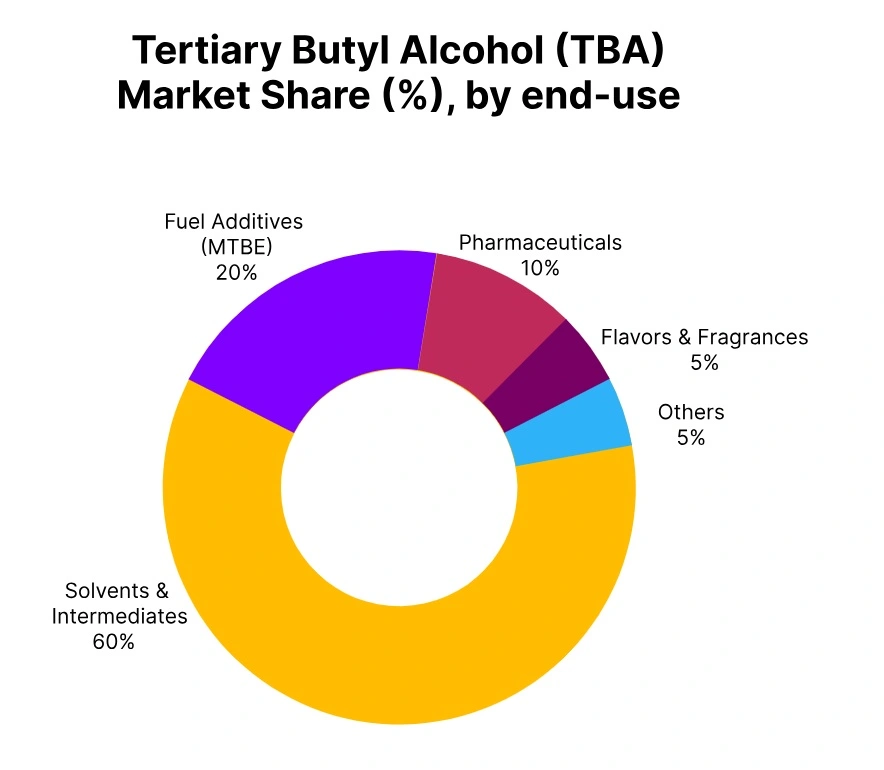
Tertiary Butyl Alcohol Market Share End Use

Historically, several events have caused significant fluctuations in Tertiary Butyl Alcohol prices

  • 2023 Geopolitical Conflicts: Ongoing conflicts and trade route disruptions, especially related to Middle Eastern tensions, further impacted supply and pricing dynamics. 
  • Global Recovery and Demand Surge (2021-2022): Post-pandemic recovery in various sectors, particularly textiles and pharmaceuticals, drove up demand, leading to significant price increase. 
  • COVID-19 Pandemic (2020): The pandemic caused widespread supply chain disruptions, resulting in both shortages and increased prices as demand fluctuated across industries.  


These events underscore the Tertiary Butyl Alcohol market’s vulnerability to global disruptions and highlight the need for continuous monitoring of supply-demand dynamics.


Why Price Watch™?

Price Watch™ is your trusted resource for tracking global tertiary butyl alcohol price trends. Our platform delivers real-time data and expert analysis, offering deep insights into the key factors driving price fluctuations in the tertiary butyl alcohol market. By monitoring critical events such as geopolitical tensions, supply chain disruptions, and economic shifts, Price Watch™ keeps you fully informed of market dynamics.

In addition, Price Watch™ provides detailed forecasts and updates on production capacities, enabling you to anticipate market changes and make well-informed decisions. With Price Watch™, you gain a competitive edge in understanding all the elements that influence tertiary butyl alcohol prices worldwide. Stay ahead of the curve with Price Watch’s™ reliable, accurate, and timely tertiary butyl alcohol market data.

Track Price Watch's™ tertiary butyl alcohol price assessment on a weekly basis since 2015 onwards, along with short-term forecasts, and get access to the detailed report in a downloadable format.

Tertiary Butyl Alcohol Market Price Trend published by 𝐏𝐫𝐢𝐜𝐞 𝐖𝐚𝐭𝐜𝐡™ reflect prevailing spot market conditions, derived from independent research, verified trade inputs, and proprietary market intelligence as of the publication date. Prices are published on the specified Incoterm and represent indicative base market levels, exclusive of applicable taxes, VAT, duties, tariffs, and other statutory charges. Actual transaction values may vary depending on volume, credit terms, contractual structure, and other negotiated conditions. Market prices are inherently subject to volatility, liquidity dynamics, regulatory changes, and evolving trade activity. The information provided is for reference and benchmarking purposes only and does not constitute an offer, recommendation, or guarantee of transactional outcomes. Users should exercise independent commercial judgment and assess their specific contractual, regulatory, tax, and application requirements before making business decisions. 𝐏𝐫𝐢𝐜𝐞 𝐖𝐚𝐭𝐜𝐡™ assumes no liability for decisions taken based on this information.

The pricing of Tertiary Butyl Alcohol (TBA) is influenced by a variety of factors, including raw material costs (such as isobutene and propylene), crude oil price fluctuations, and energy costs for production. Additionally, supply chain disruptions, such as shipping delays or geopolitical tensions, can affect prices. Seasonal demand in industries like automotive (fuel additives), paints and coatings, and pharmaceuticals also impacts pricing. Environmental regulations and shifts toward sustainable manufacturing practices may further drive production costs, influencing overall TBA prices.

The price of Tertiary Butyl Alcohol (TBA) is closely tied to the costs of its raw materials, primarily isobutene and propylene. Any fluctuations in the price of these feedstocks, which are often derived from petrochemical processes, can directly affect TBA prices. For instance, increases in crude oil prices typically lead to higher feedstock costs, which in turn raises the price of TBA. Procurement heads should track trends in the petrochemical market and evaluate the impact of oil price volatility to anticipate price changes and secure better rates.

Tertiary Butyl Alcohol (TBA) prices can vary regionally due to differences in production capacities, raw material availability, and local demand. For example, regions with well-established petrochemical industries, such as North America and Asia, may see lower prices due to economies of scale. Conversely, in regions with limited TBA production capabilities or higher transportation costs, prices may be higher. Procurement heads should evaluate regional price trends, consider sourcing from low-cost production hubs, and optimize supply chain logistics to minimize expenses while maintaining consistent quality.

Tertiary Butyl Alcohol (TBA) is an organic compound primarily used as a solvent in paints, coatings, and as a raw material for manufacturing high-octane fuel additives and pharmaceuticals. Its price is significant because fluctuations in TBA impact a variety of industries, including automotive, coatings, chemicals, and pharmaceuticals. TBA’s cost can also affect the production costs of its derivatives, such as MTBE (Methyl Tertiary Butyl Ether), an important gasoline additive. Price-Watch™ tracks these prices to help businesses understand and stay updated with market trends.

TBA prices fluctuate based on supply-demand dynamics, feedstock costs, energy prices, and market conditions. Prices are typically quoted per metric ton and vary by region. Price-Watch™ provides real-time price assessments across different global markets to help buyers and sellers make informed decisions.

TBA prices are influenced by factors such as crude oil prices, feedstock availability (especially isobutene), energy costs, and demand from downstream industries such as automotive (for fuel additives) and coatings. Seasonal demand, plant shutdowns, and supply chain disruptions can also create volatility in TBA prices. Additionally, global capacity expansions or reductions and trade flows contribute to price trends. Price-Watch™ monitors these factors to provide up-to-date market insights.

The largest consumers of TBA are the automotive, coatings, and pharmaceutical industries. TBA is used to produce high-octane gasoline additives, as well as in the formulation of coatings, adhesives, and chemical intermediates. Pharmaceutical manufacturers also use TBA for its solvent properties in drug formulation. Price-Watch™ analyzes demand patterns across all these sectors to assess market trends.

TBA is primarily produced from isobutene, which is derived from refinery processes, such as the catalytic cracking of petroleum or from natural gas liquids. The manufacturing process involves the hydration of isobutene, with the resulting TBA used in a variety of applications. Major chemical producers worldwide, particularly in regions with large petrochemical industries, manufacture TBA.

The largest exporters of TBA include countries with significant petrochemical sectors such as the United States, South Korea, and Singapore. These countries have large-scale production capacities and serve as major suppliers to global markets, particularly for automotive and industrial uses. Price-Watch™ tracks export volumes and trade flows to provide insights into global supply chains.

While global supply generally meets demand, localized shortages can occur due to factors such as refinery maintenance, feedstock constraints, or sudden demand spikes, especially from sectors like automotive. TBA supply-demand imbalances are also influenced by geopolitical factors, production disruptions, or unplanned shutdowns at major plants. Price-Watch™ keeps track of these fluctuations to inform market participants of potential risks.

TBA prices can vary based on purity levels and the intended application. Industrial grade TBA is commonly used in coatings and solvents, while pharmaceutical-grade TBA is subject to stricter quality standards, commanding higher prices. Grades also differ in handling requirements—liquid TBA versus higher-purity TBA for specialized applications. Price-Watch™ provides separate price assessments for each grade to maintain transparency in the market.

A sudden rise in TBA demand, typically driven by growth in automotive fuel additives or coatings sectors, can lead to price increases. Suppliers may prioritize long-term contract customers, while spot buyers may experience longer lead times and higher prices. Market availability can become tighter, especially if feedstock isobutene is in short supply. Price-Watch™ tracks these market shifts and provides real-time insights on price changes.

Energy is a significant component in TBA production, particularly in processes that require high temperatures. When energy prices rise, such as natural gas or electricity, production costs for TBA typically increase. This, in turn, is reflected in higher TBA prices, as producers pass on these costs to buyers. Price-Watch™ monitors energy trends and incorporates them into its price assessments to offer an accurate reflection of market conditions.

Regional price differences for TBA are driven by factors such as local production capacity, feedstock availability, energy costs, transportation expenses, and logistics constraints. Areas with limited local production or high energy costs tend to have higher prices, while regions with integrated petrochemical complexes and stable feedstock availability often see lower prices. Price-Watch™ tracks prices globally to highlight these regional variations.

TBA price forecasts are based on key drivers such as feedstock costs (isobutene), crude oil prices, energy costs, and demand trends from downstream sectors like automotive and coatings. Additionally, supply disruptions, plant turnarounds, and changes in production capacity can affect future price movements. Price-Watch™ regularly publishes forecasts for TBA prices, helping businesses plan for future market conditions.

Yes. Accurate TBA price forecasts help businesses manage procurement by predicting price fluctuations, allowing companies to time purchases effectively and negotiate better contracts. For example, if forecasts predict rising prices in the coming months, businesses may choose to buy in advance to lock in lower rates. Price-Watch™ offers valuable insights for such strategic decisions.

Global events like geopolitical tensions, trade disruptions, and natural disasters can disrupt production and transportation, leading to supply shortages and price spikes. For example, refinery outages, hurricanes, or political instability in key exporting countries can affect TBA prices globally. Price-Watch™ provides real-time alerts when such events impact TBA supply or pricing.

Price-Watch™ collects data from global manufacturers, distributors, and buyers to provide transparent and reliable price assessments. Our detailed market reports and forecasts make us a trusted source for understanding TBA pricing trends, offering businesses the insights they need to make informed decisions.