
Yellow Phosphorous Price Trend and Forecast

⟳ Weekly Update
|
Historical Data Since 2015
|
Forecast for 2026

yellow phosphorous Price Trends by Country

vnVietnam
inIndia
jpJapan
kzKazakhstan
aeUnited Arab Emirates
krSouth Korea

Global yellow phosphorous Spot Market Prices, Trend Analysis and Forecast

Price Watchâ„¢ provides real-time price assessments and price forecasts for Yellow Phosphorus (YP) across top trading regions:

Yellow Phosphorus (YP) Regional Coverage    Yellow Phosphorus (YP) Grade and Country Coverage    Yellow Phosphorus (YP) Pricing Data Coverage Explanation   
Asia-Pacific Yellow Phosphorous Pricing Analysis Yellow Phosphorous Phosphorus (P4): >99% FOB Prices at Haiphong Port, Vietnam Weekly Price Update on Yellow Phosphorous Real-Time Export Prices from Haiphong Port, Vietnam to Global Markets
  Yellow Phosphorous Phosphorus (P4): >99% FOB Prices at Aktau Port, Kazakhstan Weekly Price Update on Yellow Phosphorous Real-Time Export Prices from Aktau Port, Kazakhstan to Global Markets
  Yellow Phosphorous Phosphorus (P4): >99% CIF Prices at Tokyo Port, Japan Importing from Vietnam Weekly Price Update on Yellow Phosphorous Real-Time Import Prices at Tokyo Port, Japan from Vietnam
  Yellow Phosphorous Phosphorus (P4): >99% CIF Prices at Busan Port, South Korea Importing from Vietnam Weekly Price Update on Yellow Phosphorous Real-Time Import Prices at Busan Port, South Korea from Vietnam
  Yellow Phosphorous Phosphorus (P4): >99% CIF Prices at Nhava Sheva Port, India Importing from Vietnam Weekly Price Update on Yellow Phosphorous Real-Time Import Prices at Nhava Sheva Port, India from Vietnam
  Yellow Phosphorous Phosphorus (P4): >99% CIF Prices at Nhava Sheva Port, India Importing from Kazakhstan Weekly Price Update on Yellow Phosphorous Real-Time Import Prices at Nhava Sheva Port, India from Kazakhstan
Middle East & Africa Yellow Phosphorous Pricing Analysis Yellow Phosphorous Phosphorus (P4): >99% CIF Prices at Sharjah Port, UAE Importing from Vietnam Weekly Price Update on Yellow Phosphorous Real-Time Import Prices at Sharjah Port, UAE from Vietnam

Yellow Phosphorus (YP) Price Forecasts & Market Foresight Q3 2026

Outlook: Strongly Bullish

Confidence: High

Yellow Phosphorus (YP) prices are expected to remain strongly bullish globally during Q3 2026, supported by tight production, elevated energy costs, and robust demand from phosphate chemicals, flame retardants, and specialty chemical industries. Asia is likely to witness the strongest price gains due to constrained supply, while Europe and North America are anticipated to maintain firm import pricing amid limited availability and steady downstream demand.

Global Yellow Phosphorus (YP) Market Overview by Region (July–September 2026)

Country Grade/ Incoterm Outlook
Vietnam Phosphorus (P4): >99% FOB Haiphong Strongly Bullish
Kazakhstan Phosphorus (P4): >99% FOB Aktau Strongly Bullish
Japan Phosphorus (P4): >99% CIF Tokyo (VIETNAM) Strongly Bullish
South Korea Phosphorus (P4): >99% CIF Busan (VIETNAM) Strongly Bullish
India Phosphorus (P4): >99% CIF Nhava Sheva (VIETNAM) Strongly Bullish
India Phosphorus (P4): >99% CIF Nhava Sheva (KAZAKHSTAN) Strongly Bullish
United Arab Emirates Phosphorus (P4): >99% CIF Sharjah (VIETNAM) Strongly Bullish

*Yellow Phosphorus (YP) Forecast represents an analytical assessment based on information available at the time of publication. Actual market prices may vary due to unforeseen operational, regulatory, geopolitical, or economic developments.

 Explore the Complete Price Watch™ Yellow Phosphorus (YP) Forecast

Access comprehensive Yellow Phosphorus (YP) market intelligence, including a 3-Month Rolling Forecast, 12-Month Price Forecast, forward price curves, country-wise market outlooks, procurement insights, and monthly forecast updates.

Explore Price Watch™ Yellow Phosphorus (YP) Forecasts

What’s Included

The 3-Month Forecast (Updated Monthly)

It reflects changes in phosphate rock, coke, and electricity costs, producer operating rates, plant outages, inventory levels, trade flows, freight rates, regional demand, environmental regulations, and geopolitical developments affecting the global Yellow Phosphorus (YP) market.

The 12-Month Forecast (Published Annually)

It provides a strategic outlook based on expected capacity additions, supply-demand balances, feedstock economics, macroeconomic conditions, industrial production trends, trade policies, seasonal demand patterns, and long-term supply chain developments, supporting procurement, budgeting, and strategic planning.

Our Proprietary Hybrid Forecasting Model Evaluates:

  • Feedstock & production economics
  • Plant operating rates & outages
  • Inventory and supply-demand balance
  • Regional trade flows & freight
  • Import-export dynamics
  • Macroeconomic & geopolitical developments

Track Yellow Phosphorus (YP) Supply Disruptions in Real Time

As geopolitical risks continue to reshape global supply chains, stay ahead of the events that drive price movements by monitoring plant shutdowns, maintenance turnarounds, force majeure events, logistics bottlenecks, trade restrictions, and operational disruptions before they impact Yellow Phosphorus (YP) markets.

Access the Price Watch™ GIO Tracker

Yellow Phosphorus Price Trend Q2 2026

In Q2 2026, global Yellow Phosphorous prices increased by approximately 29% to 33% compared with the previous quarter, supported by higher electricity and phosphate rock costs, healthy demand from phosphorus derivatives, agrochemicals, flame retardants, electronics, and specialty chemical industries, alongside geopolitical uncertainties surrounding the USA-Israel vs Iran conflict, which increased freight costs, shipping risks, and logistics uncertainty.

The Yellow Phosphorous Price Chart reflected firm pricing across major export and import markets, while the Yellow Phosphorous Price Index remained supported by elevated production costs and constrained supply. In June 2026, prices increased by approximately 10% to 11% as healthy downstream demand, tight market availability, and rising replacement costs continued to support the global market.

Vietnam: Yellow Phosphorus Export Prices FOB Haiphong, Vietnam, P4 >99%

In Q2 2026, Yellow Phosphorous Price in Vietnam has increased by approximately 29.8% compared with the previous quarter. The Yellow Phosphorous Price Trend in Vietnam has remained strong as higher electricity and phosphate rock costs have increased production expenses while healthy demand from phosphorus derivatives, agrochemical, and flame retardant manufacturers has supported supplier pricing.

Geopolitical uncertainties surrounding the USA-Israel vs Iran conflict have increased freight costs and have strengthened export sentiment throughout the quarter. The Yellow Phosphorous Price Chart has reflected firm export pricing, while the Yellow Phosphorous Price Index has remained supported by elevated production costs and constrained supply. In June 2026, Yellow Phosphorous Prices in Vietnam have increased by around 10.1% as export demand has remained healthy and market availability has stayed tight.

Kazakhstan: Yellow Phosphorus Export Prices FOB Aktau, Kazakhstan, P4 >99%

In Q2 2026, Yellow Phosphorous Price in Kazakhstan has increased by approximately 30.5% compared with the previous quarter. The Yellow Phosphorous Price Trend in Kazakhstan has remained firm as robust export demand and higher production costs have supported supplier pricing.

Geopolitical uncertainties surrounding the USA-Israel vs Iran conflict have increased logistics costs across regional trade routes and have maintained firm export quotations. The Yellow Phosphorous Price Chart has reflected firm export pricing, while the Yellow Phosphorous Price Index has remained supported by elevated production costs.

In June 2026, Yellow Phosphorous Prices in Kazakhstan have increased by around 10.2% as healthy downstream demand and constrained supply have continued to support the market.

Japan: Yellow Phosphorus Imported Prices CIF Tokyo from Vietnam, Japan, P4 >99%

In Q2 2026, Yellow Phosphorous Price in Japan has increased by approximately 29.3% compared with the previous quarter. The Yellow Phosphorous Price Trend in Japan has remained strong as higher import costs from Vietnam and healthy demand from electronics, specialty chemicals, and phosphorus derivative manufacturers have supported market activity.

Geopolitical uncertainties surrounding the USA-Israel vs Iran conflict have increased freight costs and have reinforced firm import quotations. The Yellow Phosphorous Price Chart has reflected firm import pricing, while the Yellow Phosphorous Price Index has remained supported by elevated landed costs. In June 2026, Yellow Phosphorous Prices in Japan have increased by around 9.9% as import availability has remained tight and downstream demand has stayed healthy.

South Korea: Yellow Phosphorus Imported Prices CIF Busan from Vietnam, South Korea, P4 >99%

In Q2 2026, Yellow Phosphorous Price in South Korea has increased by approximately 29.4% compared with the previous quarter. The Yellow Phosphorous Price Trend in South Korea has remained firm as elevated import costs and healthy demand from electronics and specialty chemical manufacturers have supported the market.

Geopolitical uncertainties surrounding the USA-Israel vs Iran conflict have increased shipping costs and have maintained firm supplier pricing throughout the quarter. The Yellow Phosphorous Price Chart has reflected firm import pricing, while the Yellow Phosphorous Price Index has remained supported by higher landed costs.

In June 2026, Yellow Phosphorous Prices in South Korea have increased by around 9.9% as downstream demand has remained robust and supply availability has stayed constrained.

UAE: Yellow Phosphorus Imported Prices CIF Sharjah from Vietnam, UAE, P4 >99%

In Q2 2026, Yellow Phosphorous Price in United Arab Emirates has increased by approximately 33.3% compared with the previous quarter. The Yellow Phosphorous Price Trend in United Arab Emirates has remained exceptionally firm as higher import costs and healthy demand from chemical manufacturing and industrial sectors have supported supplier pricing.

Geopolitical uncertainties surrounding the USA-Israel vs Iran conflict have increased regional shipping risks and have maintained elevated import quotations. The Yellow Phosphorous Price Chart has reflected firm import pricing, while the Yellow Phosphorous Price Index has remained supported by elevated landed costs.

In June 2026, Yellow Phosphorous Prices in United Arab Emirates have increased by around 10.8% as import demand has remained healthy and replacement costs have continued to rise.

India: Yellow Phosphorus Imported Prices CIF Nhava Sheva from Kazakhstan, India, P4 >99%

In Q2 2026, Yellow Phosphorous Price in India has increased by approximately 30.9% compared with the previous quarter. The Yellow Phosphorous Price Trend in India has remained strong as higher import costs from Vietnam and Kazakhstan and healthy demand from agrochemical, phosphorus derivative, and flame-retardant manufacturers have supported domestic market sentiment.

Geopolitical uncertainties surrounding the USA-Israel vs Iran conflict have increased freight expenses and have reinforced firm import pricing during the quarter. The Yellow Phosphorous Price Chart has reflected firm import pricing, while the Yellow Phosphorous Price Index has remained supported by elevated landed costs and healthy downstream demand. In June 2026, Yellow Phosphorous Prices in India have increased by around 10.2% as downstream demand has remained healthy and supply availability has continued to tighten.
Yellow Phosphorous Price Trend Analysis: Q1 2026

Yellow Phosphorus Price Trend Q1 2026

During Q1 2026, Yellow Phosphorus prices across all monitored global markets have exhibited a broadly bullish reversal from the Q4 2025 bearish yellow phosphorus price trend, driven by geopolitical uncertainties surrounding the USA-Israel vs Iran conflict which have introduced supply chain caution and elevated energy and production costs across Yellow Phosphorus manufacturing operations, alongside recovering downstream demand from phosphoric acid, flame retardant, and chemical sectors.

Kazakhstan has recorded the strongest quarterly FOB appreciation, while the UAE has posted the highest monthly gain in March. Vietnamese FOB and CIF markets have recorded modest but positive quarterly gains. Indian import markets from both Vietnamese and Kazakhstani origins have posted moderate quarterly appreciation, with Kazakhstan-origin CIF recording slightly stronger quarterly gains.

All markets have recorded meaningful positive monthly movements in March 2026. The Yellow Phosphorus price trend across all monitored regions has reflected the gradual but progressive influence of geopolitical supply chain disruptions and recovering downstream demand throughout the quarter.

Vietnam: Yellow Phosphorus Export Prices FOB Haiphong, Vietnam, P4 >99%

According to Price-Watchâ„¢ , in Q1 2026, Yellow Phosphorus price in Vietnam has recorded a modest positive reversal of approximately 1.23%, marking a recovery from the Q4 2025 bearish trend as geopolitical uncertainties surrounding the USA-Israel vs Iran conflict have introduced energy and supply chain cost pressures into Vietnamese Yellow Phosphorus production operations, alongside recovering downstream demand from phosphoric acid and chemical manufacturing sectors sustaining firmer export procurement throughout the quarter.

The Yellow Phosphorus price trend in Vietnam has reflected gradually improving export market conditions are recovering international demand and rising production costs have provided modest upward support to FOB Haiphong export pricing. Yellow Phosphorus prices in Vietnam have remained broadly supported as consistent export procurement has sustained the price recovery momentum.

In March 2026, Yellow Phosphorus price in Vietnam has risen by around 10.41%, as intensifying geopolitical supply chain disruptions and recovering downstream demand drove a meaningful acceleration in FOB Haiphong Yellow Phosphorus export pricing during the month.

Kazakhstan: Yellow Phosphorus Export Prices FOB Aktau, Kazakhstan, P4 >99%

In Q1 2026, Yellow Phosphorus price in Kazakhstan has recorded the most pronounced quarterly FOB appreciation among all monitored export origins at approximately 2.98%, driven by geopolitical uncertainties surrounding the USA-Israel vs Iran conflict which have introduced regional supply chain caution and elevated energy costs across Kazakhstani Yellow Phosphorus production facilities, alongside firm export demand from Indian and regional chemical markets sustaining consistent procurement throughout the quarter.

The Yellow Phosphorus price trend in Kazakhstan has reflected a firming export market environment where rising production economics and consistent international demand have supported upward FOB Aktau pricing adjustments. Yellow Phosphorus prices in Kazakhstan have remained broadly supported as steady export demand has sustained upward pricing momentum.

In March 2026, Yellow Phosphorus price in Kazakhstan has risen by around 11.76%, recording the highest monthly appreciation among all monitored FOB export origins, as intensifying geopolitical supply chain disruptions and recovering downstream demand drove a meaningful acceleration in FOB Aktau Yellow Phosphorus pricing during the month.

Japan: Yellow Phosphorus Imported Prices CIF Tokyo from Vietnam, Japan, P4 >99%

In Q1 2026, Yellow Phosphorus price in Japan has recorded a modest positive reversal of approximately 1.17%, reflecting the passthrough of gradually firming Vietnamese FOB prices into the Japanese import market under CIF Tokyo terms as geopolitical uncertainties surrounding the USA-Israel vs Iran conflict have introduced supply chain caution and recovering downstream demand from phosphoric acid and chemical sectors has sustained firmer procurement activity throughout the quarter.

The Yellow Phosphorus price trend in Japan has been shaped by the measured transmission of Vietnamese export price recovery into CIF Tokyo import valuations, with consistent downstream procurement sustaining the import price recovery momentum during the period. Yellow Phosphorus prices in Japan have remained broadly supported throughout the quarter.

In March 2026, Yellow Phosphorus price in Japan has risen by around 10.19%, as firming Vietnamese FOB prices driven by geopolitical supply chain disruptions transmitted into Japanese CIF Tokyo import valuations during the month.

South Korea: Yellow Phosphorus Imported Prices CIF Busan from Vietnam, South Korea, P4 >99%

In Q1 2026, Yellow Phosphorus price in South Korea has recorded a modest positive reversal of approximately 1.17%, reflecting the passthrough of gradually firming Vietnamese FOB prices into the South Korean import market under CIF Busan terms as geopolitical uncertainties surrounding the USA-Israel vs Iran conflict have introduced supply chain caution and recovering downstream demand from chemical and industrial sectors has sustained firmer import procurement throughout the quarter.

The Yellow Phosphorus price trend in South Korea has been shaped by the consistent transmission of Vietnamese export price recovery into CIF Busan import valuations, with downstream buyers gradually increasing procurement activity as market conditions have improved. Yellow Phosphorus prices in South Korea have remained broadly supported throughout the period.

In March 2026, Yellow Phosphorus price in South Korea has risen by around 10.24%, as firming Vietnamese FOB prices driven by geopolitical supply chain disruptions transmitted into South Korean CIF Busan import valuations during the month.

UAE: Yellow Phosphorus Imported Prices CIF Sharjah from Vietnam, UAE, P4 >99%

In Q1 2026, Yellow Phosphorus price in the UAE has recorded a moderate increase of approximately 3.53%, posting the strongest quarterly CIF appreciation among all monitored Vietnamese-origin import markets, reflecting the passthrough of firming Vietnamese FOB prices into the UAE import market under CIF Sharjah terms as geopolitical uncertainties surrounding the USA-Israel vs Iran conflict have introduced regional supply chain caution and elevated logistics costs on Middle East-bound trade routes.

The Yellow Phosphorus price trend in the UAE has been shaped by the combined influence of recovering Vietnamese export pricing and geopolitical supply chain pressures that have supported firmer import valuations throughout the quarter. Yellow Phosphorus prices in the UAE have remained broadly elevated throughout the period.

In March 2026, Yellow Phosphorus price in the UAE has surged sharply by around 16.73%, recording the highest monthly appreciation among all monitored markets, as intensifying Middle East geopolitical tensions compounded firming Vietnamese FOB prices to drive a sharp upward acceleration in UAE CIF Sharjah import pricing during the month.

India: Yellow Phosphorus Imported Prices CIF Nhava Sheva from Vietnam, India, P4 >99%

In Q1 2026, Yellow Phosphorus price in India on a Vietnamese-origin CIF Nhava Sheva basis has recorded a moderate increase of approximately 3.66%, reflecting the passthrough of firming Vietnamese FOB prices into the Indian import market alongside geopolitical uncertainties surrounding the USA-Israel vs Iran conflict which have introduced supply chain caution and supported recovering downstream demand from phosphoric acid and chemical manufacturing sectors throughout the quarter.

The Yellow Phosphorus price trend in India at the Vietnamese-origin CIF level has reflected the direct transmission of Vietnamese export price recovery into Indian import valuations, with firm domestic downstream procurement sustaining upward import pricing momentum. Yellow Phosphorus prices in India on a Vietnamese-origin basis have remained broadly supported throughout the period.

In March 2026, Yellow Phosphorus price in India on a Vietnamese-origin CIF Nhava Sheva basis has risen by around 13.71%, as firming Vietnamese FOB prices and geopolitical supply chain disruptions transmitted into Indian import valuations during the month.

Yellow Phosphorous Price Trend Analysis 2025

Yellow Phosphorus Price Trend Q1 2025

Yellow Phosphorus (P4) prices followed a fluctuating trajectory throughout Q1 2025. The market saw firm gains in January and February, fuelled by strong demand from agrochemical and electronics sectors particularly in preparation for seasonal agricultural activity and stable production in semiconductor-related applications.

However, March witnessed a correction due to improved supply-side conditions and a decline in feedstock Phosphate Rock costs, which eased pressure on production margins. Both Vietnam and Kazakhstan origins mirrored this pattern, with steady price increases early in the quarter, followed by stabilization as procurement activity normalized. The quarter concluded with Yellow Phosphorus prices in Vietnam stood of USD 4022/MT.

Yellow Phosphorus (P4) >99% prices in India saw a fluctuating but overall bullish pattern in Q1 2025. While January and February registered strong gains amid tight spot availability and improved demand from downstream pesticide and surfactant sectors, March prices dipped slightly as buying slowed down after aggressive restocking.

The market responded to increased offers from Vietnam under CIF Nhava Sheva terms, with limited competition from other origins. Overall sentiment remained optimistic with cautious forward buying. The quarter closed with Yellow Phosphorus prices stood at USD 4196/MT CIF Nhava Sheva.

Yellow Phosphorus Price Trend Q2 2025

Yellow Phosphorous exported from Vietnam via FOB Haiphong traced mixed pattern through Q2 2025. Yellow Phosphorus prices slipped in April as buyers in Japan, South Korea and the UAE paused spot procurement, citing comfortable inventories and muted demand from flame‑retardant plastics and electronics chemicals. Softer freight rates and greater competition from Kazakhstan‑origin cargoes also pressured Vietnamese sellers to make concessions.

Pricing sentiment reversed sharply in May: agrochemical formulators across East and South Asia entered restocking mode ahead of midsummer spray seasons, while Chinese buyers returned after safety‑related output curbs at several domestic phosphorous plants. Tighter export allocations, combined with river‑transport disruptions near Haiphong that constrained feedstock deliveries, tipped the market in favour of producers.

That bullish tone carried into June as Gulf and Central Asian traders sought Vietnamese material to offset regional shortfalls, keeping bids firm and spot availability tight. According to PriceWatch, Yellow Phosphorus prices assessed at USD 4170/MT FOB Haiphong.

Yellow Phosphorous (P4) imports to India via CIF Nhava Sheva from Kazakhstan witnessed a consistent upward pricing trend throughout Q2 2025. In April, prices began climbing due to steady demand from agrochemical and pharmaceutical manufacturers preparing for peak seasonal operations.

The upward momentum continued into May, supported by rising inquiries from downstream intermediates and favourable consumption trends in the domestic phosphorus derivatives sector. In June, market sentiment remained bullish as buyers continued restocking in anticipation of monsoon-related logistical challenges and import volumes from Kazakhstan were relatively limited.

Meanwhile, supply availability from Vietnam improved, prompting a brief downward correction in April for that origin. However, pricing for both Kazakhstan and Vietnam-origin cargoes moved higher in May and June. Robust demand fundamentals and cautious purchasing behaviour contributed to the sustained price increase across the quarter. According to PriceWatch, Yellow Phosphorous prices (Kazakhstan origin) assessed at USD 4142/MT CIF Nhava Sheva.

Yellow Phosphorus Price Trend Q3 2025

In Q3 2025, the global Yellow Phosphorus market experienced slight softness, driven by cautious demand from fertilizer, chemical intermediate, and flame-retardant sectors. Exports from Southeast Asia and Central Asia saw modest price easing amid steady production and balanced inventories, while regional buyers in East Asia and the Middle East adopted selective procurement to manage stock levels.

In contrast, South Asia recorded a mixed trend, with imports from Southeast Asia firming slightly due to active fertilizer sector demand. Overall, the market remained stable, characterized by balanced supply-demand dynamics, efficient logistics, and cautious downstream consumption across key regions.

Vietnam: Yellow Phosphorous Exported price in Vietnam, Phosphorus (P4) >99%.

According to Price-Watch™, in Q3 2025, Yellow Phosphorous prices from Vietnam have softened slightly due to weaker demand from fertilizer and chemical intermediate sectors. Yellow Phosphorous price in Vietnam has declined, with FOB Haiphong prices falling 1.44%, trading between USD 4000–4200 per metric ton. In September 2025, Yellow Phosphorous prices in Vietnam have fallen by 1.83%, compared to the previous month.

Exporters have reported steady production and balanced inventories, but subdued buying interest from regional markets has pressured prices. Logistics and shipping have remained stable, facilitating consistent trade flows despite the mild price correction. Overall, Yellow Phosphorous price trend in Vietnam has indicated a mild downward trajectory.

Kazakhstan: Yellow Phosphorous Exported price in Kazakhstan, Phosphorus (P4) >99%.

In Q3 2025, Yellow Phosphorous prices from Kazakhstan have fallen modestly as regional demand has softened, particularly from agricultural and industrial users. Yellow Phosphorous price in Kazakhstan has declined, with FOB Aktau prices moving down by –1.98% to USD 3600–3800 per metric ton.

In September 2025, Yellow Phosphorous prices in Kazakhstan have risen by 0.33%, compared to the previous month. Supply has remained steady with stable plant operations, but sales have slowed amid cautious buyer behaviour and competitive international offers.

Export momentum has remained subdued, with market participants monitoring order flow amid global supply adjustments. Overall, Yellow Phosphorous price trend in Kazakhstan has been slightly downward.

Japan: Yellow Phosphorous Imported price in Japan from Vietnam, Phosphorus (P4) >99%.

In the third quarter of 2025, prices for imports of Yellow Phosphorous in Japan have dropped slightly due to a decrease in demand by the chemical and fertilizer industries. The Price trend of Yellow Phosphorous have slightly decreased in Japan.

The price of Yellow Phosphorous in Japan has lessened as CIF Tokyo prices have been down by 1.42%, yielding a result within USD 4100-4200 per metric ton. Also in September 2025, prices for Yellow Phosphorous in Japan have decreased by 1.65%, waning from the previous month’s price.

Importers have kept steady buying behaviour, despite weaker downstream demand. Supply chains have continued to improve without major disruptions, ensuring consistent cargo arrival, alongside acceptable regional buying demand from the industrial demand side. The market has remained stable and limited in price increases.

South Korea: Yellow Phosphorous Imported price in South Korea from Vietnam, Phosphorus (P4) >99%.

In Q3 2025, Yellow Phosphorous prices in South Korea have softened slightly as demand from flame retardant and chemical manufacturing sectors has moderated. Yellow Phosphorous price in South Korea has declined, with CIF Busan prices falling 1.54%, trading between USD 4000–4200 per metric ton. In September 2025, Yellow Phosphorous prices in South Korea have fallen by 1.66%, compared to the previous month.

Buyers have shown selective purchasing amid sufficient inventory levels, while import volumes have remained steady. Market players have reported balanced supply-demand fundamentals, with traders anticipating stable price trends in the near term. Overall, Yellow Phosphorous price trend in South Korea has been mildly downward.

United Arab Emirates: Yellow Phosphorous Imported price in UAE from Vietnam; Phosphorus (P4) >99%.

In Q3 2025, Yellow Phosphorous CIF Sharjah prices have softened by 1.43% to USD 4000–4300 per metric ton amid muted demand from chemical and fertilizer sectors. Yellow Phosphorous price in United Arab Emirates has declined, as imports from Vietnam have remained regular, although buyers have exercised caution owing to steady stocks and limited consumption growth.

In September 2025, Yellow Phosphorous prices in UAE have fallen by 3.07%, compared to the previous month. The regional market has experienced moderate activity, with pricing pressured by balanced supply and conservative downstream procurement. Overall, Yellow Phosphorous price trend in United Arab Emirates has been downward.

India: Yellow Phosphorous Imported price in India from Vietnam and Kazakhstan, Phosphorus (P4) >99%.

during the third quarter of 2025, the price of Yellow Phosphorous imported to India showed divergent trends. The price of Yellow Phosphorous in India reported an increase for CIF Nhava Sheva imports, from Vietnam, rising from USD 4100-4300 per metric ton, marginally increased by 0.86%, with better purchase levels reported from fertilizer manufacturers.

In comparison, imports from Kazakhstan decreased by 0.49% ranging from USD 3700-3900 per metric ton with buyers being cautious in buying and facing inventories that were relatively flushed. In India, Yellow Phosphorous prices in September 2025 decreased by 1.37% over August 2025.

Indian buyers have balanced sourcing to match the fluctuations in demand from industrial and agricultural diversified end-uses. Overall, the price trends for Yellow Phosphorous in India have been mixed based on origins.

Yellow Phosphorus Price Trend Q4 2025

During Q4 2025, Yellow Phosphorus prices across most monitored global markets have exhibited a broadly bearish trend, with Vietnamese FOB and most CIF import markets recording moderate quarterly declines driven by subdued downstream demand and competitive global supply conditions.

Kazakhstan has remained broadly flat with a marginal positive quarterly movement, while Indian CIF Nhava Sheva grades from Vietnamese origins have recorded contained declines and the Kazakhstan-origin Indian CIF grade has posted a modest quarterly gain.

December 2025 has brought continuation of the downward trend across Vietnamese-origin markets while Kazakhstan-origin pricing has edged marginally lower. The Yellow Phosphorus price trend across most monitored regions has reflected a broadly oversupplied market environment with subdued downstream demand from phosphoric acid, flame retardant, and chemical sectors throughout the quarter.

Vietnam: Yellow Phosphorus Export Prices FOB Haiphong, Vietnam, P4 >99%

According to Price-Watchâ„¢ , in Q4 2025, Yellow Phosphorus price in Vietnam has recorded a moderate quarterly decline of approximately 4.42%, driven by broadly competitive global supply conditions and subdued downstream demand from phosphoric acid, flame retardant, and chemical manufacturing sectors which have weighed on FOB Haiphong export pricing throughout the quarter.

The Yellow Phosphorus price trend in Vietnam has reflected a competitive export market environment where excess regional supply availability has constrained producers’ pricing power amid cautious international buyer procurement. Yellow Phosphorus prices in Vietnam have remained under sustained downward pressure as buyers have leveraged favorable supply conditions to manage procurement costs.

In December 2025, Yellow Phosphorus price in Vietnam has declined further by around 4.63%, as continued oversupply conditions and weakening downstream demand drove an accelerated downward correction in FOB Haiphong Yellow Phosphorus export pricing during the month.

Kazakhstan: Yellow Phosphorus Export Prices FOB Aktau, Kazakhstan, P4 >99%

In Q4 2025, Yellow Phosphorus price in Kazakhstan has remained broadly flat with a marginal increase of approximately 0.49%, as broadly stable domestic production economics and consistent export demand from Indian and regional markets have maintained near-equilibrium pricing conditions at FOB Aktau throughout the quarter.

The Yellow Phosphorus price trend in Kazakhstan has reflected a market where adequate domestic supply availability and steady international procurement have balanced without generating meaningful upward or downward price pressure during the period. Yellow Phosphorus prices in Kazakhstan have remained broadly rangebound throughout the quarter.

In December 2025, Yellow Phosphorus price in Kazakhstan has edged marginally lower by around 0.18%, as modest year-end demand softening provided slight downward influence on FOB Aktau pricing during the month.

Japan: Yellow Phosphorus Imported Prices CIF Tokyo from Vietnam, Japan, P4 >99%

In Q4 2025, Yellow Phosphorus price in Japan has recorded a moderate quarterly decline of approximately 3.94%, reflecting the passthrough of softening Vietnamese FOB prices into the Japanese import market under CIF Tokyo terms, as broadly competitive global Yellow Phosphorus supply conditions and subdued downstream demand from phosphoric acid and chemical sectors have weighed on import valuations throughout the quarter.

The Yellow Phosphorus price trend in Japan has been shaped by the consistent transmission of Vietnamese export price softness into CIF Tokyo import valuations, with buyers maintaining cautious procurement patterns amid a broadly favorable supply cost environment. Yellow Phosphorus prices in Japan have remained under sustained mild downward pressure throughout the period.

In December 2025, Yellow Phosphorus price in Japan has declined further by around 4.50%, as continued Vietnamese FOB price softness and weak downstream demand drove a further downward correction in Japanese CIF Tokyo import pricing during the month.

South Korea: Yellow Phosphorus Imported Prices CIF Busan from Vietnam, South Korea, P4 >99%

In Q4 2025, Yellow Phosphorus price in South Korea has recorded a moderate quarterly decline of approximately 3.97%, reflecting the passthrough of softening Vietnamese FOB prices into the South Korean import market under CIF Busan terms, as competitive global Yellow Phosphorus supply conditions and subdued downstream demand from semiconductor processing and chemical sectors have weighed on import valuations throughout the quarter.

The Yellow Phosphorus price trend in South Korea has been shaped by the consistent transmission of Vietnamese export price softness into CIF Busan import valuations, with downstream buyers maintaining cautious procurement amid a broadly favorable cost environment. Yellow Phosphorus prices in South Korea have remained under sustained mild downward pressure throughout the period.

In December 2025, Yellow Phosphorus price in South Korea has declined further by around 4.52%, as continued Vietnamese FOB price weakness and subdued downstream demand drove a further downward correction in South Korean CIF import pricing during the month.

UAE: Yellow Phosphorus Imported Prices CIF Sharjah from Vietnam, UAE, P4 >99%

In Q4 2025, Yellow Phosphorus price in the UAE has recorded a moderate quarterly decline of approximately 4.36%, reflecting the passthrough of softening Vietnamese FOB prices into the UAE import market under CIF Sharjah terms, as competitive global Yellow Phosphorus supply conditions and moderate downstream demand from chemical and industrial sectors have weighed on import valuations throughout the quarter.

The Yellow Phosphorus price trend in the UAE has been shaped by the consistent transmission of Vietnamese export price softness into CIF Sharjah import valuations, with buyers maintaining cautious procurement patterns amid a broadly favorable supply cost environment. Yellow Phosphorus prices in the UAE have remained under sustained downward pressure throughout the period.

In December 2025, Yellow Phosphorus price in the UAE has edged less steeply lower by around 3.76%, as a partial moderation in the pace of Vietnamese FOB price decline provided slightly less downward pressure on UAE CIF Sharjah import pricing during the month.

India: Yellow Phosphorus Imported Prices CIF Nhava Sheva from Kazakhstan, India, P4 >99%

In Q4 2025, Yellow Phosphorus price in India on a Kazakhstani-origin CIF Nhava Sheva basis has recorded a modest positive quarterly movement of approximately 2.27%, reflecting the passthrough of broadly stable to marginally firming Kazakhstani FOB pricing into the Indian import market as Kazakhstan-origin Yellow Phosphorus has maintained competitive positioning relative to Vietnamese-origin supply among Indian downstream buyers throughout the quarter.

The Yellow Phosphorus price trend in India at the Kazakhstani-origin CIF level has reflected a more supportive import pricing environment driven by steady procurement from Indian phosphoric acid and chemical manufacturers who have valued Kazakhstan-origin supply as a stable alternative to Vietnamese sources. Yellow Phosphorus prices in India on a Kazakhstani-origin basis have remained broadly supported throughout the period.

In December 2025, Yellow Phosphorus price in India on a Kazakhstani-origin CIF Nhava Sheva basis has edged higher by around 2.05%, as stable Kazakhstani export pricing and steady Indian downstream demand maintained modest upward support to import valuations during the month.

Yellow Phosphorus Price Trend Q1 2024

In Q1 2024, the global Yellow Phosphorus market showed a mixed trend influenced by various factors. In Vietnam, Yellow Phosphorus prices were reported at USD 3,668/MT, reflecting a decrease of 5.05% from the previous quarter. This decline can be attributed to a combination of abundant supply and shifting demand patterns.

Key sectors such as agriculture and electronics continued to drive demand, but overall consumption did not keep pace with production, leading to downward pressure on prices. Additionally, economic fluctuations and a cautious market sentiment contributed to this trend across Southeast Asia.

Yellow Phosphorus (P4) >99% prices in India faced a downward trajectory throughout Q1 2024 as bearish sentiment dominated the market. Demand from downstream industries such as flame retardants and agrochemicals remained sluggish, particularly from sectors like construction and agriculture that were slow to recover post-holiday.

The continued availability of cheaper imports, especially from Vietnam under CIF Nhava Sheva terms, contributed to buyer hesitation and lower transaction levels. Market participants also held back from large-volume purchases anticipating further price corrections. The quarter concluded with prices at USD 3700/MT CIF Nhava Sheva from Vietnam.

Yellow Phosphorus Price Trend Q2 2024

Moving into Q2 2024, the situation in Vietnam saw Yellow Phosphorus prices drop further to USD 3,590/MT, marking a 2.14% decline from Q1. Several factors played a role in this ongoing decrease. The reduction in agricultural activity during the off-peak season led to lower demand for fertilizers, while rising production rates and competitive pricing from other regions further exacerbated the market’s challenges. Furthermore, ongoing supply chain issues, including transportation delays and increasing freight costs, hindered the flow of Yellow Phosphorus to key markets.

The second quarter of 2024 saw a mixed trend in Yellow Phosphorus (P4) >99% pricing, with modest gains in May offsetting losses in April and June. The increase in May was largely attributed to restocking activity from Indian pesticide and flame-retardant manufacturers, while persistent bearishness in June followed weak global cues and softening Chinese domestic demand.

Kazakhstan-origin cargoes under CIF Nhava Sheva terms played a key role, with supply remaining steady but buyers negotiating aggressively amid subdued downstream consumption. The quarter closed at USD 3495/MT CIF Nhava Sheva (KAZAKHSTAN).

Yellow Phosphorus Price Trend Q3 2024

By early Q3 2024, prices in Vietnam reported a slight decrease to USD 3,562/MT, down 0.76%. On a global scale, this bearish trend was influenced by supply levels and a general slowdown in industrial activities. Many producers ramped up their output, resulting in an oversupply situation that outstripped demand, particularly in sectors like electronics and agriculture. While there were pockets of demand, particularly in Asia, there were not enough to absorb the excess supply, keeping prices under pressure.

Yellow Phosphorus (P4) >99% prices rallied in Q3 2024 as industrial activity rebounded following the monsoon lull. Increased demand from agricultural chemical manufacturers ahead of the sowing season supported price gains, especially for Vietnamese-origin cargoes.

Yellow Phosphorus prices rose in both July and August, driven by tight availability and active procurement by Indian buyers. However, September saw a minor correction due to importers adjusting to prior stockpiling. Despite this, overall momentum remained firm. The quarter ended with prices at USD 3743/MT CIF Nhava Sheva from Vietnam.

Yellow Phosphorus Price Trend Q4 2024

As we enter Q4 2024, the Yellow Phosphorus market is experiencing growth, with prices reported at USD 3,690/MT, an increase of 3.58% from October. This upward movement can be attributed to a combination of seasonal demand spikes, especially in agriculture as planting seasons approach. Additionally, increased demand from industries like electronics and explosives has also contributed to tightening supply. As these factors align, the market appears to be stabilizing, suggesting a more favorable outlook heading into the new year.

Q4 2024 recorded a largely bullish tone in the Yellow Phosphorus (P4) >99% market, supported by year-end procurement, improved demand from the fertilizer and other sectors, and limited supply from Kazakhstan. October and November witnessed consistent upward movement, but a price dip in December stemmed from reduced buying interest amid financial year-end inventory rationalization.

Meanwhile, Kazakhstan-origin product under CIF Nhava Sheva terms continued to dominate, albeit with longer lead times. The quarter closed with Yellow Phosphorus prices softening slightly to USD 3608/MT CIF Nhava Sheva from Kazakhstan.

Technical Specifications of Yellow Phosphorous Price Trends

Product Description

Yellow Phosphorus is a highly reactive, waxy solid allotrope of phosphorus, typically obtained through the thermal reduction of phosphate rock in an electric furnace. It is characterized by its pale-yellow color and distinctive chemiluminescence in the dark. It is extremely sensitive to air and moisture and requires storage under water or inert conditions to maintain stability. Its high chemical reactivity and strong reducing properties make it a fundamental intermediate in various chemical processes, necessitating careful handling and controlled conditions.

Identifiers and Classification:

  • CAS No – 7723-14-0
  • HS Code – 28047030
  • Molecular Formula – P4
  • Molecular Weight[g/mol] – 123.88


Yellow Phosphorus Synonyms:

  • White Phosphorus
  • Pâ‚„ (Tetra-phosphorus)
  • Elemental Phosphorus (YELLOW)
  • Phosphorus, Yellow
  • Phosphorus, White
  • Yellow P


Yellow Phosphorus Grades Specific Price Assessment:

  • Phosphorus (P4): >99%


Yellow Phosphorus (YP) Global Trade and Shipment Terms

  • Quotation Terms (Product & Country Specific): 25-30 MT
  • Packaging Type (Product & Country Specific): 200 kg Drum


Incoterms Referenced in Yellow Phosphorus (YP) Price Reporting

Shipping Term  Location  Definition 
FOB Haiphong  Haiphong, Vietnam  Yellow Phosphorous export price from Vietnam 
FOB Aktau  Aktau, Kazakhstan  Yellow Phosphorous export price from Kazakhstan 
CIF Tokyo (VIETNAM)  Tokyo, Japan  Yellow Phosphorous import price in Japan from Vietnam 
CIF Busan (VIETNAM)  Busan, South Korea  Yellow Phosphorous import price in South Korea from Vietnam 
CIF Sharjah (VIETNAM)  Sharjah, United Arab Emirates  Yellow Phosphorous import price in UAE from Vietnam 
CIF Nhava Sheva (VIETNAM)  Nhava Sheva, India  Yellow Phosphorous import price in India from Vietnam 

Quotation Terms refers to the quantity range specified for the yellow phosphorus being quoted or offered in a commercial transaction.

Packaging Type refers to standard packaging size commonly used for yellow phosphorus packing, ease of handling, transportation, and storage in industrial and commercial applications.

Key Yellow Phosphorus Manufacturers

Manufacturer 
Vietnam Phosphorus Joint Stock Company 
Victory JSC 
Nam Tien Group 
Vietnam Apatite Phosphorus Joint Stock Company 
Lao Cai Yellow Phosphorus Joint Stock Company 
Sichuan Chuantou Chemical Industry Group Co., Ltd. 
Guizhou Xinxin Industrial Group 
Kazphosphate LLP 
K.S International Inc 
NDFZ Limited Liability Company 

Yellow Phosphorous Industrial Applications

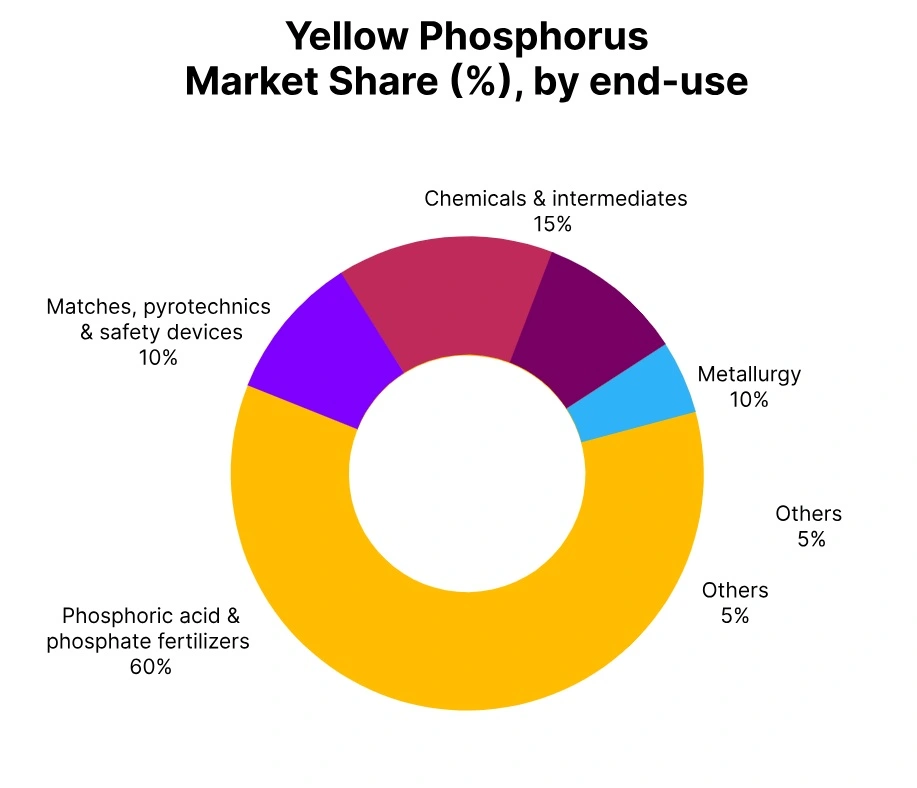
yellow phosphorus market share end use

Historically, several events have caused significant fluctuations in Yellow Phosphorous prices

  • Geopolitical Tensions (2022-Present): Ongoing conflicts and trade issues have created uncertainty in supply chains, impacting availability and causing price spikes.
  • Increased Agricultural Demand (2021-Present): Growing demand for fertilizers, particularly in developing countries, has driven up the need for Yellow Phosphorus, contributing to rising prices.
  • Global Supply Chain Disruptions (2021): Shipping delays and logistical challenges caused by the pandemic and other global events led to supply shortages and increased prices.
  • COVID-19 Pandemic (2020): The pandemic initially disrupted supply chains and caused demand fluctuations in various industries, resulting in price volatility as markets adjusted.

These events illustrate the Yellow Phosphorus market’s sensitivity to global changes and emphasize the importance of monitoring supply and demand trends.

Why Price Watchâ„¢?

Price Watchâ„¢ is your trusted resource for tracking global yellow phosphorous price trends. Our platform delivers real-time data and expert analysis, offering deep insights into the key factors driving price fluctuations in the yellow phosphorous market. By monitoring critical events such as geopolitical tensions, supply chain disruptions, and economic shifts, Price Watchâ„¢ keeps you fully informed of market dynamics.

In addition, Price Watch™ provides detailed forecasts and updates on production capacities, enabling you to anticipate market changes and make well-informed decisions. With Price Watch™, you gain a competitive edge in understanding all the elements that influence yellow phosphorous prices worldwide. Stay ahead of the curve with Price Watch’s™ reliable, accurate, and timely yellow phosphorous market data.

Track Price Watch'sâ„¢ yellow phosphorous price assessment on a weekly basis since 2015 onwards, along with short-term forecasts, and get access to the detailed report in a downloadable format.

Yellow Phosphorous Market Price Trend published by Price Watchâ„¢ reflect prevailing spot market conditions, derived from independent research, verified trade inputs, and proprietary market intelligence as of the publication date. Prices are published on the specified Incoterm and represent indicative base market levels, exclusive of applicable taxes, VAT, duties, tariffs, and other statutory charges. Actual transaction values may vary depending on volume, credit terms, contractual structure, and other negotiated conditions. Market prices are inherently subject to volatility, liquidity dynamics, regulatory changes, and evolving trade activity. The information provided is for reference and benchmarking purposes only and does not constitute an offer, recommendation, or guarantee of transactional outcomes. Users should exercise independent commercial judgment and assess their specific contractual, regulatory, tax, and application requirements before making business decisions. Price Watchâ„¢ assumes no liability for decisions taken based on this information.

Yellow Phosphorus prices are influenced by various factors, including the availability of raw materials, production costs, and market demand. Key aspects include fluctuations in supply from major producing countries, changes in production capacity, transportation costs, and environmental regulations. Additionally, geopolitical events and economic conditions can create volatility in pricing, making it essential for procurement heads to stay informed about these dynamics.

Seasonal demand plays a significant role in determining Yellow Phosphorus prices, particularly in agriculture and electronics. During planting seasons, demand for fertilizers typically increases, which can drive up prices. Conversely, during off-peak periods, demand may decrease, leading to price reductions. Procurement professionals should anticipate these seasonal trends to optimize their purchasing strategies and budget allocations effectively.

Yes, Yellow Phosphorus prices can vary significantly across regions due to differences in production capacities, local demand, and transportation costs. For instance, Southeast Asia may offer competitive pricing due to abundant production, while prices in North America and Europe might be higher. Procurement teams should analyze regional price trends and consider sourcing from cost-effective markets to enhance their procurement strategies and reduce expenses.

Yellow Phosphorus is a highly reactive chemical element widely used in the production of phosphoric acid, fertilizers, flame retardants, pesticides, and various industrial chemicals. It plays a critical role in agriculture and chemical manufacturing, making its price extremely important for downstream industries. Changes in Yellow Phosphorus prices directly impact fertilizer costs, agrochemical production, and chemical supply chains. Price-Watchâ„¢ tracks Yellow Phosphorus prices to help businesses stay informed about market movements, supply conditions, and global cost trends.

Yellow Phosphorus prices fluctuate significantly based on region, production costs, energy prices, and supply-demand balance. It is energy-intensive to produce, so electricity and raw phosphate rock costs strongly influence pricing. Freight charges, environmental regulations, and industrial demand also contribute to volatility. Prices are typically quoted per metric ton and vary across major producing regions such as China, Vietnam, and Kazakhstan. Price-Watchâ„¢ provides accurate and updated Yellow Phosphorus price assessments across global markets.

Yellow Phosphorus market trends are driven mainly by fertilizer demand, agrochemical production, and industrial chemical consumption. Prices are heavily influenced by electricity costs, phosphate rock availability, and environmental regulations on production. Supply restrictions in major producing countries can create sharp price spikes. Seasonal agricultural demand and export policies also play a major role in price direction. Recent trends often show volatility due to energy costs and regulatory constraints.

The largest consumer of Yellow Phosphorus is the chemical industry, especially for producing phosphoric acid and derivatives. It is also widely used in agrochemicals (herbicides, pesticides), fertilizers, flame retardants, and specialty chemicals. Additional demand comes from metallurgy and industrial applications. Due to its key role in phosphorus-based chemistry, downstream chemical manufacturers account for the majority of global consumption. Price-Watchâ„¢ tracks demand trends across all major end-use sectors.

Yellow Phosphorus is produced by heating phosphate rock with coke and silica in an electric furnace at very high temperatures. This energy-intensive process releases elemental phosphorus in vapor form, which is then condensed into a solid or liquid form. Production is highly concentrated in a few countries due to its high electricity consumption and environmental regulations. This makes supply highly sensitive to energy costs and industrial policy.

China is the largest producer and exporter of Yellow Phosphorus globally, followed by countries such as Vietnam and Kazakhstan. These regions dominate due to abundant phosphate rock resources and large-scale electric furnace production capacity. Export volumes depend on domestic demand, environmental controls, production quotas, and energy availability. Price-Watchâ„¢ monitors global trade flows, export restrictions, and supply availability across key markets.

Global supply is generally sufficient but can become tight due to production cuts, energy shortages, or environmental restrictions in key producing countries. Since production is highly concentrated, any disruption in major regions can quickly impact global availability. Demand spikes from agrochemical and fertilizer industries can also create temporary shortages. Price-Watchâ„¢ closely tracks supply-demand balance and market risks.

Yellow Phosphorus is typically traded in solid (under water storage) and molten forms. Prices vary based on purity, packaging (drums or bulk), handling requirements, and transportation safety costs due to its highly reactive nature. Storage and logistics costs significantly influence final pricing. Regional regulations and contract structures also contribute to price differences. Price-Watchâ„¢ provides form-wise price insights for better transparency.

When demand rises sharply especially from fertilizer and agrochemical industries—prices tend to increase rapidly. Supply can tighten quickly due to limited production capacity and environmental restrictions. Buyers may face longer lead times and reduced spot availability. Export controls in producing countries can further intensify shortages. Price-Watch™ captures these sudden market shifts and pricing movements in real time.

Electricity is one of the biggest cost drivers in Yellow Phosphorus production because of the high-temperature furnace process. Any increase in power costs directly raises production expenses. Similarly, phosphate rock prices also impact raw material costs. When both energy and raw materials rise simultaneously, Yellow Phosphorus prices tend to increase significantly. Price-Watchâ„¢ analyses these cost linkages to explain market trends.

Regional price differences arise due to production concentration, electricity costs, environmental regulations, transport costs, and export policies. Countries with large production bases typically offer lower prices, while import-dependent regions face higher costs due to freight and supply chain expenses. Seasonal demand and trade restrictions also widen regional price gaps. Price-Watchâ„¢ tracks these variations across global markets.

The Yellow Phosphorus price outlook depends on electricity prices, phosphate rock availability, environmental regulations, and demand from fertilizer and chemical industries. Supply-side restrictions in major producing regions can support higher prices, while stable production and lower energy costs may ease pressure. Global agricultural demand also plays a key role in future trends. Price-Watchâ„¢ publishes forward-looking forecasts based on these key drivers.

Yes, Yellow Phosphorus price forecasts are extremely useful for chemical manufacturers, fertilizer producers, and agrochemical companies. They help businesses plan procurement, manage inventory, reduce cost risks, and negotiate long-term contracts more effectively. Since the market is highly sensitive to energy and regulatory changes, forecasting improves budgeting accuracy and supply chain stability. Price-Watchâ„¢ provides reliable insights for smarter decision-making.

Global events such as energy crises, geopolitical tensions, export restrictions, environmental policy changes, and shipping disruptions can significantly affect Yellow Phosphorus supply chains. Since production is energy-intensive and concentrated in a few regions, any disruption can quickly tighten global supply. Trade restrictions or production quotas can also lead to sharp price movements. Price-Watchâ„¢ delivers timely updates on such market-moving developments.

Price-Watchâ„¢ collects data from producers, chemical manufacturers, traders, and end-users to publish transparent Yellow Phosphorus price assessments, detailed market reports, and forecasts. This helps industry stakeholders track real-time price movements, understand market drivers, and make informed procurement and risk management decisions in a volatile global market.