Acrylonitrile Price Trend and Forecast

UNSPC code: 13102001
|
Weekly Update
|
Historical Data Since 2015
|
Forecast for 2026

acrylonitrile Price Trends by Country

usUnited States
mxMexico
caCanada
pePeru
trTurkey
nlNetherlands
saSaudi Arabia
inIndia
auAustralia
cnChina
thThailand
krSouth Korea

Global acrylonitrile Spot Market Prices, Trend Analysis and Forecast

Price-Watch™ provides price assessments for Acrylonitrile across top trading regions:

Asia-Pacific

  • Acrylonitrile Purity≥99% FOB Shanghai, China
  • Acrylonitrile Purity≥99% CIF Nhava Sheva (China), India
  • Acrylonitrile Purity≥99% CIF Bangkok (China), Thailand
  • Acrylonitrile Purity≥99% FOB Busan, South Korea
  • Acrylonitrile Purity≥99% CIF Melbourne (South Korea), Australia


Europe

  • Acrylonitrile Purity≥99% CIF Rotterdam (South Korea), Netherlands
  • Acrylonitrile Purity≥99% CIF Mersin (USA), Turkey


North America

  • Acrylonitrile Purity≥99% FOB Houston, USA
  • Acrylonitrile Purity≥99% CIF Manzanillo (USA), Mexico
  • Acrylonitrile Purity≥99% CIF Montreal (USA), Canada


South America

  • Acrylonitrile Purity≥99% CIF Callao (USA), Peru


Middle East & Africa

  • Acrylonitrile Purity≥99% CIF Jeddah (USA), Saudi Arabia


Note: In assessments structured as CIF [Importing Port] (Exporting Country), the country mentioned in brackets indicates the primary origin of supply (exporting country), while the named port refers to the destination port in the importing country. Other Incoterms (FOB, FD, EXW, etc.) should be interpreted in accordance with standard international trade definitions.

Acrylonitrile (ACN) Price Trend Q1 2026

In Q1 2026, the global Acrylonitrile market grew steadily, with prices increasing nearly 3 – 5% across most regions compared to the last quarter. The increase has been primarily attributed to significant increases in the cost of propylene feedstock, which raise production costs and provide strong upward cost support.

Additionally, ongoing geopolitical conflict between the US-Iran and disruptions to production have contributed to rising energy prices, resulting in even greater manufacturing costs in many of the world’s major acrylonitrile-producing regions.

Disruptions have also been seen in supply chains as a result of delayed cargo shipments of naphtha from the Middle East have led to limited availability of feedstock in Asian markets. The combination of these issues as well as tighter upstream supply for several producers has resulted in reduced utilization rates, which limited total market availability.

Demand conditions improved slightly, as buyers have begun to return to the market with expectations for continued price increases. Overall, the Q1 Acrylonitrile market has been characterized by a bullish outlook supported by rising feedstock costs, supply constraints, and global macroeconomic pressures.

USA: Acrylonitrile (ACN) Export prices FOB Houston, USA; Grade- Purity≥99%

In the first quarter of 2026, there has been a continuation of the long-standing trend of increasing Acrylonitrile prices in the United States (USA) as they have increased by approximately 2.85% from last quarter. The primary driver for this increase is the continued geopolitical tensions that are disrupting international energy and feedstock markets.

The trend in Acrylonitrile pricing in the USA has been reflecting the effects of increasing energy costs and limited availability of propylene, as supply chains have been severely affected by both conflict-related supply disruptions and the volatility of crude and natural gas markets.

Additional pressures have been placed on producers as a result of scheduled maintenance of PDH units combined with the high volumes of propane that are being exported, leading to a reduction in upstream supply and increasing the costs of production.

Producers have responded to these pressures by increasing their prices for precursors to production, and subsequently passing these higher costs onto consumers, despite moderate demand from consumer industries downstream.

By March 2026, conditions for Acrylonitrile pricing in the USA have deteriorated rapidly, and they are now about 20% higher than they were in February. The overall cause of this dramatic increase in price is a combination of worsening geopolitical conditions, rising feedstock costs, and a significantly tighter supply market across the entire Acrylonitrile market.

Mexico: Acrylonitrile (ACN) Import prices CIF Manzanillo (USA), Mexico; Grade- Purity≥99%

The first quarter of 2026 witnessed a steady climb in the Acrylonitrile price in Mexico, which has risen compared to the previous quarter. This upward trend stemmed primarily from escalating geopolitical tensions that have disrupted energy markets and tightened feedstock availability.

The Acrylonitrile price trend in Mexico reflected higher FOB USA pricing, as constrained propylene supply and rising energy costs in the United States have pushed export offers upward. Additional pressure has come from logistics uncertainties and increased freight costs, which have further elevated CIF values.

Supply conditions have remained relatively tight, while buyers have maintained cautious procurement strategies in the face of rising prices. Despite moderate downstream demand, cost-push factors have dominated the market direction.

By the end of the quarter, the situation has intensified significantly; in Mexico, Acrylonitrile prices in March 2026 have surged by around 20% compared to February levels. This sharp spike has been driven by deeper geopolitical turmoil, higher upstream costs, and limited supply availability from US exporters.

Canada: Acrylonitrile (ACN) Import prices CIF Montreal (USA), Canada; Grade – Purity≥99%

The first quarter of 2026 observed the Acrylonitrile price in Canada moving upward compared to the previous quarter, as rising cost pressures have been partially balanced by moderate demand. The Acrylonitrile price trend in Canada reflected the impact of escalating geopolitical tensions, which have shaken up energy markets and tightened feedstock availability, ultimately pushing FOB USA offers higher.

Increased propylene and energy costs south of the border have fuelled this momentum, especially as supply conditions remain somewhat constrained. While steady, unaggressive demand from downstream buyers has kept quarterly gains from spiralling too early, the situation shifted dramatically at the end of the period.

In Canada, Acrylonitrile prices in March 2026 have surged by more than 15% compared to February. This sharp jump stems from intensified geopolitical disruptions, skyrocketing feedstock costs, and a tightening supply of available exports from the US.

Turkey: Acrylonitrile (ACN) Import prices CIF Mersin (USA), Turkey; Grade- Purity≥99%

The first quarter of 2026 witnessed the Acrylonitrile Price in Turkey climbing about 2% over the previous quarter, fuelled largely by geopolitical turmoil hitting global energy and feedstock supplies. The Acrylonitrile price trend in Turkey has tracked rising costs in upstream markets, as key suppliers hike their FOB offers to cover the spike in propylene and energy expenses.

While import availability stays relatively tight, Turkish buyers are playing it safe, sticking to essential, need-based purchases due to a shaky demand outlook. Even with only moderate downstream activity, cost-driven pressures have kept prices on a steady climb throughout the quarter.

However, things really ramped up toward the end of the period; in Turkey, Acrylonitrile prices in March 2026 have jumped by more than 15% compared to February. This massive surge is the result of intensified geopolitical friction, skyrocketing feedstock costs, and a shrinking global supply pool, all of which have forced import offers significantly higher.

Peru: Acrylonitrile (ACN) Import prices CIF Callao (USA), Peru; Grade- Purity≥99%

The first quarter of 2026 has seen Acrylonitrile prices in Peru climb by roughly 2% compared to the previous quarter. This uptick is mostly a byproduct of geopolitical friction rattling global energy markets and choking off feedstock availability. The Acrylonitrile price trend in Peru is essentially hitching a ride on the bullish sentiment in the US market, where producers are hiking export offers to offset their own rising propylene and energy bills.

These higher costs are flowing directly into CIF levels, even though local demand in Peru hasn’t exactly been on fire, sticking instead to essential, “just-in-need” buying. While occasional supply hiccups have helped prop up prices, buyers are still being incredibly cautious with their orders. At the end of the day, it’s the cost of production not a surge in consumption that’s driving the bus here.

Things took a sharp turn toward the end of the quarter, though; in Peru, Acrylonitrile prices in March 2026 skyrocketed by about 20% over February levels. This massive jump is a direct response to deepening geopolitical chaos, expensive raw materials, and a shrinking supply pool that has sent regional import offers through the roof.

South Korea: Acrylonitrile (ACN) Export prices FOB Busan, South Korea; Grade- Purity≥99%

The first quarter of 2026 has seen Acrylonitrile Prices in South Korea climb by about 6% compared to the previous quarter. This upward trend is primarily the result of a tightening feedstock market and escalating geopolitical chaos that has rattled the entire region. A major pain point has been the constrained supply of propylene, largely due to disruptions in naphtha imports that have sent upstream petrochemical costs through the roof.

Logistics have also been a mess; shipping delays through the Strait of Hormuz and Suez Canal have choked off feedstock inflows, leaving the regional supply pool incredibly shallow. Local production hasn’t fared better, industry heavyweights like Taekwang Industrial and Tongsuh Petrochemical have been running at reduced rates, while the shutdown of Lotte Chemical’s Yeosu complex has only tightened the squeeze.

Throw in the extended transit times from Red Sea rerouting, and you have a recipe for skyrocketing export offers. By the time March rolled around, the market hit a breaking point. In South Korea, Acrylonitrile prices in March 2026 surged by more than 25% over February levels. This massive jump is the direct outcome of intensified supply shortages, soaring feedstock prices, and a geopolitical landscape that has become increasingly unpredictable.

Netherlands: Acrylonitrile (ACN) Import prices CIF Rotterdam (South Korea), Netherlands; Grade- Purity≥99%

As of Q1 2026, prices for acrylonitrile in the Netherlands have grown about 7% over the previous quarter largely due to increased cost-push factors and existing tightness in the global market. The price trend for acrylonitrile in the Netherlands has been aligned with firm pricing momentum seen in Asian export markets, particularly South Korea; where increased propylene prices and interruptions to production have been causing increases in FOB offers.

The continued geopolitical unrest and disruptions in trade routes have been causing a delay in the arrival of goods and an increase of freight rates into Europe which has contributed to increased CIF prices into Europe. Overall, supply availability in the Netherlands has been somewhat constrained and purchasers continue to use a conservative approach to purchasing as a result of moderate downstream demand.

While there has been limited purchasing strength on the demand side, the rising price of imported product has continued to influence the upward momentum of the market during the quarter. In March 2026, prices for acrylonitrile (CIF) in the Netherlands have risen over 25%, compared to February 2026 pricing, due to increasing geopolitical disruptions and cost increases experienced upstream and tightening supply in the global market.

Saudi Arabia: Acrylonitrile (ACN) Import prices CIF Jeddah (USA), Saudi Arabia; Grade- Purity≥99%

Acrylonitrile prices in Saudi Arabia have been on the rise in Q1 2026 at around 3% higher than the previous quarter as a result of geopolitical unrest causing havoc on the global energy markets and creating shortages of feedstock. Also influencing the price trend for Acrylonitrile in Saudi Arabia are the firmer FOB USA prices due to increased production costs because of higher feedstock prices and energy costs and affecting export pricing.

The supply of imported Acrylonitrile has been limited; whereas purchasing on a need basis has been used by buyers because of moderate downstream demand. As buyers remain cautious about purchasing aggressively, ongoing cost pressures will keep the market moving up.

Acrylonitrile prices in Saudi Arabia have skyrocketed more than 15% in March 2026 versus February 2026 due to increased geopolitical instability, increased upstream costs, and tighter supply from US exporters.

China: Acrylonitrile (ACN) Export prices FOB Shanghai, China; Grade- Purity≥99%

Acrylonitrile prices in China (FOB) on the rise approximately five percent (5%) during Q1 of 2026, influenced by tightening domestic supply conditions and strong upstream fundamentals. Seasonal refinery outages across key refineries (e.g., ZPC) have reduced total refinery throughput at major refineries in China and significantly affected the availability of feedstock by reducing capacity (up to 20%) and creating difficulties in processing crude oil feeds due to the tight global supply of crude oil due to disruptions in international trade.

Several of the largest acrylonitrile producers operating in China (e.g., Jinchen, Huaneng, and CNOOC) are operating at lower levels than average because of supply shortages from the aforementioned issues, further restricting the availability of acrylonitrile. Meanwhile, the continued expansion of coal-based production of propylene is providing stable feedstocks for the acrylonitrile production process and, therefore, providing some insulation for the in-China acrylonitrile market from the international supply chain disruptions occurring globally.

In addition, stronger regional demand and supply competition from neighboring markets (e.g., South Korea) have contributed to upward pricing trends; as a result. In March 2026, Acrylonitrile prices in China have increased 30 percent over February 2026 due to ongoing supply disruptions, strong demand, and elevated production cost throughout the entire value chain.

India: Acrylonitrile (ACN) Import prices CIF Nhava Sheva (China), India; Grade- Purity≥99%

In Q1 2026, Acrylonitrile prices in India (CIF from China) have been increasing by around 5% compared to the previous quarter, largely tracking the firming trend in the Chinese export market. The Acrylonitrile price trend in India has been influenced by higher FOB China prices, where supply has been tightening due to reduced refinery output, including lower run rates at major facilities like ZPC, along with constrained feedstock availability and controlled operating rates among producers.

This upward pressure from the Chinese market has been further amplified by the Indian Rupee weakening to record low levels against the US Dollar, increasing the landed cost of imports. Supply availability in India has remained somewhat tight, while buyers have continued to adopt a cautious, need-based procurement approach amid moderate downstream demand.

In March 2026, Acrylonitrile prices in India have been surging by more than 25% compared to February levels, driven by a sharp rise in FOB China offers, currency depreciation, and tightening global supply conditions.

Australia: Acrylonitrile (ACN) Import prices CIF Melbourne (South Korea), Australia; Grade- Purity≥99%

In Q1 2026, Acrylonitrile prices in Australia (CIF from South Korea) have been increasing by around 3% compared to the previous quarter, supported by rising upstream costs and tightening supply conditions. The Acrylonitrile price trend in Australia has been influenced by higher FOB South Korea offers, as propylene feedstock prices have been strengthening and supply disruptions have been impacting production and export availability.

Ongoing geopolitical tensions and shipping delays along key trade routes have been adding further pressure by increasing freight costs and extending transit times to the Australian market. Supply has remained somewhat constrained, while buyers have continued to adopt a cautious, need-based procurement approach amid moderate downstream demand.

Despite limited consumption growth, cost-driven factors have kept the market firm throughout the quarter. In March 2026, Acrylonitrile prices in Australia have been surging by more than 25% compared to February levels, driven by intensified geopolitical disruptions, elevated feedstock costs, and tighter supply availability from South Korean exporters.

Thailand: Acrylonitrile (ACN) Import prices CIF Bangkok (South Korea), Thailand; Grade- Purity≥99%

According to Price-Watch™, in Q1 2026, Acrylonitrile prices in Thailand (CIF from China) have been increasing by more than 5% compared to the previous quarter, largely following the strong upward trend in the Chinese export market.

The Acrylonitrile price trend in Thailand has been closely tied to higher FOB China prices, where reduced refinery throughput, including lower output at major facilities like ZPC, and constrained feedstock availability have been tightening overall supply.

Additional support has come from controlled operating rates among Chinese producers and firm regional demand, which have been pushing export offers higher. Supply into Thailand has remained somewhat tight, while buyers have maintained cautious, need-based procurement amid moderate downstream demand.

Despite limited consumption growth, rising import costs have kept the market on a firm trajectory. In March 2026, Acrylonitrile prices in Thailand have been surging by more than 30% compared to February levels, driven by sharp increases in FOB China pricing, intensified supply constraints, and elevated upstream costs across the value chain.

Acrylonitrile Price Trend Analysis: Q4 2025

In Q4 2025, the global Acrylonitrile market exhibited a mild downward trend, with prices declining by approximately 1–2% across major regions compared to the previous quarter. The primary driver behind this decline was the softening of propylene feedstock prices, which reduced overall production costs and exerted downward pressure on Acrylonitrile values.

Market sentiment remained cautious, as demand from key downstream sectors such as ABS, acrylic fibre, and nitrile rubber showed limited momentum, with buyers largely maintaining need-based procurement strategies. Supply conditions were relatively balanced, with producers adjusting operating rates in line with consumption trends to avoid excess inventory accumulation.

Additionally, improved feedstock availability and stable production output across key manufacturing hubs contributed to comfortable market supply. Export activity remained moderate, with competitive offers and sufficient material availability limiting any upward price movement.

Overall, the Acrylonitrile market in Q4 reflected a soft tone, influenced by declining upstream costs, steady supply conditions, and restrained downstream demand across global markets.

USA: Acrylonitrile (ACN) Export prices FOB Houston, USA; Grade- Purity≥99%

During Q4 2025, the Acrylonitrile price in the USA decreased by approximately 2.80% compared to the previous quarter, as softer upstream cost support and cautious market sentiment take hold.

The Acrylonitrile price trend in the USA remained heavily influenced by falling propylene feedstock costs, which reduce production expenses and exert downward pressure on spot offers. Inventories stay adequate throughout the quarter, while buying activity remains measured and largely need-based, as demand holds steady but lacks significant momentum.

Seasonal factors further weigh on the market, since downstream turnarounds and year-end destocking limit consumption across key sectors such as ABS and nitrile rubber. In the USA, Acrylonitrile prices in December 2025 continue to soften slightly, shaped by declining propylene costs, mixed feedstock trends, and subdued global demand.

Although lower upstream costs offer some relief to buyers, the overall market tone remains weak, with limited procurement urgency and balanced supply levels maintaining downward pressure on prices.

Mexico: Acrylonitrile (ACN) Import prices CIF Manzanillo (USA), Mexico; Grade- Purity≥99%

Throughout Q4 2025, the Acrylonitrile price in Mexico decreased by approximately 2.6% compared to the previous quarter, as softer upstream cost trends and cautious regional demand shape the market.

The Acrylonitrile price trend in Mexico remained influenced by falling propylene prices in the USA, which reduce export offer levels and pressure CIF values. Supply conditions stay comfortable, supported by steady inflows from US producers, while inventories across the Mexican market remained sufficient to meet demand.

Buying activity stayed measured, as downstream sectors maintain a need-based procurement approach amid limited consumption growth. In Mexico, Acrylonitrile prices in December 2025 continue to soften slightly, influenced by ongoing feedstock weakness and subdued industrial activity.

Seasonal factors, such as year-end destocking, further contribute to the subdued market sentiment, keeping overall pricing under pressure during the quarter.

Canada: Acrylonitrile (ACN) Import prices CIF Montreal (USA), Canada; Grade- Purity≥99%

Throughout Q4 2025, the Acrylonitrile price in Canada decreased by approximately 2.6% compared to the previous quarter, as softer upstream cost trends and subdued market conditions shape the environment.

The Acrylonitrile price trend in Canada remained influenced by declining propylene prices in the USA, which lower export offer levels and exert downward pressure on CIF values. Supply availability stayed sufficient, supported by steady cross-border shipments, while inventories remain adequate to meet existing demand.

Buying activity stayed cautious and largely need-based, as downstream industries show limited momentum. In Canada, Acrylonitrile prices in December 2025 continued to be soften slightly, influenced by ongoing feedstock weakness and subdued consumption patterns.

Additionally, seasonal factors such as year-end destocking and reduced industrial activity contribute to weaker demand. Overall, the market maintains a soft tone, driven by lower feedstock costs, comfortable supply conditions, and restrained procurement activity.

Turkey: Acrylonitrile (ACN) Import prices CIF Mersin (USA), Turkey; Grade- Purity≥99%

Throughout Q4 2025, the Acrylonitrile price in Turkey decreased by approximately 3% compared to the previous quarter, as weaker upstream cost support and subdued demand conditions shape the market. The Acrylonitrile price trend in Turkey remained influenced by falling propylene feedstock prices, which lower import offer levels and exert downward pressure on CIF values.

Supply availability stayed sufficient, supported by steady import flows from major exporting regions, while inventories remain adequate to meet regional requirements. Buying activity stayed cautious, as downstream sectors like ABS and acrylic fiber maintain need-based procurement amid limited consumption growth.

In Turkey, Acrylonitrile prices in December 2025 continued to be soften slightly, influenced by ongoing feedstock weakness and slow market activity. Furthermore, year-end destocking and reduced industrial operations weigh on demand, resulting in an overall bearish market tone during the quarter.

Peru: Acrylonitrile (ACN) Import prices CIF Callao (USA), Peru; Grade- Purity≥99%

Throughout Q4 2025, the Acrylonitrile price in Peru dropped by nearly 2.60% relative to the previous quarter, as softer upstream costs and muted regional demand define the market landscape. The Acrylonitrile price trend in Peru tracked the decline in US propylene prices, which consistently lowers export offers and pulls down CIF values.

Supply availability remained ample, supported by regular import arrivals from American suppliers, while local inventories stay sufficient to cover downstream needs. Buying activity remained defensive and strictly need-based, as end-use sectors like plastics and fibers show little momentum.

In Peru, Acrylonitrile prices in December 2025 continued to edge lower, as ongoing feedstock weakness and sluggish industrial activity weigh on the sector. Furthermore, year-end destocking and slower procurement cycles reinforce the bearish sentiment seen across the quarter.

South Korea: Acrylonitrile (ACN) Export prices FOB Busan, South Korea; Grade- Purity≥99%

In Q4 2025, Acrylonitrile prices in South Korea have been declining by approximately 3% compared to the previous quarter, reflecting softer feedstock support and cautious market sentiment. The Acrylonitrile price trend in South Korea has been influenced by falling propylene costs, which have been reducing production expenses and exerting downward pressure on pricing.

Demand conditions have remained stable but unaggressive, with steady downstream offtake and buyers having adopted a measured procurement approach. Supply levels have been largely balanced, while export interest has remained moderate, limiting any strong price recovery. As the quarter progressed, year-end factors have further weighed on the market, with slowing demand and cautious buying behaviour contributing to the decline.

In December 2025, Acrylonitrile prices in South Korea have edged up slightly, supported by a rise in propylene and ammonia costs, which have lifted seller expectations despite continued soft demand and buyers relying on existing inventories.

Netherlands: Acrylonitrile (ACN) Import prices CIF Rotterdam (South Korea), Netherlands; Grade- Purity≥99%

In Q4 2025, Acrylonitrile prices in the Netherlands (CIF from South Korea) have been declining by approximately 5% compared to the previous quarter, reflecting softer upstream cost support and subdued demand conditions across the European market. The Acrylonitrile price trend in the Netherlands has been influenced by falling propylene costs in South Korea, which have been reducing FOB export offers and exerting downward pressure on CIF values.

Supply availability has remained sufficient, supported by steady import inflows, while buyers have maintained a cautious, need-based procurement approach amid weak downstream demand. As the quarter progressed, year-end factors such as destocking and reduced industrial activity have further weighed on consumption, keeping market sentiment soft.

In December 2025, Acrylonitrile prices in the Netherlands have edged up slightly, supported by marginal increases in feedstock costs and limited restocking activity, although overall demand has remained subdued and buyers have continued to rely on existing inventories.

Saudi Arabia: Acrylonitrile (ACN) Import prices CIF Jeddah (USA), Saudi Arabia; Grade- Purity≥99%

In Q4 2025, Acrylonitrile prices in Saudi Arabia (CIF from the USA) have been declining by approximately 2% compared to the previous quarter, reflecting softer upstream cost support and subdued regional demand. The Acrylonitrile price trend in Saudi Arabia has been influenced by falling propylene prices in the USA, which have been reducing export offer levels and exerting downward pressure on CIF values.

Supply availability has remained sufficient, supported by steady import flows, while inventories have been adequate to meet downstream requirements. Buying activity has stayed cautious and largely need-based, with limited momentum from key end-use sectors.

In December 2025, Acrylonitrile prices in Saudi Arabia have continued to soften slightly, influenced by ongoing feedstock weakness and subdued industrial activity. Additionally, year-end destocking and reduced procurement activity have contributed to the overall bearish market sentiment during the quarter.

China: Acrylonitrile (ACN) Export prices FOB Shanghai, China; Grade- Purity≥99%

In Q4 2025, Acrylonitrile prices in China (FOB) have been declining by approximately 1.0% compared to the previous quarter, reflecting persistent oversupply and continued downward adjustments by producers. The Acrylonitrile price trend in China has remained largely weak during the quarter, as ample material availability and rising inventories have been weighing on market sentiment.

However, intermittent support has been observed toward the latter part of the quarter, as downstream buyers have engaged in low-level restocking, encouraging suppliers to slightly raise offer levels despite overall comfortable supply conditions. In December 2025, Acrylonitrile prices in China have edged up marginally, supported by year-end restocking activity, controlled supply, and steady operating rates among producers.

Although these factors have provided brief upward momentum, the broader market has remained under pressure due to excess supply and cautious demand, resulting in an overall soft pricing trend during the quarter.

India: Acrylonitrile (ACN) Import prices CIF Nhava Sheva (China), India; Grade- Purity≥99%

In Q4 2025, Acrylonitrile prices in India (CIF from China) have been declining by approximately 0.5% compared to the previous quarter, influenced by softer FOB China pricing and lower freight rates, which have been collectively pressuring CIF values. The Acrylonitrile price trend in India has remained subdued for most of the quarter, as ample supply from China and cautious, need-based buying have kept overall market sentiment weak.

However, intermittent support has been observed during the latter half of the quarter, as low-level downstream restocking has led to a mild uptick in CIF Nhava Sheva prices despite rising inventories at origin.

In December 2025, Acrylonitrile prices in India have edged slightly higher, supported by year-end replenishment activity and relatively controlled supply from China, although buyers have largely depended on existing stocks. Overall, the market has maintained a soft tone, with limited demand recovery and sufficient availability capping any significant upward movement.

Australia: Acrylonitrile (ACN) Import prices CIF Melbourne (South Korea), Australia; Grade- Purity≥99%

In Q4 2025, Acrylonitrile prices in Australia (CIF from South Korea) have been declining by approximately 1.20% compared to the previous quarter, reflecting softer upstream cost trends and subdued regional demand. The Acrylonitrile price trend in Australia has been influenced by falling propylene prices in South Korea, which have been reducing FOB export offers and exerting downward pressure on CIF values.

Supply availability has remained sufficient, supported by steady import flows, while inventories have been adequate to meet downstream requirements. Buying activity has stayed cautious and largely need-based, with limited momentum from key end-use sectors.

In December 2025, Acrylonitrile prices in Australia have edged slightly higher, supported by marginal increases in feedstock costs and year-end replenishment activity, although buyers have continued to rely on existing inventories amid soft demand conditions, keeping overall market sentiment restrained.

Thailand: Acrylonitrile (ACN) Import prices CIF Bangkok (South Korea), Thailand; Grade- Purity≥99%

In Q4 2025, Acrylonitrile prices in Thailand dipped by roughly 0.3% compared to the previous quarter, as softer FOB China pricing and persistent feedstock pressure weighed on CIF Bangkok values. The Acrylonitrile price trend in Thailand stayed largely quiet throughout the period, with buyers sticking to a cautious, “as-needed” strategy while supply from China remained plentiful.

The market does see some brief support emerge during the latter part of the quarter. A round of low-level downstream restocking sparked a minor uptick in prices, although rising inventories back at the source in China kept any major gains in check.

By December 2025, Acrylonitrile prices in Thailand edged slightly higher, fuelled by year-end replenishment and a more disciplined output from Chinese producers. Even with this late-year boost, the broader sentiment remained restrained; most buyers continued to lean on their existing stockpiles rather than commit to large orders, which prevented any significant price recovery as the year closed.

The global Acrylonitrile price trend in Q3 2025 has exhibited broadly soft trends across major regions, with prices having fallen sharply in most key markets. The downturn has been primarily driven by a notable drop in upstream propylene costs, themselves being pressured by easing crude oil values and persistent oversupply of refinery feedstocks. Weak downstream demand from ABS, synthetic fibers, and chemical processing industries across North America, Europe, and Asia has further weighed on the market.

Inventory adjustments in major producing regions and cautious restocking by end-users have contributed to subdued buying sentiment. Overall, oversupply, softening feedstock costs, and muted industrial activity have kept global Acrylonitrile prices under pressure, with declines having ranged from moderate to steep across different regions.

USA: Acrylonitrile (ACN) Export prices FOB Houston, USA, Grade- Purity≥99%.

According to the PriceWatch, the Acrylonitrile (ACN) price trend in the USA has shown a downward movement in Q3 2025, averaging around USD 1,130–1,150/MT, reflecting a 10.27% drop from the previous quarter.

The USA Acrylonitrile prices have been pressured by weakening upstream propylene costs, themselves impacted by easing crude oil values, while downstream demand from ABS, synthetic fibers, and chemical processing sectors has remained subdued.

Production disruptions, including the June shutdown at CornerStone and operational uncertainty following Ascend’s bankruptcy, have further influenced market dynamics. In September 2025, Acrylonitrile prices in the USA have recorded a further 1.55% fall from August levels, as cautious buying sentiment and adequate supply flows have continued to weigh on the market.

Mexico: Acrylonitrile (ACN) Import prices CIF Manzanillo (USA), Mexico, Grade- Purity≥99%.

The Acrylonitrile price trend in Mexico has shown a significant downward movement in Q3 2025, averaging around USD 1,200–1,220/MT, reflecting a 9.80% decrease from the previous quarter. The Acrylonitrile prices in Mexico have been pressured by lower upstream propylene costs amid weakening crude oil values, combined with moderate demand from downstream ABS, synthetic fibers, and chemical processing sectors.

In September 2025, Acrylonitrile prices in Mexico have recorded a further 1.50% fall from August levels, as limited restocking activity and cautious buying sentiment have continued to weigh on the market. Overall, stable supply flows and subdued industrial consumption have kept Acrylonitrile prices under pressure throughout the quarter.

Canada: Acrylonitrile (ACN) Import prices CIF Montreal (USA), Canada, Grade- Purity≥99%.

The Acrylonitrile (ACN) price trend in Canada has shown a downward movement in Q3 2025, averaging around USD 1,280–1,300/MT, reflecting an 8.79% decrease from the previous quarter. The Acrylonitrile prices in Canada have been pressured by weakening upstream propylene costs, themselves impacted by falling crude oil values, alongside moderate demand from downstream ABS, synthetic fibers, and chemical processing sectors.

In September 2025, Acrylonitrile prices in Canada have recorded a further 1.36% fall from August levels, as cautious buying sentiment and adequate supply availability have continued to weigh on the market. Overall, steady supply flows and subdued industrial activity have kept Acrylonitrile prices under pressure throughout the quarter.

Turkey: Acrylonitrile (ACN) Import prices CIF Mersin (USA), Turkey, Grade- Purity≥99%.

According to Price-Watch™, The Acrylonitrile price trend in Turkey has shown a notable downward trend in Q3 2025, averaging around USD 1,230–1,250/MT, reflecting a 9.51% decrease from the previous quarter. The Acrylonitrile prices in Turkey have been pressured by lower upstream propylene costs amid weakening crude oil values, combined with moderate demand from downstream ABS, synthetic fibers, and chemical processing sectors.

In September 2025, Acrylonitrile prices in Turkey have recorded a further 1.41% fall from August levels, as cautious buying sentiment, subdued industrial consumption, and steady supply flows have continued to weigh on the market. Overall, balanced inventories and ongoing soft demand have kept Acrylonitrile prices under pressure throughout the quarter.

Peru: Acrylonitrile Import prices CIF Callao (USA), Peru, Grade- Purity≥99%.

The Acrylonitrile price trend in Peru has shown a significant downward movement in Q3 2025, averaging around USD 1,220–1,240/MT, reflecting a 9.55% decrease from the previous quarter. The Acrylonitrile prices in Peru have been pressured by weakening upstream propylene costs amid softening crude oil values, coupled with moderate demand from downstream ABS, synthetic fibers, and chemical processing sectors.

In September 2025, Acrylonitrile prices in Peru have recorded a further 1.42% fall from August levels, as cautious buying sentiment, steady supply flows, and subdued industrial consumption have continued to weigh on the market. Overall, balanced inventories and ongoing muted demand have kept Acrylonitrile prices under pressure throughout the quarter.

South Korea: Acrylonitrile Export prices FOB Busan, South Korea, Grade- Purity≥99%.

The Acrylonitrile (ACN) price trend in South Korea has shown a notable downward movement in Q3 2025, averaging around USD 1,130–1,150/MT, reflecting an 8.11% decrease from the previous quarter. The Acrylonitrile prices in South Korea have been pressured by lower upstream propylene costs amid weakening crude oil values, along with moderate demand from downstream ABS, synthetic fibers, and chemical processing sectors.

In September 2025, Acrylonitrile prices in South Korea have recorded a further 0.1% fall from August levels, as cautious buying sentiment, steady supply availability, and subdued industrial consumption have continued to weigh on the market. Overall, balanced inventories and soft demand have kept Acrylonitrile prices under pressure throughout the quarter.

Netherlands: Acrylonitrile (ACN) Import prices CIF Rotterdam (South Korea), Netherlands, Grade- Purity≥99%.

The Acrylonitrile (ACN) price trend in the Netherlands has shown a downward trend in Q3 2025, averaging around USD 1,260–1,280/MT, reflecting a 5.92% decrease from the previous quarter. The Acrylonitrile prices in the Netherlands have been pressured by weakening upstream propylene costs amid softening crude oil values, combined with moderate demand from downstream ABS, synthetic fibers, and chemical processing sectors.

In September 2025, Acrylonitrile prices in the Netherlands have recorded a further 3.42% fall from August levels, as cautious buying sentiment, steady supply flows, and subdued industrial consumption have continued to weigh on the market. Overall, balanced inventories and ongoing muted demand have kept Acrylonitrile prices under pressure throughout the quarter.

Saudi Arabia: Acrylonitrile (ACN) Import prices CIF Jeddah (USA), Saudi Arabia, Grade- Purity≥99%.

The Acrylonitrile (ACN) price trend in Saudi Arabia has shown a sharp downward trend in Q3 2025, averaging around USD 1,260–1,280/MT reflecting a 14.08% decrease from the previous quarter. The Acrylonitrile prices in Saudi Arabia have been pressured by significant weakening in upstream propylene costs amid softening crude oil values, along with moderate demand from downstream ABS, synthetic fibers, and chemical processing sectors.

In September 2025, Acrylonitrile prices in Saudi Arabia have recorded a further 1.37% fall from August levels, as cautious buying sentiment, steady supply flows, and subdued industrial consumption have continued to weigh on the market. Overall, balanced inventories and ongoing muted demand have kept ACN prices under pressure throughout the quarter.

China: Acrylonitrile (ACN) Export prices FOB Shanghai, China, Grade- Purity≥99%.

The Acrylonitrile (ACN) price trend in China has shown a notable slide in Q3 2025, averaging around USD 1,040–1,060/MT, reflecting a 7.02% decrease from the previous quarter. The Acrylonitrile (ACN) prices in China have been pressured by weakening upstream propylene costs amid softening crude oil values, combined with moderate demand from downstream ABS, synthetic fibers, and chemical processing sectors.

In September 2025, Acrylonitrile (ACN) prices in China have recorded a 0.14% rise from August levels, supported by cautious restocking activity, firm buying sentiment from regional processors, and limited short-term supply tightness. Overall, balanced supply flows, subdued industrial consumption, and steady operating rates have kept Acrylonitrile prices under continued pressure throughout the quarter, with minimal upward movement expected in early Q4 2025.

India: Acrylonitrile Import prices CIF Nhava Sheva (China), India, Grade- Purity≥99%.

According to the PriceWatch, the Acrylonitrile price trend in India has shown a downward movement in Q3 2025, averaging around USD 1120–1130/MT, reflecting a 4.9% fall from the previous quarter. The Acrylonitrile prices in India have been pressured by weakening upstream propylene costs amid softening crude oil values, along with moderate demand from downstream ABS, synthetic fibers, and chemical processing sectors.

In September 2025, Acrylonitrile prices in India have recorded a 1% increase from August levels, supported by improved restocking activity and firm buying sentiment from regional processors. Overall, balanced supply flows and steady industrial consumption have helped moderate the downward pressure on ACN prices throughout the quarter.

Australia: Acrylonitrile Import prices CIF Melbourne (South Korea), Australia, Grade- Purity≥99%.

The Acrylonitrile price trend in Australia has shown a downward trend in Q3 2025, averaging around USD 1,240–1,260/MT, reflecting a 5.58% fall from the previous quarter. The Acrylonitrile prices in Australia have been pressured by weakening upstream propylene costs amid softening crude oil values, coupled with moderate demand from downstream ABS, synthetic fibers, and chemical processing sectors.

In September 2025, Acrylonitrile prices in Australia have recorded a further 0.15% fall from August levels, as cautious buying sentiment, steady supply availability, and subdued industrial consumption continued to weigh on the market. Overall, balanced inventories and ongoing muted demand have kept ACN prices under pressure throughout the quarter.

Thailand: Acrylonitrile Import prices CIF Bangkok (South Korea), Thailand, Grade- Purity≥99%.

The Acrylonitrile (ACN) price trend in Thailand has shown a downward movement in Q3 2025, averaging around USD 1,080–1,100/MT, reflecting a 7.20% decrease from the previous quarter. The Acrylonitrile prices in Thailand have been pressured by weakening upstream propylene costs amid softening crude oil values, combined with moderate demand from downstream ABS, synthetic fibers, and chemical processing sectors.

In September 2025, Acrylonitrile prices in Thailand have recorded a 0.14% rise from August levels, supported by cautious restocking activity, firm regional buying sentiment, and steady feedstock supply. Overall, balanced inventories, consistent supply flows, and subdued industrial consumption have kept Acrylonitrile prices under continued pressure throughout the quarter, with limited upward movement expected in early Q4 2025.

According to PriceWatch, In the second quarter of 2025, prices for Acrylonitrile (Purity ≥99%) on an FOB Houston basis averaged $1235 per metric ton, reflecting a sharp quarter-on-quarter decline of 6.6% compared to Q1. The downturn was primarily driven by a substantial reduction in upstream propylene costs, which came under strong pressure from falling global crude oil benchmarks.

Crude oil prices dropped during the quarter as geopolitical tensions eased, and persistent oversupply concerns resurfaced, undermining refinery-derived feedstocks like propylene. Despite the cost-side weakness, acrylonitrile supply fundamentals remained stable, with no significant disruptions reported in U.S. production or export logistics.

However, subdued spot buying interest and elevated inventory positions across key downstream segments, including ABS and acrylic fiber, added further bearish sentiment to the market.

According to PriceWatch, In the second quarter of 2025, prices for Acrylonitrile (Purity ≥99%) imported from China into India on a CIF Nhava Sheva basis averaged 1,181 per metric ton, marking a steep decline of 14.42% compared to the previous quarter. The downturn closely followed the pricing trajectory of Chinese exporters, who continued to quote lower values amid soft overseas demand and a cautious trading environment.

Indian buyers remained highly selective in their procurement, with many delaying purchases in anticipation of further price reductions. Meanwhile, freight rates for China-to-India routes eased slightly during the quarter, adding further downward momentum to the landed cost of imports.

Despite steady port operations and no reported delays in vessel movement, overall buying sentiment remained muted due to slow offtake from end-use sectors like ABS and acrylic fibre.

Distributors reported sufficient stock availability, and few deals were concluded on a forward basis, as most market participants adopted a short-term purchasing approach. The overall tone remained bearish through the quarter.

In Q1 2025, Acrylonitrile prices in the U.S. averaged $1350/MT, reflecting a 2.34% decline from Q4 2024. The decrease was primarily due to continued weakness in industrial demand, with the automotive and construction sectors facing slower recovery amid persistent economic uncertainties. Additionally, propylene feedstock prices softened, reducing production costs and easing price pressures.

Downstream demand from textiles and plastics remained sluggish, as buyers adopted a cautious approach amid market volatility. While some seasonal restocking occurred, it was not enough to offset the overall decline, keeping prices on a downward trajectory.

In Q1 2025, the Indian market for Acrylonitrile (ACN) imported from China witnessed a strong upswing, with prices rising to $1380/MT, reflecting a 14.62% increase from the previous quarter. This notable price hike was primarily driven by supply-side constraints in the Chinese market, which tightened significantly due to the Lunar New Year holiday disruptions.

During this period, many Chinese producers either scaled back operations or implemented maintenance shutdowns, reducing export availability across the region. As a result, Indian buyers faced limited cargo offers and growing lead times, prompting a wave of restocking at elevated price levels.

The seasonal demand revival in India after the year-end lull, along with expectations tied to the upcoming fiscal announcements, further supported the bullish pricing environment. Additionally, firm feedstock propylene prices added upward pressure to overall production costs, reinforcing the upward momentum.

Acrylonitrile Price Trend Analysis: Q4 2024

In Q4 2024, Acrylonitrile prices in the U.S. averaged $1382/MT, reflecting a 1.01% increase from Q3. This slight recovery was driven by moderate demand improvement from the automotive and construction sectors, as supply chain conditions stabilized, and production activities picked up. Additionally, seasonal demand from textiles and plastics provided further market support.

While propylene feedstock costs remained steady, improved downstream consumption contributed to the marginal price rise. However, the overall market remained cautious, with global economic uncertainties limiting significant price movements.

Looking back at Q4 2024, ACN prices in India stood at $1204/MT, reflecting a 1.71% drop from Q3. Despite some buying activity during the festive season in October, overall sentiment remained muted due to comfortable inventories and sluggish downstream offtake.

With many Indian buyers having secured material ahead of the holiday season, fresh import interest remained low. Meanwhile, the global market was impacted by year-end slowdowns, and stable production levels in China ensured ample availability for export, keeping pricing in check.

In Q3 2024, Acrylonitrile prices in the U.S. averaged $1369/MT, reflecting a 4.8% decline from Q2. This drop was mainly due to softening demand from the automotive and construction sectors, as economic uncertainties and high interest rates led to slower industrial activity. Additionally, propylene feedstock prices stabilized, reducing cost pressures on Acrylonitrile production.

Improved supply conditions, coupled with easing freight and logistics constraints, further contributed to the price decline. While demand from textiles and plastics provided some market support, it wasn’t enough to counteract the broader industrial slowdown, leading to a downward price trend in Q3.

In Q3 2024, prices declined to $1225/MT, marking a 3.92% fall from Q2 levels. This downturn was largely attributed to the monsoon season in India, which slowed manufacturing operations and reduced demand from end-use industries such as textiles and automotive components.

Chinese suppliers remained active in the market, maintaining a steady flow of material. Buyers in India, however, were cautious, operating on thin inventories and avoiding aggressive procurement amid continued expectations of further price softness.

In Q2 2024, Acrylonitrile prices in the U.S. averaged $1438/MT, marking a 5.26% increase from Q1. This price rise was primarily driven by continued strength in the automotive and construction sectors, which maintained steady demand for Acrylonitrile-based products like ABS and acrylic fibers. Additionally, higher Propylene feedstock costs sustained upward pressure on prices, while logistical constraints and elevated freight rates further tightened supply.

Despite some easing in supply chain disruptions, industrial activity remained strong, supporting Acrylonitrile demand from key downstream industries such as textiles and plastics, leading to a sustained price increase in Q2.

During Q2 2024, the Indian ACN import market witnessed a marginal decline, with prices at $1275/MT, slipping by 0.39% compared to Q1. The period saw balanced supply-demand conditions, with steady shipments arriving from China and consistent downstream consumption.

However, with no strong external factors pushing prices upward, and a slowdown in export demand from Indian manufacturers, the market showed signs of stabilization. Pre-monsoon buying was also somewhat muted, as many processors adopted a wait-and-watch approach.

In Q1 2024, the global Acrylonitrile market experienced a sharp upward trend, primarily driven by rising prices of Propylene feedstock and strong demand from key sectors like automotive, construction, and textiles. In the U.S., Acrylonitrile prices surged to $1366/MT, reflecting a 12.65 % increase from the previous quarter.

This increase was fuelled by the ongoing recovery in the automotive and construction industries, which significantly boosted the demand for Acrylonitrile-based products such as ABS and acrylic fibres. Additionally, supply chain bottlenecks and rising freight rates contributed to the price escalation, as suppliers faced challenges in meeting growing demand.

Back in Q1 2024, prices had ticked up slightly to $1280/MT, representing a 1.75% increase from Q4 2023. This early-year firmness was supported by improved sentiment post-winter holidays and a moderate rebound in downstream consumption.

Restocking activity by Indian buyers and steady exports of derivatives like ABS and SAN added to the positive pricing pressure. Nevertheless, the increase remained limited due to sufficient availability from Chinese suppliers and no major disruptions in supply chains.

Technical Specifications of Acrylonitrile Price Trends

Product Description

Acrylonitrile (ACN) is a highly versatile, colourless liquid with a pungent odour, primarily used as a chemical intermediate in the production of various important polymers. It is produced through the ammoxidation of Propylene, ammonia, and oxygen. Acrylonitrile is known for its high reactivity and serves as a key building block for manufacturing several synthetic materials. Acrylonitrile is widely used in the production of Acrylonitrile Butadiene Styrene (ABS), Acrylic fibres, Styrene Acrylonitrile (SAN), and Nitrile Rubber (NBR). These materials are essential in industries such as automotive, construction, textiles, plastics, and adhesives due to their strength, durability, and resistance to heat, chemicals, and impact.

Identifiers and Classification:

  • CAS No – 107-13-1
  • HS Code – 29261000
  • Molecular Formula – C₃H₃N
  • Molecular Weight[g/mol] – 53.1


Acrylonitrile (ACN) Synonyms:

  • AN
  • acrylonitrile monomer
  • acrylonitrile inhibited
  • cyanoethylene
  • propenenitrile
  • 2-propenenitrile
  • VCN
  • vinyl cyanide


Acrylonitrile (ACN) Grades Specific Price Assessment:

  • Purity≥99%, Grade Price Trend


Acrylonitrile (ACN) Global Trade and Shipment Terms

  • Quotation Terms (Product & Country Specific): 25-28 MT,
  • Packaging Type (Product & Country Specific): ISO Tank


Incoterms Referenced in Acrylonitrile (ACN) Price Reporting

Shipping Term  Location  Definition 
FOB Houston  Houston, USA  Acrylonitrile Export price from USA 
CIF Manzanillo (USA)  Manzanillo, Mexico  Acrylonitrile Import price in Mexico from USA 
CIF Montreal (USA)  Montreal, Canada  Acrylonitrile Import price in Canada from USA 
CIF Callao (USA)  Callao, USA  Acrylonitrile Import price in Peru from USA 
FOB Busan  Busan, South Korea  Acrylonitrile Export price from South Korea 
CIF Mersin (USA)  Mersin, Turkey  Acrylonitrile Import price in Turkey from USA 
CIF Rotterdam (South Korea)  Rotterdam, Netherlands  Acrylonitrile Import price in Netherlands from South Korea 
CIF Jeddah (USA)  Jeddah, Saudi Arabia  Acrylonitrile Import price in Saudi Arabia from USA 
CIF Nhava Sheva (China)  Nhava Sheva, India  Acrylonitrile Import price in India from China 
FOB Shanghai  Shanghai, China  Acrylonitrile Export price from China 
CIF Melbourne (South Korea)  Melbourne, Australia  Acrylonitrile Import price in Australia from South Korea 
CIF Bangkok (China)  Bangkok, Thailand  Acrylonitrile Import price in Thailand from China 

*Quotation Terms refers to the quantity range specified for the Acrylonitrile being quoted or offered in a commercial transaction.

**Packaging Type refers to standard packaging size commonly used for Acrylonitrile packing, ease of handling, transportation, and storage in industrial and commercial applications.


Acrylonitrile (ACN) Manufacturers

Manufacturer 
Ineos Nitriles 
Ascend Performance Materials 
Jiangsu Sailboat Petrochemical Co.Ltd 
PetroChina Jilin Petrochemical Company 
Taekwang Industrial 
Tongsuh PC 
Zhejiang Petrochemical Co.Ltd 

Acrylonitrile Industrial Applications

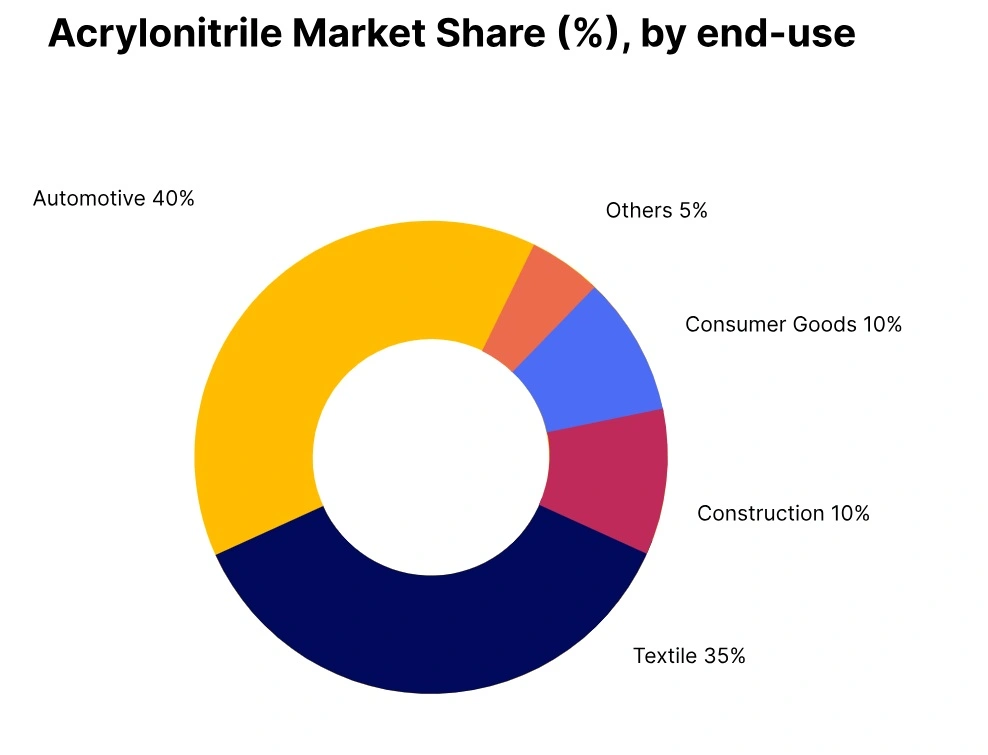
Acrylonitrile market share end use

Historically, several events have caused significant fluctuations in Acrylonitrile prices

  • COVID-19 Pandemic (2020) – Disruptions in production and shifts in demand led to significant price volatility in acrylonitrile.
  • Hurricane Harvey (2017) – This hurricane caused major disruptions in petrochemical production in the Gulf Coast, affecting acrylonitrile supply.
  • Market Consolidation (2015 Onwards) – Mergers and acquisitions in the petrochemical industry altered production capacities and market competition.

Why Price Watch™?

Price Watch™ is your trusted resource for tracking global acrylonitrile price trends. Our platform delivers real-time data and expert analysis, offering deep insights into the key factors driving price fluctuations in the acrylonitrile market. By monitoring critical events such as geopolitical tensions, supply chain disruptions, and economic shifts, Price Watch™ keeps you fully informed of market dynamics.

In addition, Price Watch™ provides detailed forecasts and updates on production capacities, enabling you to anticipate market changes and make well-informed decisions. With Price Watch™, you gain a competitive edge in understanding all the elements that influence acrylonitrile prices worldwide. Stay ahead of the curve with Price Watch’s™ reliable, accurate, and timely acrylonitrile market data.

Track Price Watch's™ acrylonitrile price assessment on a weekly basis since 2015 onwards, along with short-term forecasts, and get access to the detailed report in a downloadable format.

Acrylonitrile Market Price Trend published by Price Watch™ reflect prevailing spot market conditions, derived from independent research, verified trade inputs, and proprietary market intelligence as of the publication date. Prices are published on the specified Incoterm and represent indicative base market levels, exclusive of applicable taxes, VAT, duties, tariffs, and other statutory charges. Actual transaction values may vary depending on volume, credit terms, contractual structure, and other negotiated conditions. Market prices are inherently subject to volatility, liquidity dynamics, regulatory changes, and evolving trade activity. The information provided is for reference and benchmarking purposes only and does not constitute an offer, recommendation, or guarantee of transactional outcomes. Users should exercise independent commercial judgment and assess their specific contractual, regulatory, tax, and application requirements before making business decisions. Price Watch™ assumes no liability for decisions taken based on this information.

The pricing of Acrylonitrile is influenced by several key factors, including the cost of feedstocks like Propylene and ammonia, which are essential for its production. Fluctuations in crude oil prices and changes in demand from major end-use industries such as automotive, textiles, and plastics also play a significant role. Additionally, geopolitical events, transportation costs, and supply chain disruptions can impact pricing trends.

Feedstock availability, particularly of Propylene, directly affects Acrylonitrile pricing. When there are disruptions in Propylene supply due to refinery outages, production cuts, or changes in market dynamics, Acrylonitrile prices often rise as manufacturers compete for limited resources. Conversely, an abundant supply of Propylene can lead to price stabilization or reductions.

Regional price differences for Acrylonitrile can be substantial, influenced by local production capacities, feedstock availability, and market demand. For instance, regions with strong refining infrastructure, like the U.S. and parts of Asia, may experience lower prices compared to others with limited production capabilities. Understanding these regional dynamics is essential for procurement heads, as they can optimize sourcing strategies by exploring cost-effective suppliers in favourable markets while balancing quality and delivery times.

Acrylonitrile is a key petrochemical used in the production of plastics and synthetic materials such as ABS, acrylic fibres, and nitrile rubber. Its price directly impacts manufacturing costs across industries including automotive, textiles, electronics, and construction, making it a critical indicator for downstream production economics. Price-Watch™ tracks Acrylonitrile prices to help businesses stay informed about market movements and cost trends.

Acrylonitrile prices vary by region, grade, and contract terms (FOB, CIF, or domestic). Prices are typically quoted per metric ton and fluctuate based on supply-demand dynamics, feedstock costs such as propylene, and overall market conditions. Price-Watch™ provides up-to-date price assessments across key global markets.

Acrylonitrile prices are influenced by propylene feedstock costs, production operating rates, demand from downstream sectors such as ABS, acrylic fibres, and nitrile rubber, as well as global trade flows and logistics conditions. Seasonal demand patterns, plant maintenance or shutdowns, and regional supply-demand balances also play a significant role. Recent trends have shown mixed movements, largely depending on fluctuations in propylene prices and the pace of recovery in downstream demand.

Major consumers include manufacturers of ABS plastics, acrylic fibres, and nitrile rubber. Key end-use sectors such as automotive, textiles, electronics, and construction drive significant demand. Applications like automotive components, synthetic fibres, and industrial rubber products account for a large share. Price-Watch™ tracks consumption trends across these sectors.

Acrylonitrile is produced at petrochemical plants worldwide through the ammoxidation of propylene, where propylene reacts with ammonia and air over a catalyst to form Acrylonitrile. It is then purified and supplied as a key intermediate for various downstream applications.

Major exporters include the USA, South Korea, China, and select European producers. Export volumes depend on production capacity, domestic demand, and global pricing competitiveness. Price-Watch™ monitors global trade flows and supply availability.

Overall supply is generally balanced, but temporary tightness can occur due to plant maintenance, feedstock constraints, or logistics disruptions. Price-Watch™ closely tracks supply-demand balances to highlight potential shortages or oversupply situations.

Acrylonitrile is typically traded in high-purity grades (≥99%), but pricing can vary based on purity levels, contract terms, and end-use requirements. Differences in logistics, storage, and application specifications can also influence price variations. Price-Watch™ provides grade-wise price assessments for better market clarity.

When demand rises sharply, prices tend to increase as supply tightens. Lead times may extend, and buyers may face limited spot availability, especially if production rates are already optimized. Price-Watch™ captures these shifts in real time.

Propylene is the primary feedstock for Acrylonitrile. Any increase in propylene prices directly raises production costs, which producers may pass on to buyers. Price-Watch™ analyses Propylene- Acrylonitrile price correlations to explain cost movements.

Regional prices vary due to differences in propylene availability, production capacity, energy costs, freight rates, import duties, and local demand conditions. Price-Watch™ tracks regional differentials to highlight pricing gaps across markets.

Acrylonitrile price outlook depends on propylene feedstock trends, downstream demand from ABS, fibres, and rubber sectors, plant operating rates, and global economic conditions. Price-Watch™ publishes regular forecasts projecting price direction over the next 12 months.

Yes. Reliable forecasts help businesses plan procurement, manage inventory, negotiate contracts, and control raw material costs. Price-Watch™ forecasts support smarter purchasing and budgeting decisions.

Events such as trade policy changes, shipping disruptions, energy price volatility, or geopolitical tensions can affect feedstock supply, production rates, and trade flows, leading to price fluctuations. Price-Watch™ provides timely updates on such market-moving events.

Price-Watch™ gathers data from producers, converters, traders, and buyers to publish Acrylonitrile price assessments, market reports, and forecasts, helping stakeholders stay ahead of market trends.