Propylene Price Trend and Forecast

UNSPC code: 15111503
|
Weekly Update
|
Historical Data Since 2015
|
Forecast for 2026

propylene Price Trends by Country

usUnited States
thThailand
jpJapan
saSaudi Arabia
twTaiwan
inIndia
cnChina
coColombia
mxMexico
idIndonesia
sgSingapore
myMalaysia
nlNetherlands
deGermany
beBelgium
itItaly
frFrance
krSouth Korea

Global propylene Spot Market Prices, Trend Analysis and Forecast

𝐏𝐫𝐢𝐜𝐞 𝐖𝐚𝐭𝐜𝐡™ provides price assessments for Propylene across top trading regions:


Asia-Pacific

  • Propylene Polymer Grade FOB Busan, South Korea
  • Propylene Polymer Grade FOB Laem Chabang, Thailand
  • Propylene Polymer Grade FOB Tokyo, Japan
  • Propylene Polymer Grade FOB Kaohsiung, Taiwan
  • Propylene Polymer Grade CIF Shanghai (South Korea), China
  • Propylene Polymer Grade CIF Jakarta (Thailand), Indonesia
  • Propylene Polymer Grade CIF Port of Singapore (Thailand), Singapore
  • Propylene Polymer Grade CIF Port Kelang (Thailand), Malaysia
  • Propylene Polymer Grade CIF Nhava Sheva (Thailand), India


North America

  • Propylene Refinery Grade FOB Houston, United States
  • Propylene Polymer Grade FOB Houston, United States
  • Propylene Refinery Grade CIF Manzanillo (USA), Mexico
  • Propylene Polymer Grade CIF Manzanillo (USA), Mexico


Europe

  • Propylene Polymer Grade FD Rotterdam, Netherlands
  • Propylene Polymer Grade FD Hamburg, Germany
  • Propylene Polymer Grade FD Antwerp, Belgium
  • Propylene Polymer Grade FD Genoa, Italy
  • Propylene Polymer Grade FD Le Havre, France


South America

  • Propylene Refinery Grade CIF Barranquilla (USA), Colombia
  • Propylene Polymer Grade CIF Barranquilla (USA), Colombia


Middle East

  • Propylene Polymer Grade FOB Jeddah, Saudi Arabia


Note:
In assessments structured as CIF [Importing Port] (Exporting Country), the country mentioned in brackets indicates the primary origin of supply (exporting country), while the named port refers to the destination port in the importing country. Other Incoterms (FOB, FD, EXW, etc.) should be interpreted in accordance with standard international trade definitions.

Propylene Price Trend Q4 2025

The global Propylene market in Q4 2025 displayed uneven trends across geographic areas, with price variations ranging from around -25% to +6% depending on area of location. Overall, Western markets (including the U.S., along with Germany, the Netherlands, France, Belgium and Italy) experienced large price drops due to decreased demand from end-users such as polypropylene; packaging; and automotive, while there has been excess supply and reduced levels of industrial activity. In Latin America (including Mexico and Colombia), there have been substantial price declines because demand for imports and inventory levels have been relatively high. Conversely, Southeast Asia (including Thailand, Indonesia, Singapore, Malaysia, and India) experienced slight price increases due to stable levels of consumption from each respective region and limited availability of spot material. In Northeast Asia (including China, South Korea, Japan, and Taiwan), there has been subdued softness resulting from cautious buying behaviour in conjunction with a balanced supply environment. Although the various regions exhibited multiple pricing influences, overall, the market remains oversupplied, solely on account of healthy cracker operating rates combined with sufficient feedstock supply. Broadly speaking, the balance between supply and demand remained reasonably even throughout the quarter, partly attributable to conservative purchasing approaches by consumers, manageable fundamental requirements to establish a supply chain, and a decrease in overall freight costs. Furthermore, the pricing behavior during the quarter has been influenced by regional supply and demand fundamentals, as well as different downstream consumption trends.

South Korea: Propylene Export prices FOB Busan, South Korea, Grade-Polymer grade

In Q4 2025, Propylene prices FOB Busan, South Korea ranged USD 710–740 per metric ton and showed a downward price trend. The 3.14% decline stemmed from steady cracker output, cautious polymer-sector demand, and balanced export allocations across Northeast Asia. The narrow range signaled orderly supply placement despite selective buying. Propylene prices softened as producers optimized cargo movements. The regional Propylene market remained stable, with shifts clearly reflected on the Propylene price chart and echoed by a softer Propylene price index. The prevailing Propylene price trend highlighted supply comfort outweighing near-term demand recovery. In December 2025, Propylene prices in South Korea increased by 2.49%, supported by short-term restocking and limited spot availability.

China: Propylene Imported prices CIF Shanghai from South Korea, China, Grade-Polymer grade

In Q4 2025, Propylene prices CIF Shanghai from South Korea ranged USD 740–760 per metric ton and showed a downward price trend. The 3.30% decline reflected steady import arrivals, stable freight conditions, and moderate downstream demand from polypropylene producers. The tight range highlighted logistical balance. Propylene prices eased as buyers maintained cautious procurement strategies. The Chinese Propylene price trend stayed orderly, tracked on the Propylene price chart and aligned with a weaker Propylene price index. The quarter’s Propylene price trend emphasized supply adequacy across coastal hubs. In December 2025, Propylene prices in China increased by 2.41%, influenced by selective inventory rebuilding.

Netherlands: Propylene Domestically Traded prices FD Rotterdam, Netherlands, Grade-Polymer grade

In Q4 2025, Propylene prices FD Rotterdam, Netherlands ranged USD 770–810 per metric ton and showed a downward price trend. The 11.11% decline stemmed from subdued polymer demand, steady refinery operations, and comfortable regional availability. The defined range reflected balanced domestic distribution amid cautious industrial consumption. The Propylene price trend in the Netherlands weakened as distributors managed inventories conservatively. The European Propylene market followed a softer trajectory, visible on the Propylene price chart and reinforced by a declining Propylene price index. The prevailing Propylene price trend highlighted demand-side restraint. In December 2025, Propylene prices in the Netherlands decreased by 6.61%, influenced by year-end destocking and muted buying interest.

Germany: Propylene Domestically Traded prices FD Hamburg from Netherlands, Germany, Grade-Polymer grade

In Q4 2025, Propylene prices FD Hamburg, Germany ranged USD 800–850 per metric ton and showed a downward price trend. The 10.52% decrease reflected steady inflows from Rotterdam, moderate plastics-sector demand, and adequate storage availability. The broader range indicated uneven spot activity. Propylene prices softened as buyers limited forward commitments. The German Propylene price trend mirrored wider European conditions, tracked on the Propylene price chart and echoed by a weaker Propylene price index. The quarter’s Propylene price trend emphasized inventory-led softness. In December 2025, Propylene prices in Germany decreased by 6.18%, influenced by seasonal slowdowns and cautious procurement.

Belgium: Propylene Domestically Traded prices FD Antwerp, Belgium, Grade-Polymer grade

In Q4 2025, Propylene prices FD Antwerp, Belgium ranged USD 790–840 per metric ton and showed a downward price trend. The 10.80% decline stemmed from steady regional supply, muted polymer demand, and balanced port logistics. The defined range reflected stable distribution channels. Propylene prices eased as market participants prioritized inventory control. The Belgian Propylene price trend stayed aligned with continental trends, visible on the Propylene price chart and supported by a softer Propylene price index. The prevailing Propylene price trend highlighted cautious buying behavior. In December 2025, Propylene prices in Belgium decreased by 6.38%, influenced by year-end inventory adjustments.

Thailand: Propylene Export prices FOB Laem Chabang, Thailand, Grade-Polymer grade

In Q4 2025, Propylene prices FOB Laem Chabang, Thailand ranged USD 750–790 per metric ton and showed an upward price trend. The 3.08% rise reflected steady regional demand, controlled export volumes, and balanced refinery output. The moderate range highlighted efficient shipment scheduling. Propylene prices firmed as suppliers managed allocations across Southeast Asia. The Thai Propylene market remained supported, tracked on the Propylene price chart and reinforced by a firmer Propylene price index. The quarter’s Propylene price trend emphasized supply discipline. In December 2025, Propylene prices in Thailand decreased by 1.97%, influenced by short-term demand easing.

Indonesia: Propylene Imported prices CIF Jakarta from Thailand, Indonesia, Grade-Polymer grade

In Q4 2025, Propylene prices CIF Jakarta from Thailand ranged USD 800–850 per metric ton and showed a mild upward price trend. The 1.64% increase reflected steady import demand and lower freight costs. The defined range indicated logistical balance. Propylene prices edged higher as converters maintained baseline purchasing. The Indonesian Propylene market stayed orderly, visible on the Propylene price chart and supported by a firmer Propylene price index. The prevailing Propylene price trend in Indonesia highlighted stable downstream consumption. In December 2025, Propylene prices in Indonesia decreased by 1.85%, influenced by inventory normalization.

Singapore: Propylene Imported prices CIF Port of Singapore from Thailand, Singapore, Grade-Polymer grade

In Q4 2025, Propylene prices CIF Singapore from Thailand ranged USD 770–820 per metric ton and showed an upward price trend. The 2.94% rise stemmed from steady regional trading activity, stable freight, and consistent petrochemical demand. The moderate range reflected balanced import flows. Propylene prices strengthened as distributors aligned stocks with regional needs. The Singapore Propylene price trend remained firm, tracked on the Propylene price chart and echoed by a higher Propylene price index. The quarter’s Propylene price trend emphasized controlled supply. In December 2025, Propylene prices in Singapore decreased by 1.90%, influenced by short-term demand cooling.

Malaysia: Propylene Imported prices CIF Port Kelang from Thailand, Malaysia, Grade-Polymer grade

In Q4 2025, Propylene prices CIF Port Kelang from Thailand ranged USD 790–840 per metric ton and showed an upward price trend. The 2.96% increase reflected steady downstream polymer demand, stable freight conditions, and controlled regional export volumes. The defined range highlighted balanced import flows. The Propylene price trend firmed as Malaysian buyers maintained consistent procurement. The domestic Propylene market remained orderly, clearly reflected on the Propylene price chart and supported by a higher Propylene price index. The prevailing Propylene price trend emphasized supply discipline across Southeast Asia. In December 2025, Propylene prices in Malaysia decreased by 1.85%, influenced by short-term inventory optimization and cautious year-end purchasing.

Japan: Propylene Export prices FOB Tokyo, Japan, Grade-Polymer grade

In Q4 2025, Propylene prices FOB Tokyo, Japan ranged USD 710–750 per metric ton and showed a downward price trend. The 3.31% decline stemmed from steady cracker operations, moderate domestic polymer consumption, and balanced export availability. The moderate range reflected orderly shipment schedules. Propylene price trend in Japan softened as suppliers aligned output with regional demand. The Japanese Propylene market followed a cautious trajectory, tracked on the Propylene price chart and echoed by a weaker Propylene price index. The quarter’s Propylene price trend highlighted supply comfort outweighing near-term buying interest. In December 2025, Propylene prices in Japan decreased by 4.15%, influenced by year-end inventory adjustments.

Italy: Propylene Domestically Traded prices FD Genoa, Italy, Grade-Polymer grade

In Q4 2025, Propylene prices FD Genoa, Italy ranged USD 770–820 per metric ton and showed a downward price trend. The 10.93% decrease reflected subdued plastics-sector demand, steady European inflows, and comfortable local inventories. The defined range signaled balanced domestic circulation. Propylene prices weakened as converters adopted conservative purchasing strategies. The Italian Propylene market mirrored broader continental softness, visible on the Propylene price chart and reinforced by a declining Propylene price index. The prevailing Propylene price trend in Italy underscored demand-side restraint. In December 2025, Propylene prices in Italy decreased by 6.60%, influenced by seasonal slowdowns and destocking.

France: Propylene Domestically Traded prices FD Le Havre, France, Grade-Polymer grade

In Q4 2025, Propylene prices FD Le Havre, France ranged USD 840–890 per metric ton and showed a downward price trend. The 12.78% decline stemmed from muted industrial consumption, steady port arrivals, and ample regional supply. The narrow range reflected stable logistics despite weaker buying sentiment. Propylene prices eased as distributors focused on inventory management. The French Propylene price trend tracked European trends, clearly visible on the Propylene price chart and echoed by a softer Propylene price index. The quarter’s Propylene price trend highlighted persistent demand caution. In December 2025, Propylene prices in France decreased by 6.02%, influenced by year-end inventory rationalization.

Saudi Arabia: Propylene Export prices FOB Jeddah, Saudi Arabia, Grade-Polymer grade

In Q4 2025, Propylene prices FOB Jeddah, Saudi Arabia ranged USD 720–740 per metric ton and showed a downward price trend. The 4.20% decline reflected steady Middle East production, balanced export flows, and moderate Asian demand. The tight range highlighted efficient supply placement. Propylene price trend in Saudi Arabia softened as producers maintained consistent shipment programs. The regional Propylene market remained stable, tracked on the Propylene price chart and aligned with a lower Propylene price index. The prevailing Propylene price trend emphasized supply comfort. In December 2025, Propylene prices in Saudi Arabia increased by 2.47%, supported by short-term restocking.

Taiwan: Propylene Export prices FOB Kaohsiung, Taiwan, Grade-Polymer grade

In Q4 2025, Propylene prices FOB Kaohsiung, Taiwan ranged USD 740–770 per metric ton and showed a downward price trend. The 2.44% decline stemmed from steady refinery output, cautious polymer demand, and balanced regional exports. The narrow range reflected orderly cargo movement. Propylene prices eased as suppliers optimized allocations. The Taiwanese Propylene price trend followed a measured path, visible on the Propylene price chart and echoed by a softer Propylene price index. The quarter’s Propylene price trend highlighted stable supply conditions. In December 2025, Propylene prices in Taiwan increased by 1.70%, influenced by limited spot availability.

India: Propylene Imported prices CIF Nhava Sheva from Thailand, India, Grade-Polymer grade

In Q4 2025, Propylene prices CIF Nhava Sheva from Thailand ranged USD 810–860 per metric ton and showed an upward price trend. The 5.72% rise reflected steady downstream demand, increased freight costs, and controlled Southeast Asian exports. The moderate range highlighted active import participation. Propylene prices strengthened as Indian buyers secured material amid firm regional sentiment. The domestic Propylene market remained supported, tracked on the Propylene price chart and reinforced by a higher Propylene price index. The prevailing Propylene price trend in India emphasized supply-led firmness. In December 2025, Propylene prices in India decreased by 0.89%, influenced by short-term inventory balancing.

USA: Propylene Export prices FOB Houston, USA, Grade-Polymer grade

In Q4 2025, Propylene prices FOB Houston, USA ranged USD 560–610 per metric ton and showed a sharp downward price trend. The 25.10% decline stemmed from abundant domestic production, subdued derivative demand, and competitive export positioning. The wide range indicated elevated spot activity. Propylene prices weakened notably as producers prioritized volume placement. The US Propylene market reflected oversupply conditions, clearly visible on the Propylene price chart and reinforced by a steeply lower Propylene price index. The US’s Propylene price trend underscored supply-driven softness. In December 2025, Propylene prices in the US increased by 0.90%, supported by marginal restocking.

Mexico: Propylene Imported prices CIF Manzanillo from US, Mexico, Grade-Polymer grade

In Q4 2025, Propylene prices CIF Manzanillo from the USA ranged USD 620–680 per metric ton and showed a downward price trend. The 22.86% decline reflected heavy US supply, stable freight, and cautious regional consumption. The defined range highlighted steady import flows. Propylene prices softened as buyers capitalized on competitive offers. The Mexican Propylene price trend tracked North American weakness, visible on the Propylene price chart and echoed by a lower Propylene price index. The prevailing Propylene price trend emphasized supply-driven pressure. In December 2025, Propylene prices in Mexico increased by 2.76%, influenced by selective replenishment.

Colombia: Propylene Imported prices CIF Barranquilla from USA, Colombia, Grade-Polymer grade

In Q4 2025, Propylene prices CIF Barranquilla from the USA ranged USD 640–700 per metric ton and showed a downward price trend. The 23.14% decline stemmed from strong US export availability, stable freight, and moderate local demand. The moderate range reflected balanced port logistics. Propylene prices eased as importers leveraged competitive sourcing. The Colombian Propylene price trend mirrored broader Americas softness, tracked on the Propylene price chart and reinforced by a weaker Propylene price index. The quarter’s Propylene price trend highlighted ample supply. In December 2025, Propylene prices in Colombia decreased by 1.10%, influenced by year-end demand easing.

Propylene Price Trend Analysis: Q4 2025

During the third quarter of 2025, the global Propylene market varied significantly from region to region. Western markets such as Germany, Belgium, and the Netherlands saw considerable Propylene price trend declines due to weak demand (across automotive, packaging, and construction), thus leading to cautious procurement and oversupply.

European producers sustained steady output levels amid weak industrial activity and high energy prices. Similarly, the Asia-Pacific markets (South Korea, India) experienced downward pressure due to weak demand downstream and increased competition, in addition to freight costs impacting Overall prices.

The U.S. and North America also saw moderate weakness due to the softness of exporter demand as well as saturation of supply (though recently there has been upwards pressure in the Texas and Gulf Coast.). Generally speaking, the market was reasonably balanced sustained feedstock availability, some moderation in freight costs, and regional consumption variance were underpinning factors. Supply chain fundamentals and regional demand downstream continued to be the pricing leads during the quarter.

South Korea: Propylene Export Price from South Korea, Polymer Grade FOB Busan.

In South Korea, Propylene prices exhibited a small degree of softness in Q3 2025, due to balanced supply and moderate demand on the part of the downstream polypropylene and acrylonitrile sectors in Northeast Asia. Propylene FOB Busan price trend were in the USD 730–770/metric ton range, indicating a quarterly price reduction of 1.22%.

Cracker run rates remained steady, with no significant outages. Propylene prices in South Korea decreased by 2.95% in September 2025 from the prior month, reflecting cautious buying in the context of weak regional polymer demand.

The price developments for Propylene in South Korea have reflected limited directional movements in Naphtha feedstock costs. Buyers from China and Southeast Asia were selectively procuring in concert with weak industrial activity. Overall, the mood in the market is cautious with steady supply support, but soft demand.

China: Propylene Import Price in China from South Korea, Polymer Grade CIF Shanghai (South Korea).

In Q3 2025, Propylene prices in China showed a downward trend during the quarter with CIF Shanghai prices at USD 750–800/mt, a 1.49% drop from the previous quarter. Freight rates eased slightly, creating some marginal landed cost relief. Year-on-year, in September 2025, Propylene prices are down 2.47% from August due to selective purchasing as local PDH capacity continues to ramp up. Propylene Price trends in China were largely driven by prolonged weak demand from both polypropylene and propylene oxide producers.

Downstream consumption has been weak for an extended period, and this was despite some perception of cost advantage to process. Importers preferred to purchase supplies from quality origin suppliers, however, China’s move for self-sufficiency continued to suppress any minor uptick. The overall market sentiment is generally stable but cautious as the balance shifts towards local production gradually.

Netherlands: Propylene Export Price from Netherlands, Polymer Grade FD Rotterdam.

In Q3 2025, Propylene price trend in Netherlands underwent a notable reduction as European demand from the polymer, resin, and chemical derivative sectors remained weak (FD Rotterdam, USD 840–930/ Metric ton), indicating a quarter-over-quarter decline of 7.99%. Downstream converters continued to operate at diminished rates with a declining construction and automotive output.

In September 2025, Netherlands Propylene prices fell 2.35% from the previous month, while consumption remains restrained and the downward trend was maintained. The Netherlands Propylene price trend was also influenced by stable feedstock Naphtha price levels and above-average energy costs.

The overall supply was abundant from integrated petrochemical complexes ensuring no prices were corrected upwards immediately. Overall, market conditions remain oversupplied with limited near-term price support or upside.

Germany: Propylene Domestically Traded Price in Germany, Polymer Grade FD Hamburg (Netherlands).

During Q3 2025, the Propylene trend price in Germany was downwards, in line with broader weakness within the European market. The FD Hamburg price range was USD 870–970 metric ton for the quarter, reflecting a decrease of 7.74% from the previous quarter. Demand levels from polypropylene, resins, and other industrial chemicals did not materially shift during the quarter.

In September 2025, Propylene prices in Germany dipped by 2.79% versus the previous month, attributed to continued cautious purchasing activity by converters, who have yet to see an uptick in demand tied to new industrial output.

Furthermore, the overarching Propylene price trend in Germany has reflected steady supply levels from producers both domestic and in neighbouring countries, impeding upward price recovery. Logistics and handling costs exhibited marginal variations. Overall, the market remains firmly bearish, with pricing under pressure from limited demand levels that maintain consistent availability.

Belgium: Propylene Domestically Traded Price in Belgium, Polymer Grade FD Antwerp.

During the third quarter of 2025, Propylene price in Belgium experienced a consistent decline, due to ineffective demand from the packaging, automotive, and construction industries. Prices at FD Antwerp averaged USD 860–960 per metric ton, representing a decline of approximately 7.60% in the quarter.

Supplies from the Antwerp petrochemical complex were steady and available, but downstream converters limited their offtakes. Business activity was still weak, and Propylene prices in Belgium decreased another 2.28% from last month in the month of September 2025.

The downward Propylene price trend in Belgium was a reflection of no support for rising prices attributable to feedstock costs associated with Naphtha. European producers adjusted operating rates to respond to weak consumption signals. Overall, market sentiment remains cautious, and pricing is likely to remain under pressure in the near term.

Thailand: Propylene Export Price from Thailand, Polymer Grade FOB Laem Chabang.

In the third quarter of 2025, Propylene prices in Thailand fell sharply due to factors including soft regional demand and competition from suppliers in the Middle East and China. The price of Propylene on a free on board (FOB) basis in Laem Chabang was reported in the range of USD 710–780/metric ton, which reflects a decrease of 10.22% from the previous quarter.

The operating rates of polypropylene producers remained low and increasingly limited offtake. Propylene prices in Thailand decreased by 1.37% in September 2025 compared to August 2025 prices, continuing the bearish trend despite some slight downstream activity.

Propylene price trend in Thailand continued to be pressured by softened Naphtha costs, which did not offer much price support. Thai crackers ran at steady operating rates, however, inventories were building in the major trading hubs. Overall, sentiment in the markets continues to remain bearish, with high supply levels.

Indonesia: Propylene Import Price in Indonesia from Thailand, Polymer Grade CIF Jakarta (Thailand).

In Q3 2025, Propylene price in Indonesia decreased moderately, with CIF Jakarta prices ranging from USD 780–840 per metric ton. This price decrease reflects a quarter-over-quarter price decline of 9.52%. Freight costs remained relatively stable and helped maintain predictable landed pricing. In September 2025, the price of Propylene in Indonesia decreased 1.13% from the previous month due to limited buying interest amid muted domestic consumption.

Price trends for Propylene in Indonesia were influenced by steady supply from Thailand and softer interest from the plastics and packaging sectors. Converters maintained cautious rates of operation, and spot market activity was limited. Overall, the market remains well-supplied, and pricing is under some pressure due to oversupply in the region.

Singapore: Propylene Import Price in Singapore from Thailand; Polymer Grade CIF Port of Singapore (Thailand).

In Singapore’s Q3 2025, Propylene exhibited considerable downside pressure that saw prices (CIF Port of Singapore) in the range of USD 740–810 per metric ton, a quarterly decline of 11.09%. Freight rates fell considerably, providing substantial landed cost relief. Propylene prices in September 2025 decreased another 1.19% from the previous month, as buyers took a cautious approach in response to limited downstream activity.

The Propylene price trend in Singapore was affected by competing pricing from Thai suppliers and generally weak regional demand. Converters and buyers showed selectivity with minimal activity in the spot market. The market still appears to be oversupplied, and pricing continues to show downside pressure.

Malaysia: Propylene Import Price in Malaysia from Thailand, Polymer Grade CIF Port Kelang (Thailand).

Throughout Q3 2025, Propylene price in Malaysia exhibited a decreasing trend, with CIF Port Kelang fees between USD 760–830 metric ton, for an overall decline of 10.00%. Freight costs also experienced a slight decline, contributing to a reduced overall landed price. In September 2025, propylene price in Malaysia declined by 1.15% month over month, suggesting soft demand persisted in downstream plastics and industrial goods.

Propylene price trends in Malaysia were driven by steady supplies from Thailand, combined with cautious procurement from local converters. The market sentiment remained subdued, reporting minimal spot activity. Overall, the market remains well-supplied with pricing pressure from regional excess supply.

Japan: Propylene Export Price from Japan, Polymer Grade FOB Tokyo.

In Q3 2025, Propylene prices in Japan fell slightly, partly due to sluggish regional demand and further import competition from Middle Eastern and Chinese suppliers. The price for Propylene delivered on the FOB Tokyo ranged from USD 740 to 760 per metric ton, which was a drop of 4.03% from the last quarter.

Domestic cracker rates were steady, with limited export volumes traded due to a softened buying interest. In September 2025, Propylene prices in Japan decreased 1.31% from the previous month, again reflecting a generally moderate decrease.

The Propylene price trend in Japan was slightly affected by steady costs for Naphtha feedstock. Japanese producers also kept the price at competitive levels to secure contracts, while converters, downstream, were cautious in their buying. Overall, market sentiment appeared weak, with limited chances in the near-term for recovery.

Italy: Propylene Domestically Traded Price in Italy, Polymer Grade FD Genoa.

During Q3 2025, the price of Propylene in Italy registered a small decline, as downstream demand from the polymer and industrial chemicals markets remained weak. FD Genoa to freight at the port of Genoa indicated a price range of USD 840–930 per metric ton – a quarterly decrease of 7.46%. Downstream converters were forced to continue to operate conservatively in light of soft industrial production output.

During September 2025, Propylene prices in Italy fell by 2.34% month-to-month, sustaining the overall bearish trend of the domestic markets. The overall Propylene price trend in Italy would remain under pressure from stable supply from domestic and neighbouring producers, while limited support was provided from feedstock Naphtha costs. Overall market conditions remained oversupplied, with Propylene continued to be pressured.

France: Propylene Domestically Traded Price in France, Polymer Grade FD Le Havre.

In Q3 2025, Propylene price in France continued to experience significant downward pressure due to a reduction of consumption from both the automotive, packaging, and construction industry. Throughout the quarter, FD Le Havre pricing found a new range of USD 940–1,100 per metric ton, for a quarterly decrease of 9.12%. French converters operated at reduced rates of capacity, minimizing offtake from both domestic sources and imports.

In September 2025, Propylene prices in France increased slightly by 0.34% from August, offering small relief in an otherwise weak domestic market. The Propylene price trends in France were contingent on limited feedstock and supporting energy costs. Sentiment continues to remain subdued overall, with continued oversupply continuing to introduce downward price pressure.

Saudi Arabia: Propylene Export Price from Saudi Arabia, Polymer Grade FOB Jeddah.

In Q3 2025, Propylene price in Saudi Arabia saw moderate downside due to soft regional demand and increased competition from Chinese and other Middle Eastern suppliers. Prices reached USD 740–780 per metric ton, with a quarterly decline of 5.83%.

Cracker operations in Jubail and Yanbu were sustained at the high-utilization rates, ensuring uninterrupted supply levels. In September 2025 Propylene prices in Saudi Arabia fell by 1.98% from the month prior, as slow buying activity persisted because of limited demand recovery.

In Saudi Arabia, the price trend of Propylene was affected by fixed costs for the use of ethane as a feedstock, allowing for a competitive price advantage. In general, the market remains balanced – prices are buoyed by reliable availability of supply but pressured by weak regional demand.

Taiwan: Propylene Export Price from Taiwan, Polymer Grade FOB Kaohsiung.

In the third quarter of 2025, Propylene price in Taiwan decreased moderately, impacted by weak buying interest in the region and competition from China and the Middle East. Propylene prices trend FOB Kaohsiung were noted at USD 750–800 metric ton and that is a quarterly decrease of 6.06%.

Downstream polypropylene producers continued to appear to be cautious in operating rates. In September of 2025, the price of Propylene in Taiwan increased slightly, rising 0.56% month-on-month, indicating slight market correction, while continuing to oversupply.

The Taiwan Propylene price trend was supported by the stable operation of crackers, and lack of volatility in Naphtha feedstock costs. Overall, the market sentiment remained weak and was characterized by limited buying activity across key trading hubs. Overall, the market remains under price pressure.

India: Propylene Import Price in India from Thailand, Polymer Grade CIF Nhava Sheva (Thailand).

According to Price-Watch, during Q3 2025, Propylene price in India declined moderately, with CIF Nhava Sheva prices ranging between USD 770–820 per metric ton, reflecting a quarterly drop of 6.69%. Freight costs rose significantly, adding upward pressure to landed prices. In September 2025, Propylene prices in India decreased by 2.53% from the previous month, indicating cautious procurement amid weak downstream demand.

The Propylene price trend in India was influenced by competitive pricing from Thai suppliers and soft demand from polypropylene and packaging sectors. Local buyers remained selective, with limited spot activity reported. Overall, market conditions remain oversupplied, with pricing under downward pressure.

USA: Propylene Export Price from USA, Polymer Grade FOB Houston.

In Q3 2025, Propylene price in USA declined notably, reflecting weaker demand from European and Latin American buyers amid global oversupply concerns. FOB Houston prices ranged between USD 720–860 per metric ton, reflecting a quarterly decrease of 8.79%. Domestic offtake remained strong, but export demand softened. In September 2025, Propylene prices in USA increased by 6.22% from the previous month, providing a temporary rebound amid tighter domestic supply.

The Propylene price trend in USA was influenced by slightly lower Propane feedstock costs. Suppliers maintained competitive pricing to secure overseas contracts. Overall, market sentiment remains mixed, with moderate upward price correction limited by global oversupply.

Mexico: Propylene Import Price in Mexico from USA, Polymer Grade CIF Manzanillo (US).

During Q3 2025, Propylene price in Mexico declined moderately, with CIF Manzanillo prices ranging between USD 780–920 per metric ton, reflecting a quarterly decrease of 8.07%. Freight costs increased marginally, contributing to higher overall expenses. In September 2025, Propylene prices in Mexico increased by 5.75% from the previous month, indicating partial recovery amid stable import supply from regular supplying nations.

The Propylene price trend in Mexico was influenced by weak downstream demand from polypropylene and automotive sectors. U.S. suppliers ensured reliable supply, while Mexican converters maintained cautious procurement. Overall, market sentiment remains cautious, with selective buying supporting minor upward adjustment in prices.

Colombia: Propylene Import Price in Colombia from USA, Polymer Grade CIF Barranquilla (USA).

According to Price-Watch, in Q3 2025, Propylene price in Colombia remained under moderate pressure, reflecting soft regional demand and global oversupply. CIF Barranquilla prices ranged around USD 824 per metric ton, reflecting steady quarterly performance. In September 2025, Propylene prices in Colombia increased by 5.58% from the previous month, reflecting improved import activity and limited domestic stock.

The Propylene price trend in Colombia was influenced by consistent supply from the U.S. Gulf Coast. Local buyers from polymer and industrial sectors maintained selective procurement amid weak overall demand. Market conditions remain stable, with pricing supported by reliable imports but tempered by limited consumption growth.

According to the PriceWatch, In Q2 2025, Propylene prices averaged USD 756.20 per metric ton on FOB Busan basis. This marked a quarterly decrease of -8.41% due to subdued downstream pull and steady supply. The Propylene price trend remained weak across Northeast Asia as polymer converters operated at reduced rates, especially in packaging and textile-grade applications.

High cracker run rates and limited export activity resulted in product accumulation across major ports in South Korea. Buying interest from Taiwan and Southeast Asia was also limited as buyers held back amid unclear demand.

Feedstock naphtha prices offered little cost support as crude oil benchmarks dipped through much of the quarter. Shipping disruptions were minimal, and the supply chain moved fluidly. The Propylene price chart captured the extended softness in global prices, with few moments of relief. Overall, the Propylene market in Asia was defined by muted trade activity, consistent output, and restrained downstream consumption. 

According to the PriceWatch, In Q2 2025, Propylene prices in India averaged USD 870 per metric ton on CIF Nhava Sheva basis. This represented a quarterly decline of -3.12% as buying slowed across key derivative sectors. The Indian Propylene market faced steady imports, with limited disruptions in port operations or customs clearances.

Domestic consumption from film and moulding-grade plastics was steady but lacked aggressive replenishment. The Propylene price trend in India reflected mild softness, especially in April and May, as buyers relied on existing inventories. Cost support from upstream feedstock remained neutral, offering no upward push to prices.

The Propylene price chart indicated narrow fluctuations, largely within anticipated ranges. Traders and converters maintained a cautious tone amid low volatility. Overall, the Propylene market in India stayed stable but slightly bearish, shaped by balanced supply and conservative purchasing behaviour. 

When the first quarter of 2025 started, prices of Propylene Polymer Grade FOB Busan made a moderate recovery, rising to USD 825.67/MT with a +1.81% increase from Q4. This was driven by heightened activity in the plastic manufacturing sector, with plants restarting operations post the holiday season. Buyers began restocking in preparation for increased demand during the spring season. Supply was consistent, and with no significant logistical problems, the market remained well-balanced with a slight positive trend. 

In Q1 2025, Propylene Polymer Grade CIF Nhava Sheva prices fell slightly to USD 884 per metric ton, representing a 1.54% fall from Q4. Overall market conditions were stable but not in demand in the automobile and plastic industries. The price fall was affected by balanced supply and fewer supply chain disruptions globally. With consistent production and demand levels, the market had a steady pace, resulting in only a moderate drop in pricing. 

Propylene Price Trend Analysis: Q4 2024

During Q4-2024, the market went down due to Propylene Polymer Grade FOB Busan prices dropping to USD 811/MT, down 3.64% from Q3.64%. The decline was primarily prompted by subdued demand towards the end of the year, particularly from the automotive and consumer goods industries. Crude prices also dropped during this quarter, which relaxed feedstock as well as transportation prices. Further, rising supply from foreign markets lowered the buying pressure in South Korea, dragging prices lower. 

During Q4 2024, propylene Polymer Grade CIF Nhava Sheva prices took a drastic hit, falling to USD 898 per metric ton, indicating an 11.87% decline from Q3. The decline was largely attributed to softened demand in the plastic and automotive industries as industrial processes slowed down towards the final months of the year. Moreover, heightened imports coupled with enhanced local production levels assisted in balancing the supply and mitigating some of the pressure on prices. The correction in the market also mirrored seasonal changes as the year came to a close. 

As of Q3 2024, prices of Propylene Polymer Grade FOB Busan continued to advance to USD 841.67/MT, an increase of +2.22% from Q2 2024. Strong demand continued from downstream markets for polypropylene and acrylonitrile. Export orders from Southeast Asia also supported the market. While production remained level, maintenance shutdowns at some regional plants caused slight supply shortages, contributing to the pressure on pricing. South Korean producers maintained consistent production levels to meet both local and international demand. 

In Q3 2024, prices of propylene Polymer Grade CIF Nhava Sheva rebounded to USD 1019 per metric ton, an increase of 8.78% from Q2. The price hike was largely due to increased demand from the petrochemical and chemical sectors. As production activity increased in most segments, such as the auto and plastic products markets, the higher usage of propylene drove the price up. Constricted supply in certain areas, coupled with a consistent demand from India’s manufacturing industry, served to maintain prices high throughout the quarter. 

In Q2-2024, Propylene Polymer Grade FOB Busan prices gained momentum and surged to USD 823.40/MT, reflecting an increase of +1.58% from Q1. The rise was primarily led by enhanced buying demand from the packaging and textile industries, which began increasing their activities. Seasonal demand for air conditioning components and other plastics-based products also contributed to the intake. Availability of the feedstock was in balance, but increased energy rates propelled the production expenses marginally, holding the prices firm on the upside. 

During Q2 2024, propylene Polymer Grade CIF Nhava Sheva prices fell to USD 937 per metric ton, a decrease of 3.65% compared to Q1 2024. This fall was due to weaker demand as the automotive and plastic sectors witnessed a slowdown. Due to lower production levels in some sectors and a better-balanced supply chain, the market witnessed a slight improvement. Moreover, imports of propylene from other parts also relaxed the pressure on domestic prices. 

During Q1 2024, South Korea’s Propylene Polymer Grade FOB Busan market registered a soft fall. The price settled at USD 810.56/MT, having fallen by 0.27% compared to the last quarter. The minute drop occurred due to downstream consumption, especially among polypropylene manufacturers, losing pace after an active year-end. Additionally, inventories stood slightly above the normal level, and this eliminated buyers’ sense of urgency. The market in general was flat, with a stable domestic supply and no substantial interruptions in business. 

In Q1 2024, the Indian propylene Polymer Grade CIF Nhava Sheva price slightly rose to USD 972 per metric ton, up by +4.35% compared to the last quarter. This was primarily because of robust demand from major sectors such as the plastic and automotive industries. The ongoing production in the chemical and polymer industries also contributed to the support of the demand. Additionally, supply pressures and feedstock tightness drove the prices upwards in the quarter. 

Technical Specifications of Propylene Price Trends

Product Description

Propylene is a colourless, flammable gas with a slightly sweet odour, primarily used as an essential industrial chemical intermediate. It is a key feedstock in the production of polypropylene, acrylonitrile, propylene oxide, cumene, and various other chemicals and plastics. Propylene is typically produced as a byproduct of petroleum refining and steam cracking of hydrocarbons such as Naphtha and Propane. It plays a critical role in the packaging, automotive, textile, and construction industries due to its versatility and wide range of downstream applications.

Identifiers and Classification:

  • CAS No – 115-07-1
  • HS Code – 290122
  • Molecular Formula – C₃H₆
  • Molecular Weight[g/mol] – 42.08 g/mol


Propylene Synonyms:

  • Propene
  • Methyl Ethylene


Propylene Grades Specific Price Assessment:

  • Polymer Grade, Refinery Grade


Propylene Global Trade and Shipment Terms

  • Quotation Terms (Product & Country Specific): 25-30 MT
  • Packaging Type (Product & Country Specific): ISO Tank


Incoterms Referenced in Propylene Price Reporting

Shipping Term  Location  Definition 
FOB Busan  Busan, South Korea  Propylene (Polymer Grade) export price from South Korea 
FOB Laem Chabang  Laem Chabang, Thailand  Propylene (Polymer Grade) export price from Thailand 
FOB Tokyo  Tokyo, Japan  Propylene (Polymer Grade) export price from Japan 
FOB Jeddah  Jeddah, Saudi Arabia  Propylene (Polymer Grade) export price from Saudi Arabia 
FOB Kaohsiung  Kaohsiung, Taiwan  Propylene (Polymer Grade) export price from Taiwan 
FOB Houston  Houston, USA  Propylene (Polymer Grade) export price from USA 
FOB Houston  Houston, USA  Propylene (Refinery Grade) export price from USA 
CIF Shanghai (South Korea)  Shanghai, China  Propylene (Polymer Grade) import price in China from South Korea 
CIF Jakarta (Thailand)  Jakarta, Indonesia  Propylene (Polymer Grade) import price in Indonesia from Thailand 
CIF Port of Singapore (Thailand)  Singapore  Propylene (Polymer Grade) import price in Singapore from Thailand 
CIF Port Kelang (Thailand)  Port Kelang, Malaysia  Propylene (Polymer Grade) import price in Malaysia from Thailand 
CIF Nhava Sheva (Thailand)  Nhava Sheva, India  Propylene (Polymer Grade) import price in India from Thailand 
CIF Barranquilla (USA)  Barranquilla, Colombia  Propylene (Polymer Grade) import price in Colombia from USA 
CIF Barranquilla (USA)  Barranquilla, Colombia  Propylene (Refinery Grade) import price in Colombia from USA 
CIF Manzanillo (USA)  Manzanillo, Mexico  Propylene (Polymer Grade) import price in Mexico from USA 
CIF Manzanillo (USA)  Manzanillo, Mexico  Propylene (Refinery Grade) import price in Mexico from USA 
FD Rotterdam  Rotterdam, Netherlands  Domestically traded Propylene (Polymer Grade) price in Netherlands 
FD Hamburg  Hamburg, Germany  Domestically traded Propylene (Polymer Grade) price in Germany 
FD Antwerp  Antwerp, Belgium  Domestically traded Propylene (Polymer Grade) price in Belgium 
FD Genoa  Genoa, Italy  Domestically traded Propylene (Polymer Grade) price in Italy 
FD Le Havre  Le Havre, France  Domestically traded Propylene (Polymer Grade) price in France 

*Quotation Terms refers to the quantity range specified for the Propylene being quoted or offered in a commercial transaction.

**Packaging Type refers to standard packaging size commonly used for Propylene packing, ease of handling, transportation, and storage in industrial and commercial applications.

Key Propylene Manufacturers

Manufacturer 
Exxon Mobil Corporation 
Sinopec 
LyondellBasell 
BASF 
Dow 
Sabic 

Propylene Industrial Applications

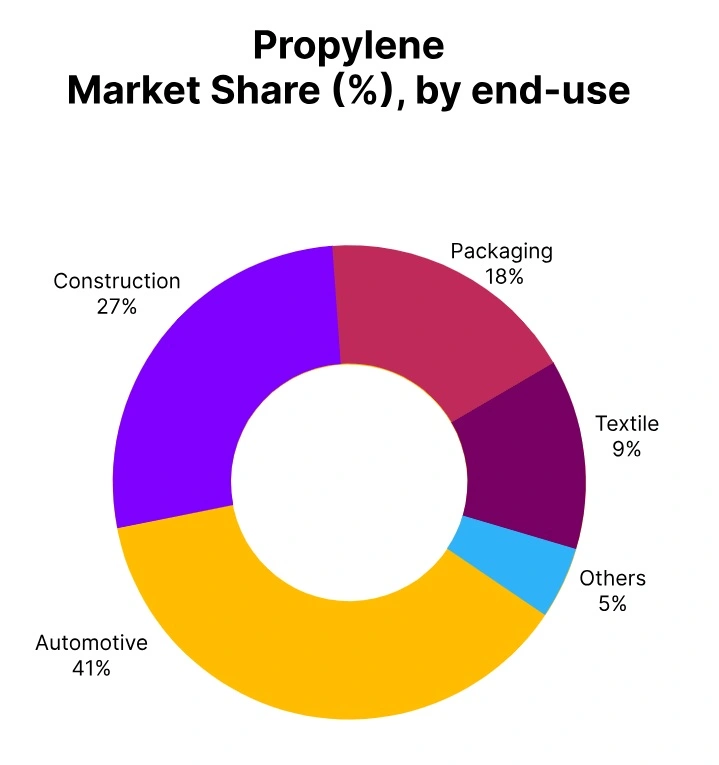
propylene market share end use

Historically, several events have caused significant fluctuations in Propylene prices

  • U.S.–China Trade Tariff Dispute (April 2025): In April 2025, escalating trade tensions between the United States and China led to the imposition of tariffs as high as 125% on various goods, including petrochemicals like propylene. As both countries are significant players in the production and consumption of propylene and its derivatives (e.g., polypropylene, acrylonitrile, and propylene oxide), the tariffs disrupted trade flows, introduced high costs, and created uncertainty in global markets. These factors led to volatility in propylene prices, especially in Asia and North America. 
  • Russia–Ukraine War & European Energy Crisis (2022–2023): The conflict between Russia and Ukraine caused severe disruptions in natural gas and crude oil supplies across Europe. As propylene is often produced through steam cracking and refinery processes—both energy-intensive—the reduced availability and high cost of feedstocks drove up production costs. Additionally, some European plants curtailed operations or shut down temporarily, tightening supply and causing propylene prices to surge. 
  • Post-COVID Manufacturing Rebound (2021–2022): Following the easing of pandemic restrictions, global manufacturing activity rebounded rapidly. Propylene demand spiked due to its widespread use in consumer goods, automotive parts, packaging, and textiles. However, supply chains were still recovering, and many petrochemical facilities faced labor shortages or logistical delays. This imbalance between recovering demand and limited supply led to sharp price increases, particularly in Asia and the Americas. 
  • 2020 Crude Oil Crash & Cracker Rate Cuts: During the early months of the COVID-19 pandemic, crude oil prices plummeted, leading many steam crackers and refineries to cut operating rates or shut down entirely. Since propylene is largely derived from these processes, global supply shrank significantly. Meanwhile, demand for certain propylene-based products, like medical-grade plastics and packaging, remained resilient or grew—contributing to market tightness and upward price pressure. 
  • China’s Environmental Crackdown (2017–2018): China implemented strict environmental regulations aimed at reducing pollution, forcing numerous chemical and refining facilities to scale back or halt operations. These measures significantly impacted the production of propylene and its derivatives. As China is a major global producer and consumer, this regulatory shift led to regional supply shortages and drove up prices, particularly in the Asia-Pacific region. 


These events highlight the sensitivity of the Propylene market to geopolitical tensions, weather disruptions, and shifts in supply-demand dynamics, underscoring the importance of monitoring global trends. 

Why Price Watch™?

Price Watch™ is your trusted resource for tracking global propylene price trends. Our platform delivers real-time data and expert analysis, offering deep insights into the key factors driving price fluctuations in the propylene market. By monitoring critical events such as geopolitical tensions, supply chain disruptions, and economic shifts, Price Watch™ keeps you fully informed of market dynamics.

In addition, Price Watch™ provides detailed forecasts and updates on production capacities, enabling you to anticipate market changes and make well-informed decisions. With Price Watch™, you gain a competitive edge in understanding all the elements that influence propylene prices worldwide. Stay ahead of the curve with Price Watch’s™ reliable, accurate, and timely propylene market data.

Track Price Watch's™ propylene price assessment on a weekly basis since 2015 onwards, along with short-term forecasts, and get access to the detailed report in a downloadable format.

Propylene Market Price Trend published by 𝐏𝐫𝐢𝐜𝐞 𝐖𝐚𝐭𝐜𝐡™ reflect prevailing spot market conditions, derived from independent research, verified trade inputs, and proprietary market intelligence as of the publication date. Prices are published on the specified Incoterm and represent indicative base market levels, exclusive of applicable taxes, VAT, duties, tariffs, and other statutory charges. Actual transaction values may vary depending on volume, credit terms, contractual structure, and other negotiated conditions. Market prices are inherently subject to volatility, liquidity dynamics, regulatory changes, and evolving trade activity. The information provided is for reference and benchmarking purposes only and does not constitute an offer, recommendation, or guarantee of transactional outcomes. Users should exercise independent commercial judgment and assess their specific contractual, regulatory, tax, and application requirements before making business decisions. 𝐏𝐫𝐢𝐜𝐞 𝐖𝐚𝐭𝐜𝐡™ assumes no liability for decisions taken based on this information.

The price of Propylene is influenced by a variety of factors, including crude oil and naphtha prices, which are key feedstocks for its production. Supply-demand dynamics, operating rates of refineries, and production disruptions play a significant role in determining prices. Geopolitical factors, trade policies, and transportation costs also contribute to price fluctuations. As a critical raw material in the production of polypropylene and other chemicals, changes in downstream industries such as packaging, automotive, and textiles can also affect propylene pricing trends.

Global supply and demand shifts directly impact propylene prices. A rise in demand from industries like plastics, automotive, and textiles can push prices higher, particularly when supply is constrained. Conversely, an oversupply of propylene due to new production capacities or a reduction in demand from downstream sectors, such as during economic downturns, can lead to lower prices. Procurement professionals must monitor global production capacities, planned maintenance activities, and demand forecasts to predict price movements and adjust procurement strategies accordingly.

Propylene prices vary regionally due to differences in feedstock availability, production capacities, demand patterns, and transportation costs. For example, Asia may experience price fluctuations due to strong demand from the plastics and automotive industries, while North America might benefit from a more stable price environment due to its well-integrated petrochemical infrastructure. Procurement teams should carefully analyze regional price trends, assess trade flows, and strategically diversify suppliers to mitigate risks related to regional price volatility and supply disruptions.

Propylene (also called propene) is a colorless, flammable gas and one of the most important petrochemical building blocks, serving as the primary raw material for polypropylene plastics and numerous chemical derivatives. Its price directly impacts the cost of packaging materials, automotive components, textiles, carpets, medical devices, household appliances, construction materials, propylene oxide, acrylonitrile, cumene, and countless consumer and industrial products, making propylene pricing a critical factor for plastic manufacturers, chemical producers, and industries worldwide. 𝐏𝐫𝐢𝐜𝐞 𝐖𝐚𝐭𝐜𝐡™ tracks these prices to help businesses and consumers understand and stay updated with the market trends.

Propylene prices vary by region, grade, and delivery basis. Prices are typically quoted per metric ton or per pound and change based on supply, demand, feedstock costs, and production capacity. 𝐏𝐫𝐢𝐜𝐞 𝐖𝐚𝐭𝐜𝐡™ provides real-time price assessments across different global markets to help buyers and sellers make informed decisions.

Propylene prices fluctuate due to changes in feedstock costs (crude oil, naphtha, propane, and refinery streams), energy price movements, steam cracker and refinery operating rates, and demand from polypropylene, propylene oxide, acrylonitrile, cumene, and other derivative producers. Production route economics (refinery-grade versus polymer-grade, steam cracker co-production with ethylene, propane dehydrogenation, metathesis, and on-purpose technologies), cracker maintenance schedules and turnarounds, refinery utilization and fluid catalytic cracker (FCC) operations, co-product values (ethylene, gasoline, butadiene), transportation and logistics costs, seasonal demand patterns in packaging and automotive sectors, capacity additions and technology shifts toward on-purpose production, trade policies and tariffs, and broader economic conditions further shape price trends, with recent outlooks reflecting volatility driven by energy costs, feedstock availability, polypropylene demand cycles, and propane dehydrogenation (PDH) capacity expansions.

The biggest buyers of Propylene are polypropylene (PP) manufacturers producing plastics for packaging, automotive parts, textiles, fibers, and consumer goods, representing approximately 60-65% of global propylene demand. Additional major demand comes from propylene oxide producers (for polyurethanes, propylene glycol), acrylonitrile manufacturers (for ABS plastics, acrylic fibers, carbon fiber), cumene producers (for phenol and acetone via the cumene process), polypropylene glycol manufacturers, isopropanol producers, and propylene oligomer/specialty chemical companies. 𝐏𝐫𝐢𝐜𝐞 𝐖𝐚𝐭𝐜𝐡™ analyses demand patterns across all these industries.

Propylene is produced through multiple routes. Historically, most propylene came as a co-product from steam crackers (producing ethylene) and refinery fluid catalytic crackers (FCC) converting heavy oils to gasoline. Increasingly, on-purpose propylene technologies including propane dehydrogenation (PDH), metathesis (converting ethylene and butene), and methanol-to-olefins (MTO) provide dedicated propylene production independent of ethylene or gasoline demand. Refinery-grade propylene from FCC units is typically upgraded to polymer-grade or chemical-grade specifications through separation and purification. It is produced by major petrochemical companies, integrated refineries, and specialized propylene producers worldwide.

Propylene trade is more limited than many petrochemicals due to its gaseous nature, with much propylene consumed near production sites through pipeline networks, though seaborne trade in refrigerated vessels and pressurized carriers is growing. The United States, particularly the U.S. Gulf Coast with expanding PDH capacity, is a significant producer with growing export capability. Middle Eastern countries including Saudi Arabia, UAE, and Qatar with refinery and petrochemical integration are major producers. Asian countries including South Korea, China, Singapore, and Japan, along with European producers in the Netherlands, Belgium, and Germany, serve regional markets. China has become the world’s largest propylene producer with substantial PDH and MTO capacity. 𝐏𝐫𝐢𝐜𝐞 𝐖𝐚𝐭𝐜𝐡™ tracks production levels, export flows and trade patterns to help businesses understand global supply chains and identify sourcing opportunities.

Supply generally matches demand, but regional shortages can occur due to steam cracker or refinery shutdowns, PDH unit outages, feedstock constraints, transportation problems, or sudden spikes in polypropylene and derivative production. Planned and unplanned turnarounds at crackers, refineries, and PDH units, particularly during peak maintenance seasons, can temporarily tighten markets. The shift toward lighter steam cracker feeds (ethane) reduces propylene co-production, making on-purpose capacity increasingly important. 𝐏𝐫𝐢𝐜𝐞 𝐖𝐚𝐭𝐜𝐡™ monitors these supply-demand imbalances to alert the market about potential shortages or surpluses.

Propylene prices vary significantly based on purity specifications and application requirements. Polymer-grade propylene (typically 99.5%+ purity, meeting stringent specifications for polypropylene and specialty polymer production) commands premium prices due to tight controls on propane, ethylene, methane, sulfur, water, and other impurities that could poison polymerization catalysts or affect polymer quality. This grade is essential for polypropylene manufacturers and most chemical derivative producers. Chemical-grade propylene (typically 92-94% purity) is suitable for some chemical synthesis applications and trades at discounts to polymer-grade. Refinery-grade propylene (70-90% purity from FCC units) requires upgrading for most applications and trades at the lowest prices. Pricing also varies based on delivery method (pipeline supply, pressurized railcar, refrigerated marine shipment, truck), contract structures (spot, monthly, quarterly, annual), and geographic location. The quality specifications typically follow ASTM D2163 or similar international standards for polymer-grade material. 𝐏𝐫𝐢𝐜𝐞 𝐖𝐚𝐭𝐜𝐡™ provides separate price assessments for polymer-grade and other specifications across different delivery bases and regional markets to ensure market transparency.

When Propylene demand rises quickly, often due to increased polypropylene production, strong packaging or automotive demand, or propylene oxide/acrylonitrile plant expansions, prices typically increase. Suppliers may prioritize long-term contract customers and pipeline-connected consumers, while those dependent on spot markets or transported supply may face tighter availability, allocation, longer lead times, or significant premium pricing. Production flexibility depends on the source: PDH units can adjust within limits, but cracker and refinery propylene is constrained by ethylene or gasoline economics and turnaround schedules. 𝐏𝐫𝐢𝐜𝐞 𝐖𝐚𝐭𝐜𝐡™ captures these market dynamics in real-time.

Energy and feedstock costs are dominant factors in Propylene pricing, though the relationship varies by production route. When crude oil, naphtha, or propane prices rise, production costs increase, making propylene more expensive. PDH economics are highly sensitive to propane prices and energy costs for the endothermic dehydrogenation process. Cracker-derived propylene pricing reflects naphtha or ethane costs and cracker economics. Refinery propylene pricing is influenced by crude oil, gasoline values, and refining margins. This is why propylene prices correlate with crude oil benchmarks and propane/naphtha spreads, though regional variations reflect different production economics, a relationship that 𝐏𝐫𝐢𝐜𝐞 𝐖𝐚𝐭𝐜𝐡™ analyses in its price assessments & market reports.

Propylene prices vary significantly by region based on local production capacity and technology mix (refinery, cracker, PDH, MTO), feedstock availability and costs, energy prices, pipeline infrastructure and connectivity, production route economics, transportation and logistics capabilities, polypropylene and derivative industry concentration, import/export infrastructure, contract structures and pricing mechanisms, and regional supply-demand balances. Regions with abundant propane (favoring PDH) or integrated refineries and crackers have different cost structures than import-dependent regions. North America with PDH growth, Asia with diverse production routes, and Europe with naphtha-based production exhibit distinct pricing dynamics. 𝐏𝐫𝐢𝐜𝐞 𝐖𝐚𝐭𝐜𝐡™ tracks prices across all major regions to highlight these differences.

The Propylene market outlook depends on factors such as crude oil, propane, and naphtha feedstock price trends, natural gas and energy costs, steam cracker and refinery operating rates, PDH and on-purpose capacity additions and utilization, planned and unplanned turnaround schedules, polypropylene and derivative demand growth, packaging industry trends, automotive and appliance production levels, construction sector activity, propylene oxide and acrylonitrile demand, feedstock slate changes in crackers (lighter feeds reduce propylene yield), trade flows and regional arbitrage dynamics, co-product values (ethylene, gasoline), propane availability and exports, and macroeconomic indicators affecting consumer goods, packaging, automotive, and construction sectors. 𝐏𝐫𝐢𝐜𝐞 𝐖𝐚𝐭𝐜𝐡™ regularly publishes detailed forecasts that project price movements for the next 12 months based on comprehensive analysis of supply additions, demand growth in key industries, seasonal patterns, and macroeconomic indicators. Our forecasts help businesses anticipate market conditions and plan accordingly.

Absolutely. Accurate forecasting allows you to time your purchases better, negotiate contracts more effectively, and budget more accurately. If 𝐏𝐫𝐢𝐜𝐞 𝐖𝐚𝐭𝐜𝐡™ forecasts predict a price increase in three months, you might choose to secure supply now or lock in long-term contracts at current rates, potentially saving thousands or millions of dollars depending on your consumption volumes.

Events like natural disasters (hurricanes affecting U.S. Gulf Coast refineries and chemical plants), cracker or PDH unit accidents, refinery disruptions, feedstock supply constraints, extreme weather events, planned and unplanned turnarounds, geopolitical tensions affecting crude oil and natural gas markets, propane export/import dynamics, pipeline or shipping disruptions, trade disputes, pandemic-related demand shocks in packaging or automotive sectors, or economic downturns can cause supply shortages and price spikes. Hurricane impacts on Gulf Coast facilities, major cracker outages in Asia or Europe, PDH unit startups affecting supply balances, propane price volatility, and force majeure declarations at production facilities, for instance, have created significant market volatility. 𝐏𝐫𝐢𝐜𝐞 𝐖𝐚𝐭𝐜𝐡™ provides timely alerts when such events affect the market.

𝐏𝐫𝐢𝐜𝐞 𝐖𝐚𝐭𝐜𝐡™ collects data from manufacturers, distributors, and buyers worldwide to publish regular price assessments, market reports, and forecasts. Our transparent methodology and comprehensive coverage make us a trusted source for understanding fair pricing and market trends in the Propylene industry, covering polymer-grade specifications across multiple delivery bases, production routes, contract structures, and regional markets worldwide.