

Rising or falling BOPA film prices often begin much earlier in the petrochemical value chain than most buyers realize. While demand from food packaging and industrial applications remains an important factor, movements in crude oil, benzene, and caprolactam frequently determine the direction of BOPA film pricing by influencing production costs.
How feedstock movements shape BOPA film production costs
Crude oil serves as the starting point for several petrochemical feedstocks. Changes in crude oil prices directly impact naphtha, which in turn influences benzene prices. Benzene is the primary raw material used to manufacture caprolactam, the key feedstock for Polyamide 6 resin, which is the main raw material used in BOPA film production.
According to Price Watch analysis, any increase in crude oil or benzene prices raises caprolactam production costs, leading to higher Polyamide 6 resin prices and increasing manufacturing expenses for BOPA film producers. Conversely, softer feedstock prices improve production economics and allow suppliers to offer more competitive prices.
Why feedstock volatility matters across the BOPA value chain
Fluctuations in upstream raw materials are creating noticeable impacts throughout the supply chain.
- Higher benzene and caprolactam costs increase BOPA film production expenses and influence replacement cost pricing.
- Lower feedstock costs improve manufacturers’ pricing flexibility and support more competitive export offers, particularly from major Asian suppliers.
Although demand from food packaging, pharmaceutical packaging, and industrial applications remains relatively stable, feedstock volatility continues to have a greater influence on short term pricing decisions than downstream consumption alone.
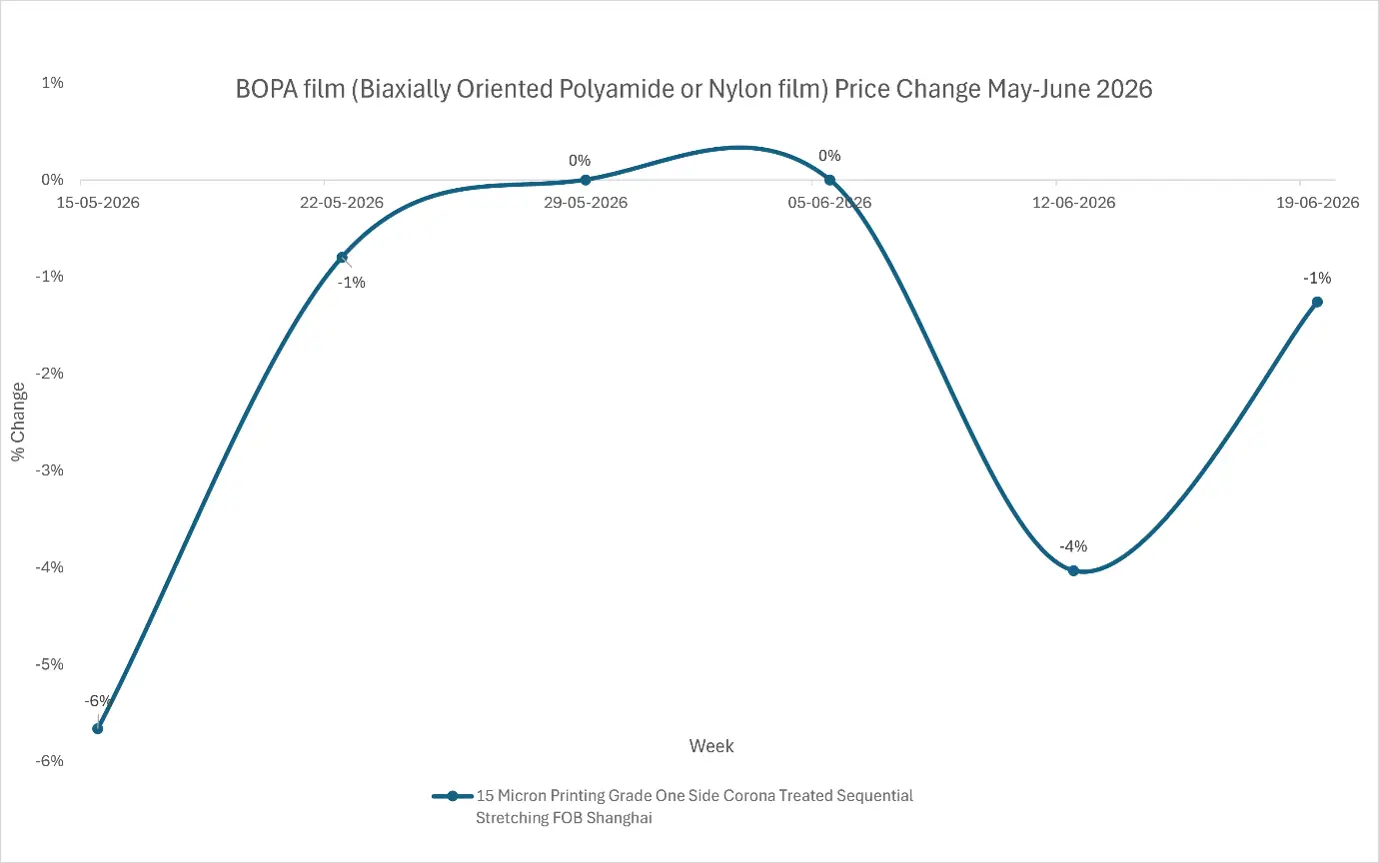
Source: Price Watch™ BOPA film (Biaxially Oriented Polyamide or Nylon film)
BOPA Film Market Outlook
The BOPA film market is expected to remain highly sensitive to crude oil, benzene, and caprolactam movements over the next one to three months. Market participants will closely monitor energy prices, feedstock availability, and production economics to assess future pricing trends.
The key question is whether stable downstream demand will be sufficient to offset feedstock volatility, or if another shift in crude oil and benzene markets will redefine BOPA film pricing in the coming weeks.
To track exact price direction, regional spot prices, and procurement activity, subscribe to Price Watch™ today.