

Biaxially Oriented Polypropylene (BOPP) film is one of the most widely used flexible packaging materials, serving industries such as food packaging, labeling, personal care, pharmaceuticals, and consumer goods.
Since BOPP film is manufactured from polypropylene (PP) resin, its production costs are closely linked to fluctuations in crude oil, naphtha, propylene, and polypropylene prices. Understanding how these upstream raw materials interact is essential for predicting BOPP film price movements.
Why Crude Oil, Naphtha, Propylene, and Polypropylene Matter
The BOPP value chain begins with crude oil, which is refined into naphtha. Naphtha is then processed through steam crackers to produce propylene, the primary feedstock for manufacturing polypropylene resin. Polypropylene pellets are subsequently converted into BOPP film through biaxial orientation technology.
According to Price Watch™ analysis, any disruption or price movement at any stage of this supply chain eventually impacts BOPP film production costs and market pricing.
How Crude Oil and Naphtha Shape Production Costs
Crude oil prices are the foundation of the petrochemical value chain. Rising oil prices increase refinery feedstock costs, leading to higher naphtha prices. Since naphtha is the key raw material for producing propylene, higher naphtha values raise production costs throughout the downstream chain.
Geopolitical tensions, refinery maintenance, OPEC+ production decisions, shipping disruptions, and changes in global fuel demand frequently influence crude oil and naphtha prices, creating volatility in BOPP manufacturing costs.
Why Propylene is the Key Feedstock
Propylene is the primary monomer used to manufacture polypropylene resin. Supply shortages caused by cracker shutdowns, reduced refinery operating rates, or strong demand from polypropylene and other downstream industries can tighten propylene availability and increase production costs.
As per proprietary data from Price Watch, fluctuations in propylene prices are often reflected quickly in polypropylene contract and spot prices, making propylene one of the most important indicators for future BOPP film pricing.
The Direct Cost Driver for BOPP Film
Polypropylene resin accounts for the largest share of BOPP film manufacturing costs. When PP prices increase due to higher feedstock costs, limited supply, or stronger packaging demand, BOPP film producers typically adjust their selling prices to maintain operating margins.
According to Price Watch™ intelligence, fluctuations in polypropylene prices have the most immediate impact on BOPP film quotations across Asia, Europe, the Middle East, and the Americas.
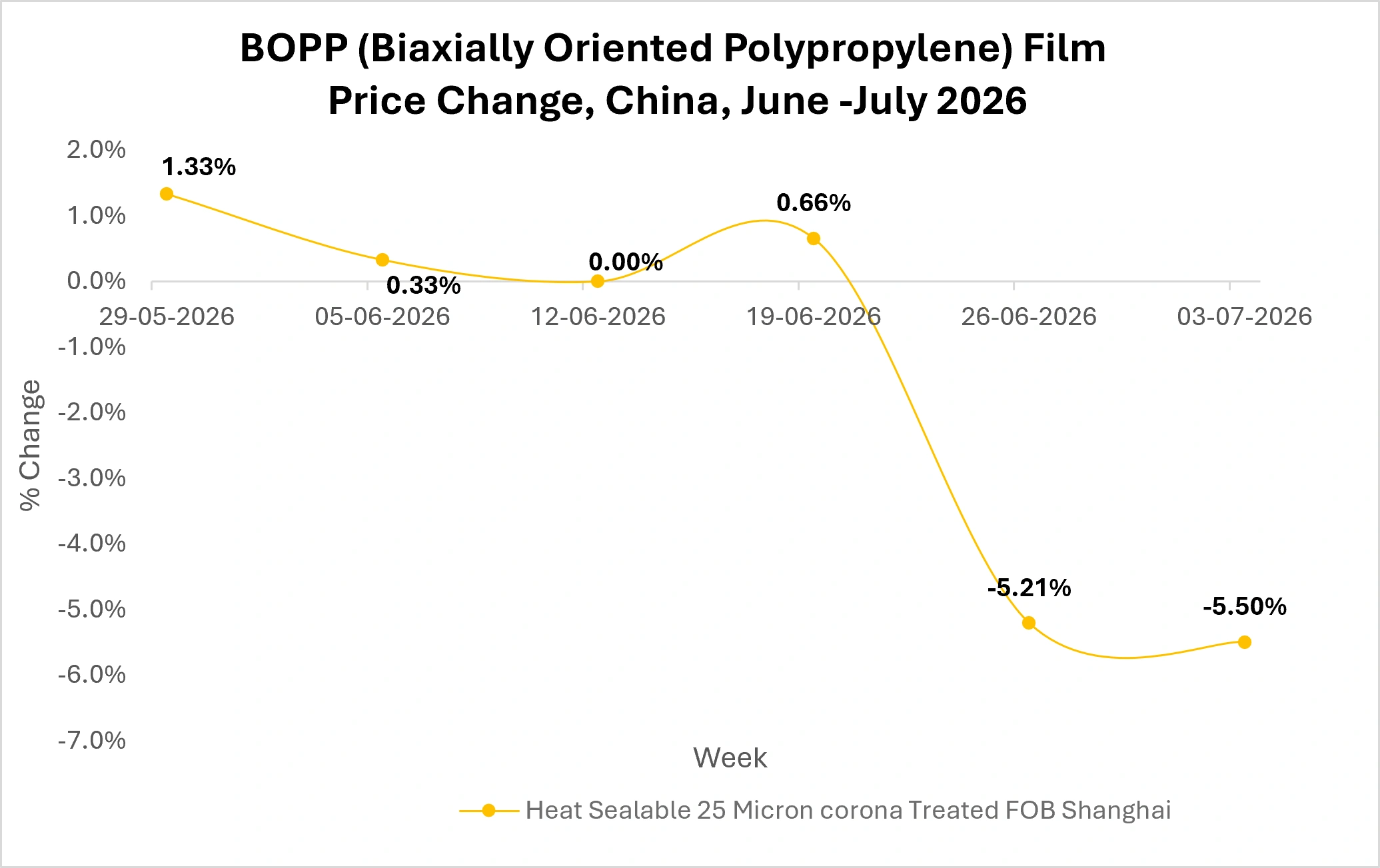
Source: Price Watch™ Biaxially Oriented Polypropylene (BOPP) Film
Other Factors Influencing BOPP Film Prices
Beyond feedstock costs, several market fundamentals continue to influence BOPP pricing:
- Electricity and natural gas costs used during film extrusion and biaxial orientation.
- Freight rates and container availability affecting global trade.
- Demand from food packaging, FMCG, labels, tobacco, and pharmaceutical sectors.
- Plant operating rates, maintenance shutdowns, and new production capacities.
- Regional supply-demand balances and import-export activity.
BOPP Film Market Outlook
The global BOPP film market is expected to remain closely tied to developments in crude oil, naphtha, propylene, and polypropylene markets. Feedstock volatility, changing refinery operating rates, geopolitical developments, and fluctuations in packaging demand will continue to influence pricing across major producing regions.
According to Price Watch™ analysis, BOPP film prices may move by nearly 5% to 6% in the near short term due to changing upstream production economics and supply-demand fundamentals. To discover the exact direction of this price movement, access regional spot prices, monitor contract trends, and receive real-time procurement intelligence, subscribe to Price Watch™ today.
Follow Price Watch™ on LinkedIn for real-time raw material insights, pricing trends, supply chain intelligence, and market updates shaping global commodity markets.