

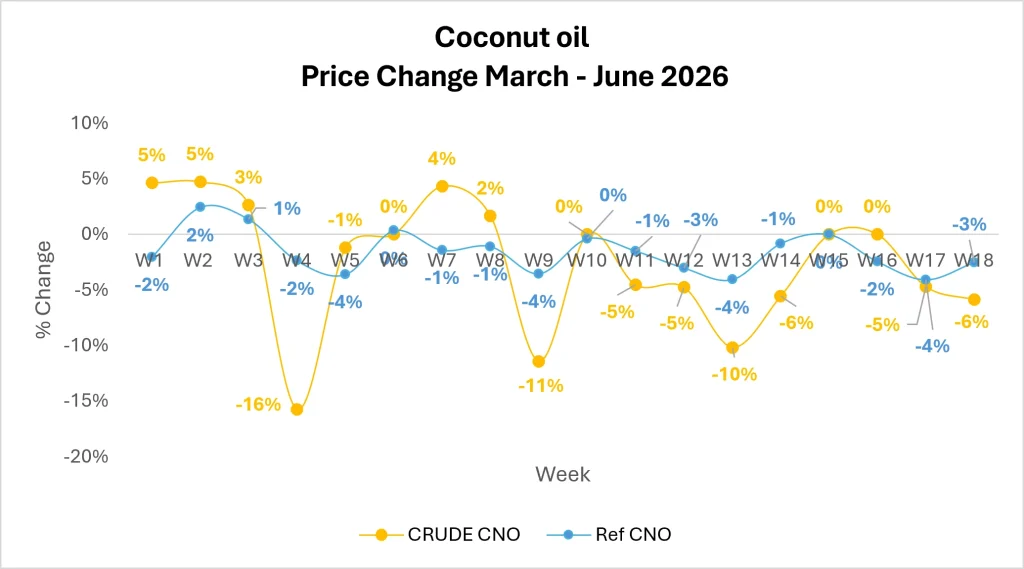
Philippine coconut oil prices have shed over 15% in six weeks, and millers were hoping the worst was over. It is not.
A bill moving through the legislature could remove one of the market’s last reliable demand props, right when supply keeps climbing. That is the part most price commentary is missing.
What Changed and Why It Matters
Philippine coconut output has bounced back hard after last year’s drought and typhoon damage, and the extra supply is already pressing prices down.
At the same time, the House passed a bill letting the President suspend the mandatory biofuel blending rule for a year whenever blended fuel costs more than five percent above pure fuel.
The Department of Energy wants to go further, allowing cheaper biofuel imports under the same trigger.

Where the Policy Fits In
Coco methyl ester from coconut oil sits at the centre of that mandate, so either move removes a built-in buyer.
If the suspension gets triggered, or imported biofuel starts replacing local coco methyl ester, coconut oil loses guaranteed offtake right when copra supply is already loose.
Source: Price Watch™ Coconut oil Prices
Two Things Worth Watching
- Local Millgate prices could slip further if the mandate gets suspended before October
- Buying interest from biodiesel blenders may dry up earlier than the usual seasonal pattern
Coconut Oil Market Outlook
Over the next one to three months, the downside risk looks bigger than the upside, unless Middle East tensions cool and the mandate quietly stays in place. This is exactly the kind of shift that slips past a simple price chart.
Price Watch tracks daily Millgate, copra and biodiesel linked demand signals across the Philippines, so subscribers can see a policy trigger like the five percent rule moving from talk to action, instead of finding out once the price has already shifted.
If the mandate gets switched off for a full year, how fast could your supply agreements lose their pricing floor?
And what happens to coconut oil prices once cheaper imported biofuel starts filling the gap that local coco methyl ester used to cover.
If you want to watch this play out before it shows up in your costs, Price Watch™ can show you.
Follow Price Watch™ on LinkedIn for real-time raw material insights, pricing trends, supply chain intelligence, and market updates shaping global commodity markets.