

The hydrogen peroxide market in 2026 is being shaped by a rare combination of plant shutdowns, new capacity investments, and geopolitical developments affecting energy and feedstock costs.
Why are supply-side developments attracting market attention?
Temporary production disruptions and capacity expansion plans are creating contrasting supply signals.
Hindustan Organic Chemicals Ltd. (HOCL) temporarily suspended operations at its Kochi hydrogen peroxide facility due to weak demand and rising operating costs, removing a portion of domestic supply from the market. At the same time, Gujarat Alkalies and Chemicals Ltd. (GACL) announced a Rs 67 crore investment in a high-purity hydrogen peroxide plant at Dahej targeting semiconductor and solar manufacturing applications.
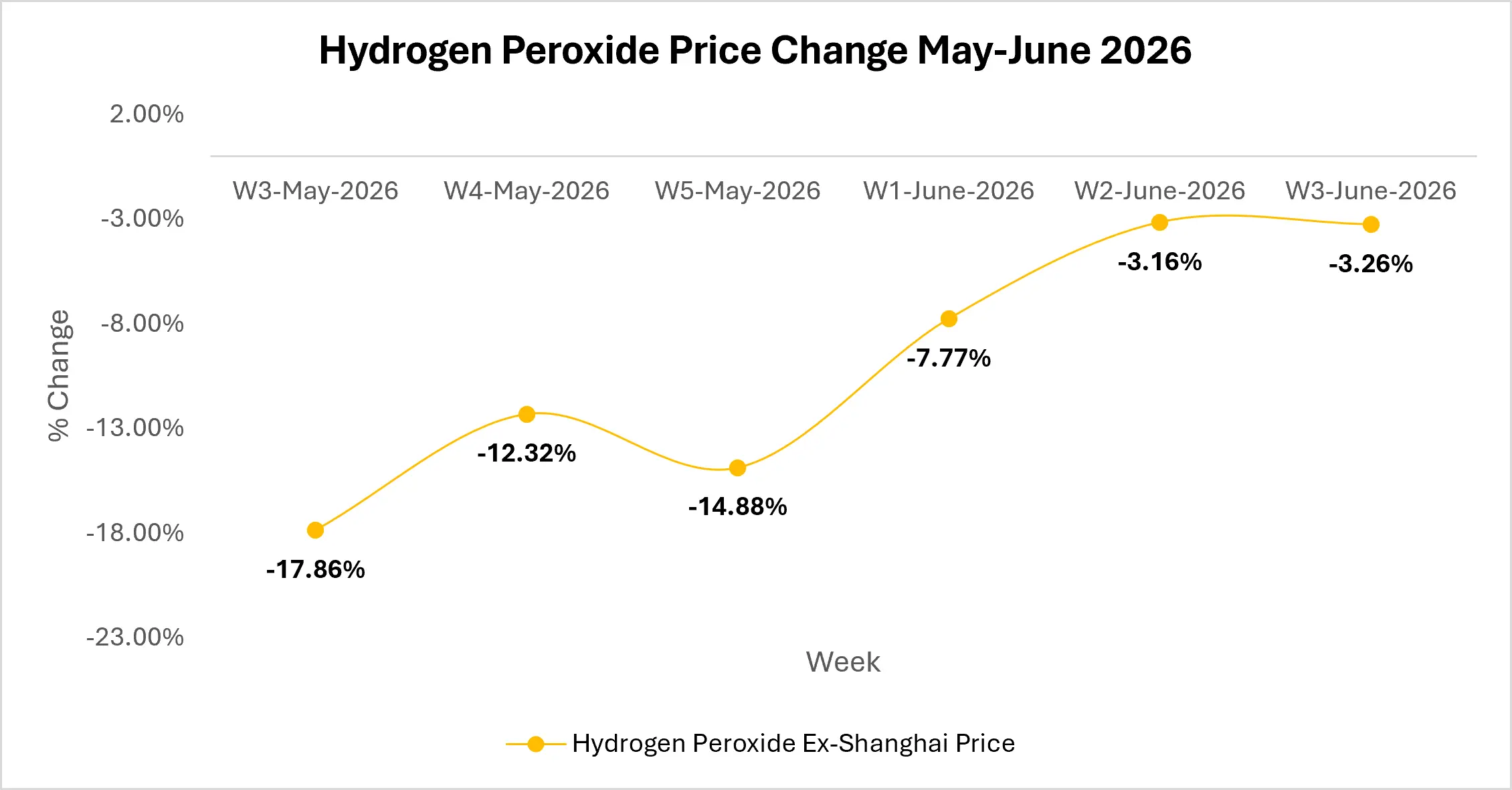
Source: Price Watch™ Hydrogen Peroxide Prices
How are feedstock and energy markets influencing the industry?
Energy market volatility continues to impact production economics across the hydrogen peroxide value chain.
Hydrogen peroxide manufacturing relies heavily on hydrogen and energy-intensive processing. In June 2026, crude oil initially rose by approximately 2% following concerns over the potential closure of the Strait of Hormuz before falling more than 4% after the US-Iran ceasefire agreement and reopening of the strategic waterway.
Since nearly 20% of global oil trade moves through Hormuz, fluctuations in energy markets directly affect chemical production costs and logistics sentiment worldwide.
What is happening on Hydrogen Peroxide demand side?
Traditional demand remains stable while advanced manufacturing applications are expanding rapidly.
Hydrogen peroxide continues to see strong consumption from pulp and paper, wastewater treatment, healthcare sterilization, food packaging, and environmental applications. Recent developments in vapor-phase decontamination technologies and semiconductor-grade hydrogen peroxide production have created additional high-value demand streams.
Price Watch™ forecasts indicate that the global hydrogen peroxide market could exceed USD 6 billion by 2032, supported by environmental regulations and growth in electronics manufacturing.
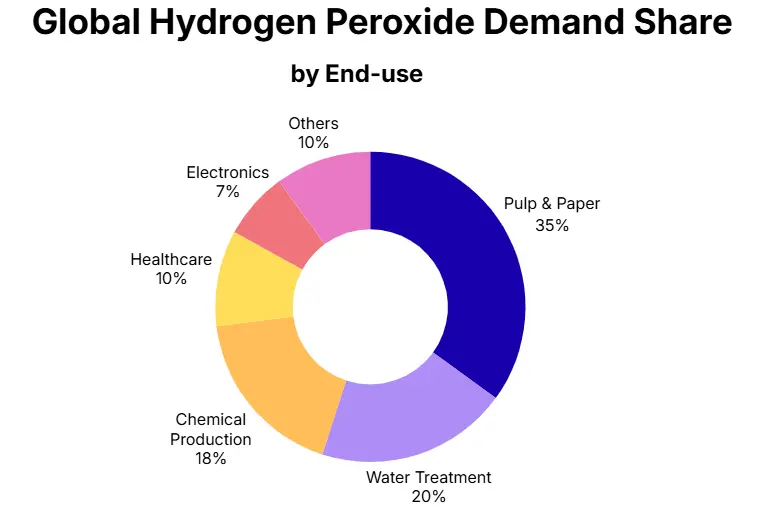
Source: Price Watch™
Key Market Signals
- HOCL temporarily suspended hydrogen peroxide production at Kochi.
- GACL announced a Rs 67 crore high-purity hydrogen peroxide investment.
- Crude oil fell more than 4% after the Hormuz ceasefire agreement.
- Nearly 20% of global oil trade remains dependent on Hormuz stability.
Hydrogen Peroxide Market Outlook
The near-term Hydrogen Peroxide outlook remains balanced as market participants monitor energy prices, operating rates, semiconductor industry expansion, and production developments across major manufacturing regions.
While fluctuations in crude oil and hydrogen costs may continue influencing production economics, growing demand from electronics, renewable energy, and environmental applications is expected to provide continued support for higher-value market segments.
The central question facing market participants is whether expanding semiconductor demand will be sufficient to offset near-term cost volatility and shifting supply conditions across the global Hydrogen Peroxide market.
Through real-time market intelligence and forecasting, Price-Watch.ai helps businesses track hydrogen peroxide developments across India, China, Europe, and North America before supply shifts influence procurement strategies, Price-Watch.ai delivers the regional market intelligence and data precision this evolving Hydrogen Peroxide industry demands.
Follow Price Watch™ on LinkedIn for real-time raw material insights, pricing trends, supply chain intelligence, and market updates shaping global commodity markets.