

As new liquefaction projects come online across North America and the Middle East, the LNG industry faces a new challenge: moving record volumes efficiently across global markets.
The New Bottleneck in LNG
Global LNG production capacity is expanding rapidly, with more than 90 MTPA of new liquefaction capacity expected to enter operation over the next few years. However, production growth is beginning to outpace the availability of LNG carriers, creating pressure throughout the value chain.
While liquefaction plants can increase output, LNG still depends on a specialized shipping fleet to reach importing markets. A shortage of available vessels can delay cargo movements and reduce the effectiveness of new production capacity.
Why Are LNG Shipping Requirements Rising?
New LNG projects are located farther from key demand centers than many legacy facilities. U.S. Gulf Coast exports often travel to Asia through long shipping routes, while Middle Eastern projects continue serving both Europe and Asia.
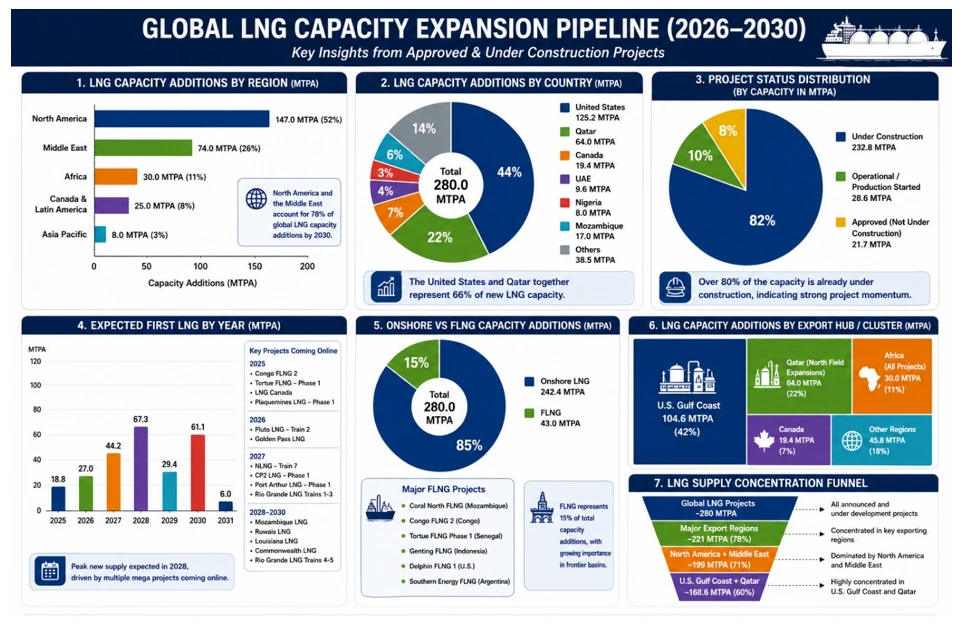
Longer shipping distances increase vessel utilization and reduce fleet availability for additional cargoes.
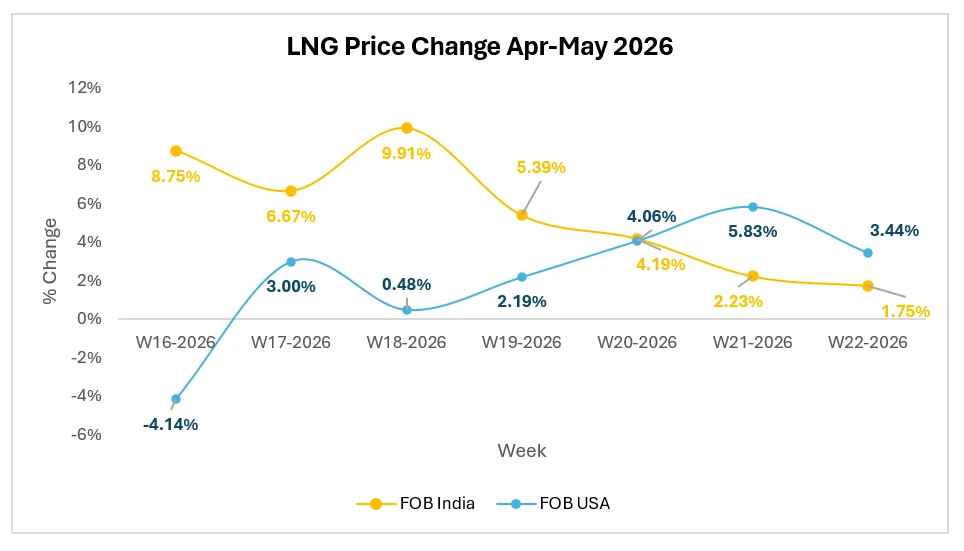
Source: Price-Watch™ LNG Prices
How Does Shipping Influence LNG Prices?
LNG prices are not determined only by production costs. Shipping availability plays a major role in the final delivered cost of LNG. When LNG carrier availability becomes tight, freight rates increase, raising transportation expenses for exporters and buyers.
Large export facilities producing 15 to 20 million tonnes annually rely on a steady flow of vessels to move cargo efficiently. Delays in vessel arrivals can slow cargo loading schedules, increase storage requirements at export terminals, and create bottlenecks across the supply chain. These disruptions can add costs throughout the value chain, ultimately influencing LNG prices in importing markets.
LNG Market Outlook
The global LNG market is expected to remain dynamic as new liquefaction capacity and changing trade flows reshape supply patterns. Future market conditions will depend on production levels, terminal utilization, vessel availability, and demand across key importing regions.
Shipping disruptions or operational issues at major export facilities could impact on cargo availability and market balance. Price-Watch™ helps businesses track LNG supply trends, logistics risks, and procurement opportunities through real-time market intelligence and forecasting analysis.
Follow Price-Watch™ on LinkedIn for real-time raw material insights, pricing trends, supply chain intelligence, and market updates shaping global commodity markets.