

The world’s largest palm oil producer just committed to burning more of it at home and while regulators quietly investigate its biggest traders, the export math changes immediately.
Indonesia Prioritizes Domestic Palm Oil Consumption
Indonesia raised its biodiesel blend from 40% to 50% palm oil, lifting domestic CPO use to 16.3–17 million tons from 15.2 million, per Energy Minister Bahlil Lahadalia, with 3.5 million tons earmarked for B50 and diesel imports halted from July 1. Yet Jakarta just cut its July CPO prices to $XXX/ton on weak demand a sign the tightening story isn’t so clean.
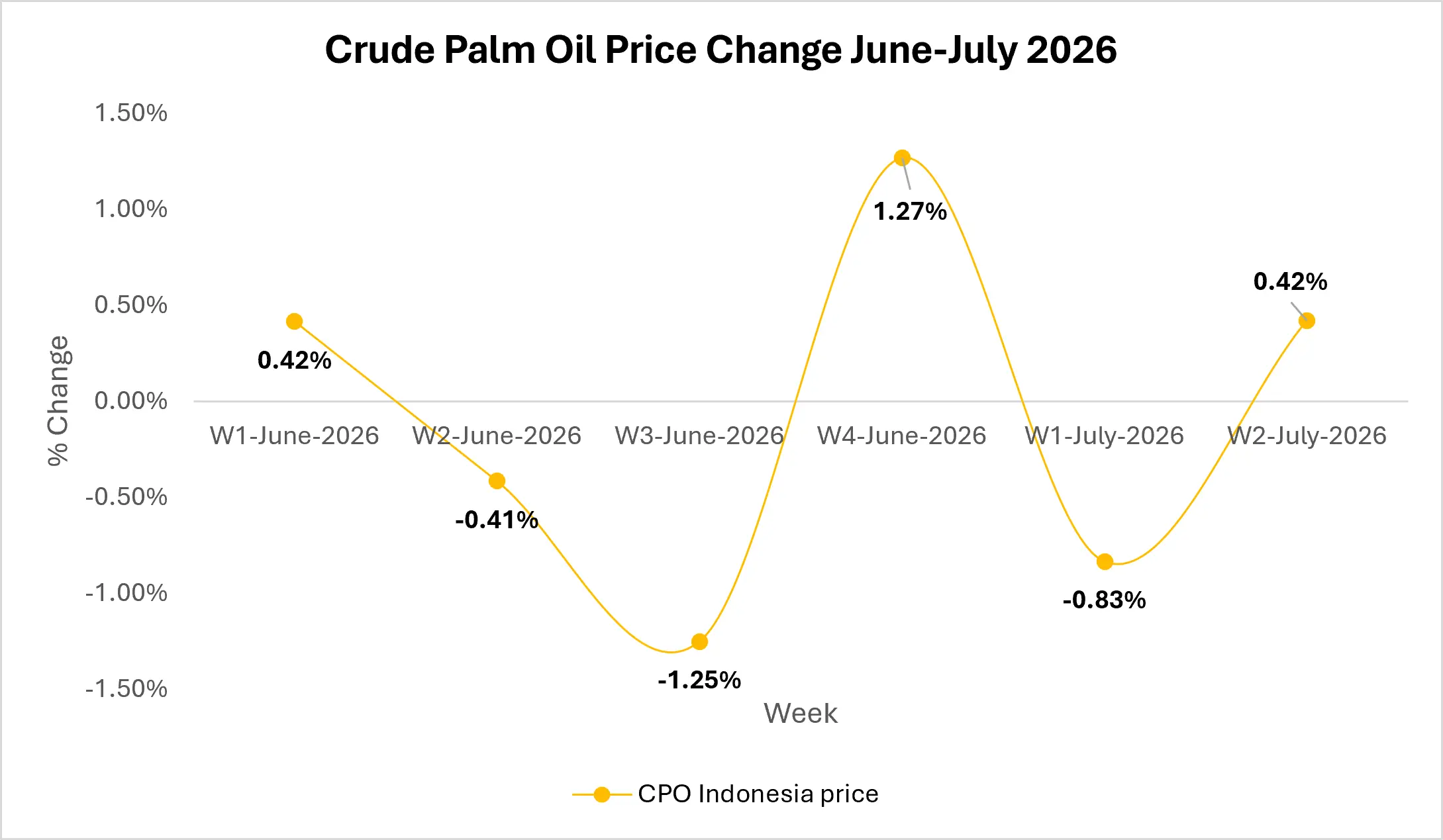
Source: Price Watch™ Palm Oil
Regional Palm oil Supply Dynamics Continue to Shift
Indonesia supplies roughly 58% of global palm oil, so domestic diversion squeezes buyers across South Asia, China, and Europe. Malaysia, the number-two producer, saw June stockpiles climb 4.8% to a four-month high as production rose 8.1%, even as India’s imports fell to a 14-month low.
When palm tightens, food and oleochemical buyers lean on soybean and sunflower oil instead, pushing pressure across the wider vegetable-oil complex. The Agriculture Ministry says B50 won’t disrupt exports, since CPO exports have climbed from 26 million to 32 million tons.
But Indonesia’s finance ministry is now investigating Wilmar International and Musim Mas Group two of the industry’s biggest names plus eight other exporters for suspected under-invoicing and transfer pricing, raising doubts about that export figure’s true value.
Watch These Two Signals
- Whether the under-invoicing probe into Wilmar, Musim Mas, and eight other exporters widens or gets quietly resolved
- How quickly substitute vegetable oil prices react to tighter palm oil exports
Palm oil Market Outlook
Over the next three months, palm oil should stay supported by B50 though Jakarta’s own price cut and Malaysia’s swelling stockpiles show the floor isn’t absolute. The bigger risk: a demand slowdown in China or India.
So here’s the real question. The EU deforestation regulation takes effect December 30, 2026, forcing full traceability on palm sourcing just as Jakarta probes its own largest traders for pricing irregularities. Can Indonesia scale B50, clean up its export data, and satisfy Brussels all at once?
This is where Price-Watch.ai helps market participants track policy driven supply shifts, trade flow changes, and pricing direction before the market moves faster than expected. Price-Watch.ai delivers the regional market intelligence this evolving Palm Oil industry demands.
Follow Price Watch™ on LinkedIn for real-time agricultural commodity insights, edible oil market trends, supply chain intelligence, and global market updates.