

The Global Palm Olein market entered a period of contrasting regional dynamics during June and July 2026, as stronger Malaysian production and exports coincided with weaker import demand from India.
While refiners benefited from improved feedstock availability and higher output, softer buying from the world’s largest import market created fresh uncertainty over the sustainability of export growth.
Malaysia Palm Olein Market Sees Higher Production and Exports
Malaysia’s Palm Oil stocks climbed to a four-month high in June, rising 4.78% to 2.54 million tons, the highest-ever level recorded for that month, according to Malaysian Palm Oil Board data.
Crude palm oil production jumped 8.08% to a six-month high of 1.64 million tons, feeding refiners such as Sime Darby Plantation, IOI Corporation, and Kuala Lumpur Kepong with more feedstock for RBD palm olein output.
Overall palm oil exports rose 6.2% to 1.2 million tons, snapping two straight months of decline, with palm olein a key driver of that rebound.
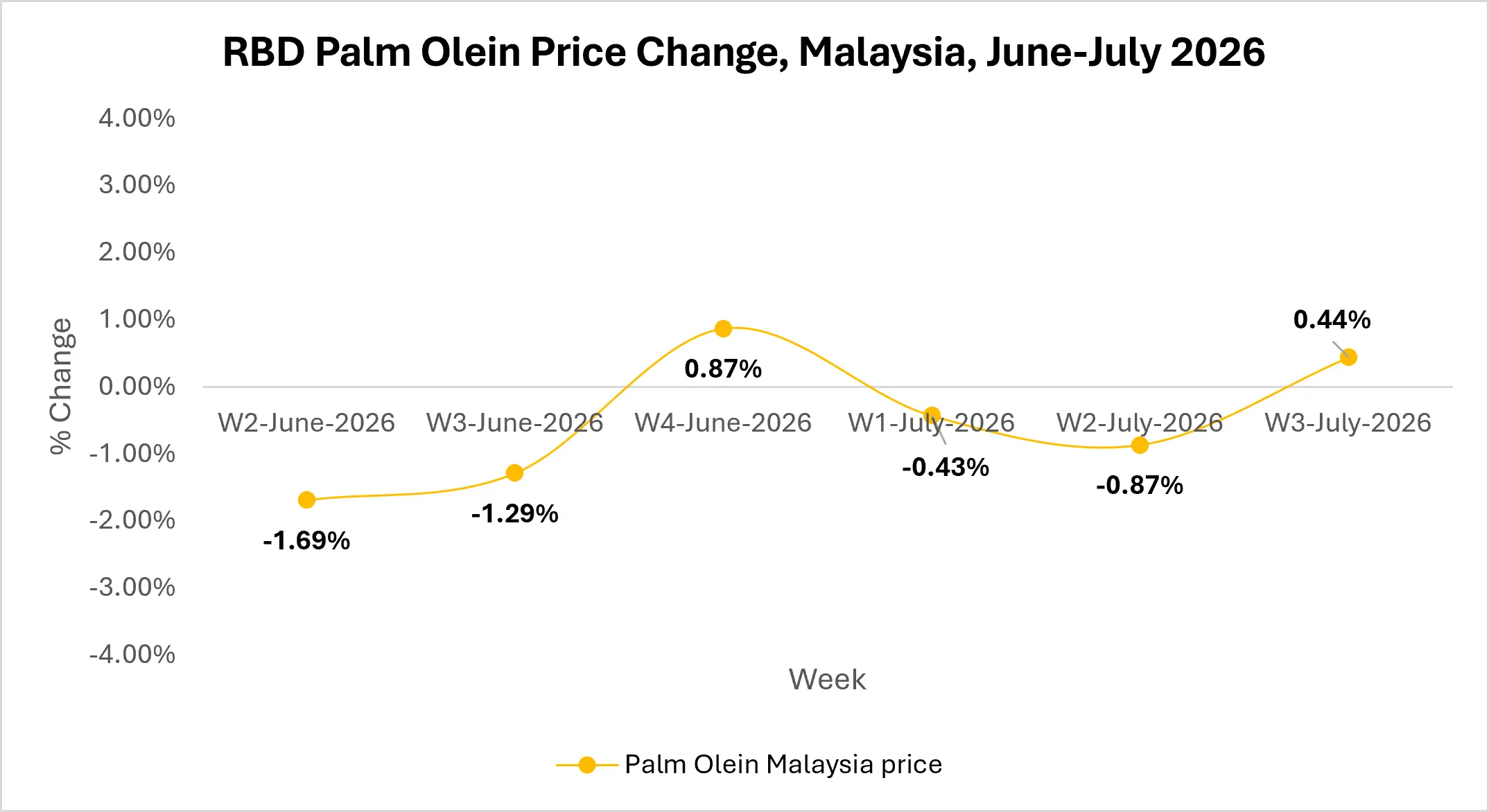
Source: Price Watch™ Palm Olein Malaysia
India Palm Olein Market Slows Procurement
India, Malaysia’s largest buyer of RBD palm olein at roughly 28.3% of export volume, saw its palm oil imports fall to a 14-month low in June. AWL Agri Business, India’s top edible oil importer, along with Patanjali Foods and Gokul Agro Resources, felt the pinch as a narrower price gap between palm olein and rival soybean and sunflower oils pushed price sensitive buyers toward substitutes.
The Value Chain Impact
Freight costs amplified price transmission into India, the UAE, and the US this quarter, sharpening buyer sensitivity to small shifts in the olein to substitute gap.
As Malaysian supply builds while its top buyer pulls back, refiners face a widening gap between output and absorption.
A Fresh Angle Worth Watching
Indonesia’s B50 mandate, live since July 1, diverts more domestic CPO into biodiesel rather than export channels, including refined products. If Indonesian palm olein availability tightens, buyers including AWL and Patanjali may rotate back toward Malaysian supply despite the price gap, offsetting some of the current slowdown.
Global Palm Olein Market Outlook
Looking ahead, the Global Palm Olein market is expected to remain influenced by production levels, edible oil price competitiveness, and regional trade policies. Malaysia’s expanding supply will require sustained export demand to maintain market balance, while India’s procurement strategy will continue to depend on the relative pricing of competing vegetable oils.
Indonesia’s biodiesel program will also remain an important factor for global trade flows, as reduced export availability could strengthen Malaysia’s role in international markets. Over the coming months, inventory levels, freight costs, and substitution trends among major edible oils are expected to remain the key drivers shaping the Global Palm Olein market.
Watch These Two Signals
- Whether India’s palm olein discount to rival oils widens again, restoring competitiveness
- Whether rising olein stock levels start pressuring Malaysian refiners to cut prices just to move volume
Two questions are worth sitting with. Is Malaysia’s export rebound sustainable, or is it building refined stock faster than India and other buyers can absorb it. And if Indonesia’s biodiesel mandate tightens its own export supply, does Malaysia become the default winner by circumstance rather than by price.
Follow Price Watch™ on LinkedIn for real-time edible oils market insights, Palm Olein price trends, supply chain intelligence, and global commodity updates.