

The global PMMA (Polymethyl Methacrylate) market is witnessing a downward pricing trend as weak downstream demand continues to outweigh relatively stable feedstock conditions.
Despite limited fluctuations in MMA and acetone costs, PMMA prices are under pressure due to subdued buying activity across key end-use industries.
PMMA Market Faces Weak Demand
Demand from major sectors such as construction and automotive remains inconsistent, with converters adopting a cautious procurement approach. Buyers are primarily focusing on immediate requirements rather than bulk purchasing, which is limiting overall market momentum.
At the same time, stable supply conditions and steady operating rates among producers are ensuring adequate material availability, further contributing to the soft pricing environment.
PMMA Supply Conditions Remain Comfortable
In Asia, particularly in markets like China and India, competitive pricing and sufficient inventory levels are influencing market sentiment. Import offers remain attractive, adding pressure on domestic producers to adjust their pricing strategies.
Similarly, in Europe, moderate consumption and cautious buying behaviour are preventing any strong recovery in PMMA prices despite stable feedstock support.
Additionally, limited pass-through of upstream cost changes is evident across the value chain, as converters resist higher prices amid uncertain demand conditions. This imbalance between supply and consumption is keeping the market range-bound with a downward bias.
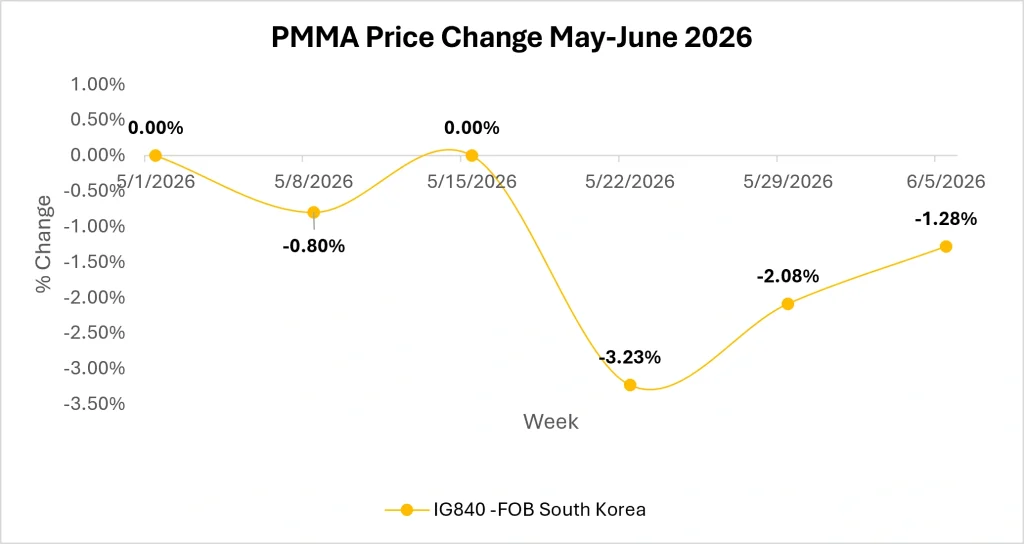
Source: Price Watch™ PMMA
PMMA Market Outlook
The PMMA market is expected to remain sensitive to downstream demand recovery, feedstock MMA trends, and overall economic activity in key sectors. While stable feedstock costs may provide some support, price movement will largely depend on improvement in consumption patterns.
In the near term, PMMA prices may continue to face mild downward pressure as cautious buying and adequate supply persist across major regions.
To track exact price direction, regional spot prices, and procurement activity, subscribe to Price Watch™ today.
Follow Price Watch™ on LinkedIn for real-time raw material insights, pricing trends, supply chain intelligence, and market updates shaping global commodity markets.