

The latest increase in Southeast Asia polyurethane prices is less about a single manufacturer adjustment and more about a changing global supply landscape.
Wanhua Chemical’s reported USD 200 per tonne increase for MDI and TDI offers signals growing pressure across the polyurethane value chain, where tighter availability, higher production costs, maintenance shutdowns and concentrated global capacity are reshaping procurement strategies.
Wanhua Chemical reportedly raised Southeast Asia MDI and TDI offers by USD 200/tonne effective July 29, driven by a combination of rise in spot purchasing activities, higher global energy expenses, and ongoing disruptions across international logistics networks and supply chains.
Global Maintenance Shutdowns Tighten MDI and TDI Supply
The current market increase is mainly being driven by tighter supply conditions. A series of scheduled maintenance activities across major global production sites has temporarily reduced available MDI and TDI supply.
Wanhua Chemical’s 800,000-tonne/year MDI facility in Fujian completed maintenance in June, while its Hungary operations, consisting of a 400,000-tonne/year MDI unit and a 250,000-tonne/year TDI unit, began a 35-day planned shutdown from July 17.
Additional maintenance at Tosoh’s MDI units and Hanwha’s overseas TDI facilities has further tightened effective global supply. As availability became more limited, traders have strengthened inventory positions and shown greater resistance to lowering offers, adding upward pressure to the spot market.
For Southeast Asian buyers, the timing of the increase is significant. The region remains highly dependent on imported polyurethane raw materials, leaving manufacturers exposed to global producer strategies and international supply disruptions.
Vietnam, Thailand, Indonesia, Malaysia and the Philippines are among the markets where polyurethane demand is closely linked to furniture, appliance, automotive, footwear and insulation industries. Higher MDI and TDI replacement costs could therefore translate into broader pressure on manufacturing margins.
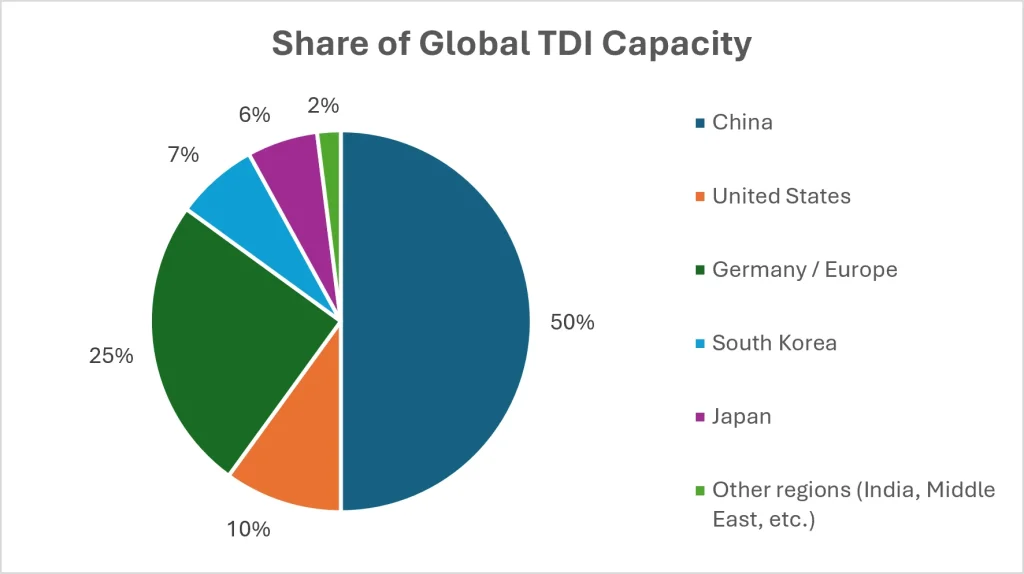 Source: Price Watch™
The current market shift is being driven increasingly by supply-side constraints rather than demand recovery. A series of planned maintenance activities across major production facilities has reduced effective availability during the third quarter.
Wanhua’s BorsodChem facilities in Hungary began planned maintenance in July, affecting approximately 400,000 tonnes/year of MDI capacity and 250,000 tonnes/year of TDI capacity.
At the same time, maintenance activities at other producers, including Asian facilities, have contributed to a temporary tightening of global supply.
The impact has already appeared in domestic Asian markets. China’s polyurethane sector recorded a strong rebound in 2026 after prices reached their annual lows at the beginning of the year.
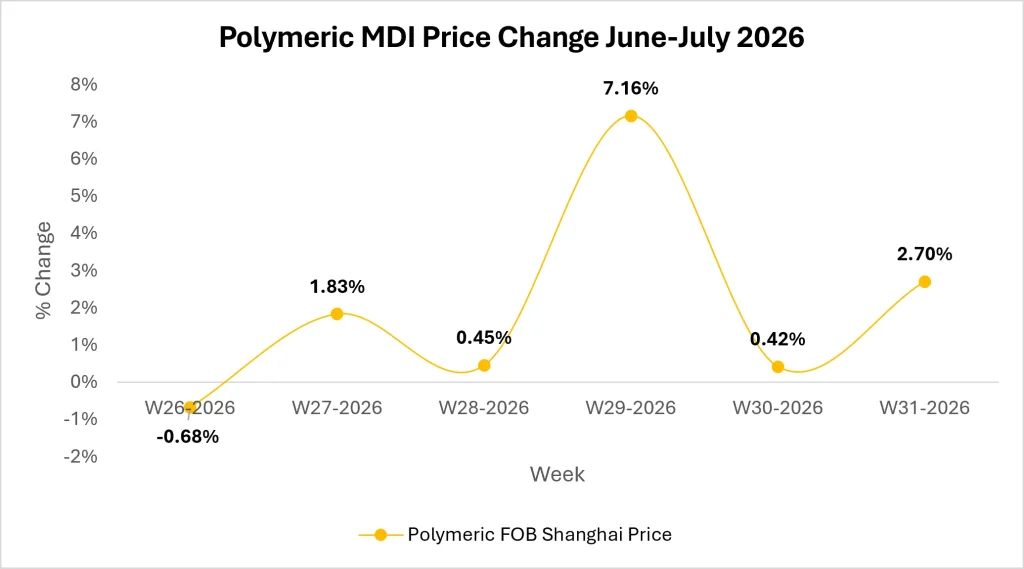
Source: Price Watch™ MDI Prices
Supply Security Becomes a Strategic Priority
The lesser-known factor behind the current volatility is the highly concentrated structure of the MDI and TDI industry. These products require specialized technology and large investments, so production is concentrated among a small number of major global manufacturers.
This means maintenance schedules, production interruptions or strategic pricing decisions from major suppliers can quickly influence regional markets.
For buyers, the challenge is no longer only managing price increases but managing supply security. Companies with flexible sourcing networks and stronger supplier relationships may limit exposure, while buyers dependent on spot purchases could face greater volatility.
Polyurethane Market Outlook
Market participants generally agree that the next phase will depend on three critical factors: whether other producers follow Wanhua’s price move, how quickly production returns after maintenance, and whether downstream industries can absorb higher raw-material costs.
If supply remains restricted through the third quarter, will Southeast Asia establish a permanently higher polyurethane price benchmark? Or will weak downstream margins force suppliers to reconsider increases as buyers delay purchases and seek alternative sourcing options?
Follow Price Watch™ on LinkedIn for real-time polyurethane market insights, MDI and TDI price trends, supply chain intelligence, and global commodity updates.