

Polytetramethylene Ether Glycol (PTMEG) is a key raw material used primarily in the production of spandex fibers, as well as polyurethane elastomers, thermoplastic polyurethanes (TPU), and specialty engineering plastics.
During recent weeks, the global PTMEG market remained under sustained downward pressure as weak downstream demand continued to outweigh limited support from feedstock and energy markets.
Although geopolitical developments initially raised concerns over supply disruptions and production costs, easing tensions and sluggish consumption across the textile industry ultimately drove prices lower.
China PTMEG Prices Extend Decline
Earlier in the quarter, market sentiment had improved amid escalating geopolitical tensions involving the United States and Iran, which raised concerns over disruptions to shipping through the Strait of Hormuz.
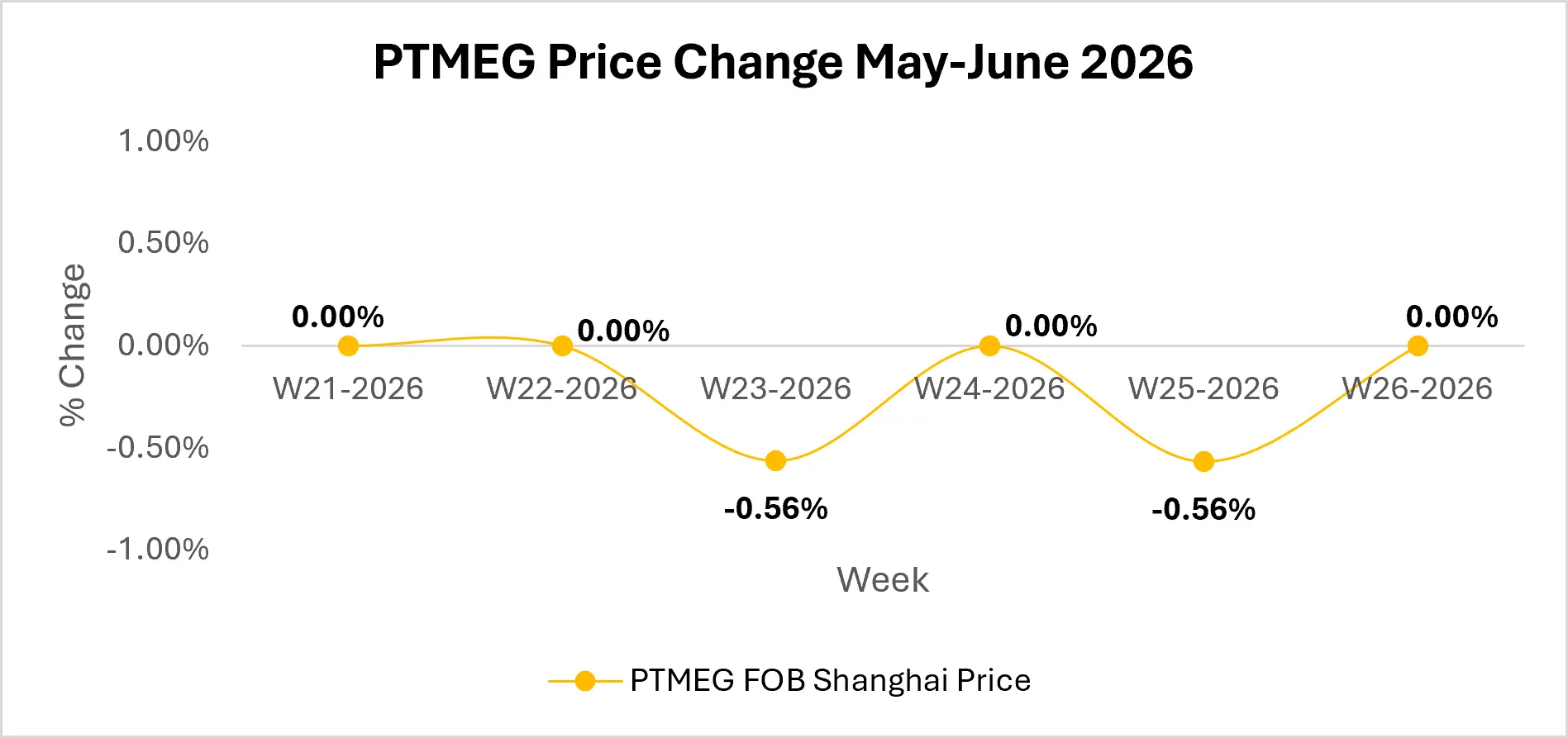
Source: Price Watch™ PTMEG Prices
Market participants anticipated tighter availability of tetrahydrofuran (THF) the primary feedstock for PTMEG, along with higher costs driven by elevated crude oil prices. These expectations initially supported bullish sentiment and raised hopes of stronger PTMEG prices.
However, the expected supply tightening did not materialize as tensions eased and crude oil prices softened, while THF remained readily available, limiting cost support.
PTMEG Demand Remains Constrained by Textile Slowdown
China witnessed continued price declines driven by weak demand across the spandex value chain, while spandex manufacturers remained cautious as order volumes stayed below expectations.
Instead of rebuilding inventories, buyers focused on consuming existing stocks and purchasing only for immediate production needs. This reduced spot market activity and intensified competition among suppliers, keeping prices under pressure.
Seasonal weakness in China’s textile sector further weighed on demand. As the industry entered its traditional off-season, operating rates among downstream weaving enterprises hovered at only 50% to 70%, while orders for apparel and home textiles remained limited.
This lack of end-user demand provided insufficient support for PTMEG consumption and reinforced the bearish market trend.
PTMEG Market Outlook
Looking ahead, the PTMEG market is expected to remain cautious as participants monitor spandex operating rates, textile demand recovery, and THF price movements.
While feedstock costs and geopolitical factors may still influence sentiment, demand recovery in the textile and spandex sectors will be the key driver of price direction. Unless buying activity improves, PTMEG prices are likely to stay under pressure in the coming months.
As supply concerns gradually ease and demand continues to weaken, could the future direction of PTMEG prices depend more on the pace of recovery in the global textile industry than on feedstock costs and geopolitical developments? Stay tuned with Price Watch for the latest market insights and pricing trends.
Follow Price Watch™ on LinkedIn for real-time raw material insights, pricing trends, supply chain intelligence, and market updates shaping global commodity markets.