

Sodium nitrite rarely attracts the attention that commodities such as crude oil or ammonia do. However, an important trend has been unfolding beneath the surface.
Nitric acid, the primary feedstock for sodium nitrite production in India, has declined almost every week since 12 June 2026, with only one week showing no change. Over five consecutive weeks, prices have fallen by approximately 3% to 13% each week, resulting in a cumulative decline of nearly 32% in the feedstock cost index.
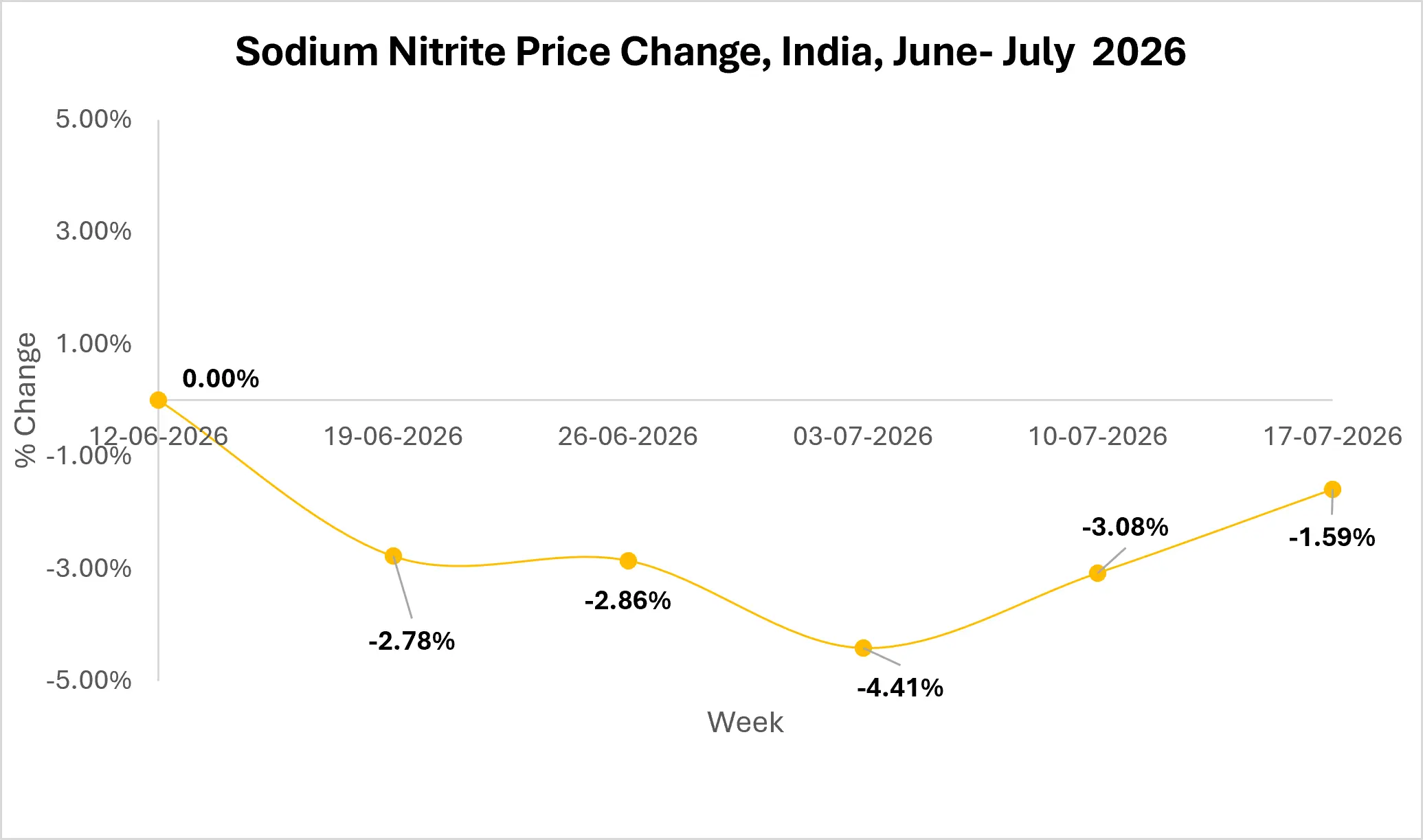
Source: Price Watch™ Sodium Nitrite Prices
For Indian producers operating captive nitric acid facilities, this translates directly into lower production costs and improved margins. For buyers, it presents a pricing opportunity that may not yet be fully reflected in existing supply contracts.
Deepak Nitrite Expanded Capacity, While Chinese Imports Continue to Cap Prices
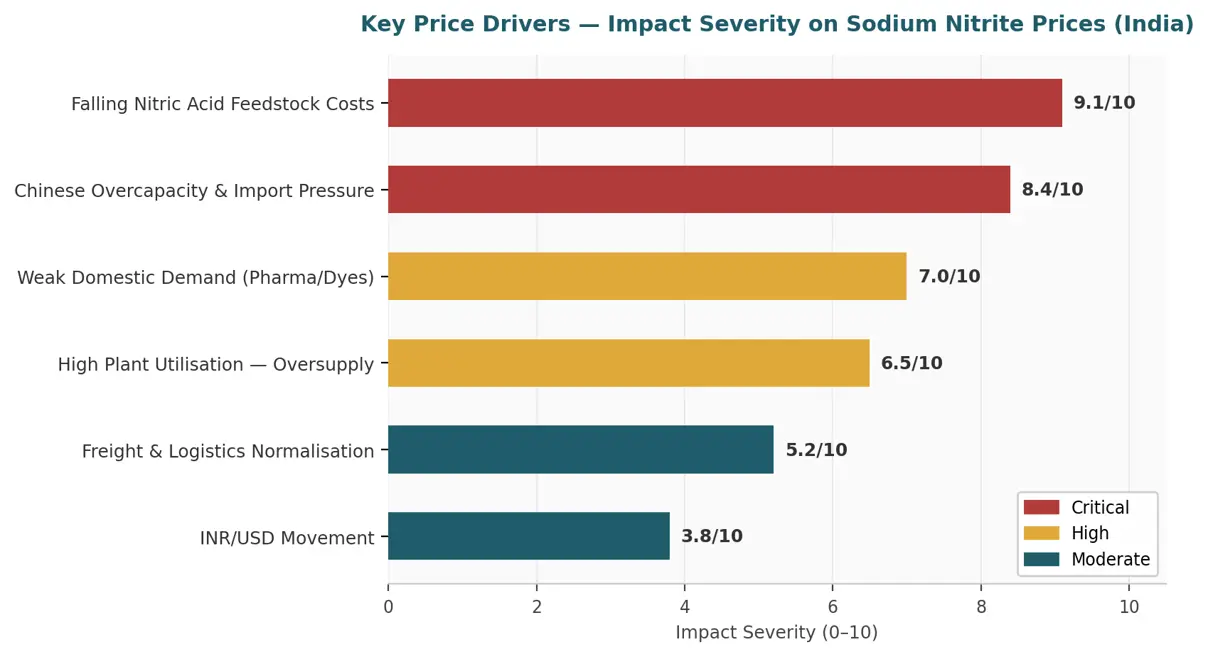
India’s sodium nitrite market remains structurally oversupplied. Major domestic producers, including Deepak Nitrite (VAPI) and GNFC (BHARUCH), continue to operate at high utilisation rates. The commissioning of additional captive nitric acid capacity at Deepak Nitrite in mid-2025 further reduced dependence on spot feedstock purchases and strengthened domestic production capabilities.
At the same time, competitively priced Chinese sodium nitrite—available at domestic prices estimated to be nearly half of prevailing Indian spot levels—continues to enter the Indian market. This persistent import pressure has limited producers’ ability to implement meaningful price increases despite lower feedstock costs.
Steady Demand from Pharma and Dyes, but Insufficient to Change Market Direction
The pharmaceutical sector, particularly manufacturers requiring high-purity sodium nitrite for active pharmaceutical ingredients (APIS), and textile dye intermediates remain the strongest domestic demand segments. However, purchasing activity has largely remained need-based, with buyers maintaining minimal inventories.
Meanwhile, the agrochemical sector, traditionally an important source of demand, has remained subdued throughout Q2 2026. Without stronger participation from this segment or another major end-use industry, current demand is insufficient to offset the supply-side pressure created by lower production costs.
The U.S. Anti-Dumping Duty Removal Could Gradually Reshape the Market
One development with potentially long-term implications occurred in January 2026, when the U.S. Department of Commerce removed the 45.16% anti-dumping duty on sodium nitrite imports from India.
This regulatory change has reopened the U.S. market for Indian exporters, providing domestic producers with an opportunity to redirect part of the surplus supply overseas. If export volumes increase meaningfully, domestic oversupply could gradually ease, offering some support to Indian prices over the coming months.
Sodium Nitrite Market Outlook
Over the next three months, sodium nitrite prices in India are expected to remain under pressure, provided nitric acid prices continue their downward trend. A key indicator to monitor will be whether the pace of feedstock declines continues to moderate.
During the week ending 17 July, nitric acid recorded a relatively modest decline of 1.59%, the smallest weekly decrease in the current correction cycle, potentially signalling that feedstock prices are approaching a floor.
If nitric acid prices stabilize, domestic producers may gain greater confidence in defending current sodium nitrite prices. Nevertheless, continued Chinese import competition and elevated domestic operating rates are likely to keep any price recovery gradual rather than immediate.
While buyers may anticipate further softness in the near term, waiting for a significant correction carries some risk. Should Indian producers increasingly utilise the reopened U.S. export channel, domestic surplus could tighten faster than expected, limiting further downside in prices.
Overall, the Indian sodium nitrite market is expected to remain highly sensitive to feedstock movements, geopolitical developments, energy costs, and changes in global fertilizer trade policies throughout 2026.
Subscribe to Price Watch™ to receive weekly Sodium Nitrite market updates and stay ahead of changing market dynamics.
Follow Price Watch™ on LinkedIn for real-time chemical market insights, Sodium Nitrite price trends, supply chain intelligence, and global commodity updates.