

Crude oil and semiconductors usually dominate supply chain headlines. Yet in 2026, another industrial raw material is creating challenges across multiple sectors.
Sulphur and Sulphuric Acid have become increasingly difficult to source in several regions, raising costs for industries ranging from agriculture to battery materials and metal mining.
Because Sulphuric Acid is produced from elemental Sulphur and is widely used in industrial processing, disruptions in Sulphur availability can quickly spread through global supply chains.
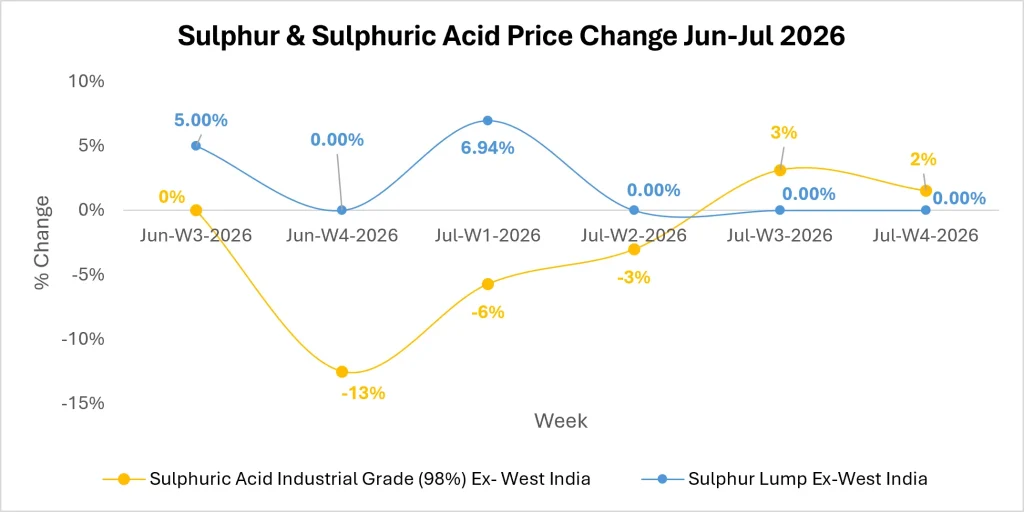
Source: Price Watch™ Sulphur & Sulphuric Acid Prices
Geopolitical Risk Is Reshaping Sulphur Supply
The current market pressure is being driven by two major developments.
The first is continued disruption to Middle Eastern trade flows. A significant share of globally traded elemental Sulphur originates in the Middle East, making shipping conditions around the Strait of Hormuz critical for international supply.
Higher freight risks and logistical disruptions have reduced cargo availability for import-dependent regions.
The second factor is tighter export availability from China. Greater emphasis on domestic fertilizer production and industrial demand has reduced export volumes, leaving overseas buyers competing for fewer tonnes in the international market.
These developments have tightened supply at the same time, amplifying pressure across global markets.
The Impact Extends Well Beyond the Chemical Industry
Agriculture is among the first sectors to feel the impact. Sulphuric Acid is an essential raw material for producing phosphate fertilizers such as DAP and MAP. Higher Sulphur and acid costs increase fertilizer production expenses and can eventually raise farming input costs.
Battery materials are also affected. High Pressure Acid Leach (HPAL) facilities in Indonesia require substantial volumes of Sulphuric Acid to process nickel for EV battery production. Higher acid costs directly influence operating economics across the battery materials supply chain.
Copper mining faces similar challenges. Sulphuric Acid is widely used in copper leaching operations, meaning tighter availability and higher prices can increase production costs for mines in Chile and the African Copperbelt.
Sulphur Market Outlook
Unlike many commodities, Sulphur production cannot be increased simply because prices rise. Most elemental Sulphur is recovered as a byproduct of oil refining and natural gas processing, making supply dependent on activity in those industries rather than Sulphur prices alone.
That makes the months ahead particularly important. Shipping conditions through the Strait of Hormuz, refinery operating rates, fertilizer demand, and Chinese export policies will determine whether supply begins to recover or remains constrained.
The bigger question is no longer just where Sulphur prices move next. If one industrial feedstock sits at the centre of fertilizers, battery materials, and copper production, which supply chain feels the greatest pressure first?
Follow Price Watch™ on LinkedIn for real-time Sulphur and Sulphuric Acid market insights, price trends, supply chain intelligence, and global commodity updates.