

The white top kraftliner landscape (135–140 GSM, Uncoated FOB Gothenburg, Sweden) is showing signs of renewed volatility after weeks of choppy trading. Persistent cost inflation across hardwood and softwood pulp, energy, and freight has met cautious downstream demand from converters and box plants serving the wider European packaging belt, keeping prices under pressure.
Add to this the steady stream of mill-level price increase announcements through 2026, elevated global freight and logistics costs, and cautious inventory management by producers and buyers alike, and the result is a market where sentiment remains mixed.
For buyers, converters, and distributors sourcing through Gothenburg and other Northern European ports, navigating these dynamics is becoming increasingly challenging.
How White Top Kraftliner Prices Corrected Through Early Summer
Before the latest firming, the FOB Gothenburg, Sweden white top kraftliner market had been on a soft, corrective footing, driven by a combination of cautious buying and mixed demand signals. Weekly price tracking shows the benchmark grade opening W1-2026 down 3%, before stabilizing through W2 and W3 at 0% change as buyers and sellers found temporary equilibrium.
That stability proved short-lived. By W4-2026, prices corrected a further 3%, as converters continued to purchase mainly for immediate production needs and mills faced thin trading activity amid elevated stock levels.
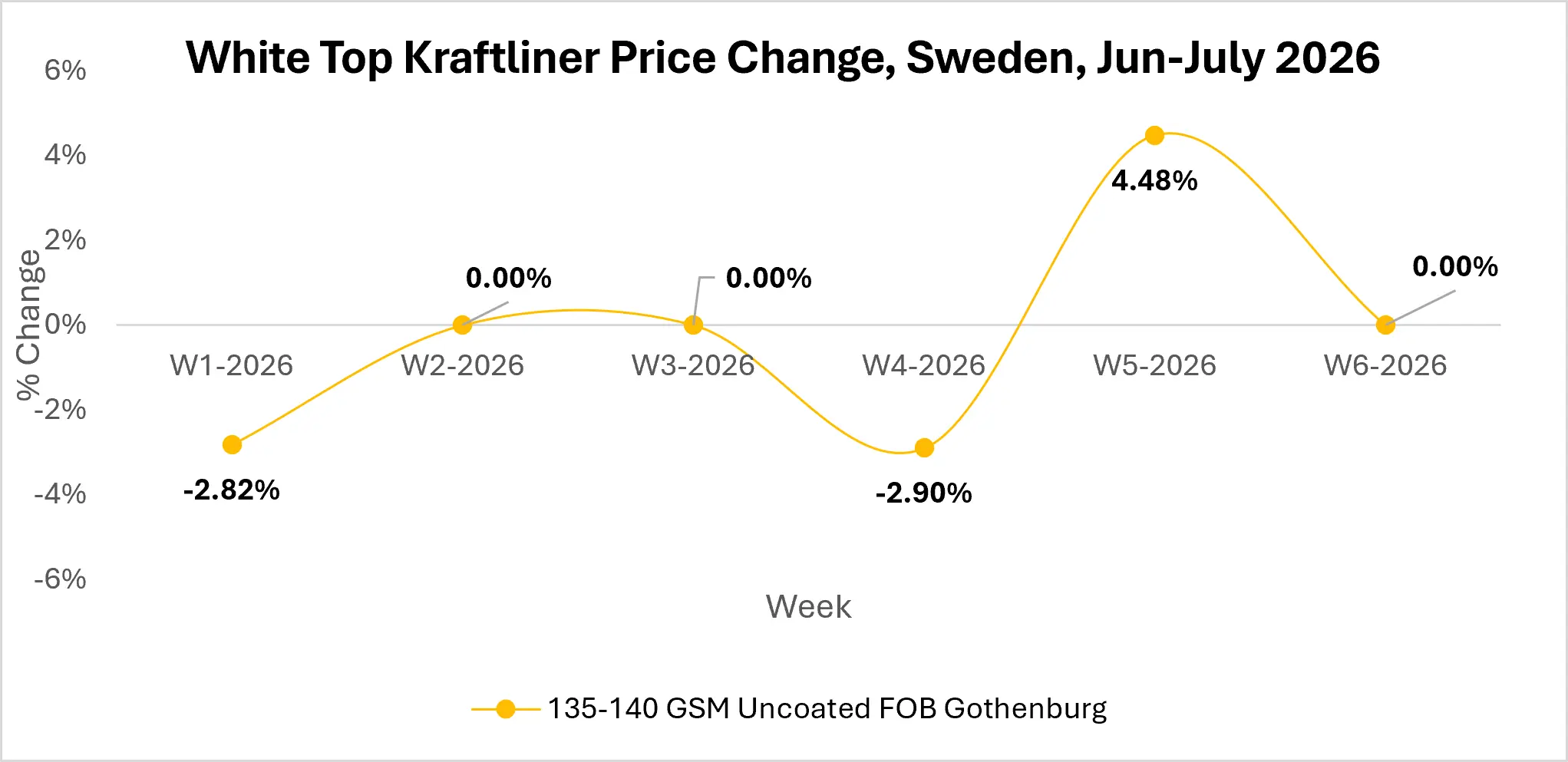
Source: Price Watch™ White Top Kraftliner
Several producers across the region cut or held operating rates steadily amid energy cost pressure and rising softwood and hardwood pulp costs, even as overall order books remained cautious. With demand subdued, sellers found limited room to hold firm on pricing, and the market entered a phase of restrained, defensive trading.
White Top Kraftliner Market Reacts to Mounting Cost Pressure
What’s happening in the FOB Gothenburg white top kraftliner market right now? Prices have swung sharply higher, with W5-2026 posting a strong 4% rebound before settling flat again in W6-2026. This reversal comes as producers move to pass through persistent cost inflation that has been building across the sector for months.
The clearest signal comes from Koehler Paper, which has announced a 6% price increase on recycled paper, effective for deliveries from September 1, 2026.
According to Price Watch™, the increase is driven by continued cost inflation across raw materials including hardwood and softwood pulp as well as energy costs, global freight and logistics, and ongoing supply chain pressures.
Despite implementing internal efficiency and process optimization measures, the company states the adjustment is necessary to maintain reliable supply and consistent product quality.
This is not an isolated move. It continues a series of price increases announced across the year: thermal paper in March, flexible packaging paper in March, fine paper and carbonless paper in March, thermal paper again in June, and now recycled paper in July, effective September. Meanwhile, buyers remain cautious, purchasing mainly to cover near-term needs, while mills work through elevated inventories built up during the earlier corrective phase.
White Top Kraftliner Market Outlook
So, what’s in store for Europe’s white top kraftliner market? After a period of correction followed by a sharp rebound, conditions point to continued price sensitivity rather than settled direction. Persistent inflation in hardwood and softwood pulp, energy, and freight costs is keeping producers focused on margin protection, while buyers remain measured in their purchasing pace.
Procurement teams and converters should expect continued volatility in the months ahead as Koehler’s September increase filters through and other European producers weigh similar moves on the back of firm pulp cost trends. All signs point to one clear trend: cost pressures across virgin fibre, energy, and logistics remain elevated, and further price action in either direction should not be ruled out.
Continued monitoring of hardwood and softwood pulp costs, freight rates, and downstream converter demand will be critical as the market navigates this transition phase. Producers with strong internal efficiency measures and disciplined supply management are best positioned to weather the current volatility.
Subscribe to Price Watch™ today to get weekly updates and stay informed on FOB Gothenburg white top Kraftliner price movements.
Follow Price Watch™ on LinkedIn for real-time raw material insights, pricing trends, supply chain intelligence, and market updates shaping global commodity markets.