Carbon Black Price Trend and Forecast

UNSPC code: 12171604
|
Weekly Update
|
Historical Data Since 2015
|
Forecast for 2026

carbon black Price Trends by Country

cnChina
inIndia
deGermany
usUnited States
plPoland
aeUnited Arab Emirates
vnVietnam

Global carbon black Spot Market Prices, Trend Analysis and Forecast

Price-Watch™ provides price assessments for Carbon Black across top trading regions:

Asia-Pacific

  • Carbon Black N220 FOB Qingdao, China
  • Carbon Black N330 FOB Qingdao, China
  • Carbon Black N660 FOB Qingdao, China
  • Carbon Black N220 FOB Mundra, India
  • Carbon Black N330 FOB Mundra, India
  • Carbon Black N660 FOB Mundra, India
  • Carbon Black N660 Ex-Jamnagar, India
  • Carbon Black N220 Ex-Jamnagar, India
  • Carbon Black N330 Ex-Jamnagar, India
  • Carbon Black N220 Ex-West India
  • Carbon Black N330 Ex-West India
  • Carbon Black N220 Ex-Kolkata, India
  • Carbon Black N330 Ex-Kolkata, India
  • Carbon Black N220 Ex-East India
  • Carbon Black N330 Ex-East India
  • Carbon Black N220 Ex-Delhi, India
  • Carbon Black N330 Ex-Delhi, India
  • Carbon Black N220 Ex-North India
  • Carbon Black N330 Ex-North India
  • Carbon Black N220 Ex-Chennai, India
  • Carbon Black N330 Ex-Chennai, India
  • Carbon Black N220 Ex-South India
  • Carbon Black N330 Ex-South India
  • Carbon Black Pigment Grade Ex-Delhi, India
  • Carbon Black Pigment Grade Ex-North India
  • Carbon Black N220 CIF Haiphong (China), Vietnam
  • Carbon Black N330 CIF Haiphong (China), Vietnam
  • Carbon Black N660 CIF Haiphong (China), Vietnam


Europe

  • Carbon Black N330 FD Hamburg, Germany
  • Carbon Black N550 FD Hamburg, Germany
  • Carbon Black N220 CIF Gdynia (India), Poland
  • Carbon Black N330 CIF Gdynia (India), Poland
  • Carbon Black N660 CIF Gdynia (India), Poland


North America

  • Carbon Black N330 Ex-Works USGC, USA
  • Carbon Black N220 CIF Charleston (India), USA
  • Carbon Black N330 CIF Charleston (India), USA
  • Carbon Black N660 CIF Charleston (India), USA


Middle East & Africa

  • Carbon Black N220 CIF Jebel Ali (India), UAE
  • Carbon Black N330 CIF Jebel Ali (India), UAE
  • Carbon Black N660 CIF Jebel Ali (India), UAE


Carbon Black Price Trend Q1 2026

In Q1 2026, the trends in Carbon Black price in the global market have shown considerable price increases in important regions. For instance, in the APAC market, the prices have increased by approximately 10% due to the conflict in the Middle East affecting the feedstock supply.

The Middle East conflict has been affecting naphtha and crude oil supplies, resulting in price pressures in terms of energy and crude prices. The rising prices of energy and crude oil have led to an increase in coal tar costs, which is the main feedstock used in Carbon Black production.

Therefore, the cost of production has gone up. Also, stable demand in the automotive and industrial sectors is another factor contributing to the price hike. In the US and Europe, prices have risen by about 2-3%.

China: Carbon Black Export prices FOB Qingdao, China; Grade- N220

The Carbon Black price in China has risen considerably in Q1 2026, seeing a rise in its price by about 13%. The Carbon Black price trend in China rise is mainly due to problems related to the supply of crude oil because of the conflicts that are going on in the Middle East.

The shutdown of the Strait of Hormuz, one of the major transit points for oil, has severely affected the supply of oil to the Asian nations, including China. In China, Carbon Black price in March 2026 increase because of feedstock prices being increased.

Furthermore, Sinopec has informed that it intends to cut down the refining process of the crude oil by about 11-13% because of disruption in the supply of crude.

India: Carbon Black Domestically traded prices Ex-Jamnagar, India; Grade- N220

The Carbon Black price in India has witnessed an uptick in Q1 2026, recording a rise of about 12%. Carbon Black price trend in India rise can be attributed to major disruptions that have occurred in the availability of essential raw materials for producing carbon black.

For instance, the Middle East, which provides almost half of the naphtha needs for Asia, is currently experiencing delays in shipments owing to the shutdown of the Strait of Hormuz, resulting in a lack of supply of raw materials.

In addition, the scarcity of LPG, along with the industrial utilization ban imposed by the government, has forced manufacturers to operate below normal capacity, resulting in high Carbon Black prices in India.

Despite all the supply chain disturbances and high cost of inputs, the Carbon Black price outlook in India continues to remain strong. In India, Carbon Black price in March 2026 has climbed more than 20% due to limited supply and prioritized deliveries to end consumers despite operating below capacity by manufacturers.

Germany: Carbon Black Domestically traded prices FD Hamburg, Germany; Grade- N330

Carbon Black price in Germany has witnessed an increase of around 4% during Q1 2026. This upswing has been fuelled by the rapid hike in oil and gas prices due to Iran’s military strikes against major oil and gas production facilities in the Middle East, especially the large-scale LNG plant in Qatar.

These factors have raised concerns about supply, especially since Europe is heavily dependent on imports for its energy needs, making it vulnerable to price fluctuations due to supply chain disruptions through the Gulf countries.

The Carbon Black price trend in Germany has been firm despite the rising pressure on energy costs and supply risks. In Germany, Carbon Black price in March 2026 has seen an increase of over 5%, owing to the steady rise in energy costs and global supply chain disruptions.

USA: Carbon Black Domestically traded prices Ex-Works USGC, USA; Grade- N330

According to Price-Watch™, in Q1 2026, Carbon Black prices in the USA have increased by around 2%. Carbon Black price trend in the USA rise has been driven by disruptions in global energy supply following Qatar’s halting of production at Ras Laffan and the closure of the Strait of Hormuz, which has impacted 20% of global LNG flows.

The disruption has affected U.S. energy supply, while the increase in WTI crude prices above $95 per barrel has raised energy costs in the U.S. These higher crude prices have also contributed to an increase in coal tar feedstock costs, subsequently driving up Carbon Black production expenses.

In March 2026, Carbon Black prices in the USA have surged by more than 7%. The continued energy supply disruptions and rising crude prices have further intensified price increases in the U.S. market.

Poland: Carbon Black Import prices CIF Gdynia (India), Poland; Grade- N220

In Q1 2026, Carbon Black prices in Poland have increased by around 8%. Carbon Black price trend in Poland rise has been largely influenced by disruptions in the global supply chain, particularly due to the ongoing Middle East conflict.

The closure of the Strait of Hormuz has impacted naphtha shipments, with supply shortages from major producers like Saudi Arabia affecting feedstock availability. Additionally, the LPG shortage and reduced operating rates in India, a key supplier, have resulted in limited material availability, further pushing up prices.

The increase in freight charges has added additional pressure, making shipments from India more expensive and contributing to the overall rise in costs. In March 2026, Carbon Black prices in Poland have surged by more than 20%. The combination of continued feedstock shortages, high freight rates, and supply disruptions has caused a significant increase in prices in the Polish market.

United Arab Emirates: Carbon Black Import prices CIF Jebel Ali (India), United Arab Emirates; Grade- N220

In Q1 2026, Carbon Black prices in the UAE have increased by around 11%. Carbon Black price trend in the UAE rise has been influenced by ongoing disruptions in the global supply chain, particularly due to the Middle East conflict.

The closure of the Strait of Hormuz has caused significant delays in naphtha shipments, impacting feedstock availability, particularly from key suppliers like Saudi Arabia. Additionally, the LPG shortage and production constraints in India, a major supplier of Carbon Black, have exacerbated the situation, leading to limited material availability.

The rising freight charges have also added to the cost burden, making shipments from India more expensive and further driving up prices. In March 2026, Carbon Black prices in the UAE have surged by more than 30%. The combination of these supply-side challenges, along with high transportation costs, has contributed to a substantial increase in prices in the UAE market.

Vietnam: Carbon Black Import prices CIF Haiphong (China), Vietnam; Grade- N220

In Q1 2026, Carbon Black prices in Vietnam have increased by around 10%. Carbon Black price trend in Vietnam rise has been driven by ongoing disruptions in the supply chain, particularly as China has faced significant challenges due to the Middle East conflict.

The closure of the Strait of Hormuz and its impact on global energy supplies have caused delays in feedstock deliveries, particularly naphtha, which is crucial for Carbon Black production. Additionally, the rising energy costs and freight charges have further contributed to the increased prices.

High transportation costs, coupled with reduced production rates in China, have resulted in limited material availability for export. In March 2026, Carbon Black prices in Vietnam have surged by more than 15%. This sharp increase has been driven by the compounded effects of supply shortages and high freight charges, further tightening availability and pushing prices higher in the Vietnamese market.

Carbon Black Price Trend Analysis: Q4 2025

In the last quarter of 2025, Carbon Black price trends across the globe have exhibited varied dynamics in major regions. Prices in the APAC region have declined by approximately 4-5% owing to a lower demand by the automotive industry and the industrial sectors especially the manufacture of tires and rubbers.

This is attributed to a lower level of consumption by these two industries. On the other hand, both the USA and Europe have witnessed stable prices increasing by about 1%.

The increase has been triggered by a stable demand for carbon black in both regions due to stable operations in the automotive industry and modest improvements in its application in the industrial sector. Supply wise, the situation has been quite stable with production matching demand thus enabling an increase in prices.

China: Carbon Black Export prices FOB Qingdao, China; Grade- N220

A downtrend has characterized Carbon Black price in China during the Q4 of 2025, experiencing a reduction of roughly 3%. The factors causing this downtrend in the Carbon Black price trend in China have included reduced domestic demand in the automotive and industrial sector, mainly for tires production.

Another factor that has characterized the downtrend is the weakened export demand because of the disruptions in global supply chains. The China Carbon Black price trend has continued to be stagnant due to low demand for Carbon Black.

In China, Carbon Black price in December 2025 recorded a growth of about 1%, due to increased export demand and stabilization of domestic consumption due to adjustment by manufacturing firms to match the demands in the major export markets. Improved domestic demand before holidays has also contributed to an increase in Carbon Black prices, as firms step up production to cover orders.

India: Carbon Black Domestically traded prices Ex-Jamnagar, India; Grade- N220

Carbon Black prices in India have shown a downward trend in Q4 2025 with a drop of about 6% in Carbon Black prices. The downward pressure in Carbon Black prices is primarily attributed to lower demand, slower consumption rates, and slower production in the automotive and industrial sectors, especially in tires.

Carbon Black price trend in India has been relatively low considering the above factors affecting the market demand for Carbon Black. In December 2025, carbon black prices in India fell by 2% owing to weak demand in the market and the seasonal year-end downturn. It should be noted that this fall in the price level is milder than in earlier quarters of the year.

Germany: Carbon Black Domestically traded prices FD Hamburg, Germany; Grade- N330

Carbon Black price in Germany is stable in Q4 2025 because of the stability of the demand side from major sectors including auto manufacturing and industries. Even with the prevailing economic conditions on a global scale, the demand side of Carbon Black has been stable leading to balanced market conditions hence no extreme price volatility. The Carbon Black price trend in Germany has been one of stability amidst balanced market conditions.

In Germany, Carbon Black price in December 2025 has fallen marginally by 1% mainly due to weakening demand towards the end of the year. Firms are now adjusting their demand behavior to suit the festive seasons hence the reduced purchase rate of the commodity.

USA: Carbon Black Domestically traded prices Ex-Works USGC, USA; Grade- N330

According to Price-Watch™, in Q4 2025, Carbon Black prices in the USA have increased by around 1%. This rise has been driven by steady demand from key industries like automotive and industrial sectors, where consumption has remained consistent.

Despite some global supply chain disruptions, the market has seen a slight upward movement in Carbon Black price trend in the USA due to stable production activity and balanced supply-demand dynamics. However, in December 2025, Carbon Black prices in the USA have remained stable, with a marginal decrease observed.

The slight decline has been attributed to the typical year-end slowdown in demand, with industries reducing their purchasing activity as the holiday season approached. This has resulted in a minor dip in prices, though the overall market has maintained relative stability throughout the month.

Poland: Carbon Black Import prices CIF Gdynia (India), Poland; Grade- N220

In Q4 2025, Carbon Black prices in Poland have decreased by around 9%. Carbon Black price trend in Poland decline has been influenced by reduced demand from the automotive and industrial sectors, impacting consumption across Europe.

As Poland imports Carbon Black from India, fluctuations in Indian pricing, combined with the weaker European demand, have contributed to the price decrease. The overall weak demand has led to lower production levels and cautious purchasing behaviour, further driving down prices. In December 2025, Carbon Black prices in Poland have decreased by around 3%.

This smaller decline has been linked to the typical year-end slowdown, with industries reducing their purchases and focusing on inventory management in preparation for the holiday season. Consequently, prices have continued to decrease, although at a slower rate.

United Arab Emirates: Carbon Black Import prices CIF Jebel Ali (India), United Arab Emirates; Grade- N220

In Q4 2025, Carbon Black prices in the UAE have decreased by around 8%. Carbon Black price trend in the UAE decline has been influenced by weaker demand from key sectors, such as automotive and manufacturing, particularly in tire production, where consumption has slowed.

The decrease in Indian prices, from which the UAE imports Carbon Black, has also contributed to the lower prices in the UAE market. Additionally, reduced demand in Europe and other major regions has impacted pricing.

In December 2025, Carbon Black prices in the UAE have decreased by around 3%. This slight reduction has been attributed to the usual year-end slowdown, with businesses adjusting their purchases and focusing on inventory management ahead of the holidays.

Vietnam: Carbon Black Import prices CIF Haiphong (China), Vietnam; Grade- N220

In Q4 2025, Carbon Black prices in Vietnam have decreased by around 5%. Carbon Black price trend in Vietnam decline has been influenced by weaker demand from key industries such as automotive and tire production, with reduced consumption in these sectors.

The prices of imports from China, Vietnam’s primary source, have followed a similar downward trend, largely due to the softening global demand and oversupply in the market. In December 2025, Carbon Black prices in Vietnam have increased by about 1%.

This increase has been driven by a slight rebound in demand as companies have ramped up production ahead of year-end activities and the holiday season, contributing to a marginal uptick in prices.

The global Carbon Black price trend in Q3 2025 has experienced a downward trend, with a 4-5% decline across key regions. In the APAC region, countries have faced weaker demand from the automotive and industrial sectors, leading to price reductions. The overall decline has been primarily driven by reduced consumption of Carbon Black in tire production and rubber manufacturing.

In North America, the market has also shown a decline, influenced by lower demand from key sectors and fluctuations in raw material prices. Meanwhile, Europe has experienced pressure on prices, with demand softening in the automotive sector and production constraints impacting pricing stability. Despite this, overall demand in Europe has remained steady, leading to more moderate price changes.

Globally, the Carbon Black market has continued to face pricing pressures, with regional supply chain disruptions and raw material fluctuations impacting the market across all regions. The outlook has remained uncertain, with continued challenges expected in the near term.

China: Carbon Black Export prices FOB Qingdao, China, Grade- N220.

In Q3 2025, the Carbon Black price trend in China has followed a downward movement reflecting a 4% adjustment during the quarter. The price trend has been influenced by weaker demand from tire and rubber manufacturing sectors, combined with fluctuations in feedstock costs and regional supply dynamics. Despite stable production levels, the reduced consumption has put pressure on the market, leading to softer pricing.

In September 2025, Carbon Black prices in China have experienced an upward adjustment, with a 2% improvement from the previous month. This short-term rise has reflected slight recovery in demand and better supply chain conditions. Overall, the market has remained under close observation, with ongoing industrial demand and raw material availability likely to influence future price movements. The global and domestic factors have continued to shape the pricing trend in China’s Carbon Black market.

India: Carbon Black Domestically traded prices Ex-Jamnagar, India, Grade- N220.

In Q3 2025, the Carbon Black price trend in India has shown a downward movement, with a 3% adjustment during the quarter. The price trend has been influenced by weaker demand in tire and industrial rubber sectors, coupled with volatility in feedstock prices and regional supply constraints. Reduced consumption from key end-use sectors has put pressure on overall pricing.

In September 2025, the Carbon Black prices in India have continued their downward movement, with a further 3% adjustment from the previous month. This sustained softness has indicated that the market has been facing ongoing challenges, as demand has remained subdued and supply chain conditions have been fluctuating.

The combination of weak domestic demand, feedstock cost volatility, and regional supply pressures has continued to shape the pricing dynamics. The market has been expected to remain under pressure in the near term unless demand recovers or supply chain conditions stabilize.

Germany: Carbon Black Domestically traded prices FD Hamburg, Germany, Grade- N330.

In Q3 2025, the Carbon Black price trend in Germany has followed a downward movement, with a 6% adjustment during the quarter. The price trend has been influenced by reduced demand from automotive and industrial sectors, where Carbon Black is essential for tire and rubber product manufacturing.

Fluctuations in feedstock costs, combined with regional supply imbalances, have affected market pricing. Despite steady production levels, subdued consumption has put downward pressure on prices. In September 2025, Carbon Black prices in Germany have continued their decline, with a further 3% adjustment from the previous month.

This persistent softness has reflected ongoing market challenges, as industrial demand has remained weak and supply chain factors have been impacting pricing stability. The market has been expected to continue experiencing adjustments in the near term, with price dynamics likely being influenced by shifts in demand, feedstock costs, and regional production conditions.

USA: Carbon Black Domestically traded prices Ex-Works USGC, USA, Grade- N330.

In Q3 2025, the Carbon Black price trend in the USA has followed a downward movement, with a 4% adjustment during the quarter. The price trend has been influenced by weaker demand from the automotive and industrial rubber sectors, where Carbon Black is widely used for tires and rubber products. Feedstock cost fluctuations and regional supply constraints have contributed to softer pricing.

In September 2025, Carbon Black prices in the USA have experienced an upward adjustment, with a 2% rise from the previous month. This short-term improvement has reflected a temporary recovery in demand and more stable supply conditions. Despite the September increase, the market has remained under pressure, with overall pricing dynamics being influenced by demand fluctuations, feedstock volatility, and regional supply factors. The US Carbon Black market has been expected to continue experiencing moderate adjustments in the near term.

Poland: Carbon Black Import prices CIF Gdynia (India), Poland, Grade- N220.

In Q3 2025, the Carbon Black price trend in Poland has followed a downward movement, with a 4% adjustment during the quarter. The price trend has been influenced by weaker demand from tire and industrial rubber sectors, coupled with feedstock cost volatility. Reduced industrial consumption has put pressure on market pricing.

In September 2025, Carbon Black prices in Poland have continued its downward trajectory, with a further 5% adjustment from the previous month. This sustained softness has reflected ongoing challenges in meeting demand while managing supply chain constraints. The combination of subdued demand and feedstock cost fluctuations has shaped the pricing dynamics in the region. The market has likely remained under pressure in the near term unless demand strengthens or supply chain conditions improve.

United Arab Emirates: Carbon Black Import prices CIF Jebel Ali (India), United Arab Emirates, Grade- N220.

According to PriceWatch, In Q3 2025, the Carbon Black price trend in the United Arab Emirates has followed a downward movement, with a 4% adjustment during the quarter. The price trend has been influenced by reduced demand from automotive and industrial sectors and by fluctuations in feedstock availability. Despite stable production, lower consumption has put pressure on prices.

In September 2025, the Carbon Black price trend in the United Arab Emirates has continued its downward movement, with a further 4% adjustment from the previous month. This ongoing decline has indicated that market conditions have remained challenging, with demand still subdued and supply chain pressures being felt across the region. The market has been expected to experience continued pricing adjustments until industrial demand improves, or feedstock and supply chain conditions stabilize.

Vietnam: Carbon Black Import prices CIF Haiphong (China), Vietnam, Grade- N220.

In Q3 2025, the Carbon Black price trend in Vietnam has followed a downward movement, with a 5% adjustment during the quarter. The price trend has been influenced by weaker demand from the automotive and industrial sectors and by fluctuations in feedstock availability. Production levels have remained steady, but lower industrial consumption has put downward pressure on prices.

In September 2025, Carbon Black prices in Vietnam have experienced a marginal upward adjustment, reflecting slight improvements in demand and supply chain conditions. This small positive shift has indicated that while demand has still been soft, supply chain stability has been supporting price resilience. The market has been expected to continue experiencing moderate adjustments in the near term, with future trends being influenced by industrial demand and feedstock cost fluctuations.

According to the PriceWatch, In Q2 2025, the Chinese Carbon Black market has experienced notable price declines, with the N220 grade now priced at USD 1003 per metric ton, reflecting a significant drop of 17.6%, and the N330 grade at USD 910 per metric ton, down by 15.4%. These price reductions are primarily driven by fluctuations in crude oil prices, changes in demand and supply chain issues. Any changes in crude oil prices have a direct impact on the cost structure of Carbon Black.

In Q2 2025, crude oil prices saw a marked decline compared to Q1 2025, largely due to concerns about a global economic slowdown and reduced demand from major economies. This decrease in crude oil prices lowered the cost of feedstock for Carbon Black production, contributing to the price reductions for both the N220 and N330 grades.

Additionally, the demand for Carbon Black, used extensively in the automotive, rubber, and plastics industries, has been relatively weak in Q2. The automotive sector has faced challenges, with a slower than expected recovery in manufacturing and tire production.

The combination of reduced demand and lower feedstock costs has driven down Carbon Black prices. Overall, the Carbon Black market has faced downward pricing trends, influenced by a combination of volatile crude oil prices, lower demand, and logistical hurdles.

According to the PriceWatch, In Q2 2025, the Indian Carbon Black market, specifically for the N220 and N330 grades Ex-Jamnagar, has seen a moderate increase in prices despite the overall decrease in crude oil prices during the quarter. The N220 grade is currently priced at USD 1318 per metric ton, reflecting a 1.9% increase, while the N330 grade is priced at USD 1169 per metric ton, up by 1.7%.

This price fluctuation can be attributed to a combination of factors, primarily the demand for Carbon Black in key sectors, including automotive, tire manufacturing, and rubber industries, which has shown a stronger than expected recovery in the second quarter. Despite the drop in crude oil prices, which typically lowers the cost of feedstocks used in Carbon Black production, the increased demand has offset the impact of lower raw material costs.

Additionally, there has been an uptick in manufacturing activity in industries that use Carbon Black for plastics, coatings, and other applications. Overall, the increase in prices for Carbon Black grades N220 and N330 in India reflects strong demand trends, which have allowed the market to remain resilient despite fluctuations in crude oil prices. 

During Q1 2025, the Carbon Black market in China was subjected to a bearish trend due to weak demand and seasonal production slumps. N220 FOB Qingdao prices fell by 0.5%, coming in at approximately USD 1220/MT, while N330 FOB Qingdao experienced a fall of 1.7%, reaching about USD 1075/MT.

The market downtrend was fueled by the Lunar New Year holidays, which extended factory closures and lowered operating levels in the tire and rubber industries. This cyclical disruption clipped procurement activity and placed downward pressure on prices.

Furthermore, comfortable inventory levels, weakening feedstock prices, and increasing regional competition from lower-cost producers fueled the price drop. In general, the Chinese Carbon Black market was downbeat in Q1 2025, as buyers took a wait-and-see stance amidst poor near-term demand visibility.

During Q1 2025, the Indian local Carbon Black market saw a mixed trend where N220 Ex-Jamnagar prices went up by 0.5% to around USD 1294/MT, while N330 Ex-Jamnagar decreased by 1.8% to around USD 1150/MT. The hike in N220 prices was propelled by firm demand from the rubber and tire industries, supported by a snug supply-demand equation in the market.

Nonetheless, N330 prices came under pressure due to weaker demand in some segments, such as the automotive and industrial uses, affecting overall consumption. Seasonal influences and prudent buying behaviour in anticipation of the fiscal year-end also supported the mixed market trend. In total, although N220 remained resilient, N330 battled weaker demand, leading to a relatively subdued overall market trend during Q1 2025. 

Carbon Black Price Trend Analysis: Q4 2024

In Q4 2024, Carbon Black prices in China rose moderately as companies started procuring for the holiday season. Prices for N220 FOB Qingdao increase by 3.6%, settling around USD 1220/MT, while N330 FOB Qingdao saw a 3.1% rise, reaching approximately USD 1090/MT. In contrast, markets in Germany saw a decline in prices, driven by weak demand, destocking activities, and unfavourable weather conditions that hindered manufacturing.

These regional discrepancies highlight the contrasting market dynamics, with China benefiting from pre-holiday procurement, while Germany faced challenges that pressured prices downward. Factors like seasonal demand and external conditions played a significant role in shaping the price trends across these regions during the quarter.

In Q4 2024, the Indian domestic Carbon Black market experienced a bearish trend, with prices for both N220 Ex-Jamnagar and N330 Ex-Jamnagar showing mixed movements compared to the previous quarter. N220 prices remained largely unchanged, settling at around USD 1290/MT, while N330 prices saw a slight decline of 1.2%, reaching approximately USD 1170/MT.

The market slowdown was attributed to the seasonal dip in demand as the year ended, with many industries reducing procurement activity ahead of the holiday season and year-end inventory adjustments. Additionally, weaker consumption from the tire and rubber sectors, combined with global price corrections, put downward pressure on local prices.

Buyers were more cautious, preferring to deplete existing stocks before making new purchases. As a result, the market showed limited movement, reflecting typical year-end factors such as reduced industrial activity and cautious spending in anticipation of the new year.

In Q3 2024, the Carbon Black market in China recorded an upward trend, driven by a gradual recovery in demand from the automotive and tire manufacturing sectors. N220 FOB Qingdao prices increased by 2.8%, reaching around USD 1180 per metric ton, while N330 FOB Qingdao rose by 2.1%, settling at approximately USD 1060 per metric ton.

The pickup in domestic consumption, particularly from tire and rubber goods producers, contributed to stronger market sentiment and firmer pricing. Seasonal restocking activity also supported buying interest across key industrial regions. In contrast, the German Carbon Black market remained weak during the same period, weighed down by sluggish demand from the European automotive sector and reduced production rates.

Buyers in Europe maintained a cautious approach amid ongoing economic uncertainty, limiting the pace of recovery. Overall, while China’s market saw moderate growth, regional disparities highlighted the uneven demand outlook across global Carbon Black markets in Q3 2024.

In Q3 2024, the Carbon Black market in the Indian domestic sector saw a strong upward trend, with prices for both N220 Ex-Jamnagar and N330 Ex-Jamnagar increasing significantly from the previous quarter. N220 prices rose by 3.8%, reaching around USD 1290/MT, while N330 prices saw a 5.9% increase, settling at approximately USD 1190/MT.

This surge was driven by a recovery in demand, particularly from the tire manufacturing sector, which ramped up production following the slower months in Q2. Additionally, tighter supply conditions and restocking activity led to stronger market sentiment.

Buyers responded to the improved demand outlook by securing more material, further supporting price increases. Overall, the Indian Carbon Black market showed resilience and growth in Q3 2024, fuelled by improved industrial activity and an optimistic market outlook.

In Q2 2024, the Carbon Black market in China witnessed a sharp downward trend, primarily due to weakened demand and ample supply in the domestic market. Prices for N220 FOB Qingdao dropped significantly by 13.6%, reaching around USD 1150/MT, while N330 FOB Qingdao declined by 13.3%, settling at approximately USD 1040/MT. The substantial price correction was largely driven by reduced procurement from tire and rubber manufacturers amid sluggish industrial activity and economic headwinds.

Additionally, high inventory levels from the previous quarter and cautious purchasing behaviour among downstream buyers further pressured the market. Seasonal slowdown in tire and automotive output during the quarter also contributed to the weak demand environment. As a result, suppliers were compelled to lower prices to stimulate buying interest, leading to a bearish market sentiment across the Chinese Carbon Black industry in Q2 2024.

During Q2 2024, Carbon Black prices in the Indian domestic market were in a bearish trend, and both N220 Ex-Jamnagar and N330 Ex-Jamnagar prices registered significant falls. N220 prices fell by 6.9%, going down to about USD 1240/MT, while N330 prices went down by 7.9%, ending at around USD 1120/MT. The decline was mainly fuelled by weak demand from major industries like tire production, as slower economic activity and lower production levels affected purchasing.

The seasonal decline, combined with reduced inventory turnover, helped drive this downward pressure. Also, weakening global prices and constrained domestic consumption caused buyers to become more conservative in their purchasing tactics. In total, the Indian Carbon Black market experienced downward pressure on prices during Q2 2024 due to a mix of decreasing demand and market adjustments.

During Q1 2024, China’s Carbon Black market experienced a soft downward trend, impacted largely by the seasonal dip typical of the Chinese New Year holidays. N220 FOB Qingdao prices decreased by 2.1% to about USD 1330/MT, and N330 FOB Qingdao slipped by 2.4% to about USD 1200/MT.

The longer holiday period caused short-term factory closures and lower operating levels at key downstream sectors like tire and rubber production. This suspension of production and procurement activity tempered market momentum and curtailed buying interest early in the quarter.

While demand recovered later in Q1 when production resumed, it was not strong enough to overcome the downside price pressure. Holiday-linked inactivity coupled with risk-averse restocking helped push the soft market mood seen during the quarter.

In Q1 2024, the Carbon Black market in the Indian domestic landscape exhibited a mixed trend, reflecting varied dynamics across different grades. Prices for N220 Ex-Jamnagar declined by 2%, settling around USD 1330/MT, primarily due to subdued demand from the tire and rubber sectors, along with sufficient inventory levels from the previous quarter.

In contrast, N330 Ex-Jamnagar saw a 3.9% price increase, reaching approximately USD 1220/MT, supported by a moderate rebound in demand for lower-grade rubber applications and selective restocking by downstream manufacturers. The market was also influenced by regional consumption patterns and operational variations across manufacturing hubs.

While the overall sentiment remained cautious, the divergence in price movements between the two grades reflected the differing consumption trends and procurement strategies across user industries during Q1 2024.

Technical Specifications of Carbon Black Price Trends

Product Description

Carbon Black is a fine black powder composed mainly of elemental carbon, produced through the incomplete combustion or thermal decomposition of hydrocarbons. It is manufactured in different grades, depending on particle size, surface area, and structure, with common production methods including furnace black, channel black, and acetylene black. Carbon Black is valued for its high surface area and ability to enhance the properties of materials, improving attributes like durability and UV protection. Its production is energy-intensive, requiring precise control over temperature and conditions. While widely used in various industrial processes, Carbon Black production can pose environmental concerns, particularly regarding emissions and pollution.

Identifiers and Classification:

  • CAS No – 1333-86-4
  • HS Code – 28030010
  • Molecular Formula – C
  • Molecular Weight[g/mol] – 12.01


Carbon Black Synonyms:

  • Furnace Carbon Black


Carbon Black Grades Specific Price Assessment:

  • N220 Price Trend
  • N330 Price Trend
  • Pigment Grade Price Trend
  • N660 Price Trend
  • N550 Price Trend


Carbon Black Global Trade and Shipment Terms

  • Quotation Terms (Product & Country Specific): 35-40 MT, 25-28 MT, 10-15 MT
  • Packaging Type (Product & Country Specific): 25 Kg Bag


Incoterms Referenced in Carbon Black Price Reporting

Shipping Term  Location  Definition 
FOB Qingdao  Qingdao, China  Carbon Black export price from China 
FOB Mundra  Mundra, India  Carbon Black export price from India 
Ex-Jamnagar  Jamnagar, India  Domestically Traded Carbon Black price in Jamnagar 
Ex-West India  West India  Domestically Traded Carbon Black price in West India 
Ex-Kolkata  Kolkata, India  Domestically Traded Carbon Black price in Kolkata 
Ex-East India  East India  Domestically Traded Carbon Black price in East India 
Ex-Delhi  Delhi, India  Domestically Traded Carbon Black price in Delhi 
Ex-North India  North India  Domestically Traded Carbon Black price in North India 
Ex-Chennai  Chennai, India  Domestically Traded Carbon Black price in Chennai 
Ex-South India  South India  Domestically Traded Carbon Black price in South India 
FD Hamburg  Hamburg, Germany  Domestically Traded Carbon Black price in Germany 
Ex-Works USGC  USGC, USA  Domestically Traded Carbon Black price in USA 
CIF Gdynia (India)  Gdynia, Poland  Carbon Black import price in Poland from India 
CIF Jebel Ali (India)  Jebel Ali, United Arab Emirates  Carbon Black import price in United Arab Emirates from India 
CIF Haiphong (China)  Haiphong, Vietnam  Carbon Black import price in Vietnam from China 
CIF Charleston (India)  Charleston, USA  Carbon Black import price in USA from India 

*Quotation Terms refers to the quantity range specified for the Carbon Black being quoted or offered in a commercial transaction.

**Packaging Type refers to standard packaging size commonly used for Carbon Black packing, ease of handling, transportation, and storage in industrial and commercial applications.


Key Carbon Black Manufacturers and their brands

Brand Name  Manufacturer 
Orient Black  PCBL Chemical Limited 
NA  Himadri Speciality Chemical Ltd 
NA  Aditya Birla Management Corporation Pvt. Ltd. 
NA  Beilum Carbon Chemical Limited 
NA  Jiangxi Black Cat Carbon Black Inc. Ltd. 
NA  Shanxi Sanqiang New Energy Science and Technology Co., Ltd. 
NA  Hangzhou Nature Technology Co., Ltd 
REGAL®  Cabot Corporation 
NA  Orion Engineered Carbons S.A. 
NA  International CSRC Investment Holdings Co., Ltd 

Carbon Black Industrial Applications

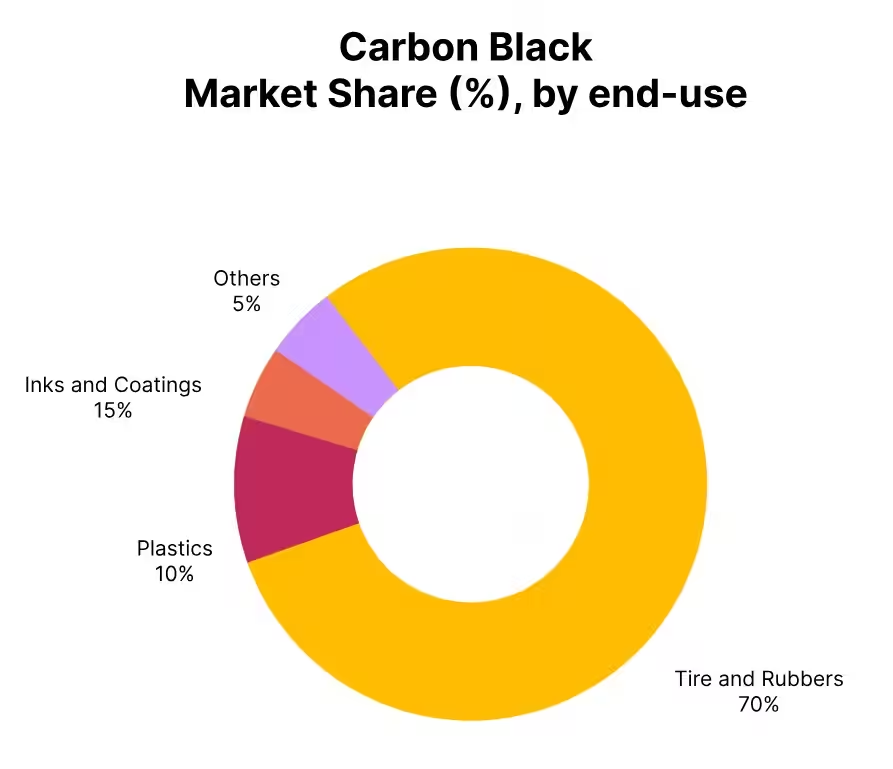
carbon black market share end use

Historically, several events have caused significant fluctuations in Carbon Black prices

  • Global Logistics and Shipping Crisis (2021-Present): The global logistics and shipping crisis has severely impacted the Carbon Black market, leading to supply chain disruptions and increased costs. Delays in the transport of key raw materials, such as Coal Tar, have reduced production rates and caused plant shutdowns. Rising freight costs from container shortages and higher fuel prices have also made Carbon Black more expensive for industries like automotive. Supply chain volatility has caused stock shortages, complicating manufacturers’ ability to meet demand.
  • Global Energy Crisis (2021-2023): The 2021-2023 energy crisis significantly impacted Carbon Black production, leading to supply constraints and price increases. Rising energy costs, driven by disruptions in natural gas supplies, higher oil prices, and supply chain issues, escalated operating expenses for Carbon Black producers, particularly in Asia. This led to reduced production rates and even plant shutdowns, tightening global supply and pushing prices higher. Transportation costs also surged, further exacerbating the situation. The crisis prompted Carbon Black producers to explore energy-efficient technologies and diversify energy sources to reduce future risks, while price volatility and supply instability affected downstream industries like automotive.
  • COVID-19 Pandemic (2020-2022): The COVID-19 pandemic caused widespread production halts as lockdowns forced manufacturing plants to close, delaying new vehicle releases and disrupting parts supply. Global supply chains, dependent on just-in-time manufacturing, faced severe disruptions, with critical component shortages like semiconductors leading to delays and cost increases. Consumer demand also plummeted due to economic uncertainty and lockdowns, further impacted by car dealership closures. A shift towards private vehicles and electric vehicles (EVs) emerged, driven by health concerns and online sales trends. Though the industry began to recover by late 2020, semiconductor shortages slowed the recovery, with Asia-Pacific rebounding faster than other regions.

Why Price Watch™?

Price Watch™ is your trusted resource for tracking global carbon black price trends. Our platform delivers real-time data and expert analysis, offering deep insights into the key factors driving price fluctuations in the carbon black market. By monitoring critical events such as geopolitical tensions, supply chain disruptions, and economic shifts, Price Watch™ keeps you fully informed of market dynamics.

In addition, Price Watch™ provides detailed forecasts and updates on production capacities, enabling you to anticipate market changes and make well-informed decisions. With Price Watch™, you gain a competitive edge in understanding all the elements that influence carbon black prices worldwide. Stay ahead of the curve with Price Watch’s™ reliable, accurate, and timely carbon black market data.

Track Price Watch's™ carbon black price assessment on a weekly basis since 2015 onwards, along with short-term forecasts, and get access to the detailed report in a downloadable format.

Carbon Black Market Price Trend published by Price Watch™ reflect prevailing spot market conditions, derived from independent research, verified trade inputs, and proprietary market intelligence as of the publication date. Prices are published on the specified Incoterm and represent indicative base market levels, exclusive of applicable taxes, VAT, duties, tariffs, and other statutory charges. Actual transaction values may vary depending on volume, credit terms, contractual structure, and other negotiated conditions. Market prices are inherently subject to volatility, liquidity dynamics, regulatory changes, and evolving trade activity. The information provided is for reference and benchmarking purposes only and does not constitute an offer, recommendation, or guarantee of transactional outcomes. Users should exercise independent commercial judgment and assess their specific contractual, regulatory, tax, and application requirements before making business decisions. Price Watch™ assumes no liability for decisions taken based on this information.

The pricing of Carbon Black production is influenced by factors such as the cost of feedstocks (e.g., crude oil, natural gas), production methods (energy-intensive processes), and energy prices. Supply and demand dynamics, environmental regulations, and transportation costs also play key roles.

Additionally, technological advancements, market competition, and geopolitical factors (e.g., trade policies) can impact pricing. The specific grade and quality of Carbon Black further influences its cost, with higher-performance grades typically being more expensive.

Fluctuations in Coal Tar prices have a significant impact on Carbon Black production costs, as coal tar is a key feedstock in processes like the thermal black process. When coal tar prices rise, feedstock costs increase, which can either reduce profit margins or lead to higher Carbon Black prices for customers.

Supply chain disruptions, geopolitical factors, and the volatility of coal tar prices can further exacerbate cost increases. If coal tar becomes too expensive, manufacturers may shift to alternative feedstocks, but this transition can involve additional costs. Ultimately, price hikes may limit supply, driving up market prices for Carbon Black.

The current price trend for coal tar is shaped by factors such as fluctuations in crude oil prices, production capacities, and the global recovery in demand. In the near term, coal tar prices may experience volatility due to ongoing supply chain disruptions and shifts in feedstock prices.

For procurement managers, this indicates potential price fluctuations for Carbon Black in the future market, making it crucial to closely monitor market developments that could affect procurement strategies.

Carbon Black is a crucial material used in a variety of industries, including automotive, rubber manufacturing, coatings, and electronics. It is primarily used as a reinforcing agent in tires, rubber products, and as a black pigment in coatings and inks. Its price plays a critical role in production costs, particularly in tire manufacturing, where it is used to enhance durability and performance. Price-Watch™ tracks Carbon Black prices to help businesses stay informed about market movements and cost trends.

Carbon Black prices fluctuate depending on factors such as region, grade, feedstock costs (like coal tar), freight rates, and demand from industries like automotive, rubber manufacturing, coatings, and electronics. Prices are usually quoted per metric ton and can vary based on supply-demand dynamics, particularly influenced by fluctuations in raw material costs and regional supply chain disruptions. Price-Watch™ provides up-to-date price assessments across key global markets.

Carbon Black prices are influenced by feedstock costs like coal tar and oil, demand from automotive, rubber, coatings, and electronics industries, and production conditions. Price trends are shaped by raw material fluctuations, supply-demand balance, and seasonal demand. Recent movements have been driven by feedstock availability, supply disruptions, and shifts in demand, especially from the automotive and tire sectors, with geopolitical and energy factors also playing a role.

Major consumers of Carbon Black include the tire industry, automotive manufacturers, and industrial rubber goods producers. It is primarily used in tire manufacturing to enhance wear resistance and durability. Carbon Black is also used in coatings, plastics, and electronics for its conductive and reinforcing properties. The demand from these industries drives a significant portion of Carbon Black consumption. Price-Watch™ tracks consumption trends across these sectors.

Carbon Black is produced by the controlled combustion or thermal decomposition of hydrocarbons, such as coal tar, in specialized reactors. The resulting fine carbon particles are processed into different grades for applications like tire production, coatings, and plastics, where it serves as a reinforcing agent and provides conductive properties.

The largest exporters of Carbon Black are China, followed by the India and United States. Export volumes are influenced by production capacity, feedstock availability, and demand from global industries such as automotive, rubber manufacturing, and coatings. Competitive pricing and market conditions also play a crucial role in shaping trade dynamics. Price-Watch™ monitors global trade flows and supply availability.

Overall, the supply of Carbon Black is generally sufficient to meet global demand. However, temporary shortages can occur due to feedstock constraints, production disruptions, or logistical issues, along with fluctuations in demand from key sectors such as automotive, rubber, and industrial manufacturing. Price-Watch™ closely tracks supply-demand balances to highlight potential shortages or oversupply situations.

Carbon Black grades are classified based on their particle size, structure, and surface area, which influence key performance characteristics such as conductivity, reinforcement, and colour. These variations make different grades suitable for diverse industrial applications, including tires, rubber products, and coatings. Prices for Carbon Black vary depending on factors such as the specific properties of the grade, its intended use, and the production method employed. Price-Watch™ provides grade-wise price assessments for better market clarity.

When demand suddenly increases, typically driven by higher activity in industries like automotive, tire manufacturing, and industrial applications, prices generally rise. Lead times may lengthen, and buyers could face limited availability as production struggles to keep up with demand. Price-Watch™ captures these shifts in real time.

Carbon Black is primarily produced from coal tar, and any increase in the prices of these feedstocks directly raises production costs. As feedstock prices rise, manufacturers may pass these increased costs onto buyers, which in turn impacts Carbon Black prices. Price-Watch™ analyses coal tar and Carbon Black price correlations to explain cost movements.

Regional prices for Carbon Black vary due to factors such as local availability, manufacturing capacity, feedstock costs (coal tar), energy expenses, freight rates, import duties, and domestic demand levels. Additionally, regional market conditions, including supply chain disruptions or fluctuations in feedstock availability, can further influence pricing. Price-Watch™ tracks regional differentials to highlight pricing gaps across markets.

The Carbon Black price outlook largely depends on trends in feedstock costs (coal tar and oil), demand from key industries such as automotive, tire manufacturing, and coatings, production capacity changes, and overall global economic conditions. Price-Watch™ publishes regular forecasts projecting price direction over the next 3 months.

Yes. Reliable forecasts help buyers plan procurement, manage inventory, negotiate contracts, and control production costs. Price-Watch™ forecasts support smarter purchasing and budgeting decisions.

Global events such as trade policy changes, shipping disruptions, energy price fluctuations, or geopolitical tensions can impact the availability of key feedstocks like coal tar, influence production rates, and disrupt global trade flows, leading to fluctuations in Carbon Black prices. Price-Watch™ provides timely updates on such market-moving events.

Price-Watch™ gathers data from producers, converters, traders, and buyers to publish transparent Carbon Black price assessments, market reports, and forecasts, helping stakeholders stay ahead of market trends.