

Chromium Price Trend and Forecast

UNSPC code: 31101503
|
âźł Weekly Update
|
Historical Data Since 2015
|
Forecast for 2026
  • Commodity Pricing

chromium Price Trends by Country

nlNetherlands
usUnited States
cnChina
inIndia

Global chromium Spot Market Prices, Trend Analysis and Forecast

Price-Watch’s most active coverage of Chromium price assessment:

  • (Cr-99%min, Fe-0.3%%max) FOB Shanghai, China
  • (Cr-99%min, Fe-0.3%%max) CIF Nhava Sheva (China), India
  • (Cr-99%min, Fe-0.3%%max) CIF Houston (China), USA
  • (Cr-99%min, Fe-0.3%%max) CIF Rotterdam (China), Netherlands

Chromium Price Trend Q3 2025

In Q3 2025, the global chromium market has been moving towards a negative price trend caused by reduced demand from key sectors such as stainless steel and construction, especially in developed markets. Prior to the negative price trend, some regional price spikes occurred due to supply chain disruptions and increased environmental compliance costs.

However, supply chain issues have been easing, and, as a result of weakening consumption, supply fundamentals have strengthened. Regulatory pressures and high production costs have been compressing margins, particularly for high-cost producers, while previous quarters of inventory build-up may see destocking. As a result, chromium prices should decrease further in the near-term.

Netherlands

Chromium Import prices CIF Rotterdam (China), Netherlands, Grade- (Cr-99%min, Fe-0.3%max).

According to PriceWatch, In Q3 2025, the chromium price trend market in Netherlands witnessed a slight decline of 0.84% compared to Q2, reflecting a mild softening in demand from key downstream industries such as stainless-steel production. The chromium price trend in the Netherlands showed a modest downward adjustment after earlier upward momentum driven by supply constraints.

This decrease has been influenced by cautious buying behaviour, inventory carryover, and potential easing of supply side pressures. The 0.76% decrease in chromium prices in the Netherlands in September 2025 can be attributed to reduced demand from the stainless-steel industry amid slowing manufacturing activity.

Additionally, increased global supply, particularly from key exporting countries, have contributed to downward pressure on prices. While the Chromium market remains relatively stable, stakeholders should monitor pricing closely as the trend may impact margins and sourcing strategies heading into Q4.

USA

Chromium Import prices CIF Houston (China), USA, Grade- (Cr-99%min, Fe-0.3%max).

In Q3 2025, the chromium price trend in the USA showed a slight decline of 0.7% compared to Q2, driven by moderate demand shifts in key industries like stainless steel production and stabilized supply levels. This small price decrease indicates a period of price consolidation amid improved mining outputs and cautious market sentiment influenced by global trade uncertainties.

The 0.75% decrease in chromium prices in the USA in September 2025 has been attributed to a slight oversupply in the market, reducing demand driven price support. Additionally, fluctuations in global trade dynamics and raw material availability have contributed to this moderate price adjustment. Overall, the Chromium market is expected to maintain a relatively stable outlook heading into the next quarter.

China

Chromium Export prices FOB Shanghai, China, Grade- (Cr-99%min, Fe-0.3%max).

In Q3 of 2025, the chromium price trend in China experienced a 4.01% quarter over quarter decrease from Q2 2025. The decline has largely been influenced by the tempered demand from the stainless steel and alloy markets, reduced supply concerns from higher ore imports, and lower input costs from tighter environmental restrictions in Q2.

Although inventories built and speculative interest weakened, the market had maintained sensitivity to supply risk and have limited rebound from infrastructure activity. Overall, the quarter represented a change in chromium price momentum in China, from the stability seen in Q2 to a moderate decline.

The 1.84% decline in chromium prices in China during September 2025 has been attributed to weaker demand from the stainless steel and alloy producing markets which have been major consumers of chromium. Additionally, increased supply from laundered producers and slower export demand placed additional downward pressure on prices.

India

Chromium Import prices CIF Nhava Sheva (China), India, Grade- (Cr-99%min, Fe-0.3%max).

In the third quarter of 2025, the chromium price trend in India experienced a modest drop of 0.85% from the second quarter, signalling a mild cooling in market momentum after a strong first half of the year. This has been due to softened demand from the stainless-steel sector, seasonal slowdowns, and a stable supply of chrome ore in the market. Demand has been sufficient, yet there have been signs of softness, alongside an easing of cost pressures related to softer export demand.

The modest price drop indicates that the market has been stabilizing, rather than falling sharply, and prices are balancing out due to supply demand attributes. In September 2025, chromium prices in India fell by 0.77% due to softness in demand from the stainless steel and alloy industries, which have been the primary consumers of chromium.
Chromium Price Trend Analysis: Q2 2025

According to the PriceWatch, In Q2 2025, Chromium prices rose sharply by $8,909.53 per metric ton, FOB Shanghai an 8.63% increase, driven by geopolitical instability and rising tariffs. Disruptions in major supply regions like South Africa and Kazakhstan, due to labour unrest and logistical challenges, significantly constrained global output. Simultaneously, escalating trade tensions led to stricter tariffs on strategic metal exports, particularly from China and Russia, further limiting availability.

Western nations, aiming to secure critical mineral supply chains, imposed protective trade measures, prompting a wave of stockpiling by manufacturers reliant on Chromium for stainless steel and energy transition technologies. This combination of restricted supply, increased demand, and policy driven market fragmentation contributed to the substantial price spike.

According to the PriceWatch, In Q2 2025, Chromium prices in India rose by $9,331.50 per metric ton, CIF Nhava Sheva (China) a 7.03% increase, driven by global geopolitical instability and shifting tariff policies. Ongoing disruptions in major supply countries like South Africa and Kazakhstan, along with heightened sanctions and tariffs on exports from China and Russia, tightened global Chromium availability.

As India heavily depends on imports for its stainless steel and alloy industries, rising international prices and increased import duties led to higher domestic costs. Additionally, India’s efforts to localize critical mineral supply and reduce external dependence spurred increased procurement and stockpiling by manufacturers.

The combination of restricted global supply, higher import costs, and domestic demand growth especially from infrastructure and energy sectors contributed to the significant price escalation.

In Q1 2025, the chromium market experienced a notable price decline, with values falling by $8,221 per metric ton, FOB Shanghai marking a 1.01% decrease. This downward trend suggests a combination of softening demand and improved supply dynamics. Factors potentially influencing the price drop include reduced industrial activity in key consuming sectors such as stainless-steel manufacturing, shifts in global trade patterns, and stabilization in mining output following previous supply chain disruptions.

While the percentage decline appears modest, the significant absolute price drop underscores the high base value of chromium and the market’s sensitivity to macroeconomic indicators and inventory levels.

In Q1 2025, India’s chromium market experienced a notable price increase of $8,723 per metric ton, CIF Nhava Sheva (China) reflecting a 1.52% rise. This uptick is attributed to several factors, including a 21% year-on-year increase in ferrochrome production during the first half of FY2024–25, driven by higher stainless-steel production and increased demand for superior stainless-steel grades.

Additionally, the use of nickel pig iron (NPI) in stainless steel manufacturing has led to higher ferrochrome consumption. However, challenges such as deteriorating chrome ore grades and weak export demand, particularly from China, have impacted market dynamics. Despite these pressures, the price rise indicates a cautious optimism in the market, with expectations of improved demand following government infrastructure initiatives.

Chromium Price Trend Analysis: Q4 2024

In Q4 2024, the price of chromium experienced a notable decline, dropping by $8,304 per metric ton, FOB Shanghai representing a 5.94% decrease. This downturn reflects a combination of softer demand from key industrial sectors such as stainless-steel production and potential oversupply in the global market. Macroeconomic uncertainties, including slower growth in major consuming countries like China, likely contributed to weakened consumption patterns.

Additionally, increased output from major producers or a drawdown in strategic reserves may have added downward pressure on prices. This price movement signals a cooling phase in the chromium market after periods of volatility earlier in the year.

In the fourth quarter of 2024, chromium prices in India fell by $8,592 per metric ton, CIF Nhava Sheva (China) marking a 4.76% decline. This drop was primarily driven by subdued demand from key industries such as stainless steel and specialty chemicals, which are major end-users of chromium. Additionally, global supply outpacing demand and a slowdown in industrial activity contributed to the downward price pressure.

Despite these market challenges, companies like Vishnu Chemicals Ltd (VCL) are taking strategic steps to buffer the impact. VCL’s backward integration through the acquisition of a chrome ore mine in South Africa, along with its forward integration into chrome metal production, is aimed at improving supply stability and maintaining profitability amid market fluctuations.

In Q3 2024, the chromium market experienced a notable downturn, with prices declining by $8,829 per metric ton, FOB Shanghai representing a 0.95% decrease. This price shift reflects a combination of subdued demand from key end-use sectors, such as stainless steel and aerospace, and an oversupply from major producing regions.

The relatively modest percentage change, despite the significant absolute drop, suggests chromium was trading at a high baseline price, highlighting the market’s previous inflationary trend. Global economic uncertainties and a potential slowdown in industrial output likely contributed to this downward pressure, prompting cautious sentiment among buyers and producers alike.

In the third quarter of 2024, chromium prices in India saw a modest increase of $9,021 per metric ton, CIF Nhava Sheva (China) marking a 0.30% rise. This price movement was largely influenced by supply limitations due to reduced output from local producers who shifted focus towards manganese alloys, which offered higher profitability despite increased production costs. Furthermore, a major ferrochrome supplier withdrawing from the market further tightened spot availability.

In the second quarter of 2024, the price of chromium experienced a notable increase, rising by $8,914 per metric ton, FOB Shanghai which represents a 1.65% gain. This upward trend suggests tightening supply conditions or increasing demand in key industries such as stainless-steel manufacturing and aerospace. The modest percentage rise despite a substantial price jump in dollar terms indicates that chromium was already trading at a high base price.

Market dynamics, including geopolitical factors, export restrictions, or shifts in production from major suppliers like South Africa or Kazakhstan, may have contributed to this increase. Overall, the Q2 2024 price movement reflects a stable yet upward-pressured chromium market.

In Q2 2024, Chromium India experienced a notable price increase of $8,995 per metric ton, CIF Nhava Sheva (China) reflecting a 2.41% rise compared to the previous quarter. This upward adjustment highlights strengthening demand dynamics and potential supply constraints within the chromium market. The price hike may also be influenced by global raw material cost pressures and inflationary trends impacting input costs.

As a critical alloying element in stainless steel production, chromium’s price sensitivity to industrial activity suggests that this increase could affect downstream manufacturers, potentially leading to higher end-product prices. Overall, the 2.41% price growth indicates a cautiously optimistic market outlook for Chromium India, balancing steady demand against tightening supply factors.

In the first quarter of 2024, the chromium market experienced a notable downturn, with prices decreasing by $8,770 per metric ton, FOB Shanghai reflecting a 2.74% decline. This drop highlights a shift in supply-demand dynamics, potentially driven by increased global production, easing logistical constraints, or softened demand from key industries such as stainless steel and aerospace manufacturing.

Additionally, macroeconomic factors like slowed industrial activity in major economies or shifts in trade policies could have contributed to the reduced pricing. The decline signals a period of adjustment in the chromium sector, prompting stakeholders to reassess their strategies in anticipation of further market fluctuations.

In Q1 2024, Chromium prices in India experienced a notable decline, dropping by $8,783 per metric ton, CIF Nhava Sheva (China) which translates to a 1.06% decrease compared to the previous quarter. This downward trend reflects a moderation in demand within key industrial sectors such as stainless-steel manufacturing and alloy production, possibly influenced by global supply chain adjustments and shifting market dynamics. Despite the price reduction, the decrease remains relatively modest, indicating that while there is some pressure on pricing, the overall market for chromium continues to maintain stability in India’s industrial landscape.

Technical Specifications of Chromium Price Trends

Product Description

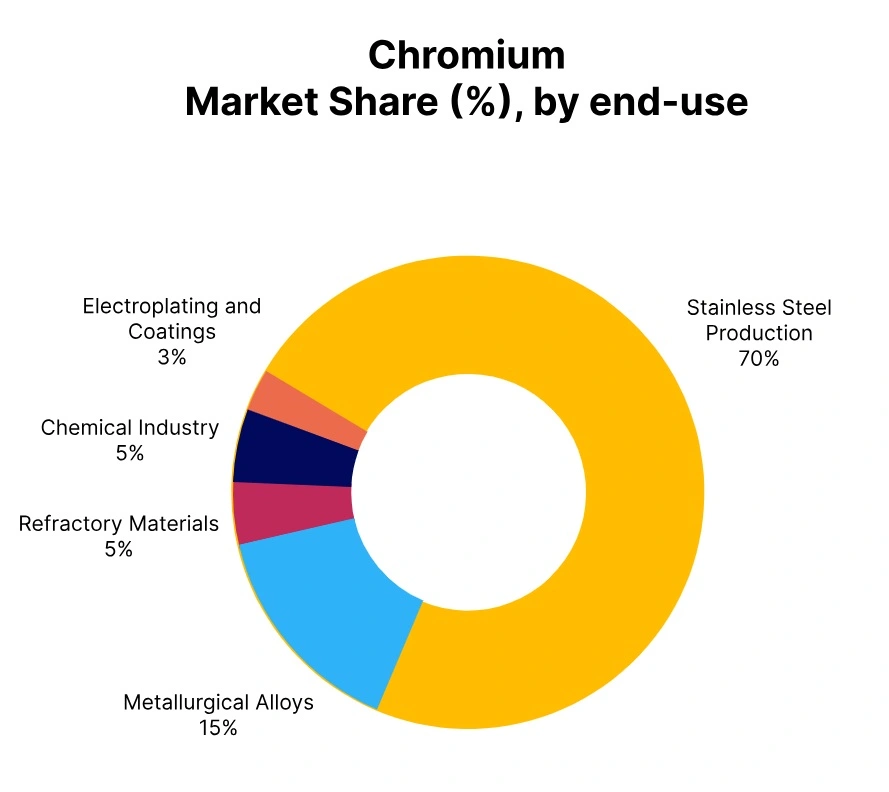
Chromium is a hard, lustrous, and corrosion resistant metal primarily used as an alloying element to enhance the durability, strength, and wear resistance of materials. Its most notable application is in the production of stainless steel and other corrosion resistant alloys, where it significantly improves surface hardness and longevity. Chromium is also used in electroplating to provide a shiny, protective coating on metal surfaces, as well as in various industrial applications, including refractory materials, pigments, and catalysts. Its role is vital in both the metallurgical and chemical industries, contributing to product performance, appearance, and resilience.

Identifiers and Classification:

  • HS Code – 811221


Chromium Grades Specific Price Assessment:

  • (Cr-99%min, Fe-0.3%max)


Chromium Global Trade and Shipment Terms

  • Quotation Terms (Product & Country Specific): 50-80 MT
  • Packaging Type (Product & Country Specific): Steel drum


Incoterms Referenced in Chromium Price Reporting

Shipping Term  Location  Definition 
FOB Shanghai  Shanghai, China  Chromium Metal Export price from China 
CIF Houston (China)  Houston, USA  Chromium import price in USA from China 
CIF Rotterdam (China)  Rotterdam, Netherlands  Chromium import price in Netherlands from China 
CIF Nhava Sheva (China)  Nhava Sheva, India  Chromium import price in India from China 

*Quotation Terms refers to the quantity range specified for the Chromium being quoted or offered in a commercial transaction.

**Packaging Type refers to standard packaging size commonly used for Chromium packing, ease of handling, transportation, and storage in industrial and commercial applications.


Key Chromium Manufacturers

Manufacturer 
Assmang Proprietary Limited 
Lomon Billions Group 
Jindal Stainless (Hisar) 
Tata Steel 

Chromium Industrial Applications

chromium market share end use

Historically, several events have caused significant fluctuations in Chromium prices

  • Energy Crisis and Geopolitical Tensions (2022–2023): Rising energy costs, especially in Europe, increased production costs for chromium alloys and ferrochrome. Additionally, geopolitical tensions and sanctions impacted key trade flows, contributing to price volatility.
  • Supply Constraints and Export Policies (2021–2022): Major chromium-producing countries, such as South Africa and Kazakhstan, faced mining disruptions due to labour issues, power shortages, and stricter export regulations. These constraints tightened global supply and elevated prices.
  • Stainless Steel Production Demand (2020–2021): Chromium is a key component in stainless steel. A rebound in global manufacturing and construction after the COVID-19 slump led to increase stainless steel output, driving up chromium demand and prices.

Why PriceWatch?

PriceWatch is your trusted resource for tracking global chromium price trends. Our platform delivers real-time data and expert analysis, offering deep insights into the key factors driving price fluctuations in the chromium market. By monitoring critical events such as geopolitical tensions, supply chain disruptions, and economic shifts, PriceWatch keeps you fully informed of market dynamics.

In addition, PriceWatch provides detailed forecasts and updates on production capacities, enabling you to anticipate market changes and make well-informed decisions. With PriceWatch, you gain a competitive edge in understanding all the elements that influence chromium prices worldwide. Stay ahead of the curve with PriceWatch’s reliable, accurate, and timely chromium market data.

Track PriceWatch's chromium price assessment on a weekly basis since 2015 onwards, along with short-term forecasts, and get access to the detailed report in a downloadable format.

Data Collection and Sources​

  • Real-Time Market Data: We gather information from global exchanges, industry reports, and proprietary sources to provide timely and accurate assessments.
  • On-the-Ground Intelligence: We incorporate insights from producers, suppliers, and end-users across key production regions to offer a comprehensive view of market dynamics.
  • Supply Chain Monitoring: We track the availability and cost of raw materials to evaluate supply conditions and price pressures.

Event Tracking and Impact Analysis​

  • Geopolitical Tensions: We monitor political and economic events that impact supply chains and the flow of chromium production.
  • Market Demand Shifts: Our analysis considers global shifts in industrial and consumer demand, particularly in sectors like automotive, electronics, and renewable energy.

Production Capacity and Supply Analysis

  • Current Production Monitoring: We assess operational Chromium production facilities and their output levels.
  • Future Capacity Projections: We forecast future production capabilities, factoring in technological advancements and production expansions.

Demand Forecasting

  • Sectoral Demand Analysis: We evaluate demand from major sectors such as automotive catalysts, renewable energy, and electronics.
  • Regional Demand Dynamics: We assess demand from key markets and regions, especially China, India, the Netherlands, and the USA, and their impact on global pricing.

Pricing Model Development

  • Dynamic Pricing Models: Our pricing models incorporate real-time data, historical trends, and market projections.
  • Scenario Analysis: We perform scenario-based forecasting, assessing potential market conditions under various economic, geopolitical, and technological developments.

Reporting and Client Support

  • Comprehensive Reports: We provide actionable insights, forecasting, and detailed analysis of current and future price trends.
  • Ongoing Support: PriceWatch delivers continuous updates and expert advice tailored to your business needs.

Chromium Market Price Trend provided by PriceWatch is a base price and excludes VAT/Taxes, discounts, or offers. The information herein is accurate to the best of our knowledge as of the date indicated and is provided solely for the convenience of our customers as a reference for chromium. PriceWatch disclaims any warranties or representations regarding the accuracy of results derived from this information. It is the sole responsibility of the user to assess the suitability of the product for their specific application. This document does not constitute an endorsement to use the product in violation of any applicable patent rights.

• Raw Material Availability – Chromium is primarily obtained from chromite ore. The availability and quality of chromite deposits significantly influence chromium prices.

• Supply and Demand – High demand from industries such as stainless-steel production, aerospace, and electroplating can push prices up. Conversely, decreased industrial activity or oversupply can reduce prices.

• Mining and Production Costs – The costs associated with extraction, refining, energy consumption, and labour directly affect chromium pricing.

• Environmental Regulations – Stricter environmental and safety regulations in mining regions can increase production costs and impact supply, thereby affecting prices.

• Geopolitical Factors – Political instability in major chromium-producing countries (like South Africa, Kazakhstan, and Türkiye) can disrupt supply chains and influence global prices.

• Global Trade Policies & Tariffs – Export restrictions, import duties, and international trade agreements can impact chromium prices on the global market.

• Technological Advancements – Innovations in mining, processing, or material substitution can influence both production efficiency and demand, affecting overall pricing.

• Exchange Rates – Since chromium is traded internationally, fluctuations in currency exchange rates can impact prices in different regions and markets.

• Stockpiles and Inventories – Government and private sector stockpiling or liquidation of reserves can affect the balance of supply and demand, influencing price trends.

The availability and cost of raw materials such as high-carbon steel and alloy coatings directly affect chromium production costs and pricing.

Chromium prices generally rise with inflation, driven by higher energy, mining, and transportation costs. However, consistent demand from the stainless steel and aerospace industries often supports price stability, even amid broader economic pressures.