
Cold Rolled Sheet Price Trend and Forecast

UNSPC code: 30102204
|
⟳ Weekly Update
|
Historical Data Since 2015
|
Forecast for 2026
  • Commodity Pricing

cold rolled sheet Price Trends by Country

gbUnited Kingdom
deGermany
cnChina
inIndia
usUnited States

Global cold rolled sheet Spot Market Prices, Trend Analysis and Forecast

Price Watchâ„¢ provides real-time price assessments and price forecasts for Cold Rolled Sheet across top trading regions:

Cold Rolled Sheet (CRS) Regional Coverage Cold Rolled Sheet (CRC) Grade and Country Coverage Cold Rolled Sheet (CRC) Pricing Data Coverage Explanation
Asia-Pacific Cold Rolled Sheet (CRS) Pricing Analysis Cold Rolled Sheets 1.0mm FOB Shanghai, China Weekly Price Update on Cold Rolled Sheet (CRS) Real-Time Export Prices from Shanghai, China to Global Markets
Cold Rolled SheetIS513 0.9mm Ex-Mumbai, India Weekly Price Update on Cold Rolled Sheet (CRS) Real-Time Domestic Ex-Mumbai Prices in India
North America Cold Rolled Sheet (CRS) Pricing Analysis Cold Rolled Sheet SAE 1008 1.0mm Delivered Prices at Alabama, USA Weekly Price Update on Cold Rolled Sheet (CRS) Real-Time Delivered Prices in Alabama, USA
Europe Cold Rolled Sheet (CRS) Pricing Analysis


Cold Rolled SheetDC01 1.00mm FD Prices at Sheffield, UK Weekly Price Update on Cold Rolled Sheet (CRS) Real-Time FD Prices in Sheffield, UK
Cold Rolled Sheet DC01  2.00mm EX Ruhr, Germany


Weekly Price Update on Cold Rolled Sheet (CRS) Real-Time Domestic Ex Ruhr prices, Germany.


Cold Rolled Sheet Price Forecasts & Market Foresight Q3 2026

Outlook: Mildly Bearish

Confidence: High

Cold Rolled Sheet prices are expected to remain mildly bearish globally during Q3 2026, influenced by ample steel supply, cautious procurement, and moderate raw material cost fluctuations. China and India are likely to experience mild price corrections amid sufficient inventories and competitive market conditions.

Germany and the United Kingdom may witness gradual price improvements supported by recovering industrial demand, while the United States is anticipated to maintain a bullish trend, driven by firm domestic consumption, infrastructure activity, and balanced supply fundamentals.

Global Cold Rolled Sheet Market Overview by Region (July–September 2026)

Country Grade/ Incoterm Outlook
China SPCC 2.0mm FOB Shanghai Mildly Bearish
Germany DC01 2.00mm EX Ruhr Mildly Bullish
USA SAE 1008 2.0mm EX Alabama Bullish
India IS513 – 2.0mm EX-Mumbai Mildly Bearish
United Kingdom DC01 2.00mm FD Sheffield Mildly Bullish

* Cold Rolled Sheet Forecast represents an analytical assessment based on information available at the time of publication. Actual market prices may vary due to unforeseen operational, regulatory, geopolitical, or economic developments.

Explore the Complete Price Watch™ Cold Rolled Sheet Forecast

Access comprehensive Cold Rolled Sheet market intelligence, including a 3-Month Rolling Forecast, 12-Month Price Forecast, forward price curves, country-wise market outlooks, procurement insights, and monthly forecast updates.

Explore Price Watch™ Cold Rolled Sheet Forecasts

What’s Included

The 3-Month Forecast (Updated Monthly)

It reflects changes in iron ore, coking coal, and hot rolled coil feedstock costs, energy prices, steel mill operating rates, maintenance shutdowns, inventory levels, trade flows, freight rates, automotive and construction demand, government trade policies, and geopolitical developments affecting the global Cold Rolled Sheet market.

The 12-Month Forecast (Published Annually)

It provides a strategic outlook based on expected capacity additions, supply-demand balances, feedstock economics, macroeconomic conditions, industrial production trends, trade policies, seasonal demand patterns, and long-term supply chain developments, supporting procurement, budgeting, and strategic planning.

Our Proprietary Hybrid Forecasting Model Evaluates:

  • Feedstock & production economics
  • Plant operating rates & outages
  • Inventory and supply-demand balance
  • Regional trade flows & freight
  • Import-export dynamics
  • Macroeconomic & geopolitical developments


Track Cold Rolled Sheet Supply Disruptions in Real Time

As geopolitical risks continue to reshape global supply chains, stay ahead of the events that drive price movements by monitoring plant shutdowns, maintenance turnarounds, force majeure events, logistics bottlenecks, trade restrictions, and operational disruptions before they impact Cold Rolled Sheet markets.

Access the Price Watch™ GIO Tracker

Cold Rolled Sheet Price Trend Q2 2026

In Q2 2026, the global Cold Rolled Sheet market remains on an upward trajectory, supported by resilient manufacturing activity, firm automotive production, and supportive trade policies across major economies. India records the strongest quarterly gain, followed by Germany, the UK, the USA, and China, as steady industrial demand and higher production costs strengthen market sentiment.

Trade measures, including India’s safeguard duty and the USA’s Section 232 tariffs, continue to support domestic pricing, while stable manufacturing PMIs across key regions reinforce steel consumption. The Cold Rolled Sheet Price Chart reflects consistent price growth through April and May across most markets.

Toward the end of the quarter, buying activity becomes more cautious as supply conditions improve and production costs ease in parts of Europe and China. The Cold Rolled Sheet Price Index shows mixed regional movements in June 2026, with the USA and India posting further gains, while China, Germany, and the UK record modest monthly corrections as balanced supply and softer spot demand reduce upward price pressure.

China: Cold Rolled Sheet Export prices FOB Shanghai, China; Grade- SPCC 2.0mm

In Q2 2026, Cold Rolled Sheet Price Trend in China has increased by 1.89% compared with Q1 2026. Prices remain supported by steady manufacturing activity and resilient demand from the automotive and appliance sectors. China’s manufacturing PMI returns to 50.3 in June, while industrial production grows 5.3%, reflecting stable factory activity.

Automotive sheet demand also stays firm as vehicle exports continue to strengthen, supporting Cold Rolled Sheet consumption. However, weaker property investment and soft domestic consumption limit stronger price gains across the steel market. In June 2026, Cold Rolled Sheet Prices in China have edged down by 0.08% from May as balanced supply and cautious buying keep the market stable despite steady industrial output.

India: Cold Rolled Sheet Domestic traded prices EX-Mumbai, India; Grade- IS513 – 2.0mm

In Q2 2026, Cold Rolled Sheet Price Trend in India has increased by 8.34% compared with Q1 2026. The market remains firm due to healthy demand from the automotive, engineering, and white goods sectors. India also maintains strong steel consumption as finished steel demand rises 8.7% during April to May, while production grows 6.4%.

The safeguard duty on selected steel imports continues to support domestic pricing by limiting low priced overseas material. Cold Rolled Sheet Price in India also benefits from stable manufacturing activity, with the manufacturing PMI staying above 54 in June. In June 2026, Cold Rolled Sheet Prices in India have increased by 0.52% compared with May as steady buying and supportive trade measures keep the market firm.

UK: Cold Rolled Sheet Domestic traded prices FD Sheffield, UK; Grade- DC01 2.00mm

In Q2 2026, Cold Rolled Sheet Price Trend in the UK has increased by 7.07% compared with Q1 2026. Prices remain supported by higher production costs and improving manufacturing activity through most of the quarter. The UK manufacturing PMI stands at 52.5 in June and remains above the growth threshold for the eighth consecutive month, reflecting steady industrial demand.

The government also confirms tighter steel import measures from July, including a 51% cut in tariff free quotas, reinforcing confidence across the domestic steel market. Cold Rolled Sheet Price in the UK stays firm during the quarter. In June 2026, Cold Rolled Sheet Prices in the UK decline by 0.67% from May as buyers slow purchases after earlier restocking and market sentiment turns more cautious.

Germany: Cold Rolled Sheet Domestic traded prices EX Ruhr, Germany; Grade- DC01 2.00mm

In Q2 2026, Cold Rolled Sheet Price Trend in Germany has increased by 7.67% compared with Q1 2026. Higher raw material and energy costs support prices through most of the quarter despite cautious downstream demand. Germany’s manufacturing PMI reaches 50.3 in June, while factory output rises 0.9% in May and new manufacturing orders return to growth.

These indicators reflect a gradual recovery in industrial activity and improve demand for flat steel products. Cold Rolled Sheet Price in Germany remains firm during April and May. In June 2026, Cold Rolled Sheet Prices in Germany decline by 0.57% from May as easing energy costs and slower spot buying reduce upward price pressure despite improving manufacturing conditions.

USA: Cold Rolled Sheet Domestic traded prices EX Alabama, USA; Grade- SAE 1008 2.0mm

In Q2 2026, Cold Rolled Sheet Price Trend in the USA has increased by 5.22% compared with Q1 2026. The market remains supported by higher domestic steel costs and strong manufacturing activity. The US manufacturing PMI stays at 53.3 in June and marks the sixth consecutive month of expansion. Manufacturing output also grows at an annualized rate of 4.7% during the second quarter, the strongest pace in five years.

Trade measures continue to support domestic steel pricing as Section 232 tariffs remain in place for imported steel products. Cold Rolled Sheet Price in the USA stays firm through the quarter. In June 2026, Cold Rolled Sheet Prices in the USA increase by 3.20% compared with May due to steady industrial demand and tighter domestic supply conditions.
Cold Rolled Sheet Price Trend Analysis: Q1 2026

Cold Rolled Sheet Price Trend Q1 2026

In Q1 2026, global Cold Rolled Sheet markets recovered from the late 2025 weakness, with prices rising across major regions. In China, tentative stabilization was supported by improving automotive, appliance, and manufacturing demand, while stable upstream costs and inventory management underpinned offers.

India saw stronger domestic demand from infrastructure and industry, aided by protective duties and higher raw material costs, supporting a bullish trend. In the UK and Germany, supply constraints, elevated energy and logistics costs, and regulatory pressures, including carbon measures, drove sharp price increases amid cautious buyer restocking.

In the USA, rising demand from construction, automotive, and appliances, coupled with tighter supply, higher production costs, and protective trade policies, contributed to a modest market rebound. Overall, elevated cost pressures, improving downstream activity, and geopolitical tensions collectively shifted global CRC markets toward a cautiously bullish outlook.

China: Cold Rolled Sheet Export prices FOB Shanghai, China; Grade- SPCC 2.0mm

In Q1 2026, Cold Rolled Sheet prices trend in China, rising 0.99% quarter on quarter, with a further 0.65% increase in March, signalling tentative stabilization after the prolonged weakness in late 2025. The recovery was supported by incremental improvement in downstream demand from automotive, home appliance, and manufacturing sectors, as seasonal restocking and cautious procurement gradually resumed.

Upstream cost pressures, including stable hot‑rolled coil prices and tighter scrap availability, provided additional floor support, while mills focused on inventory management and avoided aggressive discounting. Export activity remained moderate, but elevated energy and logistics costs due to the ongoing Middle East conflict and disruptions around the Strait of Hormuz added indirect cost pressures, reinforcing price support.

Overall, the Q1 market transitioned from a bearish tone to a more neutral‑bullish sentiment, with producers prioritizing margin protection and anticipating gradual demand recovery in the coming months.

India: Cold Rolled Sheet Domestic traded prices EX-Mumbai, India; Grade- IS513 – 2.0mm

In Q1 2026, Cold Rolled Sheet prices trend in India rose by 5.36% compared to Q4 2025, with a 3.99% increase in March, driven by stronger domestic demand from infrastructure and industrial sectors as buyers resumed restocking after a weak year‑end. Supportive safeguard duties limited import pressure, giving domestic mills greater pricing power, while elevated raw material costs, including ferrous scrap and DRI, added upward momentum.

Global flat steel price gains and tighter domestic supply reinforced the trend. Additionally, the ongoing Middle East conflict disrupted shipping and increased logistics costs, indirectly raising production expenses and supporting CRC prices.

Mills maintained flexible sales terms to manage demand, while cautious buyer activity and sustained infrastructure spending contributed to a gradual, bullish market sentiment. Overall, Q1 2026 marked a recovery from the late 2025 decline, with expectations of continued stabilization in early 2026.

UK: Cold Rolled Sheet Domestic traded prices FD Sheffield, UK; Grade- DC01 2.00mm

In Q1 2026, UK Cold Rolled Sheet prices rose sharply by 6.32% quarter on quarter, supported by a combination of supply constraints, higher energy costs, and regulatory pressures on imports. Seasonal restocking after year end and tight mill output discipline limited immediate availability, with March seeing a 3.95% increase as buyers replenished inventories amid higher costs.

Elevated freight and input costs, partly driven by ongoing geopolitical tensions in the Middle East, further pushed production costs higher, which were passed through to finished CRC prices. Meanwhile, competitive imports from Europe were less effective at curbing prices due to carbon compliance costs and trade friction.

Despite subdued construction and automotive demand, these factors created a mildly bullish market, underpinned by cost pressures and cautious buyer replenishment. Overall, the UK CRC market in Q1 2026 showed a clear upward trend, with momentum expected to continue into early Q2.

Germany: Cold Rolled Sheet Domestic traded prices EX Ruhr, Germany; Grade- DC01 2.00mm

In Q1 2026, Cold Rolled Sheet prices trend in Germany rose sharply, up 6.49% compared to Q4 2025 and 3.92% in March, driven by tighter near term supply from European mills, higher energy and logistics costs, and buyer restocking amid expectations of continued constraints.

The introduction of the EU’s Carbon Border Adjustment Mechanism raised import costs, supporting domestic offers, while cautious optimism in industrial demand encouraged mills to push higher prices. Supply disruptions linked to the Russia Ukraine war and broader geopolitical tensions added uncertainty to trade flows and freight, further underpinning the market.

Seasonal maintenance and reduced planned production also contributed to limited spot availability. Overall, Q1 shifted the CRC market from cautious stabilization toward a strong upward trajectory, with prices reflecting both structural cost pressures and geopolitical risk premiums.

USA: Cold Rolled Sheet Domestic traded prices EX Alabama, USA; Grade- SAE 1008 2.0mm

In Q1 2026, USA Cold Rolled Sheet prices trend rose 4.22% compared to Q4 2025, driven by a combination of factors. Strengthening domestic demand from construction, automotive, and appliance sectors supported mill pricing, while tighter spot availability and moderated production schedules limited excess supply.

In March, prices increased 1.83%, reflecting rising raw material and energy costs along with broader import price inflation. Geopolitical tensions, particularly the ongoing USA Iran conflict, contributed to higher energy and transportation costs, indirectly supporting steel prices.

Additionally, protective trade policies maintained domestic mill leverage against imports. These dynamics collectively reversed the late-2025 price softness, leading to a modest early 2026 market rebound as buyers stocked ahead of anticipated tightening.

Cold Rolled Sheet Price Trend Analysis 2025

Cold Rolled Sheet Price Trend Q1 2025

In Q1 2025, Cold Rolled Sheet prices rose in the UK, USA, and India, but declined in China. In China, FOB Shanghai marking a drop from the previous quarter, reflecting persistent market weakness and oversupply, FOB Shanghai in last quarter. Meanwhile, the UK and US markets experienced price increases, supported by improved demand and tighter supply. In the US, CR SHEET prices climbed significantly in early 2025, buoyed by domestic demand and protective tariffs.

The UK market also saw firmer prices, with buyers returning and producers maintaining higher offers. India’s CR SHEET prices increased due to robust demand from the automotive and infrastructure sectors. Across these regions, positive market sentiment and supply constraints contributed to price gains. However, China’s market remained under pressure from weak domestic consumption and high production.

In Q1 2025, CR SHEET prices showed a modest recover, a 1.2% increase over the previous quarter. This uptick was supported by a gradual revival in demand from the automotive and infrastructure sectors, as government spending on public projects picked up post-monsoon. Downstream industries began restocking in anticipation of improved business activity. Mills, having reduced inventories in the previous quarters, were able to hold prices firmer. Export demand also showed slight improvement, with Indian CR SHEET becoming more attractive to buyers in the Middle East and Africa. Overall, market sentiment turned cautiously optimistic, with expectations of further recovery in the coming quarters.

Cold Rolled Sheet Price Trend Q2 2025

According to PriceWatch, in Q2 2025, the price of Cold Rolled Sheet in iclined in Q1 2025. This 3.59% increase is primarily attributed to persistent oversupply and weak demand from key downstream sectors such as construction and consumer goods.

Market sentiment remains cautious due to ongoing financial uncertainties and volatile raw material costs. Additionally, seasonal slowdowns and reduced activity after the Lunar New Year contributed to the price decline. Despite some stabilization in domestic production, the lack of robust demand and global market oversaturation continue to exert downward pressure on prices.

For Q2 2025, Cold Rolled Sheet prices in the UK have increased by 3.59% supported by tighter supply conditions and steady demand from the automotive and manufacturing sectors. The price increase is also influenced by higher shipping costs from Asia to Europe and a modest reduction in domestic inventories.

While economic recovery in the region remains gradual, the combination of supply constraints and consistent downstream demand has supported the upward trend in prices.

In Q2 2025, the Cold Rolled Sheet price in the US picked up slightly by 0.75% follows a period of market volatility driven by oversupply and weak export activity. While the US market has faced downward pressure from rising imports and subdued demand, recent supply constraints and a rebound in automotive sector demand have provided some price support.

Domestic raw steel production saw a slight decline, tightening supply and contributing to the marginal price rise. However, the market remains sensitive to shifts in both domestic and international trade dynamics.

According to PriceWatch, in Q2 2025, the Cold Rolled Sheet price Inclined. This increase of 4.27% is driven by several factors such as the imposition of a 12% safeguard duty on imported rolled steel, which has curtailed cheaper imports and allowed domestic producers to raise prices, significant production cuts at major mills such as JSW Steel and Tata Steel, tightening supply, and continued strong demand from the automotive sector, where new vehicle sales and price hikes by automakers have supported higher steel prices. These dynamics have collectively contributed to the upward movement in Indian Cold Rolled Sheet prices during Q2 2025.

Cold Rolled Sheet Price Trend Q3 2025

During Q3 2025, the Cold Rolled Sheet market worldwide saw a downward trend as prices overall fell by about 1.77% across the major regions. This weakness has been consistent at the same time across all key producing nations, such as China, India, the U.S. and the U.K. Weak market performance has primarily been driven by weak demand from the automotive and appliance sector, sufficient inventories and mild export performance.

The persistent macroeconomic uncertainty and cautious buying from downstream manufacturers exerted additional price pressure. While raw material costs remained stable, limited recovery in consumption levels and competitive, lower export offers continued to drive bearish sentiments in the global market throughout the quarter.

UK: Cold Rolled Sheet Domestically traded prices FD Sheffield, UK, Grade- DC01 2.00mm.

In Q3 2025, the cold rolled sheet price trend in the United Kingdom declined by 2.04% compared to the previous quarter, as weak demand from the construction and automotive industries continued to pressure the market. Sluggish economic activity, high energy costs, and reduced manufacturing output dampened overall consumption. Additionally, increased import competition from European and Asian suppliers contributed to the downward movement in prices.

Producers focused on controlling production and managing inventories to mitigate the impact of declining margins, resulting in a cautious and subdued market sentiment throughout the quarter. Cold Rolled Sheet prices in the United Kingdom declined by 0.25% in September 2025, primarily due to subdued demand from the construction and manufacturing sectors amid slow economic recovery.

Adequate supply levels and competitive imports from European markets further weighed on domestic prices, limiting any potential rebound. Overall, the Cold Rolled Sheet market in the UK during Q3 2025 exhibited a mildly bearish trend, with expectations of stabilization in Q4 as downstream activity gradually improves.

Germany: Cold Rolled Sheet Domestically traded prices EX Ruhr, Germany, Grade- DC01 2.00mm.

In Q3 2025, the cold rolled sheet price trend in Germany declined by 2.13% compared to the previous quarter, primarily due to weak demand from the automotive and industrial manufacturing sectors. Persistent economic headwinds, including high energy costs and lower export orders, led to reduced production activity. Meanwhile, an oversupply situation across the European market and competitive import offers further pressured domestic prices.

Steelmakers focused on output optimization and inventory management to stabilize operations, but overall market sentiment remained bearish throughout the quarter. Cold Rolled Sheet prices in Germany declined by 0.26% in September 2025, mainly due to weak demand from the automotive and machinery sectors as industrial production slowed.

Persistent supply availability and competitive pricing across the European market further pressured domestic offers, preventing any significant recovery. Overall, the Cold Rolled Sheet market in Germany during Q3 2025 reflected a softening trend, with expectations of gradual stabilization in Q4 as manufacturing activity begins to pick up.

USA: Cold Rolled Sheet Domestically traded prices EX Alabama, USA, Grade- SAE 1008 2.0mm.

In Q3 2025, the cold rolled sheet price trend in the USA declined by 0.74% compared to the previous quarter, reflecting slightly softer demand from the automotive, appliance, and construction sectors. Stable raw material costs, including hot rolled coil and scrap steel, helped limit the decline, but moderate inventory buildup and cautious downstream procurement applied mild downward pressure.

Producers maintained controlled production schedules to avoid oversupply, resulting in a modest bearish trend while the overall market remained relatively stable. Cold Rolled Sheet prices in the USA declined by 1.06% in September 2025, primarily driven by softer demand from the automotive, appliance, and construction sectors amid slowing industrial activity.

Steady domestic production and sufficient inventory levels, coupled with cautious import and export dynamics, contributed to the downward pressure on prices.

China: Cold Rolled Sheet Export prices FOB Shanghai, China, Grade- SPCC 2.0mm.

In the third quarter of 2025, the cold rolled sheet price trend in China fell by 1.50% over the previous quarter, as demand cooled from the automotive, appliance, and construction sectors. There has been a drop in the activity across manufacturing and end-users bought cautiously, which helped contribute to easing market sentiment.

Unchanged raw material costs for hot rolled coil and iron ore, combined with an oversupply from domestic mills and relatively weak export orders, put downward pressure on prices. Overall, the market sentiment was bearish, as producers were focused on destocking in order to support their margins.

The price of Cold Rolled Sheet in China has been down 1.51% in September 2025, primarily due to soft demand from the automotive and appliance sectors and continued weakness in manufacturing output.

Moreover, high inventory levels and steady production rates from leading mills added to the supply pressure and made it hard for prices to recover. Export activity remained modest and many overseas buyers were cautious, especially amid uncertainty in the global economy.

India: Cold Rolled Sheet Domestically traded prices EX-Mumbai, India, Grade- IS513 – 2.0mm.

According to Price-Watchâ„¢ , The cold rolled sheet price trend in India decreased in Q3 2025 by 2.44% compared to the previous quarter, primarily due to sluggish demand in the automobile, construction and appliances sectors.

A slowdown in consumption in downstream markets, as well as competitive import offers from East Asian countries, impacted domestic prices. While a fixity of raw material costs, high inventories and sluggish project activity limited pricing upside potential and became an impediment.

Mills were discounting products to entice sales, resulting in a bearish disposition towards general market sentiment for the duration of Q3 2025. Cold Rolled Sheet prices in India declined by 0.09% in September 2025 dominantly due to steady, albeit cautious, demand and usage from the automobile, appliance and construction sectors.

Even though domestic consumption has marginally been stable, competitive offers from domestic mills and moderate export orders of Cold Rolled Sheet in the spot market maintained pricing under slight pressure.

Overall, the Cold Rolled Sheet market in India showed a marginally declining trend in pricing behaviour during Q3 2025, with an expectation for modest upside recovery in Q4 2025 through growth in infrastructure spending and demand around the festive season.

Cold Rolled Sheet Price Trend Q4 2025

In Q4 2025, the global Cold-Rolled Coil market showed a mixed trend, with notable regional variations. China and India experienced some softness, driven by cautious year-end procurement and inventory adjustments. Meanwhile, the United Kingdom and Germany saw modest firmness, supported by stable downstream demand and steady production.

The USA market remained largely stable, reflecting balanced supply and measured buying activity. Overall, the global CRC market displayed mixed fundamentals, with controlled price movements as the industry moved into early 2026.

China: Cold Rolled Sheet Export prices FOB Shanghai, China; Grade- SPCC 2.0mm

In Q4 2025, Cold Rolled Sheet prices trend in China declined by 2.28% compared to Q3, reflecting continued weakness in downstream demand from the automotive, home appliance, and manufacturing sectors. Sluggish industrial activity, cautious procurement strategies among end-users, and limited improvement in construction-related consumption weighed on overall market sentiment.

Although raw material costs such as hot rolled coil and iron ore remained relatively stable, ample domestic supply and elevated inventory levels at major mills exerted sustained downward pressure on prices. Export activity remained moderate amid global economic uncertainty, further restricting price recovery.

In December 2025, CRC prices edged down by an additional 0.09%, as year-end destocking, conservative purchasing behaviour, and steady mill production kept the market subdued. Overall, the Q4 market maintained a bearish tone, with producers focusing on inventory management and margin protection while anticipating gradual demand stabilization in early 2026.

India: Cold Rolled Sheet Domestic traded prices EX-Mumbai, India; Grade- IS513 – 2.0mm

In Q4 2025, the price trend of Cold Rolled Sheet in India declined by 2.05% compared to Q3 2025, primarily due to continued subdued demand from the automotive, construction, and appliance sectors, along with competitive import offers from East Asian suppliers that pressured domestic pricing.

While raw material costs such as iron ore and coking coal remained relatively stable, cautious procurement strategies by downstream buyers, elevated inventories, and moderate export inquiries limited price recovery during the quarter.

Mills maintained discounting strategies and flexible sales terms to sustain volumes amid weak spot demand, resulting in an overall bearish market sentiment. Cold Rolled Sheet prices in India further decreased by 0.70% in December 2025, reflecting restrained year-end buying activity and persistent competitive pricing among domestic producers.

Although underlying consumption remained stable, the absence of strong project execution and slow restocking kept prices under pressure. Overall, the CRC market in India during Q4 2025 displayed a marginally declining trend, with expectations of gradual stabilization in early 2026 supported by infrastructure momentum and post-holiday restocking demand.

UK: Cold Rolled Sheet Domestic traded prices FD Sheffield, UK; Grade- DC01 2.00mm

In Q4 2025, Cold Rolled Sheet prices trend in the United Kingdom rose modestly by 0.63% compared to Q3, as slight improvements in downstream demand and producer discipline on output supported the market. While construction and automotive sectors remained subdued amid slow economic recovery, tight inventories and elevated import parity values helped underpin prices.

Competitive imports from Europe continued to influence dynamics, but December saw a 1.14% price increase due to short-term restocking and modest seasonal pickup in orders. Overall, the UK CRC market in Q4 2025 showed a mildly bullish to stable trend, with expectations of gradual stabilization and potential firming in early 2026.

Germany: Cold Rolled Sheet Domestic traded prices EX Ruhr, Germany; Grade- DC01 2.00mm

In Q4 2025, cold‑rolled coil prices trend in Germany inclines by 0.33% compared to Q3, supported by slightly firmer demand from engineering and white‑goods manufacturers, seasonal restocking, and tighter near‑term supply at European mills.

Despite ongoing caution in the automotive and machinery sectors, restrained import availability and disciplined mill pricing helped underpin domestic offers. In December, prices increased by 0.78% as mills pushed early Q1 2026 pricing and buyers covered short-term needs amid expectations of tighter supply. Overall, the CRC market shifted from Q3’s bearish tone toward cautious optimism, with hopes for gradual stabilization in early 2026.

USA: Cold Rolled Sheet Domestic traded prices EX Alabama, USA; Grade- SAE 1008 2.0mm

In Q4 2025, Cold Rolled Sheet prices trend in the USA showed a marginal decline of 0.02% compared to Q3, reflecting a balance between moderate demand from automotive, appliance, and construction sectors and disciplined supply from domestic producers.

Stable inventories and steady production helped prevent sharper price drops, while cautious downstream buying and limited import inflows maintained overall market stability. By December, CRC prices rose 1.34%, driven by year end restocking, tighter spot availability, and mill pricing support, resulting in a modest late-quarter rebound as the market positioned for early 2026.

Cold Rolled Sheet Price Trend Q1 2024

In Q1 2024, CR SHEET prices in global markets saw fluctuations during Q1 2024, with prices increasing slightly in some regions due to strong demand and continued recovery in key industries like automotive and construction. However, some regions also experienced price corrections due to overproduction or slower demand.

In Europe, CR SHEET prices showed a 10% increase, mainly due to higher energy prices, the cost of raw materials, and a reduction in steel production capacity. Indian and Chinese market edged down on a quarterly basis in Q1 2024.

During Q1 2024, prices softened to 1.6% quarter-on-quarter decline. The post-festive season typically sees a demand lull, and this was evident as automotive and construction activity slowed. Stockists held higher inventories, leading to reduced fresh bookings. Additionally, the global steel market was subdued, with export orders from traditional markets such as Europe and the Middle East declining. Mills responded by offering discounts to stimulate demand, but buyers remained cautious, anticipating further price corrections. The overall sentiment was bearish, with market participants focusing on inventory management rather than aggressive procurement.

Cold Rolled Sheet Price Trend Q2 2024

In Q2 2024, Global CR SHEET prices showed drop in Q2 2024 after the volatility in Q1. However, regional markets experienced varied trends based on local demand and production conditions. The US and UK market saw a significant decline of 10% in prices, primarily due to weak demand and an oversupply of steel.

Contributing factors include high interest rates, reduced production activity, and a drop in crude steel manufacturing. As a result, major steelmakers significantly adjusted their prices, further deepening the market’s bearish outlook. Prices in India edged down by 1% and from China by 9% respectively. 

CR SHEET prices dipped further in Q2 2024, a 1.08% decrease from the previous quarter. The market was characterized by continued weak demand, especially from the infrastructure sector, where project execution was slow due to funding delays and monsoon preparations. Export competitiveness was also challenged by lower-priced offers from China and Vietnam, making it harder for Indian mills to secure overseas orders. Domestic buyers delayed purchases, expecting additional price drops. Mills attempted to support prices through production cuts, but oversupply persisted, keeping the market under pressure throughout the quarter.

Cold Rolled Sheet Price Trend Q3 2024

In Q3 2024, Prices in the third quarter showed decline in major economies. Domestic CR SHEET prices fell in India by 4% in Q32024, in China by 9%, USA by 11% and the United Kingdom by 2% as against fourth quarter 2023. Sluggish demand from key sectors like automotive and construction, coupled with an oversupply of steel, put downward pressure on prices.

High interest rates reduced investment and financing, leading to slower economic activity. Additionally, a decline in crude steel production, fluctuating raw material costs, and price cuts by major steelmakers to clear excess inventory further reinforced the bearish sentiment. In both developed and emerging economies, there was a decline in the manufacturing of crude steel in Q3 2024.

This reduction was partly due to higher operational costs, particularly from energy prices and raw material costs. The slowdown in steel production, in turn, led to a decreased need for CR SHEET. These factors combined to drive a notable reduction in CR SHEET prices during the quarter.

In Q3 2024, CR SHEET prices fell more sharply to 4.5%. The onset of the monsoon season led to a significant slowdown in construction and infrastructure activities, further dampening demand. The automotive sector also faced headwinds, with manufacturers reporting lower sales and inventory build-up. Imports remained steady, adding to the supply glut. Mills adopted aggressive pricing strategies to clear inventories, but this only accelerated the price decline. Market sentiment was bearish, and many buyers opted to wait for further corrections before making significant purchases.

Cold Rolled Sheet Price Trend Q4 2024

In Q4 2024, CR SHEET prices in last quarter 2024 fell which 7% price rise in China. The market remained under pressure from oversupply, and fluctuating raw material costs, which capped any significant price rebounds. In India, domestic demand supported some price stability, especially from infrastructure projects, but competition from imports and global trade uncertainties kept prices relatively flat. Despite some recovery, the overall market remained cautious due to ongoing economic concerns and supply-demand imbalances. 

CR SHEET prices were in downward trajectory in Q4 2024, a 3.9% drop from Q3. The market struggled with persistent oversupply as mills maintained high production rates despite weak demand. Year-end inventory clearance sales further pressured prices. Demand from key sectors like automotive and white goods remained sluggish, and export opportunities were limited due to global oversupply and competitive offers from other Asian producers. Mills focused on cash flow management and reducing stock levels, but the overall market mood remained pessimistic, with little hope for a near-term recovery.

Technical Specifications of Cold Rolled Sheet Price Trends

Product Description

A Cold Rolled Sheet is a type of steel product produced by further processing hot rolled coil (HRC) through a process where the steel is cooled to room temperature and then passed through rollers to achieve the desired thickness and surface finish. Unlike HRC, the cold rolling process is done at room temperature, which increases the strength, hardness, and surface smoothness of the steel. This results in a product with superior dimensional accuracy and a more polished finish, making it ideal for applications in industries like automotive, appliances, and construction.

Identifiers and Classification:

  • HS Code – 720917


Cold Rolled Sheet Synonyms:

  • CR Sheet
  • Cold Reduced Steel Sheet
  • CR Coil


Cold Rolled Sheet Grades Specific Price Assessment:

  • Cold Rolled Sheet DC01 2.00mm Price Trend
  • Cold Rolled Sheet IS513 – 2.0mm Price Trend
  • Cold Rolled Sheet SPCC 2.0mm Price Trend
  • Cold Rolled Sheet SAE 1008 2.0mm price Trend


Cold Rolled Sheet Global Trade and Shipment Terms

  • Quotation Terms (Product & Country Specific): 15-18MT, 200-300 MT
  • Packaging Type (Product & Country Specific): Container


Incoterms Referenced in Cold Rolled Sheet Price Reporting

Shipping Term  Location  Definition 
FOB Shanghai  Shanghai, China  Cold Rolled Sheet Export price from South Korea 
EX Alabama  Alabama, USA  Domestically Traded Cold Rolled Sheet price in USA 
FD Sheffield  Sheffield, UK  Domestically Traded Cold Rolled Sheet price in UK 
EX Ruhr  Ruhr, Germany  Domestically Traded Cold Rolled Sheet price in Germany 
EX-Mumbai  Mumbai, India  Domestically Traded Cold Rolled Sheet price in India 

*Quotation Terms refers to the quantity range specified for the Cold Rolled Sheet being quoted or offered in a commercial transaction.

**Packaging Type refers to standard packaging size commonly used for Cold Rolled Sheet packing, ease of handling, transportation, and storage in industrial and commercial applications.

Key Cold Rolled Sheet Manufacturers

Manufacturer 
Tata Steel Group 
JSW Steel 
SAIL 
China Baowu Steel Group Corp. 
Nucor Corporation 
United States Steel Corporation 
Thyssenkrupp Steel Europe 
POSCO 

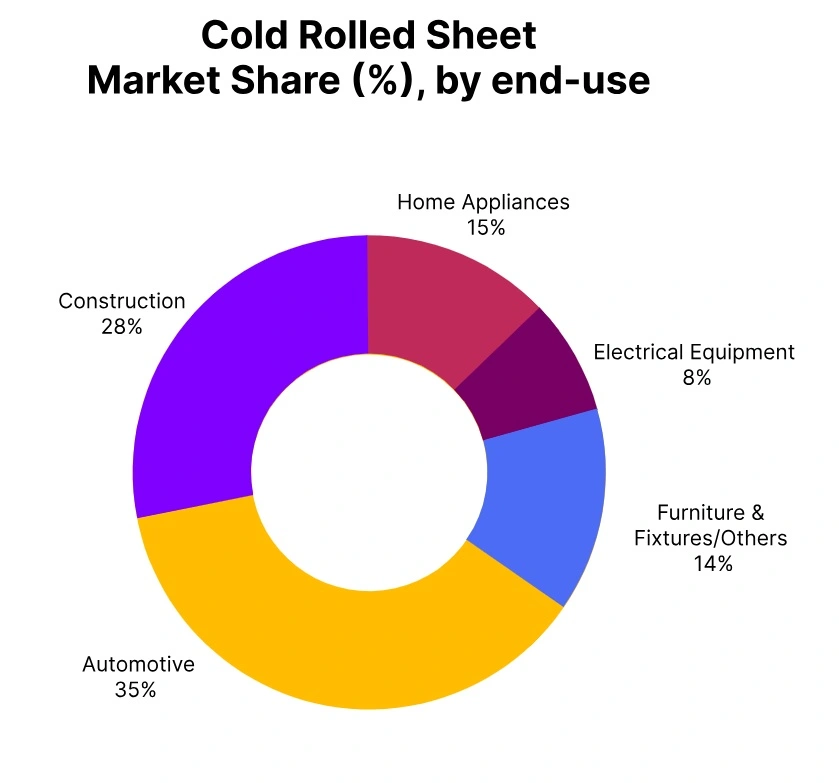
Cold Rolled Sheet Industrial Applications

cold rolled sheet market share end use

Historically, several events have caused significant fluctuations in Cold Rolled Sheet prices

  • Global Economic Downturn (2019-2020): The global economic slowdown, particularly in sectors like steel and automotive, led to reduced demand for CR SHEET, resulting in lower prices.
  • COVID-19 Pandemic (2019-2020): The global pandemic led to a significant decline in demand for CR SHEET-intensive industries, such as steelmaking and automotive manufacturing, causing prices to plummet.
  • Global Supply Chain Disruption (2022): The war in Ukraine and other geopolitical tensions disrupted supply chains, leading to price volatility in various commodities, including CR SHEET.
  • Impact on Investment and Financing: Elevated interest rates globally, particularly in major economies like the U.S. and Europe, made financing more expensive for businesses.


These events underscore the CR SHEET market’s vulnerability to global disruptions and highlight the need for continuous monitoring of supply-demand dynamics.

Why Price Watchâ„¢?

Price Watchâ„¢ is your trusted resource for tracking global cold rolled sheet price trends. Our platform delivers real-time data and expert analysis, offering deep insights into the key factors driving price fluctuations in the cold rolled sheet market. By monitoring critical events such as geopolitical tensions, supply chain disruptions, and economic shifts, Price Watchâ„¢ keeps you fully informed of market dynamics.

In addition, Price Watch™ provides detailed forecasts and updates on production capacities, enabling you to anticipate market changes and make well-informed decisions. With Price Watch™, you gain a competitive edge in understanding all the elements that influence cold rolled sheet prices worldwide. Stay ahead of the curve with Price Watch’s™ reliable, accurate, and timely cold rolled sheet market data.

Track Price Watch'sâ„¢ cold rolled sheet price assessment on a weekly basis since 2015 onwards, along with short-term forecasts, and get access to the detailed report in a downloadable format.

Cold Rolled Sheet Market Price Trend published by Price Watchâ„¢ reflect prevailing spot market conditions, derived from independent research, verified trade inputs, and proprietary market intelligence as of the publication date. Prices are published on the specified Incoterm and represent indicative base market levels, exclusive of applicable taxes, VAT, duties, tariffs, and other statutory charges. Actual transaction values may vary depending on volume, credit terms, contractual structure, and other negotiated conditions. Market prices are inherently subject to volatility, liquidity dynamics, regulatory changes, and evolving trade activity. The information provided is for reference and benchmarking purposes only and does not constitute an offer, recommendation, or guarantee of transactional outcomes. Users should exercise independent commercial judgment and assess their specific contractual, regulatory, tax, and application requirements before making business decisions. Price Watchâ„¢ assumes no liability for decisions taken based on this information.

Feedstock prices have a direct and significant impact on Cold Rolled Sheet (CR SHEET) prices, as CR SHEET is produced by further processing hot rolled coil (HRC), which itself is derived from raw materials like iron ore, coking coal, and scrap metal. When feedstock prices such as HRC rise due to increased costs of iron ore or coal, the production cost of CR SHEET also increases, pushing its market price higher. Conversely, a drop in raw material costs typically lowers CR SHEET prices, assuming stable demand. As feedstock accounts for a major portion of CR SHEET production expenses, fluctuations in these input prices are a primary driver of CR SHEET price volatility in the market.

Commodity prices can have a significant impact on inflation. When commodity prices rise, it can increase the cost of production for businesses, which may pass these costs on to consumers in the form of higher prices. This can lead to inflation, a sustained increase in the general price level of goods and services in an economy.

PriceWatch, a leading procurement intelligence firm, offers a comprehensive suite of tools and services to help you effectively track commodity prices.

Some of the key benefits of using PriceWatch include:

Real-time Data: Access to up-to-date market intelligence and data on commodity supply chains.

Expert Analysis: Insights from industry experts to interpret market trends and identify potential risks.

Risk Assessment: Tools to assess supply chain vulnerabilities and develop mitigation strategies.

Benchmarking: Comparisons of commodity prices and sourcing practices to optimize procurement decisions.

Supplier Intelligence: Detailed information on suppliers, including their financial health, production capacity, and sustainability practices.

Cold-rolled coil (CRC) is a steel product processed through rolling at room temperature to achieve precise thickness, smooth surface, and improved mechanical properties. It is widely used in automotive, appliances, construction, and machinery industries. Its price impacts manufacturing costs, industrial planning, and supply chain management. Price Watchâ„¢ tracks CRC prices to help businesses and consumers stay informed about market trends.

CRC prices fluctuate based on global steel demand, production output, import/export policies, and raw material costs (like hot-rolled coil and iron ore). Prices are usually quoted per metric ton. Price Watchâ„¢ provides real-time assessments across different regions to guide buyers and sellers.

Prices vary with changes in steel mill production, scrap availability, energy costs, global demand, and trade policies. Logistics, currency rates, and macroeconomic conditions also influence trends.

Major consumers include automotive, home appliances, construction, machinery, and packaging industries. Price Watchâ„¢ analyses demand patterns to track these industry trends.

CRC is produced from hot-rolled coil through cold rolling and annealing processes. These steps refine the steel’s thickness, surface finish, and mechanical properties to meet industrial standards.

China is the world’s leading CRC exporter, followed by South Korea, Japan, and European countries. Export volumes depend on domestic production policies, trade tariffs, and international demand. Price Watch™ monitors global supply chains to help businesses identify sourcing opportunities.

Generally, supply meets demand, but shortages can occur due to steel mill maintenance, energy restrictions, raw material shortages, or spikes in industrial demand. Price Watchâ„¢ tracks supply-demand imbalances to alert the market to potential risks.

CRC is graded by thickness, tensile strength, surface quality, and coating options. Higher-quality or specialty grades (e.g., high-strength automotive steel) are more expensive due to advanced processing and quality control. Price Watchâ„¢ provides separate price assessments for each grade.

Price typically rises with increased demand from automotive, construction, or appliance production. Suppliers may prioritize certain buyers, and lead times may extend. Price Watchâ„¢ monitors these dynamics in real time.

CRC production is energy-intensive. Rising electricity, gas, or coal costs can increase production expenses, which may be reflected in CRC prices. Price Watchâ„¢ analyses these energy cost impacts in its reports.

Price variations arise from import/export dependency, shipping costs, local demand, and currency fluctuations. v tracks regional prices to highlight these differences.

Forecasts depend on production capacity, raw material availability, trade policies, and industrial demand. Price Watchâ„¢ publishes detailed projections for the next 12 months, helping businesses anticipate market conditions and plan procurement accordingly.

Yes. Accurate forecasts allow businesses to optimize purchasing, manage inventories, and negotiate contracts. Predictive insights from Price Watchâ„¢ can help companies save costs by timing purchases strategically.

Events such as steel mill shutdowns, energy shortages, trade restrictions, or geopolitical tensions can cause supply shortages and price volatility. Price Watchâ„¢ provides timely updates when such events affect the market.

Price Watchâ„¢ aggregates data from steel manufacturers, distributors, and buyers globally to publish regular price assessments, market reports, and forecasts. This makes it a trusted source for understanding CRC pricing and market trends.