Diisopropyl Ether (dipe) Price Trend and Forecast

UNSPC code: 12352112
|
⟳ Weekly Update
|
Historical Data Since 2015
|
Forecast for 2026

diisopropyl ether (dipe) Price Trends by Country

cnChina
deGermany
saSaudi Arabia
trTurkey
beBelgium
inIndia
krSouth Korea

Global diisopropyl ether (dipe) Spot Market Prices, Trend Analysis and Forecast

Price-Watchâ„¢ provides real-time price assessments and price forecasts for Diisopropyl Ether (DIPE) across top trading regions:

Diisopropyl Ether (DIPE) Regional Coverage  Diisopropyl Ether (DIPE) Grade and Country Coverage Diisopropyl Ether (DIPE) Pricing Data Coverage Explanation
Asia- Pacific Diisopropyl Ether (DIPE) Pricing Analysis    Diisopropyl Ether (DIPE) Industrial Grade (99% min) FOB Prices Shanghai, China  Weekly Price Update on Diisopropyl Ether (DIPE) Real-Time Export Prices from Shanghai port, China to Global Markets  
Diisopropyl Ether (DIPE) Industrial Grade (99% min) CIF Prices at Busan Port, South Korea, importing from China  Weekly Price Update on Diisopropyl Ether (DIPE)
Real-Time Import Prices at Busan Port, South Korea, from China 
Diisopropyl Ether (DIPE) Industrial Grade (99% min) CIF Prices at Nhava Sheva Port, West India, Importing from China  Weekly Price Update on Diisopropyl Ether (DIPE) Real-Time Import Prices at Nhava Sheva Port, West India, from China 
Europe Pacific Diisopropyl Ether (DIPE) Pricing Analysis 


Diisopropyl Ether (DIPE) Industrial Grade (99% min) FOB Prices at Hamburg, Germany  Weekly Price Update on Diisopropyl Ether (DIPE) Real-Time Export Prices from Hamburg, Germany to Global Markets 
Diisopropyl Ether (DIPE) Industrial Grade (99% min) at FD Antwerp Prices, Belgium  Weekly Price Update on Diisopropyl Ether (DIPE) Real-Time Domestic Prices at FD Antwerp Prices, Belgium  
Diisopropyl Ether (DIPE) Industrial Grade (99% min) CIF Prices at Mersin port, Turkey, Importing from Germany   Weekly Price Update on Diisopropyl Ether (DIPE) Real-Time Import Prices at Mersin port, Turkey, from Germany 
Middle East & Africa Diisopropyl Ether (DIPE) Pricing Analysis  

Diisopropyl Ether (DIPE) Industrial Grade (99% min) CIF Prices at Jeddah, Saudi Arabia, Importing from China 

Weekly Price Update on Diisopropyl Ether (DIPE) Real-Time Import Prices at Jeddah, Saudi Arabia, from China 


Note: In assessments structured as CIF [Importing Port] (Exporting Country), the country mentioned in brackets indicates the primary origin of supply (exporting country), while the named port refers to the destination port in the importing country. Other Incoterms (FOB, FD, EXW, etc.) should be interpreted in accordance with standard international trade definitions.

Diisopropyl Ether Price Trend Q1 2026

For the first quarter of 2026, the global market of diisopropyl ether exhibits varied performances in terms of price increases, where some markets experience modest increases while others see substantial increments. For instance, the diisopropyl ether price trend in China and the diisopropyl ether price in India have recorded marked increments due to high demand by various industrial sectors, including chemicals, drugs, and textiles.

Additionally, there have been notable increments in the diisopropyl ether price in Germany and the diisopropyl ether price in Belgium, owing to consistent demand and supply levels in the two nations. The diisopropyl ether price in the USA is reported to have seen modest increments with a recovery in demand from automobile and textile industries.

In addition, there have been minor price changes in diisopropyl ether price in Turkey and the diisopropyl ether price in Saudi Arabia amid consistent underlying demand. On the other hand, diisopropyl ether price trends are influenced by consistent supply availability and geopolitical risks, including tension between Iran and Israel resulting in high crude oil prices.

China: Diisopropyl ether Export prices FOB Shanghai, China; Grade- Industrial Grade (99% min)

Diisopropyl Ether prices in China for the period ending in Q1 2026 have recorded a 5% increase because of high demand in major consumer industries like chemicals, medicines, and textiles. This has been supported by robust industrial operations as well as healthy demand, with supply remaining intact in the market.

On the other hand, conservative buying practices in the converting sector have restricted larger price increases. Diisopropyl ether price trend in China is indicative of conservative trading sentiments. In China, Diisopropyl Ether price in March 2026 has recorded a 5% increase owing to geopolitics because of the conflict between Iran and Israel, which has increased crude oil prices.

Germany: Diisopropyl ether Export prices FOB Hamburg, Germany; Grade- Industrial Grade (99% min)

During the first quarter of 2026, Diisopropyl Ether price in Germany have increased by 4% due to the stable demand for the product from key end-user industries like chemicals and pharmaceuticals. This is because there have been stable conditions in terms of production as well as consumption, although there is still caution in the procurement of larger amounts.

The Diisopropyl ether price trend in Germany have witnessed an upward price trend in Germany due to stability on both ends of the spectrum. Nevertheless, geopolitical instabilities, such as the war between Iran and Israel and the closing of the Strait of Hormuz, have led to an increase in crude oil prices. In Germany, Diisopropyl Ether price in March 2026 has seen a rise of 10%.

Belgium: Diisopropyl ether domestically traded prices FD Antwerp, Belgium; Grade- Industrial Grade (99% min)

The Diisopropyl Ether price in Belgium for the quarter of January-March 2026 have risen by 4% because of demand from major industries. These include chemicals and manufacturing industry. Such an increase in price has been facilitated by active and stable production in the industries where high consumption has been registered. The market is stable despite the slow purchasing pace of the buyers.

The Diisopropyl ether price trend in Belgium during this period show rising prices because of demand. Geopolitical instability caused by tension between Iran and Israel coupled with the closing down of the Strait of Hormuz has resulted in increased prices of crude oil. This has increased the cost of production for the product. In Belgium, Diisopropyl Ether price in March 2026 have risen by 10%.

Saudi Arabia: Diisopropyl ether Import prices CIF Jeddah, Saudi Arabia; Grade- Industrial Grade (99% min)

In Q1 2026, Diisopropyl Ether prices in Saudi Arabia, importing from China, rose by 5%, driven by steady demand from key sectors such as chemicals and pharmaceuticals. The price increase is supported by resilient industrial consumption and stable supply conditions, although cautious buying behavior persisted among converters.

The diisopropyl ether price trend in Saudi Arabia showed moderate upward movement due to continued industrial demand. In Saudi Arabia, Diisopropyl Ether prices in March 2026 rose by 6%, influenced by geopolitical tensions, particularly the Iran-Israel conflict, which caused a rise in crude oil prices. This impacted production costs, contributing to higher Diisopropyl Ether prices in Saudi Arabia.

India: Diisopropyl ether Import prices CIF Nhava Sheva, India; Grade- Industrial Grade (99% min)

In Q1 2026, Diisopropyl Ether prices in India, importing from China, rose by 8%, driven by strong demand from key industries such as chemicals, pharmaceuticals, and textiles. The price rise reflected ongoing industrial activity and continued robust consumption in these sectors. Despite cautious procurement strategies, the market remained supported by stable supply conditions.

The diisopropyl ether price trend in India indicated significant upward movement due to high demand. In India, Diisopropyl Ether prices in March 2026 rose by 9%, influenced by geopolitical tensions, particularly the Iran-Israel conflict, which led to higher crude oil prices, impacting production costs and contributing to the price hike in the region.

Turkey: Diisopropyl ether Import prices CIF Mersin, Turkey; Grade- Industrial Grade (99% min)

In Q1 2026, Diisopropyl Ether prices in Turkey, importing from Germany, rose by 4%, driven by steady demand from key sectors such as textiles and chemicals. The price increase is supported by stable manufacturing conditions and consistent consumption across industries. Despite cautious buying behavior, the market remained balanced with a stable supply.

The diisopropyl ether price trend in Turkey reflected moderate price increases. In Turkey, Diisopropyl Ether prices in March 2026 rose by 9%, influenced by the ongoing geopolitical tensions, particularly the Iran-Israel conflict, which resulted in higher crude oil prices, affecting production costs and further driving up prices in Turkey.

South Korea: Diisopropyl ether Import prices CIF Busan, South Korea; Grade- Industrial Grade (99% min)

According to Price-Watchâ„¢, in Q1 2026, Diisopropyl Ether prices in South Korea, importing from China, rose by 5%, driven by strong demand from key sectors such as chemicals and manufacturing. The price increase is supported by steady industrial consumption and a stable supply chain. Despite some cautious buying behavior, the market remained balanced with moderate price adjustments.

The diisopropyl ether price trend in South Korea reflected consistent demand and resilient industrial activity. In South Korea, Diisopropyl Ether prices in March 2026 rose by 5%, influenced by geopolitical tensions, particularly the Iran-Israel conflict, which led to higher crude oil prices and impacted production costs, further driving up prices in the region.

Diisopropyl Ether (DIPE) Price Trend Analysis: Q4 2025

In the fourth quarter of 2025, the worldwide Diisopropyl Ether market has witnessed diverse outcomes due to changes in price that fluctuate between slight gains and drops. There have been slight falls in Diisopropyl Ether prices in China and Diisopropyl Ether prices in India. This situation is primarily because of lower demand and caution among buyers. The Diisopropyl Ether price in Germany and Diisopropyl Ether prices in Belgium have gained slightly because of stable demand from industries including chemicals and pharmaceuticals. The fall in Diisopropyl Ether prices in Saudi Arabia and Diisopropyl Ether prices in Turkey, however, occurred due to lower demand and slow economic recovery. Meanwhile, in the United States, the Diisopropyl Ether market price has shown stability in line with stable supplies. In summary, there have been variations in Diisopropyl Ether price trends depending on demand, procurement, and supply factors across the globe.

China: Diisopropyl ether Export prices FOB Shanghai, China; Grade- Industrial Grade (99% min)

In the fourth quarter of 2025, the Diisopropyl Ether price in China saw a small decrease of 0.5%, largely due to lower demand from important industries, including the chemical industry and pharmaceuticals. Diisopropyl Ether price trend in China indicated consistent supply conditions; however, the conservative purchasing attitude of consumers has restrained any increase in prices. While the manufacturing industry showed stable consumption, slower demand from downstream industries led to conservative purchasing behavior. In China, Diisopropyl Ether price in December 2025 saw an even greater decrease of 2% because of weaker demand and scarcity in spot cargoes. This is also due to the waiting and seeing attitude of buyers. Consequently, Diisopropyl Ether prices in China continue to be pressured towards the end of the quarter.

Germany: Diisopropyl ether Export prices FOB Hamburg, Germany; Grade- Industrial Grade (99% min)

For the fourth quarter of 2025, there has been a moderate rise in the Diisopropyl Ether prices in Germany, rising 2% due to sustained demand from sectors like chemicals and pharmaceuticals. Even while there is a degree of caution in purchases, the German market has maintained its stability on the back of sustainable demand and active industry operations. There has been an upward Diisopropyl Ether price trend in Germany. In Germany, Diisopropyl Ether price in December 2025 have fallen by 2% due to weaker demand and lesser amounts of restocking at this stage of the year. Even while there has been a decline in price levels during December, the overall trend in the market has been one of stability. There has been a degree of caution seen in purchases by converters.

Belgium: Diisopropyl ether domestically traded prices FD Antwerp, Belgium; Grade- Industrial Grade (99% min)

For the fourth quarter of 2025, Diisopropyl Ether prices in Belgium rose by 2% due to consistent demand from important industries like chemical and manufacturing. The market-maintained equilibrium with sufficient supply levels, albeit cautious purchase from consumers. Diisopropyl Ether price trend in Belgium have been backed up by the strength of their manufacturing industries, especially chemicals and pharmaceuticals. In Belgium, Diisopropyl Ether prices in December 2025 fell by 2% due to weak demands and decreased purchases as the quarter is nearing its end. The drop in prices is fuelled by decreased demands and less restocking for the last month of the year.

Saudi Arabia: Diisopropyl ether Import prices CIF Jeddah, Saudi Arabia; Grade- Industrial Grade (99% min)

In Q4 2025, Diisopropyl Ether prices in Saudi Arabia, importing from China, decreased by 2%, largely due to weaker demand from key industries such as chemicals and pharmaceuticals. The market faced challenges with slower industrial recovery, which limited consumption and overall price movement. Despite stable supply, cautious buying behavior among customers resulted in restrained price increases. The Diisopropyl Ether price trend in Saudi Arabia showed some downward pressure, reflecting these demand issues. In Saudi Arabia, Saudi Arabia price in December 2025 decreased by 1.5%, influenced by lower demand and limited restocking activity as the quarter ended. This decline is due to a combination of weak market sentiment and slower recovery in critical sectors.

India: Diisopropyl ether Import prices CIF Nhava Sheva, India; Grade- Industrial Grade (99% min)

In Q4 2025, Diisopropyl Ether prices in India, importing from China, showed a slight increase of 0.1%, driven by steady demand from key sectors such as pharmaceuticals and chemicals. Despite cautious buying behavior, the market is supported by consistent industrial consumption. The Diisopropyl Ether price trend in India remained relatively stable throughout the quarter, reflecting balanced supply and demand conditions. In India, Diisopropyl Ether prices in December 2025 rose by 0.5%, influenced by short-term restocking activities and limited spot availability as the quarter ended. This price increase is a result of ongoing demand in key industries, alongside the need for converters to replenish stocks, reflecting a moderately favorable market outlook.

Turkey: Diisopropyl ether Import prices CIF Mersin, Turkey; Grade- Industrial Grade (99% min)

In Q4 2025, Diisopropyl Ether prices in Turkey, importing from Germany, increased by 2.0%, driven by steady demand from key sectors such as chemicals and pharmaceuticals. Despite cautious buying behavior, the market remained balanced with stable supply. The Diisopropyl Ether price trend in Turkey is supported by the resilience of its manufacturing sectors, particularly in chemicals and automotive. In Turkey, Diisopropyl Ether prices in December 2025 dropped by 2.5%, reflecting weaker demand and reduced purchasing activity as the quarter ended. This decline is primarily due to slower recovery in critical industries, resulting in limited restocking and a shift in market sentiment, as buyers adopted a more cautious approach toward the close of the quarter.

South Korea: Diisopropyl ether Import prices CIF Busan, South Korea; Grade- Industrial Grade (99% min)

In Q4 2025, Diisopropyl Ether prices in South Korea, importing from China, showed a slight decrease of 0.5%, driven by subdued demand from key industries such as chemicals and manufacturing. Despite stable supply conditions, cautious buying behavior and a slower-than-expected industrial recovery put downward pressure on prices. The Diisopropyl Ether price trend in South Korea reflected a more cautious market, with steady but limited consumption across sectors. In South Korea, Diisopropyl Ether prices in December 2025 remained flat, experiencing a 0.5% further decline, influenced by continued low demand and limited restocking activities, as buyers remained hesitant to make significant purchases in the face of uncertain market conditions.

During the third quarter of 2025, moderate price increases characterized the Diisopropyl ether (DIPE) market globally, buoyed by consistent demand from chemical and solvent sectors. Moderate to moderate price increases have been realized in several regions, including stability for the product in both China and Germany and Belgium in the liquified gas market, thus prices overall increased.

Overall price increases in several regions confirmed stable industrial demand, even as a worldwide economic slowdown developed. Demand for Diisopropyl Ether (DIPE) had continued upward in September 2025, with consumption remaining steady across key industries.

Incremental price overall increases across several regions indicated relatively balanced demand and supply with no significant production or distribution disruptions.

Belgium: Diisopropyl Ether (DIPE) domestically traded prices FD Antwerp, Belgium, Grade- Industrial Grade (99% min).

Diisopropyl Ether (DIPE) prices in Belgium increased by 3.0%, reaching 1717 USD/MT in Q3 2025. The price rise has been driven by relatively stable demand within the European Union, particularly from the solvent and chemical sectors. Belgium’s role as a trading hub for Diisopropyl Ether (DIPE) contributed to stable price movements.

In September 2025, the Diisopropyl Ether (DIPE) price trend in Belgium continued to reflect the broader European market conditions, with prices maintaining an upward trajectory.

The price increase in Belgium has been a direct result of steady demand in key downstream industries across the region. Diisopropyl Ether (DIPE) price trend in Belgium remained high, reflecting consistent demand in the market.

Germany: Diisopropyl Ether (DIPE) Export prices FOB Hamburg, Germany, Grade- Industrial Grade (99% min).

In Q3 2025, the Diisopropyl Ether (DIPE) price trend in Germany rose 2.8% to 1650-1700 range USD/MT. The increase has been propelled by constant demand from the European chemical and pharmaceutical industries. The price rise has also been supported by advantageous market conditions for Exports to neighboring regions.

In September 2025, Diisopropyl Ether (DIPE) prices in Germany continued to trend upward aligned with global prices, which remained steady despite the slow global economy.

Overall Diisopropyl Ether (DIPE) price trend in Germany exhibited strength, continuing to trend upward in contrast to other lower European industrial activity. The price increase suggests that sufficient demand remained in Europe.

Turkey: Diisopropyl Ether (DIPE) Import prices CIF Mersin, Turkey; Grade- Industrial Grade (99% min).

Diisopropyl ether prices in Turkey increased by 2.5%, reaching 1739 USD/MT in Q3 2025. The price rise was driven by stable demand in the Turkish chemical and pharmaceutical industries, which helped support the higher Import prices. Turkey’s reliance on Imports from Germany meant that local price movements were influenced by European market conditions.

In September 2025, the diisopropyl ether prices in Turkey followed the upward trajectory seen in other regions, with prices reflecting stronger market conditions. Diisopropyl Ether (DIPE) price trend in Turkey continued to increase, in line with global price trends.

Saudi Arabia: Diisopropyl Ether (DIPE) Import prices CIF Jeddah, Saudi Arabia, Grade- Industrial Grade (99% min).

In the third quarter, Diisopropyl Ether (DIPE) price trend in Saudi Arabia remained firm, reflecting continued demand from key industrial sectors. Diisopropyl ether prices in Saudi Arabia rose by 3.4%, reaching 1735 USD/MT in Q3 2025. The price increase has been driven by higher demand from the chemical industry, particularly in the production of solvents and other specialized chemicals.

Saudi Arabia’s Import dependency on China for DIPE Imports also influenced the price movement. In September 2025, the Diisopropyl Ether (DIPE) prices in Saudi Arabia continued to reflect the global market rise, as prices in the region stayed elevated.

China: Diisopropyl Ether (DIPE) Export prices FOB Shanghai, China, Grade- Industrial Grade (99% min).

The Diisopropyl Ether (DIPE) price trend in China rose 3.0%, reaching USD 1626/MT in Q3 2025. The increase in price has primarily been a function of steady demand from the chemical and solvent sectors, and increased exports. The demand for diisopropyl ether has been high enough to stabilize production while the increased global demand provided a supportive price environment.

In September 2025, diisopropyl ether prices remained on the higher-end within the Chinese market during Q3. The Diisopropyl Ether (DIPE) price trend in China followed suit of the increase in global prices led by continued demand in multiple uses.

South Korea: Diisopropyl Ether (DIPE) Import prices CIF Busan, South Korea, Grade- Industrial Grade (99% min).

In Q3 2025, the prices of diisopropyl ether in South Korea experienced a 3.0% increase to reach 1655 USD/MT. The price increase has occurred due to strengthened demand from the solvent sector and other industrial chemical applications, where production remained stable amid a tumultuous global economy. Since South Korea sources DIPE from China, the price increase only reflected global supply trends.

In September 2025, diisopropyl ether prices in South Korea continued to reflect positive price movements seen globally. The South Korean price trend of diisopropyl ether has increased consistently, continuing the steady upward trend based on the global market demand seen within other countries regional and global market.

India: Diisopropyl Ether (DIPE) Import prices CIF Nhava Sheva, India, Grade- Industrial Grade (99% min).

According to Price-Watch, the Diisopropyl Ether (DIPE) price trend in India remained firm and elevated. Diisopropyl ether prices in India increased by 6.4% in Q3 2025. The significant rise in prices has been attributed to strong demand from the chemical, pharmaceutical, and solvent sectors.

The increase has also been driven by higher Import costs from China, reflecting global market pressures. In September 2025, the Diisopropyl Ether (DIPE) prices in India showed continued upward movement, with prices reflecting stronger demand and Import dependency on China.

In Q2 2025, according to PriceWatch, the diisopropyl ether (DIPE) price trend experienced notable declines in both China and Germany. In China, prices decreased by 2.8%, reaching USD 1578 per metric ton, primarily due to reduced demand from key sectors such as pharmaceuticals and agrochemicals. This decline was further influenced by high inventory levels and logistical challenges, which led to an oversupplied market and downward pressure on prices.

In Germany, prices decreased by 8.3%, reaching USD 1633 per metric ton, owing to lower demand from downstream sectors such as specialty chemicals and coatings. Despite rising feedstock costs, the lack of significant consumption in these sectors prevented price increases. Additionally, cautious procurement strategies and ample inventories contributed to the price decline.

Both regions faced challenges stemming from global economic uncertainties, supply chain disruptions, and fluctuating raw material costs, which collectively impacted the DIPE price trend in Q2 2025. 

In Q2 2025, according to PriceWatch, India experienced a 4.9% decline in the diisopropyl ether (DIPE) price trend for CIF China imports, reaching USD 1628 per metric ton. This decrease was primarily driven by reduced demand from key sectors such as pharmaceuticals and agrochemicals, coupled with ongoing global economic challenges affecting import activities.

The decline highlights the complex dynamics between international supply constraints and demand. Despite fluctuating regional consumption patterns, global economic factors, including supply chain disruptions and reduced industrial output, contributed to the downward pressure on prices, affecting both import and overall market conditions in India. 

In Q1 2025, the Diisopropyl Ether market saw downward pressure across most regions, with Belgium experiencing a significant decline of 5.8%, bringing prices to $1818/MT, primarily due to weak demand in key sectors like automotive and chemicals, compounded by economic uncertainty. Germany followed with a 5.7% decrease, bringing prices to $1783/MT, driven by subdued consumption in manufacturing and supply chain disruptions. Turkey also saw a 5.7% drop to $1842/MT, attributed to lower export demand and slower domestic industrial activity.

South Korea experienced a slight 0.3% decline to $1652/MT, reflecting the broader economic slowdown, while China saw a minimal drop of 0.1%, reaching $1624/MT, influenced by weaker domestic consumption amid economic restructurings. Saudi Arabia recorded a 1.8% decline to $1730/MT due to reduced demand in chemicals and manufacturing, exacerbated by global economic challenges and logistical constraints.

Overall, the market sentiment remained subdued due to persistent economic uncertainty, weak demand across key industries, oversupply in some regions, and ongoing supply chain issues, leading to price declines in most regions during the quarter. 

In Q1 2025, India’s Diisopropyl Ether market saw a modest increase of 1.9%, with prices rising to $1,723/MT (CIF China). This uptick was driven by stable demand in local sectors such as chemicals and pharmaceuticals, despite global challenges.

Higher export activity and resilient domestic consumption helped mitigate the effects of weak demand in major international markets. However, logistical constraints and broader economic uncertainty kept the overall market outlook subdued. 

Diisopropyl Ether (DIPE) Price Trend Analysis: Q4 2024

In Q4 2024, the Diisopropyl Ether market showed slight upward movements in some regions, while others saw marginal declines. Belgium recorded a 2.2% increase, with prices rising to $1930/MT, and Germany experienced a 1.7% rise, reaching $1891/MT. Turkey saw a smaller increase of 1.3%, with prices at $1953/MT. China and South Korea saw modest gains, with prices increasing by 0.8% to $1626/MT and 0.7% to $1657/MT, respectively.

However, Saudi Arabia saw a decrease of 1.3%, with prices falling to $1761/MT. The overall market remained subdued due to the ongoing global economic challenges, with fluctuating demand and supply issues continuing to impact the market, especially in regions with industrial slowdowns. 

In Q4 2024, India’s Diisopropyl Ether market experienced a slight decline of 0.3%, with prices falling to $1,692/MT (CIF China). The decline was relatively small, as domestic consumption remained steady despite global economic pressures. Weak global demand and ongoing logistical challenges contributed to the price drop, but the decline was contained due to the resilience of local market conditions. 

In Q3 2024, the Diisopropyl Ether market experienced mixed trends, with price increases in some regions and significant declines in others. Belgium saw a 2.2% increase, with prices rising to $1888/MT, while Germany also saw a modest rise of 2.0%, reaching $1860/MT. Turkey recorded the highest increase, up by 3.0%, with prices rising to $1929/MT, driven by regional demand recovery. However, several key markets saw substantial price declines.

China experienced a sharp drop of 15.9%, with prices falling to $1613/MT, and Saudi Arabia and South Korea also faced significant reductions, with prices falling by 12.4% and 15.2%, respectively, to $1784/MT and $1645/MT. These declines were attributed to weakened demand in key sectors like chemicals, automotive, and manufacturing, along with ongoing global economic challenges and logistical bottlenecks. 

In Q3 2024, India’s Diisopropyl Ether market saw a significant drop of 15.4%, with prices falling to $1,695/MT (CIF China). This sharp decline was primarily due to weakened demand from key sectors such as chemicals, automotive, and manufacturing. Ongoing global economic uncertainties, along with logistical bottlenecks and supply chain disruptions, also put downward pressure on prices, making Q3 a challenging period for the market. 

During Q2 2024, the Diisopropyl Ether market continued to face downward price pressures across most regions, with Belgium, China, Germany, Saudi Arabia, South Korea, and Turkey all experiencing declines. Belgium saw a drop of 2.7%, with prices falling to $1847/MT, while China and Germany both recorded a decrease of 2.8%, with prices reaching $1917/MT and $1824/MT, respectively.

South Korea saw a decline of 2.6%, bringing prices down to $1939/MT, and Saudi Arabia experienced a 2.1% decrease to $2036/MT. Turkey followed suit with a 2.5% drop, with prices falling to $1872/MT. The overall decline in prices across most regions can be attributed to weaker demand from key sectors such as automotive, chemicals, and manufacturing, combined with ongoing economic slowdowns and logistical challenges impacting global supply chains. 

In Q2 2024, India’s Diisopropyl Ether market saw a modest increase of 1.6%, with prices rising to $2,007/MT (CIF China). This increase was driven by improved domestic demand, especially in the chemicals and pharmaceuticals sectors. Higher export activity also played a role, though the broader global economic challenges, including weak demand from major export markets, continued to impact the market sentiment. 

During Q1 2024, the Diisopropyl Ether market experienced mixed price trends across regions due to several key factors. Saudi Arabia saw a slight price increase of 0.8% to $2079/MT, supported by steady domestic demand, particularly from sectors like chemicals and pharmaceuticals. However, most other regions faced price declines.

Belgium, Germany, and Turkey saw significant drops of 9.2%, 9.3%, and 8.0%, respectively, due to weaker industrial demand, particularly in sectors like automotive and manufacturing. China and South Korea saw declines of 2.5% to $1971/MT and 1.9% to $1992/MT, respectively, as demand from key sectors like electronics and automotive remained subdued amid ongoing economic uncertainties and global supply chain disruptions.

The overall market faced downward pressure from weak demand across various industries, economic slowdowns in key markets, and continued supply chain disruptions. 

In Q1 2024, India’s Diisopropyl Ether market experienced a slight decline of 1.0%, with prices dropping to $1,974/MT (CIF China). The decrease was attributed to subdued demand in key industries, particularly chemicals and manufacturing, which were affected by the global economic slowdown and supply chain disruptions. Despite steady export activity, weaker domestic consumption and high inventory levels led to lower pricing. 

Technical Specifications of Diisopropyl Ether (dipe) Price Trends

Product Description

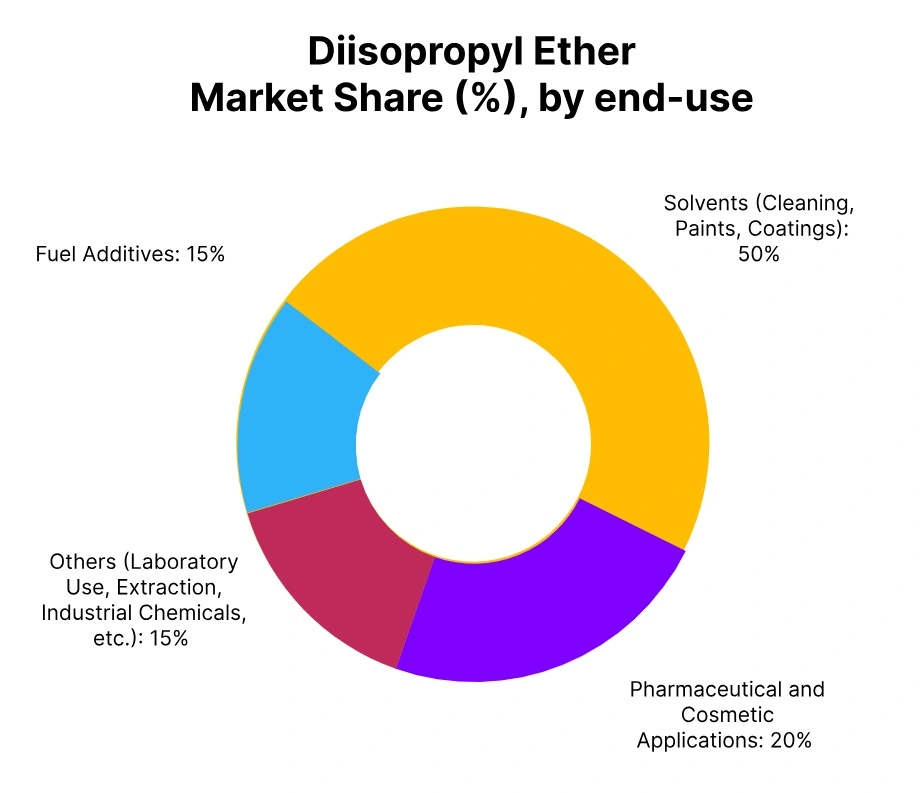
Diisopropyl ether is a colourless liquid widely used as a solvent and intermediate in various industrial applications. It plays a crucial role in the production of chemicals and as a solvent in chemical processes. Diisopropyl ether is also utilized in the pharmaceutical and cosmetic industries, where it serves as a solvent in drug formulations and personal care products. Its feedstock includes isopropyl alcohol, and it is commonly used as a fuel additive, particularly in gasoline formulations to improve fuel performance. Additionally, Diisopropyl ether is used as a solvent in coatings, cleaning agents, and in laboratory applications for extraction and separation processes.

Identifiers and Classification:

  • CAS No – 108-20-3
  • HS Code – 29091900
  • Molecular Formula – C6H14O
  • Molecular Weight (in gm/mol) – 102.18 g/mol


Diisopropyl Ether Synonyms:

  • Isopropyl ether
  • Diisopropyl oxide
  • 2-Isopropoxypropane
  • 2,2′-Oxybispropane
  • 2-Isopropoxy propane
  • Bis(isopropyl) ether
  • Diisopropyl ether
  • DIPE


Diisopropyl Ether Grades Specific Price Assessment:

  • Industrial Grade (99% min)


Diisopropyl Ether Global Trade and Shipment Terms

  • Quotation Terms (Product & Country Specific): 25-28 MT
  • Packaging Type (Product & Country Specific): 180kg Drum


Incoterms Referenced in Diisopropyl Ether Price Reporting

Shipping Term  Location  Definition 
FOB Shanghai   Shanghai, China  Diisopropyl Ether Export Price from China 
FOB Hamburg  Hamburg, Germany  Diisopropyl Ether Export Price from Germany 
CIF Mersin (Germany)  Mersin, Turkey  Diisopropyl Ether Import price in Turkey from Germany 
FD Antwerp  Antwerp, Belgium  Diisopropyl Ether domestically traded price in Belgium 
CIF Jeddah (China)  Jeddah, Saudi Arabia  Diisopropyl Ether Import price in Saudi Arabia from China 
CIF Busan (China)  Busan, South Korea  Diisopropyl Ether Import price in South Korea from China 
CIF JNPT (China)  Nhava Sheva, India  Diisopropyl Ether Import price in Nhava Sheva from China 

*Quotation Terms refers to the quantity range specified for the Diisopropyl Ether being quoted or offered in a commercial transaction.

**Packaging Type refers to standard packaging size commonly used for Diisopropyl Ether packing, ease of handling, transportation, and storage in industrial and commercial applications.


Key Diisopropyl Ether Manufacturers

Manufacturer 
INEOS Solvents 
Exxon Mobil 
BASF SE 
Haike Group 

Diisopropyl Ether (dipe) Industrial Applications

diisopropyl ether market share end-use

Historically, several events have caused significant fluctuations in Diisopropyl Ether (dipe) prices

  • Surplus inventories: Periods of oversupply in the market which lead to price drops. For example, increased production capacity by major manufacturers can saturate the market and reduce prices. 
  • Pandemic Impact (2020-2021): The global COVID-19 pandemic led to disruptions in supply chains and changes in demand patterns. Germany and China, as a major producer, faced challenges that affected DIPE production and pricing. 
  • Geopolitical Tensions (2018-2019): U.S.-China trade wars caused price instability due to disrupted supply chains. 
  • U.S.-China Trade War (2018-2019): Trade disputes and tariffs imposed between the U.S. and China affected the chemical industry, including DIPE. Tariffs on chemical imports and exports impacted market dynamics and pricing. 
  • Supply Chain Issues: Disruptions in the supply of key raw materials for DIPE production, such as methanol and carbon monoxide, due to domestic and international factors have influenced DIPE prices. 
  • Oil Price Crises (e.g., 1973, 1980s, 2014-2016): As a major oil producer, Saudi Arabia’s oil price fluctuations impact the cost of raw materials and energy used in DIPE production. Sharp oscillations in crude oil prices which indirectly influenced the chemical production costs and DIPE prices. 

These events underscore the Diisopropyl Ether market’s vulnerability to global disruptions and highlight the need for continuous monitoring of supply-demand dynamics.

Why Price Watchâ„¢?

Price Watchâ„¢ is your trusted resource for tracking global diisopropyl ether (dipe) price trends. Our platform delivers real-time data and expert analysis, offering deep insights into the key factors driving price fluctuations in the diisopropyl ether (dipe) market. By monitoring critical events such as geopolitical tensions, supply chain disruptions, and economic shifts, Price Watchâ„¢ keeps you fully informed of market dynamics.

In addition, Price Watch™ provides detailed forecasts and updates on production capacities, enabling you to anticipate market changes and make well-informed decisions. With Price Watch™, you gain a competitive edge in understanding all the elements that influence diisopropyl ether (dipe) prices worldwide. Stay ahead of the curve with Price Watch’s™ reliable, accurate, and timely diisopropyl ether (dipe) market data.

Track Price Watch'sâ„¢ diisopropyl ether (dipe) price assessment on a weekly basis since 2015 onwards, along with short-term forecasts, and get access to the detailed report in a downloadable format.

Diisopropyl Ether (dipe) Market Price Trend published by Price Watchâ„¢ reflect prevailing spot market conditions, derived from independent research, verified trade inputs, and proprietary market intelligence as of the publication date. Prices are published on the specified Incoterm and represent indicative base market levels, exclusive of applicable taxes, VAT, duties, tariffs, and other statutory charges. Actual transaction values may vary depending on volume, credit terms, contractual structure, and other negotiated conditions. Market prices are inherently subject to volatility, liquidity dynamics, regulatory changes, and evolving trade activity. The information provided is for reference and benchmarking purposes only and does not constitute an offer, recommendation, or guarantee of transactional outcomes. Users should exercise independent commercial judgment and assess their specific contractual, regulatory, tax, and application requirements before making business decisions. Price Watchâ„¢ assumes no liability for decisions taken based on this information.

The price of Diisopropyl Ether (DIPE) is influenced by several key factors, including raw material costs (particularly isopropanol), market supply and demand dynamics, and regional production capacities. Changes in the cost of raw materials like propylene and ethylene, fluctuations in global demand from industries such as pharmaceuticals, agrochemicals, and solvents, and geopolitical factors affecting production regions like Asia-Pacific can lead to price volatility. Additionally, transportation costs and currency exchange rates may also impact DIPE pricing for procurement.

Supply chain disruptions can have a significant effect on Diisopropyl Ether (DIPE) pricing. Issues such as logistics bottlenecks, raw material shortages, and manufacturing delays can restrict the supply of DIPE, leading to price increases due to scarcity. On the other hand, if production levels exceed demand, or if there are improvements in raw material availability and logistics, DIPE prices may decline. Procurement heads should stay updated on potential disruptions in key regions like Asia-Pacific and Europe, as these areas are major producers and consumers of DIPE.

To secure competitive Diisopropyl Ether (DIPE) pricing, procurement heads can adopt several strategies. Long-term contracts with suppliers can provide price stability and protect against market fluctuations. Sourcing from multiple suppliers in different regions, particularly in Asia-Pacific and Europe, can help mitigate the impact of regional price hikes. Staying informed about market trends, such as raw material price changes, and timing purchases based on market lows can also help optimize costs. Additionally, building strong supplier relationships can lead to better negotiation leverage and favorable terms.

Diisopropyl ether is a highly versatile solvent widely used in various industries, particularly in the chemical, pharmaceutical, and petrochemical sectors. It serves as a crucial solvent in the production of coatings, paints, and adhesives, as well as in the extraction and purification of specific compounds. Diisopropyl ether is also employed in laboratories and industrial applications for its ability to dissolve a wide range of organic compounds. It is used in the formulation of chemical products, including cleaning agents and degreasers, due to its effective solvent properties. In the pharmaceutical industry, Diisopropyl ether plays a role as a solvent in drug formulation. Additionally, it is utilized in the production of specialty chemicals and as a component in fuel additives. The price of Diisopropyl ether significantly influences the production costs of these materials, making it an essential chemical in industries reliant on solvents and performance-enhancing chemicals. Price-Watchâ„¢ tracks these prices to help businesses and consumers understand and stay updated with the market trends.

Diisopropyl ether prices vary by region and delivery basis. Prices are typically quoted per metric ton and change based on supply, demand, feedstock costs, and production capacity. Price-Watchâ„¢ provides real-time price assessments across different global markets to help buyers and sellers make informed decisions.

Diisopropyl ether prices fluctuate due to a variety of factors, including changes in raw material costs (such as isopropanol and propylene), energy price fluctuations, and production capacity utilization. Demand from industries like pharmaceuticals, chemicals, paints, coatings, and petrochemicals significantly influences price trends. Seasonal demand in sectors such as solvents, cleaning agents, and industrial chemicals, along with inventory levels, transportation and logistics costs, and competition from alternative solvents, also impact pricing. Additionally, trade policies, tariffs, and fluctuations in the availability of key raw materials, such as isopropanol, play vital roles in shaping price movements. Plant turnarounds, maintenance schedules, and broader economic conditions, including global supply chain disruptions and geopolitical tensions, further contribute to price volatility. Recent market trends have been affected by raw material cost fluctuations, production output variations, and demand cycles in key industrial sectors.

The biggest buyers of Diisopropyl ether are manufacturers in the chemical, pharmaceutical, and petrochemical industries. Diisopropyl ether is widely used as a solvent in various applications, including coatings, paints, adhesives, and cleaning agents. It plays a critical role in the pharmaceutical industry, where it is used as a solvent in drug formulations and as an extraction agent. The chemical industry also relies on Diisopropyl ether for its ability to dissolve a wide range of organic compounds, making it essential in the production of specialty chemicals. Additionally, Diisopropyl ether is utilized in the petrochemical industry for its role in refining and as a component in fuel additives. Other significant demand comes from industries such as textiles and agriculture, where it is used in formulations for pesticides and other chemicals. Price-Watchâ„¢ analyzes demand patterns across these diverse industries to provide valuable insights into market trends.

Diisopropyl ether is primarily produced through the dehydration of isopropanol, typically using an acidic catalyst such as sulfuric acid or phosphoric acid in specialized reactors. Isopropanol, the key feedstock, is commonly produced through the hydration of propene, which is derived from petrochemical refining processes. The resulting Diisopropyl ether is then purified through distillation and used in various industrial applications. Sustainable production routes are also being explored, with an emphasis on using bio-based feedstocks and renewable energy sources. Major chemical companies that manufacture Diisopropyl ether operate integrated production facilities to serve industries such as pharmaceuticals, paints and coatings, petrochemicals, and solvents. These companies aim to meet the growing demand for Diisopropyl ether in applications like drug formulation, industrial cleaning, and as a solvent in various chemical processes.

Diisopropyl ether trade is influenced by factors such as production capacity, raw material availability, and regional demand across key industries like chemicals, pharmaceuticals, and petrochemicals. Major producers, including countries like the United States, China, and Germany, are significant exporters of Diisopropyl ether, with large-scale production facilities for feedstocks such as isopropanol. In Asia, countries like India and South Korea play critical roles in the global Diisopropyl ether market, driven by strong demand from the chemical and pharmaceutical industries. Europe, especially countries like the United Kingdom and France, contributes significantly to meeting the demand for Diisopropyl ether in sectors such as coatings, cleaning agents, and solvents. Export volumes fluctuate based on production capacity, raw material costs, seasonal demand, shipping expenses, and regional supply-demand dynamics. Trade flows are also impacted by factors such as competition from alternative solvents, trade policies, tariffs, and region-specific pricing conditions. Price-Watchâ„¢ tracks production levels, export flows, and trade patterns to help businesses understand global supply chains and identify sourcing opportunities.

Supply and demand for Diisopropyl ether generally remain balanced, but regional shortages can arise due to production disruptions, such as plant shutdowns, raw material supply constraints, and transportation challenges. Unplanned or planned maintenance at key manufacturing facilities, limitations in the availability of feedstocks like isopropanol or propylene, or changes in production focus can temporarily tighten the market. Sudden surges in demand from industries like pharmaceuticals, paints, coatings, and chemical manufacturing can also strain supply, leading to short-term imbalances. These disruptions can result in tighter availability and rising prices, particularly during peak demand periods or when production capacity is constrained. Additionally, fluctuations in raw material costs, geopolitical tensions, and trade barriers can further contribute to supply-demand imbalances and price volatility in the market for Diisopropyl ether. Price-Watchâ„¢ monitors these supply-demand imbalances to alert the market about potential shortages or surpluses, helping businesses stay informed about market conditions and make proactive sourcing decisions.

Diisopropyl ether prices fluctuate based on application grades, delivery terms, and contract structures. Diisopropyl ether is produced in different grades depending on its purity and intended use. Lower-grade Diisopropyl ether (typically 99% purity) is commonly used in applications such as solvents, cleaning agents, and degreasers, while higher-grade Diisopropyl ether (greater than 99.5% purity) is employed in more specialized applications like pharmaceutical formulations and chemical synthesis. Higher purity grades typically command premium prices due to their suitability for more precise and demanding processes. Pricing also varies based on delivery terms (truck, rail, marine, or bulk shipments), contract structures (spot versus long-term agreements), and geographic location, with regional supply and demand factors influencing overall costs. The cost of Diisopropyl ether is also impacted by fluctuations in raw material prices, transportation expenses, and market competition. Price-Watchâ„¢ provides separate price assessments for different delivery bases and contract types, ensuring market transparency for businesses and consumers.

When Diisopropyl ether demand rises quickly, often driven by increased pharmaceutical production, solvent requirements, or higher needs in coatings and cleaning agents, prices generally increase. Suppliers may prioritize long-term contract customers, while spot buyers may face tighter availability, extended lead times, or significantly higher prices to secure supplies. Production flexibility is constrained by raw material availability, manufacturing capacity limits, and the time required to restart or ramp up production facilities. Market conditions, such as seasonal demand spikes, especially in the chemical and pharmaceutical industries, or supply chain disruptions, can further impact availability and contribute to price increases. Additionally, fluctuations in feedstock costs, such as isopropanol and propylene, can influence production costs, further driving up the price of Diisopropyl ether. Price-Watchâ„¢ captures these market dynamics in real-time.

Energy and feedstock costs are the dominant factors in Diisopropyl ether pricing. When crude oil, natural gas, or electricity prices rise, the cost of producing Diisopropyl ether increases, as raw materials like isopropanol and propylene become more expensive. The production of Diisopropyl ether is energy-intensive, especially during the dehydration process, making it highly sensitive to fluctuations in energy prices. The pricing of Diisopropyl ether is closely tied to raw material costs, such as isopropanol for the dehydration reaction and propylene as a key feedstock. Increases in energy prices or disruptions in the supply of these raw materials can lead to higher production costs, directly impacting Diisopropyl ether prices. Additionally, energy constraints and supply chain disruptions can exacerbate cost increases, affecting overall market pricing. This relationship is analyzed in real-time by Price-Watchâ„¢, which tracks energy costs and feedstock trends to provide accurate price assessments and market insights.

Diisopropyl ether prices vary by region based on local production capacity, feedstock availability, manufacturing infrastructure, energy costs, and regional supply-demand balances. Differences in feedstock types, such as isopropanol and propylene, influence production costs, with regions relying on different raw materials or processes affecting Diisopropyl ether pricing. Local energy prices, transportation costs, and logistics also play a significant role in price variations. Additionally, the concentration of key industries, such as pharmaceuticals, chemicals, coatings, and petrochemicals, as well as the level of Diisopropyl ether import/export activity, influence regional pricing dynamics. Regions with stronger pharmaceutical, chemical, and solvent industries tend to experience different pricing trends compared to regions with less industrial concentration. Economic conditions, regulatory factors, and geopolitical events can also impact regional price movements for Diisopropyl ether. Price-Watchâ„¢ tracks DIPE prices across all major regions to highlight these differences and provide detailed market insights.

The Diisopropyl ether market outlook depends on factors such as isopropanol and propylene feedstock price trends, production rates in key manufacturing sectors, capacity expansions (including Diisopropyl ether production units), and maintenance schedules. Industry demand from pharmaceuticals, chemicals, coatings, and petrochemicals, as well as growth in solvents, cleaning agents, and industrial applications, are critical drivers of price trends. Changes in feedstock availability, particularly isopropanol and propylene, along with fluctuations in transportation or shipping costs, can also influence Diisopropyl ether pricing. Additionally, regional supply-demand balances, import/export dynamics, and broader macroeconomic conditions affecting pharmaceutical production, coatings manufacturing, and chemical industries will play a key role in shaping market trends. Geopolitical events, energy prices, and supply chain disruptions may also contribute to price volatility. Price-Watchâ„¢ regularly publishes detailed forecasts, analyzing supply-demand patterns, seasonal trends, and economic indicators to help businesses anticipate market conditions and plan accordingly for DIPE prices over the next 12 months.

Absolutely. Accurate forecasting allows you to time your purchases better, negotiate contracts more effectively, and budget more accurately. If Price-Watchâ„¢ forecasts predict a price increase in three months, you might choose to stock up now or lock in long-term contracts at current rates, potentially saving thousands of dollars.

Global events can significantly impact Diisopropyl ether supply and prices. Disruptions such as natural disasters, accidents at production facilities, feedstock supply shortages, planned and unplanned maintenance shutdowns, and geopolitical tensions affecting raw material markets can lead to supply shortages and price volatility. For example, disruptions like hurricanes or floods impacting chemical plants, unplanned plant shutdowns in key production regions, geopolitical tensions in areas critical for isopropanol or propylene production, or labor strikes in major manufacturing hubs can create significant market volatility for Diisopropyl ether. Economic downturns or changes in demand from key sectors like pharmaceuticals, chemicals, and coatings can also influence pricing. These global events often result in fluctuations in availability and pricing, impacting industries that rely on Diisopropyl ether for their products, such as in drug formulations, cleaning agents, and industrial solvents. Price-Watchâ„¢ provides timely alerts when such global events affect DIPE market conditions, helping businesses anticipate price fluctuations.

Price-Watchâ„¢ collects data from manufacturers, distributors, and buyers worldwide to publish regular price assessments, market reports, and forecasts for DIPE. Our transparent methodology and comprehensive coverage make us a trusted source for understanding fair pricing and market trends in the DIPE industry.