Dimethyl Acetamide (dmac) Price Trend and Forecast

UNSPC code: 12352100
|
Weekly Update
|
Historical Data Since 2015
|
Forecast for 2026

dimethyl acetamide (dmac) Price Trends by Country

cnChina
inIndia
vnVietnam
arArgentina

Global dimethyl acetamide (dmac) Spot Market Prices, Trend Analysis and Forecast

Price-Watch™ provides real-time price assessments and price forecasts for Dimethyl Acetamide (DMAC) across top trading regions:

Dimethyl Acetamide (DMAC) Regional Coverage   Dimethyl Acetamide (DMAC) Grade and Country Coverage   Dimethyl Acetamide (DMAC) Pricing Data Coverage Explanation  
Asia- Pacific Dimethyl Acetamide (DMAC) Pricing Analysis   Dimethyl Acetamide (DMAC) Industrial Grade 99% min Grade FOB Prices at Shanghai Port, China  Weekly Price Update on Dimethyl Acetamide (DMAC) Real-Time Export Prices from Shanghai Port, China to Global Markets  
Dimethyl Acetamide (DMAC) Industrial Grade 99% min Grade CIF Prices Haiphong Port, Vietnam. Importing from China  Weekly Price Update on Dimethyl Acetamide (DMAC) 
Real-Time Import Prices at Haiphong Port, Vietnam, from China  
Dimethyl Acetamide (DMAC) Industrial Grade 99% min Grade CIF Prices at Nhava Sheva Port, West India. Importing from China  Weekly Price Update on Dimethyl Acetamide (DMAC) Real-Time Import Prices at Nhava Sheva Port, West India, from China. 
South America Dimethyl Acetamide (DMAC) Pricing Analysis  Dimethyl Acetamide (DMAC) Industrial Grade 99% min Grade CIF Prices at Buenos Aires Port, Argentina. Importing from China  Weekly Price Update on Dimethyl Acetamide (DMAC) Real-Time Import Prices at Buenos Aires Port, Argentina, from China. 


Note: In assessments structured as CIF [Importing Port] (Exporting Country), the country mentioned in brackets indicates the primary origin of supply (exporting country), while the named port refers to the destination port in the importing country. Other Incoterms (FOB, FD, EXW, etc.) should be interpreted in accordance with standard international trade definitions.

Dimethyl Acetamide Price Trend Q1 2026

Dimethyl acetamide (DMAc) prices in the first quarter of 2026 have shown moderate growth, reflecting growth of +1% to +15%. Dimethyl acetamide price trend in China, Argentina, Vietnam, and India have shown varying levels of growth, owing to consistent demand from industries such as water treatment and manufacturing.

Dimethyl acetamide (DMAc) prices in the specified regions have continued to remain on an upward  Dimethyl acetamide trend owing to favorable production levels and balanced supply and demand in these markets, despite certain price pressures in some markets owing to volatility in the cost of raw materials.

Overall, dimethyl acetamide (DMAc) prices have continued to be stable due to adequate raw material availability and purchasing, along with modest growth.

China: Dimethyl Acetamide (DMAC) Export price from FOB Shanghai, China, Industrial Grade 99% min Purity

Dimethyl Acetamide (DMAc) price in China for the period Q1 2026 has varied where price variations are +1% to +15%. The dimethyl acetamide price trend in China is affected by steady demand by major sectors like water treatment and industries, along with a constant supply of the commodity in the region. The broad trading range is due to fluctuations in the availability of cargo and purchasing.

Despite the continuous growth observed in the market during the quarter, in China, Dimethyl Acetamide (DMAc) prices in March 2026 have experienced an abrupt rise of +8%. The surge in prices has been attributed to supply chain disturbances in the strait of Hormuz, which are possibly exacerbated by political tensions between US and Iran, resulting in a temporary lack of regional availability.

Production levels remained constant across the quarter, whereas consumption levels rose steadily in specific sectors.

Argentina: Dimethyl Acetamide (DMAC) imported price CIF Buenos Aires from China, Argentina, Industrial Grade 99% min Purity

In the first quarter of 2026, Dimethyl Acetamide (DMAc) prices in Argentina have witnessed strong price changes ranging between +1% and +14%. The dimethyl acetamide price trend in Argentina has been impacted by the moderate level of demand coming from end-use industries, including water treatment and industrial use, coupled with a steady supply situation within the region.

Despite the overall steady growth in the quarter, in Argentina, Dimethyl Acetamide (DMAc) prices in March 2026 have experienced a sharp increase of +9%. Such a rise has been facilitated by disruptions in the supply chain processes due to possible geopolitical conflicts that have contributed to tightening the regional supply.

Over the quarter, production volumes have maintained their steady level, whereas consumption increased steadily. The overall dimethyl acetamide price trend in Argentina has been determined by volatile supply factors affecting price dynamics during the quarter.

Vietnam: Dimethyl Acetamide (DMAC) imported price CIF Haiphong from China, India, Industrial Grade 99% min Purity

According to Price-Watch™, in Q1 2026, Dimethyl Acetamide (DMAc) prices in Vietnam witnessed fluctuations between +1% and +10%. Dimethyl acetamide price trend in Vietnam is driven by steady demand from sectors such as water treatment and industrial applications, alongside stable regional supply.

The wide price range reflected varying cargo availability and changes in purchasing activity. In Vietnam, dimethyl acetamide price trend in March 2026 market saw consistent growth throughout the quarter, a sharp price increase of +8%. This rise is primarily attributed to supply chain disruptions, likely worsened by geopolitical tensions, which tightened regional availability and caused short-term supply constraints.

Throughout the quarter, production levels remained steady, and consumption grew at a moderate pace in certain sectors. The broader market showed signs of supply-driven volatility, with significant price movements reflecting the evolving dynamics within the Vietnamese DMAc market.

India: Dimethyl Acetamide (DMAC) imported price CIF Nhava Sheva from China, India, Industrial Grade 99% min Purity

India: Domestic Traded price EX Bhiwandi, India, Industrial Grade 99% min Purity

In Q1 2026, Dimethyl Acetamide (DMAc) price in India witnessed sharp volatility. The dimethyl acetamide price trend showed an upward movement, with CIF prices rising by 1% to 14%, and Ex-India prices increasing by 1% to 9%. A sharp price increase occurred in March, with CIF prices rising by 9.5%, while Ex-India prices saw a 4% increase.

The price surge is driven by steady demand from key sectors such as water treatment and industrial applications, alongside ongoing import constraints and rising logistics costs. The Indian market, particularly Ex-India, faced challenges due to delays in international shipments, port congestion, and a weaker rupee, which further increased import costs.

While the global DMAc market remained relatively stable, regional supply chain disruptions and logistical bottlenecks contributed to the upward price movement. As supply chains gradually stabilize and production capacity increases, DMAc prices in India may ease in the coming quarter. However, robust demand and potential disruptions could continue to support higher pricing.

Dimethyl Acetamide (DMAC) Price Trend Analysis: Q4 2025

For the fourth quarter of 2025, the DMAc industry has experienced a minor fall in prices corresponding to a rate of change from -1% to -4%. The dimethyl acetamide (DMAc) price for countries like China, Argentina, Vietnam, and India has witnessed diverging tendencies, due to the constant demand from sectors like the water treatment and industrial sector. There is no denying that dimethyl acetamide (DMAc) prices have maintained stability on account of stable production levels and a balanced supply-demand relationship, despite certain regions having faced upward price pressures on the back of changes in the cost of feedstocks. The stability in dimethyl acetamide (DMAc) prices can be attributed to stable feedstocks availability and efficient procurement methods, while the growth rate has been hampered owing to various other factors.

China: DMAC Export price from FOB Shanghai, China, Industrial Grade 99% min Purity

Dimethyl Acetamide (DMAc) prices in China for Q4 2025 have been experiencing variations of +1% to +4%. The Dimethyl Acetamide (DMAc) pricing trend in China has been positive, and prices have been at USD 780 in December 2025, showing an increment of 1% from the previous month. The above trend in prices is attributed to the steady demand in the markets where water treatment products are produced, as well as industrial activities. In India, Dimethyl Acetamide (DMAc) prices in December 2025 have been stable supply in terms of production and demand.

Argentina: DMAC imported price CIF Buenos Aires from China, Argentina, Industrial Grade 99% min Purity

The Dimethyl Acetamide (DMAc) price in Argentina for Q4 2025 has reported volatility within a range of +1% to +4%. Dimethyl Acetamide (DMAc) price trend in Argentina reveals a drop in December prices to USD 880, indicating a fall of -4% against its price in the previous month. However, the sustained demand from various end-user sectors including water treatment and industries is offset by supply shortages and geopolitical instabilities in the country. Although there has been a consistent demand for DMAc in various sectors, the market continues to face supply-related issues that impact the overall DMAc price trend in Argentina.

Vietnam: DMAC imported price CIF Haiphong from China, India, Industrial Grade 99% min Purity

In Q4 2025, Dimethyl Acetamide (DMAc) prices in Vietnam ranged from USD 800 to USD 950 per metric ton, with fluctuations between +1% and +4%. The price trend is relatively stable, with the price reaching USD 818 in December 2025, showing a slight increase of 1% compared to the previous month. The price movement is primarily influenced by steady demand from sectors such as water treatment and industrial applications, while regional supply remained stable. The market showed signs of stability despite occasional fluctuations, with consistent demand and production conditions supporting the price trend.

In Q4 2025, Dimethyl Acetamide (DMAc) prices in Vietnam have observed fluctuations between +1% and +4%. The Dimethyl Acetamide (DMAc) price trend in Vietnam has remained relatively stable, with prices reaching USD 818 in December 2025, reflecting a slight increase of 1% compared to the previous month. This price movement has been primarily influenced by steady demand from sectors such as water treatment and industrial applications, while regional supply has remained stable. In Vietnam, Dimethyl Acetamide (DMAc) price in December 2025 has shown signs of stability despite occasional fluctuations, with consistent demand and production conditions supporting the overall Dimethyl Acetamide (DMAc) price trend in Vietnam.

India: DMAC imported price CIF Nhava Sheva from China, India, Industrial Grade 99% min Purity

India: Domestic Traded price Bhiwandi, India, Industrial Grade 99% min Purity

In Q4 2025, Dimethyl Acetamide (DMAc) prices in India witnessed firm upward movement. The CIF price trend showed an increase of 1% to 5%, while the Ex-India price range increased by 0.5% to 2%. In December 2025, CIF prices reached USD 850, reflecting a minimal increase of 0.05%, while Ex-India prices reached USD 1350, showing a slight decrease of -0.15%. The price movement is driven by steady demand from key sectors such as water treatment and industrial applications, alongside ongoing logistical challenges, delays in shipments, and a weaker rupee. While the global DMAc market remained stable, regional disruptions and import constraints led to higher import costs in India.

In Q3 2025, the global Dimethyl Acetamide (DMAC) market showed moderate stability with regional variations. The price trend for DMAc fluctuated sharply during the July-September 2025 quarter, influenced by stable feedstock costs, energy prices, and regional supply chain dynamics.

Despite some fluctuations in upstream factors, consistent demand from the pharmaceutical, chemical, and textile industries supported price stability. Ongoing expansions in production capacity and supply chain adjustments are expected to sustain stable prices in the upcoming quarter.

Argentina: Dimethyl Acetamide (DMAC) import price CIF Buenos Aires, Argentina, Grade- Industrial Grade 99.9% Purity.

In Q3 2025, Dimethyl Acetamide (DMAC) price in Argentina increased by 21.6%, reflecting moderation in imports due to tightening global supply conditions. The Dimethyl Acetamide (DMAC) price trend in Argentina faced upward pressure, as feedstock Acetic Acid and Anhydrous Dimethylamine availability tightened due to rising domestic consumption in China.

Exporters became more selective, limiting flexibility in overseas shipments, and Argentine buyers responded cautiously. In September 2025, the dimethyl acetamide prices in Argentina have been assessed at USD 1044 per metric ton.

While demand from Argentina’s pharmaceutical sector remained firm, textile demand slowed, weighed down by inflationary pressures and weaker consumer spending. Freight conditions remained high compared to historical averages, keeping landed costs elevated.

Currency volatility in Argentina further constrained procurement decisions, prompting buyers to adopt leaner inventory practices. Overall, Q3 2025 highlights a shift in sentiment from earlier optimism, with constrained upstream supply and higher cost bases impacting Argentina’s import activity despite ongoing demand.

China: Dimethyl Acetamide (DMAC) Export price FOB Shanghai, China, Grade- Industrial Grade 99.9% Purity.

In Q3 2025, Dimethyl Acetamide (DMAc) price in China increased by 10.6%, reflecting a moderation in export momentum after the strong performance of the previous quarter.

The Dimethyl Acetamide (DMAC) price trend in China faced challenges on the supply side, with tight feedstock Acetic Acid availability due to increased domestic consumption and limited expansion capacity of Anhydrous Dimethylamine supplies. These factors placed upward pressure on production costs, reducing exporters’ ability to sustain earlier levels of competitiveness.

According to Price-Watch, in September 2025, the dimethyl acetamide prices in China have been assessed at USD 895 per metric ton. Logistics inefficiencies also resurfaced, with regional freight costs firming due to seasonal container shortages. While importers in Southeast Asia and South Asia continued procurement at slightly reduced levels, some European buyers turned to alternative suppliers for price relief.

Despite these challenges, export volumes remained resilient, albeit at moderate levels compared to Q2. Overall, the Q3 2025 price change highlights the impact of upstream constraints on Dimethyl Acetamide (DMAC) export dynamics.

Vietnam: Dimethyl Acetamide (DMAC) import price CIF Haiphong, Vietnam, Grade- Industrial Grade 99.9% Purity.

In Q3 2025, Dimethyl Acetamide (DMAC) price in Vietnam increased by 9.8%, as imports continued rising, though at a slower pace compared to the previous quarter. The Dimethyl Acetamide (DMAC) price trend in Vietnam was influenced by steady demand from the textile sector, while the pharmaceutical and chemical industries sustained procurement.

However, concerns over tightening global feedstock supply began to impact trade sentiment. In September 2025, the dimethyl acetamide prices in Vietnam have been assessed at USD 933 per metric ton. FOB China offers firmed in Vietnam, reflecting cost pressures from constrained availability of Acetic Acid and limited expansion in Anhydrous Dimethylamine production.

Export flexibility narrowed as Chinese producers prioritized domestic demand, while freight rates across Southeast Asia edged up slightly due to seasonal container demand, contributing to higher landed costs.

Vietnamese buyers responded cautiously, securing necessary volumes but avoiding large forward bookings, wary of potential rising input costs. Overall, Q3 2025 reflects a phase of slower momentum, with persistent demand supporting imports but tightening upstream fundamentals beginning to temper trade enthusiasm.

India: Dimethyl Acetamide (DMAC) import price CIF Nhava Sheva, India, Grade- Industrial Grade 99.9% Purity.

In the third quarter of 2025, the pricing of Dimethyl Acetamide (DMAc) exhibited a 14.4% upsurge (CIF basis – from China) and a 2.96% spike (Ex Bhiwandi-basis) in India. The sequential rise in Dimethyl Acetamide (DMAC) prices in India reflects a broad moderation in production and supply due to the aforementioned tightness in upstream conditions.

In particular, the availability of feedstocks has been pressurized as regional competition for acetyl-based intermediates developed. As of September 2025, the prices of dimethyl acetamide in India have been assessed at USD 988 per metric ton.

This entailed further pressure on operating costs and brought concern about the continued capacity of producers to operate at earlier levels of output.

While downstream demand has been steady across a mix of customers (with pharmaceuticals continuing to add strong demand) indications of seasonal moderation against the backdrop of the monsoon weather have been witnessed in textiles applications.

With supply concerns on the table, producers balanced a careful approach to sourcing and meeting proper customer demand with a more conservative approach to inventory management.

According to the PriceWatch, Dimethyl Acetamide prices from China saw a decrease to 777 USD per MT in Q2 2025, marking an 8.59% drop from Q1. The DMAc price index reflected a downward adjustment, driven by weaker demand from key sectors in Argentina and Vietnam. Argentina’s textile industry experienced slower growth, impacting imports, while Vietnam faced a lull in pharmaceutical production.

India’s imports also showed some softness as local production partially satisfied demand. The DMAc price Trend showed a dip, indicating reduced consumption in downstream industries. Feedstock costs were slightly higher, which also contributed to the price decline.

The DMAc price Chart for Q2 revealed a downward slope, reflecting this price decrease across all three importing countries. Seasonality played a role, as the second quarter is typically less active in these markets, contributing to the overall reduction in demand for Dimethyl Acetamide. 

According to the PriceWatch, Dimethyl Acetamide prices from China to India (CIF) dropped to 840 USD per MT in Q2 2025, marking an 11.19% decrease from Q1. The DMAc price index reflected this notable reduction, which was influenced by a slower demand from India’s textile and pharmaceutical industries during the second quarter. In Bhiwandi, the Ex-Bhiwandi price also showed a modest decline to 1425 USD per MT, a 2.60% drop from Q1.

This reduction indicated a slowdown in local market activity, likely due to lower production during the monsoon season, which often disrupts industrial operations. Feedstock costs remained volatile, affecting overall pricing trends in both China and India.

The DMAc price Trend in Q2 indicated a dip in the Indian market, reflecting weaker consumption and a decrease in import volumes, particularly from China. The DMAc price Chart highlighted a declining trend in Q2, mainly driven by these factors and seasonal factors in India. 

With an 8.55% downturn, the Q1 2025 slump to 853 USD signals significant turbulence in the market, highlighting pressing economic challenges. Possible contributing factors include shifting consumer demand, economic instability, regulatory changes, or internal inefficiencies. Given the scale of the decline, this appears to go beyond typical seasonal fluctuations, warranting a thorough evaluation to pinpoint causes and implement strategies for recovery. 

The CIF Nhava Sheva price dropped again to USD 934, declining by 7.98%. Contrarily, the EX Bhiwandi-price rose to USD 1437, registering an increase of 7.00%. This divergence suggests continued reductions in import costs, coupled with growing local market costs. 

Dimethyl Acetamide (DMAC) Price Trend Analysis: Q4 2024

In Q4 2024, the price rose slightly to 933 USD, a marginal 0.28% increase, indicating market stability. This indicates a stabilization between supply and demand or a decline in external influences shaping market dynamics. While offering predictability and reduced risk, the minimal growth highlights the need for strategies to drive stronger momentum moving forward. 

The CIF Nhava Sheva price reached USD 1015, showing a marginal increase of 0.59%. On the other hand, the EX Bhiwandi-price climbed to USD 1343, with a significant rise of 10.17%. While import costs stabilized, local costs surged, indicating higher domestic demand or distribution expenses. 

In Q3 2024, the price increased by 3.96% to 931 USD, signaling market recovery. This growth likely resulted from improved demand, favorable economic conditions, and strategic adjustments, providing a positive outlook for further progress. 

The CIF Nhava Sheva price rebounded to USD 1009, reflecting an increase of 5.43%. Similarly, the EX Bhiwandi-price rose to USD 1219, showing growth of 3.83%. This quarter marked a recovery phase, with import and local costs rising moderately. 

In Q2 2024, the price fell to 895 USD, marking a 7.45% decline. This dip likely reflects a market correction, influenced by external factors like economic uncertainties or industry challenges, and possibly internal inefficiencies. It highlights the need for analysis and action to recover momentum. 

The CIF Nhava Sheva price declined further to USD 957, representing a reduction of 6.45%. The EX Bhiwandi-price also decreased, falling to USD 1174, with a sharper decline of 11.80%. This indicates a downward trend in both import and local costs during this period. 

In Q1 2024, the price of dimethylacetamide reached 967 USD, showing a strong start to the year. Favourable conditions like steady demand, efficient production, and stable supply chains contributed to this performance, providing a solid foundation for subsequent market trends. 

 The CIF Nhava Sheva price was USD 1023, showing a decrease of 10.03%. However, the EX Bhiwandi-price was USD 1331, with a slight increase of 2.62%. This suggests that while import costs dropped significantly, local distribution costs experienced mild growth. 

Technical Specifications of Dimethyl Acetamide (dmac) Price Trends

Product Description

Dimethylacetamide (DMAc) is a versatile organic solvent widely used in industries such as pharmaceuticals, textiles, and chemicals. It is produced from acetic acid and dimethylamine as feedstocks. DMAc serves as a solvent for polymers, resins, and dyes due to its high polarity, low volatility, and excellent solvency power, making it essential in various industrial applications.

Identifiers and Classification:

  • CAS No – 127-19-5
  • HS Code – 29241900
  • Molecular Formula – C4H9NO
  • Molecular Weight[g/mol] – 87.12 g/mol


DMAC Synonyms:

  • Dimethylacetamide
  • DMAc
  • DMA
  • DMAC
  • N,N-Dimethyl acetamide
  • Acetdimethylamide
  • Dimethyl acetamide
  • Dimethylamide acetate


DMAC Grades Specific Price Assessment:

  • Industrial Grade 99.9% Purity Price Trend


DMAC Global Trade and Shipment Terms

  • Quotation Terms (Product & Country Specific): 25-28 MT
  • Packaging Type (Product & Country Specific): ISO Tanks (Global), 200 kg Drum (India)


Incoterms Referenced in DMAC Price Reporting

Shipping Term  Location  Definition 
FOB Shanghai  Shanghai, China  DMAC Export price from China 
CIF Buenos Aires (China)  Buenos Aires, Argentina  DMAC import price in Argentina from China 
CIF Haiphong (China)  Haiphong, Vietnam  DMAC import price in Vietnam from China 
CIF Nhava Sheva (China)  Nhava Sheva, India  DMAC import price in India from China 
Ex Bhiwandi  Bhiwandi, India  Domestically Traded DMAC price in Bhiwandi 

*Quotation Terms refers to the quantity range specified for the DMAC being quoted or offered in a commercial transaction.

**Packaging Type refers to standard packaging size commonly used for DMAC packing, ease of handling, transportation, and storage in industrial and commercial applications.


DMAC Manufacturers and their brands

Brand Name  Manufacturer 
N/A  Shandong Yifan Chemical Technology Co., Ltd. 
Balaji DMAc  Balaji Amines Ltd. 
  Gujarat Alkalies and Chemicals Ltd. (GACL) 
Hangda DMAc  Hangda Chemical 

Dimethyl Acetamide (dmac) Industrial Applications

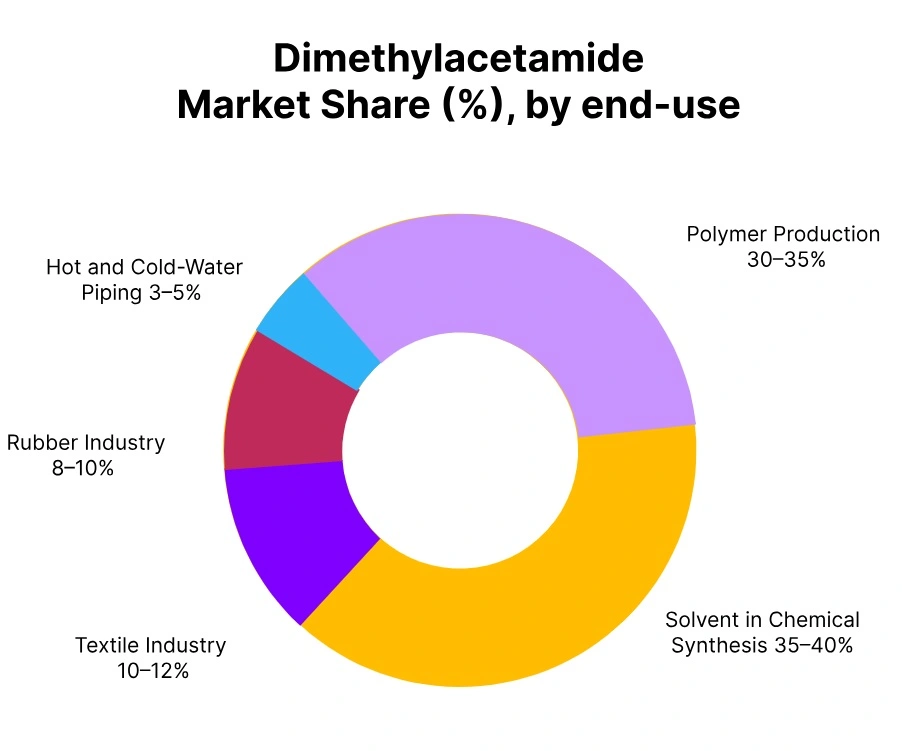
dimethyl acetamide market share end use

Historically, several events have caused significant fluctuations in Dimethyl Acetamide (dmac) prices

  • Russia-Ukraine Conflict (2022): The Russia-Ukraine conflict that began in 2022 has significantly impacted the global chemical market, including the prices of Dimethyl Acetamide (DMAc). The conflict has disrupted supply chains, particularly for raw materials and energy sources, which are crucial for chemical production. 

One major factor has been the rise in energy costs, as Russia is a key supplier of natural gas. Higher energy prices lead to increased production costs for chemicals, including DMAc, which in turn drives up market prices. Additionally, the conflict has caused instability in the supply of certain chemicals and intermediates, making it harder for producers to maintain steady production levels. 

Moreover, the geopolitical uncertainty has led to fluctuations in trade policies and tariffs, affecting the availability of DMAc in various regions. As countries seek alternative suppliers or face sanctions, the supply chain becomes more strained, further contributing to price volatility. 

  • COVID-19 Pandemic (2020): The COVID-19 pandemic that emerged in 2020 had a notable impact on the prices of Dimethyl Acetamide (DMAc). Initially, the pandemic caused widespread disruptions in global supply chains due to lockdowns, reduced workforce availability, and transportation challenges. This led to delays in production and shipping, which strained the availability of DMAc and resulted in price increases. 

As demand for pharmaceuticals and personal protective equipment surged during the pandemic, the need for certain chemicals, including DMAc, also rose. This heightened demand further pressured supply chains that were already struggling to keep up. Many manufacturers faced difficulties sourcing raw materials, contributing to overall production delays and cost escalations. 

On the flip side, as economies began to reopen and production ramped up, there was a shift in demand patterns. Some industries, particularly in automotive and construction, experienced slow recoveries, which eventually stabilized DMAc prices. However, the lingering effects of supply chain disruptions meant that volatility remained a concern. 

  • Geopolitical Tensions (2018-2019): Geopolitical tensions in 2018 and 2019 had a noticeable impact on the prices of Dimethyl Acetamide (DMAc). During this period, factors such as trade wars, particularly between the U.S. and China, influenced the chemical market significantly. Tariffs and trade restrictions increased the costs of raw materials and transportation, which directly affected the production expenses for chemicals like DMAc. 

Additionally, concerns over supply chain stability led many companies to reassess their sourcing strategies. This uncertainty often resulted in higher prices as procurement heads sought to secure supply in a volatile environment. Suppliers facing increased operational costs passed these expenses onto buyers, contributing to price hikes in DMAc. 

Furthermore, regional conflicts and sanctions in various parts of the world affected the availability of certain raw materials essential for DMAc production. This further strained supply chains and fueled price volatility. 

These events underscore the DMAC market’s vulnerability to global disruptions and highlight the need for continuous monitoring of supply-demand dynamics. 

Why Price Watch™?

Price Watch™ is your trusted resource for tracking global dimethyl acetamide (dmac) price trends. Our platform delivers real-time data and expert analysis, offering deep insights into the key factors driving price fluctuations in the dimethyl acetamide (dmac) market. By monitoring critical events such as geopolitical tensions, supply chain disruptions, and economic shifts, Price Watch™ keeps you fully informed of market dynamics.

In addition, Price Watch™ provides detailed forecasts and updates on production capacities, enabling you to anticipate market changes and make well-informed decisions. With Price Watch™, you gain a competitive edge in understanding all the elements that influence dimethyl acetamide (dmac) prices worldwide. Stay ahead of the curve with Price Watch’s™ reliable, accurate, and timely dimethyl acetamide (dmac) market data.

Track Price Watch's™ dimethyl acetamide (dmac) price assessment on a weekly basis since 2015 onwards, along with short-term forecasts, and get access to the detailed report in a downloadable format.

Dimethyl Acetamide (dmac) Market Price Trend published by Price Watch™ reflect prevailing spot market conditions, derived from independent research, verified trade inputs, and proprietary market intelligence as of the publication date. Prices are published on the specified Incoterm and represent indicative base market levels, exclusive of applicable taxes, VAT, duties, tariffs, and other statutory charges. Actual transaction values may vary depending on volume, credit terms, contractual structure, and other negotiated conditions. Market prices are inherently subject to volatility, liquidity dynamics, regulatory changes, and evolving trade activity. The information provided is for reference and benchmarking purposes only and does not constitute an offer, recommendation, or guarantee of transactional outcomes. Users should exercise independent commercial judgment and assess their specific contractual, regulatory, tax, and application requirements before making business decisions. Price Watch™ assumes no liability for decisions taken based on this information.

The pricing of dimethyl acetamide is influenced by several crucial factors. First and foremost, the cost of raw materials, such as acetic anhydride and dimethylamine, plays a significant role; any fluctuations in their prices can directly impact DMAC costs. Additionally, production capacity is a critical element. If a major manufacturing facility faces outages or disruptions, it can create supply shortages that drive prices up. Market demand is also essential, particularly from sectors like pharmaceuticals and textiles, which can vary significantly. Keeping an eye on these factors will help us make more informed purchasing decisions.

Global supply chain disruptions can have a profound effect on DMAC pricing. Events such as natural disasters, geopolitical tensions, or trade restrictions can create bottlenecks that affect the availability of both raw materials and finished products. When supply chains are strained, production may slow down, leading to shortages and increased prices. It’s important for us to remain aware of these potential disruptions and develop contingency plans to ensure we can secure DMAC at stable prices, even in unpredictable circumstances.

When looking to the future, several long-term trends could impact the pricing of dimethyl acetamide. One major trend is the growing emphasis on sustainability; as industries push for greener practices, there may be shifts towards alternative solvents or production methods, which could influence demand for DMAC. Additionally, economic growth in emerging markets is expected to drive up demand, potentially leading to higher prices. Monitoring these trends will be vital for us as we craft our procurement strategies, helping us to mitigate risks and seize opportunities in the evolving market.

Dimethyl Acetamide (DMAc) is a colorless, hygroscopic liquid used as a solvent in the production of pharmaceuticals, plastics, and agrochemicals. It is also used in the manufacture of synthetic fibers and as a reagent in chemical reactions. The price of DMAc matters as it directly influences the production costs of these industries, impacting the pricing of final products and overall supply chain dynamics.

DMAc prices vary depending on region, grade, and delivery terms. Prices are generally quoted per metric ton and fluctuate based on supply-demand conditions, feedstock costs, and production trends. Price-Watch™ provides real-time pricing insights across global markets to support informed decision-making.

The DMAc market experiences moderate price fluctuations influenced by factors such as raw material costs, particularly acetic acid, supply-demand dynamics, and global economic conditions. Key drivers include demand from the pharmaceutical, agrochemical, and textile industries, along with changes in feedstock availability, energy prices, and geopolitical events.

The largest consumers of DMAc are the pharmaceutical, agrochemical, and textile industries. It is used in drug manufacturing, particularly for the synthesis of active pharmaceutical ingredients (APIs), as a solvent in agricultural formulations, and as a key solvent in the production of synthetic fibers like acrylics and spandex.

DMAc is produced through the reaction of acetic acid with dimethylamine in the presence of a catalyst. It is synthesized in specialized chemical facilities, with major manufacturing hubs in Asia, North America, and Europe.

Major exporters of DMAc include China, the United States, and South Korea, supported by strong chemical manufacturing infrastructure and large production capacities. Export dynamics depend on regional demand, production costs, and international trade conditions.

Globally, DMAc supply is generally sufficient, although regional imbalances can occur due to feedstock availability, plant operations, or logistical issues. Temporary tightness may arise during demand spikes, particularly from the pharmaceutical and textile sectors, but production capacity is typically adequate to meet demand.

DMAc is typically available in industrial and high-purity grades. The high-purity grade, used in pharmaceuticals and fine chemicals, commands higher prices due to stricter quality standards and additional processing requirements. Pricing differences are influenced by the grade, application, and quality specifications.

A sudden increase in demand, especially from pharmaceutical or textile sectors, can lead to price hikes as supply tightens. Producers may prioritize contract customers, while spot buyers may face higher prices or limited availability. Capacity expansion may follow, but it requires time and investment.

Energy prices play a significant role in DMAc production, as the synthesis process is energy-intensive. Higher energy costs, especially for natural gas or electricity, increase production expenses and can lead to higher market prices for DMAc. Additionally, energy prices influence the cost of upstream petrochemical feedstocks.

Regional price variations for DMAc arise from differences in production costs, feedstock access, logistics costs, and local demand conditions. Regions with strong domestic production tend to have more competitive pricing, while markets dependent on imports may experience higher costs due to transportation fees and import tariffs.

DMAc prices are expected to show moderate growth, driven by steady demand from pharmaceuticals, agrochemicals, and textiles. While supply remains sufficient, fluctuations in raw material costs, energy prices, and geopolitical factors may create short-term volatility.

Yes, accurate price forecasts can assist businesses in better procurement planning, cost optimization, and contract negotiation. By leveraging insights from Price-Watch™, businesses can mitigate risks and take advantage of favorable price trends.

Global events such as geopolitical tensions, supply chain disruptions, plant shutdowns, or fluctuations in energy markets can affect DMAc availability and pricing. These factors can lead to short-term volatility and affect market sentiment, especially when demand surges or supply chain disruptions occur.

Price-Watch™ provides trusted, real-time price assessments, market insights, and forecasts for DMAc across regions, helping businesses track trends and make informed decisions.