Ethylene Dichloride (edc) Price Trend and Forecast

UNSPC code: 12191602
|
⟳ Weekly Update
|
Historical Data Since 2015
|
Forecast for 2026

ethylene dichloride (edc) Price Trends by Country

usUnited States
inIndia
saSaudi Arabia
qaQatar
deGermany
nlNetherlands

Global ethylene dichloride (edc) Spot Market Prices, Trend Analysis and Forecast

Price-Watch™ provides real-time price assessments and price forecasts for Ethylene Dichloride (EDC) across top trading regions:

Ethylene Dichloride (EDC) Regional Coverage Ethylene Dichloride (EDC) Grade and Country Coverage Ethylene Dichloride (EDC) Pricing Data Coverage Explanation
Asia-Pacific Ethylene Dichloride (EDC) Pricing Analysis Ethylene Dichloride (EDC) Industrial Grade (99.9% min) CIF Prices at Nhava Sheva Port, West India (importing from Saudi Arabia) Weekly Price Update on Ethylene Dichloride (EDC) real-time import prices at Nhava Sheva Port, West India from Saudi Arabia
Ethylene Dichloride (EDC) Industrial Grade (99.8% min) CIF Prices at Nhava Sheva Port, West India (importing from USA) Weekly Price Update on Ethylene Dichloride (EDC) real-time import prices at Nhava Sheva Port, West India from USA
Ethylene Dichloride (EDC) Industrial Grade (99.8% min) Ex-Mumbai Prices, West India Weekly Price Update on Ethylene Dichloride (EDC) real-time domestic prices in Mumbai, West India
Middle East Ethylene Dichloride (EDC) Pricing Analysis Ethylene Dichloride (EDC) Industrial Grade (99.9% min) FOB Prices at Hamad Port, Qatar Weekly Price Update on Ethylene Dichloride (EDC) real-time export prices from Hamad Port, Qatar to global markets
Ethylene Dichloride (EDC) Industrial Grade (99.9% min) FOB Prices at Jeddah Port, Saudi Arabia Weekly Price Update on Ethylene Dichloride (EDC) real-time export prices from Jeddah Port, Saudi Arabia to global markets
North America Ethylene Dichloride (EDC) Pricing Analysis Ethylene Dichloride (EDC) Industrial Grade (99.8% min) FOB Prices at Texas Port, USA Weekly Price Update on Ethylene Dichloride (EDC) real-time export prices from Texas Port, USA to global markets
Europe Ethylene Dichloride (EDC) Pricing Analysis Ethylene Dichloride (EDC) Industrial Grade (99.8% min) FOB Prices at Hamburg Port, Germany Weekly Price Update on Ethylene Dichloride (EDC) real-time export prices from Hamburg Port, Germany to global markets
Ethylene Dichloride (EDC) Industrial Grade (99.8% min) FD Rotterdam Prices, Netherlands Weekly Price Update on Ethylene Dichloride (EDC) real-time domestic prices in Netherlands

Note: In assessments structured as CIF [Importing Port] (Exporting Country), the country mentioned in brackets indicates the primary origin of supply (exporting country), while the named port refers to the destination port in the importing country. Other Incoterms (FOB, FD, EXW, etc.) should be interpreted in accordance with standard international trade definitions.

Ethylene Dichloride Price Trend Q1 2026

The global ethylene dichloride price trend has posted a small increase in Q1 2026, as price increases have been attributed to supply chain disruptions and the rise in costs associated with feedstock, largely due to rising costs of Ethylene that contribute to the rising production costs.

The Global market has ample quantity of Ethylene Dichloride however, purchasing has remained cautious and contract negotiations have balanced the market throughout this quarter. The ethylene dichloride price trend has gradually increased in the global market due to dropping supply, increasing logistical difficulties and the increase in costs of feedstock.

In March of 2026, Ethylene Dichloride Pricing in the Global Market is at an all-time high compared to February of 2026 due to supply chain disruptions and geo-political tensions resulting from the Iranian-American conflict. The Iranian-American conflict caused disruption in key shipping channels such as the Strait of Hormuz, causing a further tightening of supply.

Qatar: Ethylene Dichloride Export prices FOB Hamad, Qatar, Grade- Industrial grade (99.9% min)

Ethylene dichloride prices in Qatar have seen an upward ethylene dichloride price trend in March 2026 due to an increasing amount of supply chain disruptions and rising feedstock costs, especially ethylene and chlorine, causing production costs to rise. There is also limited availability in several export lanes putting upward pressure on the prices with some supporting bullish market sentiment.

After increasing 35% to 40% over February 2026, ethylene dichloride prices trend in Qatar are continuing to rise because of both the Iran/US war and the blockage of the strait of Hormuz disrupting logistical operations and causing trade flows to be disrupted.

Therefore, these conditions create uncertainty which negatively affect supply conditions and subsequently increases in Qatar, ethylene dichloride prices in Qatar in March 2026, even with more caution shown in purchasing from various downstream industries.

Saudi Arabia: Ethylene Dichloride Exported prices FOB Jeddah, Saudi Arabia, Grade- Industrial grade (99.9% min)

The Ethylene Dichloride price in Saudi Arabia has risen sharply during Q1 2026, which has created an uptick in the overall market tone. The reason for this upward drift is that the overall price level of Ethylene Dichloride in Saudi Arabia has been generated primarily through supply chain disruptions, leading to higher relative costs for the ethylene and chlorine feedstocks that are used to manufacture Ethylene Dichloride.

Ethylene Dichloride price trend in Saudi Arabia has been consistent, which adds slight downward pressure on domestic supply levels relative to export activity and thus contributes somewhat to the challenge of finding reliable inventory levels in the market.

In Saudi Arabia, Ethylene Dichloride price in Marc 2026 increased approximately 35-40% from the previous month due to increased oil prices and conflicts in Iran and the United States combined with the closing of the Strait of Hormuz, all of which produced significant disruptions to the logistics of transporting Ethylene Dichloride and trade flows in the region. These conditions have resulted in tight supply never-ending and continue to drive up residential prices in Saudi Arabia because of slow demand for buying.

Germany: Ethylene Dichloride Exported prices FOB Hamburg, Germany, Grade- Industrial grade (99.8% min)

Ehylene dichloride price trend in Germany climbed about 50-55% from month to month in March 2026. This increase is expected to continue into the next quarter because there are still constraints on availability from disruptions related to the recent blockade of the Strait of Hormuz and there are continuing global logistics challenges that have impacted the flow of products globally, and continued tightening of the supply chain with in Germany.

Ethylene dichloride (EDC) price in March 2026 increase further because limited-cautious buying will continue to purchase EDC from the market as EDC price trend in Germany continue trending upward even after the end of the current quarter as compared to what these same consumers previously would have paid for EDC prior to experiencing this current period of strong price increases.

Netherlands: Ethylene Dichloride Imported prices FD Rotterdam, Netherlands, Grade- Industrial grade (99.8% min)

In Q1 2026, Ethylene Dichloride prices in Netherlands moved higher, reflecting a firm market environment. The Ethylene Dichloride price trend in Netherlands is supported by supply chain disruptions and increased feedstock costs, particularly ethylene and chlorine, which raised overall production expenses. Availability remained slightly constrained, adding upward pressure across the quarter.

In Netherlands, Ethylene Dichloride prices in March 2026 increased by 40-45% compared to previous month, prices increased further due to supply disruptions and the blockage of the Strait of Hormuz, which affected shipping routes and logistics. These challenges tightened supply conditions, keeping Ethylene Dichloride prices in Netherlands elevated despite some cautious buying and ongoing price negotiations in the market.

USA: Ethylene Dichloride Imported prices FOB Texas, USA, Philippines, Grade- ·Industrial grade (99.8% min)

In Q1 2026, Ethylene Dichloride prices in the USA moved on an upward path, supported by intermittent supply chain disruptions and firm feedstock costs, particularly for ethylene and chlorine. Logistics constraints and delayed shipments added further pressure on FOB levels, while cautious buying persisted as market participants anticipated possible corrections amid ample supply. Despite ongoing negotiations aimed at softening prices, rising input costs kept the market firm.

The Ethylene Dichloride price trend in the USA reflected this mixed sentiment, balancing supply availability with cost-side pressure. In the USA, Ethylene Dichloride prices in March 2026 increased by 45-50% compared to previous month, prices increased more noticeably due to supply disruptions linked to the blockage of the Strait of Hormuz, tightening global availability.

India: Ethylene Dichloride Imported prices CIF Nhava Sheva (Saudi Arabia), India, Grade- Industrial grade (99.9% min)

According to Price-Watchâ„¢, in Q1 2026, Ethylene Dichloride prices in India moved upward on a CIF basis, with imports from the USA and Saudi Arabia shaping the market direction. Supply chain disruptions, firm feedstock costs such as ethylene and chlorine, and ongoing logistics challenges kept pricing supported, even as buyers remained cautious due to ample availability and continued negotiations for lower offers.

The Ethylene Dichloride price trend in India reflected a balance between cost pressures and measured procurement activity. In India, Ethylene Dichloride prices in March 2026 increased compared to previous month, as the Iran–USA conflict, stockpiling behavior, and blockage of the Strait of Hormuz tightened supply, with USA material rising by 40–50% and Saudi Arabia material by 55–65%.

Ethylene Dichloride (EDC) Price Trend Analysis: Q4 2025

Over the course of Q4- 2025, Ethylene Dichloride (EDC) prices fell in the international market due to a combination of lower supplies around the globe and decreased input costs (ethylenes/chlorines) which lessened the strain on EDC producers. There have been some logistics difficulties with getting materials to and from facilities but this has been reduced by increased cargo movement during Q4- 2025 as well as normal operation procedures. As a result of this situation, buyers have been very cautious making decisions about pricing; many buyers are delaying their purchases until they receive better price offers. As a consequence, EDC price movements have displayed an overall combination of stable and weak prices. During December 2025, prices for EDC continued to decline versus the previous month due to excess inventories; a general decrease in the amount of products being consumed by downstream users (e.g., plastic producers) has caused additional downward pricing pressure on EDC pricing trends in the international market.

Qatar: Ethylene Dichloride Export prices FOB Hamad, Qatar, Grade- Industrial grade (99.9% min)

Ethylene Dichloride price in Qatar increases during Q4 2025 due to some cautious stability in the market; the higher Ethylene Dichloride price trend in Qatar can be attributed to the continued increase of feedstock costs (ethylene and chlorine), and minor supply disruptions resulting in constraints of supply through key channels. Although there is from increasing inventory levels and ongoing negotiations, pricing has new buyers are cautious, but pricing has become more competitive from sellers as of in Qatar, Ethylene Dichloride price in December 2025 with other negotiating sides. As such prices are predicted to show an overall increase due to production constraint pressures and moderate purchasing activities; and the combined effect of these two factors is predicted to maintain an ongoing or steady trading environment for Ethylene Dichloride price in Qatar over the next three months until suppliers can provide sufficient inventory to satisfy increased consumer demand.

Saudi Arabia: Ethylene Dichloride Exported prices FOB Jeddah, Saudi Arabia, Grade- Industrial grade (99.9% min)

In December 2025, Ethylene Dichloride prices in Saudi Arabia decreased 2 percent from November 2025, as sellers adjusted their offer prices to be competitive. Ethylene Dichloride price trend in Saudi Arabia has continued to experience upward momentum, with both production costs and levels of measured procurement activity having increased the average in Saudi Arabia, Ethylene Dichloride price in December 2025; however, the increase has been moderate due to the use of other methods to show the continued upward trend.

Germany: Ethylene Dichloride Exported prices FOB Hamburg, Germany, Grade- Industrial grade (99.8% min)

Ethylene Dichloride price in Germany in Q4 2025 softened as the market went from being oversupplied to having balance between the supply and the demand for Ethylene Dichloride through the availability of sufficient Ethylene Dichloride, as well as a gradual decrease in feedstock prices (especially that of both Ethylene and Chlorine), which created an environment for low production rates to be established due to logistical stability and the smooth flow of Trade (neither Trade nor production being interrupted by any other factor) and due to cautious buying patterns on the part of the downstream buyer market and current price negotiations occurring between the downstream buyer market and the Ethylene Dichloride sellers, which is an indication of limited market activity from the downstream buyer perspective. In Germany, Ethylene Dichloride price in December 2025 increased 1% in December compared with that of November despite the fact that the available supply of ethylene dichloride sufficiently met the market demand for ethylene dichloride, which demonstrates the market experienced only a slight correction in Ethylene Dichloride price trend in December 2025 due to seller price adjustments through competitive pricing in order to reflect current procurement values on behalf of buyers within the downstream buyer market, and because of the established current inventories of buyers.

Netherlands: Ethylene Dichloride Imported prices FD Rotterdam, Netherlands, Grade- Industrial grade (99.8% min)

In Q4 2025, Ethylene Dichloride prices in the Netherlands eased slightly, reflecting a more balanced market. The Ethylene Dichloride price trend in the Netherlands is influenced by ample supply and modestly lower feedstock costs, particularly ethylene and chlorine, which eased production pressure. Smooth logistics and steady trade flows reduced urgency among buyers, while cautious purchasing and ongoing price negotiations kept sentiment subdued. In the Netherlands, Ethylene Dichloride prices in the December 2025 increased compared to previous month by 2%, but the gain is limited as market activity remained restrained. Overall, the market showed a gentle correction, with sellers adjusting offers to encourage buying while inventories stayed sufficient, maintaining a soft yet steady trading environment.

USA: Ethylene Dichloride Imported prices FOB Texas, USA, Grade-Industrial grade (99.8% min)

In Q4 2025, Ethylene Dichloride prices in the USA softened, reflecting a more subdued market. The Ethylene Dichloride price trend in the USA is influenced by ample supply and easing feedstock costs, particularly ethylene and chlorine, which reduced production pressure. Smooth logistics and steady shipments helped ease market tightness, while cautious buying and active price negotiations among downstream players weighed on sentiment. In the USA, Ethylene Dichloride prices in the December 2025 declined compared to previous month by 7%. Overall, the market showed a clear correction, with sellers offering more competitive terms to encourage purchases, and inventories remaining sufficient to meet demand, keeping the Ethylene Dichloride market in USA under modest downward pressure.

India: Ethylene Dichloride Imported prices CIF Nhava Sheva (Saudi Arabia), India, Grade- Industrial grade (99.9% min)

In Q4 2025, Ethylene Dichloride prices in India eased on a CIF basis, reflecting a softer market tone. The Ethylene Dichloride price trend in India is influenced by ample supply from both USA and Saudi Arabia, along with slightly lower feedstock costs, particularly ethylene and chlorine, which eased production pressures. Smooth logistics and steady shipments reduced urgency among buyers, while cautious procurement and ongoing negotiations encouraged sellers to offer more competitive terms. In India, Ethylene Dichloride prices in December 2025 declined compared to previous month, with Saudi material increasing by 1% and USA material declining by 6%. Overall, the market showed a mild correction, balancing supply comfort with measured buying activity across key import sources.

India: Ethylene Dichloride Imported prices Ex-Mumbai, India, Grade- Industrial grade (99.8% min)

In Q4 2025, Ethylene Dichloride prices in India on an Ex-basis saw a moderate uptick, reflecting a cautiously firm market. The Ethylene Dichloride price trend in India is supported by rising feedstock costs, particularly ethylene and chlorine, alongside intermittent supply disruptions at key plants. Logistics remained mostly smooth, but tight scheduling and cautious buying amid ample domestic stock kept the market balanced. Ongoing negotiations between buyers and sellers also influenced pricing decisions, preventing sharper spikes. In India, Ethylene Dichloride prices in December 2025 increased compared to previous month by 9%. Overall, the market displayed controlled upward movement, with cost pressures and measured procurement activity shaping the Ex-price trend in India.

According to Price-Watch™, In Q3 2025, the global Ethylene Dichloride market experienced a notable downward trend, with prices declining by around 5–30% compared to the previous quarter. The drop was primarily driven by weaker demand for downstream vinyl chloride monomer and polyvinyl chloride products, coupled with lower feedstock ethylene and chlorine costs.

High production levels across major manufacturing regions, combined with elevated inventory positions and cautious buying behavior among end-users, further intensified the price decline. Looking ahead to the next quarter, gradual stabilization in feedstock pricing and potential recovery in PVC demand are expected to help the ethylene dichloride market regain balance, although significant price volatility may persist in certain regions.

Germany: Ethylene Dichloride Export prices FOB Hamburg, Germany, Grade- Industrial grade (99.8% min).

In Q3 2025, Ethylene Dichloride (EDC) prices in Germany exhibited a moderate downward movement, with Ethylene Dichloride prices in September 2025 ranging between USD 100–120/MT on an FOB Germany basis.

The Ethylene Dichloride price trend in Germany was influenced by fluctuating feedstock ethylene and chlorine costs, alongside stable operating rates at major domestic production facilities. Softer demand from downstream vinyl chloride monomer and polyvinyl chloride sectors slightly weighed on market sentiment.

Meanwhile, the Ethylene Dichloride price in India followed a similar direction, mirroring the global pricing sentiment. The Ethylene Dichloride price trend in India remained subdued due to sufficient inventories and limited downstream pull from the PVC industry, reflecting the influence of the weakening Ethylene Dichloride prices in September 2025 across major exporting regions.

Netherlands: Ethylene Dichloride Free Delivered prices FD Rotterdam, Netherlands, Grade- Industrial grade (99.8% min).

According to PriceWatch, In Q3 2025, Ethylene Dichloride (EDC) prices in the Netherlands experienced a moderate downward movement, with Ethylene Dichloride prices in September 2025 ranging between USD 130–150/MT on an FD Netherlands basis.

The Ethylene Dichloride price trend in the Netherlands was largely shaped by softer feedstock ethylene and chlorine costs, along with steady operating rates at key regional production facilities. Weaker demand from downstream vinyl chloride monomer and polyvinyl chloride sectors exerted mild pressure on market sentiment.

Qatar: Ethylene Dichloride import prices FOB Hamad, Qatar, Grade- Industrial grade (99.9% min).

In Q3 2025, Ethylene dichloride (EDC) prices in Qatar showed a moderate downward movement, with EDC prices in September 2025 ranging between USD 180–230/MT on an FOB Qatar basis. The EDC price trend in Qatar was influenced by softer feedstock ethylene and chlorine costs, alongside steady operating rates at major domestic production facilities.

Weaker demand from downstream vinyl chloride monomer and polyvinyl chloride sectors exerted mild pressure on market sentiment. Despite these factors, balanced supply conditions and consistent export activity helped prevent sharper declines.

Saudi Arabia: Ethylene Dichloride import prices FOB Jeddah, Saudi Arabia, Grade- Industrial grade (99.9% min).

In Q3 2025, Ethylene dichloride (EDC) prices in Saudi Arabia displayed a moderate upward-to-stable trend, with EDC prices in September 2025 ranging between USD 150–190/MT on an FOB Saudi Arabia basis.

The ethylene dichloride price trend in Saudi Arabia was supported by relatively firm feedstock ethylene and chlorine costs, along with steady operating rates at major domestic production plants. Stronger demand from downstream vinyl chloride monomer and polyvinyl chloride sectors provided additional support, even as some supply-side pressures persisted.

USA: Ethylene Dichloride import prices FOB Texas, USA, Grade- Industrial grade (99.8% min).

According to PriceWatch, in Q3 2025, Ethylene dichloride prices in the USA exhibited a mild downward movement, with EDC prices in September 2025 ranging between USD 100–150/MT on an FOB USA basis.

The ethylene dichloride price trend in the USA was influenced by fluctuating feedstock ethylene and chlorine costs, along with stable operating rates at key domestic production facilities. Softer demand from downstream vinyl chloride monomer and polyvinyl chloride sectors exerted slight pressure on market sentiment.

India: Ethylene Dichloride import prices CIF Nhava Sheva, India, Grade- Industrial grade (99.8% min).

According to PriceWatch, in Q3 2025, Ethylene dichloride (EDC) prices in India reflected a soft-to-moderate downward movement, with EDC prices in September 2025 ranging between USD 210–240/MT for imports from Saudi Arabia and USD 160–190/MT for imports from the USA on a CIF India basis.

The ethylene dichloride price trend in India was largely influenced by the declining FOB prices in Saudi Arabia and the USA, alongside steady freight rates and consistent import availability. Domestic demand from downstream vinyl chloride monomer and polyvinyl chloride sectors remained cautious, as buyers-maintained inventories at moderate levels.

According to PriceWatch in Q2 2025, Ethylene Dichloride (EDC) prices continued their downward trajectory across major FOB regions, reflecting persistent global market weakness. Saudi Arabia witnessed a significant decline of 22.93%, with prices falling to $198/MT. This drop was largely attributed to sluggish demand from Asian buyers, coupled with ample supply and reduced feedstock ethylene costs in the Gulf region.

The USA experienced the steepest fall, with prices plummeting by 30.48% to $127/MT. The decline stemmed from weak construction and housing activity, dampening PVC demand, along with a buildup of inventories due to slow offtake.

Germany also reported a notable decrease of 11.88%, settling at $177/MT, amid tepid industrial activity and ongoing economic challenges in the EU. Excess stockpiles and limited downstream pull further exacerbated bearish market sentiment.

Overall, the global EDC market remained under pressure in Q2, weighed down by weak end-user consumption, high availability, and regional macroeconomic concerns.

According to PriceWatch in Q2 2025, Ethylene Dichloride (EDC) prices in the Indian market experienced a substantial decline across all sourcing channels. Imports from Saudi Arabia fell by 20.27%, while those from the USA dropped even further by 25.00%, and India Ex-warehouse prices plummeted by 26.46%, reflecting the broad-based bearish market sentiment.

The steep drop was primarily attributed to weakened demand from India’s downstream PVC manufacturing sector, which faced sluggish consumption due to delayed infrastructure activity and limited seasonal construction projects. Moreover, global supply dynamics, particularly increased availability of cargoes from the USA and Middle East, intensified competitive pricing pressure.

Domestically, sufficient inventories and cautious buying behaviour led to further reduction in Ex-India prices. The alignment in price drops across CIF and Ex-domestic levels suggests a synchronized decline driven by weak fundamentals, ample supply, and global oversupply trends throughout the quarter.

In Q1 2025, EDC prices experienced a sharp global decline due to a mix of oversupply and economic slowdown. In Saudi Arabia, prices dropped by 11.99% to $256/MT, driven by weak export orders and lower feedstock costs. The USA saw a substantial decline of 20.70%, with prices falling to $182/MT, as sluggish housing activity and declining ethylene prices weakened market sentiment.

Germany saw the largest drop, with EDC prices plunging by 33.59% to $200.77/MT, reflecting broad industrial contraction, excess inventory, and subdued downstream demand. This global downturn underscored rising uncertainty and cautious purchasing behaviour across regions as the new year began.

Q1 2025 marked a continued downtrend in EDC prices, reflecting weakening global sentiment and declining cost pressures. CIF Nhava Sheva (Saudi Arabia) prices fell 10.88% to $290/MT, while CIF Nhava Sheva (USA) prices saw a sharper 16.44% drop to $231/MT, as global ethylene prices declined and demand remained soft.

In India, Ex-Mumbai prices decreased by 13.99% to $325/MT, pressured by abundant inventories and a sluggish start to the fiscal year in downstream PVC and construction sectors. Additionally, better shipping conditions and reduced dollar-rupee volatility contributed to softer import costs, further driving down domestic pricing.

Ethylene Dichloride (EDC) Price Trend Analysis: Q4 2024

In Q4 2024, EDC prices declined again in major regions, impacted by weaker demand and ongoing macroeconomic challenges. In Saudi Arabia, prices dropped by 9.58% to $292/MT, as a result of lower buying activity and more accessible shipping routes. The USA saw a 4.47% decrease to $230/MT, influenced by slower PVC production and end-of-year inventory adjustments.

In Germany, prices remained relatively stable, with a slight 0.08% increase to $302.31/MT, reflecting a balanced market with steady but muted consumption. Overall, the quarter was characterized by subdued trade, cautious restocking, and slowing momentum in key sectors like construction and automotive across global markets.

In Q4 2024, EDC prices experienced a broad-based decline due to seasonal slowdown and stabilized freight conditions. CIF Nhava Sheva (Saudi Arabia) dropped 9.42% to $325/MT, while USA-origin cargoes declined 3.08% to $277/MT, reflecting weakened demand in global PVC markets. Ex-Mumbai prices saw a significant fall of 16.26% to $378/MT as domestic demand cooled post-monsoon and supply chains normalized after the Q3 surge.

Indian buyers remained cautious amid currency fluctuations and year-end inventory management. Overall, the quarter marked a typical seasonal correction shaped by reduced downstream activity and softer global EDC fundamentals.

In Q3 2024, EDC prices saw a modest recovery across all three regions, driven by seasonal demand and tighter inventories. In Saudi Arabia, prices increased by 2.12% to $323/MT, supported by steady demand from Asian PVC producers and consistent export levels. The USA experienced a 4.85% rise to $241/MT, following a slight pickup in construction activity and stable ethylene feedstock prices.

Germany saw a more notable 13.83% increase, reaching $302/MT, due to restocking efforts and supply disruptions caused by maintenance in European plants. While this quarter indicated a cautious recovery, broader macroeconomic concerns and inflation-related uncertainties kept overall demand growth subdued.

In Q3 2024, EDC prices saw a significant rebound, particularly in the Indian market. CIF Nhava Sheva (Saudi Arabia) increased by 5.56% to $359/MT, while USA-origin imports rose by 10.4% to $286/MT, driven by a tighter global supply and stronger demand from Asian PVC producers. The most notable increase occurred in Ex-Mumbai, where prices jumped by 31.88% to $451/MT, fuelled by active restocking, tight domestic supply, and robust seasonal demand from the infrastructure and construction sectors.

Delays in shipments and limited availability led to higher import costs for Indian buyers, which directly impacted local pricing. Moreover, fluctuations in freight rates and currency instability further put upward pressure on prices.

Q2 2024 saw a sharp correction in EDC prices globally as demand softened significantly. Saudi Arabia’s prices fell by 11.76% to $316/MT, driven by easing demand from Asia and better availability. Crucially, Houthi rebel attacks in the Red Sea continued to disrupt key trade routes, increasing transit times and costs, which discouraged purchasing and caused delays in shipping.

This uncertainty pushed many buyers to reduce orders, contributing to downward pressure. The USA saw a steep 16.01% drop to $230/MT, while Germany posted the largest fall of 23.5% to $265/MT, driven by destocking and industrial slowdowns.

In Q2 2024, EDC prices experienced a significant decline across regions, driven by weakening demand and geopolitical disruptions. CIF Nhava Sheva (Saudi Arabia) prices dropped by 10.41% to $340/MT, and USA-origin cargoes fell by 13.59% to $259/MT, both reflecting subdued demand and lower global ethylene prices.

Notably, ongoing attacks by Houthi rebels in the Red Sea disrupted shipping lanes, causing delays, and leading buyers to reduce volumes or delay orders. In India, Ex-Mumbai prices dropped by 14.07% to $342/MT, as construction activity slowed due to the monsoon and ample inventories dampened purchasing. The quarter reflected market caution and reduced industrial activity.

In Q1 2024, EDC prices increased across all regions, driven by post-winter restocking and fluctuations in feedstock prices. Saudi Arabia saw a 6.47% increase to $358/MT, supported by revived demand and limited supply amid regional tensions. In the USA, prices rose by 11.08% to $274/MT, thanks to strong PVC demand and a tight ethylene market.

Similarly, Germany saw a 10.67% rise to $347/MT, fuelled by higher energy costs and stronger demand in the building materials sector. This overall price increase was further supported by low global inventories and ongoing uncertainties in international shipping and supply chains.

In Q1 2024, EDC prices surged across India and major supplier regions due to a strong post-winter demand revival and higher input costs. CIF Nhava Sheva (Saudi Arabia) prices increased 10.49% to $380/MT, reflecting higher shipping rates and tighter Middle East supply. CIF Nhava Sheva (USA) jumped a notable 21.78% to $300/MT, fueled by restricted US exports and robust domestic PVC consumption.

Ex-Mumbai prices climbed 12.54% to $398/MT amid strong restocking activity and import reliance. Global freight instability and tight inventories, combined with steady downstream demand, set the tone for a bullish start to the year.


Technical Specifications of Ethylene Dichloride (edc) Price Trends

Product Description:

Ethylene Dichloride (EDC, Câ‚‚Hâ‚„Clâ‚‚) is a key industrial chemical used in producing vinyl chloride for PVC production. It is primarily derived from Ethylene, a feedstock obtained from petroleum or natural gas through the chlorination process. EDC is crucial in the manufacture of solvents, adhesives, and coatings, offering strong solvent properties and chemical stability in various applications.

Identifiers and Classification:

  • CAS No – 107-06-2
  • HS Code – 29031500
  • Molecular Formula – C2H4Cl2
  • Molecular Weight[g/mol] – 98.96 g/mol


Ethylene Dichloride Synonyms:

  • 1,2-Dichloroethane
  • Dichloroethane
  • EDC


Ethylene Dichloride (EDC) Grades Specific Price Assessment:

  • Industrial grade (99.8% min)
  • Industrial grade (99.9% min)


Ethylene Dichloride (EDC) Global Trade and Shipment Terms

  • Quotation Terms (Product & Country Specific): 25-28 MT, 10-15 MT
  • Packaging Type (Product & Country Specific): ISO Tank


Incoterms Referenced in Ethylene Dichloride Price Reporting

Shipping Term  Location  Definition 
FOB Hamburg  Hamburg, Germany  EDC Export price from China 
FD Rotterdam  Rotterdam, Netherlands  EDC Free Delivered prices in Netherlands 
FOB Hamad  Hamad, Qatar  EDC Export price from Qatar 
FOB Jeddah  Jeddah, Saudi Arabia  EDC Export price from Saudi Arabia 
FOB Texas  Texas, USA  EDC Export price from USA 
CIF Nhava Sheva (Saudi Arabia)  Mumbai, India  EDC import price in Mumbai from Saudi Arabia 
CIF Nhava Sheva (USA)  Mumbai, India  EDC import price in Mumbai from USA 
Ex-Mumbai  Mumbai, India  Domestically Traded EDC price in Mumbai 

*Quotation Terms refers to the quantity range specified for the EDC being quoted or offered in a commercial transaction.

**Packaging Type refers to standard packaging size commonly used for EDC packing, ease of handling, transportation, and storage in industrial and commercial applications.


Key Ethylene Dichloride (EDC) Manufacturers

Manufacturer 
Occidental Chemical Corporation 
Formosa Plastics Corporation 
Westlake Chemical Corporation   
SABIC 
Olin Corporation   
Axiall Corporation   

Ethylene Dichloride (edc) Industrial Applications

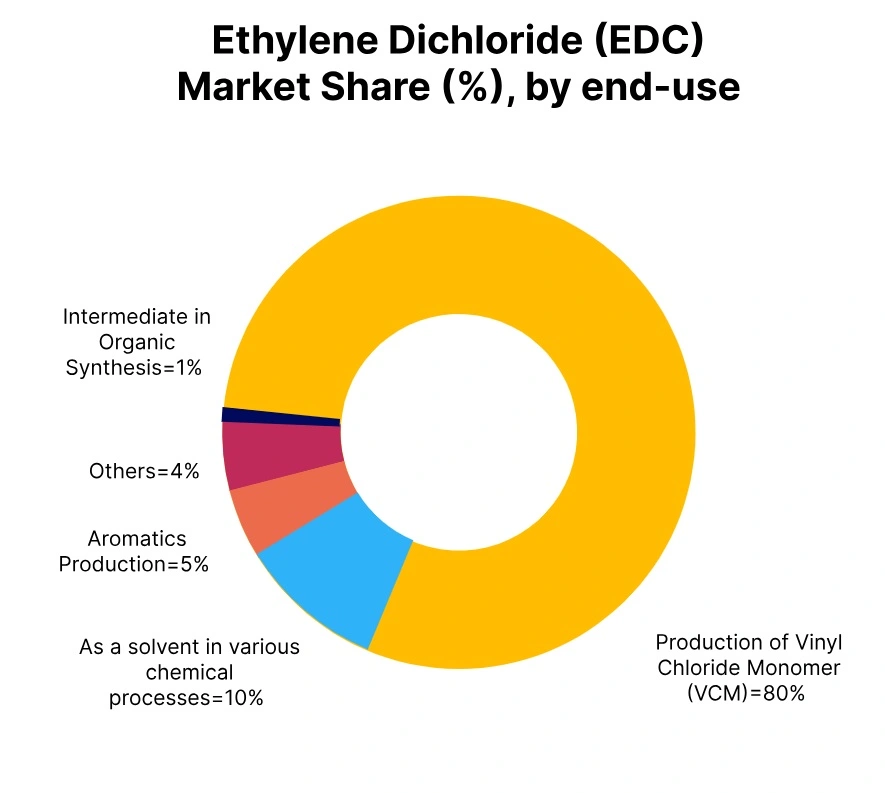
ethylene dichloride market share end use

Historically, several events have caused significant fluctuations in Ethylene Dichloride (edc) prices

2022 Energy Crisis 

  • Impact: The energy crisis, exacerbated by geopolitical tensions such as the Russia-Ukraine conflict, led to significant increases in energy prices. Since energy is a major input to produce ethylene and chlorine, this crisis had a direct effect on EDC production costs and prices. The increased cost of energy led to higher production costs for EDC, contributing to price volatility and increases. 


2020 COVID-19 Pandemic
 

  • Impact: The COVID-19 pandemic caused widespread disruptions across industries, including chemicals. Lockdowns, travel restrictions, and supply chain interruptions affected the production and transportation of feedstocks like ethylene and chlorine. The pandemic initially led to decreased demand for many chemicals, including EDC, which contributed to price volatility. However, as economies started to recover, demand surged, leading to price increases and supply challenges. 


2017-2018 US-China Trade War
 

  • Impact: Trade tensions between the US and China led to tariffs and trade barriers that affected chemical trade. For instance, tariffs on ethylene and chlorine have impacted the cost structure for EDC production. The trade war created uncertainty and volatility in global markets.

Why Price Watchâ„¢?

Price Watchâ„¢ is your trusted resource for tracking global ethylene dichloride (edc) price trends. Our platform delivers real-time data and expert analysis, offering deep insights into the key factors driving price fluctuations in the ethylene dichloride (edc) market. By monitoring critical events such as geopolitical tensions, supply chain disruptions, and economic shifts, Price Watchâ„¢ keeps you fully informed of market dynamics.

In addition, Price Watch™ provides detailed forecasts and updates on production capacities, enabling you to anticipate market changes and make well-informed decisions. With Price Watch™, you gain a competitive edge in understanding all the elements that influence ethylene dichloride (edc) prices worldwide. Stay ahead of the curve with Price Watch’s™ reliable, accurate, and timely ethylene dichloride (edc) market data.

Track Price Watch'sâ„¢ ethylene dichloride (edc) price assessment on a weekly basis since 2015 onwards, along with short-term forecasts, and get access to the detailed report in a downloadable format.

Ethylene Dichloride (edc) Market Price Trend published by Price Watchâ„¢ reflect prevailing spot market conditions, derived from independent research, verified trade inputs, and proprietary market intelligence as of the publication date. Prices are published on the specified Incoterm and represent indicative base market levels, exclusive of applicable taxes, VAT, duties, tariffs, and other statutory charges. Actual transaction values may vary depending on volume, credit terms, contractual structure, and other negotiated conditions. Market prices are inherently subject to volatility, liquidity dynamics, regulatory changes, and evolving trade activity. The information provided is for reference and benchmarking purposes only and does not constitute an offer, recommendation, or guarantee of transactional outcomes. Users should exercise independent commercial judgment and assess their specific contractual, regulatory, tax, and application requirements before making business decisions. Price Watchâ„¢ assumes no liability for decisions taken based on this information.

The pricing of ethylene dichloride is influenced by several key factors. First, the costs of feedstocks, primarily ethylene and chlorine, play a significant role in determining EDC prices. Fluctuations in the availability and prices of these raw materials due to market dynamics or geopolitical issues can lead to price volatility. Additionally, supply chain constraints, production capacity, and transportation costs are critical considerations.

Market demand, particularly from the PVC production sector, also impacts pricing, as higher demand can lead to increased costs. Finally, global economic conditions and regulatory changes can further influence EDC pricing trends.

To ensure competitive pricing for ethylene dichloride, procurement heads should adopt a comprehensive approach. Establishing strong relationships with multiple suppliers can create a competitive environment, enabling better negotiation terms. Regularly conducting market analyses to monitor pricing trends and benchmarks allows for informed decision-making.

Additionally, considering long-term contracts can provide price stability against market fluctuations. Exploring alternative sourcing options, including regional suppliers, may also yield cost advantages. Lastly, maintaining an agile procurement strategy that can adapt to market changes will help secure the best pricing for EDC.

Fluctuations in ethylene dichloride pricing pose several risks, including budget overruns and increased production costs that can impact overall profitability. To mitigate these risks, procurement heads can implement strategic measures such as entering into hedging contracts to protect against sudden price spikes in raw materials.

Developing a diverse supplier base reduces dependence on any single source, enhancing resilience against market volatility. Maintaining optimal inventory levels can also help buffer against price fluctuations, allowing organizations to take advantage of lower prices when available. Finally, continuous monitoring of market conditions and geopolitical developments will enable proactive adjustments to procurement strategies.

Ethylene Dichloride (Câ‚‚Hâ‚„Clâ‚‚) is a colorless, volatile liquid used primarily as an intermediate in the production of vinyl chloride monomer (VCM) for PVC manufacturing. It also finds applications in the chemical industry as a solvent for adhesives, coatings, and degreasing operations.

Due to its central role in VCM production, Ethylene Dichloride costs are a key consideration for manufacturers across downstream industries, impacting the pricing and availability of PVC and related products globally. These prices are tracked by Price-Watchâ„¢ to assist consumers and organizations in comprehending and staying current with market developments.

Prices for Ethylene Dichloride differ by location. Prices vary according to supply, demand, feedstock costs, and energy prices and are usually expressed per metric ton. To assist buyers and sellers in making well-informed decisions, Price-Watchâ„¢ offers real-time pricing assessments across several international markets.

Prices for Ethylene Dichloride vary due to changes in feedstock costs, particularly ethylene and chlorine, as well as fluctuations in energy and crude oil prices, which affect overall production expenses. Utilization rates at production plants and demand from key downstream sectors, especially PVC manufacturing and chemical intermediates, can influence market dynamics.

Pricing patterns are also shaped by supply-demand balance, global capacity expansions or plant shutdowns, and transportation and logistics costs. Trade flows, import/export activity, and seasonal variations in industrial demand all play a role. The availability of feedstocks, evolving demand trends, and changing supply conditions in major producing and consuming regions have collectively influenced recent market developments.

The primary demand for Ethylene Dichloride comes from the PVC and chemical manufacturing industries, where it is used as a key intermediate in producing vinyl chloride monomer. Secondary demand arises from sectors that use it as a solvent, including adhesives, coatings, and degreasing applications.

Other industries, such as textiles, pharmaceuticals, and specialty chemicals, also contribute to consumption, utilizing Ethylene Dichloride in various chemical formulations and processes. Demand patterns in each of these industries are analyzed by Price-Watchâ„¢.

The primary method for producing Ethylene Dichloride is the direct chlorination of ethylene with chlorine, typically in the presence of an iron or copper-based catalyst, producing EDC as the main product. It can also be obtained through oxychlorination of ethylene in certain industrial setups.

Production is usually carried out in integrated chemical plants or dedicated facilities, with output levels influenced by feedstock availability—particularly ethylene and chlorine—and downstream demand from PVC and chemical manufacturing sectors.

Production capacity, regional demand balances, and feedstock availability articularly ethylene and chlorine are the main factors influencing the trade of Ethylene Dichloride. Large-scale production positions countries like China as major exporters, followed by key supply hubs in Europe, including Germany and the Netherlands. Other regions, such as parts of Asia and North America, participate in international trade depending on domestic demand and surplus availability.

Export volumes are also affected by regional capacity expansions or maintenance shutdowns, production economics, logistics and freight costs, and downstream demand from PVC manufacturing and chemical industries. In order to assist organizations comprehend global supply chains and find sourcing opportunities, Price-Watchâ„¢ examines production levels, export flows, and trade patterns.

Although regional shortages can occur due to plant shutdowns, feedstock constraints—particularly ethylene and chlorine—transportation bottlenecks, or sudden spikes in demand from PVC and chemical sectors, supply generally aligns with overall demand. Market availability may be temporarily tightened by maintenance turnarounds at key production facilities.

Pricing pressures can also arise from changes in production economics, fluctuations in upstream raw material costs, and shifts in feedstock supply, all of which influence Ethylene Dichloride market dynamics. These supply-demand disparities are monitored by Price-Watchâ„¢ in order to notify the market of any shortages or surpluses.

Prices for Ethylene Dichloride vary depending on application, purity, and physical form. Industrial-grade Ethylene Dichloride is primarily used in PVC production, chemical intermediates, and solvent applications, while specialty or high-purity grades are required for more sensitive chemical processes. Higher-purity grades typically command higher prices due to stricter quality standards and lower impurity levels.

Additionally, variations in handling, storage, and transportation requirements, as well as different physical forms liquid, stabilized, or packaged solutions can also influence costs in the market. To maintain market openness, Price-Watchâ„¢ offers distinct pricing evaluations for every grade.

Prices typically rise when demand for Ethylene Dichloride increases sharply, often driven by higher PVC production, chemical intermediate needs, or increased industrial activity. Spot buyers may face tighter availability, longer lead times, or elevated prices to secure volumes, while suppliers often prioritize long-term contract customers.

Feedstock availability, particularly ethylene and chlorine, along with overall plant operating rates, can constrain production flexibility and influence pricing dynamics in the market. These market movements are captured in real time by Price-Watchâ„¢.

A major cost in the production of Ethylene Dichloride is energy. Prices often rise when producers pass on higher natural gas, electricity, or steam costs to buyers. Upstream energy market fluctuations and changes in chemical feedstock costs, particularly ethylene and chlorine, also impact production expenses.

Consequently, Ethylene Dichloride prices are generally more competitive in regions with lower energy costs and easier access to key raw materials, while higher-cost regions may experience firmer pricing due to elevated production expenses. Price-Watchâ„¢ analyses these cost correlations in its price assessments and market reports.

Regional Ethylene Dichloride prices are influenced by feedstock availability and costs, energy prices, transportation and logistics expenses, import/export flows, and the strength of demand from downstream PVC and chemical industries.

Prices are generally lower in regions with integrated petrochemical complexes and favorable feedstock economics, while areas with limited local production, higher logistical costs, or constrained supply tend to experience firmer pricing. Price-Watchâ„¢ tracks prices across all major regions to highlight these differences.

The future of the Ethylene Dichloride market depends on several factors, including energy costs, production capacity expansions and plant maintenance shutdowns, and feedstock price trends—particularly for ethylene and chlorine—as well as demand growth from key downstream sectors such as PVC manufacturing and chemical intermediates. Regional supply-demand balances, trade flows, seasonal fluctuations in industrial activity, and logistics costs also play a crucial role.

Broader macroeconomic trends that influence manufacturing activity further shape the market trajectory, affecting both pricing and production decisions in major producing and consuming regions. Price-Watchâ„¢ regularly publishes detailed forecasts that project price movements for the next 12 months based on comprehensive analysis of supply additions, demand trends across key industries, seasonal patterns, and macroeconomic indicators, helping businesses anticipate market conditions and plan accordingly.

Absolutely. Accurate forecasting allows you to time your purchases better, negotiate contracts more effectively, and budget more accurately. If Price-Watchâ„¢ forecasts predict a price increase in three months, you might choose to stock up now or lock in long-term contracts at current rates, potentially saving thousands of dollars.

Events that affect the production and logistics of Ethylene Dichloride—such as natural disasters, trade disputes, plant accidents, feedstock shortages, or economic slowdowns—can lead to supply tightness and price volatility. Market dynamics are also influenced by shifts in PVC and chemical demand, transportation constraints, maintenance shutdowns, or force majeure announcements at key production sites, as well as fluctuations in ethylene and chlorine availability.

Global disruptions, including pandemics or trade crises, further exacerbate market uncertainty by affecting supply chains and trade flows, impacting both regional pricing and overall market stability for Ethylene Dichloride. Price-Watchâ„¢ provides timely alerts when such events affect the market.

Price-Watchâ„¢ collects data from manufacturers, distributors, and buyers worldwide to publish regular price assessments, market reports, and forecasts. Our transparent methodology and comprehensive coverage make us a trusted source for understanding fair pricing and market trends in the Ethylene Dichloride industry.