

Graphite Price Trend and Forecast

UNSPC code: 12141700
|
Weekly Update
|
Historical Data Since 2015
|
Forecast for 2026
  • Commodity Pricing

graphite Price Trends by Country

cnChina
jpJapan
usUnited States
krSouth Korea

Global graphite Spot Market Prices, Trend Analysis and Forecast

Price-Watch’s most active coverage of Graphite price assessment:

Asia-Pacific

  • Graphite Flakes 94-95%,-100mesh FOB Shanghai, China
  • Graphite Flakes 94-95%,-100mesh CIF Busan (China), South Korea
  • Graphite Flakes 94-95%,-100mesh CIF Nagoya (China), Japan


North America

  • Graphite Flakes 94-95%,-100mesh CIF Houston (China), USA


Note:
In assessments structured as CIF [Importing Port] (Exporting Country), the country mentioned in brackets indicates the primary origin of supply (exporting country), while the named port refers to the destination port in the importing country. Other Incoterms (FOB, FD, EXW, etc.) should be interpreted in accordance with standard international trade definitions.

Graphite Price Trend Q4 2025

In Q4 2025, the global Graphite market experience a mild downward trend, with prices softening across major regions. The slowdown was driven by subdued demand in the battery and refractories sectors, along with cautious purchasing behaviour among industrial users. Key consuming regions saw restrained end-user activity, while production remained stable in countries like India and Germany. Elevated inventories and steady raw material costs contributed to the cautious market sentiment. Despite the marginal decline, long-term growth prospects remain positive, supported by rising adoption of energy storage technologies and ongoing industrial applications.

China: Graphite Export prices FOB Shanghai, China; Grade- Flakes 94-95%,-100mesh

In Q4 2025, graphite prices trend in China declined by 0.43% compared to Q3, primarily due to steady but unspectacular demand from the battery, steel, and refractory sectors, alongside sufficient domestic supply and competitive pressure among producers. While electric vehicle and energy storage demand remained structurally supportive, cautious procurement strategies, adequate inventories at downstream plants, and stable raw material and energy costs limited upward price momentum. Export activity remained moderate amid balanced global supply conditions, reducing opportunities for price firming.

Producers continued adjusting operating rates and managing inventories to maintain market equilibrium, reflecting a slightly soft but largely stable market sentiment. In December 2025, graphite prices registered a 0.00% month-on-month change, as balanced supply-demand dynamics, steady industrial activity, and subdued spot transactions kept prices flat. Overall, the graphite market in China during Q4 2025 exhibited mild softness with underlying stability, with expectations of gradual recovery as downstream demand improves in early 2026.

South Korea: Graphite Import prices CIF Busan, South Korea; Grade- Flakes 94-95%,-100mesh

In Q4 2025, graphite prices trend in South Korea declined by 0.45% compared to Q3, reflecting slightly weaker demand from the lithium-ion battery, steel, and refractory sectors amid cautious procurement and balanced industrial activity. Battery manufacturers maintained conservative purchasing strategies due to stable EV production growth and sufficient anode material inventories, while the steel sector experienced moderate operating rates, limiting graphite electrode consumption.

Steady import availability, particularly from China, and stable domestic supply conditions further exerted mild downward pressure on prices, as competition among suppliers remained firm. Despite stable raw material and energy costs, overall market sentiment remained slightly bearish during most of the quarter.

However, in December 2025, graphite prices recorded a marginal increase of 0.05%, supported by limited year-end restocking activity and modest improvement in downstream inquiries. Overall, the South Korean graphite market in Q4 2025 demonstrated a largely stable yet soft trend, with expectations of gradual firming in early 2026 as downstream consumption maintains steady momentum.

Japan: Graphite Import prices CIF Nagoya, Japan; Grade- Flakes 94-95%,-100mesh

In Q4 2025, graphite prices trend in Japan declined by 0.37% compared to Q3, reflecting slightly weaker demand conditions and continued cautious procurement behaviour among downstream manufacturers in the battery, steel, refractories, and industrial lubricant sectors. Despite stable production levels and sufficient import availability particularly from China competitive pricing and comfortable inventory positions contributed to mild downward pressure throughout the quarter. Energy and processing costs remained largely stable, limiting sharper corrections, while producers maintained disciplined output to prevent excessive oversupply. Market sentiment remained moderately bearish as buyers avoided bulk purchasing and operated on need-based procurement strategies.

In December 2025, prices dipped further by 0.09%, mirroring subdued year-end restocking activity and balanced supply-demand fundamentals. Overall, the Japanese graphite market in Q4 2025 demonstrated a controlled softening trend, with expectations of continued price stability supported by steady industrial consumption and managed supply conditions heading into early 2026.

USA: Graphite Import prices CIF Houston, USA; Grade- Flakes 94-95%,-100mesh

In Q4 2025, graphite prices in the USA declined by 0.37% compared to Q3, reflecting slightly weaker demand from the battery, steel, refractory, and lubricant sectors amid stable industrial activity and steady inventory levels. Domestic supply remained adequate, and imports continued to provide balanced availability, while producers maintained controlled production schedules to avoid oversupply. Market sentiment stayed cautious, keeping overall price movement modest.

In December 2025, prices rose slightly by 0.15%, supported by steady procurement from the battery sector and limited spot availability, reflecting a modest stabilization as downstream consumption remained consistent and supply chains were carefully managed. Overall, the U.S. graphite market in Q4 exhibited mild quarterly softening with a slight rebound at year-end.
Graphite Price Trend Analysis: Q3 2025

In the third quarter of 2025, the global Graphite market saw a mild downward shift, with average prices decreasing by roughly 0.95% since the last quarter. Demand from clients in the battery and refractories sectors has generally soften, particularly in China and the U. S., which are two of the largest consuming markets.

Electric vehicle (EV) and steel orders have been softer than expected this quarter which also contributed to lower overall demand. Production levels in India and Germany remained stable, however, weaker downstream activity, combined with more cautious purchasing behaviour from end-users, has lowered demand in the market.

Higher inventory levels and consistent pricing for raw materials have also contributed to the current market conditions. Despite this slight setback, the fundamental growth remained intact, as the long-term growth remained supported by increased demand for energy storage technologies and industrial applications.

China: Graphite Export prices FOB Shanghai, China, Grade- Flakes 94-95%, 100mesh.

According to PriceWatch, during the third quarter of 2025, China saw a decline of 1.88% in the graphite price trend from the previous quarter due to softer demand from the battery, refractory and lubricant industries. Weaker downstream manufacturer purchasing and lower export orders had an impact on prices as well.

Meanwhile, raw material and energy prices were stable, though an oversupply of some grades and more competition from domestic suppliers resulted in downward pricing pressure. The graphite market has been mildly bearish overall.

Producers have been responsive to softer conditions, and adjusted output and inventories to correct for market conditions. In September 2025, graphite prices in China fell 0.08%, mainly due to moderate buying activity from the battery, refractories and steel sectors amid stable industrial activity.

Additionally, there has been sufficient domestic supply and steady levels of production, enabling a slight price adjustment lower. The overall graphite market in China during Q3 of 2025 essentially reflected a stable price trend with a minor price softening, with expectations for stabilization to gradually occur in Q4 as key downstream demand stabilizes.

South Korea: Graphite Import prices CIF Busan, South Korea, Grade- Flakes 94-95%,100mesh.

In the third quarter of 2025, Graphite price trend in South Korea has witnessed decline as prices decreased by 1.01% over the previous quarter, reflecting marginally reduced demand from battery, refractory, and lubricant applications. A decline in downstream procurement and stable supply through China countervailing demand exerted some downward pressure on Graphite prices.

Although raw material costs and energy pricing have stable, there has been increased competition among sellers and some risk aversion in the inventory management approach of manufacturers resulting in some overall bearish sentiment during the period. In September 2025, the price of Graphite in South Korea decreased by 0.08% mainly exasperated by diminishing demand from battery, steel, and refractory applications even with stable industrial activity.

The stable domestic supply and stable availability of imported Graphite maintained slight downward pressure on prices. Overall, pricing of Graphite in South Korea has generally been stable during Q3 2025 with slight softening and is expected to become increasingly stable in Q4 2025 with downstream consumable use remaining approximately stable.

Japan: Graphite Import prices CIF Nagoya, Japan, Grade- Flakes 94-95%, 100mesh.

According to PriceWatch, in Q3 2025, the graphite price trend in Japan declined as prices dropped by 0.59% compared to the previous quarter, reflecting modestly weaker demand from the battery, refractory, and industrial lubricant sectors. Downstream manufacturers adopted a cautious procurement approach, slowing their purchases amid steady inventory levels and stable raw material costs.

Although supply from domestic producers and imports from China remained sufficient, competitive pricing and moderate oversupply in certain grades contributed to mild downward pressure. Energy and processing costs remained stable, providing some support to producers, who maintained controlled production and inventory strategies.

Overall, market sentiment in Japan remained slightly bearish, with price adjustments reflecting both subdued consumption and careful supply management across the quarter. However, Graphite prices in Japan inclined by 0.02% in September 2025, primarily supported by steady demand from the battery, steel, and refractories sectors amid moderate industrial activity.

Limited changes in domestic supply and consistent import availability contributed to the marginal upward adjustment. Overall, the graphite market in Japan during Q3 2025 reflected a stable trend with slight positive momentum, with expectations of continued steadiness in Q4 as downstream demand remains consistent.

USA: Graphite Import prices CIF Houston, USA, Grade- Flakes 94-95%, 100mesh.

In Q3 2025, Graphite prices in the USA decreased by 0.95% from the previous quarter. Demand remained slightly weaker from the battery, refractory, and lubricant industries. Downstream manufacturers adjusted their purchasing plans following steady inventory levels and raw material prices.

Domestic supply remained sufficient, however, mild import availability from China and other regions added competition, which contributed to price softness. Producers moderated production schedules and inventories in a controlled manner to mitigate risk of oversupply. Overall, market sentiment has been slightly bearish in Q3 with prices adjusting modestly to reduced consumption and cautious market activity.

In September 2025, Graphite prices in the USA decreased by 0.05%, primarily due to moderate demand from the battery, steel, and refractories industries following stable industrial activity. Adequate supply in the USA market and stable imports maintained a slight pricing adjustment. Overall, the US graphite market in Q3 2025 has been largely stable with minimal softening, and a gradual return to stability was expected in Q4 as downstream consumption remained steady.

According to the PriceWatch, In Q2 2025, the graphite market showed early signs of stabilization with export prices increasing by $483.65 per metric ton, FOB Shanghai representing a marginal 0.01% rise suggesting that the market is attempting to recover from recent lows rather than experiencing a true rebound.

This slight uptick follows a turbulent Q1 marked by price drops and sharp increases in export volumes, particularly in synthetic graphite. The modest price increase reflects a shift among Chinese producers from aggressive price competition toward preserving margins amid ongoing oversupply and pressure from synthetic alternatives.

Although this indicates a tentative bottoming out of the market, structural challenges such as global demand uncertainty, competitive pressure from synthetic graphite, and evolving export policies continue to weigh heavily on any sustained recovery.

In Q1 2025, the Graphite price increase of $483.58 per metric ton, FOB Shanghai equating to a 0.06% rise. This supplement reflects a complex interplay of factors, including evolving battery chemistries, shifting force dynamics, and indigenous policy interventions.

Specially, the transition from nickel manganese  cobalt (NMC) to lithium iron  phosphate (LFP) cathodes in China has led to a fat of synthetic graphite, while natural graphite demand has softened. Again, the North American request faces a force deficiency, with a 200,000 tonne per annum space in 2024, egging increased investment and strategic hookups to bolster domestic product.

Despite these challenges, the global graphite request is poised for an answer, driven by surging demand from electric vehicle (EV) batteries and energy storehouse operations.

Judges anticipate a gradational price recovery in the ultimate half of 2025, contingent on the immersion of redundant force and stabilization of force chains.

Graphite Price Trend Analysis: Q4 2024

In the fourth quarter of 2024, the global graphite market experienced a modest price increase of $483.28 per metric ton, FOB Shanghai reflecting a 1.08% rise. This uptick was observed across various regions, including the United States, China, and Germany, where prices reached $1,114, $876, and $721 per metric ton, respectively.

Despite this increase, the market faced challenges such as fluctuating demand from key industries like electric vehicles and construction, geopolitical tensions, and shifts in battery chemistries. China’s export restrictions on certain graphite products and the growing preference for synthetic graphite in battery anodes contributed to market volatility.

While the price rise indicates some stabilization, the market remains cautious, with ongoing efforts to diversify supply chains and secure long-term agreements to mitigate future uncertainties.

In the third quarter of 2024, the graphite market experienced a notable price decrease of $478.11 per metric ton, FOB Shanghai marking a decline of approximately 3.33%. This drop reflects a combination of softer demand from key sectors such as electric vehicles and energy storage, along with increased supply from major producers, particularly in China.

Market analysts suggest that the dip may also be influenced by ongoing inventory corrections and cautious procurement behaviour among manufacturers facing broader economic uncertainties. Despite this short-term decline, long term demand fundamentals for graphite remain strong due to its critical role in lithium-ion battery production and the global energy transition.

In Q2 2024, the graphite request endured a notable decline, with prices dropping by $494.58 per metric ton, FOB Shanghai representing a 14.18% drop. This downcast trend was driven by weak downstream demand, particularly from the electric vehicle (EV) and battery storehouse sectors, were surfeit and high supplies pressured request sentiment. also, increased product and exports from major suppliers like China contributed to global surfeit, farther dampening prices.

Environmental restrictions and nonsupervisory changes in some producing regions also disintegrated trade overflows, creating short term volatility. This significant price drop underscores the fragile balance between force and demand in the graphite request, pressing the sector’s perceptivity to macroeconomic and policy shifts.

In the first quarter of 2024, the graphite request endured a modest yet notable price increase of $576.33 per metric ton, FOB Shanghai reflecting a 1.41% rise. This supplement signals a growing demand across crucial sectors similar as electric vehicles, energy storehouse, and artificial operations, where graphite is essential for lithium-ion batteries and high temperature operations.

The price movement, while not dramatic, suggests tensing force chains or increased procurement exertion, in expectation of stronger downstream manufacturing trends. Investors and assiduity stakeholders are monitoring this shift as an implicit early index of broader instigation in the energy accoutrements sector.

Technical Specifications of Graphite Price Trends

Product Description

Graphite is a naturally occurring form of crystalline carbon known for its excellent electrical and thermal conductivity, high lubricity, and resistance to heat and chemicals. It is soft, lightweight, and commonly used in applications such as batteries, lubricants, refractories, and pencils. Graphite’s layered structure makes it an excellent conductor and a key material for emerging technologies like lithium-ion batteries and fuel cells.

Identifiers and Classification:

HS Code – 250410

Graphite Synonyms:

  • Black Lead
  • Mineral Carbon
  • Electrographite


Graphite Grades Specific Price Assessment:

  • Graphite Flakes 94-95%, 100mesh Price Trend


Graphite Global Trade and Shipment Terms

  • Quotation Terms (Product & Country Specific): 25-28MT
  • Packaging Type (Product & Country Specific): 25Kg Bag


Incoterms Referenced in Graphite Price Reporting

Shipping Term  Location  Definition 
CIF Busan  Busan, South Korea  Graphite Export price from South Korea 
FOB Shanghai  Shanghai, China  Domestically Traded Graphite price in China 
CIF Nagoya  Nagoya, Japan  Domestically Traded Graphite price in Japan 
CIF Houston  Houston, USA  Domestically Traded Graphite price in USA 

*Quotation Terms refers to the quantity range specified for the Graphite being quoted or offered in a commercial transaction.

**Packaging Type refers to standard packaging size commonly used for Graphite packing, ease of handling, transportation, and storage in industrial and commercial applications.

Key Graphite Manufacturers

Manufacturer 
Tokai Carbon Co., Ltd. 
Nippon Carbon Co., Ltd. 
GrafTech International Ltd. 
POSCO Future M 
Korea Graphite Company Limited (KGCL) 
Fangda Carbon New Material Co., Ltd. 

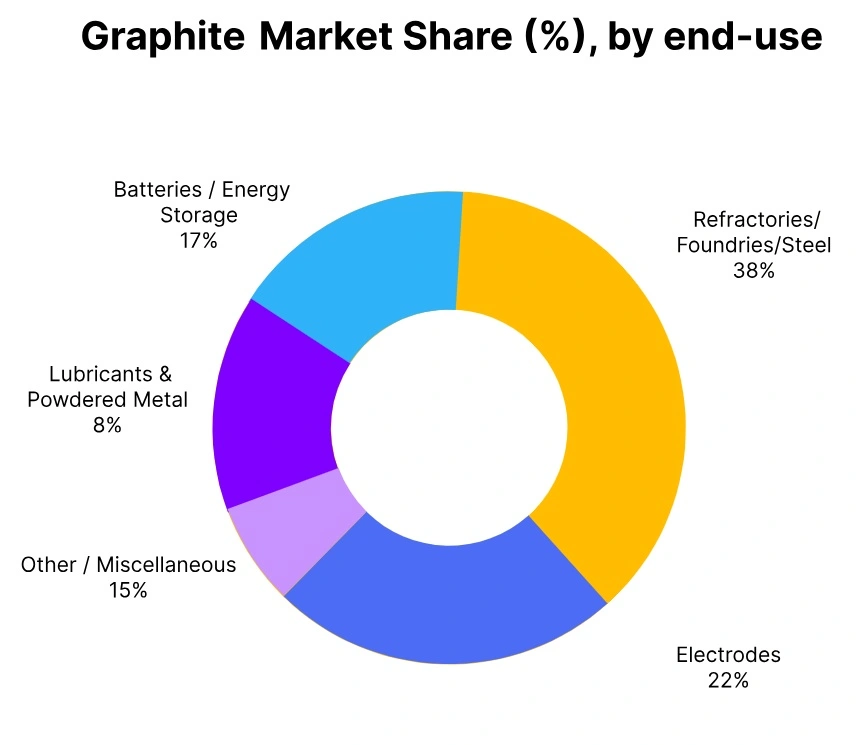
Graphite Industrial Applications

graphite market share end use

Historically, several events have caused significant fluctuations in Graphite prices

Global Supply Chain Disruption (2022): The war in Ukraine and other geopolitical tensions disrupted supply chains, leading to price volatility in various commodities, including graphite.
Global Economic Downturn (2019-2020): The global economic slowdown, particularly in sectors like steel and automotive, led to reduced demand for graphite, resulting in lower prices.
COVID-19 Pandemic (2019-2020): The global pandemic led to a significant decline in demand for graphite-intensive industries, such as steelmaking and automotive manufacturing, causing prices to plummet.

These events underscore the Graphite market’s vulnerability to global disruptions and highlight the need for continuous monitoring of supply-demand dynamics.

Why Price Watch™?

Price Watch™ is your trusted resource for tracking global graphite price trends. Our platform delivers real-time data and expert analysis, offering deep insights into the key factors driving price fluctuations in the graphite market. By monitoring critical events such as geopolitical tensions, supply chain disruptions, and economic shifts, Price Watch™ keeps you fully informed of market dynamics.

In addition, Price Watch™ provides detailed forecasts and updates on production capacities, enabling you to anticipate market changes and make well-informed decisions. With Price Watch™, you gain a competitive edge in understanding all the elements that influence graphite prices worldwide. Stay ahead of the curve with Price Watch’s™ reliable, accurate, and timely graphite market data.

Track Price Watch's™ graphite price assessment on a weekly basis since 2015 onwards, along with short-term forecasts, and get access to the detailed report in a downloadable format.

Graphite Market Price Trend published by 𝐏𝐫𝐢𝐜𝐞 𝐖𝐚𝐭𝐜𝐡™ reflect prevailing spot market conditions, derived from independent research, verified trade inputs, and proprietary market intelligence as of the publication date. Prices are published on the specified Incoterm and represent indicative base market levels, exclusive of applicable taxes, VAT, duties, tariffs, and other statutory charges. Actual transaction values may vary depending on volume, credit terms, contractual structure, and other negotiated conditions. Market prices are inherently subject to volatility, liquidity dynamics, regulatory changes, and evolving trade activity. The information provided is for reference and benchmarking purposes only and does not constitute an offer, recommendation, or guarantee of transactional outcomes. Users should exercise independent commercial judgment and assess their specific contractual, regulatory, tax, and application requirements before making business decisions. 𝐏𝐫𝐢𝐜𝐞 𝐖𝐚𝐭𝐜𝐡™ assumes no liability for decisions taken based on this information.

Graphite prices are influenced by a complex interplay of factors, including:

 1. Supply and Demand

Demand from EV and battery industries: With rising electric vehicle (EV) production, demand for graphite (used in lithium-ion battery anodes) has grown significantly.

Steel and refractories: Graphite is used in crucibles, ladles, and other high-temperature industrial applications.

Growth in renewable energy: Increased use of energy storage systems also drives demand.

Supply limitations: Major producers like China dominate the supply chain. Export controls or mine closures can tighten supply and raise prices.

2. Purity and Flake Size

Purity: Higher carbon content (e.g., +94% C) commands a premium price.

Flake size:

Large flake (>+80 mesh): Used in expandable graphite and niche applications, hence priced higher.

Medium and fine flakes: Lower price due to broader availability and different use cases.

3. Processing Costs

Mining and beneficiation costs: Costlier extraction methods (e.g., in hard rock vs. soft rock deposits) impact final price.

Purification: Chemical or thermal purification adds cost, especially for high-purity battery-grade material.

4. Geopolitical and Regulatory Factors

China’s export policies: China controls over 60% of global graphite supply. Export tariffs, licensing rules, or environmental regulations can constrain supply and raise global prices.

Government incentives or restrictions: In countries like the U.S. or Canada, subsidies for critical minerals or restrictions on imports can shift market dynamics.

Feedstock prices significantly impact graphite prices because graphite production, particularly synthetic graphite, relies heavily on raw materials like petroleum coke and coal tar pitch. When feedstock prices rise, the cost of producing graphite increases, which typically drives up graphite prices to maintain producer margins.

Conversely, a drop in feedstock prices can lower production costs and exert downward pressure on graphite prices. Since feedstock availability and energy-intensive processing also affect supply dynamics, fluctuations in feedstock prices often ripple through the entire graphite value chain, influencing pricing trends.

Graphite is a naturally occurring form of crystalline carbon, widely used in batteries, lubricants, refractories, steelmaking, and industrial applications. Its price affects industries that rely on high-performance materials. 𝐏𝐫𝐢𝐜𝐞 𝐖𝐚𝐭𝐜𝐡™ tracks these prices to help businesses and consumers stay informed about market trends.

Graphite prices vary by grade (natural, synthetic, flake, or amorphous), purity, particle size, and market conditions. Prices are typically quoted per metric ton or per kilogram and fluctuate based on supply-demand balance, mining output, processing costs, and global economic factors. 𝐏𝐫𝐢𝐜𝐞 𝐖𝐚𝐭𝐜𝐡™ provides real-time price assessments across different markets to help buyers and sellers make informed decisions.

Prices fluctuate due to changes in mining output, processing capacity, industrial demand, battery production, and global technological developments. Trade policies, logistics costs, and macroeconomic conditions also influence market trends.

Major consumers include battery manufacturers (especially for electric vehicles), steel producers, lubricants manufacturers, refractories, and other industrial sectors. 𝐏𝐫𝐢𝐜𝐞 𝐖𝐚𝐭𝐜𝐡™ analyses demand patterns across all these industries.

Graphite is sourced from natural mines or produced synthetically through high-temperature carbon processes. Natural graphite comes from metamorphic rocks, while synthetic graphite is derived from petroleum coke or coal tar pitch. Both are refined to meet industrial standards.

China is the world’s largest exporter, followed by countries like Brazil, India, Canada, and Mozambique. Export volumes depend on mining output, processing capacity, and international trade conditions. 𝐏𝐫𝐢𝐜𝐞 𝐖𝐚𝐭𝐜𝐡™ tracks production levels, export flows, and trade patterns to help businesses understand global supply chains and sourcing opportunities.

Supply generally meets demand, but shortages can occur due to mine disruptions, processing limitations, or surges in demand from batteries and steel industries. 𝐏𝐫𝐢𝐜𝐞 𝐖𝐚𝐭𝐜𝐡™ monitors supply-demand imbalances to alert the market about potential shortages or surpluses.

Graphite is graded by type (natural flake, amorphous, synthetic), purity, particle size, and crystal structure. Higher-quality or specialized graphite costs more due to stricter production standards. 𝐏𝐫𝐢𝐜𝐞 𝐖𝐚𝐭𝐜𝐡™ provides separate price assessments for each grade to ensure market transparency.

When demand rises, for example, from battery production or steel manufacturing, prices typically climb. Suppliers may prioritize orders, and lead times can extend. 𝐏𝐫𝐢𝐜𝐞 𝐖𝐚𝐭𝐜𝐡™ captures these market dynamics in real-time.

Producing and processing graphite is energy-intensive. Rising electricity, fuel, or processing costs are often passed on to buyers. Regions with cheaper energy tend to have lower prices, a correlation that 𝐏𝐫𝐢𝐜𝐞 𝐖𝐚𝐭𝐜𝐡™ analyzes in its price assessments and market reports.

Regional variations arise from local mining capacity, processing infrastructure, import dependency, shipping costs, and industrial demand. 𝐏𝐫𝐢𝐜𝐞 𝐖𝐚𝐭𝐜𝐡™ tracks prices across all major regions to highlight these differences.

Forecasts depend on mining output, synthetic production capacity, industrial demand, and macroeconomic factors. 𝐏𝐫𝐢𝐜𝐞 𝐖𝐚𝐭𝐜𝐡™ publishes detailed forecasts projecting price movements for the next 12 months based on supply growth, demand in key industries, seasonal patterns, and macroeconomic indicators. These forecasts help businesses anticipate market conditions and plan accordingly.

Yes. Accurate forecasts allow businesses to optimize purchasing, negotiate contracts, and manage inventories. If 𝐏𝐫𝐢𝐜𝐞 𝐖𝐚𝐭𝐜𝐡™ predicts a price increase in three months, you might stock up now or lock in long-term contracts at current rates, potentially saving significant costs.

Events such as mining restrictions, plant shutdowns, raw material shortages, or economic shocks can cause supply shortages and price volatility. 𝐏𝐫𝐢𝐜𝐞 𝐖𝐚𝐭𝐜𝐡™ provides timely alerts when such events affect the market.

𝐏𝐫𝐢𝐜𝐞 𝐖𝐚𝐭𝐜𝐡™ collects data from producers, processors, and buyers worldwide to publish regular price assessments, market reports, and forecasts. Our transparent methodology and comprehensive coverage make us a trusted source for understanding fair pricing and market trends in the Graphite industry.