High Density Polyethylene (hdpe) Price Trend and Forecast

UNSPC code: 13102017
|
Weekly Update
|
Historical Data Since 2015
|
Forecast for 2026

high density polyethylene (hdpe) Price Trends by Country

usUnited States
mxMexico
brBrazil
beBelgium
deGermany
frFrance
itItaly
saSaudi Arabia
cnChina
inIndia
krSouth Korea
vnVietnam

Global high density polyethylene (hdpe) Spot Market Prices, Trend Analysis and Forecast

Price Watch™ provides real-time price assessments and price forecasts for High-Density Polyethylene (HDPE) across top trading regions:

High-Density Polyethylene (HDPE) Regional Coverage    High-Density Polyethylene (HDPE) Grade and Country Coverage    High-Density Polyethylene (HDPE) Pricing Data Coverage Explanation   
Asia-Pacific High-Density Polyethylene (HDPE) Pricing Analysis    HDPE Injection Moulding Grade (MFI: 17-30) CIF prices at Shanghai Port, China. Importing from Saudi Arabia  Weekly Price Update on High-Density Polyethylene (HDPE) Real-Time Import Prices at Shanghai Port, China, from Saudi Arabia 
HDPE Blown Film Grade (MFI: 0.5-1.0) CIF Prices at Shanghai Port, China. Importing from Saudi Arabia.  Weekly Price Update on High-Density Polyethylene (HDPE) Real-Time Import Prices at Shanghai Port, China, from Saudi Arabia. 
HDPE Blow Moulding Grade FDA (MFI: 0.3-0.4) CIF at Shanghai Port, China. Importing from Saudi Arabia.  Weekly Price Update on High-Density Polyethylene (HDPE) Real-Time Import Prices at Shanghai Port, China, from Saudi Arabia. 
HDPE Injection Moulding Grade (MFI: 7-8) Ex-Nanjing Prices, China  Weekly Price Update on High-Density Polyethylene (HDPE) Real-Time Domestic Prices of Ex-Nanjing, China 
HDPE Raffia Grade (MFR: 0.8-1.0) Ex-Nanjing Prices, China  Weekly Price Update on High-Density Polyethylene (HDPE) Real-Time Domestic Prices of Ex-Nanjing, China 
HDPE Blown Film Grade (MFI: 0.5-1.0) CIF Prices at Nhava Sheva Port, West India. Importing from Saudi Arabia  Weekly Price Update on High-Density Polyethylene (HDPE) Real-Time Import Prices at Nhava Sheva Port, West India, from Saudi Arabia 
HDPE Injection Moulding Grade (MFI: 17-30) CIF Prices at Nhava Sheva Port, West India. Importing from Saudi Arabia  Weekly Price Update on High-Density Polyethylene (HDPE) Real-Time Import Prices at Nhava Sheva, West India, from Saudi Arabia 
HDPE Blow Moulding Grade FDA (MFI: 0.3-0.4) CIF Prices at Nhava Sheva Port, West India. Importing from Saudi Arabia  Weekly Price Update on High-Density Polyethylene (HDPE) Real-Time Import Prices at Nhava Sheva Port, West India, from Saudi Arabia 
HDPE Injection Moulding Grade (MFI: 20) Ex-Chennai Depot Prices, India  Weekly Price Update on High-Density Polyethylene (HDPE) Real-Time Domestic Prices of Ex-Chennai Depot, India 
HDPE Injection Moulding Grade (MFI: 20) Ex-South India Prices.  Weekly Price Update on High-Density Polyethylene (HDPE) Real-Time Domestic Prices of Ex-South India. 
HDPE Blown Film Grade (MFI: 1.1) Ex-Chennai Depot Prices, India  Weekly Price Update on High-Density Polyethylene (HDPE) Real-Time Domestic Prices of Ex-Chennai Depot, India 
HDPE Blown Film Grade (MFI: 1.1) Ex-South India Prices  Weekly Price Update on High-Density Polyethylene (HDPE) Real-Time Domestic Prices of Ex-South India 
HDPE Film Grade (MFI: 0.09) Ex-Calcutta Depot Prices, India  Weekly Price Update on High-Density Polyethylene (HDPE) Real-Time Domestic Prices of Ex-Calcutta Depot, India 
HDPE Injection Moulding Grade (MFI: 19) Ex-Calcutta Depot Prices, India  Weekly Price Update on High-Density Polyethylene (HDPE) Real-Time Domestic Prices of Ex-Calcutta Depot, India 
HDPE Injection Moulding Grade (MFI: 19) Ex-East India Prices  Weekly Price Update on High-Density Polyethylene (HDPE) Real-Time Domestic Prices of Ex- East India 
HDPE Film Grade (MFI: 0.09) Ex-East India  Weekly Price Update on High-Density Polyethylene (HDPE) Real-Time Domestic Prices of Ex-East India 
HDPE Injection Moulding Grade (MFI: 20) Ex-Delhi Depot Prices, India  Weekly Price Update on High-Density Polyethylene (HDPE) Real-Time Domestic Prices of Ex-Delhi Depot, India 
HDPE Blown Film Grade (MFI: 0.6) Ex-Delhi Depot Prices, India  Weekly Price Update on High-Density Polyethylene (HDPE) Real-Time Domestic Prices of Ex-Delhi Depot, India 
HDPE Blow Moulding Grade FDA (MFI: 0.38) Ex-Delhi Depot Prices, India  Weekly Price Update on High-Density Polyethylene (HDPE) Real-Time Domestic Prices of Ex-Delhi Depot, India 
HDPE Pipe Extrusion Grade (MFI: 0.22) Ex-Delhi Depot, India  Weekly Price Update on High-Density Polyethylene (HDPE) Real-Time Domestic Prices of Ex-Delhi Depot, India 
HDPE Injection Moulding Grade (MFI: 20) Ex-North India  Weekly Price Update on High-Density Polyethylene (HDPE) Real-Time Domestic Prices of Ex-North India 
HDPE Blown Film Grade (MFI: 0.6) Ex-North India  Weekly Price Update on High-Density Polyethylene (HDPE) Real-Time Domestic Prices of Ex-North India 
HDPE Blow Moulding Grade FDA (MFI: 0.38) Ex-North India Prices  Weekly Price Update on High-Density Polyethylene (HDPE) Real-Time Domestic Prices of Ex-North India  
HDPE Pipe Extrusion Grade (MFI: 0.22) Ex-North India Prices  Weekly Price Update on High-Density Polyethylene (HDPE) Real-Time Domestic Prices of Ex-North India  
HDPE Injection Moulding Grade (MFI: 20) Ex-Ahmedabad Depot Prices, India  Weekly Price Update on High-Density Polyethylene (HDPE) Real-Time Domestic Prices of Ex-Ahmedabad Depot, India 
HDPE Blown Film Grade (MFI: 1.1) Ex-Ahmedabad Depot Prices, India  Weekly Price Update on High-Density Polyethylene (HDPE) Real-Time Domestic Prices of Ex-Ahmedabad Depot, India 
HDPE Blow Moulding Grade FDA (MFI: 1.5) Ex-Ahmedabad Depot Prices, India  Weekly Price Update on High-Density Polyethylene (HDPE) Real-Time Domestic Prices of Ex-Ahmedabad Depot, India 
HDPE Pipe Extrusion Grade (MFI: 0.3) Ex-Ahmedabad Depot Prices, India  Weekly Price Update on High-Density Polyethylene (HDPE) Real-Time Domestic Prices of Ex-Ahmedabad Depot, India 
HDPE Injection Moulding Grade (MFI: 20) Ex-West India Prices  Weekly Price Update on High-Density Polyethylene (HDPE) Real-Time Domestic Prices of Ex-West India 
HDPE Blown Film Grade (MFI: 1.1) Ex-West India Prices  Weekly Price Update on High-Density Polyethylene (HDPE) Real-Time Domestic Prices of Ex-West India 
HDPE Blow Moulding Grade FDA (MFI: 1.5) Ex-West India Prices  Weekly Price Update on High-Density Polyethylene (HDPE) Real-Time Domestic Prices of Ex-West India 
HDPE Pipe Extrusion Grade (MFI: 0.3) Ex-West India Prices  Weekly Price Update on High-Density Polyethylene (HDPE) Real-Time Domestic Prices of Ex-West India 
HDPE Injection Moulding Grade (MFI: 7-12) FOB Prices at Busan Port, South Korea  Weekly Price Update on High-Density Polyethylene (HDPE) Real-Time Export Prices at Busan Port, South Korea to Global Markets 
HDPE Blown Film Grade (MFI: 0.035-0.045) FOB Prices at Busan Port, South Korea  Weekly Price Update on High-Density Polyethylene (HDPE) Real-Time Export Prices at Busan Port, South Korea to Global Markets 
HDPE Blown Film Grade (MFI: 0.5-1.0) CIF Prices at Haiphong Port, Vietnam. Importing from Saudi Arabia  Weekly Price Update on High-Density Polyethylene (HDPE) Real-Time Import Prices at Haiphong Port, Vietnam, from Saudi Arabia 
HDPE Injection Moulding Grade (MFI: 17-30) CIF Prices at Haiphong Port, Vietnam. Importing from Saudi Arabia  Weekly Price Update on High-Density Polyethylene (HDPE) Real-Time Import Prices at Haiphong Port, Vietnam, from Saudi Arabia 
HDPE Blow Moulding Grade FDA (MFI: 0.3-0.4) CIF Prices at Haiphong Port, Vietnam. Importing from Saudi Arabia  Weekly Price Update on High-Density Polyethylene (HDPE) Real-Time Import Prices at Haiphong Port, Vietnam, from Saudi Arabia 
North America High-Density Polyethylene (HDPE) Pricing Analysis    HDPE Injection Moulding Grade (MFI: 20) FOB Prices at Houston Port, USA  Weekly Price Update on High-Density Polyethylene (HDPE) Real-Time Export Prices at Houston Port, USA to Global Markets 
HDPE Blown Film Grade (MFI: 0.03-1.0) FOB Prices at Houston Port, USA  Weekly Price Update on High-Density Polyethylene (HDPE) Real-Time Export Prices at Houston Port, USA to Global Markets 
HDPE Injection Moulding Grade (MFI: 20) CIF Prices at Manzanillo Port, Mexico. Importing from USA  Weekly Price Update on High-Density Polyethylene (HDPE) Real-Time Import Prices at Manzanillo Port, Mexico, from USA 
South America High-Density Polyethylene (HDPE) Pricing Analysis   


HDPE Injection Moulding Grade (MFI: 20) CIF Prices at Santos Port, Brazil. Importing from USA  Weekly Price Update on High-Density Polyethylene (HDPE) Real-Time Import Prices at Santos Port, Brazil, from USA 
HDPE Blown Film Grade (MFI: 0.03-1.0) CIF Prices at Santos Port Brazil. Importing from USA  Weekly Price Update on High-Density Polyethylene (HDPE) Real-Time Import Prices at Santos Port Brazil, from USA 
Middle East & Africa High-Density Polyethylene (HDPE) Pricing Analysis   HDPE Blown Film Grade (MFI: 0.5-1.0) FOB Prices at Jeddah Port, Saudi Arabia  Weekly Price Update on High-Density Polyethylene (HDPE) Real-Time Export Prices at Jeddah Port, Saudi Arabia to Global Markets 
HDPE Injection Moulding Grade (MFI: 17-30) FOB Prices at Jeddah Port, Saudi Arabia  Weekly Price Update on High-Density Polyethylene (HDPE) Real-Time Export Prices at Jeddah Port, Saudi Arabia to Global Markets 
HDPE Blow Moulding Grade FDA (MFI: 0.3-0.4) FOB Prices at Jeddah Port, Saudi Arabia  Weekly Price Update on High-Density Polyethylene (HDPE) Real-Time Export Prices at Jeddah Port, Saudi Arabia to Global Markets 
Europe High-Density Polyethylene (HDPE) Pricing Analysis  HDPE Injection Moulding Grade (MFI: 11-20) FD Antwerp Prices, Belgium  Weekly Price Update on High-Density Polyethylene (HDPE) Real-Time Domestic Prices of FD Antwerp, Belgium 
HDPE Blown Film Grade (MFI: 0.03-1.0) FD Antwerp Prices, Belgium  Weekly Price Update on High-Density Polyethylene (HDPE) Real-Time Domestic Prices of FD Antwerp, Belgium 
HDPE Blow Moulding Grade FDA (MFI: 0.2-2.5) FD Antwerp Prices, Belgium  Weekly Price Update on High-Density Polyethylene (HDPE) Real-Time Domestic Prices of FD Antwerp, Belgium 
HDPE Injection Moulding Grade (MFI: 11-20) FD Hamburg Prices, Germany  Weekly Price Update on High-Density Polyethylene (HDPE) Real-Time Domestic Prices of FD Hamburg, Germany 
HDPE Injection Moulding Grade (MFI: 11-20) FD Genoa Prices, Italy  Weekly Price Update on High-Density Polyethylene (HDPE) Real-Time Domestic Prices of FD Genoa, Italy 
HDPE Injection Moulding Grade (MFI: 11-20) FD Le Havre Prices, France  Weekly Price Update on High-Density Polyethylene (HDPE) Real-Time Domestic Prices of FD Le Havre, France 


Note:
In assessments structured as CIF [Importing Port] (Exporting Country), the country mentioned in brackets indicates the primary origin of supply (exporting country), while the named port refers to the destination port in the importing country. Other Incoterms (FOB, FD, EXW, etc.) should be interpreted in accordance with standard international trade definitions.

High Density Polyethylene (HDPE) Price Trend Q1 2026

In the first quarter of 2026, the trend of the global HDPE prices took a sharp turn, marked by an unprecedented rise in prices across all geographical regions, driven by a significant increase of 24.2% in the USA.

The key reason for the same is the geopolitical clash between the US and Iran, coupled with the shutdown of the Strait of Hormuz, leading to a severe disruption in the international logistics network and blocking more than 40% of the polyethylene shipments from the Middle East. This geopolitical situation increased crude oil prices resulting in significantly higher feedstock and ethylene prices.

Mexico: HDPE Import prices CIF Manzanillo, Mexico from USA; Grade – Injection Moulding Grade (MFI: 20)

The HDPE price in Mexico increased by 22.5% during the first quarter of 2026, attributed to high demand recovery and low import supply. Restrictions on Middle Eastern exportations because of the war between the US and Iran and the Hormuz blockage affected the supply chain globally.

High feedstock and crude oil prices contributed to the price increase. Increased freight charges and logistics expenses further impacted the supply chain. The trend is evident in the price of HDPE in Mexico and the HDPE price trend in Mexico. Likewise, towards the end of the quarter, in March 2026, HDPE price in Mexico skyrocketed by 41.0%.

Germany: HDPE Domestically Traded prices FD Hamburg, Germany; Grade – Injection Moulding Grade (MFI: 11-20)

According to Price-Watch™, in Quarter 1 2026, there are significant increases in the HDPE price in Germany by 18% because of the tightening supplies in the global market and increases in production expenses.

The intensification of tensions between the US and Iran and subsequent closure of the Strait of Hormuz has severely disrupted the shipment of petrochemicals and crude, resulting in over 40% reduction in the export of polyethylene in the Middle East to Europe.

With crude prices rising, prices of naphtha and ethylene increased, thereby raising polymer prices. These factors contributed to the increase in HDPE prices in Germany and the rise in HDPE price trend in Germany. Likewise, in March 2026, HDPE prices in Germany there are significant rises in by 40%.

Italy: HDPE Domestically Traded prices FD Genoa, Italy; Grade – Injection Moulding Grade (MFI: 11-20)

HDPE prices in Italy gone up sharply by 18% in the first quarter of 2026 as a result of low global supply and increasing costs of production.

Escalation of the US-Iran conflict and closure of a large portion of the Strait of Hormuz led to disruption of global flows of petrochemicals and crude oil, with over 40% of global exports of polyethylene from the Middle East getting shut down, limiting the access of European countries including Italy to these supplies.

Sharp increases in prices of crude oil, contributed to an increase in prices of naphtha and ethylene, thus increasing polymer prices. This supply-driven surge is captured in the HDPE price movement in Italy and the HDPE price trend in Italy. In the same way, in March 2026, HDPE prices in Italy gone up sharply by 40%.

France: HDPE Domestically Traded prices FD Le Havre, France; Grade – Injection Moulding Grade (MFI: 11-20)

The HDPE price in France saw a sharp increase in the first quarter of 2026 by 18%, largely due to constrained supply from around the world and rising manufacturing costs.

With the escalating tensions between the United States and Iran and the consequent shutdown of a portion of the Strait of Hormuz, the shipment of chemicals and oil witnessed major disruption, constraining more than 40% of all polyethylene shipments out of the Middle Eastern countries.

Higher crude oil prices pushed up naphtha and ethylene costs and raised polymer prices. This supply-induced rally in prices manifested itself in the HDPE price index in France and the HDPE price trend in France. Likewise, in the last month of the quarter, In March 2026, HDPE prices in France soared by 40%.

India: HDPE Domestically Traded prices Ex-Ahmedabad Depot, India; Grade – Blow Moulding Grade FDA (MFI: 1.5)

The HDPE price in India increased by 19.7% in Q1 2026, due to robust demand recovery and inadequate supply. The war between the US and Iran and the closing of the Strait of Hormuz disrupted about 20% of global oil and petrochemical transportation, resulting in reduced polymer imports in India.

With limited imports and inadequate local manufacturing capacity to satisfy domestic demand, the supply gap widened. Furthermore, oil prices rose, making ethylene and naphtha feedstocks more expensive. Such bullishness is evident from the increase in HDPE prices in India and the HDPE price trend in India. Similarly, in the final month of the quarter, in March 2026, HDPE prices in India jumped by 43.2%.

China: HDPE Domestically Traded prices Ex-Nanjing, China; Grade – Raffia Grade (MFR: 0.8-1.0) Ex-Nanjing

In Q1 2026, HDPE prices in China increased modestly by 3.7%, supported by gradual demand recovery and tightening global supply. Disruptions in Middle Eastern supply due to the US-Iran conflict and Hormuz closure reduced feedstock naphtha availability and increased import costs, although China partially offset shortages through alternative sourcing.

Rising crude oil prices and higher ethylene costs contributed to cost-push inflation. This upward trend is reflected in HDPE prices in China and the improving HDPE price trend in China. Similarly, in the last month of the quarter, in March 2026, HDPE prices in China rose sharply by 19.1%, driven by stronger industrial demand and constrained import supply.

USA: HDPE Export prices FOB Houston, USA; Grade – Injection Moulding Grade (MFI: 20) FOB Houston

In Q1 2026, HDPE prices in the USA surged by 24.2%, supported by strong demand recovery, improved export activity, and constrained supply conditions due to production disruptions. Rising feedstock ethylene prices, backed by firm crude oil trends and ongoing geopolitical tensions affecting energy markets, further contributed to the bullish sentiment.

This upward trajectory is evident in HDPE prices in the USA and the strengthening HDPE price trend in the USA, reflecting tighter supply-demand balance. Similarly, in the last month of the quarter, in March 2026, HDPE prices in the USA sharply increased by 43.8%, driven by aggressive procurement amid supply shortages, escalating feedstock costs, and persistent logistical constraints.

Brazil: HDPE Import prices CIF Santos, Brazil from USA; Grade – Injection Moulding Grade (MFI: 20)

In Q1 2026, HDPE prices in Brazil surged by 23.8%, driven by supply shortages and rising import dependency. The US-Iran conflict and Hormuz Strait disruptions significantly reduced Middle Eastern exports, tightening global polyethylene supply chains and limiting cargo availability in Latin America.

At the same time, crude oil prices surged by nearly 50%, increasing naphtha and ethylene production costs, which translated into higher polymer prices. This bullish momentum is reflected in HDPE prices in Brazil and the firm HDPE price trend in Brazil.

Similarly, in the last month of the quarter, in March 2026, HDPE prices in Brazil surged by 41.4%, driven by aggressive buying activity, limited vessel arrivals, and escalating freight and feedstock costs.

Belgium: HDPE Domestically Traded prices FD Antwerp, Belgium; Grade – Blow Moulding Grade FDA (MFI: 0.2-2.5)

In Q1 2026, HDPE prices in Belgium rose significantly by 18%, driven by tightening global supply and rising production costs. The escalation of the US-Iran conflict and partial closure of the Strait of Hormuz severely disrupted petrochemical and crude flows, restricting over 40% of global polyethylene exports from the Middle East and tightening European import availability.

Rising crude oil prices, significantly increased naphtha and ethylene costs, pushing polymer prices higher. This supply-driven rally is reflected in HDPE prices in Belgium and the strong HDPE price trend in Belgium. Similarly, in the last month of the quarter, in March 2026, HDPE prices in Belgium surged by 40%, driven by acute supply shortages, elevated feedstock costs, and aggressive procurement amid ongoing geopolitical uncertainty.

Saudi Arabia: HDPE Export prices FOB Jeddah, Saudi Arabia; Grade – Blow Moulding Grade FDA (MFI: 0.3-0.4)

In Q1 2026, HDPE prices in Saudi Arabia increased by 6.7%, supported by improved export demand and tightening global supply conditions. The escalation of the US-Iran conflict and partial closure of the Strait of Hormuz disrupted regional trade flows, impacting outbound shipments and creating supply imbalances in international markets.

Although Saudi Arabia is a key exporter, logistical constraints and rerouting challenges affected trade efficiency. Rising crude oil prices and higher feedstock costs further supported the upward trend. This is reflected in HDPE prices in Saudi Arabia and the strengthening HDPE price trend in Saudi Arabia, indicating improving market fundamentals.

Similarly, in the last month of the quarter, in March 2026, HDPE prices in Saudi Arabia surged by 22.4%, driven by supply tightness, improved demand, and global trade disruptions.

South Korea: HDPE Export prices FOB Busan, South Korea; Grade – Injection Moulding Grade (MFI: 0.035-0.045)

In Q1 2026, HDPE prices in South Korea increased by 10.6%, driven by improving export demand and tightening regional supply. The US-Iran conflict and disruptions in the Strait of Hormuz significantly reduced Middle Eastern polymer exports, tightening global availability and supporting Asian prices.

Additionally, rising crude oil prices increased naphtha and ethylene production costs, adding upward pressure on HDPE prices. Stronger downstream demand from packaging and manufacturing sectors further supported the market.

This is reflected in HDPE prices in South Korea and the strengthening HDPE price trend in South Korea, indicating supply-driven recovery. Similarly, in the last month of the quarter, In March 2026, HDPE prices in South Korea surged by 30.4%, driven by limited import availability and aggressive restocking.

Vietnam: HDPE Import prices CIF Haiphong, Vietnam from Saudi Arabia; Grade – Blow Moulding Grade FDA (MFI: 0.3-0.4)

In Q1 2026, HDPE prices in Vietnam increased by 10.0%, supported by improving demand and tightening import supply. The US-Iran conflict and partial closure of the Strait of Hormuz significantly disrupted Middle Eastern exports, which are a key supply source for Vietnam, leading to reduced cargo availability.

Rising crude oil prices and higher feedstock ethylene costs further supported the upward trend. Additionally, improved manufacturing activity and restocking demand strengthened market sentiment.

This is reflected in HDPE prices in Vietnam and the firm HDPE price trend in Vietnam, indicating tightening supply conditions. Similarly, in the last month of the quarter, in March 2026, HDPE prices in Vietnam surged by 33.1%, driven by supply shortages and aggressive procurement activity.

High Density Polyethylene (HDPE) Price Trend Analysis: Q4 2025

The last quarter of 2025 saw falling HDPE prices around the world, with reductions varying from 2.8% in India to an aggressive 13.2% in Belgium. The fall in prices is mainly driven by weak demand for downstream industries, such as packaging, construction, and FMCG.

Supply in the markets is sufficient due to stable manufacturing levels and import flows, while weak prices of raw materials like ethylene and crude oil do not give any support to prices. Nevertheless, December witnessed a minor rebound in prices in most regions (excluding China and India) due to temporary plant shutdowns and year-end restocking.

Mexico: HDPE Import prices CIF Manzanillo, Mexico from USA; Grade – Injection Moulding Grade (MFI: 20)

HDPE prices in Mexico experienced a decrease of 8.8% in Q4 2025, mainly because of low demand from end-use markets and steady imports from the US. The packaging and automotive industries have exhibited gradual improvement, but purchasers have adopted a conservative buying approach.

Ethylene feedstock prices have been moderate, and crude oil prices have been stable, thereby restraining any potential increases. This pessimistic view is echoed by HDPE prices in Mexico and the general HDPE price trend in Mexico. Nonetheless, during the final month of the quarter, in December 2025, HDPE prices in Mexico witnessed a rise of 4.1% on monthly basis.

Germany: HDPE Domestically Traded prices FD Hamburg, Germany; Grade – Injection Moulding Grade (MFI: 11-20)

According to Price-Watch™, HDPE price in Germany experienced a strong drop of 10% during Q4 2025, mainly as a result of poor downstream demand coming from packaging and FMCG industries against an unfavorable environment of poor industrial performance in Europe.

There is sufficient supply of the material in the region owing to steady output from cracker plants and constant inflows through imports. Prices of the feedstock ethylene decreased owing to stable supply-demand dynamics, whereas crude oil stayed rangebound, which do not offer support in terms of costs.

Competitive imports from both the US and Asia also affected domestic prices unfavorably. The negative sentiment is clear from HDPE prices in Germany and prevailing HDPE price trends in Germany. Nonetheless, at the end of the quarter, in December 2025, HDPE prices in Germany rose by 2.3%.

Italy: HDPE Domestically Traded prices FD Genoa, Italy; Grade – Injection Moulding Grade (MFI: 11-20)

HDPE prices in Italy witnessed a steep fall of 10% in Q4 2025, driven mainly by the absence of sufficient demand from end-user industries such as packaging and FMCG due to lackluster manufacturing operations in Europe.

The presence of ample local supplies, backed by consistent plant utilization and imports, resulted in excess supply. Feedstock ethylene prices came under downward pressure due to balanced supply-demand dynamics, whereas crude oil prices are rangebound, failing to provide any support.

Competitive imports from the United States and Asia further put downward pressure on local prices. Such negative sentiment is evident through HDPE prices in Italy and current HDPE price trend in Italy, implying limited buying interest. Conversely, towards the end of the period, in December 2025, HDPE prices in Italy rose by 2.3%, buoyed by restocking demand and upstream feedstock ethylene costs.

France: HDPE Domestically Traded prices FD Le Havre, France; Grade – Injection Moulding Grade (MFI: 11-20)

According to Price-Watch™, in Q4 2025, HDPE prices in France saw a significant drop of 10% because of poor end-user consumption from the packaging and FMCG industries owing to the slowdown in Europe’s industrial operations.

With ample availability of local supplies, coupled with stable cracker output and reliable imports, excess inventory emerged. Ethylene feedstock prices are soft owing to favorable supply and demand conditions, although crude oil prices are range-bound and provided minimal pricing support.

Moreover, fierce competition from imported grades from the US and Asia impacted domestic prices negatively. Such pessimism is also reflected in HDPE prices in France and the HDPE price trend in France, suggesting low purchase levels.

On the contrary, in December 2025, HDPE prices in France rose by 2.3% on account of replenishment demand, constrained supplies amid plant outages, and slightly improved ethylene upstream costs.

India: HDPE Domestically Traded prices Ex-Ahmedabad Depot, India; Grade – Blow Moulding Grade FDA (MFI: 1.5)

The HDPE price in India fell by 2.8% during the fourth quarter of 2025, owing to stable demand along with sufficient domestic and foreign supplies. The demand from the packaging industry and the FMCG segment continued to be stable; however, there is no sign of growth in terms of demand.

While ethylene feedstock prices are stable, crude oil prices are stable as well, offering little support for costs. Besides, steady imports from the Middle East region ensured adequate supply.

This is evident from the HDPE price trend in India as well as HDPE pricing in India in general. In the final month of the quarter, that is, in December 2025, HDPE price in India dropped by 0.5%.

China: HDPE Domestically Traded prices Ex-Nanjing, China; Grade – Raffia Grade (MFR: 0.8-1.0) Ex-Nanjing

During Q4 2025, HDPE prices in China declined by 4.8%, primarily due to subdued demand from woven sack and packaging industries, coupled with sufficient domestic production. High operating rates among Chinese producers and inventory accumulation reduced procurement urgency.

Feedstock ethylene prices remained stable due to balanced supply, while crude oil volatility is limited, offering minimal cost-side support. Export competitiveness also weakened due to global demand slowdown.

This trend is reflected in HDPE prices in China and the ongoing HDPE price trend in China, indicating an oversupplied market. Similarly, in the last month of the quarter, in December 2025, HDPE prices in China decreased by 3.6%, as demand remained weak and inventories stayed elevated.

USA: HDPE Export prices FOB Houston, USA; Grade – Injection Moulding Grade (MFI: 20) FOB Houston

During Q4 2025, HDPE prices in the USA declined by 9.4%, primarily due to subdued demand from key downstream sectors such as packaging and construction, along with sufficient domestic supply and weak export opportunities.

Feedstock ethylene prices remained under pressure amid ample availability, while fluctuations in crude oil further impacted production economics. The overall bearish sentiment is reflected in HDPE prices in the USA and the prevailing HDPE price trend in the USA, which indicated a well-supplied market with limited buying momentum.

Similarly, in the last month of the quarter, in December 2025, HDPE prices in the USA increased by 4.4%, driven by short-term restocking activity and slight supply tightening due to plant maintenance, along with marginal improvement in feedstock and energy costs.

Brazil: HDPE Import prices CIF Santos, Brazil from USA; Grade – Injection Moulding Grade (MFI: 20)

During Q4 2025, HDPE prices in Brazil declined by 9.2%, mainly due to weak downstream demand and steady import inflows from the US, which ensured sufficient availability. Packaging and construction sectors showed muted consumption, while buyers adopted cautious procurement strategies amid economic uncertainty.

Feedstock ethylene prices remained soft due to adequate global supply, and crude oil fluctuations are limited, providing minimal cost support. This bearish environment is reflected in HDPE prices in Brazil and the broader HDPE price trend in Brazil, indicating oversupply conditions.

However, in the last month of the quarter, in December 2025, HDPE prices in Brazil increased by 4.1%, supported by restocking demand, improved import parity, and slight tightening in cargo arrivals.

Belgium: HDPE Domestically Traded prices FD Antwerp, Belgium; Grade – Blow Moulding Grade FDA (MFI: 0.2-2.5)

During Q4 2025, HDPE prices in Belgium declined sharply by 13.2%, primarily due to weak downstream demand from packaging and FMCG sectors amid sluggish European industrial activity.

Adequate regional supply, supported by steady cracker operating rates and consistent import flows, created oversupply pressure. Feedstock ethylene prices softened due to balanced supply-demand fundamentals, while crude oil remained rangebound, limiting cost support.

Additionally, competitive imports from the US and Asia weighed on domestic pricing. This bearish sentiment is reflected in HDPE prices in Belgium and the prevailing HDPE price trend in Belgium, indicating subdued procurement activity.

However, in the last month of the quarter, in December 2025, HDPE prices in Belgium increased by 3.8%, supported by restocking demand, temporary supply tightening due to maintenance shutdowns, and slight recovery in upstream ethylene costs.

Saudi Arabia: HDPE Export prices FOB Jeddah, Saudi Arabia; Grade – Blow Moulding Grade FDA (MFI: 0.3-0.4)

During Q4 2025, HDPE prices in Saudi Arabia declined by 4.9%, primarily due to stable production levels and moderate export demand across Asia and Africa. Regional producers maintained high operating rates, leading to sufficient supply availability in the market.

Additionally, subdued downstream demand from packaging and industrial sectors, along with competitive global pricing, exerted downward pressure. Feedstock ethane-based production economics remained relatively stable, while crude oil price fluctuations provided limited support to polymer prices.

This market scenario is reflected in HDPE prices in Saudi Arabia and the broader HDPE price trend in Saudi Arabia, indicating a balanced-to-oversupplied market. Similarly, in the last month of the quarter, in December 2025, HDPE prices in Saudi Arabia decreased by 1.4%, due to weak export inquiries and steady supply availability.

South Korea: HDPE Export prices FOB Busan, South Korea; Grade – Injection Moulding Grade (MFI: 0.035-0.045)

During Q4 2025, HDPE prices in South Korea declined by 3.2%, mainly due to weak export demand and sufficient regional supply. Key downstream sectors such as packaging and consumer goods showed subdued activity, while buyers maintained cautious procurement strategies amid uncertain economic conditions.

Feedstock naphtha and ethylene prices remained relatively stable, with limited support from crude oil fluctuations. Additionally, competitive pricing from Middle Eastern and US suppliers pressured domestic producers.

This trend is reflected in HDPE prices in South Korea and the prevailing HDPE price trend in South Korea, indicating a soft demand environment. Similarly, in the last month of the quarter, in December 2025, HDPE prices in South Korea decreased slightly by 0.2%, due to continued weak buying interest and sufficient supply.

Vietnam: HDPE Import prices CIF Haiphong, Vietnam from Saudi Arabia; Grade – Blow Moulding Grade FDA (MFI: 0.3-0.4)

During Q4 2025, HDPE prices in Vietnam declined by 6.1%, primarily due to weak downstream demand from packaging and industrial sectors, along with sufficient import availability from the Middle East and South Korea.

Buyers remained cautious amid adequate inventory levels and stable supply conditions. Feedstock ethylene prices remained soft, while crude oil trends are relatively stable, limiting cost-side support. Additionally, competitive pricing from regional suppliers further pressured the market.

This is reflected in HDPE prices in Vietnam and the broader HDPE price trend in Vietnam, indicating a subdued market environment. Similarly, in the last month of the quarter, in December 2025, HDPE prices in Vietnam decreased by 1.3%, due to weak buying sentiment and continued supply sufficiency.

The global High Density Polyethylene (HDPE) price trend during Q3 2025 has witnessed mixed regional dynamics. In the USA and North America, the HDPE price trend has shown a weak upwards movement because of firm demand in agriculture and packaging. On the contrary, in Europe, HDPE price trend declined because of excessive supply and weakening demand from major industries.

Asia has shown a mixed trend, with China experiencing a mild price drop owing to poor demand, whereas India has seen small price hikes fuelled by strong demand from the packaging industry and firm local supply. In Latin America, Brazil has experienced a declining price trend based on poor domestic consumption and heavy import competition.

Meanwhile, the Middle East and Africa have held firm prices, supported by solid demand from infrastructure activities. The worldwide trend in the price of HDPE during Q3 2025 has been influenced by a combination of supply-demand and regional market drivers.

Mexico: HDPE Import prices CIF Manzanillo, Mexico from USA, Grade Injection Moulding Grade (MFI: 20).

The HDPE price trend in Mexico has decreased by 0.3% during Q3 2025. Subdued demand in the packaging sector and a sufficient supply of material have led to lower procurement activities. HDPE prices in Mexico have experienced a significant drop of 5.4% in September 2025 compared to August, largely driven by weaker ethylene prices, which have reduced production costs. The availability of imported resins from Asia has also increased supply pressure.

Domestic converters have focused on existing inventories, resulting in reduced fresh buying. As a result, the overall HDPE price trend in Mexico has remained under pressure. Market participants have been cautious, awaiting stability in crude oil prices and feedstock costs. The HDPE price trend may stabilize once inventories normalize and seasonal demand resumes, although short-term weakness has persisted.

Germany: HDPE Domestically Traded prices FD Hamburg, Germany, Grade Injection Moulding Grade (MFI: 11-20).

In Germany, the HDPE price trend for injection moulding grade (MFI: 11–20) under FD Hamburg has decreased by approximately 3.8% during Q3 2025. This downward price trend has primarily been attributed to weak demand from packaging, automotive, and household goods sectors.

HDPE prices in Germany have continued to fall by 4.1% in September, mainly due to reduced feedstock costs from ethylene prices. Ample supply and lower purchasing activity among traders have added to the bearish market sentiment.

Imports from other European regions and Asia have contributed to a well-supplied market, leading to further downward pressure. Despite the market’s bearish tone, a potential recovery may have occurred if downstream demand had strengthened or production cuts had been implemented. The current HDPE price trend reflects caution, with traders waiting for more favourable conditions.

Italy: HDPE Domestically Traded prices FD Genoa, Italy, Grade Injection Moulding Grade (MFI: 11-20).

In Italy, the High Density Polyethylene (HDPE) price trend for injection moulding grade (MFI: 11–20) under FD Genoa has decreased by 3.7% during Q3 2025. Weak demand from packaging and automotive sectors and ample availability in the European market have resulted in declining prices. By September 2025, HDPE prices in Italy have decreased by 4.1% compared to August, largely due to lower ethylene costs and an influx of imports from the EU and Asia.

The competitive market conditions have forced suppliers to lower prices in an attempt to clear excess stock. Buyers have been cautious, focusing on short-term procurement and avoiding long-term contracts. The overall market sentiment has been weak, with any potential recovery hinging on an uptick in downstream consumption or a tightening of regional supply. The HDPE price trend in Italy remains under pressure, with no immediate signs of stabilization.

France: HDPE Domestically Traded prices FD Le Havre, France, Grade Injection Moulding Grade (MFI: 11-20).

The High Density Polyethylene (HDPE) price trend in Le Havre, France, during Q3 2025 has indicated a 3.7% decrease, driven by low demand from key sectors such as automotive and packaging. This downward price trend has been attributed to ample availability in the domestic market and reduced buying activity.

HDPE prices in France have further dropped by 4.0% in September 2025 compared to August, primarily due to a significant decrease in ethylene prices, which have reduced production costs and supported downward pressure on High Density Polyethylene (HDPE) price trend. Increased imports from other regions, including the Middle East and Asia, have further contributed to competitive market conditions.

Despite some disruptions related to hurricane preparedness, the European HDPE price trend has remained sluggish. With subdued downstream demand, the HDPE price trend in France may continue to weaken if the recovery from end-users remains slow. Close market monitoring has been necessary.

India: HDPE Domestically Traded prices Ex-Ahmedabad Depot, India, Grade Blow Moulding Grade FDA (MFI: 1.5).

According to the PriceWatch, the HDPE price trend in Ahmedabad, India, during Q3 2025 has shown an upward movement of 2.9%. This increase has primarily been driven by higher demand from the packaging sector, especially in food and beverage applications. The tight supply environment, exacerbated by limited domestic production, has played a key role in pushing prices higher.

However, by September, the HDPE prices in India have experienced a slight decrease of 1.5% due to weak downstream demand, cautious pre-Diwali purchasing, and ample supply in the domestic market. The availability of competitive imports from Southeast Asia has also added downward pressure.

Despite this short-term correction, the High Density Polyethylene (HDPE) price trend in India is expected to stabilize as festive demand resumes and imports ease. However, the market remains dynamic, and future price trends will depend on seasonal procurement patterns and supply chain developments.

China: HDPE Domestically Traded prices Ex-Nanjing, China, Grade Injection Moulding Grade (MFI: 7–8).

The HDPE price trend in Nanjing, China, for Q3 2025 has shown a marginal decrease of 0.3%, driven by weak demand from the downstream packaging and construction industries. Reduced procurement activities have led to a subdued market, despite stable supply conditions. In September 2025, HDPE prices in China have slightly increased by 0.2% compared to August 2025, supported by a mild rise in ethylene prices.

However, the overall sentiment has remained weak due to sluggish demand, especially from the greenhouse film segment. Regional challenges, such as temporary plant shutdowns, have created minor tightness, but they have been insufficient to significantly alter the price trend.

United States: HDPE Export prices FOB Houston, USA, Grade Blown Film Grade (MFI: 0.03-1.0).

According to the PriceWatch, the price trend of High Density Polyethylene (HDPE) in the USA throughout Q3 2025 has shown a 0.9% rise based on steady demand from the packaging industry, especially for usage in blown film. Seasonal buying and limited supply constraints have given the requisite push towards price hikes. Yet, in September 2025, US High Density Polyethylene (HDPE) prices have fallen by 4.1% from August, primarily as a result of a steep decline in ethylene prices, which have lowered the cost support for polymer manufacturers.

Elevated inventory levels and soft downstream demand have also put downward pressure. Building hurricane preparation stocks has skewed near-term market trends towards excess supply. The HDPE price trend in Houston can continue to be weak unless demand from the packaging and film industries improves, compelling buyers to strategically manage procurement.

Brazil: HDPE Import prices CIF Santos, Brazil from USA, Grade Blown Film Grade (MFI: 0.03-1.0).

In Brazil, the price trend of HDPE in Q3 2025 has decreased by 2.8% due to lower consumption from household items and packaging industries. Local converters have pursued a defensive buying strategy due to competitive local imports from Mexico and the USA. Even with steady local production from Braskem, the general Latin American trend in the price of HDPE has come under pressure from weak demand as well as constrained export prospects.

In September 2025, HDPE prices in Brazil have fallen 1.9% from August, mainly driven by the lower US imports. The downward trend in feedstock ethylene prices has also affected market sentiment, further reducing the cost of production. Although the local market has been stable, the trend in the price of HDPE in Brazil has continued to be threatened by good availability and poor export demand. Prices could stabilize if purchasing activity increases towards the latter part of the year.

Belgium: HDPE Domestically Traded prices FD Antwerp, Belgium, Grade Blow Moulding Grade FDA (MFI: 0.2-2.5).

According to Price-Watch, The price trend of High-Density Polyethylene (HDPE) in Antwerp, Belgium, in Q3 2025 has faced a declining trend of 3.3%, mainly caused by weaker buying interest in the packaging and chemical container markets. Local suppliers have also experienced pressure on margins because of weak demand from domestic as well as Western European markets.

The average price band of HDPE Blow Moulding Grade FDA (MFI: 0.2-2.5) has been USD 1010-1020 throughout this quarter. As of September 2025, HDPE prices in Belgium have dropped by a further 3.9% from August on the back of declining ethylene and crude prices, weakening support to costs of production.

Dovetailing with this has been surplus local material and aggressive imports from the Middle East, which has put pressure on prices. Buyers have also been apprehensive about further downtrends. In spite of some temporary relief from maintenance work at certain European crackers, overall HDPE price trend in Belgium has remained on the downtrend. Except in the event of a resurgence in seasonal demand, prices are likely to remain under pressure.

Saudi Arabia: HDPE Export prices FOB Jeddah, Saudi Arabia, Grade Blow Moulding Grade FDA (MFI: 0.3-0.4).

In Jeddah, Saudi Arabia, the HDPE price trend during Q3 2025 has shown a downward movement of 2.1%, reflecting steady domestic production and weak export demand. Local producers have maintained high operating rates, leading to surplus supply and downward pressure on export offers. HDPE prices in Saudi Arabia have decreased by 3.4% in September 2025 compared to August, primarily driven by reduced ethylene prices and weaker regional buying activity.

The lack of export demand from Africa and Southeast Asia has further pressured the market. Moderate consumption in the domestic packaging sector has also contributed to inventory buildup. The HDPE price trend in Saudi Arabia may stabilize if regional buying interest recovers and crude oil price fluctuations subside.

South Korea: HDPE Export prices FOB Busan, South Korea, Grade Injection Moulding Grade (MFI: 0.035-0.045).

The HDPE price trend in Busan, South Korea, during Q3 2025 has shown a decrease of 1.7%, following persistent regional demand weakness and ample supply. Domestic producers have continued to export actively to balance inventory levels. By September 2025, HDPE prices in South Korea have decreased by 2.6% compared to August, mainly due to lower ethylene prices and weak export demand.

Despite stable domestic production, competitive global offers from countries like China and Southeast Asia have pressured export margins. The packaging and industrial film sectors have experienced moderate activity, further contributing to soft market conditions. The overall HDPE price trend in South Korea remains bearish, with prices likely to stay under mild pressure until demand improves from key importing nations.

Vietnam: HDPE Import prices CIF Haiphong, Vietnam from Saudi Arabia, Grade Blow Moulding Grade FDA (MFI: 0.3-0.4).

In Vietnam, the HDPE price trend during Q3 2025 has shown an upward movement of 2.5%, primarily driven by steady demand in the packaging sector and limited import arrivals. Increased consumption from flexible film converters and stable manufacturing activity has supported higher procurement activity.

In September 2025, High Density Polyethylene (HDPE) prices in Vietnam have increased by 1.3% compared to August due to improved downstream demand and tighter availability from key exporting countries like South Korea and Saudi Arabia.

The onset of festive packaging demand has also contributed to the upward price movement. The HDPE market trend in Vietnam may continue to see modest price increases in the short term, as balanced fundamentals and stronger seasonal demand provide support to the price trend.

According to the Price-Watch™, the US HDPE Film Grade market experienced a 0.6% increase in prices during Q2, 2025. The average price for the quarter was recorded at USD 1230 per metric ton. This price trend in the US HDPE market is primarily driven by strong demand from the packaging and agricultural sectors.

Seasonal demand for packaging materials, particularly for summer-related products and increased agricultural activities, has also contributed to the upward price movement. Factors like tighter supply chains, rising production costs, and limited availability of raw materials have added additional pressure on prices.

Additionally, in the last month of the quarter, upstream Crude Oil prices saw a significant increase, which further impacted the production costs of HDPE, leading to a rise in product prices. The US HDPE market is experiencing gradual price growth, expected to continue in the near term, as demand remains strong and external factors influence market dynamics.

According to the PriceWatch, the Indian HDPE Film Grade market experienced a 1.1% decrease in prices during Q2, 2025. The average price for the quarter was recorded at USD 1120 per metric ton. This decline in the Indian HDPE Film Grade market is primarily due to reduced demand from key sectors like packaging and construction.

Additionally, Crude Oil prices were relatively low during the first two months of the quarter, which led to lower production costs, contributing to the price decrease. The strengthening of the Indian Rupee against the US Dollar also helped reduce import costs, further putting downward pressure on prices.

Moreover, excess inventory from previous quarters and softer seasonal demand contributed to the market correction. The Indian HDPE Film Grade market is experiencing this price adjustment, and this trend is expected to continue in the near term, as demand remains subdued and external factors exert downward pressure on prices.

In Q1 2025, FOB Houston Injection Moulding Grade prices remained almost flat, dipping by just 0.1% to USD 901/MT, amid balanced supply and cautious buying sentiment. However, FD Antwerp Injection Moulding Grade prices rose by 4.8% to USD 1,192/MT, supported by strong restocking activities, a healthier trading atmosphere after the New Year, and recovering demand in packaging and industrial applications. Similarly, Film Grade FOB Jeddah prices increased by 2.2%, backed by firm regional demand and improved market confidence during the first quarter.

In Q1 2025, HDPE Film Grade CIF Nhava Sheva prices rebounded sharply to an average of USD 1010/MT, posting a 4.7% quarter-on-quarter gain. Meanwhile, HDPE Injection Moulding Grade CIF Nhava Sheva prices rose to an average of USD 990/MT, marking a 3.7% increase.

The uptick was primarily driven by a strong start to the year, improved trading sentiment, active restocking, and festive season demand in Asia. In addition, imports from Saudi Arabia became more expensive, further supporting the rising trend.

High Density Polyethylene (HDPE) Price Trend Analysis: Q4 2024

Throughout Q4 2024, HDPE Injection Moulding Grade FOB Houston prices fell sharply by 10.7% to USD 902/MT, driven by sluggish domestic consumption, year-end destocking, and aggressive price competition.

FD Antwerp Injection Moulding Grade prices also declined by 9.0% to USD 1,137/MT, mirroring soft demand in Europe and abundant supply from imports. Film Grade FOB Jeddah prices edged down by 1.7%, as regional suppliers lowered prices slightly to stimulate demand during a weak trading environment.

In Q4 2024, HDPE Film Grade CIF Nhava Sheva prices stood at an average of USD 989/MT, slipping by 1.6%. HDPE Injection Moulding Grade CIF Nhava Sheva prices averaged USD 979/MT, also declining by 1.7%.

The drop in prices was due to lower year-end buying momentum, softer freight rates, and cheaper imports from Saudi Arabia, which kept market supply comfortable and weighed on spot prices.

During Q3 2024, HDPE Injection Moulding Grade FOB Houston prices declined slightly by 2.3% quarter-on-quarter to USD 1,010/MT due to soft domestic demand and stable local supply.

In Europe, FD Antwerp Injection Moulding Grade prices increased modestly by 1.3% to USD 1,249/MT, supported by steady downstream demand and slightly firmer import costs. Meanwhile, HDPE Film Grade FOB Jeddah prices dropped by 4.4%, reflecting weaker global demand and competitive pricing pressure from regional suppliers.

In Q3 2024, HDPE Film Grade CIF Nhava Sheva prices averaged USD 1014/MT, decreasing by 1.2% quarter-on-quarter, as seasonal monsoon-related demand softness and improved vessel availability led to cheaper imports from Saudi Arabia.

HDPE Injection Moulding Grade CIF Nhava Sheva prices averaged USD 1004/MT, dropping by 1.2% as well, as local traders adjusted their offers amid easing supply pressures.

In Q2 2024, the European HDPE market faced considerable challenges, marked by sustained downward pressure on prices. This decline was driven by weakened demand from key downstream sectors such as construction and automotive.

The drop in demand was exacerbated by high inventory levels, leading to an oversupply, despite occasional logistical disruptions, including severe weather conditions in Germany. Moreover, increased global exports from the USA and Middle East intensified competitive pressures, worsening the supply glut.

Economic uncertainty and rising inflation across the Eurozone further dampened consumer confidence and spending, further limiting demand. Germany saw the most significant price changes, with an 8% decline, reflecting the broader market dynamics throughout the quarter.

In Q2 2024, HDPE Film Grade CIF Nhava Sheva prices moved up further to an average of USD 1031/MT, posting a 2.5% increase. HDPE Injection Moulding Grade CIF Nhava Sheva prices averaged USD 1021/MT, also up by 2.5%.

Demand from key downstream sectors such as flexible packaging and household goods remained healthy, while imports from Saudi Arabia stayed moderately expensive due to continued vessel congestion and firm freight rates lingering from earlier supply chain disruptions.

In Q1 2024, High-Density Polyethylene (HDPE) prices showed a bullish trend across North America, APAC, MEA, and European markets, with the US market observed a notable 21.5% price increase. Several key factors contributed to this upward momentum. Strong demand from major industries, especially construction, played a pivotal role. Increased construction activity and positive business sentiment fuelled overall economic growth, enhancing confidence in future market prospects.

Additionally, rising feedstock costs, particularly for Ethylene, driven by escalating upstream Naphtha and Crude Oil prices, pushed production costs higher, further elevating HDPE prices. The US market experienced the most significant price movements, with steady increases observed throughout the quarter.

In Q1 2024, HDPE Film Grade CIF Nhava Sheva prices averaged USD 1010/MT, increasing by 3.8% quarter-on-quarter, driven by strong post-New Year restocking and the Chinese Lunar New Year demand.

Imports from Saudi Arabia remained expensive amid elevated freight rates due to the Red Sea crisis. Similarly, HDPE Injection Moulding Grade CIF Nhava Sheva prices averaged USD 1000/MT, also rising by 3.8%, supported by resilient demand from the packaging and molding industries and tight logistics.

Technical Specifications of High Density Polyethylene (hdpe) Price Trends

Product Description

High Density polyethylene (HDPE) is a durable and versatile thermoplastic polymer made from petroleum, recognized for its outstanding strength-to-density ratio, impact resistance, and chemical durability. It is widely used in applications such as bottles, containers, piping systems, and plastic lumber due to its ability to withstand harsh environmental conditions, chemicals, and UV radiation. Its linear molecular structure and minimal branching, HDPE is more rigid, less permeable, and offers greater resistance to cracking compared to other types of polyethylene. This makes it suitable for both consumer and industrial applications, spanning packaging, construction, medical devices, and more. Additionally, HDPE is lightweight, easily fabricated or welded, and is often chosen for its recyclability and cost-effectiveness, further contributing to its popularity across a broad spectrum of industries

Identifiers and Classification:

  • CAS No – 9002-88-4
  • HS Code – 39012000
  • Molecular Formula – (C₂H₄)ₙ
  • Molecular Weight[g/mol] – 28.05


High Density Polyethylene Synonyms:

  • HDPE
  • Polyethylene, high-density
  • Ethene polymer, high-density
  • PE-HD


High Density Polyethylene (HDPE) Grades Specific Price Assessment:

  • Blown Film Grade (MFI: 0.5-1.0)
  • Injection Moulding Grade (MFI: 17-30)
  • Injection Moulding Grade (MFI: 20)
  • Blown Film Grade (MFI: 0.03-1.0)
  • Blow Moulding Grade FDA (MFI: 0.3-0.4)
  • Injection Moulding Grade (MFI: 7-12)
  • Blown Film Grade (MFI: 0.035-0.045)
  • Injection Moulding Grade (MFI: 11-20)
  • Blown Film Grade (MFI: 1.1)
  • Blow Moulding Grade FDA (MFI: 1.5)
  • Pipe Extrusion Grade (MFI: 0.3)
  • Blown Film Grade (MFI: 0.6)
  • Blow Moulding Grade FDA (MFI: 0.38)
  • Pipe Extrusion Grade (MFI: 0.22)
  • Film Grade (MFI: 0.09) Ex-Calcutta Depot
  • Injection Moulding Grade (MFI: 19) Ex-Calcutta Depot
  • Injection Moulding Grade (MFI: 7-8) Ex-Nanjing
  • Raffia Grade (MFR: 0.8-1.0) Ex-Nanjing


High Density Polyethylene (HDPE) Global Trade and Shipment Terms

  • Quotation Terms (Product & Country Specific): 25-28 MT
  • Packaging Type (Product & Country Specific): 25 Kg Bag


Incoterms Referenced in HDPE Price Reporting

Shipping Term  Location  Definition 
FOB Busan  Busan, South Korea  HDPE Export price from South Korea 
FOB Jeddah  Jeddah, Saudi Arabia  HDPE Export price from Saudi Arabia 
CIF Nhava Sheva (Saudi Arabia)  Nhava Sheva, India  HDPE import price in India from Saudi Arabia 
FOB Houston  Houston, USA  HDPE Export price from USA 
CIF Santos (USA)  Santos, Brazil  HDPE import price in Brazil from USA 
CIF Manzanillo (USA)  Manzanillo, Mexico  HDPE import price in Mexico from USA 
FD Antwerp  Antwerp, Belgium  Domestically Traded HDPE price in Belgium 
FD Hamburg  Hamburg, Germany  Domestically Traded HDPE price in Germany 
FD Genoa  Genoa, Italy  Domestically Traded HDPE price in Italy 
FD Le Havre  Le Havre, France  Domestically Traded HDPE price in France 
CIF Shanghai (Saudi Arabia)  Shanghai, China  HDPE import price in China from Saudi Arabia 
Ex-Nanjing  Nanjing, China  Domestically Traded HDPE price in China 
CIF Haiphong (Saudi Arabia)  Haiphong, Vietnam  HDPE import price in Vietnam from Saudi Arabia 
Ex-Calcutta Depot  Calcutta, India  Domestically Traded HDPE price in Calcutta Depot 
Ex-East India  East India  Domestically Traded HDPE Depot price in East India 
Ex-Ahmedabad Depot  Ahmedabad, India  Domestically Traded HDPE Depot price in Ahmedabad Depot 
Ex-West India  West India  Domestically Traded HDPE price in West India 
Ex-Delhi Depot  Delhi, India  Domestically Traded HDPE price in Delhi Depot 
Ex-North India  North India  Domestically Traded HDPE price in North India 
Ex-Chennai Depot  Chennai, India  Domestically Traded HDPE price in Chennai Depot 
Ex-South India  South India  Domestically Traded HDPE price in South India 

*Quotation Terms refers to the quantity range specified for the HDPE being quoted or offered in a commercial transaction.

**Packaging Type refers to standard packaging size commonly used for HDPE packing, ease of handling, transportation, and storage in industrial and commercial applications.

Key High-Density Polyethylene (HDPE) Manufacturers and their brands

Brand Name  Manufacturer 
G-Lex and G-Lene   GAIL (India) Ltd 
Relene  Reliance 
HALENE-H  Haldia 
Propel  IOCL 
DOWLEX™, CONTINUUM™, and DOW™  Dow 
SABIC® HDPE  SABIC 
NA  Sinopec 
NA  Guangdong Petrochemical Complex 
NA  Fujian Refining and Petrochemical 
NA  Zhejiang Petrochemical 
NA  SADARA 
NA  Saudi Kayan 
InnoPlus  PTTGC 
Paxon™/ ExxonMobil™ HD  ExxonMobil 
Alathon and Hostalen/Lupolen  LyondellBasell  
Formolene®  Formosa 
NA  Korea Petrochemical Ind. Co., LTD. 
NA  Lotte Chem 
BorPure  Borogue 
Marlex  Chevron 
Eltex®/ RIGIDEX®  INEOS 

High Density Polyethylene (hdpe) Industrial Applications

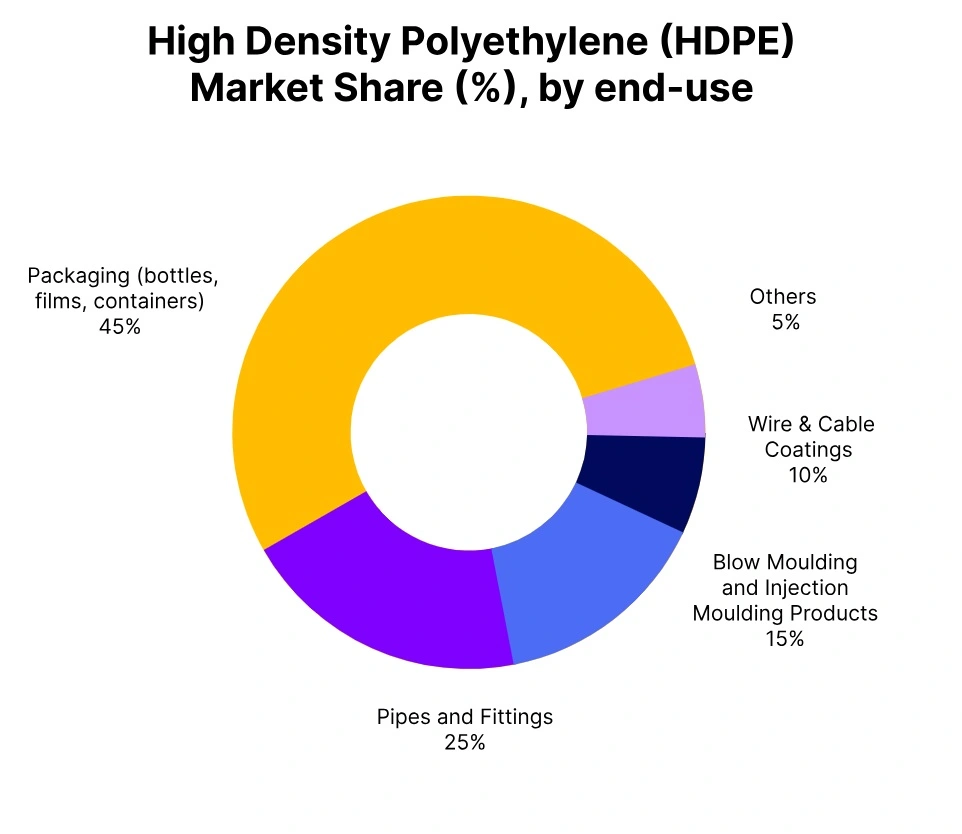
high density polyethylene market share end use

Historically, several events have caused significant fluctuations in High Density Polyethylene (hdpe) prices

  • Global Inflation and Economic Slowdown (2023–Present): In 2023, global inflation driven by high energy costs and supply chain constraints raised production costs for HDPE. Simultaneously, economic slowdowns and high inflation in key regions such as the Eurozone reduced consumer spending, particularly in the construction and automotive sectors. As a result, HDPE prices faced downward pressure despite increased input costs, reflecting weaker overall demand.
  • Slowing Global Economy and Rising Crude Oil Prices (2019): In 2019, geopolitical tensions, particularly the attacks on Saudi Aramco facilities, led to rising crude oil prices, which in turn increased feedstock Ethylene costs. However, a simultaneous global economic slowdown reduced demand for HDPE, especially in construction and consumer goods sectors. This combination of higher production costs and weakened demand caused mixed price movements, with HDPE prices rising initially before stabilizing later in the year.
  • Crude Oil Price Collapse (2015–2016): The global collapse in crude oil prices during 2015–2016, driven by oversupply and OPEC’s decision to maintain production, caused a sharp decline in oil prices. Since Ethylene, the primary feedstock for HDPE, is derived from Naphtha (a Crude Oil by-product), production costs decreased significantly. Consequently, HDPE prices dropped considerably during this period, reflecting the lower input costs across global markets.

Why Price Watch™?

Price Watch™ is your trusted resource for tracking global high density polyethylene (hdpe) price trends. Our platform delivers real-time data and expert analysis, offering deep insights into the key factors driving price fluctuations in the high density polyethylene (hdpe) market. By monitoring critical events such as geopolitical tensions, supply chain disruptions, and economic shifts, Price Watch™ keeps you fully informed of market dynamics.

In addition, Price Watch™ provides detailed forecasts and updates on production capacities, enabling you to anticipate market changes and make well-informed decisions. With Price Watch™, you gain a competitive edge in understanding all the elements that influence high density polyethylene (hdpe) prices worldwide. Stay ahead of the curve with Price Watch’s™ reliable, accurate, and timely high density polyethylene (hdpe) market data.

Track Price Watch's™ high density polyethylene (hdpe) price assessment on a weekly basis since 2015 onwards, along with short-term forecasts, and get access to the detailed report in a downloadable format.

High Density Polyethylene (hdpe) Market Price Trend published by Price Watch™ reflect prevailing spot market conditions, derived from independent research, verified trade inputs, and proprietary market intelligence as of the publication date. Prices are published on the specified Incoterm and represent indicative base market levels, exclusive of applicable taxes, VAT, duties, tariffs, and other statutory charges. Actual transaction values may vary depending on volume, credit terms, contractual structure, and other negotiated conditions. Market prices are inherently subject to volatility, liquidity dynamics, regulatory changes, and evolving trade activity. The information provided is for reference and benchmarking purposes only and does not constitute an offer, recommendation, or guarantee of transactional outcomes. Users should exercise independent commercial judgment and assess their specific contractual, regulatory, tax, and application requirements before making business decisions. Price Watch™ assumes no liability for decisions taken based on this information.

HDPE prices are primarily influenced by the cost of Ethylene, derived from Crude Oil and Naphtha. Other key factors include supply and demand dynamics, with increased demand from industries like packaging and construction driving prices up, while oversupply reduces them. Logistics issues, such as shipping disruptions or high freight rates, and regional market conditions, including economic growth and local regulations, also play a role in HDPE pricing.

Procurement managers can secure the best HDPE prices by monitoring global market trends, locking in long-term contracts to mitigate price volatility, and buying in bulk to negotiate better rates. Diversifying suppliers across different regions can also provide leverage and reduce risk, ensuring more competitive pricing.

Global events like geopolitical tensions, natural disasters, and economic shifts can significantly impact HDPE prices. Rising crude oil prices, supply chain disruptions, or reduced demand from economic slowdowns can drive prices up or down, making it essential for procurement managers to stay informed and anticipate market shifts.

HDPE (High-Density Polyethylene) is a widely used thermoplastic polymer used in packaging, pipes, containers, and automotive components. Its price impacts production costs across multiple industries. Price-Watch™ tracks HDPE prices to help businesses stay informed about market movements and cost trends.

HDPE prices fluctuate based on region, grade, and market conditions, influenced by feedstock costs (such as ethylene), freight rates, and demand from industries like packaging and construction. Prices are typically quoted per metric ton and vary with supply-demand balance. Price-Watch™ provides up-to-date price assessments across key global markets.

HDPE prices are influenced by ethylene feedstock costs, demand from packaging and infrastructure sectors, and production levels. Global supply-demand dynamics, feedstock price fluctuations, and seasonal demand play key roles. Recent trends show price variations depending on raw material costs and market recovery.

Major consumers of HDPE include the packaging industry, construction sector, and automotive manufacturers. Packaging accounts for the largest share, followed by demand for pipes, containers, and industrial applications. Price-Watch™ tracks consumption trends across these sectors.

HDPE is produced in petrochemical plants through polymerization of ethylene. It is then processed into various grades for use in packaging, piping systems, and industrial products.

Major exporters of HDPE include countries such as Saudi Arabia, the United States, South Korea, and China. Export volumes vary depending on production capacity, feedstock availability, domestic demand, and pricing competitiveness in the international market. Price-Watch™ monitors global trade flows and supply availability.

Overall supply is generally adequate; however, temporary tightness may arise due to feedstock constraints, production outages, logistics disruptions, or sudden fluctuations in demand across key end-use industries. Price-Watch™ closely tracks supply-demand balances to highlight potential shortages or oversupply situations.

HDPE is available in multiple grades such as injection molding, blow molding, and pipe grades. Prices vary based on factors such as molecular weight, density, production process, performance characteristics, and specific end-use requirements. Price-Watch™ provides grade-wise price assessments for better market clarity.

When demand rises sharply, often driven by increased activity in packaging or construction sectors, prices tend to increase, lead times may extend, and buyers can experience limited spot availability in the market. Price-Watch™ captures these shifts in real time.

Ethylene is the primary raw material for HDPE. Any increase in its price directly raises production costs, which manufacturers may pass on to buyers. Price-Watch™ analyses feedstock-HDPE price correlations to explain cost movements.

Regional prices vary due to local availability, manufacturing capacity, energy costs, freight rates, import duties, and domestic demand levels. Price-Watch™ tracks regional differentials to highlight pricing gaps across markets.

The HDPE price outlook depends on trends in key feedstocks such as ethylene, demand from packaging and construction industries, capacity expansions, and overall global economic conditions. Price-Watch™ publishes regular forecasts projecting price direction over the next 12 months.

Yes. Reliable forecasts help buyers plan procurement, manage inventory, negotiate contracts, and control production costs. Price-Watch™ forecasts support smarter purchasing and budgeting decisions.

Events such as trade policy changes, shipping disruptions, energy price volatility, or geopolitical tensions can affect the availability of feedstocks like ethylene, alter production rates, and disrupt global trade flows, leading to fluctuations in HDPE prices. Price-Watch™ provides timely updates on such market-moving events.

Price-Watch™ gathers data from producers, converters, traders, and buyers to publish transparent HDPE price assessments, market reports, and forecasts, helping stakeholders stay ahead of market trends.