Methyl Ethyl Ketone (mek) Price Trend and Forecast

UNSPC code: 41116107
|
Weekly Update
|
Historical Data Since 2015
|
Forecast for 2026
  • Commodity Pricing

methyl ethyl ketone (mek) Price Trends by Country

cnChina
jpJapan
nlNetherlands
zaSouth Africa
usUnited States
inIndia
vnVietnam
idIndonesia
krSouth Korea
deGermany

Global methyl ethyl ketone (mek) Spot Market Prices, Trend Analysis and Forecast

Price-Watch™ provides real-time price assessments and price forecasts for Methyl Ethyl Ketone across top trading regions:

Methyl Ethyl Ketone (MEK) Regional Coverage Methyl Ethyl Ketone (MEK) Grade and Country Coverage Methyl Ethyl Ketone (MEK) Pricing Data Coverage Explanation
Asia-Pacific Methyl Ethyl Ketone (MEK) Pricing Analysis Methyl Ethyl Ketone; Grade- Industrial Grade (99% min) FOB Prices at Shanghai Port, China Weekly Price Update on Methyl Ethyl Ketone (MEK) Real-Time Export Prices from Shanghai Port, China to Global Markets
Methyl Ethyl Ketone; Grade- Industrial Grade (99% min) CIF Prices at Busan Port, South Korea. Importing from China Weekly Price Update on Methyl Ethyl Ketone (MEK) Real-Time Import Prices at Busan Port, South Korea, from China
Methyl Ethyl Ketone; Grade- Industrial Grade (99% min) CIF Prices at Haiphong Port, Vietnam. Importing from China Weekly Price Update on Methyl Ethyl Ketone (MEK) Real-Time Import Prices at Haiphong Port, Vietnam, from China
Methyl Ethyl Ketone; Grade- Industrial Grade (99% min) CIF Prices at Jakarta Port, Indonesia. Importing from China Weekly Price Update on Methyl Ethyl Ketone (MEK) Real-Time Import Prices at Jakarta Port, Indonesia, from China
Methyl Ethyl Ketone; Grade- Industrial Grade (99% min) CIF Prices at Nhava Sheva Port, India. Importing from China Weekly Price Update on Methyl Ethyl Ketone (MEK) Real-Time Import Prices at Nhava Sheva Port, India, from China
Methyl Ethyl Ketone; Grade- Industrial Grade (99% min) Ex-Mumbai, India Weekly Price Update on Methyl Ethyl Ketone (MEK) Real-Time Domestic Prices in Mumbai, India
Methyl Ethyl Ketone; Grade- Industrial Grade (99% min) FOB Prices at Tokyo, Japan Weekly Price Update on Methyl Ethyl Ketone (MEK) Real-Time Export Prices from Tokyo, Japan to Global Markets
Methyl Ethyl Ketone; Grade- Industrial Grade (99% min) CIF Prices at Haiphong Port, Vietnam. Importing from Japan Weekly Price Update on Methyl Ethyl Ketone (MEK) Real-Time Import Prices at Haiphong Port, Vietnam, from Japan
Europe Methyl Ethyl Ketone (MEK) Pricing Analysis Methyl Ethyl Ketone; Grade- Industrial Grade (99% min) FOB Prices at Rotterdam Port, Netherlands Weekly Price Update on Methyl Ethyl Ketone (MEK) Real-Time Export Prices from Rotterdam Port, Netherlands to Global Markets
Methyl Ethyl Ketone; Grade- Industrial Grade (99% min) CIF Prices at Hamburg Port, Germany. Importing from Netherlands Weekly Price Update on Methyl Ethyl Ketone (MEK) Real-Time Import Prices at Hamburg Port, Germany, from Netherlands
North America Methyl Ethyl Ketone (MEK) Pricing Analysis Methyl Ethyl Ketone; Grade- Industrial Grade (99% min) CIF Prices at Houston, USA. Importing from Netherlands Weekly Price Update on Methyl Ethyl Ketone (MEK) Real-Time Import Prices at Houston, USA, from Netherlands
MEA Methyl Ethyl Ketone (MEK) Pricing Analysis Methyl Ethyl Ketone; Grade- Industrial Grade (99% min) FOB Prices at Durban, South Africa Weekly Price Update on Methyl Ethyl Ketone (MEK) Real-Time Export Prices from Durban, South Africa to Global Markets

Note: In assessments structured as CIF [Importing Port] (Exporting Country), the country mentioned in brackets indicates the primary origin of supply (exporting country), while the named port refers to the destination port in the importing country. Other Incoterms (FOB, FD, EXW, etc.) should be interpreted in accordance with standard international trade definitions.

Methyl Ethyl Ketone (MEK) Price Trend Q1 2026

MEK prices made a strong recovery in the first quarter of 2026 due to reduced supplies and revived demand from downstream businesses. The need to build inventory during times of increasing input and energy prices led to higher pricing for MEK.

During March, there is an unusually high increase in MEK prices due to supply shortages brought about by the Middle East war, thereby driving up transport costs. This led to the need to build up inventories, making the market volatile in the short term.

China: MEK Export prices FOB Shanghai, China; Grade- Industrial Grade (99% min)

In Q1 2026, the MEK price in China made a significant recovery, rising by 11.00% compared to the previous quarter’s average due to rising feedstock prices and better downstream demand. There are signs of active purchases in the market, fuelled by worries about supply shortages.

The MEK price trend in China is on an upward trajectory in Q1 2026. In March 2026, MEK price in China saw a massive spike of 36.00%, primarily owing to supply issues resulting from the war in the Middle East.

Japan: MEK Export prices FOB Tokyo, Japan; Grade- Industrial Grade (99% min)

The MEK price in Japan in Q1 2026 witnessed an increase of 4.00%, owing to limited supply along with increasing demand from the downstream sector. Purchasers stepped up their purchases of the product to stock up due to the rising prices of raw materials and fuel costs.

During Q1 2026, the MEK price trend in Japan saw a consistent increase. In March 2026, MEK price in Japan witnessed a sharp increase of 25.00% as compared to the previous month, attributed to supply shortages arising out of the Middle East war.

Netherlands: MEK Export prices FOB Rotterdam, Netherlands; Grade- Industrial Grade (99% min)

During the first quarter of 2026, the MEK price in the Netherlands witnessed an increase by 105.00% as compared to the average price in the previous quarter, owing to limited supplies and high demands from the end-use industry.

Procurement activities are up by buyers who wanted to build stocks considering the high prices for feedstock and energy. In March 2026, MEK price in the Netherlands experienced a sudden increase by 34.00% as compared to the average price in the previous month, owing to supply disruption from the Middle East conflict.

South Africa: MEK Export prices FOB Durban, South Africa; Grade- Industrial Grade (99% min)

The MEK price in South Africa witnessed a growth rate of 6.00% in Q1 2026, as compared to the average MEK prices of the previous quarter. This is owing to the favorable market conditions where downstream demand has been improving, and there are tight supplies.

Buyers made efforts to acquire more inventory due to increasing costs for feedstocks and energy. The MEK price trend in South Africa witnessed a growing trend in the quarter. In March 2026, MEK price in South Africa grew sharply by 20.00% in March as compared to the previous month average, owing to supply disruptions in the Middle East war.

South Korea (CIF from China): MEK Import prices CIF Busan, South Korea; Grade- Industrial Grade (99% min)

During Q1 2026, there is a positive MEK price trend in South Korea, where prices saw an increase of 11.00% when compared to the previous quarter average due to the influence of low supply and high downstream demand. Buyers’ purchasing activities intensified to have a guaranteed supply, especially with the rise in feedstock prices.

There is a continuous rise in MEK prices in South Korea throughout the quarter. In March 2026, MEK price trend in South Korea there has been a sharp increase, which has been up by 35.00% when compared to the previous month average, due to supply disruptions brought about by the war in the Middle East region.

Vietnam (CIF from China): MEK Import prices CIF Haiphong, Vietnam; Grade- Industrial Grade (99% min)

In Q1 2026, the MEK price trend in Vietnam rebounded, increasing by 11.00% as compared to the previous quarter average, supported by tighter supply and renewed demand from downstream industries. Buyers increased procurement to secure inventory amid rising feedstock costs and energy prices. The MEK price in Vietnam maintained an upward trajectory during the quarter.

In March 2026, MEK price in Vietnam surged by 35.00% as compared to the previous month average, primarily driven by supply disruptions caused by the Middle East war, which affected raw material availability and logistics. Accelerated restocking and constrained supply further amplified short-term price volatility.

Indonesia (CIF from China): MEK Import prices CIF Jakarta, Indonesia; Grade- Industrial Grade (99% min)

In Q1 2026, the MEK price trend in Indonesia rebounded, increasing by 10.00% as compared to the previous quarter average, supported by tighter supply and improving downstream demand. Buyers increased procurement to secure availability amid rising feedstock and energy costs. The MEK price in Indonesia maintained an upward trajectory during the quarter.

In March 2026, MEK price in Indonesia surged by 35.00% as compared to the previous month average, primarily driven by supply disruptions caused by the Middle East war. These disruptions affected raw material sourcing and freight logistics, tightening supply and prompting urgent restocking by buyers. Overall, the quarter highlighted the strong influence of geopolitical tensions on short-term price volatility.

USA (CIF from Netherlands): MEK Import prices CIF Houston, USA; Grade- Industrial Grade (99% min)

In Q1 2026, the MEK price trend in the USA rebounded, increasing by 9.00% as compared to the previous quarter average, supported by tighter supply and renewed demand from downstream industries. Buyers stepped up procurement to secure stocks amid rising feedstock and energy costs. The MEK price in the USA maintained a steady upward trajectory during the quarter.

In March 2026, MEK price in the USA surged by 32.00% as compared to the previous month average, primarily driven by supply disruptions caused by the Middle East war. These disruptions affected raw material sourcing and freight logistics, tightening supply and prompting urgent restocking, which amplified short-term price volatility.

Germany (CIF from Netherlands): MEK Import prices CIF Antwerp, Germany; Grade- Industrial Grade (99% min)

According to Price-Watch™, in Q1 2026, the MEK price trend in Germany increased by 10.00% as compared to the previous quarter average, supported by tightening supply and improving downstream demand. Buyers stepped up procurement to secure stocks amid rising feedstock and energy costs. The MEK price in Germany maintained an upward trajectory during the quarter.

In March 2026, MEK price in Germany surged by 33.00% as compared to the previous month average, largely driven by supply disruptions caused by the Middle East war, which affected raw material availability and freight logistics. These disruptions intensified supply tightness and prompted urgent restocking, resulting in strong short-term price volatility.

Methyl Ethyl Ketone (MEK) Price Trend Analysis: Q4 2025

MEK prices witnessed significant downward movements during Q4 2025, mainly driven by sluggish demand from downstream industries such as coatings, adhesives, and other industries, coupled with ample supply. Participants exhibited caution in their buying activities, purchasing only when stock levels are satisfactory.

Prices witnessed some further declines in December as operating costs became less of an issue, and logistics are steady, maintaining the bearish tone. Supply-demand conditions in the quarter are largely balanced, although prices showed some stability towards the end of the quarter due to soft consumer demand.

China: MEK Export prices FOB Shanghai, China; Grade- Industrial Grade (99% min)

For the MEK price trend in China in Q4 2025, there has been a decrease of 13.00% compared to the quarterly average in the previous period, mainly because of low demand for downstream products and industrial applications while there is sufficient supply in the market.

The production rate remained constant, although there are conservative purchases and adjustments in inventories that led to low prices. In China, MEK price in December 2025, there has been a decline of 2.00% compared to the monthly average in the previous month, mainly because of conservative buying sentiments and slightly decreased logistics expenses.

Japan: MEK Export prices FOB Tokyo, Japan; Grade- Industrial Grade (99% min)

The MEK price trend in Japan in the fourth quarter of 2025 fell by 12.00% when compared to the previous quarter’s average due to low demand from the coating, adhesive, and industrial segments coupled with adequate supply levels. Buyers has conservative purchase plans due to adequate inventory levels, resulting in sluggish market activity.

The MEK price in Japan has been bearish during the quarter owing to steady supply conditions and low downstream consumption. In December 2025, MEK price in Japan witnessed a fall of 3.00% when compared to the previous month’s average due to weak purchasing sentiments and reduced logistics expenses.

Netherlands: MEK Export prices FOB Rotterdam, Netherlands; Grade- Industrial Grade (99% min)

The MEK price trend in the Netherlands during Q4 2025 decreased by 13.00% in comparison with the quarterly average price level, driven by lower demand for coatings, adhesives, and other applications along with adequate supply conditions. Buyers are conservative in their purchasing activities owing to adequate stock levels.

The MEK price in the Netherlands displayed a bearish outlook through the entire quarter, driven by steady supply and low demand dynamics. In December 2025, MEK price in the Netherlands decreased by 6.00% in comparison with the average price level in November, owing to the weak buying interest and lower logistics expenses.

South Africa: MEK Export prices FOB Durban, South Africa; Grade- Industrial Grade (99% min)

MEK price in South Africa has declined by approximately 5.5% in Q4 2025 compared with the previous quarter average, primarily due to weaker demand from the coatings, adhesives, and industrial sectors alongside sufficient supply availability.

The MEK price trend in South Africa has remained under pressure as buyers have maintained cautious procurement strategies, limiting fresh purchases amid already adequate inventories. Throughout the quarter, the market has sustained a generally weak tone, supported by stable supply conditions and subdued downstream consumption.

In South Africa, MEK prices in December 2025 have declined by nearly 2.0% compared with the previous month average, reflecting continued low buying interest and a slight easing in logistics-related costs. Overall, the quarter has reflected persistent pricing pressure, with only limited signs of stabilization emerging toward the year-end.

South Korea (CIF from China): MEK Import prices CIF Busan, South Korea; Grade- Industrial Grade (99% min)

The MEK prices in South Korea for Q4 2025 fell by 13.00% in comparison with the average prices of the last quarter due to poor demand in the coatings, adhesives, and industrial sectors, combined with adequate supplies. In general, market players took a conservative approach to buying, restraining their purchasing activities with enough stocks on hand.

The MEK price trend in South Korea demonstrated a bearish outlook for the whole quarter, affected by well-balanced supply and inactive consumer activity. In South Korea, MEK prices in December 2025 decreased by 2.00% compared to the previous month due to poor consumer sentiments and reduced logistics expenses.

Vietnam (CIF from China): MEK Import prices CIF Haiphong, Vietnam; Grade- Industrial Grade (99% min)

MEK price trend in Vietnam during Q4 2025 saw an overall decrease of 13.00% on a quarterly average basis, largely because of low demand from coatings, adhesives, and industries on account of ample supply levels. The market players adopted a cautious buying approach, considering their healthy stock level.

The MEK price in Vietnam during Q4 2025 has been negative on the back of equilibrium between supply and demand along with low consumption from downstream sectors. In December 2025, MEK price in Vietnam saw a decrease of 2.00% against November’s average, due to continued weak purchasing trends and reduction in logistics charges.

India (CIF from China): MEK Import prices CIF Nhava Sheva, India; Grade- Industrial Grade (99% min)

In Q4 2025, the MEK price trend in India declined by 13.00% as compared to the previous quarter average, reflecting soft demand from coatings, adhesives, and industrial sectors amid ample supply availability. Market participants limited procurement due to sufficient inventories, resulting in subdued buying activity.

The MEK price in India showed a bearish trend throughout the quarter, driven by balanced supply and weak downstream consumption. In December 2025, MEK price in India declined by 1.00% as compared to the previous month average, supported by stable logistics costs and continued cautious purchasing. Overall, the quarter experienced significant price weakness with minor stabilization toward year-end.

Indonesia (CIF from China): MEK Import prices CIF Jakarta, Indonesia; Grade- Industrial Grade (99% min)

In Q4 2025, the MEK price trend in Indonesia declined by 13.00% as compared to the previous quarter average, reflecting weak demand from coatings, adhesives, and industrial applications along with ample supply availability.

Market participants remained cautious in procurement, resulting in reduced buying activity. The MEK price in Indonesia showed a generally bearish trend throughout the quarter, influenced by stable supply and subdued downstream consumption.

In December 2025, MEK price in Indonesia declined by 1.50% as compared to the previous month average, driven by continued soft buying sentiment and slight easing in logistics costs. Overall, the quarter experienced notable price weakness with moderate stabilization toward the year-end.

USA (CIF from Netherlands): MEK Import prices CIF Houston, USA; Grade- Industrial Grade (99% min)

In Q4 2025, the MEK price trend in the USA declined by 13.00% as compared to the previous quarter average, pressured by soft demand from coatings, adhesives, and industrial sectors along with ample supply availability.

Buyers remained cautious in procurement, limiting purchases due to sufficient inventories. The MEK price in the USA showed a generally bearish trend throughout the quarter, influenced by balanced supply and subdued downstream activity.

In December 2025, MEK price in the USA declined by 5.00% as compared to the previous month average, driven by continued weak buying sentiment and minor easing in logistics costs. Overall, the quarter experienced significant price weakness with slight stabilization toward year-end.

Germany (CIF from Netherlands): MEK Import prices CIF Antwerp, Germany; Grade- Industrial Grade (99% min)

In Q4 2025, the MEK price trend in Germany declined by 12.50% as compared to the previous quarter average, pressured by soft demand from coatings, adhesives, and industrial sectors amid ample supply availability.

Buyers maintained cautious procurement, limiting purchases due to sufficient inventories and stable logistics. The MEK price in Germany showed a generally bearish trend throughout the quarter, reflecting balanced supply-demand dynamics and subdued downstream consumption.

In December 2025, MEK price in Germany declined by 6.00% as compared to the previous month average, driven by continued weak buying sentiment and minor easing in costs. Overall, the quarter experienced notable price weakness with gradual stabilization toward year-end.

In Q3 2025, the overall Methyl Ethyl Ketone (MEK) price trend showed a clear decline across global markets, driven by weak downstream demand and sufficient supply levels. The price softened as industries such as paints, coatings, and adhesives continued to operate below capacity, reducing procurement volumes.

Additionally, stable production in key manufacturing hubs, coupled with easing feedstock prices like butylene, contributed to the bearish sentiment. By September, Methyl Ethyl Ketone (MEK) prices in most regions had adjusted downward, reflecting subdued buying interest and competitive export offers, with no immediate signs of recovery heading into Q4.

USA: Methyl Ethyl Ketone (MEK) Import prices CIF Houston, USA, Grade- Industrial Grade (99% min).

In the third quarter of 2025, prices for Methyl Ethyl Ketone (MEK) in the United States fell by 6.00% when compared to the second quarter of 2025. The Methyl Ethyl Ketone (MEK) price trend in the United States has been primarily driven by weaker demand from key sectors, particularly automotive and chemicals, which showed some slow deliveries. In a softer demand environment, rising freight costs facilitated downward pressure on Methyl Ethyl Ketone (MEK) prices.

As of September 2025, Methyl Ethyl Ketone (MEK) prices in the United States remained on a downward trend and exhibited a rather soft market. The outlook for the fourth quarter of 2025, as indicated, continues the focus on major sector demand as critical for MEK price direction and whether it remains downward or stabilizes, depending on sector improvement.

Germany: Methyl Ethyl Ketone (MEK) Import prices CIF Hamburg, Germany, Grade- Industrial Grade (99% min).

In Q3 2025, prices for Methyl Ethyl Ketone in Germany fell 5% compared to the previous quarter, Q2 2025. The Methyl Ethyl Ketone (MEK) price trend in Germany has been subject to tapering demand from the major consuming sectors of automotive and coatings, which also saw production slow. The decline in prices has occurred against an oversupply of Methyl Ethyl Ketone while freight costs rose.

In September 2025, Methyl Ethyl Ketone prices in Germany remained lower based on weaker downstream demand and oversupply. The outlook for Q4 2025 remains uncertain and could change as demand from downstream sectors varies.

Netherlands: Methyl Ethyl Ketone (MEK) Export prices FOB Rotterdam, Netherlands, Grade- Industrial Grade (99% min).

In Q3 2025, Methyl Ethyl Ketone prices in the Netherlands decreased by 5% compared to Q2 2025. Methyl Ethyl Ketone (MEK) price trend in the Netherlands has primarily been impacted by weaker demand from key sectors like coatings and automotive, which saw slower production. The oversupply of Methyl Ethyl Ketone, combined with rising freight costs, placed downward pressure on prices.

In September 2025, Methyl Ethyl Ketone prices in the Netherlands remained lower, reflecting weaker market conditions. The outlook for Q4 2025 remains cautious, with prices expected to stay subdued unless there is a rebound in demand from downstream industries.

South Africa: Methyl Ethyl Ketone (MEK) Export prices FOB Durban, South Africa, Grade- Industrial Grade (99% min).

In Q3 2025, Methyl Ethyl Ketone prices in South Africa decreased by 3.0% compared to Q2 2025. Methyl Ethyl Ketone (MEK) price trend in South Africa was influenced by slower demand from the automotive and chemicals sectors, which faced production slowdowns. Despite stable feedstock costs, the reduction in demand from key downstream industries and rising freight costs contributed to the price decline.

In September 2025, Methyl Ethyl Ketone prices in South Africa continued to show a downward trend, reflecting the weaker market environment. Moving forward, the outlook for Q4 2025 suggests continued price pressure unless demand from major sectors recovers.

China: Methyl Ethyl Ketone (MEK) Export prices FOB Shanghai, China, Grade- Industrial Grade (99% min).

According to Price-Watch, the price of Methyl Ethyl Ketone (MEK) in China experienced a drop of about 8% in Q3 2025 compared to Q2 2025. The downward Methyl Ethyl Ketone (MEK) price trend in China has largely stemmed from reduced demand from both the coatings and chemical sector as some downstream producers reduced operation rates due to the slower influx of orders.

In addition, lower feedstock prices (particularly for propylene and butadiene) and declining freight costs, added downward pressure for MEK prices in China. In September 2025, the price of Methyl Ethyl Ketone in China continued to decrease, due to adequate supply levels and weak activity in the market.

Japan: Methyl Ethyl Ketone (MEK) Export prices FOB Tokyo, Japan, Grade- Industrial Grade (99% min).

According to Price-Watch, in the third quarter of 2025, the price of Methyl Ethyl Ketone (MEK) in Japan decreased by almost 8% when compared to the preceding quarter. Decreased demand from the coatings and adhesive classifications drove the Methyl Ethyl Ketone (MEK) price trend in Japan as end-users reduced production and downstream consumption remained weak in general.

Since domestic consumption has mostly been stagnant with low export activity, cheap feedstocks availability and supply have been steady, further reinforcing price declines in Methyl Ethyl Ketone (MEK). Price for Methyl Ethyl Ketone in Japan continued to fall in September of 2025, consistent with the market’s stronger supply and hesitancy to purchase.

South Korea: Methyl Ethyl Ketone (MEK) Import prices CIF Busan, South Korea, Grade- Industrial Grade (99% min).

The price of Methyl Ethyl Ketone (MEK) in South Korea has decreased by a margin of 8 to 10% in Q3 2025 compared with Q2 2025. The Methyl Ethyl Ketone (MEK) price trend in South Korea has reflected a drop in the FOB prices of major exporting countries which impacted valuations in the domestic market.

Demand from the coatings and chemicals markets has decreased, with a stable supply also contributing to the downward pressure on prices. The price of Methyl Ethyl Ketone in South Korea continued to fall in September 2025 as a result of lower import prices and moderate consumption from downstream users.

Vietnam: Methyl Ethyl Ketone (MEK) Import prices CIF Haiphong, Vietnam, Grade- Industrial Grade (99% min).

The price of Methyl Ethyl Ketone (MEK) in Vietnam fell by approximately 8-10% in the third quarter of 2025 compared to the second quarter of 2025. The Methyl Ethyl Ketone (MEK) price trend in Vietnam has been impacted by a decline in the free-on-board (FOB) price of MEK in major exporting countries, causing lower entry costs to the Vietnamese marketplace for importers.

Coupled with modest demand in the coatings and adhesive markets, and adequate supply across the market contributed to the decrease in price. For September 2025, the price of Methyl Ethyl Ketone in Vietnam continued to decline following the slow procurement and poor end-user consumption in August 2025.

Indonesia: Methyl Ethyl Ketone (MEK) Import prices CIF Jakarta, Indonesia, Grade- Industrial Grade (99% min).

Methyl Ethyl Ketone (MEK) price in Indonesia dropped around 8-10% during the third quarter of 2025 compared to the second quarter of 2025. The Methyl Ethyl Ketone (MEK) price trend in Indonesia has been affected predominantly by a downward trend in the FOB price offered by the major exporting countries that tampered with the local buyer’s costs for imports to the region.

Softer demand from the coatings and adhesive industries along with overall supply levels in the domestic market being adequate, have contributed to a decline in the Methyl Ethyl Ketone (MEK) price. In September 2025, Methyl Ethyl Ketone prices in Indonesia continued to decrease, signalling buyers’ cautiousness in following through with purchases and overall downstream purchases have not strong for MEK.

India: Methyl Ethyl Ketone (MEK) Domestic traded price Ex-Mumbai, India, Grade- Industrial Grade (99% min).

According to Price-Watch, Methyl Ethyl Ketone (MEK) prices in India (Ex-Mumbai) declined by 5–6% in Q3 2025 compared to Q2, reflecting a broad correction in the regional solvent market.

The Methyl Ethyl Ketone (MEK) price trend in India weakened as lower import prices from China, driven by reduced FOB offers and high inventories, eased landed costs for Indian importers.

Downstream demand from coatings, adhesives, and resins remained sluggish, prompting manufacturers to limit procurement and maintain lean inventories amid volatile feedstock values.

Though propylene and butadiene prices fluctuated moderately, regional supply softness shaped overall sentiment. By September 2025, MEK prices in India extended their downward trajectory, pressured by weak Chinese export offers, muted domestic consumption, and cautious buyer behavior ahead of the festive and construction demand cycle.

According to PriceWatch, the price trend for MEK (Methyl Ethyl Ketone) on an FOB Shanghai basis in Q2 2025 was largely characterized by a gradual decline during most of the quarter, driven by sluggish demand, stable production levels, and steady export availability. The MEK price index reflected this weakening momentum, with prices remaining under pressure due to subdued activity in downstream sectors such as paints, coatings, and adhesives.

However, in a sharp reversal of the earlier trend, the last two weeks of June witnessed a sudden and notable price spike. This was primarily triggered by heightened geopolitical tensions stemming from the Israel and Iran conflict, which caused significant volatility in global crude oil prices.

Since crude oil is a key upstream feedstock for MEK production, the resulting uncertainty led to increased cost pressure and speculative buying activity in the Asian chemical markets. As a consequence, MEK prices on an FOB Shanghai basis surged rapidly during this short window.

Despite the earlier downward trajectory, this late-quarter rally pushed the price index up, and by the end of June, MEK prices had climbed to USD 1047 per ton. This abrupt shift highlights the sensitivity of the MEK market to global energy developments and underscores how geopolitical disruptions can override existing supply and demand fundamentals, at least in the short term.

According to Price-Watch, the price trend for MEK (Methyl Ethyl Ketone) on an FOB Rotterdam basis in Q2 2025 showed a slight decline, reflecting modest downward pressure amid balanced supply-demand dynamics in the European market.

Throughout the quarter, demand from downstream industries such as paints, coatings, and adhesives remained steady but unremarkable, while supply levels were sufficient to meet market requirements without significant disruptions.

This resulted in a relatively stable pricing environment, though mild bearish sentiment led to a gradual softening in the MEK price index over the three-month period.

Unlike more volatile regions, the European MEK market maintained a comparatively calm pricing pattern, with no major geopolitical or upstream cost shocks during the quarter. By the end of Q2, the FOB Rotterdam price settled at USD 1,307 per ton, marking a slight decrease from earlier levels and reinforcing the overall subdued yet stable price trend observed across the region during this period.

According to Price-Watch, the price trend for MEK (Methyl Ethyl Ketone) of FOB Durban, South Africa, during Q2 2025 remained almost stable, with minor fluctuations throughout the quarter.

The MEK price index in the South African market reflected a balanced supply-demand environment, where steady import volumes and consistent consumption from key downstream sectors such as paints, coatings, and adhesives helped maintain price stability.

While there were brief periods of modest price movement driven by shifts in freight costs and currency exchange rates overall volatility was limited compared to other global regions. The South African MEK market was relatively insulated from the sharper price swings observed in Asia and Europe, particularly during late June when geopolitical tensions elsewhere spiked energy related costs.

As a result, despite some mid-quarter adjustments, MEK prices in Durban showed resilience and held firm. By the end of Q2 2025, the FOB Durban price stood at USD 1,045 per ton, reinforcing the overall trend of a stable yet slightly fluctuating market throughout the quarter.

According to Pricewatch, the price trend for MEK (Methyl Ethyl Ketone) on a CIF basis at Nhava Sheva, India, showed a consistent decline throughout Q2 2025. The MEK price index reflected weakening market fundamentals, driven by sluggish demand from key downstream sectors such as paints, coatings, and adhesives, along with sustained import volumes that contributed to excess supply. This imbalance between supply and demand maintained downward pressure on prices across the quarter.

As a result, the price trend remained negative, and by the end of Q2, the CIF price stood at 96250 INR per ton. The falling price index highlights the overall bearish sentiment in the Indian MEK market during this period. 

In Q1 2025, MAK prices began to show a slightly upward trend, with a 0.56% increase, moving from USD3,530 in January to USD3,550 in March. This growth was attributed to a moderate increase in demand from industries such as paints and coatings, particularly as market activity ramped up following the winter months.

The slight upward movement in prices was driven by steady demand from end-users, coupled with stable feedstock availability and favourable market conditions. The relatively consistent market dynamics allowed for this gradual increase, which reflected a return to normal levels of consumption after the slower winter period. 

Q1 2025 marked a modest upward trend in MAK prices, growing 1.17% over the quarter. This reflects improved demand as industrial activity picked up post-winter, mirroring previous seasonal recovery patterns. The paints and coatings sector played a key role, supported by stable raw material supply and favourable market sentiment. The market showed resilience, transitioning smoothly into the spring season with prices nearing pre-Q2 2024 peaks 

Methyl Ethyl Ketone (MEK) Price Trend Analysis: Q4 2024

In Q4 2024, MAK prices experienced a slight decline of 0.07%, moving from USD3,525 in October to USD3,510 by December. This minor drop reflects a slightly weaker demand in some end-user industries, particularly as seasonal factors influenced consumption patterns. Despite this, prices remained within a narrow range, with moderate demand continuing to come from sectors like paints and coatings. The stable feedstock availability and steady but lower seasonal demand helped maintain prices at relatively stable levels. 

During Q4 2024, prices remained within a narrow band, showing a minor overall rise of about 0.14% over the quarter. This marginal increase indicates stability in the market, with consistent but moderate demand as seasonal consumption slowed slightly. Paints and coatings industries likely maintained baseline purchasing, and ample feedstock ensured price volatility was minimal. 

In Q3 2024, Methyl n-Amyl Ketone (MAK) prices remained stable at around USD 3520/Ton. This stability was driven by a balance between supply and demand, with steady consumption from end-user industries. Although there were fluctuations in demand, particularly in the paint and coatings sectors, the overall market conditions allowed prices to maintain a steady level. The stability in Q3 was supported by consistent feedstock availability and moderate industry demand. 

Q3 2024 saw stable MAK prices, maintaining levels close to INR 304,000–306,000 throughout the quarter. Minor fluctuations occurred, with a small drop in August and a marginal rebound in September. This steadiness reflects a balanced market where supply met consistent demand, particularly from coatings and industrial users, in line with seasonal maintenance schedules and steady feedstock availability. 

In Q2 2024, the price surged to 3550 due to increased demand in the end-use market. This rise in price can be attributed to the growing need for the product, driven by various factors such as heightened consumer demand, shifts in market conditions, and potentially changes in production or supply chain dynamics. The increased end-use demand created upward pressure on prices, leading to this significant increase. 

In Q2 2024, prices peaked in April at INR 301,000 due to strong end-user demand, reflecting heightened consumption in industrial sectors. However, prices plateaued in May and declined slightly in June, indicating stabilization after the April surge. This pattern aligns with a temporary demand spike, possibly from procurement cycles or restocking, followed by normalized market activity and slight downward corrections in the latter part of the quarter. 

In Q1 2024, Methyl n-Amyl Ketone (MAK) prices were around USD 3200/Ton, primarily due to weakened demand from end-user industries. The lower consumption in key sectors, such as paints and coatings, significantly impacted the market, causing a decline in prices. Reduced activity in these industries, especially during the winter months, contributed to the overall softness in demand. This led to the lower price levels observed in Q1, the trend was largely driven by the continued sluggishness in end-user consumption, which affected both the supply chain and market pricing. 

MAK prices in Q1 2024 began on a weaker note due to sluggish demand from downstream sectors like paints and coatings, with January seeing the lowest point at INR 274,000. However, a gradual recovery began in February and March, as indicated by monthly increases of 3.01% and 2.75%, respectively. This late-quarter rise suggests a slow return in industrial activity post-winter, aligning with slightly improving market sentiments, although the quarter overall remained relatively soft. 

Technical Specifications of Methyl Ethyl Ketone (mek) Price Trends

Product Description

Methyl Ethyl Ketone (MEK), also known as butanone, is a clear, colourless, and highly volatile liquid with a sharp, sweet odour similar to acetone. MEK is a fast-evaporating solvent widely used in industrial and commercial applications. It is primarily used in the manufacture of coatings, adhesives, inks, resins, and cleaning agents, thanks to its excellent solvency for a broad range of polymers and resins.

MEK is particularly valued in the automotive, aerospace, and furniture industries for its effectiveness in dissolving nitrocellulose, acrylics, and vinyl resins. It is also used as a precursor in chemical synthesis and as a dewaxing agent in lubricant production. Due to its low boiling point and high evaporation rate, MEK provides fast drying times, making it ideal for high-performance formulations. However, it is flammable and should be handled with proper safety precautions in well-ventilated areas.

Identifiers and Classification:

  • CAS No – 78-93-3
  • HS Code – 291412
  • Molecular Formula – C₄H₈O
  • Molecular Weight[g/mol] – 72.11 g/mol


Methyl Ethyl Ketone (MEK) Synonyms:

  • Butan-2-one
  • 2-Butanone
  • Methylpropanone


Methyl Ethyl Ketone (MEK) Grades Specific Price Assessment:

  • Industrial Grade (99% min)


Methyl Ethyl Ketone (MEK) Global Trade and Shipment Terms

  • Quotation Terms (Product & Country Specific): 15-20 MT, 10-15MT
  • Packaging Type (Product & Country Specific): ISO Tank, 165 Kg Drum


Incoterms Referenced in Methyl Ethyl Ketone (MEK) Price Reporting

Shipping Term  Location  Definition 
FOB Shanghai  Shanghai, China  MEK Export price from China 
FOB Tokyo  Tokyo, Japan  MEK Export price from Japan 
FOB Rotterdam  Rotterdam, Netherlands  MEK Export price from Netherlands 
CIF Nhava Sheva (China)  Nhava Sheva, India  SBR import price in India from China 
CIF Busan (China)  Busan, South Korea  MEK import price in South Korea from China 
CIF Haiphong (China)  Haiphong, Vietnam  MEK import price in Vietnam from China 
CIF Jakarta (China)  Jakarta, Indonesia  MEK import price in Indonesia from China 
CIF Haiphong (Japan)  Haiphong, Vietnam  MEK import price in Vietnam from Japan 
CIF Houston (Netherlands)  Houston, USA  MEK import price in USA from Netherlands 
CIF Hamburg (Netherlands)  Hamburg, Germany  MEK import price in Germany from Netherlands 
FOB Durban  Durban, South Africa  MEK Export price from South Africa 
Ex-Mumbai  Mumbai, India  Domestically Traded MEK price in Mumbai 

*Quotation Terms refers to the quantity range specified for the Methyl Ethyl Ketone, being quoted or offered in a commercial transaction.

**Packaging Type refers to standard packaging size commonly used for Methyl Ethyl Ketone packing, ease of handling, transportation, and storage in industrial and commercial applications.

Key Methyl Ethyl Ketone (MEK) Manufacturers

Manufacturer 
Shell 
Maruzen  
ExxonMobil Corporation 
Zibo Qixiang 
Sasol 
Idemsitu 
Cetex Petrochemicals Limited (CPL) 
Qingdao Siyuan Chemical  

Methyl Ethyl Ketone (mek) Industrial Applications

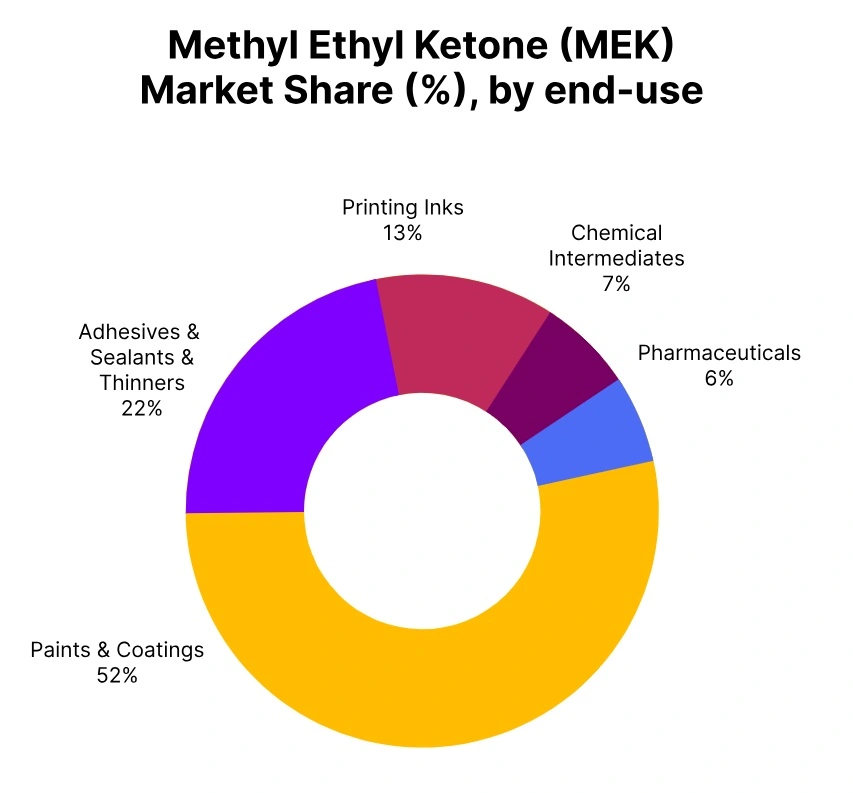
MEK market share end use

Historically, several events have caused significant fluctuations in Methyl Ethyl Ketone (mek) prices

  • Russia-Ukraine Conflict (2022-Present): Disruptions in European Methyl Ethyl Ketone production led to increased costs and global price volatility. 
  • Israel-Hamas Conflict (2023): The recent escalation in the Israel-Hamas conflict has introduced additional uncertainty in Middle Eastern supply chains, potentially impacting global crude oil prices and, consequently, the pricing of MEK Disruptions in this region can affect supply routes and increase volatility in markets worldwide. 
  • COVID-19 Pandemic (2020): Demand plummeted initially but rebounded as packaging needs surged. 
  • Geopolitical Tensions (2018-2019): U.S.-China trade wars caused price instability due to disrupted supply chains. 
  • Global Financial Crisis (2008-2009): A sharp drop in demand during the economic downturn led to price declines. 


These events underscore the Methyl Ethyl Ketone market’s vulnerability to global disruptions and highlight the need for continuous monitoring of supply-demand dynamics.
 

Why Price Watch™?

Price Watch™ is your trusted resource for tracking global methyl ethyl ketone (mek) price trends. Our platform delivers real-time data and expert analysis, offering deep insights into the key factors driving price fluctuations in the methyl ethyl ketone (mek) market. By monitoring critical events such as geopolitical tensions, supply chain disruptions, and economic shifts, Price Watch™ keeps you fully informed of market dynamics.

In addition, Price Watch™ provides detailed forecasts and updates on production capacities, enabling you to anticipate market changes and make well-informed decisions. With Price Watch™, you gain a competitive edge in understanding all the elements that influence methyl ethyl ketone (mek) prices worldwide. Stay ahead of the curve with Price Watch’s™ reliable, accurate, and timely methyl ethyl ketone (mek) market data.

Track Price Watch's™ methyl ethyl ketone (mek) price assessment on a weekly basis since 2015 onwards, along with short-term forecasts, and get access to the detailed report in a downloadable format.

Methyl Ethyl Ketone (mek) Market Price Trend published by Price Watch™ reflect prevailing spot market conditions, derived from independent research, verified trade inputs, and proprietary market intelligence as of the publication date. Prices are published on the specified Incoterm and represent indicative base market levels, exclusive of applicable taxes, VAT, duties, tariffs, and other statutory charges. Actual transaction values may vary depending on volume, credit terms, contractual structure, and other negotiated conditions. Market prices are inherently subject to volatility, liquidity dynamics, regulatory changes, and evolving trade activity. The information provided is for reference and benchmarking purposes only and does not constitute an offer, recommendation, or guarantee of transactional outcomes. Users should exercise independent commercial judgment and assess their specific contractual, regulatory, tax, and application requirements before making business decisions. Price Watch™ assumes no liability for decisions taken based on this information.

Methyl Ethyl Ketone (MEK) prices are primarily driven by the cost of raw materials like n-butanol and crude oil, as well as demand from key downstream industries such as paints, coatings, adhesives, and pharmaceuticals. Price fluctuations also stem from global supply chain disruptions, plant shutdowns, and freight costs. Environmental regulations, especially those targeting VOC emissions can limit MEK production or shift demand toward alternative solvents. Additionally, currency exchange rates, seasonal demand cycles, and geopolitical events all influence MEK pricing. Together, these factors create a highly dynamic and interdependent market.

Regional production plays a significant role in Methyl Ethyl Ketone pricing. Regions with high production, like Asia-Pacific, tend to have more competitive pricing due to local availability, whereas regions that rely on imports, such as North America and Europe, often face higher costs due to transportation fees, import duties, and potential supply chain disruptions.

The latest pricing trends for Methyl Ethyl Ketone often reflect fluctuations in the cost of raw materials and changes in global supply chains. To secure better rates, procurement heads can consider locking in long-term contracts with suppliers, monitoring global price trends and indices, and optimizing bulk purchasing strategies to take advantage of volume discounts.

Methyl Ethyl Ketone (MEK, CH₃C(O)CH₂CH₃) is a highly volatile, flammable solvent widely used in paints, coatings, adhesives, inks, and chemical manufacturing. Its strong solvency and fast evaporation rate make it essential for industrial applications such as surface cleaning, polymer processing, and resin formulation.

MEK’s price matters because it is a major raw material for coatings, adhesives, and chemical industries, so fluctuations directly impact production costs and profit margins. Additionally, as a petrochemical derivative, MEK prices reflect crude oil and naphtha trends, feedstock availability, and global market conditions. Price-Watch™ monitors MEK prices to help businesses stay updated on market trends.

MEK prices vary by region, delivery basis, and grade, typically quoted per metric ton. Prices fluctuate based on supply-demand balance, feedstock costs (butanone or n-butane derivatives), production capacity, and logistics. Price-Watch™ provides real-time assessments across global markets to help buyers and sellers make informed decisions.

The MEK market has recently been stable to slightly firm, influenced by steady demand from paints, coatings, adhesives, and chemical industries. Prices are primarily affected by crude oil, naphtha, and butanone feedstock costs, as well as regional industrial activity, inventory levels, and trade flows.

Seasonal demand, regulatory restrictions on volatile organic compounds (VOCs), and logistics issues can also cause short-term price fluctuations. Overall, trends reflect balanced supply-demand conditions, with significant price changes linked to feedstock volatility or shifts in downstream industrial consumption.

The largest consumers of MEK are the paints and coatings, adhesives, inks, and chemical manufacturing sectors. MEK is used as a solvent for resins, polymers, and coatings, as well as a cleaning agent and intermediate in chemical synthesis.

Globally, the coatings and adhesives industry accounts for the majority of consumption, while printing inks, construction chemicals, and specialty chemical applications also consume significant volumes.

MEK is primarily produced through the dehydrogenation of n-butanol or from butanone derived in petrochemical processes. It can also be synthesized via oxidation of 2-butanol. As an industrial solvent, its supply and pricing are closely linked to crude oil, naphtha, and petrochemical feedstock availability, as well as global chemical manufacturing capacity.

China is one of the largest exporters of MEK, supported by its extensive petrochemical industry and production capacity. Other key exporters include Japan, Netherlands and South Africa. Price-Watch™ tracks production levels, export flows, and trade patterns to help businesses identify sourcing opportunities.

Currently, global MEK supply is generally sufficient to meet industrial demand. Production largely keeps pace with consumption, with inventories supporting stable pricing.

Some regions may experience short-term tightness due to plant maintenance or logistics constraints, but overall supply-demand balance is maintained.

Long-term forecasts indicate steady growth in demand from coatings, adhesives, and specialty chemical industries. Price-Watch™ monitors supply-demand dynamics to highlight potential shortages or surpluses.

MEK comes in different grades based on purity and end-use requirements, including industrial grade for general solvent applications, high-purity grade for chemical intermediates or coatings, and specialty grades for sensitive processes.

Prices differ because higher purity levels and specialized specifications require additional refining, quality control, and testing, while standard industrial grades benefit from larger-scale production and lower processing costs.

A sudden increase in MEK demand typically results in price rises due to limited immediate supply, potentially causing temporary shortages. Short-term spikes can be sharp as production capacity is relatively fixed, but over time, manufacturers may scale output to stabilize prices.

Higher costs can affect downstream industries like paints, coatings, and adhesives, prompting higher product prices or alternative solvent use. Market speculation may amplify short-term volatility, which Price-Watch™ captures in real-time.

Energy prices directly impact MEK costs because production is energy-intensive, involving dehydrogenation and distillation processes. Higher crude oil, natural gas, or electricity prices increase feedstock and operational costs, pushing MEK prices upward.

Conversely, lower energy prices reduce production expenses, allowing suppliers to offer MEK at lower prices. Volatility in energy markets can therefore influence both short-term and long-term MEK pricing trends, which Price-Watch™ monitors.

Regional price differences arise from local supply availability, demand levels, proximity to production facilities, transportation costs, energy prices, tariffs, and environmental regulations.

Import-dependent regions usually face higher prices, while regions near petrochemical hubs benefit from lower logistics costs. Price-Watch™ tracks regional variations to highlight local market conditions.

Current market analysis suggests that MEK prices are likely to remain stable to slightly firm in the near term, with only moderate upside expected unless feedstock costs rise sharply or downstream demand increases.

Balanced supply and inventories in Asia, Europe, and North America support stable pricing, while seasonal demand or plant maintenance may drive modest gains. Longer-term forecasts indicate gradual price growth driven by coatings, adhesives, and chemical applications. Price-Watch™ provides detailed forecasts based on supply-demand trends, feedstock costs, and global economic indicators.

Yes. Accurate MEK price forecasts allow businesses to optimize procurement, budget effectively, and negotiate contracts. If Price-Watch™ predicts a price increase, companies can purchase in advance or secure long-term contracts, reducing costs and protecting margins.

Events such as petrochemical plant outages, feedstock shortages, natural disasters, geopolitical tensions affecting crude oil and naphtha, transportation disruptions, or sudden changes in coatings and adhesives demand can cause MEK supply shortages and price volatility. Price-Watch™ monitors these events and provides timely alerts on market impacts.

Price-Watch™ collects global data from manufacturers, distributors, and buyers to provide accurate price assessments, market reports, and forecasts. Its transparent methodology and comprehensive coverage make it a trusted source for understanding MEK pricing trends, regional differences, and market dynamics, helping businesses make informed procurement and investment decisions.