N Propanol Price Trend and Forecast

UNSPC code: 12352001
|
Weekly Update
|
Historical Data Since 2015
|
Forecast for 2026

n propanol Price Trends by Country

cnChina
vnVietnam
inIndia
arArgentina
phPhilippines

Global n propanol Spot Market Prices, Trend Analysis and Forecast

Price Watch™ provides real-time price assessments and price forecasts for N-Propanol across top trading regions:

Regional Coverage Grade and Country Coverage Pricing Data Coverage Explanation
Asia-Pacific N-Propanol Pricing Analysis n-Propanol Industrial Grade (99.5% min) FOB Prices at Shanghai Port, China Weekly price update on N-Propanol real-time export prices from Shanghai Port, China to global markets.
n-Propanol Industrial Grade (99.5% min) CIF Prices at Haiphong Port, Vietnam, importing from China Weekly price update on N-Propanol real-time import prices at Haiphong Port, Vietnam, from China.
n-Propanol Industrial Grade (99.5% min) CIF Prices at Manila Port, Philippines, importing from China Weekly price update on N-Propanol real-time import prices at Manila Port, Philippines, from China.
n-Propanol Industrial Grade (99.5% min) CIF Prices at Nhava Sheva Port, West India, importing from China Weekly price update on N-Propanol real-time import prices at Nhava Sheva Port, West India, from China.
n-Propanol Industrial Grade (99.5% min) Ex-Kandla Prices, India Weekly price update on N-Propanol real-time domestic prices Ex-Kandla, India.
South America N-Propanol Pricing Analysis n-Propanol Industrial Grade (99.5% min) CIF Prices at Buenos Aires Port, Argentina, importing from China Weekly price update on N-Propanol real-time import prices at Buenos Aires Port, Argentina, from China.

n Propanol Price Trend Q1 2026

The worldwide n-Propanol industry saw a consistent decline in Q1 2026, with price trends ranging from about -5% to -15% relative to Q4 2025. The n propanol price trend in Asian countries like China, Vietnam, and the Philippines saw a consistent downward trend during the first few months of the quarter, mainly attributed to lower demand for this chemical compound in end-user industries such as pharmaceuticals, cosmetics, and coatings.

This n propanol price trend is supported by the presence of adequate stock in the market and cautious purchasing behavior from major importers like Argentina, who experienced low demand as well. However, prices rose sharply in March 2026, fueled by the geopolitical conflicts between Iran and Israel that disrupted the supply chain and created shortages in production.

N propanol prices in China witnessed a surge, while the price of n-Propanol is higher for importing countries such as Vietnam and Argentina due to disruption in logistics and supply. However, despite the sharp increase in prices in March, the first quarter’s market showed signs of weakness at the beginning of the quarter due to weak industrial demand and adequate supplies of feedstocks, especially propylene.

China: N propanol export prices FOB Shanghai, China; Grade- Industrial Grade-99.5% min

For the first quarter of 2026, the n propanol price trend in China has declined by 5%, based on the price recorded last quarter. The decline is caused primarily by steady supply and medium demand. However, for March, there is a 36% increase in the N-Propanol price in China when compared to the average price in February.

In March 2026, n propanol price in China increase is due mainly to supply disruption, such as logistics and insufficient raw materials, that causes tight supply. Additionally, there is new buying activity, which makes the price more volatile in the short term.

Vietnam (CIF from China): N-propanol Import prices CIF Haiphong, Vietnam, Grade- Industrial Grade -99.5% min

The n propanol price trend in Vietnam in Q1 2026 decreased by 5%, mainly attributed to steady supply and demand conditions. Limited purchases are witnessed owing to supply conditions being steady. Nonetheless, there is a 34% hike for n propanol price in Vietnam in March 2026, relative to the monthly average price witnessed in February.

Such price spikes could be attributed to supply shocks, logistics constraints, and shortage of raw materials. These issues have played a major role in making prices extremely volatile in Vietnam. There have been fluctuations of the in Vietnam, N-Propanol price in March 2026, however, March experienced an unusual price spike amid a general decrease in prices.

Argentina (CIF from China): N-propanol Import prices CIF Buenos Aires, Argentina; Grade- Industrial Grade -99.5% min

In Q1 2026, the n propanol price trend in Argentina has experienced a 6% decline, indicating a slow market, attributable to consistent supply coupled with moderate demand. The market witnessed reduced purchases, as the supply situation is relatively balanced, and the total demand is stable.

On the other hand, the n propanol price in Argentina rose by 37% in March from its value in the preceding month. This significant rise in price is mainly attributed to disrupted supply, characterized by insufficient raw materials and logistics challenges, among others.

In March 2026, n propanol price in Argentina has been highly variable in Q1, especially considering that the price rose sharply in March against the declining prices throughout the quarter.

Philippines (CIF from China): N-propanol Import prices CIF Manila, Philippines; Grade- Industrial Grade -99.5% min

In Q1 2026, the n propanol price trend in Philippines has decreased by 6%, reflecting a market slowdown driven by stable supply and moderate demand. The market has shown limited buying activity, with supply conditions remaining balanced throughout the quarter. However, in March, the N-Propanol price in the Philippines surged by 34% compared to the previous month’s average.

This sharp increase is mainly due to supply chain disruptions, including logistical bottlenecks and raw material shortages, which created supply tightness and led to short-term price volatility. In March 2026, N-Propanol price in Philippines has experienced significant fluctuations, with the March surge contrasting sharply with the overall decline seen in Q1.

India (CIF from China): N-propanol Import prices CIF Nhava Sheva, India; Grade- Industrial Grade -99.5% min

n-Propanol price in India has declined by 3.26% in Q1 2026 compared with Q4 2025, according to Price Watch. The n propanol price trend in India has weakened due to reduced demand across several sectors, particularly pharmaceuticals and personal care, following the holiday season.

Although India has continued relying on imports from China, overall market sentiment has remained cautious, with industries adopting conservative procurement strategies. Geopolitical tensions in the Middle East and subsequent supply chain disruptions have affected logistics.

However, the impact has remained comparatively limited in the Indian market, resulting in a more moderate decline than in other regional markets. Consequently, in India, n-Propanol prices in March 2026 have reflected softer downstream demand alongside relatively stable import availability from China.

Ex-Kandla: (N-propanol Ex-prices Ex-Kandla, India; Grade- Industrial Grade (99.5% min)

According to Price-Watch™, in Q1 2026, the n propanol price trend in India increased by 6%, driven by higher feedstock costs and growing demand in downstream markets. The market showed renewed buying activity, with concerns over supply tightness emerging as a key factor influencing price movement. In March 2026, N-Propanol price in India surged by 30% compared to the previous month’s average.

This sharp increase is primarily due to logistical disruptions and raw material shortages, which tightened the supply and led to significant price volatility. The n propanol price trend in India during Q1 demonstrated substantial fluctuations, with March’s surge reflecting heightened procurement urgency and the impact of supply chain challenges.

n Propanol Price Trend Analysis: Q4 2025

The global n-Propanol market witnessed bearish tendencies during Q4 2025, with price changes within 7%-10% relative to Q3 2025. There is a slight fall in prices within the Asian region, especially within the markets of China, Vietnam, and the Philippines. This is due to lower demand from end-use segments like the pharmaceutical industry, cosmetic and coating sector.

The abundance of supply and low demand resulted in reduced pricing of n-Propanol across these countries. The exporting countries, including China, saw falling prices mainly due to a slowdown in purchasing activity among buyers.

Additionally, importers within countries like Argentina also must contend with loared pricing due to a conservative approach to purchasing as well as strong competition from Chinese exporters. Overall, there is an excess of supply in the global n-Propanol market, thanks to steady supplies of propylene feedstocks.

China: (N-propanol export prices FOB Shanghai, China; Grade- Industrial Grade (99.5% min)

The N-Propanol price in China experienced a decline of 9% during Q4 2025, which is an indication of a cool market, hence the lack of buying pressure. There have been stable market conditions with supply and demand balances that caused the decline in prices.

Nonetheless, in December 2025, N-Propanol price in China saw an increase of 2% relative to the average monthly price in the previous month. This upward N-Propanol price trend in China swing is because of efforts to stabilize the market based on annual demand.

Vietnam (CIF from China): (N-propanol Import prices CIF Haiphong, Vietnam; Grade- Industrial Grade (99.5% min)

The N-Propanol prices in Vietnam witnessed a fall in Q4 2025 by 9%, implying that the market has not been strong because of a lack of buying pressure. Since the supply has been stable, there has been a reduction in the price movement.

Nonetheless, in December 2025, N-Propanol prices in Vietnam experienced a positive shift by 2%, which is more than the average for the preceding month. This upward N-Propanol price trend in Vietnam has been due to increased demand for the product at the end of the year, thus allowing it to meet the requirements.

Argentina (CIF from China): (N-propanol Import prices CIF Buenos Aires, Argentina; Grade- Industrial Grade (99.5% min)

In Q4 2025, the N-Propanol price in Argentina experienced a significant decline of 16%, reflecting a weaker market with reduced demand and increased supply stability. The market showed little upward momentum as demand slowed down. In December 2025, N-Propanol price in Argentina slightly decreased by 1% compared to the previous month’s average.

This minimal decrease is due to a stable supply situation and muted demand in the final month of the year. Despite some minor fluctuations, N-Propanol price trend in Argentina during Q4 is mostly negative, reflecting the overall market conditions. The N-Propanol price in Argentina has remained under pressure, with little sign of recovery by December.

Philippines (CIF from China): (N-propanol Import prices CIF Manila, Philippines; Grade- Industrial Grade (99.5% min)

In Q4 2025, the N-Propanol price in Philippines decreased by 9%, reflecting a continued decline due to weaker demand and a stable supply environment. The market saw limited activity with reduced buying pressure. In December 2025, N-Propanol price in Philippines showed a modest rebound, increasing by 2% compared to the previous month’s average.

This slight increase is driven by some seasonal demand and adjustments in supply. Despite this minor uptick, the overall trend in Q4 remained negative, with the market still facing downward pressure. The N-Propanol price in Philippines reflected a balancing act between stable supply and muted demand, with December marking a brief recovery.

Ex-Kandla: (N-propanol Ex-prices Ex-Kandla, India; Grade- Industrial Grade (99.5% min)

In Q4 2025, the N-Propanol price in India decreased by 8%, as the market experienced reduced demand and more stable supply conditions. Despite some fluctuations, the overall market trend showed a downward movement due to lower buying activity. In December 2025, N-Propanol price in India increased by 1% compared to the previous month’s average, showing a slight recovery toward the end of the year.

This modest rebound is driven by seasonal demand adjustments and a reduction in supply chain bottlenecks. While N-Propanol price trend in India overall is marked by a decline, December’s small uptick reflected a temporary improvement in market conditions as the year ended.

The n-propanol market on a global level experienced modest n-propanol price trend fluctuations in Q3 2025, in the range of 2-5%, due to a steady feedstock environment (propylene, acetone) despite crude oil price likelihood, with demand from pharmaceutical, paints, and coatings holding the market stable.

There were some pressures behind logistics challenges and rising freight activity costs, however, stable production and continued capacity expansions were more important and outweighed any impacts related to this change.

China: n Propanol export prices FOB Shanghai, China, Grade- Industrial Grade (99.5% min).

According to Price-Watch, in Q3 2025, n-Propanol prices in China dropped 8.64% from the previous quarter, Q2 2025. The n-Propanol price trend in China primarily followed a downward path due to declining demand in the automotive, coatings, and chemical sectors, where many participants had reduced output and consumption when compared to earlier in the year.

Prices had been mostly stable when production was nearly at full capacity, but then the market experienced an oversupply, which was a leading factor contributing to the significant price decline. Increased freight expenses and the ongoing disruption of global supply chains were additional pressure points on n-propanol pricing.

In September 2025, the pricing of n-propanol in China, was nonetheless showing a continuing downward trend fueled by weak demand and oversupply. Price volatility is anticipated to remain into the coming months, with recovery from the backlog being dependent on downstream demand and feedstock pricing fluctuations.

Vietnam (CIF from China): n Propanol Import prices CIF Haiphong, Vietnam, Grade- Industrial Grade (99.5%).

In the third quarter of 2025, prices for n-Propanol in Vietnam fell by 8.25% compared to the second quarter of 2025. The trading fundamentals for n-Propanol pricing in Vietnam was affected by lower demand in key downstream industries, particularly automotive and textiles, which faced production delays, in addition to oversupply in the region and higher freight costs, which led to a fall in n-Propanol prices.

Although production levels were stable, weak demand in core sectors contributed to the declining price environment. n-Propanol price trends fell further in September 2025 as part of the weakening market conditions. As the outlook is uncertain as we head into the next quarter, prices are expected to continue to weaken further, unless there is a positive shift in market demand.

Argentina (CIF from China): n Propanol Import prices CIF Buenos Aires, Argentina, Grade- Industrial Grade (99.5%).

In Q3 2025, n-Propanol prices in Argentina witnessed a 2.47% increase from Q2 2025. The n-Propanol price trend in Argentina was reinforced by gradual demand from the country’s pharmaceutical and automotive sectors which continued production despite challenges globally.

The rise in prices of n-Propanol was attributed to an increase in freight costs from China as well as higher upstream prices, especially for propylene, which contributed to rises in production costs.

n-Propanol prices in Argentina in September 2025 continued a trend to sluggish prices, which reflected stable demand and tighter supply. The market is expected to continue upward moving forward, with prices likely to be supported by steady demand from key sectors.

Philippines (CIF from China): n Propanol Import prices CIF Manila, Philippines, Grade- Industrial Grade (99.5%).

In Q3 2025, n-Propanol prices in the Philippines dropped by 10.95% compared to 2Q 2025. Lower demand from major end-users in coatings and chemicals and associated lower production levels drove the n-Propanol price trend. Higher freight also compounded the situation. Oversupply and weak domestic consumption contributed to the larger price drop.

Additionally, n-Propanol prices in the Philippines continued to decline in September 2025 due to lower demand and weak market conditions. The expectation for the next quarter is uncertain, but further declines in prices are anticipated unless demand increases.

Ex-Kandla: n Propanol Ex-prices Ex-Kandla, India, Grade- Industrial Grade (99.5%).

In the third quarter of 2025, n-Propanol prices at Ex-Kandla experienced a decrease of 4.41% compared to the second quarter of 2025. The n-Propanol price trend has been affected by deterred demand from the downstream automotive and chemical sectors, which has slowed production. Elevated freight rates and a reduction in export demand added further downward pressure to the price.

The sluggishness in consumption from key downstream industries in conjunction with oversupply conditions in the region have contributed to the price decline. n-Propanol prices in September 2025 at Ex-Kandla continued to lower in price, following the general trend of the outside market. The view for the fourth quarter of 2025 is cautious from a pricing perspective with the outlook for further price pressure unless demand returns in downstream industries.

According to the Price-Watch™, N-propanol prices from China dropped by 7.85% to 993 USD per MT in Q2 2025. The price trend saw a significant decline because of reduced demand from key downstream industries such as pharmaceuticals, coatings, and automotive, all of which typically experience lower activity in the middle of the year. The seasonality effect played a major role in this decrease, as industrial activity generally slows down after the peak months.

Furthermore, the CIF countries, including Argentina, the Philippines, and Vietnam, also witnessed a decline in prices, with Vietnam seeing a more substantial decrease compared to other regions.

The reduction in feedstock costs, particularly propylene, added to the downward pressure on prices. Additionally, overall market uncertainty and lower consumption further contributed to the sharp price drop across the board. 

According to the PriceWatch, N-propanol prices from China to India (CIF) dropped by 9.14% to 1052 USD per MT in Q2 2025. The price trend reflects reduced demand from India’s downstream pharmaceutical and chemical sectors, which typically slow down mid-year.

Additionally, feedstock prices for propylene softened, which contributed to the overall price decline. The Ex-Kandla market in India saw a similar dip of 4.61%, reaching 1110 USD per MT, as regional supply continued to stabilize. The domestic market in India felt the impact of seasonal demand reductions, with fewer orders from manufacturing industries.

Despite these declines, India’s importers continued to secure stable supplies from China, but at a more cautious pace. In comparison to Q1 2025, the second-quarter decrease signals that the market is adjusting to lower activity levels, particularly in the automotive and construction sectors. 

According to the PriceWatch, N-propanol prices from China fell by 10.68% to 1078 USD per MT in Q1 2025. The decline in prices during this period can be attributed to a combination of weak demand from downstream sectors such as automotive and textile industries, which typically slow down post-holidays.

Additionally, CIF countries such as Argentina, the Philippines, and Vietnam saw a decrease in import volumes, contributing to the overall price trend. Feedstock costs, particularly propylene, remained stable, but did not rise significantly enough to offset the lower demand.

The lower consumption in both the domestic and export markets led to the sharp price decrease, with Vietnam and Argentina experiencing the most noticeable drops in prices. The Q1 2025 price trend was thus largely driven by seasonal demand variations and weaker-than-expected global consumption. 

According to the PriceWatch, N-propanol prices from China to India (CIF) decreased by 10.01% to 1158 USD per MT in Q1 2025. The price trend was influenced by weaker demand from key downstream sectors like textiles and automotive, traditionally slower post-holiday. The feedstock market also saw some price softening, further contributing to the lower prices.

However, India’s Ex-Kandla market saw a modest increase of 4.73%, reaching 1163 USD per MT. This price rise was likely due to localized supply chain factors and continued demand from the pharmaceutical sector.

While the CIF price reduction reflected global market pressures, the Ex-Kandla market showed resilience. Despite the overall drop in CIF prices, India’s importers maintained consistent buying activity, though more cautious due to global economic uncertainties. The contrast between CIF and Ex-Kandla pricing highlighted regional variations and differing supply-demand dynamics during this period. 

n Propanol Price Trend Analysis: Q4 2024

According to the PriceWatch, N-propanol prices from China increased by 9.63% to 1207 USD per MT in Q4 2024. This price surge can be attributed to a seasonal uptick in demand, especially from downstream industries like pharmaceuticals, automotive, and chemicals. As the end of the year approached, increased production activity and a rise in consumer demand contributed to higher consumption of N-propanol.

The feedstock supply chain also saw some tightening, with rising propylene prices influencing production costs. CIF countries such as Vietnam, Argentina, and the Philippines also reflected this upward trend, with Vietnam seeing a noticeable price increase due to higher demand in the coatings and automotive sectors. The Q4 2024 price increase was primarily driven by seasonal factors, increased market activity, and tighter global supply chains. 

According to the PriceWatch, N-propanol prices from China to India (CIF) surged by 9.22% to 1287 USD per MT in Q4 2024. The price trend was driven by increased demand from India’s pharmaceutical, automotive, and chemical sectors, which typically see higher activity during the festive season. Additionally, feedstock costs for propylene were on the rise, contributing to the overall price increase. The Ex-Kandla market in India also reflected a price drop of 19.92%, reaching 1111 USD per MT.

This significant fall in Ex-Kandla prices was likely due to reduced demand at the end of the year and inventory adjustments. Despite the decline in the domestic market, imports from China remained strong, supporting the price increase in CIF. In comparison to Q3 2024, the price jump signified a seasonal uptick driven by increased demand, but the Ex-Kandla price divergence indicated the ongoing challenges in balancing domestic supply and demand. 

According to the PriceWatch, N-propanol prices from China saw a substantial increase of 8.30%, reaching 1101 USD per MT in Q3 2024. This price surge was largely driven by higher demand from pharmaceutical and chemical industries, which saw a seasonal boost. Additionally, the feedstock market, particularly propylene, saw a rise in prices, contributing to higher production costs. Global logistics issues also led to tighter supply, which further drove up the price of N-propanol.

CIF countries, especially Vietnam and Argentina, mirrored this increase, with Vietnam showing the sharpest price rise of about 9.5%. This price growth in Q3 2024 was also fueled by stronger industrial activities and higher export demand, particularly in the pharmaceutical sector. An increase was expected as manufacturers and importers prepared for the end-of-year demand spike. 

According to the PriceWatch, N-propanol prices from China to India (CIF) increased by 9.31% to 1178 USD per MT in Q3 2024. The price trend saw a strong rebound, driven by recovery in demand across downstream industries such as pharmaceuticals, automotive, and chemicals. Seasonal demand spikes, especially in the automotive and coatings sectors, led to increased orders and higher production requirements.

The Ex-Kandla market saw a smaller increase of 3.96%, reaching 1387 USD per MT, driven by higher local production activity and limited stock. Despite the global supply chain pressures, imports from China remained stable. The comparative rise in CIF prices reflected a stronger global market, while Ex-Kandla’s gradual increase suggested that local suppliers continued to face supply chain issues. The price uptick in both markets indicated improving demand, particularly as production ramped up in anticipation of the year-end peak. 

According to the PriceWatch, N-propanol prices from China decreased by 0.38% to 1016 USD per MT in Q2 2024. The slight drop in prices was mainly driven by lower demand from the automotive and chemical sectors, which typically experience reduced activity during the mid-year period. The feedstock market remained stable, but the seasonal slowdown in industrial production led to this minor decrease in prices.

CIF countries such as Vietnam and Argentina also reflected this trend, with Argentina showing a marginal decline, while the Philippines remained stable. While the reduction in prices was modest, it still marked a contrast with the prior quarter’s price increases. The demand in key markets softened, leading to a slight dip in prices across the board, although supply chains continued to function without significant disruptions. 

According to the PriceWatch, N-propanol prices from China to India (CIF) saw a modest increase of 0.24%, reaching 1078 USD per MT in Q2 2024. The price trend was relatively stable despite softer demand from certain industries like automotive and textiles, which typically slow down mid-year. The Ex-Kandla market experienced a stronger increase of 15.78%, reaching 1334 USD per MT. This significant rise in the domestic market was driven by regional supply constraints and increased demand from India’s pharmaceutical sector.

While the CIF price increase was modest, the domestic Ex-Kandla market showed more volatility due to local factors. Despite this, both markets managed to remain stable overall, reflecting steady demand for N-propanol from downstream sectors, especially pharmaceuticals. The comparative price rise in Ex-Kandla versus CIF indicated that local dynamics were influencing the domestic pricing more than global trends at the time. 

According to the PriceWatch, N-propanol prices from China increased by 1.52% to 1020 USD per MT in Q1 2024 compared to the previous quarter. The price trend saw a modest rise, primarily due to stable demand from the downstream pharmaceutical and cosmetics industries, which use N-propanol as a solvent. The feedstock market remained steady, providing a stable production base.

Despite the slight increase, the price rise was not dramatic, reflecting the seasonal nature of industrial demand at the beginning of the year. In CIF countries, including Argentina, the Philippines, and Vietnam, the prices saw similar increases. The overall market conditions were conducive to steady price growth, driven by consistent production and stable demand across the key importing countries. 

According to the PriceWatch, N-propanol prices from China to India (CIF) rose by 4.80% to 1076 USD per MT in Q1 2024. The price trend reflected a seasonal increase in demand from India’s downstream industries, particularly pharmaceuticals and chemicals, as production ramped up in early 2024. Feedstock prices for propylene remained stable, contributing to the overall price rise. On the domestic front, Ex-Kandla prices increased by 4.33%, reaching 1152 USD per MT.

This increase was driven by stronger regional demand and tighter local supply. India’s importers continued to secure steady shipments from China, with favorable market conditions supporting the price growth. While the CIF market reflected global supply-demand dynamics, the Ex-Kandla market showed more localized fluctuations, as regional factors played a larger role in pricing. The quarter-over-quarter increase in both markets indicated healthy demand, though price pressures began to build towards the end of Q1 2024. 

Technical Specifications of N Propanol Price Trends

Product Description

n-Propanol is a colourless alcohol primarily produced from propylene via direct hydration or oxo synthesis. Known for its mild odour and excellent solvency, it is widely used in coatings, printing inks, and cosmetics. As a versatile solvent and chemical intermediate, n-propanol plays a vital role in manufacturing pharmaceuticals, adhesives, and cleaning products, ensuring industrial efficiency.

Identifiers and Classification:

  • CAS No – 71-23-8
  • HS Code – 29051210
  • Molecular Formula – CH3CH2CH2OH
  • Molecular Weight (in gm/mol) – 69.095


n-propanol Synonyms:

  • 1-Propanol
  • N-propyl alcohol
  • Ethyl Carbinol
  • 1-hydroxypropane


n-propanol Grades Specific Price Assessment:

  • Industrial Grade (99.5% min)


n-propanol Global Trade and Shipment Terms

  • Quotation Terms: 25-28 MT, 10-15 MT
  • Packaging Type: ISO Tank, 201 Kg Drum


Incoterms Referenced in n-propanol Price Reporting

Shipping Term  Location  Definition 
FOB Shanghai  Shanghai, China  n-propanol Export price from China 
CIF Haiphong (China)  Haiphong, Vietnam  n-propanol import price in Vietnam from China 
CIF Buenos Aires (China)  Buenos Aires, Argentina  n-propanol import price in Argentina from China 
CIF Manila (China)  Manila, Philippines   n-propanol import price in Philippines from China 
CIF Nhava Sheva (China)  Nhava Sheva, India   n-propanol import price in India from China 
Ex-Kandla  Kandla, India   Domestically Traded n-propanol price in Kandla 

*Quotation Terms refers to the quantity range specified for the n-propanol being quoted or offered in a commercial transaction.

**Packaging Type refers to standard packaging size commonly used for n-propanol packing, ease of handling, transportation, and storage in industrial and commercial applications.


Key n-propanol Manufacturers

Manufacturer 
Shandong Aojin Chemical Technology Co., Ltd. 
Luxi Chemical 
Nanjing Rongxin Chemical 
Juhua Chemical Tech 

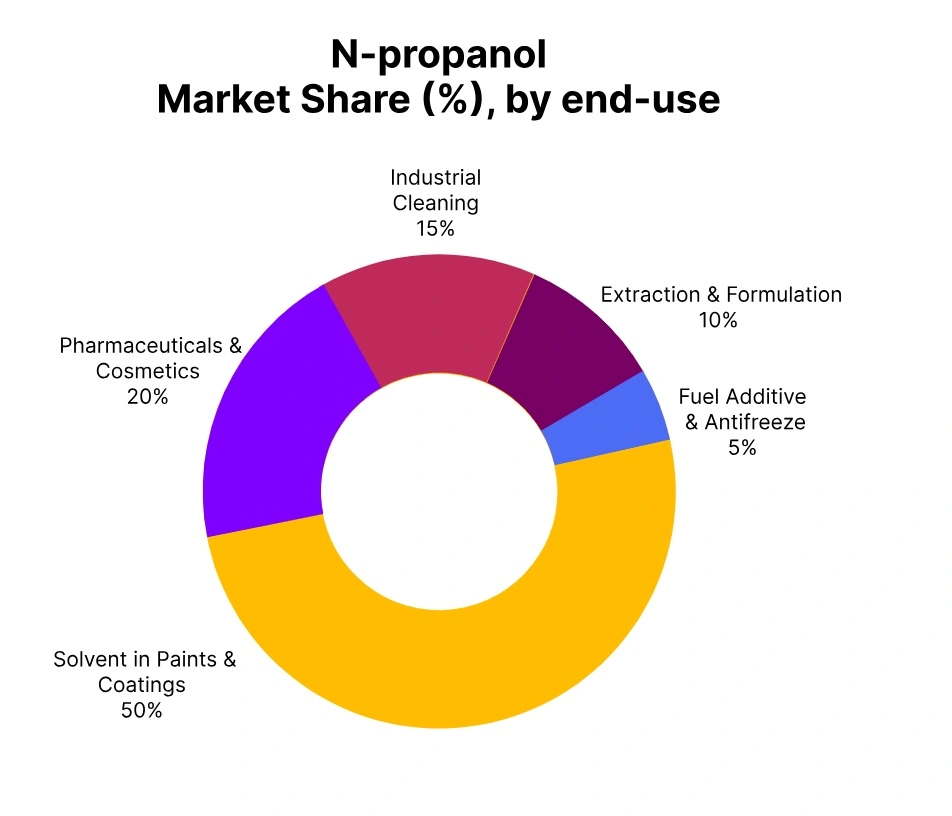
N Propanol Industrial Applications

n-propanol-market-share-end-use

Historically, several events have caused significant fluctuations in N Propanol prices

Russia-Ukraine Conflict (2022-Present):  

  • Supply Chain Disruptions: The conflict disrupted trade routes in Eastern Europe, causing logistical challenges for the transport of raw materials and finished chemicals like n-Propanol. Sanctions on Russia, a major energy and chemical exporter, limited access to petrochemical feedstocks essential for producing alcohols like n-Propanol. 
  • Energy Prices and Feedstock Costs: The war led to volatility in crude oil and natural gas prices, which are primary feedstocks for n-Propanol production. Rising energy costs increased the operational expenses for chemical manufacturers globally, pushing up prices. 
  • Demand-Supply Imbalance: Disruptions in industrial production in conflict-affected regions led to a supply shortage. Concurrently, increased demand for sanitizers, disinfectants, and cleaning agents during the pandemic sustained a high demand for n-Propanol, intensifying price pressures. 
  • Economic Uncertainty: The conflict caused financial instability, affecting currencies, trade policies, and global economic growth, all of which influenced commodity pricing, including chemicals like n-Propanol. 

COVID-19 Pandemic (2020):  

  • Surge in Demand for Disinfectants and Sanitizers: n-Propanol is a critical ingredient in the production of sanitizers and disinfectants due to its antibacterial properties. The heightened demand for hygiene products led to a rapid spike in n-Propanol consumption, driving prices higher, especially during the early phases of the pandemic. 
  • Supply Chain Disruptions: Lockdowns and restrictions across countries disrupted manufacturing, transportation, and distribution channels. This limited the availability of raw materials and finished n-Propanol, exacerbating supply shortages. 
  • Fluctuations in Petrochemical Feedstock Prices: n-Propanol is derived from petrochemical processes, making its production cost-sensitive to fluctuations in crude oil prices. Early in the pandemic, crude oil prices plummeted due to reduced demand, temporarily lowering feedstock costs. 
  • Shifts in Industrial Activity: Many industries using n-Propanol, such as coatings, printing inks, and solvents, faced slowdowns or shutdowns during lockdowns, reducing demand in these sectors. This created a dual market dynamic, with reduced industrial demand but surging healthcare-related demand. 
  • Market Speculation and Hoarding: Panic buying and speculative stocking of n-Propanol by distributors and manufacturers amplified price volatility during the peak of the pandemic. 

Geopolitical Tensions (2018-2019):  

  • Trade Wars and Tariffs: The U.S.-China trade war-imposed tariffs on a wide range of goods, including petrochemical products and their derivatives like n-Propanol. Increased tariffs raised production costs for manufacturers in affected regions, leading to price hikes for downstream products like n-Propanol. Disruptions in trade routes and shifts in global sourcing caused supply-demand imbalances. 
  • Oil Price Volatility: Geopolitical conflicts, including U.S. sanctions on Iran and tensions in the Middle East, led to fluctuations in crude oil prices. Since n-Propanol production relies on petrochemical feedstocks derived from crude oil, these price changes directly impacted its production costs and market prices. 
  • Regional Instability: Political unrest in key regions, such as Venezuela (a major oil producer) and ongoing disputes in the Middle East, created uncertainty in the supply of raw materials. This instability led to inconsistent supply chains, pushing up costs for chemicals dependent on these resources. 
  • Shifting Production Patterns: Geopolitical instability caused manufacturers to re-evaluate sourcing and production strategies, potentially leading to higher logistics and operational costs for n-Propanol producers. 
  • Demand-Supply Fluctuations: Demand for n-Propanol remained stable in some industries, like coatings and inks, but supply disruptions and price volatility in raw materials caused unpredictable price movements.

Why Price Watch™?

Price Watch™ is your trusted resource for tracking global n propanol price trends. Our platform delivers real-time data and expert analysis, offering deep insights into the key factors driving price fluctuations in the n propanol market. By monitoring critical events such as geopolitical tensions, supply chain disruptions, and economic shifts, Price Watch™ keeps you fully informed of market dynamics.

In addition, Price Watch™ provides detailed forecasts and updates on production capacities, enabling you to anticipate market changes and make well-informed decisions. With Price Watch™, you gain a competitive edge in understanding all the elements that influence n propanol prices worldwide. Stay ahead of the curve with Price Watch’s™ reliable, accurate, and timely n propanol market data.

Track Price Watch's™ n propanol price assessment on a weekly basis since 2015 onwards, along with short-term forecasts, and get access to the detailed report in a downloadable format.

N Propanol Market Price Trend published by Price Watch™ reflect prevailing spot market conditions, derived from independent research, verified trade inputs, and proprietary market intelligence as of the publication date. Prices are published on the specified Incoterm and represent indicative base market levels, exclusive of applicable taxes, VAT, duties, tariffs, and other statutory charges. Actual transaction values may vary depending on volume, credit terms, contractual structure, and other negotiated conditions. Market prices are inherently subject to volatility, liquidity dynamics, regulatory changes, and evolving trade activity. The information provided is for reference and benchmarking purposes only and does not constitute an offer, recommendation, or guarantee of transactional outcomes. Users should exercise independent commercial judgment and assess their specific contractual, regulatory, tax, and application requirements before making business decisions. Price Watch™ assumes no liability for decisions taken based on this information.

The pricing of n-Propanol is influenced by several factors, including raw material costs such as propylene, fluctuations in supply and demand within industries like paints, coatings, and adhesives, as well as external elements like geopolitical events, trade tariffs, and energy prices. These factors combine to create variability in pricing depending on global economic conditions.

Regional production plays a significant role in n-propanol pricing. Regions with high production, like Asia-Pacific, tend to have more competitive pricing due to local availability, whereas regions that rely on imports, such as North America and Europe, often face higher costs due to transportation fees, import duties, and potential supply chain disruptions.

The latest pricing trends for n-propanol often reflect fluctuations in the cost of raw materials and changes in global supply chains. To secure better rates, procurement heads can consider locking in long-term contracts with suppliers, monitoring global price trends and indices, and optimizing bulk purchasing strategies to take advantage of volume discounts.

n-propanol is a colorless alcohol commonly used as a solvent in industries such as pharmaceuticals, cosmetics, paints, coatings, and chemical manufacturing. It is also used as an intermediate in the production of chemicals like propyl acetate and butyl alcohol.

The price of n-Propanol matters because it directly impacts production costs in industries that rely on them for formulation and manufacturing processes. Fluctuations in n-propanol’s price can lead to increased costs for end products, influencing pricing, supply chains, and the overall cost structure of industries such as personal care, pharmaceuticals, and paints.

n-propanol prices fluctuate by region and delivery terms. Prices are typically quoted per metric ton and can change based on factors like supply, demand, feedstock availability, and production capacity.

Price-Watch™ provides real-time price assessments across various global markets to help businesses stay informed about current pricing trends and make well-informed procurement decisions.

The market for n-propanol has shown periodic fluctuations, influenced by factors such as feedstock costs, energy prices, and demand from key industries like paints, pharmaceuticals, and personal care.

The price is driven by supply-demand imbalances, feedstock availability, and capacity utilization rates in production plants. Additionally, geopolitical events, changes in raw material prices, and environmental regulations can also significantly impact pricing.

The market sees price increases when demand from sectors like pharmaceuticals or coatings rises, while lower production or feedstock availability can cause upward pressure on prices.

The largest consumers of n-propanol are industries involved in pharmaceutical manufacturing, cosmetics, paints and coatings, and chemical production. In the pharmaceutical industry, n-Propanol is used as a solvent in drug formulations.

The cosmetics industry relies on it in the production of lotions, perfumes, and other personal care products. The paint and coatings industry uses n-Propanol for formulation, while chemical manufacturers use it as an intermediate for producing other chemicals such as propyl acetate. These industries collectively represent the majority of global demand for n-Propanol.

natural gas or petroleum. The process involves adding water to propene in the presence of an acid catalyst to form n-Propanol. It can also be produced through biotechnological processes using fermentation, particularly from renewable biomass.

Major production facilities for n-Propanol are in regions with well-established chemical manufacturing industries, such as North America, Europe, and Asia, where propene is readily available as a byproduct from petroleum refining or natural gas processing.

The largest exporters of n-propanol include the United States, China, and Germany, as these countries have significant chemical production facilities. The United States is a major exporter, primarily due to its robust petrochemical industry and large-scale production capacity.

China also plays a key role, exporting n-Propanol to various global markets driven by its manufacturing and chemical sectors. Germany is another major exporter, supplying n-Propanol to Europe and other regions.

Export volumes fluctuate based on supply and demand dynamics, production rates, and logistical factors that affect transportation costs. Price-Watch™ tracks production levels, export flows and trade patterns to help businesses understand global supply chains and identify sourcing opportunities.

Currently, global production capacity for n-propanol is sufficient to meet demand. However, regional imbalances can occur due to factors such as feedstock shortages, production disruptions, or unexpected demand surges in key sectors like pharmaceuticals or coatings. Periodic supply chain disruptions, natural disasters, or logistical challenges can create temporary shortages.

Major producers in North America, Europe, and Asia are typically able to adjust supply levels based on demand fluctuations, but localized shortages can occasionally happen during peak periods or because of unforeseen events. Price-Watch™ monitors these supply-demand imbalances to alert the market about potential shortages or surpluses.

n-propanol is available in various grades, including industrial grade, pharmaceutical grade, and cosmetic grade. The primary difference between these grades lies in purity levels. Industrial-grade n-Propanol is used for applications such as paints, coatings, and solvents, where high purity is not required.

Pharmaceutical-grade n-Propanol must meet strict standards for purity and is used in drug formulations and medical applications. Similarly, cosmetic-grade n-Propanol is used in personal care products and must meet high-quality standards.

Prices differ based on purity, application, and regulatory requirements, with higher-purity grades commanding a premium due to more rigorous production and quality control processes. Price-Watch™ provides separate price assessments for different delivery bases and contract types to ensure market transparency.

When demand for n-Propanol suddenly increases, typically driven by surges in industries such as pharmaceuticals or coatings, prices generally rise. If production capacity cannot quickly scale up to meet this demand, supply may become constrained. Suppliers may prioritize long-term contract customers, leading to higher prices and longer lead times for spot buyers.

In cases of sustained demand increases, producers may expand capacity or optimize production, but this requires time and investment. Price Watch™ captures these market dynamics in real-time, providing insights into supply-demand shifts and their impact on prices. Price-Watch™ captures these market dynamics in real-time.

Energy prices significantly impact the cost of producing n-Propanol, as its production process involves energy-intensive chemical reactions. Higher energy prices, particularly for electricity and natural gas, increase operational costs for production facilities. These additional costs are typically passed on to consumers in the form of higher prices for n-Propanol.

Furthermore, fluctuations in energy prices can affect the price of feedstocks like propene, as their extraction and transportation are also energy dependent. Price-Watch™ analyzes these relationships in its price assessments and market reports to offer comprehensive insights on the impact of energy prices on n-Propanol costs.

Regional price differences for n-Propanol are influenced by several factors, including local production capacity, feedstock availability, energy costs, and logistics expenses. For example, regions with abundant propene production or lower energy costs often experience lower n-Propanol prices.

In contrast, areas that rely on imports or face logistical challenges, such as high shipping costs or tariffs, may experience higher prices. Local demand, the concentration of key industries, and transportation costs also play a role in regional price variations. Price-Watch™ tracks prices across all major regions to highlight these differences.

The forecast for n-Propanol prices suggests moderate growth in the medium term, driven by consistent demand from industries such as pharmaceuticals, cosmetics, and coatings. While production capacity is generally sufficient, occasional volatility may occur due to fluctuations in feedstock costs, energy prices, and global supply chain dynamics.

Price-Watch™ regularly publishes detailed forecasts, projecting price movements for the next 12 months based on comprehensive analysis of supply additions, demand growth in key industries, and broader economic factors that affect n-Propanol prices.

Absolutely. Accurate price forecasts help businesses optimize purchasing decisions, negotiate contracts more effectively, and manage budgets more efficiently.

If Price-Watch™ forecasts indicate a potential price increase in the coming months, businesses can choose to stock up at current rates or lock in long-term contracts, potentially saving substantial amounts.

Being aware of price trends and forecasts allows companies to mitigate cost risks and secure more favorable terms in their supply chain management.

Global events such as natural disasters, geopolitical tensions, feedstock supply disruptions, and trade policy changes can significantly impact n-Propanol supply and pricing. For example, supply chain interruptions, such as disruptions in propene supply or transportation strikes, can lead to temporary shortages or price spikes.

Geopolitical events affecting energy prices or petrochemical production can also cause shifts in market conditions. Price-Watch™ provides timely alerts when such global events affect market dynamics and prices, helping businesses stay informed and make proactive decisions.

Price-Watch™ collects data from manufacturers, distributors, and buyers worldwide to publish regular price assessments, market reports, and forecasts for n-Propanol. Our transparent methodology and comprehensive coverage make us a trusted source for understanding fair pricing and market trends in the n-Propanol industry, covering industrial-grade specifications across multiple delivery bases and regional markets.