Phthalic Anhydride Price Trend and Forecast

UNSPC code: 12352099
|
Weekly Update
|
Historical Data Since 2015
|
Forecast for 2026

phthalic anhydride Price Trends by Country

cnChina
twTaiwan
beBelgium
itItaly
inIndia
brBrazil
aeUnited Arab Emirates
nlNetherlands

Global phthalic anhydride Spot Market Prices, Trend Analysis and Forecast

Price Watch™ provides real-time price assessments and price forecasts for Phthalic Anhydride across top trading regions:

Phthalic Anhydride Regional Coverage  Phthalic Anhydride Grade and Country Coverage  Phthalic Anhydride Pricing Data Coverage Explanation 
Asia-Pacific Phthalic Anhydride Pricing Analysis  Phthalic Anhydride; Grade- Industrial Grade Flakes (99.5% min) FOB Prices at Shanghai Port, China  Weekly Price Update on Phthalic Anhydride Real-Time Export Prices from Shanghai Port, China to Global Markets 
Phthalic Anhydride; Grade- Industrial Grade Flakes (99.5% min) CIF Prices at JNPT Port, India. Importing from China  Weekly Price Update on Phthalic Anhydride Real-Time Import Prices at JNPT Port, India, from China 
Phthalic Anhydride; Grade- Industrial Grade Flakes (99.5% min) FOB Prices at Kaohsiung Port, Taiwan  Weekly Price Update on Phthalic Anhydride Real-Time Export Prices from Kaohsiung Port, Taiwan to Global Markets 
Phthalic Anhydride; Grade- Industrial Grade Flakes (99.5% min) CIF Prices at JNPT Port, India. Importing from Taiwan  Weekly Price Update on Phthalic Anhydride Real-Time Import Prices at JNPT Port, India, from Taiwan 
Europe Phthalic Anhydride Pricing Analysis  Phthalic Anhydride; Grade- Industrial Grade Flakes (99.5% min) FOB Prices at Antwerp Port, Belgium  Weekly Price Update on Phthalic Anhydride Real-Time Export Prices from Antwerp Port, Belgium to European and Global Markets 
Phthalic Anhydride; Grade- Industrial Grade Flakes (99.5% min) CIF Prices at Rotterdam Port, Netherlands. Importing from Belgium  Weekly Price Update on Phthalic Anhydride Real-Time Import Prices at Rotterdam Port, Netherlands, from Belgium 
Phthalic Anhydride; Grade- Industrial Grade Flakes (99.5% min) FD Prices at Milano, Italy  Weekly Price Update on Phthalic Anhydride Real-Time Domestic FD Prices in Milano, Italy 
South America Phthalic Anhydride Pricing Analysis  Phthalic Anhydride; Grade- Industrial Grade Flakes (99.5% min) CIF Prices at Santos Port, Brazil. Importing from China  Weekly Price Update on Phthalic Anhydride Real-Time Import Prices at Santos Port, Brazil, from China 
MEA Phthalic Anhydride Pricing Analysis  Phthalic Anhydride; Grade- Industrial Grade Flakes (99.5% min) CIF Prices at Jebel Ali Port, UAE. Importing from China  Weekly Price Update on Phthalic Anhydride Real-Time Import Prices at Jebel Ali Port, UAE, from China 

Note: In assessments structured as CIF [Importing Port] (Exporting Country), the country mentioned in brackets indicates the primary origin of supply (exporting country), while the named port refers to the destination port in the importing country. Other Incoterms (FOB, FD, EXW, etc.) should be interpreted in accordance with standard international trade definitions.

Phthalic Anhydride Price Trend Q1 2026

In Q1 2026, Phthalic anhydride price trend remained relatively stable to slightly improved during the early months, supported by balanced supply-demand dynamics and controlled inventory levels. However, in March, prices increased notably due to supply disruptions caused by geopolitical tensions in the Middle East, which impacted feedstock availability and increased freight costs.

These factors tightened supply and triggered restocking activity, resulting in short-term price volatility. The quarter highlights how external geopolitical events and supply constraints can significantly influence pricing trends despite otherwise stable market fundamentals.

Phthalic Anhydride prices have been stable to marginally better in the first few months of 2026 Q1 due to stable supply-demand conditions and adequate inventories. But there is a sudden spike in prices in the month of March due to disruption in supplies because of the geopolitical conflicts in the Middle East.

Phthalic anhydride prices showed some volatility due to limited supply and restocking activities. This is an example of the impact of external geopolitical factors on prices.

China: Phthalic Anhydride Export prices FOB Shanghai, China; Grade- Industrial Grade Flakes (99.5% min)

According to Price-Watch™ , for Q1 2026, the phthalic anhydride price trend in China has exhibited a remarkable upturn, rising by 15.00% on the back of reduced supply and stronger demand from end-use sectors. Purchasers have been becoming more proactive in buying Phthalic Anhydride to replenish inventory as raw material and energy prices rise.

The Phthalic Anhydride price in China has continued to be bullish in Q1 2026. In March 2026, the Phthalic Anhydride price in China has shown a remarkable surge of 27.00% against the prior month average price level, mainly due to the disruption in supplies resulting from the Middle East war, leading to increased costs for both raw materials and transport.

Taiwan: Phthalic Anhydride Export prices FOB Kaohsiung, Taiwan; Grade- Industrial Grade Flakes (99.5% min)

The Phthalic Anhydride price trend in Taiwan has been up by 10.00% in the first quarter of 2026 when compared to the last quarter’s average price due to tight supplies and better demand from downstream sectors. Buyers have stepped up their purchases amid high feedstock and energy prices. The Phthalic Anhydride price in Taiwan has been still going upwards this quarter.

In March 2026, Phthalic Anhydride price in Taiwan is up by 21.00% from the last month’s average price because of the supply interruptions following the Middle East war, which has caused disruption in the supply of raw materials and high freight prices.

Brazil: Phthalic Anhydride Import prices CIF Santos, Brazil; Grade- Industrial Grade Flakes (99.5% min)

For Q1 2026, the Phthalic Anhydride price trend in Brazil has experienced recovery, rising by 11.00% in comparison with the average Q4 2026 prices owing to reduced supplies and stronger demand from downstream consumers. Purchasing activity has risen amid high prices for feedstocks and energy supplies. The Phthalic Anhydride price in Brazil has exhibited an appreciable upwards trend through the quarter under review.

In March 2026, Phthalic Anhydride price in Brazil has increased by 29.00% in comparison with the previous month due to disrupted supplies caused by the war in the Middle East that disrupted raw material supplies and led to higher freight charges.

UAE: Phthalic Anhydride Import prices CIF Jebel Ali, UAE; Grade- Industrial Grade Flakes (99.5% min)

During Q1 2026, the Phthalic Anhydride price trend in the UAE experienced an increase of 14.00% as compared to the previous quarter’s average level, owing to tight supply and growing demand from downstream buyers. Purchasers have to raise their buying activities because of higher costs of raw materials and energy.

During this quarter, the Phthalic Anhydride price in the UAE experienced a consistent rise. In March 2026, Phthalic Anhydride price in the UAE witnessed a rise of 26.00% as compared to the previous month’s average level, mainly due to supply chain disruptions triggered by the Middle East war, affecting the availability of raw materials and shipping costs.

Belgium: Phthalic Anhydride Export prices FOB Antwerp, Belgium; Grade- Industrial Grade Flakes (99.5% min)

In Q1 2026, the Phthalic Anhydride price trend in Belgium declined slightly by 1.50% as compared to the previous quarter average, reflecting continued soft demand and balanced supply conditions during the early part of the quarter. Buyers maintained cautious procurement, keeping inventory levels under control. The Phthalic Anhydride price in Belgium showed limited movement overall.

In March 2026, Phthalic Anhydride price in Belgium increased by 9.00% as compared to the previous month average, primarily driven by supply disruptions caused by the Middle East war, which impacted feedstock availability and increased freight costs. These disruptions tightened supply and prompted restocking activity, leading to short-term price recovery.

Netherlands: Phthalic Anhydride Import prices CIF Rotterdam, Netherlands; Grade- Industrial Grade Flakes (99.5% min)

In Q1 2026, the Phthalic Anhydride price trend in the Netherlands declined slightly by 1.50% as compared to the previous quarter average, reflecting continued soft demand and balanced supply conditions during the early part of the quarter. Buyers maintained cautious procurement and controlled inventory levels.

The Phthalic Anhydride price in the Netherlands showed limited movement overall. In March 2026, Phthalic Anhydride price trend in the Netherlands increased by 9.00% as compared to the previous month average, primarily driven by supply disruptions caused by the Middle East war, which impacted feedstock availability and increased freight costs. These disruptions tightened supply and triggered restocking activity, leading to short-term price recovery.

Italy: Phthalic Anhydride Domestic Traded prices FD Milano, Italy; Grade- Industrial Grade Flakes (99.5% min)

In Q1 2026, the Phthalic Anhydride price trend in Italy increased slightly by 0.50% as compared to the previous quarter average, reflecting largely stable market conditions with balanced supply and demand in the early part of the quarter. Buyers maintained controlled procurement while managing inventory levels efficiently.

The Phthalic Anhydride price in Italy showed limited movement overall. In March 2026, Phthalic Anhydride price in Italy increased by 9.00% as compared to the previous month average, primarily driven by supply disruptions caused by the Middle East war, which impacted feedstock availability and increased freight costs. These disruptions tightened supply and prompted restocking activity, leading to short-term price recovery.

India: Phthalic Anhydride Import prices CIF JNPT, India; Grade- Industrial Grade Flakes (99.5% min)

In Q1 2026, the Phthalic Anhydride price trend in India rebounded sharply, increasing by 18.00% as compared to the previous quarter average, supported by tightening supply and improved downstream demand. Buyers increased procurement activity to secure volumes amid rising feedstock and energy costs.

The Phthalic Anhydride price in India maintained a strong upward trajectory during the quarter. In March 2026, Phthalic Anhydride price in India surged by 30.00% as compared to the previous month average, primarily driven by supply disruptions caused by the Middle East war, which impacted raw material availability and increased freight costs. These disruptions tightened supply and triggered aggressive restocking, resulting in significant short-term price volatility.

Phthalic Anhydride Price Trend Analysis: Q4 2025

The Phthalic Anhydride price witnessed a downward trend in Q4 2025 because of low demand from the plasticizer, coating, and construction industries, coupled with enough supply in the market. All parties involved in the transaction took a careful approach in purchasing to ensure that their inventory is just enough and no excess purchases are made. There is also a marginal drop in December as the demand remained low, while logistics remained steady.

China: Phthalic Anhydride Export prices FOB Shanghai, China; Grade- Industrial Grade Flakes (99.5% min)

According to Price-Watch™ , in Q4 2025, there has been an 8.00% down-trend in the Phthalic Anhydride in China product due to weak demand from plasticizers, construction, and coatings applications, along with good supplies. Procurement activities by market stakeholders have been characterized by a degree of caution, and buyers refrain from making purchases owing to sufficient stock levels.

The Phthalic Anhydride price trend in China has been a bearish, with subdued end-user demand and constant production. In December 2025, Phthalic Anhydride in China there is a 3.00% down-trend, which is due to ongoing weak buyer sentiments and slightly reduced feedstock prices.

Taiwan: Phthalic Anhydride Export prices FOB Kaohsiung, Taiwan; Grade- Industrial Grade Flakes (99.5% min)

The Phthalic Anhydride price trend in Taiwan for Q4 2025 has witnessed a decline of 6.00%, as compared to the prior quarter average, on account of poor demand coming from the downstream applications of plasticizers, coatings, and construction, coupled with ample supplies. The players in the market have adopted a prudent approach and refrained from making bulk buys owing to the presence of adequate stock levels.

In Q4, the Phthalic Anhydride price in Taiwan has been bearish, supported by the low consumption of the product and balanced production. In December 2025, Phthalic Anhydride price in Taiwan has declined by 2.00%, as compared to the prior month average, owing to persisting poor buyer sentiments and stable raw material prices.

Brazil: Phthalic Anhydride Import prices CIF Santos, Brazil; Grade- Industrial Grade Flakes (99.5% min)

The Phthalic Anhydride price trend in Brazil fell by 17.00% when compared with the average of the previous quarter, owing to low demand for plasticizers, construction, and coatings markets, along with plentiful imports in the country. The market players have remained prudent buyers, avoiding purchases amid adequate stock levels.

The Phthalic Anhydride price in Brazil has been quite bullish during the quarter under consideration, mainly on the back of sluggish demand and adequate supply. In December 2025, Phthalic Anhydride price in Brazil declined by 5.00% compared with the previous month’s average, largely due to persistent lackluster demand and moderating logistics costs.

UAE: Phthalic Anhydride Import prices CIF Jebel Ali, UAE; Grade- Industrial Grade Flakes (99.5% min)

For the fourth quarter of 2025, the Phthalic Anhydride price trend in the UAE has fallen by 10.00%, mainly owing to the weak demand from downstream applications including plasticizers, construction, and coating sectors, while there is adequate stock level in imports as well. The buyers adopted cautious purchase policy, purchasing goods because of sufficient inventories.

The trend of Phthalic Anhydride price in the UAE witnessed a bearish trend during the quarter, impacted by weak demand from end users as well as steady supply. In December 2025, Phthalic Anhydride price in the UAE has fallen by 2.00% on the monthly average level, primarily because of stable logistical costs and weak buyer sentiment.

Belgium: Phthalic Anhydride Export prices FOB Antwerp, Belgium; Grade- Industrial Grade Flakes (99.5% min)

In Q4 2025, the Phthalic Anhydride price trend in Belgium declined by 8.00% as compared to the previous quarter average, reflecting weak demand from plasticizers, coatings, and construction sectors along with sufficient supply availability. Market participants adopted cautious procurement strategies, limiting purchases due to adequate inventories.

The Phthalic Anhydride price in Belgium showed a bearish trend throughout the quarter, influenced by subdued downstream consumption and stable production levels. In December 2025, Phthalic Anhydride price in Belgium declined by 1.00% as compared to the previous month average, driven by continued weak buying sentiment and stable logistics costs. Overall, the quarter experienced moderate price weakness with slight stabilization toward the year-end.

Netherlands: Phthalic Anhydride Import prices CIF Rotterdam, Netherlands; Grade- Industrial Grade Flakes (99.5% min)

In Q4 2025, the Phthalic Anhydride price trend in the Netherlands declined by 8.00% as compared to the previous quarter average, reflecting weak demand from plasticizers, coatings, and construction sectors along with sufficient import availability. Buyers maintained cautious procurement strategies, limiting purchases due to adequate inventories. The Phthalic Anhydride price in the Netherlands showed a bearish trend throughout the quarter, influenced by subdued downstream consumption and stable supply conditions.

In December 2025, Phthalic Anhydride price in the Netherlands declined by 1.00% as compared to the previous month average, driven by continued weak buying sentiment and stable logistics costs. Overall, the quarter experienced moderate price weakness with slight stabilization toward the year-end.

Italy: Phthalic Anhydride Domestic Traded prices FD Milano, Italy; Grade- Industrial Grade Flakes (99.5% min)

In Q4 2025, the Phthalic Anhydride price trend in Italy declined by 8.00% as compared to the previous quarter average, reflecting weak demand from plasticizers, coatings, and construction sectors along with sufficient supply availability. Buyers adopted cautious procurement strategies, limiting purchases due to adequate inventories. The Phthalic Anhydride price in Italy showed a bearish trend throughout the quarter, influenced by subdued downstream consumption and stable supply conditions.

In December 2025, Phthalic Anhydride price in Italy declined by 1.00% as compared to the previous month average, driven by continued weak buying sentiment and stable logistics costs. Overall, the quarter experienced moderate price weakness with slight stabilization toward the year-end.

India: Phthalic Anhydride Import prices CIF JNPT, India; Grade- Industrial Grade Flakes (99.5% min)

In Q4 2025, the Phthalic Anhydride price trend in India declined by 8.00% as compared to the previous quarter average, reflecting weak demand from plasticizers, construction, and coatings sectors along with sufficient import availability. Buyers maintained cautious procurement strategies, limiting purchases due to adequate inventories.

The Phthalic Anhydride price in India showed a bearish trend throughout the quarter, influenced by subdued downstream consumption and stable supply conditions. In December 2025, the Phthalic Anhydride price in India declined by 2.00% as compared to the previous month average, driven by continued weak buying sentiment and stable logistics costs. Overall, the quarter experienced moderate price weakness with slight stabilization toward the year-end.

China: Phthalic Anhydride Export prices FOB Shanghai, China, Grade- Industrial Grade Flakes (99.5% min).

In Q3 2025, Phthalic Anhydride prices in China went down by 7.53% compared to Q2 2025. Phthalic Anhydride price trend in China was mainly driven by weaker demand from key downstream sectors such as automotive and coatings, which faced production slowdowns. Despite stable production levels, oversupply conditions in the market contributed to the price decline.

Additionally, rising freight costs, combined with reduced export demand, further exacerbated the downward pressure. In September 2025, Phthalic Anhydride prices in China remained on a downward trend, swayed by low demand and oversupply conditions. Moving forward, prices are expected to remain volatile, with the market’s direction dependent on the recovery in downstream industries and global supply chain adjustments.

Taiwan: Phthalic Anhydride Export prices FOB Kaohsiung, Taiwan, Grade- Industrial Grade Flakes (99.5% min).

According to Price-Watch, In Q3 2025, Phthalic Anhydride prices in Taiwan decreased by 6.87% compared to Q2 2025. Phthalic Anhydride price trend in Taiwan was impacted by less demand from key industries, particularly automotive and coatings, which saw production slowdowns. Despite stable supply, the oversupply conditions in the market, coupled with rising freight costs, contributed to the price decline.

In September 2025, Phthalic Anhydride prices in Taiwan continued to decline, reflecting weak market conditions. The outlook for Q4 2025 remains unsteady, with prices expected to remain under pressure unless there is a significant rebound in demand from key industrial sectors.

Brazil: Phthalic Anhydride Import prices CIF Santos, Brazil, Grade- Industrial Grade Flakes (99.5% min).

In Q3 2025, Phthalic Anhydride prices in Brazil went up by 6.30% compared to Q2 2025. Phthalic Anhydride price trend in Brazil was supported by steady demand from the automotive and construction sectors, which continued their production despite global supply chain disruptions. The increase was also driven by rising freight costs and higher feedstock prices, particularly for propylene.

In September 2025, Phthalic Anhydride prices in Brazil stayed elevated, reflecting strong demand and tightening supply chains. Moving forward, prices are expected to remain stable, with moderate increases expected if demand from key industries continues.

UAE: Phthalic Anhydride Import prices CIF Jebel Ali, UAE, Grade- Industrial Grade Flakes (99.5% min).

In Q3 2025, Phthalic Anhydride prices in the UAE dipped by 6.23% compared to Q2 2025. Phthalic Anhydride price trend in the UAE was primarily impacted by weaker demand from key industrial sectors, including automotive and coatings, which experienced production slowdowns. The decline was further worsened by rising freight costs and oversupply in the local market.

In September 2025, Phthalic Anhydride prices in the UAE continued to follow a downward trend, reflecting low demand and weak market conditions. The outlook for Q4 2025 remains cautious, with prices expected to remain under pressure unless there is a recovery in industrial demand.

Belgium: Phthalic Anhydride Export prices FOB Antwerp, Belgium, Grade- Industrial Grade Flakes (99.5% min).

In Q3 2025, Phthalic Anhydride prices in Belgium decreased by 4.68% compared to Q2 2025. Phthalic Anhydride price trend in Belgium was influenced by softer demand from the automotive and coatings sectors, which faced challenges in production. Increasing freight costs and oversupply conditions in the region added additional pressure to the prices.

In September 2025, Phthalic Anhydride prices in Belgium stayed lower, continuing the downward trend. The market outlook for Q4 2025 suggests that prices will likely stay under pressure unless demand improves significantly in the downstream sectors, particularly in Europe’s key industrial markets.

Netherlands: Phthalic Anhydride Import prices CIF Rotterdam, Netherlands, Grade- Industrial Grade Flakes (99.5% min).

In Q3 2025, Phthalic Anhydride prices in the Netherlands decreased by 4.64% in comparison to to Q2 2025. Phthalic Anhydride price trend in the Netherlands was driven by weaker demand from automotive and coatings industries, which faced production slowdowns. The oversupply conditions in the market, coupled with rising freight costs, contributed to the price decline.

In September 2025, Phthalic Anhydride prices in the Netherlands remained on a downward trend, reflecting the ongoing market weakness. The outlook for the next quarter suggests that prices will stay subdued unless there is a significant recovery in demand from key industrial sectors.

Italy: Phthalic Anhydride Domestic Traded prices FD Milano, Italy, Grade- Industrial Grade Flakes (99.5% min).

In Q3 2025, Phthalic Anhydride prices in Italy dipped by 2.16% compared to Q2 2025. Phthalic Anhydride price trend in Italy was driven by reduced demand from automotive and coatings sectors, which slowed production. Oversupply conditions in the region contributed to a price decline despite stable feedstock availability. Rising freight costs contributed to the downward pressure on prices.

In September 2025, Phthalic Anhydride prices in Italy continued to reflect the softer demand environment. The outlook for the next quarter stays uncertain, with further price declines likely unless demand from key industries including automotive and coating strengthens.

India: Phthalic Anhydride Import prices CIF JNPT, India, Grade- Industrial Grade Flakes (99.5% min).

In Q3 2025, Phthalic Anhydride prices in India from China decreased by 5.19% compared to Q2 2025. Phthalic Anhydride price trend in India was impacted by slower demand from key sectors like automotive and plastics, which faced production slowdowns. Despite stable production levels, higher freight costs from China and reduced export demand led to the price decline.

According to Price-Watch, in September 2025, Phthalic Anhydride prices in India remained on a downward trend, reflecting the slow market conditions. Moving forward, prices are expected to stay under pressure unless there is a significant recovery in demand from the downstream industries and stabilization in freight costs.

According to the PriceWatch, In Q2 2025, Phthalic Anhydride price trend FOB Shanghai basis recorded a clear quarterly average decrease, with a consistent downward trend observed from April through June. At the end of June the prices were 910 USD per ton. The decline was primarily driven by abundant supply, as Chinese producers operated at high capacity and inventory levels remained elevated throughout the quarter.

At the same time, demand from downstream sectors such as plasticizers, alkyd resins, and unsaturated polyester resins remained weak, with buyers limiting procurement to essential needs amid ongoing economic caution.

Feedstock prices, particularly for orthoxylene and naphthalene, also softened during the period, providing minimal cost support and reinforcing the bearish sentiment. With no significant disruptions in logistics or production, market participants continued to lower prices to remain competitive, resulting in a steadily declining price trend across the quarter.

According to the PriceWatch, In Q2 2025, phthalic anhydride price trend for FOB Kaohsiung, Taiwan basis followed a consistent downward trend from April through June. The decline in prices was primarily driven by a combination of ample supply and subdued demand and ended at 970 USD per ton.

Taiwanese producers maintained steady production rates, leading to sufficient market availability, while demand from downstream sectors such as plasticizers, alkyd resins, and unsaturated polyester resins remained weak.

This cautious buying sentiment, coupled with softening feedstock prices particularly ortho xylene and naphthalene contributed to reduced cost support for producers. Although there were brief periods of stability, the overall market sentiment remained bearish, and sellers gradually lowered offers to stay competitive in an oversupplied environment. As a result, the quarterly average price for FOB Kaohsiung declined noticeably, reflecting persistent downward pressure throughout the second quarter.

According to the PriceWatch, In Q2 2025, phthalic anhydride price trend for FOB Antwerp, Belgium basis showed a consistent downward trend from April through June and ended at 1130 USD per ton. The quarterly decline was largely attributed to weak demand across major downstream sectors in Europe, including plasticizers, alkyd resins, and unsaturated polyester resins.

Market activity remained subdued, with buyers limiting procurement due to economic uncertainty and sufficient stock levels. At the same time, supply remained stable across the region, with no major production disruptions, contributing to a well-supplied market environment.

Although there were slight increases in feedstock prices such as orthoxylene and naphthalene, the support they offered was not strong enough to reverse the bearish sentiment. Sellers were observed adjusting offers downward throughout the quarter in response to muted demand and competitive pressures. As a result, the average FOB Antwerp price for phthalic anhydride declined steadily over Q2, reflecting the broader softness in European chemical markets.

According to the PriceWatch, In Q2 2025, phthalic anhydride price trend for CIF JNPT (China) basis experienced a slight quarterly average decrease. However, prices remained almost stable throughout the quarter, with minimal fluctuations observed from April to June and ended at 84900 INR per ton.

This stability was primarily due to balanced supply and demand dynamics, as Chinese producers maintained consistent production levels, and downstream demand from sectors such as plasticizers, alkyd resins, and unsaturated polyester resins remained steady.

Feedstock costs, including ortho-xylene and naphthalene, showed only minor fluctuations, providing limited cost support. Overall, the market exhibited a stable environment, with slight downward pressure on prices, resulting in a modest decrease in the quarterly average.

According to the PriceWatch, In Q2 2025, phthalic anhydride price trend CIF JNPT (Taiwan) basis remained almost stable throughout the quarter and ended at 88600 INR per ton. This stability was primarily due to balanced supply and demand dynamics, as Taiwanese producers maintained consistent production levels, and downstream demand from sectors such as plasticizers, alkyd resins, and unsaturated polyester resins remained steady.

Feedstock costs, including ortho-xylene and naphthalene, showed only minor fluctuations, providing limited cost support. Overall, the market exhibited a stable environment, with minimal fluctuations observed from April to June.

In Q1 2025, Asia, Phthalic Anhydride prices increase by 1.2% over Q4 2024, supported by steady demand from downstream plasticizers and resins sectors, slightly higher feedstock Ortho xylene costs, and increased early-quarter export activity to Southeast and South Asia; however, mid-quarter production normalization and stable raw material availability capped further gains.

In South America, prices declined by 2.3%, reflecting subdued demand from the construction and automotive sectors alongside ample local supply. The European market presented a recorded 5.2% increase, driven by firm demand and constrained supply amid logistical delays, impacted by oversupply and weak domestic consumption.

In the Middle East, prices edged up 0.8%, supported by moderate buying interest and stable regional output. Overall, Q1 2025 revealed a cautious yet dynamic global landscape for Phthalic Anhydride, shaped by sector-specific demand, raw material trends, and regional market fundamentals.

In Q1 2025, the Asian phthalic anhydride market showed a mixed performance in CIF India pricing, with material from China registering a 4.9% increase compared to Q4 2024, while Prices from Taiwan saw a slight decline during the same period.

The uptick in Chinese-origin cargoes was supported by a combination of firmer feedstock ortho-xylene costs, supply tightening due to reduced operating rates, and improved buying interest from Indian importers replenishing inventories after the previous quarter’s decline.

Early in the quarter, Chinese suppliers benefitted from limited spot availability and a gradual recovery in demand from downstream sectors like plasticizers and coatings, prompting moderate price gains. In contrast, Taiwanese-origin material saw relatively flat market movement, as competitive pricing persisted amid stable production and lackluster spot demand.

Despite the marginal dip in Taiwan cargo prices, Indian buyers remained cautiously active, with sentiment improving slightly toward the end of the quarter. Overall, the market reflected early signs of rebalancing, with Chinese supply tightening supporting price recovery while Taiwanese offers remained under pressure from regional competition.

Phthalic Anhydride Price Trend Analysis: Q4 2024

In Q4 2024, Asia, Phthalic Anhydride prices decrease by 10.3% compared to Q3 2024, driven by reduced industrial activity and oversupply amid weak demand from the plasticizer and resins sectors. The South American market saw a steeper drop, with prices decreasing by 14.5%, largely due to sluggish construction-related consumption and elevated inventories.

In Europe, the downward trend was pronounced, with prices declining by 14.1%, amid year-end manufacturing slowdowns and lower buying interest from the automotive and coatings industries.

Meanwhile, the Middle East market also faced a moderate decline, with prices falling by 12.5%, as consistent supply and limited export activity weighed on the market. These regional drops were further intensified by elevated feedstock costs and persistent logistics issues, including shipping delays and container shortages, which compounded the pricing pressure in Q4 2024.

In Q4 2024, the Asian phthalic anhydride market experienced a sharp decline in CIF India prices, with material from China falling by 8.8% and from Taiwan dropping more significantly by 11.9% compared to Q3 2024. The overall bearish trend was driven by weakened demand from downstream sectors such as plasticizers and coatings, alongside ample inventory levels in the Indian market.

Early in the quarter, Indian buyers slowed their procurement activities in anticipation of further price drops, while exporters from China and Taiwan continued to offer competitively amid rising regional competition and lower feedstock ortho-xylene prices. Mid-quarter, supply outpaced demand as production in both China and Taiwan remained steady despite limited spot buying interest.

Additionally, logistical constraints had a minimal impact on overall trade dynamics, failing to offer any significant price support. By the end of the quarter, market sentiment remained weak, with buyers maintaining a cautious stance and sellers under pressure to adjust offers lower to stimulate demand.

In Q3 2024, Asia, Phthalic Anhydride prices increase by 6.3% compared to Q2 2024, supported by increased demand from the plasticizer and resin sectors and tighter supply due to scheduled maintenance at key production sites. South America saw a sharper upswing, with prices increasing by 13.6%, driven by strong restocking activity and improved demand from construction-related applications.

Conversely, the European market faced downward pressure, with prices falling by 11.2% and 7%, respectively, amid weak industrial output and lower downstream consumption. In the Middle East, prices saw a marginal decline of 0.5%, reflecting a balanced supply-demand environment.

Overall, while select regions like Asia and South America experienced positive momentum, global Phthalic Anhydride pricing in Q3 2024 was tempered by soft demand and logistical hurdles in Europe and the Middle East.

In Q3 2024, the Asian phthalic anhydride market saw a steady increase in CIF India prices, with Chinese-origin material rising by 7.9% compared to Q2 2024, supported by stronger regional demand, firmer feedstock ortho-xylene costs, and tightening supply from Northeast Asia.

Early in the quarter, improved procurement from downstream sectors such as plasticizers and alkyd resins supported an uptick in transaction volumes, while several Chinese producers reduced export allocations due to increased domestic consumption and planned maintenance shutdowns.

This supply-side tightening contributed to sustained upward price momentum. In Q4 2024, Taiwanese-origin phthalic anhydride saw an even sharper increase, with CIF India prices surging by 12.7% over the previous quarter.

The rise was fueled by aggressive buying from Indian importers amid limited Taiwanese export availability and higher freight costs. Toward the end of both quarters, sellers held offers firm on the back of tightening inventories and expectations of continued feedstock strength.

Overall, market sentiment turned increasingly bullish, with both Chinese and Taiwanese cargoes seeing robust gains due to favorable supply-demand dynamics and persistent cost pressures.

In Q2 2024, Asia, Phthalic Anhydride prices decrease by 3.7% compared to Q1 2024, driven by soft demand from downstream plasticizers and resin manufacturers and ample product availability. Similarly, the South American market saw a modest dip, with prices decreasing by 1.3% amid subdued industrial activity and cautious buying behavior.

In contrast, the European market saw notable gains, with prices increasing by 9.4% supported by tight supply conditions and a gradual recovery in demand from the automotive and construction sectors. The Middle East followed a similar upward trend, with prices rising by 6.7%, backed by stable regional consumption and limited import availability.

Overall, Q2 2024 reflected regional disparities in the Phthalic Anhydride market, with Asia and South America experiencing slight declines, while Europe and the Middle East saw firming prices driven by supply constraints and improving end-use demand.

In Q2 2024, the Asian phthalic anhydride market showed divergent trends in CIF India pricing, with Chinese-origin material registering a marginal decline of 2.5% compared to Q1 2024, while Taiwanese-origin Cargoes recorded a notable increase of 7.3% by Q4 2024.The softening in Chinese-origin prices was largely due to subdued demand from downstream sectors such as plasticizers and coatings, coupled with ample inventory levels in the Indian market.

Early in the quarter, Indian buyers adopted a cautious stance amid expectations of further price corrections, while consistent export availability from China kept supply abundant. In contrast, CIF India prices for Taiwanese-origin phthalic anhydride rose steadily, supported by firmer production costs, tighter regional availability, and increased freight rates.

Despite moderate demand, Taiwanese suppliers held firm on offers due to constrained supply and steady buying interest from Indian importers looking to diversify sources. By the end of the respective quarters, market sentiment remained mixed bearish for Chinese cargoes, but increasingly firm for Taiwanese shipments, reflecting varied supply dynamics and cost structures across the region.

During Q1 2024, In Asia, Phthalic Anhydride prices decrease by 10.4% compared to Q4 2023. This decline was largely driven by sluggish demand from downstream sectors such as plasticizers and coatings, along with increased regional supply and reduced export activity. In contrast, the South American market showed slight resilience, with CIF Brazil prices rising by 0.7% due to stable demand and limited local production.

In Europe, FOB Belgium prices declined by 5.0%, reflecting weak industrial activity and reduced procurement, while the Middle East market also softened, with CIF UAE prices dropping by 6.4% amid tepid regional demand and sufficient stock levels. Overall, the market in Q1 2024 reflected subdued global sentiment, driven by weak consumption patterns and uneven regional performance.

In Q1 2024, the Asian phthalic anhydride market recorded a noticeable decline in CIF India prices, with Chinese-origin cargoes falling by 10.8% and Taiwanese-origin material decreasing by 7.4% compared to Q4 2023. The downward trend was driven by persistently weak demand from downstream sectors such as plasticizers, unsaturated polyester resins, and alkyd resins, along with elevated inventory levels across the Indian market.

Early in the quarter, sluggish procurement activity and a cautious buying outlook pressured sellers to lower offers, while steady export availability from both China and Taiwan contributed to oversupply in the region. Mid-quarter market momentum remained subdued due to limited trade activity around the Lunar New Year holidays and weak feedstock ortho-xylene prices.

Despite minor logistical delays, market fundamentals remained largely bearish, and suppliers were forced to adjust prices downward to stimulate interest. By the end of the quarter, overall sentiment remained weak, with buyers holding back on purchases amid expectations of continued price softness.

Technical Specifications of Phthalic Anhydride Price Trends

Product Description

Phthalic Anhydride is a white, crystalline organic compound with a faint, pungent odor, commonly used as a key intermediate in the production of plasticizers, polyesters, alkyd resins, and dyes. It is produced primarily by the catalytic oxidation of o-xylene or naphthalene. Phthalic anhydride reacts readily with alcohols and glycols to form esters and polyesters, making it an essential raw material for manufacturing phthalate plasticizers (such as DOP and DBP) used in flexible PVC applications.

It is also widely used in the production of unsaturated polyester resins, alkyd paints, pigments, and agrochemicals. Its versatility, high purity, and reactivity make it valuable in both commodity and specialty chemical sectors. While highly useful, it should be handled with care due to its irritating properties and potential environmental impact if improperly managed.

Identifiers and Classification:

  • CAS No – 85-44-9
  • HS Code – 29173500
  • Molecular Formula – C₆H₄(CO)₂O
  • Molecular Weight[g/mol] – 148.1g/mol


Phthalic Anhydride Synonyms:

  • 1,3-Isobenzofurandione
  • Phthalic acid anhydride
  • O-Phthalic anhydride


Phthalic Anhydride Grades Specific Price Assessment:

  • Industrial Grade Flakes (99.5% min)


Phthalic Anhydride Global Trade and Shipment Terms

  • Quotation Terms: 25-28 MT
  • Packaging Type: 25 Kg Bag


Incoterms Referenced in Phthalic Anhydride Price Reporting

Shipping Term  Location  Definition 
FOB Shanghai  Shanghai, China  Phthalic Anhydride Export price from China 
CIF JNPT (China)  JNPT, India  Phthalic Anhydride import price in India from China 
CIF Santos (China)  Santos, Brazil  Phthalic Anhydride import price in Brazil from China 
CIF Jebel Ali (China)  Jebel Ali, UAE  Phthalic Anhydride import price in UAE from China 
FOB Kaohsiung  Kaohsiung, Taiwan  Phthalic Anhydride Export price from Taiwan 
CIF JNPT (Taiwan)  JNPT, India  Phthalic Anhydride import price in India from Taiwan 
FOB Antwerp  Antwerp, Belgium  Phthalic Anhydride Export price from Belgium 
CIF Rotterdam (Belgium)  Rotterdam, Netherlands  Phthalic Anhydride import price in Netherlands from Belgium 
FD Milano  Milano, Italy  Domestically Traded SBR price in Italy 

*Quotation Terms refers to the quantity range specified for the Phthalic Anhydride, being quoted or offered in a commercial transaction.

**Packaging Type refers to standard packaging size commonly used for Phthalic Anhydride packing, ease of handling, transportation, and storage in industrial and commercial applications.

Key Phthalic Anhydride Manufacturers

Manufacturer 
Nan Ya Plastics Corporation 
Ostend Basic Chemicals 
Nanjing Libang 
Shandong Hongxin Chemical Co 
Sinopec 
BASF 
Aekyung Chemical 

Phthalic Anhydride Industrial Applications

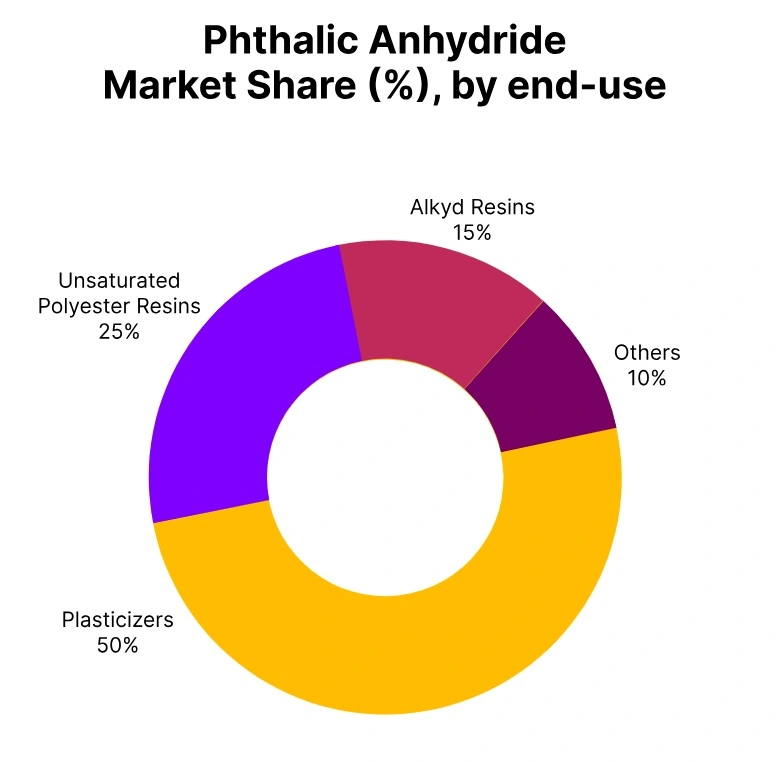
Phthalic Anhydride Market Share End Use

Historically, several events have caused significant fluctuations in Phthalic Anhydride prices

  • Feedstock Surplus and Market Corrections (2023–2024): In 2023, PA prices fell due to an oversupply of feedstock materials and subdued demand from key industries such as plastics and construction. This declining trend extended into early 2024. However, by Q2 and Q3 2024, pricing began to recover as demand gradually improved and supply availability tightened across the region.
  • Recovery and Supply Chain Challenges (2021): In 2021, PA prices rose significantly due to a strong post-pandemic recovery, with increased demand from downstream sectors like plastics and coatings. This was compounded by raw material shortages, rising ortho-xylene prices, and ongoing logistical bottlenecks, including elevated shipping and freight costs, which added upward pressure on overall production expenses.
  • COVID-19 Impact (2020): In 2020, global demand for PA declined sharply as industries such as automotive, construction, and plastics reduced operations in response to pandemic-related restrictions. Prices dropped early in the year, influenced by reduced industrial activity and a collapse in crude oil prices. However, by the second half of the year, demand began to stabilize as countries gradually reopened and implemented economic recovery measures.
  • Environmental Regulations and Supply Chain Adjustments (2017–2018): In 2017, the implementation of stricter environmental regulations in China led to plant closures and constrained production, resulting in reduced phthalic anhydride (PA) supply and temporary price spikes, particularly across Asia. This pressure persisted through 2018 as enforcement intensified, leading to continued volatility in pricing amid tight supply conditions.
  • These developments highlight the PA market’s sensitivity to global events and reinforce the importance of closely monitoring supply-demand fundamentals and regulatory landscapes.

Why Price Watch™?

Price Watch™ is your trusted resource for tracking global phthalic anhydride price trends. Our platform delivers real-time data and expert analysis, offering deep insights into the key factors driving price fluctuations in the phthalic anhydride market. By monitoring critical events such as geopolitical tensions, supply chain disruptions, and economic shifts, Price Watch™ keeps you fully informed of market dynamics.

In addition, Price Watch™ provides detailed forecasts and updates on production capacities, enabling you to anticipate market changes and make well-informed decisions. With Price Watch™, you gain a competitive edge in understanding all the elements that influence phthalic anhydride prices worldwide. Stay ahead of the curve with Price Watch’s™ reliable, accurate, and timely phthalic anhydride market data.

Track Price Watch's™ phthalic anhydride price assessment on a weekly basis since 2015 onwards, along with short-term forecasts, and get access to the detailed report in a downloadable format.

Phthalic Anhydride Market Price Trend published by Price Watch™ reflect prevailing spot market conditions, derived from independent research, verified trade inputs, and proprietary market intelligence as of the publication date. Prices are published on the specified Incoterm and represent indicative base market levels, exclusive of applicable taxes, VAT, duties, tariffs, and other statutory charges. Actual transaction values may vary depending on volume, credit terms, contractual structure, and other negotiated conditions. Market prices are inherently subject to volatility, liquidity dynamics, regulatory changes, and evolving trade activity. The information provided is for reference and benchmarking purposes only and does not constitute an offer, recommendation, or guarantee of transactional outcomes. Users should exercise independent commercial judgment and assess their specific contractual, regulatory, tax, and application requirements before making business decisions. Price Watch™ assumes no liability for decisions taken based on this information.

Phthalic Anhydride (PA) pricing is influenced by several key factors, including raw material costs, where fluctuations in crude oil prices directly impact the price of feedstocks like ortho-xylene, a petroleum derivative. Demand and supply dynamics also play a critical role, as increased demand from industries such as plastics, coatings, and adhesives can drive price hikes, particularly when supply is constrained.

Additionally, stricter environmental regulations may impose higher compliance costs on manufacturers, further affecting pricing. Staying informed about these dynamics is essential for procurement heads to make strategic sourcing decisions.

Geopolitical events significantly impact Phthalic Anhydride pricing and availability due to their effects on trade routes, raw material supply, and overall market stability. For instance, conflicts in oil-producing regions can disrupt crude oil supplies, leading to increased feedstock costs.

Additionally, trade tariffs and sanctions may limit access to essential materials or finished products, causing price volatility. Procurement professionals should closely monitor geopolitical developments to anticipate potential disruptions and adjust sourcing strategies accordingly.

To manage price fluctuations in Phthalic Anhydride, companies can adopt strategies such as establishing long-term contracts with suppliers to ensure price stability and protection against market volatility. Diversifying suppliers across different regions helps mitigate risks from supply chain disruptions or regional price spikes.

Additionally, regular market monitoring and analysis enable procurement teams to make informed decisions about purchase timing and negotiate favorable terms, ensuring cost efficiency and supply security.

Phthalic anhydride (C₈H₄O₃) is a key industrial chemical used primarily in the production of plasticizers (like dioctyl phthalate), unsaturated polyester resins, alkyd resins, and dyes. It is also used in coatings, adhesives, and chemical intermediates. Its price matters because it is a critical raw material for multiple downstream industries, and fluctuations directly affect manufacturing costs and profit margins. Additionally, as a petrochemical derivative produced from ortho-xylene, phthalic anhydride prices are influenced by crude oil and naphtha trends, feedstock availability, and global chemical market conditions. Price-Watch™ monitors phthalic anhydride prices to help businesses track market trends.

Phthalic anhydride prices vary by region, delivery basis, and grade, typically quoted per metric ton. Prices fluctuate depending on supply-demand balance, ortho-xylene feedstock costs, production capacity, and logistics. Price-Watch™ provides real-time assessments across global markets to help buyers and sellers make informed decisions.

The phthalic anhydride market has recently been stable to slightly firm in many regions, supported by steady demand from plasticizers, polyester resins, and coatings industries. Prices are primarily influenced by ortho-xylene and crude oil costs, production capacity, inventory levels, and trade flows. Seasonal demand, regional industrial activity, and environmental regulations also affect short-term fluctuations. Overall, market trends reflect balanced supply-demand conditions, with major price movements closely tied to feedstock availability and downstream demand from resins and plasticizer industries.

The largest consumers of phthalic anhydride are the plasticizer, unsaturated polyester resin, and alkyd resin industries. It is used in the production of PVC plasticizers, coatings, adhesives, paints, and certain dyes. Globally, plasticizer manufacturing accounts for the majority of consumption, followed by polyester resin producers for construction, automotive, and electrical applications. Specialty chemical applications also consume significant volumes.

Phthalic anhydride is primarily produced by the catalytic oxidation of ortho-xylene in the vapor phase using vanadium pentoxide catalysts. It can also be produced from naphthalene in certain specialty applications. As a petrochemical derivative, its supply and pricing are closely linked to crude oil and naphthalene/orhto-xylene feedstock availability, refining capacity, and global chemical manufacturing infrastructure.

China is the largest exporter of phthalic anhydride globally, supported by extensive petrochemical and chemical production capacity. Other significant exporters include Taiwan and Eurupe. Price-Watch™ tracks global trade flows and export patterns to help businesses understand sourcing opportunities.

Currently, global supply of phthalic anhydride is generally sufficient to meet industrial demand. Production capacity keeps pace with consumption, and inventories in major regions support stable pricing. Temporary tightness can occur due to plant maintenance or feedstock shortages, but overall supply-demand balance is maintained. Long-term forecasts indicate modest growth in demand from plasticizer, resin, and coating industries. Price-Watch™ monitors supply-demand dynamics to highlight potential shortages or surpluses.

Phthalic anhydride is available in different grades based on purity and application, including industrial grade for resins and plasticizers, and high-purity grades for dyes, coatings, and specialty chemicals. Prices vary because higher purity levels require additional refining and quality control, while standard industrial grades are less expensive due to simpler production and larger-scale manufacturing.

A sudden increase in demand typically causes price rises due to limited immediate supply, potentially creating short-term shortages. Short-term price spikes can be sharp as production capacity is relatively fixed, but over time, manufacturers may increase output to stabilize prices. Higher costs can affect downstream industries like plasticizer, resin, and coating manufacturers, prompting higher product prices or alternative formulations. Market speculation may further amplify short-term volatility. Price-Watch™ captures these market dynamics in real time.

Energy prices impact phthalic anhydride production because catalytic oxidation processes are energy-intensive. Higher crude oil, natural gas, or electricity costs increase feedstock and operational expenses, pushing prices up. Conversely, lower energy costs reduce production expenses, allowing suppliers to offer phthalic anhydride at lower prices. Energy market volatility can therefore affect both short-term and long-term pricing trends, which Price-Watch™ monitors.

Regional price variations result from differences in supply availability, local industrial demand, proximity to production facilities, transportation costs, energy prices, tariffs, taxes, and environmental regulations. Import-dependent regions generally face higher prices, while regions near petrochemical hubs benefit from lower logistics costs. Price-Watch™ tracks regional differences to highlight local market conditions.

Market analysis suggests phthalic anhydride prices are likely to remain stable to slightly firm in the near term, with only moderate upside unless feedstock costs rise sharply or downstream demand surges. Balanced supply and inventories in Asia, Europe, and North America support price stability, while seasonal demand or plant maintenance may drive modest increases. Long-term forecasts indicate gradual price growth driven by expansion in plasticizer, resin, and coatings industries. Price-Watch™ provides detailed projections based on supply-demand trends, feedstock costs, and macroeconomic factors.

Yes. Accurate price forecasts allow businesses to optimize procurement, budget effectively, and negotiate contracts. If Price-Watch™ predicts a price increase, companies can secure material at current rates or sign long-term contracts, reducing costs and protecting margins.

Events such as petrochemical plant outages, feedstock shortages, natural disasters, geopolitical tensions affecting crude oil or ortho-xylene supply, logistics disruptions, or sudden changes in downstream polymer or coating demand can create supply shortages and price volatility. Price-Watch™ monitors these events and provides timely alerts on market impacts.

Price-Watch™ collects global data from manufacturers, distributors, and buyers to provide accurate price assessments, market reports, and forecasts. Its methodology and coverage make it a trusted source for understanding phthalic anhydride pricing trends, regional differences, and market developments, helping businesses make informed procurement and investment decisions.