Polypropylene Filament Yarn (ppfy) Price Trend and Forecast

UNSPC code: 11151511
|
Weekly Update
|
Historical Data Since 2015
|
Forecast for 2026

polypropylene filament yarn (ppfy) Price Trends by Country

inIndia
lkSri Lanka
pyParaguay
omOman
djDjibouti
keKenya

Global polypropylene filament yarn (ppfy) Spot Market Prices, Trend Analysis and Forecast

Price Watch™ provides real-time price assessments and price forecasts for Polypropylene Filament Yarn (PPFY) across top trading regions:    

Polypropylene Filament Yarn (PPFY) Regional Coverage Polypropylene Filament Yarn (PPFY) Grade and Country Coverage Polypropylene Filament Yarn (PPFY) Pricing Data Coverage Explanation
Asia Polypropylene Filament Yarn (PPFY) Pricing Analysis Polypropylene Filament Yarn (PPFY) 840D Twisted Ex-Ahmedabad Domestic Prices, India Real-Time Weekly Price Update of Polypropylene Filament Yarn (PPFY) Domestic Prices in Ahmedabad, India
Polypropylene Filament Yarn (PPFY) 840D Twisted CIF Prices at Colombo Port, Sri Lanka Importing from India Weekly Price Update on Polypropylene Filament Yarn (PPFY) Real-Time Import Prices at Colombo Port, Sri Lanka from India
Polypropylene Filament Yarn (PPFY) 840D Twisted FOB Prices at Mundra Port, India Weekly Price Update on Polypropylene Filament Yarn (PPFY) Real-Time Export Prices from Mundra Port, India to Global Markets
Africa Polypropylene Filament Yarn (PPFY) Pricing Analysis Polypropylene Filament Yarn (PPFY) 840D Twisted CIF Prices at Djibouti Port, Djibouti Importing from India Weekly Price Update on Polypropylene Filament Yarn (PPFY) Real-Time Import Prices at Djibouti Port, Djibouti from India
Polypropylene Filament Yarn (PPFY) 840D Twisted CIF Prices at Mombasa Port, Kenya Importing from India Weekly Price Update on Polypropylene Filament Yarn (PPFY) Real-Time Import Prices at Mombasa Port, Kenya from India
Middle East Polypropylene Filament Yarn (PPFY) Pricing Analysis Polypropylene Filament Yarn (PPFY) 840D Twisted CIF Prices at Sohar Port, Oman Importing from India Weekly Price Update on Polypropylene Filament Yarn (PPFY) Real-Time Import Prices at Sohar Port, Oman from India
South America Polypropylene Filament Yarn (PPFY) Pricing Analysis Polypropylene Filament Yarn (PPFY) 840D Twisted CIF Prices at Asuncion Port, Paraguay Importing from India Weekly Price Update on Polypropylene Filament Yarn (PPFY) Real-Time Import Prices at Asuncion Port, Paraguay from India

Polypropylene Filament Yarn (PPFY) Price Trend Q1 2026

In the first quarter of 2026, the global Polypropylene Filament Yarn prices exhibited a robust increase, marking an opposite trend to that seen towards the end of 2025 when the market showed more subdued conditions. The Polypropylene Filament Yarn prices saw a rise due to higher demand from the carpet industry, packaging sector, and textiles in addition to increased propylene-based feedstock prices which supported prices in the upstream chain.

Momentum gathered pace towards March 2026 owing to geopolitical developments, leading to an increase in crude oil prices. This subsequently resulted in higher costs associated with the production of polymers, shipping charges, and other related logistics costs. Recovery has been more prominent among Indian-led export markets owing to higher regional demand and positive producer sentiment.

However, some import markets saw relatively subdued rises in prices depending on logistics and procurement negotiations within those markets.

India (Domestic: Ahmedabad): Polypropylene Filament Yarn Domestic prices Ex Ahmedabad, India; Grade- 840D Twisted

During the first quarter of 2026, there has been a positive rise in the Polypropylene Filament Yarns price in India due to the positive downstream demand as well as improved upstream costs in the quarter. There has been an improvement in downstream demand for Polypropylene Filament Yarns price trend in India and an improvement in producer sentiments after the weak market sentiment in December 2025.

Higher propylene-related feedstock costs and the rise in crude oil costs in March 2026 due to geopolitical concerns led to rising production, transportation, and freight costs in the entire supply chain process. Higher costs in the production are effectively passed into the domestic market by sellers amid renewed buying activity for inventory building purposes by consumers.

In March 2026, Polypropylene Filament Yarn prices in India increased by around 7.40% under Ex-India, indicating a strongly bullish market environment.

India (Export: Mundra): Polypropylene Filament Yarn Export prices FOB Mundra, India; Grade- 840D Twisted

The Polypropylene Filament Yarn price in India experienced a healthy increase in Q1 2026 due to favorable demand from abroad as well as upstream cost conditions. The Polypropylene Filament Yarn price trend in India experienced an improvement on account of better export demand, healthier contract negotiations, as well as increased production costs due to the improvement in the upstream.

According to Price-Watch™ , increased geopolitical risks during March 2026 along with the rise in crude oil prices further helped exporters raise their export quotations due to increased transportation costs in the quarter. Though competitive exporting is evident in the quarter, buyers are prepared to pay higher prices due to rising replacement costs and improvement in overall market sentiment. In March 2026, Polypropylene Filament Yarn price in India rose by about 7.20%.

Paraguay: Polypropylene Filament Yarn Import prices CIF Asuncion, Paraguay; Grade- 840D Twisted

For Q1 2026, there has been a modest increase in Polypropylene Filament Yarn price in Paraguay, driven by increasing demand and rising import prices for the period. The Polypropylene Filament Yarn price trend in Paraguay has been underpinned by rising purchasing activities within the carpet and industrial textile segments, albeit at a slower pace than that experienced by India’s export recovery.

The freight and logistics segment is steady, constraining increases in landed costs even amidst rising upstream prices. There are also ongoing restocking activities in the market throughout the period, ensuring a balanced market situation without putting pressure on pricing. In March 2026, Polypropylene Filament Yarn price in Paraguay there is a gain of 3.30% measured on CIF Paraguay basis.

Oman: Polypropylene Filament Yarn Import prices CIF Sohar, Oman; Grade- 840D Twisted

In Q1 2026, Polypropylene Filament Yarn prices in Oman remained largely stable, with only marginal movement observed through the quarter despite firmer global market conditions. The Polypropylene Filament Yarn price trend in Oman reflected balanced downstream demand and competitive import supply, which prevented any significant upward movement in landed values.

Although geopolitical tensions and higher crude oil prices during March increased freight and logistics-related costs, importers continued negotiating aggressively and maintained need-based procurement strategies to control purchasing expenses. As a result, the market stayed restrained and broadly unchanged compared with stronger regional markets. In March 2026, Polypropylene Filament Yarn prices in Oman slipped marginally by around 0.10% under CIF Sohar, indicating a stable market environment.

Djibouti: Polypropylene Filament Yarn Import prices CIF Port of Djibouti, Djibouti; Grade- 840D Twisted

In Q1 2026, Polypropylene Filament Yarn prices in Djibouti witnessed a firm upward trend, supported by stronger import pricing and improving downstream demand during the quarter. The Polypropylene Filament Yarn price trend in Djibouti reflected firmer Indian export offers alongside healthier procurement from textile and bag manufacturing sectors.

Rising freight and logistics expenses during March, driven by geopolitical tensions and higher crude oil prices, further strengthened landed cost pressure across the market. Importers gradually accepted higher supplier offers as replacement and supply chain costs continued moving upward through the quarter.

In March 2026, Polypropylene Filament Yarn prices in Djibouti increased by around 4.60% under CIF Djibouti, indicating a bullish market environment.

Sri Lanka: Polypropylene Filament Yarn Import prices CIF Colombo, Sri Lanka; Grade- 840D Twisted

In Q1 2026, Polypropylene Filament Yarn prices in Sri Lanka witnessed a firm upward trend, supported by improving downstream demand and stronger import pricing during the quarter. The Polypropylene Filament Yarn price trend in Sri Lanka reflected healthier procurement from geotextile, textile, and consumer goods manufacturing sectors, alongside firmer Indian export offers that increased landed cost pressure.

Rising fuel and freight-related expenses during March, driven by geopolitical tensions and crude oil gains, further strengthened import pricing across the market. Buyers gradually resumed cautious restocking activity following the weaker conditions seen in late 2025, which helped sustain the upward market movement through the quarter.

In March 2026, Polypropylene Filament Yarn prices in Sri Lanka increased by around 4.90% under CIF Colombo, indicating a bullish market environment.

Kenya: Polypropylene Filament Yarn Import prices CIF Mombasa, Kenya; Grade- 840D Twisted

In Q1 2026, Polypropylene Filament Yarn prices in Kenya witnessed a firm upward trend, supported by steady downstream demand and rising import-related costs during the quarter.

The Polypropylene Filament Yarn price trend in Kenya reflected stable procurement from packaging and matting manufacturing sectors, while higher freight and broader supply chain expenses during March increased landed pricing pressure across the market.

Geopolitical tensions and crude oil gains further strengthened logistics-related cost inflation, pushing replacement values upward despite buyers remaining highly price conscious. As a result, the market maintained a positive trajectory through the quarter. In March 2026, Polypropylene Filament Yarn prices in Kenya increased by around 4.70% under CIF Mombasa, indicating a bullish market environment.

Polypropylene Filament Yarn (PPFY) Price Trend Analysis: Q4 2025

Prices of Polypropylene Filament Yarn in Q4 2025 have been bearish across all the main destinations due to weak demand as well as lower prices of feedstocks linked to propylene. The trend in prices for Polypropylene Filament Yarn is driven by weak buying interest that resulted in purchases being limited mainly to needs of immediate operations, instead of buying in a more aggressive manner for restocking.

Competition in terms of supply on the Indian side weighed on Polypropylene Filament Yarn prices in both the local as well as export trade channels. While transport cost and currency rate movements have an impact on import prices, they did not have enough weight to offset the prevailing weakness in the overall global demand and supplier pricing environment.

India (Domestic: Ahmedabad): Polypropylene Filament Yarn Domestic prices Ex Ahmedabad, India; Grade- 840D Twisted

Polypropylene Filament Yarn prices in India witnessed a bearish trend during the fourth quarter of 2025 due to relatively low demand from end-use applications along with sufficient supply in the market during the period.

The Polypropylene Filament Yarn price trend in India has been driven by limited purchases from textile and industrial sectors, wherein buyers refrained from bulk orders amidst weak sentiments prevailing in the market.

The adequate availability of the product further made the competition among the sellers intensify, compelling them to lower down their quotations. Thus, the domestic market remained stagnant throughout the quarter. In December 2025, Polypropylene Filament Yarn prices in India dropped by about 3.30% Ex-India.

India (Export: Mundra): Polypropylene Filament Yarn Export prices FOB Mundra, India; Grade- 840D Twisted

Polypropylene Filament Yarn price in India experienced a bearish trend in Q4 2025 due to weak foreign demand and international competition in the quarter. Polypropylene Filament Yarn price trend in India showed a bearish trend due to slow urgency of demand from foreign clients, while lower feedstock costs based on propylene constrained upstream price support, thus allowing exporters to push prices down.

Manufacturers are still able to sustain exports and keep their volume up, although discounts have been increasing amid caution in international markets. This caused continued downward pressure on export prices throughout the quarter. In December 2025, Polypropylene Filament Yarn price in India fell by approximately 3.20% under FOB India basis.

Paraguay: Polypropylene Filament Yarn Import prices CIF Asuncion, Paraguay; Grade- 840D Twisted

The Polypropylene Filament Yarn prices in Paraguay witnessed a bearish trajectory for Q4 2025, mainly on account of lower importing costs in India, coupled with conservative downstream purchasing sentiments prevailing in the quarter.

The Polypropylene Filament Yarn price trend in Paraguay trajectory mirrored the conservative purchasing sentiments prevalent among carpet and industrial textile manufacturers, along with tight management of inventories owing to weak market sentiments.

While freight rates and exchange rates offered some degree of cushion to the landed prices, softer quotations can make an impact on the market on the back of limited supportive factors. The prices witnessed downward pressure through the course of the quarter. In December 2025, Polypropylene Filament Yarn prices in Paraguay fell by about 4.10%.

Oman: Polypropylene Filament Yarn Import prices CIF Sohar, Oman; Grade- 840D Twisted

In Q4 2025, Polypropylene Filament Yarn prices in Oman displayed a strongly bearish trend, influenced by subdued downstream demand and softer import pricing during the quarter. The Polypropylene Filament Yarn price trend in Oman reflected aggressive price negotiations by buyers, while procurement from packaging and industrial application sectors remained weak and highly need-based.

Lower Indian export offers and comfortable product availability across the regional market further intensified downward pricing pressure, leading to a sharper decline compared with some other import destinations. As a result, the market remained under sustained pressure throughout the quarter.

In December 2025, Polypropylene Filament Yarn prices in Oman decreased by around 5.00% under CIF Sohar, indicating a strongly bearish market environment.

Djibouti: Polypropylene Filament Yarn Import prices CIF Port of Djibouti, Djibouti; Grade- 840D Twisted

According to Price-Watch™ , in Q4 2025, Polypropylene Filament Yarn prices in Djibouti followed a strongly bearish trend, influenced by softer import pricing from India and restrained downstream demand during the quarter. The Polypropylene Filament Yarn price trend in Djibouti reflected lower landed costs alongside cautious procurement activity from downstream users, while buyers continued operating with lean inventory levels amid weak market sentiment.

Selective purchasing patterns and comfortable product availability reinforced the downward pricing movement throughout the period. As a result, the market remained under sustained pressure through the quarter.

In December 2025, Polypropylene Filament Yarn prices in Djibouti decreased by around 5.00% under CIF Djibouti, indicating a strongly bearish market environment.

Sri Lanka: Polypropylene Filament Yarn Import prices CIF Colombo, Sri Lanka; Grade- 840D Twisted

In Q4 2025, Polypropylene Filament Yarn prices in Sri Lanka displayed a strongly bearish trend, influenced by softer Indian export pricing and cautious downstream procurement during the quarter. The Polypropylene Filament Yarn price trend in Sri Lanka reflected restrained restocking activity from textile and geotextile sectors, while buyers delayed larger purchase commitments and focused mainly on short-term operational requirements.

Softer landed import costs and conservative inventory management further reinforced downward pressure on the market through the period. As a result, pricing remained on a weaker trajectory throughout the quarter.

In December 2025, Polypropylene Filament Yarn prices in Sri Lanka decreased by around 5.10% under CIF Colombo, indicating a strongly bearish market environment.

Kenya: Polypropylene Filament Yarn Import prices CIF Mombasa, Kenya; Grade- 840D Twisted

In Q4 2025, Polypropylene Filament Yarn prices in Kenya followed a bearish trend, influenced by weaker downstream demand and softer import pricing during the quarter. The Polypropylene Filament Yarn price trend in Kenya reflected subdued procurement activity from packaging and matting manufacturers, while lower offers from Indian suppliers exerted additional pressure on landed values.

Buyers maintained disciplined purchasing strategies and avoided significant inventory accumulation amid cautious market sentiment, which kept overall demand momentum weak through the period. As a result, the market remained soft throughout the quarter.

In December 2025, Polypropylene Filament Yarn prices in Kenya decreased by around 4.40% under CIF Mombasa, indicating a bearish market environment.

In Q3 2025, the global Polypropylene Filament Yarn prices saw a decreasing trend by around 1%, driven by decreased propylene feedstock costs, competitive offers from producers, and subdued consumption in textile, carpet, and industrial sectors.

Polypropylene Filament Yarn (PPFY) price trend in September 2025 reflected brisk negotiation and lean restocking, while regional price declines happened by currency movements and variable freight rates, particularly in export routes from India.

India (Domestic: Ahmedabad): Polypropylene Filament Yarn (PPFY) Domestic prices Ex Ahmedabad, India, Grade- 840D Twisted.

Polypropylene Filament Yarn prices in India followed a downward price trend during Q3 2025, shifting down by 1% from the previous quarter. The Polypropylene Filament Yarn (PPFY) price trend in India reflected a landscape where textile and industrial users reduced contract volumes due to ample market supply and slow demand from converters.

Selective restocking ahead of the festive season played a pivotal role in maintaining stability, while key trading approaches ensured new orders stayed conservative as feedstock costs adjusted downward. In September 2025, Polypropylene Filament Yarn prices in India ranged from USD 1400 to 1500 per metric ton, as buyers emphasized inventory discipline and responded to evolving end-use sentiment.

India (Export: Mundra): Polypropylene Filament Yarn (PPFY) Export prices FOB Mundra, India, Grade- 840D Twisted.

According to Price-Watch, Polypropylene Filament Yarn price in India for exports moved along a mild downward price trend in Q3 2025, with export values dipping by 1.5% compared to Q2. Across the quarter, the Polypropylene Filament Yarn price trend in India’s export channels revealed adaptable contract negotiation and timely booking as exporters balanced global competition, changing currency rates, and average offshore demand from carpet and technical fabric buyers.

In September 2025, Polypropylene Filament Yarn export prices in India settled between USD 1450 and 1550 per metric ton, underpinned by currency movements and responsive pricing strategies configured to ongoing international market shifts.

Paraguay: Polypropylene Filament Yarn (PPFY) Import prices CIF Asuncion, Paraguay, Grade- 840D Twisted.

Polypropylene Filament Yarn price in Paraguay demonstrated a clear downward price trend in Q3 2025, dropping about 4% quarter on quarter. The Polypropylene Filament Yarn price trend in Paraguay was driven by strong sourcing from Indian suppliers as freight reductions and a weakening INR enhanced landed cost advantages.

Importers increased inventories for carpets, bags, and industrial textile applications, assisting in securing favourable deals and maintain flexible procurement. In September 2025, Polypropylene Filament Yarn prices in Paraguay remained attractive, as strategic supply chain adjustments and ongoing cost management sustained lower offers for buyers.

Oman: Polypropylene Filament Yarn (PPFY) Import prices CIF Sohar, Oman, Grade- 840D Twisted.

Polypropylene Filament Yarn prices in Oman reflected a stable downward price trend during Q3 2025, dipping by 3–4% from the previous quarter. The Polypropylene Filament Yarn price trend in Oman was influenced by falling propylene costs, moderate freight reductions, and another phase of INR weakening.

Buyers for packaging and industrial yarns benefited from advantageous order timing, while September 2025 market activity centered on exploiting more competitive international pricing and careful inventory building.

Djibouti: Polypropylene Filament Yarn (PPFY) Import prices CIF Port of Djibouti, Djibouti, Grade- 840D Twisted.

Polypropylene Filament Yarn prices in Djibouti tracked a consistent downward price trend in Q3 2025, declining by 3% from the previous period. The Polypropylene Filament Yarn price trend in Djibouti displayed the effect of stable freight, prudent inventory management, and a weaker rupee, which together ensured lower procurement costs for downstream textile and bag producers. Demand for September 2025 prioritized adaptive purchasing strategies and disciplined price negotiation, helping to reinforce regionally competitive offers and flexible supply.

Sri Lanka: Polypropylene Filament Yarn (PPFY) Import prices CIF Colombo, Sri Lanka, Grade- 840D Twisted.

Polypropylene Filament Yarn price in Sri Lanka adopted a gentle downward price trend in Q3 2025, slipping by 3–4% as market softness extended from Q2. The Polypropylene Filament Yarn price trend in Sri Lanka mirrored the influence of a slight freight drop, a softer rupee, and buyers’ preference for replenishing inventories at the lowest possible landed costs.

September 2025 procurement showed vigilant monitoring of international price shifts as local geotextile, textile, and consumer goods manufacturers looked for efficient and economical sourcing options.

Kenya: Polypropylene Filament Yarn (PPFY) Import prices CIF Mombasa, Kenya, Grade- 840D Twisted.

Polypropylene Filament Yarn price in Kenya echoed a modest downward price trend for Q3 2025, easing by around 2–3% for the quarter. The Polypropylene Filament Yarn price trend in Kenya reflected a market shaped by rising freight but partially offset by a softer INR combined with careful inventory management by local packagers and matting makers.

For September 2025, competitive buying and active attention to logistics and currency changes prevailed, preventing sharper price declines and supporting disciplined procurement throughout the trading cycle.

According to PriceWatch, In Q22025 Indian Polypropylene Filament Yarn FOB prices remained largely stable, with a slight decrease of 0.40% as crude oil eased and feedstock Polypropylene costs softened slightly. Demand from woven sacks and industrial packaging sectors held steady, though buying slowed in some export-linked applications due to seasonal factors.

Freight rates declined on improved container flow, and the stronger rupee reduced the landed cost of imported inputs. Mills continued to operate cautiously, adjusting run rates to prevent oversupply. Price trends were shaped by stable demand, minor feedstock relief and logistical cost improvements. 

In Q12025 Indian Polypropylene Filament Yarn FOB prices rebounded to INR136,000 per ton. This recovery was driven by renewed market optimism and improved order visibility from both domestic and export segments. Manufacturers increased operating rates in anticipation of stronger demand, while proactive inventory management supported stable supply.

Strengthening global economic indicators and firming feedstock Polypropylene prices added to the upward momentum, encouraging buyers to resume restocking across packaging and textile sectors. 

Polypropylene Filament Yarn (PPFY) Price Trend Analysis: Q4 2024

In Q4 2024, prices continued to face pressure with an additional decline of 4.58%. Although manufacturers were preparing for potential increases in festive season demand by adjusting production levels, the prevailing global economic uncertainties and strategic inventory management practices maintained a subdued pricing environment. 

In Q3 2024, PPFY prices in India experienced a notable decline of 2.93% compared to the previous quarter. This downturn was primarily driven by falling crude oil prices and a slowdown in demand from key markets. The easing of feedstock polypropylene costs further contributed to this downward trend, while ongoing supply chain disruptions prompted manufacturers to exercise increased caution in managing their inventories. 

By the second quarter of 2024, PPFY prices in India experienced a further increase. This rise was driven by several factors, including heightened demand from both domestic and international markets as manufacturers ramped up production in anticipation of seasonal needs. Additionally, improvements in export orders contributed to this upward trend. The overall economic environment showed signs of recovery, with brands redirecting their orders from other countries to capitalize on India’s manufacturing capabilities. 

In the first quarter of 2024, FOB prices for Polypropylene Filament Yarn (PPFY) in India saw a slight increase of 1.8% compared to the previous quarter. This uptick was attributed to a combination of factors, including a modest recovery in demand from the textile sector and increased feedstock Polypropylene costs. Furthermore, ongoing supply chain disruptions and logistical challenges continued to impact the availability of raw materials, adding upward pressure on costs. 

Technical Specifications of Polypropylene Filament Yarn (ppfy) Price Trends

Product Description

Polypropylene Filament Yarn (PPFY) is a versatile synthetic fibre made from polypropylene polymer, consisting of multiple fine strands bundled together to form a single yarn. Known for its exceptional strength, durability, and lightweight nature, PPFY exhibits excellent resistance to moisture, chemicals, and abrasion, making it suitable for a wide range of applications across various industries. Its low moisture absorption and quick-drying properties enhance its usability in outdoor and moisture-sensitive environments. Common applications include textiles for clothing and upholstery, packaging materials like bags and sacks, automotive components, geotextiles for construction, agricultural products such as crop covers, and medical textiles.

Identifiers and Classification:

  • CAS No – 9003-07-0
  • HS Code – 54025900
  • Molecular Formula – (C3​H6​)n
  • Molecular Weight (in gm/mol) – 35000 to 50000


Polypropylene Filament Yarn Synonyms:

  • PP Filament Yarn
  • PPFY


Polypropylene Filament Yarn (PPFY) Grades Specific Price Assessment:

  • 840D Twisted


Polypropylene Filament Yarn (PPFY) Global Trade and Shipment Terms

  • Quotation Terms (Product & Country Specific): 15-20 MT
  • Packaging Type (Product & Country Specific): 40 Kg Bag


Incoterms Referenced in PPFY Price Reporting

Shipping Term  Location  Definition 
Ex-Ahmedabad  Ahmedabad, India  Domestically Traded PPFY price in Ahmedabad 
FOB Mundra  Mundra, India  PPFY Export price from India 
CIF Asuncion (India)  Asuncion, Paraguay  PPFY Import price in Paraguay from India 
CIF Sohar (India)  Sohar, Oman  PPFY Import price in Oman from India 
CIF Port of Djibouti (India)  Port of Djibouti, Djibouti  PPFY Import price in Djibouti from India 
CIF Colombo (India)  Colombo, Sri Lanka  PPFY Import price in Sri Lanka from India 
CIF Mombasa (India)  Mombasa, Kenya  PPFY Import price in Kenya from India 

*Quotation Terms refers to the quantity range specified for the PPFY being quoted or offered in a commercial transaction.

**Packaging Type refers to standard packaging size commonly used for PPFY packing, ease of handling, transportation, and storage in industrial and commercial applications.

Key Polypropylene Filament Yarn (PPFY) Manufacturers and their brands

Manufacturer 
Macfil Global 
Shivam Fibres 
Fortune Cat® Fibers 
Polyyarn 
Lanjing Chemical Fiber 

Polypropylene Filament Yarn (ppfy) Industrial Applications

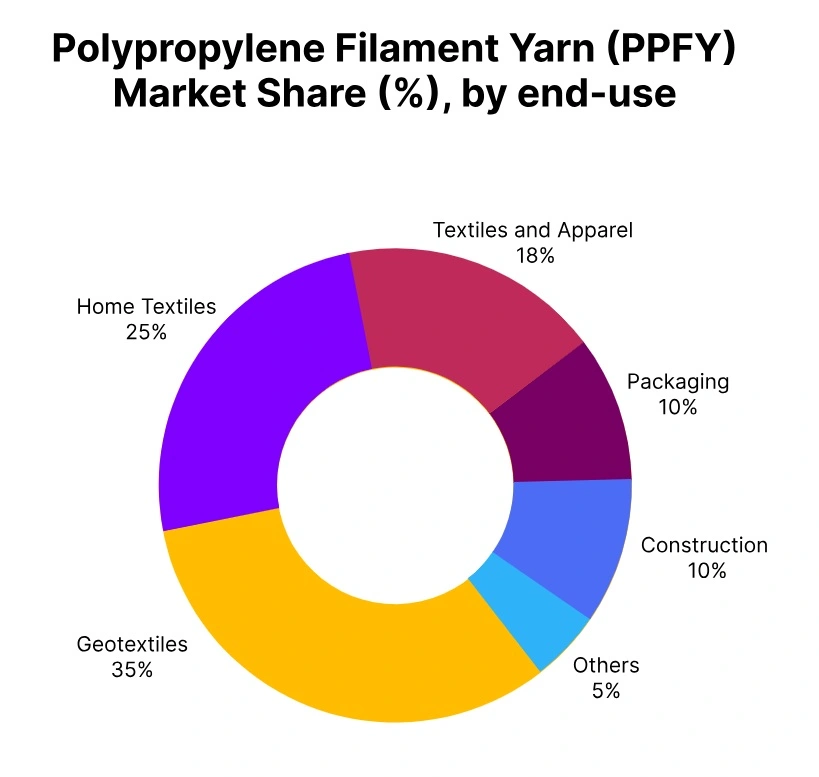
polypropylene filament yarn market share end use

Historically, several events have caused significant fluctuations in Polypropylene Filament Yarn (ppfy) prices

  • Fluctuating Crude Oil Prices (2022-2023) 

The fluctuations in Crude Oil prices during 2022 and 2023 had a direct impact on PPFY prices due to the close relationship between Crude Oil and Polypropylene production costs. As Crude Oil prices rose sharply following geopolitical tensions and supply constraints, the cost of feedstock Polypropylene increased, driving up PPFY prices. Conversely, when Crude Oil prices stabilized or decreased, manufacturers adjusted their pricing strategies, accordingly, leading to fluctuations in the market. 

  • Supply Chain Disruptions (2021) 

In 2021, global supply chain issues significantly impacted PPFY prices. Factors such as port congestion, container shortages, and logistical challenges led to increased production costs and delays in deliveries. As a result, manufacturers faced higher expenses for raw materials and shipping, which contributed to rising PPFY prices. Additionally, geopolitical tensions and energy price fluctuations further exacerbated these challenges, leading to a volatile pricing environment. 

  • The COVID-19 Pandemic (2020) 

The outbreak of the COVID-19 pandemic in early 2020 led to unprecedented disruptions across various industries, including textiles. Initially, there was a sharp decline in demand for PPFY as manufacturing halted due to lockdowns. However, as the pandemic progressed, a surge in demand for disposable products and personal protective equipment (PPE) resulted in a rebound in PPFY prices. Manufacturers had to adapt quickly to changing market needs, leading to volatility in pricing.

Why Price Watch™?

Price Watch™ is your trusted resource for tracking global polypropylene filament yarn (ppfy) price trends. Our platform delivers real-time data and expert analysis, offering deep insights into the key factors driving price fluctuations in the polypropylene filament yarn (ppfy) market. By monitoring critical events such as geopolitical tensions, supply chain disruptions, and economic shifts, Price Watch™ keeps you fully informed of market dynamics.

In addition, Price Watch™ provides detailed forecasts and updates on production capacities, enabling you to anticipate market changes and make well-informed decisions. With Price Watch™, you gain a competitive edge in understanding all the elements that influence polypropylene filament yarn (ppfy) prices worldwide. Stay ahead of the curve with Price Watch’s™ reliable, accurate, and timely polypropylene filament yarn (ppfy) market data.

Track Price Watch's™ polypropylene filament yarn (ppfy) price assessment on a weekly basis since 2015 onwards, along with short-term forecasts, and get access to the detailed report in a downloadable format.

Polypropylene Filament Yarn (ppfy) Market Price Trend published by Price Watch™ reflect prevailing spot market conditions, derived from independent research, verified trade inputs, and proprietary market intelligence as of the publication date. Prices are published on the specified Incoterm and represent indicative base market levels, exclusive of applicable taxes, VAT, duties, tariffs, and other statutory charges. Actual transaction values may vary depending on volume, credit terms, contractual structure, and other negotiated conditions. Market prices are inherently subject to volatility, liquidity dynamics, regulatory changes, and evolving trade activity. The information provided is for reference and benchmarking purposes only and does not constitute an offer, recommendation, or guarantee of transactional outcomes. Users should exercise independent commercial judgment and assess their specific contractual, regulatory, tax, and application requirements before making business decisions. Price Watch™ assumes no liability for decisions taken based on this information.

When evaluating the price of Polypropylene Filament Yarn, procurement heads should consider several key factors, including raw material Polypropylene costs, production methods, and supplier pricing strategies. Additionally, market demand and supply dynamics play a crucial role; for instance, seasonal demand fluctuations can lead to price increases. It’s also important to assess the quality of the yarn, as higher-quality products may command a premium price. Understanding the total cost of ownership, including shipping and handling fees, will help in making informed procurement decisions.

Global events such as geopolitical tensions, natural disasters, and economic downturns can significantly impact the pricing of Polypropylene Filament Yarn. For instance, disruptions in oil supply due to geopolitical conflicts can lead to increased Crude oil prices, subsequently raising the cost of Polypropylene production. Additionally, events like the COVID-19 pandemic have caused supply chain interruptions and shifts in demand patterns, further influencing yarn prices on a global scale.

To negotiate better pricing for Polypropylene Filament Yarn with suppliers, procurement heads should conduct thorough market research to understand current pricing trends and competitor offerings. Building strong relationships with suppliers can also facilitate better negotiation outcomes. Discussing long-term contracts or bulk purchasing agreements may provide leverage for securing lower prices. Additionally, being transparent about your purchasing volume and future needs can encourage suppliers to offer more competitive rates tailored to your business requirements.

Polypropylene Filament Yarn is a lightweight synthetic yarn made from polypropylene polymer. It is used in ropes, webbing, industrial sewing, carpets, upholstery, sports goods, packaging fabrics, and some technical textile applications because it is strong, moisture resistant, and cost effective.

Its price affects the cost of industrial textiles, packaging products, and some home furnishing materials. Buyers in rope, carpet, and woven tape manufacturing watch it closely because changes in yarn cost can quickly affect their margins.

Prices move with polypropylene resin costs, propylene availability, crude oil trends, plant operating rates, freight, and demand from industrial users. Local supply conditions and import dependence also play a major role.

Major demand comes from rope and cord makers, carpet producers, webbing manufacturers, packaging fabric converters, and industrial textile units. It is also used in some sports and safety-related products.

Polypropylene filament yarn is made from polypropylene resin, so any rise or fall in resin costs usually passes through to yarn pricing. Tight resin supply or higher feedstock costs often push yarn prices higher.

It has low density, good chemical resistance, and useful mechanical strength, which makes it suitable for many applications at relatively low cost. That combination keeps it popular in price-sensitive industrial markets.

Yes. It is sold in different deniers, filament counts, twist levels, and finish types depending on the end use. Yarn for ropes or industrial sewing is priced differently from yarn used in carpets or decorative textiles.

Since polypropylene is derived from petrochemical feedstocks, crude oil movement can influence propylene and resin costs. When upstream costs rise, yarn manufacturers often face higher production expenses.

Prices differ because of regional resin availability, energy costs, freight, import duties, and local demand from textile and industrial buyers. Markets that depend on imports usually see more price variation.

Demand from carpets, packaging fabrics, ropes, and industrial webbing often changes with construction activity, export orders, and manufacturing cycles. Strong industrial activity usually supports firmer yarn prices.

Specialized market intelligence platforms track producer offers, trade flows, and regional pricing trends. Price Watch™ follows Polypropylene Filament Yarn prices to help buyers and suppliers stay aligned with market changes.