Succinic Acid Price Trend and Forecast

UNSPC code: 12164502
|
Weekly Update
|
Historical Data Since 2015
|
Forecast for 2026

succinic acid Price Trends by Country

cnChina
inIndia
usUnited States
idIndonesia
trTurkey

Global succinic acid Spot Market Prices, Trend Analysis and Forecast

Price-Watch™ provides real-time price assessments and price forecasts for Succinic Acid across top trading regions:

Succinic Acid Regional Coverage Succinic Acid Grade and Country Coverage Succinic Acid Pricing Data Coverage Explanation
Asia Succinic Acid Pricing Analysis Succinic Acid Industrial Grade (99.5%) FOB Prices at Shanghai Port, China Weekly Price Update on Succinic Acid Real-Time Export Prices from Shanghai Port, China to Global Markets
Succinic Acid Industrial Grade (99.5%) CIF Prices at Jakarta Port, Indonesia (Importing from China) Weekly Price Update on Succinic Acid Real-Time Import Prices at Jakarta Port, Indonesia from China
Succinic Acid Industrial Grade (99.5%) CIF Prices at Nhava Sheva Port, India (Importing from China) Weekly Price Update on Succinic Acid Real-Time Import Prices at Nhava Sheva Port, India from China
North America Succinic Acid Pricing Analysis Succinic Acid Industrial Grade (99.5%) CIF Prices at Houston Port, USA (Importing from China) Weekly Price Update on Succinic Acid Real-Time Import Prices at Houston Port, USA from China
Europe Succinic Acid Pricing Analysis Succinic Acid Industrial Grade (99.5%) CIF Prices at Mersin Port, Turkey (Importing from China) Weekly Price Update on Succinic Acid Real-Time Import Prices at Mersin Port, Turkey from China

Succinic Acid Price Trend Q1 2026

The Succinic Acid price trend in the global market has been up during the quarter January-March 2026 because of the increase in the demand for the product from the industry sectors and supply disruption problems that have been experienced in the market. The price trend of Succinic Acid has been on an increase due to various reasons such as high energy prices, scarcity of raw materials, and the geopolitics surrounding the feedstock.

The global markets have recorded some increases in Succinic Acid prices in the month of March 2026 because of supply chain disruptions and reduced feedstock availability in the market. In other global markets, the Succinic Acid prices have been stable in March despite the volatility that occurred during the quarter January-March 2026 in the market.

China: Succinic Acid Export prices FOB Shanghai, China; Grade- Industrial (99.5%)

Succinic Acid price trends in China have been favourable in Q1 2026 due to robust demand from the major downstream users and tightness in supply. Succinic Acid price in China have indicated an increasing pattern by 19.9% in comparison with the previous quarter due to disruptions in the supply chain affecting manufacturing capabilities, despite robust overall demand.

According to Price-Watch™, in China, Succinic Acid prices in March 2026 have shown a dramatic increase in comparison with the previous month by 27.8% due to disruptions in the supply chain of raw materials in the international market and increased costs of energy. In addition, geopolitical conflicts in the Middle East have also contributed to this increase in price.

USA: Succinic Acid import prices CIF Houston, USA; Grade- Industrial (99.5%)

There has been a rise in the Succinic Acid price in the USA during Q1 2026 owing to the high demands from various industries after the festive period as well as the tight global supply situation. The Succinic Acid price trend in the USA is trending upwards, registering an impressive growth of 17.5% compared to Q4 2025 due to the high downstream demand and tight global supply of the product.

In the USA, Succinic Acid price in March 2026 have risen sharply by 25.8% in comparison to last month. The increase in prices is caused by the challenges in freight and supply of raw materials due to political instability.

Indonesia: Succinic Acid import prices CIF Jakarta, Indonesia; Grade- Industrial (99.5%)

In Q1 2026, Succinic Acid price trend in Indonesia increased by 19%. This rise is mainly driven by stronger demand in the industrial and chemical sectors compared to previous quarter, coupled with tighter supply due to global raw material shortages. The Succinic Acid price trend in Indonesia remained stable in March compared to February, as market conditions balanced out with adequate inventory levels and steady demand.

In Indonesia, Succinic Acid price in March 2026 shows that despite some fluctuations earlier in the quarter, the market stabilized, influenced by consistent supply flows and stable feedstock availability.

Turkey: Succinic Acid import prices CIF Mersin, Turkey; Grade- Industrial (99.5%)

In Q1 2026, Succinic Acid price trend in Turkey increased by 21% compared to last quarter. This sharp rise is driven by a significant uptick in demand from key downstream industries and tighter supply conditions. The Succinic Acid price trend in Turkey rose by 26% in March, primarily due to disruptions in the global raw material supply chains, exacerbated by geopolitical tensions in the Middle East from previous month.

These tensions resulted in higher energy and feedstock costs, creating logistical bottlenecks and tightening the overall supply. In Turkey, Succinic Acid price in March 2026 underscores the market’s sensitivity to external supply-side shocks and the impact of geopolitical factors on pricing dynamics.

India: Succinic Acid import prices CIF Nhava Sheva, India; Grade- Industrial (99.5%)

In Q1 2026, Succinic Acid price trend in India increased by 24%. This sharp rise is driven by increased demand in key industrial sectors, coupled with tight supply due to raw material shortages globally as compared to last quarter. The Succinic Acid price in India remained stable in March, as demand and supply conditions balanced from last February, and no major disruptions occurred in the supply chain. In India, Succinic Acid price in March 2026 reflects a stable market despite earlier price increases, as inventory levels and feedstock availability remained consistent.

Succinic Acid Price Trend Analysis: Q4 2025

In Q4 2025, Succinic Acid prices showed a mixed trend across global markets compared to Q3 2025, with some regions experiencing declines due to weaker demand and competitive market pressures, while others saw price recoveries in December driven by seasonal restocking and tighter supply conditions. The overall price trend is influenced by a combination of factors, including reduced demand from key industries, oversupply from certain producers, and inventory adjustments.

However, in December as compared to November, many markets saw a rebound, with prices rising due to pre-holiday buying activity and anticipation of higher demand in early 2026. These shifts in price trends highlight the ongoing impact of seasonal dynamics, supply-side disruptions, and market-driven responses to inventory replenishment, as global markets prepared for the upcoming year.

China: Succinic Acid Export prices FOB Shanghai, China; Grade- Industrial (99.5%)

There is a fall in the Succinic Acid price in China in Q4 2025 by 4.5% as compared to the previous quarter due to lower demand from the important sectors and over-supply by some of the leading producers in this period. The Succinic Acid price trend in China has mostly shown weak fundamentals in this quarter due to over-supply and low consumption levels which have exerted pricing pressure in the market.

In China, Succinic Acid prices in December 2025 have gained 7% on account of the beginning of the Lunar New Year holiday and tightened supply of the chemical. The price rise is fueled by restocking activities and increased demand for the chemical towards the end of the quarter.

USA: Succinic Acid import prices CIF Houston, USA; Grade- Industrial (99.5%)

The Succinic Acid price in the USA, sourced from China, has experienced a decrease of 5.5% in Q4 2025 relative to Q3 2025. The Succinic Acid price trend in the USA (CIF Houston) has been negatively impacted by weak market conditions within the quarter due to low demand and inventory surplus in the supply chain.

In the USA, Succinic Acid price in December 2025 has experienced a slight rise of 2.3%, mainly attributed to rising purchases ahead of the new year as well as tight supply in some locations. This improvement can be linked to stockpiling practices and precautionary purchasing due to anticipated supply limitations in the early parts of 2026.

Indonesia: Succinic Acid import prices CIF Jakarta, Indonesia; Grade- Industrial (99.5%)

In Q4 2025, Succinic Acid price trend in Indonesia declined by 4%, primarily due to weaker demand and competition from other suppliers in the region from last quarter. However, the Succinic Acid price in Indonesia saw an increase of 7% in December compared to November, driven by seasonal restocking as the year-end approached and a slight tightening in supply. In Indonesia, Succinic Acid price in December 2025 highlights the impact of pre-holiday buying activity, along with a rebound in purchasing after a quieter period earlier in the quarter.

Turkey: Succinic Acid import prices CIF Mersin, Turkey; Grade- Industrial (99.5%)

In Q4 2025, Succinic Acid price trend in Turkey decreased by 5%, primarily due to weakened demand and a more competitive market environment. However, the Succinic Acid price in Turkey showed a strong recovery in December as compared to last month, rising by 8%. This increase is largely driven by pre-holiday restocking and tighter supply conditions, as well as the anticipation of higher demand in early 2026. In Turkey, Succinic Acid price in December 2025 highlights the seasonal dynamics and market-driven responses to inventory replenishment ahead of the new year.

India: Succinic Acid import prices CIF Nhava Sheva, India; Grade- Industrial (99.5%)

In Q4 2025, Succinic Acid price trend in India declined by 4%, primarily due to lower demand in the domestic market and competitive pricing pressures from previous quarter. However, the Succinic Acid price in India saw a recovery in December, rising by 8%, driven by seasonal restocking and tighter supply from key producers from last month. In India, Succinic Acid price in December 2025 highlights the seasonal demand spike and the market’s response to tightening supply as the year ended.

In Q3 2025, Succinic Acid prices declined across key markets, with China seeing a 2.74% drop following a larger decline in Q2, due to weak domestic demand in pharmaceuticals and food additives. The USA saw a 4.69% decrease, driven by weaker demand for chemicals and pharmaceuticals.

Indonesia, Turkey, and India experienced price drops of 3.59%, 2.85%, and 0.96%, respectively, due to slow industrial recovery, economic instability, and high logistics costs. The outlook for Q4 remains cautious, with potential stabilization dependent on recovery in global demand and key sectors such as pharmaceuticals, automotive, and coatings.

USA: Succinic Acid import prices CIF Houston, USA, Grade (99.5% min) Industrial Grade.

According to PriceWatch, Through Q3 2025, Succinic Acid prices in the USA have declined by about 4.7%, extending the downward movement seen earlier with a 12.6% drop in Q2. The Succinic acid price trend in the US has been shaped by weaker domestic demand, particularly from the chemical and pharmaceutical sectors, which have faced reduced production schedules.

A stronger US Dollar has added further pressure on import prices from China. Although supply has remained steady, oversupply within the domestic market and elevated freight costs have weighed on overall sentiment. By September 2025, Succinic acid prices in the US have settled lower than in Q2, and the market has remained cautious, with any recovery likely to depend on a pickup in industrial activity.

China: Succinic Acid Export prices FOB Shanghai, China, Grade- (99.5% min) Industrial Grade.

In the third quarter of 2025, the pricing for Succinic Acid in China declined by approximately 2.7%, after a steep correction of around 12% in the previous quarter. The market seems to have stabilized recently, but demand overall remained soft particularly from the pharmaceutical and food additive segments. Some small improvement in Southeast Asian export inquiries prevented prices from declining further, while feedstock in particular maleic anhydride remained stable and provided some minor support.

By late September, Succinic acid prices in China have been lower than in the second quarter; however, there appeared to be some early signs of stability in pricing. Over the rest of 2025, any lingering price recovery will depend heavily on improvements in global demand and feedstock price movement in the upcoming quarters.

Indonesia: Succinic Acid import prices CIF Jakarta, Indonesia, Grade- (99.5% min) Industrial Grade.

Succinic Acid prices have declined by roughly 3.6% in Q3 2025 in Indonesia, after having already experienced a major decline in Q2. The decline in the price trend has stemmed mainly from lower activity in the automotive and textile sectors, which has softened overall demand. Imports from China have remained consistent, though a weaker Rupiah has added modest pressure on landed costs.

Constant supply chain disruptions and high freight rates have also created further barriers to any price recovery. By September 2025, Succinic Acid prices in Indonesia have shifted lower than Q2, and the forecast is still dependent on purchasing from better sectors, especially the Pharma sector, recovering in the near months.

Turkey: Succinic Acid import prices CIF Mersin, Turkey, Grade (99.5% min) Industrial Grade.

In Q3 2025, Succinic Acid prices in Turkey experienced a decline of 2.85%, following a sharper drop of 14.23% in Q2. The Succinic Acid price trend in Turkey was impacted by ongoing economic instability, which affected industrial production, particularly in the automotive and manufacturing sectors.

Despite competitive pricing from China, Turkey’s market faced pressure from weaker demand and currency devaluation, which increased the cost of imports. Succinic Acid prices in September 2025 showed a decrease compared to Q2.

With inflationary pressures and logistical challenges continuing, the market remains uncertain, though a potential stabilization in demand could provide some relief in the upcoming quarter.

India: Succinic Acid import prices CIF Nhava Sheva, India, Grade (99.5% min) Industrial Grade.

In Q3 2025, Succinic Acid prices in India have experienced a minor decline of 0.96%, following the substantial 13.80% drop incurred in Q2. The succinic acid price trend in India remained relatively unchanged, with the pharmaceutical and food sectors maintaining stable demand, although the automotive and coatings sectors continued to struggle. Import prices from China remained competitive, aided by the more advantageous exchange rate.

In addition, some logistical challenges, such as elevated transportation costs, also inhibited price recovery. The prices of Succinic Acid in September 2025 have been lower than what it was in the previous quarter. The outlook for the next quarter is dependent upon the continued stability of both import prices and demand from the key sectors.

According to the PriceWatch, the average Succinic Acid price in China stood at 1192 USD per metric ton, reflecting a 12.99% drop from Q1 2025. This steep fall in prices marks a sharp downturn in the price trend after a milder 3.19% decline in the prior quarter.

The downward movement in the price trend was mainly triggered by weak feedstock maleic anhydride costs and oversupply in the Chinese Market. The price trend indicates sluggish demand from the global bioplastics and polyurethane sectors, particularly in the USA and Türkiye.

In the USA, prices dropped due to low procurement volumes from the green solvents Market. Türkiye faced reduced imports as local inventories remained high. Meanwhile, Indonesian buyers lowered their buying interest amid cheaper alternatives and off-season downstream activity. As per the price trend, high inventories and lower freight rates further pressured prices. Seasonal stagnancy added to the negative market sentiment across all three importing countries.

According to the PriceWatch, In Q2 2025, the Succinic acid CIF price for India saw a sharp 13.80% increase, reaching 1252 USD per metric ton. This increase was driven by stronger demand from the automotive and pharmaceutical sectors, which experienced a seasonal uptick in activity.

Feedstock availability in China was slightly tighter due to production constraints, leading to higher prices. The Chinese export market faced some tightening, particularly with higher production costs, contributing to the upward trend in prices.

India’s demand saw a significant rebound, particularly with the onset of the summer season, which boosted consumption in various industries. Compared to Q1, where the market was slower, Q2 showed a positive price shift as industries in India prepared for increased production and consumption. This price jump indicates a recovering market with improving economic sentiment, positioning the market for a potentially stronger Q3 2025.

In Q1 2025, Succinic Acid prices in China experienced a 3.19% decline, settling at USD 1370/MT. This decrease was mainly attributed to weaker demand from key industries such as flavors, fragrances, and coatings, which had seen peak demand periods earlier. In addition, broader global market conditions remained sluggish, leading to lower import volumes.

Despite steady production rates, the market faced an oversupply situation, which further put downward pressure on prices. Even though producers adjusted production levels, the overall sentiment remained cautious, and the supply-demand imbalance kept prices under pressure.

In Q1 2025, the CIF price of Succinic Acid at Nhava Sheva (China) saw a decline of 2.98%, reaching USD 1452/MT. This decrease was largely attributed to weaker demand from key downstream sectors such as food and beverage, bioplastics, and cosmetics and detergents, which led to reduced import volumes.

Additionally, increased competition from other suppliers, coupled with ongoing market conditions, put downward pressure on prices. The price drop followed the overall market trend of subdued demand and excess supply, creating a challenging market environment.

Succinic Acid Price Trend Analysis: Q4 2024

Succinic Acid prices in China saw a modest drop of 0.35% in Q4 2024, reaching USD 1415/MT. This minor decline was mainly due to a seasonal slowdown in demand following strong market activity in previous quarters. Despite stable production levels, reduced consumption in sectors such as food & beverages, personal care, and automotive led to higher inventory levels.

This oversupply situation in the market triggered slight price adjustments. Though the decrease was limited, the market remained sensitive to fluctuations in demand and supply, with conditions continuing to evolve based on changing consumption patterns.

In Q4 2024, the CIF price of Succinic Acid at Nhava Sheva (China) dropped marginally by 0.15%, settling at USD 1496/MT. The limited price decrease reflected a relatively stable market despite the ongoing seasonal slowdown in demand after the peak periods of earlier quarters.

While production levels remained steady, the lower demand and higher inventory levels contributed to slight oversupply, limiting price movement. The relatively small price drop indicated the market’s attempt to balance these dynamics.


In Q3 2024, Succinic Acid prices in China dropped by 1.93%, settling at USD 1420/MT. This decline was primarily driven by a slight reduction in demand from major industries like flavors, fragrances, coatings, and pharmaceuticals. While some seasonal demand persisted, overall consumption softened during the quarter.

Production remained stable, but the accumulation of excess inventory created pressure on prices. Despite these challenges, the price decrease remained moderate, indicating a balanced supply-demand situation with limited market volatility.

In Q3 2024, Succinic Acid prices experienced a slight decrease of 0.80%, settling at USD 1499/MT at CIF Nhava Sheva (China). This decline was largely due to a moderation in demand from key industries such as industrial chemicals, pharmaceuticals, solvents, and paints and inks. While there was some seasonal demand, it was not sufficient to absorb the available supply, leading to a slight oversupply situation in the market.

Additionally, production levels remained stable, but there were no significant supply constraints to tighten the market. As a result, the price adjustment reflected the balance between stable supply and reduced demand during the quarter.

During Q2 2024, Succinic Acid prices in China saw a more notable decline of 4.99%, reaching USD 1448/MT. This price drop was driven by reduced demand across sectors such as flavors, fragrances, and coatings, which often experience seasonal fluctuations.

As manufacturers scaled back orders and inventory levels built up, an oversupply situation emerged, putting further pressure on prices. With little recovery in sight due to the lack of significant demand increases, the market struggled to stabilize, contributing to the more substantial decline in prices.

In Q2 2024, Succinic Acid prices at CIF Nhava Sheva (China) decreased by 4.38%, settling at USD 1511/MT. This decline was primarily driven by a slowdown in demand from key sectors such as bioplastics, cosmetics and personal care, and perfumes and flavors. While there was some seasonal demand, it was not enough to offset the weaker-than-expected consumption across these industries.

Additionally, production remained stable, but without significant supply constraints, the market faced an oversupply situation. As a result, the price drop reflected the imbalance between steady supply levels and softer demand during the quarter.

In Q1 2024, Succinic Acid prices in China fell by 5.81%, reaching USD 1524/MT. This sharp decline was largely driven by weaker demand from key sectors like food & beverages (flavors), personal care (fragrances), and coatings. After a peak demand period in late 2023, many industries reduced their purchasing activities in Q1, leading to a drop in prices.

Combined with steady production levels and an accumulation of inventory from the previous quarter, these factors put additional downward pressure on prices. The overall market condition highlighted a temporary imbalance between supply and demand, resulting in lower pricing trends.

In Q1 2024, the CIF price of Succinic Acid at Nhava Sheva (China) dropped by 3.66%, settling at USD 1580/MT. This decline was due to weaker demand, primarily from the flavors, fragrances, and coatings industries, after the peak season in late 2023.

The buildup of inventory by downstream producers reduced the need for new imports, and a steady supply of feedstocks further pressured the market, contributing to the price drop. Despite this, the overall market condition showed a balancing of supply and demand, maintaining a relatively stable price range.

Technical Specifications of Succinic Acid Price Trends

Product Description

Succinic acid is a white, odourless crystalline powder with a distinct acidic taste. It’s a versatile dicarboxylic acid used in pharmaceuticals, food additives (as a sequestrant, buffer, and flavour enhancer), and as an intermediate in the production of various other chemicals and products like lacquers, perfume esters, and biodegradable polymers.

Identifiers and Classification:

  • CAS No -110-15-06
  • HS Code – 29171930
  • Molecular Formula – C₄H₆O₄
  • Molecular Weight (in gm/mol) – 118.09


Succinic Acid Synonyms:

  • Butanedioic Acid
  • Amber Acid
  • 1,4-Butanedioic acid
  • 1,2-Ethanedicarboxylic acid


Succinic Acid Grades Specific Price Assessment:

  • (99.5% min) Industrial Grade


Succinic Acid Global Trade and Shipment Terms

  • Quotation Terms (Product & Country Specific): 25-28 MT
  • Packaging Type (Product & Country Specific): 25 Kg Bags


Incoterms Referenced in Succinic Acid Price Reporting

Shipping Term  Location  Definition 
FOB China  Shanghai, China  Succinic Acid Export price from China 
CIF Nhava Sheva (China)  Nhava Sheva, India  Succinic Acid import price in India from China 
CIF Houston (China)  Houston, USA  Succinic Acid import price in USA from China 
CIF Jakarta (China)  Jakarta, Indonesia  Succinic Acid import price in Indonesia from China 
CIF Mersin (China)  Mersin, Turkey  Succinic Acid import price in Turkey from China 

*Quotation Terms refers to the quantity range specified for the Succinic Acid being quoted or offered in a commercial transaction.

**Packaging Type refers to standard packaging size commonly used for Succinic Acid packing, ease of handling, transportation, and storage in industrial and commercial applications.

Key Succinic Acid Manufacturers

Manufacturer 
Shandong Longze Chemical Co.Ltd. 
Fengchen Group 
Anhui Sunsing Chemicals Co.,Ltd 
Ensince Industry Co, ltd.  

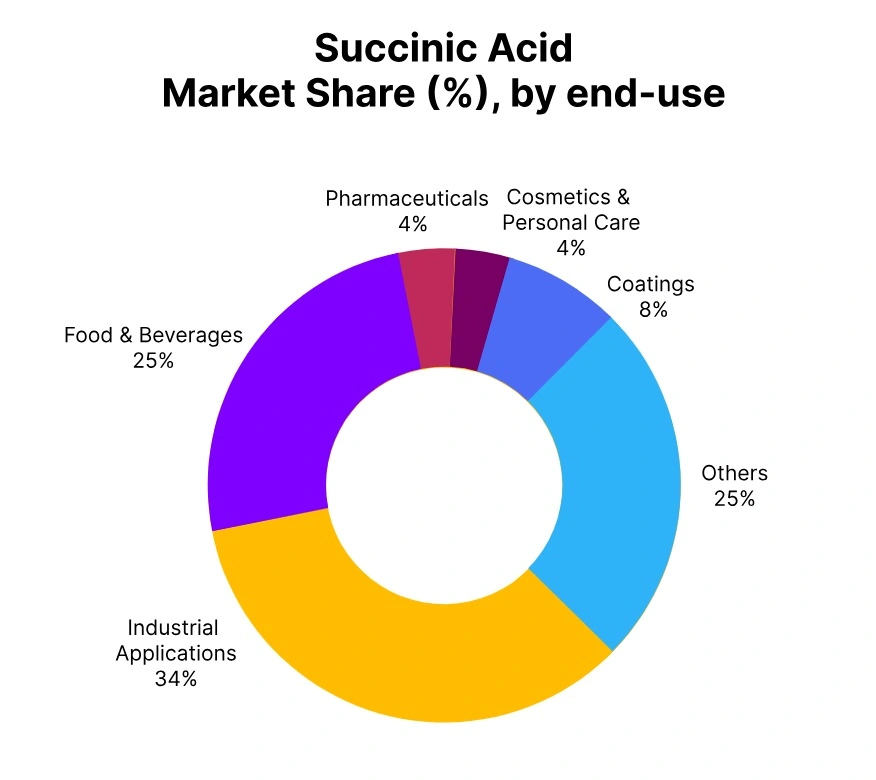
Succinic Acid Industrial Applications

succinic acid market share end use

Historically, several events have caused significant fluctuations in Succinic Acid prices

  • 2021 Supply Chain Disruptions: Following the pandemic, many industries faced ongoing supply chain challenges, including shortages of key raw materials and logistical issues. This led to increased Succinic Acid prices due to constrained supply amid recovering demand.
  • COVID-19 Pandemic: The global pandemic led to widespread disruptions in production and supply chains, causing significant fluctuations in Succinic Acid prices. Initial drops in demand during lockdowns were followed by supply shortages as markets began to recover in late 2020.
  • 2017 Chinese Environmental Regulations: In 2017, China implemented stringent environmental regulations that led to the temporary shutdown of many chemical plants, significantly affecting Succinic Acid supply. The resulting supply constraints caused a spike in prices as producers struggled to meet demand.
  • 2015-2016 Global Oil Price Collapse: The dramatic decline in crude oil prices during this period led to decreased costs for feedstocks like fumaric acid, which are essential for Succinic Acid production. This contributed to a temporary decrease in Succinic Acid prices as production costs fell.

Why Price Watch™?

Price Watch™ is your trusted resource for tracking global succinic acid price trends. Our platform delivers real-time data and expert analysis, offering deep insights into the key factors driving price fluctuations in the succinic acid market. By monitoring critical events such as geopolitical tensions, supply chain disruptions, and economic shifts, Price Watch™ keeps you fully informed of market dynamics.

In addition, Price Watch™ provides detailed forecasts and updates on production capacities, enabling you to anticipate market changes and make well-informed decisions. With Price Watch™, you gain a competitive edge in understanding all the elements that influence succinic acid prices worldwide. Stay ahead of the curve with Price Watch’s™ reliable, accurate, and timely succinic acid market data.

Track Price Watch's™ succinic acid price assessment on a weekly basis since 2015 onwards, along with short-term forecasts, and get access to the detailed report in a downloadable format.

Succinic Acid Market Price Trend published by Price Watch™ reflect prevailing spot market conditions, derived from independent research, verified trade inputs, and proprietary market intelligence as of the publication date. Prices are published on the specified Incoterm and represent indicative base market levels, exclusive of applicable taxes, VAT, duties, tariffs, and other statutory charges. Actual transaction values may vary depending on volume, credit terms, contractual structure, and other negotiated conditions. Market prices are inherently subject to volatility, liquidity dynamics, regulatory changes, and evolving trade activity. The information provided is for reference and benchmarking purposes only and does not constitute an offer, recommendation, or guarantee of transactional outcomes. Users should exercise independent commercial judgment and assess their specific contractual, regulatory, tax, and application requirements before making business decisions. Price Watch™ assumes no liability for decisions taken based on this information.

Succinic Acid pricing is primarily influenced by the cost of raw materials, particularly fumaric acid, which is essential for its production. Fluctuations in crude oil prices can also affect the cost of feedstocks like fumaric acid. Additionally, demand from various industries including food and beverage, bioplastics, pharmaceuticals, and cosmetics and detergents, plays a crucial role in shaping price trends. Supply chain disruptions, transportation costs, and changes in environmental regulations or trade policies also contribute to pricing volatility. Procurement heads should monitor these factors closely to make informed purchasing decisions.

The availability of key feedstocks, such as fumaric acid, is critical for determining Succinic Acid prices. Any disruptions in the supply of these feedstocks, whether caused by natural disasters, political instability, or shifts in production capacity, can lead to increased Succinic Acid prices. Conversely, improvements in feedstock production or an oversupply of raw materials may lead to price reductions. Procurement teams should stay updated on feedstock market trends to anticipate potential price movements and manage costs effectively.

Succinic Acid prices can vary by region due to differences in feedstock availability, local production capacities, and regional demand. Areas with well-established petrochemical industries, such as North America and Asia, generally experience competitive pricing due to abundant production capacity and lower transportation costs. In contrast, regions with limited manufacturing facilities may face higher prices. Procurement teams should analyse regional price trends and consider factors like local supply availability, transportation costs, and potential partnerships with local suppliers to optimize sourcing strategies and ensure cost efficiency.

Succinic Acid is a naturally occurring dicarboxylic acid used in a variety of industries, including pharmaceuticals, food additives, and bio-based polymers. It serves as a key intermediate in the production of industrial chemicals, including 1,4-butanediol (BDO), which is essential for producing plastics and synthetic fibers. Succinic Acid’s price is crucial because fluctuations affect the cost of its derivatives and downstream products across multiple sectors, including biofuels, polyurethanes, and resins. Price-Watch™ monitors these price trends to keep businesses informed.

The cost of Succinic Acid varies depending on factors such as feedstock availability, production methods, and regional market conditions. Prices are typically quoted per metric ton, and they can fluctuate due to changes in demand from key industries like pharmaceuticals, food production, and biodegradable plastics. Price-Watch™ provides real-time price assessments across different markets to help buyers and sellers make informed decisions.

Succinic Acid prices are influenced by factors such as feedstock costs (primarily glucose, fossil fuels, and bio-based resources), demand from key industries like pharmaceuticals, food additives, and bio-based polymers, and production methods (such as petrochemical vs. bio-based production). Additionally, global capacity expansions, production disruptions, regulatory changes, and macroeconomic conditions like oil prices can also impact Succinic Acid pricing trends. Price-Watch™ tracks these factors to provide up-to-date insights.

The largest consumers of Succinic Acid are industries producing biodegradable plastics (e.g., polybutylene succinate), pharmaceuticals (as an intermediate in drug production), food and beverage (as a preservative and flavoring agent), and cosmetics. Additionally, it is used in the production of polyurethanes, resins, and other specialty chemicals. Price-Watch™ analyzes demand trends across these industries to assess market changes.

Succinic Acid can be produced through petrochemical processes or from renewable bio-based sources. The bio-based process typically involves fermentation of glucose using microorganisms, while the petrochemical process typically utilizes fossil fuels like oil or natural gas as feedstocks. Major chemical producers worldwide, especially in regions with a strong biotechnology or petrochemical sector, manufacture Succinic Acid.

The largest exporters of Succinic Acid are countries with well-established chemical industries, such as China, the United States, and European nations like Germany and the Netherlands. These countries have significant production capacities and serve as key suppliers to global markets, particularly for biodegradable plastic production and pharmaceutical applications. Price-Watch™ tracks global export flows to provide insights on international supply dynamics.

While global production generally matches demand, regional shortages can occur due to disruptions in production, feedstock constraints, or unexpected demand surges from emerging markets like biodegradable plastics. Additionally, maintenance turnarounds at key production plants or capacity expansions in developing regions can affect availability. Price-Watch™ monitors these dynamics to alert the market of potential supply-demand imbalances.

Succinic Acid is typically available in industrial-grade and pharmaceutical-grade variations, with the latter requiring higher purity levels and more stringent quality controls. Prices differ depending on grade, with pharmaceutical-grade Succinic Acid commanding a premium due to its application in drug manufacturing. Additionally, bio-based Succinic Acid may also command higher prices due to its environmentally sustainable production process. Price-Watch™ provides price assessments for each grade to maintain market transparency.

A sudden rise in demand for Succinic Acid, particularly driven by growth in industries like biodegradable plastics or pharmaceuticals, can lead to price increases. In such cases, suppliers may prioritize long-term contract customers, while spot buyers may experience higher prices or longer lead times. Production flexibility is limited by feedstock availability and plant capacity. Price-Watch™ captures these dynamics in real-time, providing insights into market behavior.

Energy prices, particularly for natural gas and electricity, are a major cost component in Succinic Acid production. When energy prices rise, manufacturers typically pass on these increased costs to buyers, making Succinic Acid more expensive. This is particularly true for petrochemical-based production methods, where energy is required for the cracking process. Price-Watch™ tracks energy price trends and incorporates them into its price assessments.

Regional price differences for Succinic Acid arise from factors such as local production capacity, feedstock availability and costs, energy prices, and transportation expenses. Areas with limited local production or higher logistics costs tend to have higher prices, while regions with integrated petrochemical complexes or favorable bio-based feedstock availability may see lower prices. Price-Watch™ tracks prices across all major regions to highlight these differences.

The forecast for Succinic Acid prices depends on key drivers such as feedstock costs (primarily glucose and petrochemical derivatives), energy prices, global production capacity changes, demand growth in key industries (especially biodegradable plastics and pharmaceuticals), and supply-demand dynamics in both developed and emerging markets. Price-Watch™ regularly publishes price forecasts based on a comprehensive analysis of these factors, helping businesses plan for future market conditions.

Yes. Accurate price forecasts allow businesses to plan their procurement strategies effectively, negotiate contracts at favorable terms, and budget more accurately. For example, if forecasts predict rising prices in the coming months due to higher feedstock costs, businesses may choose to secure supplies in advance at current prices. Price-Watch™ offers valuable insights for such strategic decisions.

Global events like natural disasters, trade disruptions, and feedstock supply issues can impact the availability of Succinic Acid, leading to price volatility. For example, geopolitical tensions or natural disasters affecting key production regions can disrupt supply chains, leading to shortages and higher prices. Price-Watch™ provides timely alerts when such events affect Succinic Acid supply or pricing.

Price-Watch™ gathers data from global manufacturers, distributors, and buyers to publish transparent and reliable price assessments. Our detailed market reports and forecasts make us a trusted source for understanding Succinic Acid pricing trends, offering businesses the insights they need to make informed decisions.