

Markets often spend months building support and only days losing it. The Korean ABS market in Q2 2026 became a clear example as changing upstream dynamics rapidly erased the confidence that had carried prices through the previous quarter and reshaped the broader ABS Price trend in South Korea.
Korea ABS Prices Drop as Styrene Cost Floor Disappears
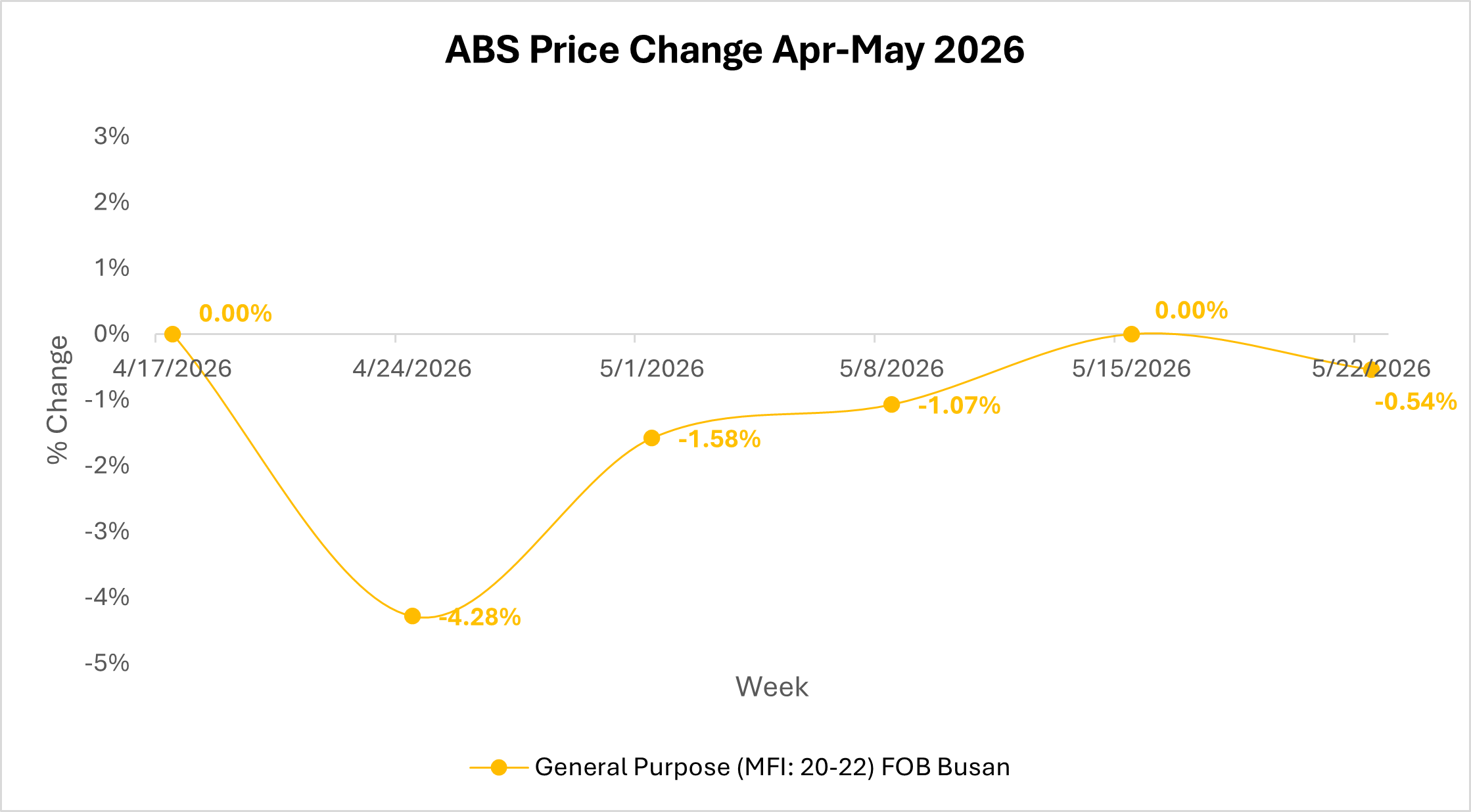
When the Strait of Hormuz reopened in mid-April 2026, South Korean ABS producers felt the impact within days. Crude oil prices moved lower, and styrene quickly followed. Since styrene accounts for nearly 65% of ABS production costs, that shift removed the pricing floor that had supported the market through March. The result was a sharp decline by late April, representing one of the strongest downward movements seen in recent months.
In May 2026, ABS prices in South Korea showed a temporary recovery during the middle of the month before weakening once again toward month-end.
How the Korea ABS Supply Chain is Absorbing the Shock
Traders are facing increasing pressure across the value chain. Many built inventory during Q1 when prices were rising and supply conditions appeared tight. Now, they are holding higher-cost material in a declining market and reducing offers simply to keep product moving. At the same time, Korean ABS producers returned from maintenance shutdowns with operating rates above 75%, adding fresh supply into an already weak market environment.
Downstream sectors such as home appliances, automotive, and consumer goods are also passing through a seasonal slowdown. Buyers are securing only essential requirements and showing resistance toward higher offers.
Two things to note. Acrylonitrile and butadiene prices are also declining, pulling away another layer of cost support. Chinese origin cargoes are entering at competitive levels, making it difficult for Korean producers to hold firm on offers.
Source: Price-Watch™ Acrylonitrile Butadiene Styrene Prices
What Comes Next for ABS Prices in Korea
Prices are expected to remain under downward pressure in the coming weeks. Unless feedstock costs find stability or downstream buying activity improves, sellers are likely to have limited room to defend current offers.
Here is a question worth sitting with; if South Korean ABS producers cannot protect margins in a falling raw material cycle, what happens when input costs eventually rise again and buyers are already used to lower price levels?
Stay connected with Price-Watch™ for continued insights and weekly updates on the Korea ABS market.
Follow Price-Watch™ on LinkedIn for real-time raw material insights, pricing trends, supply chain intelligence, and market updates shaping global commodity markets.