

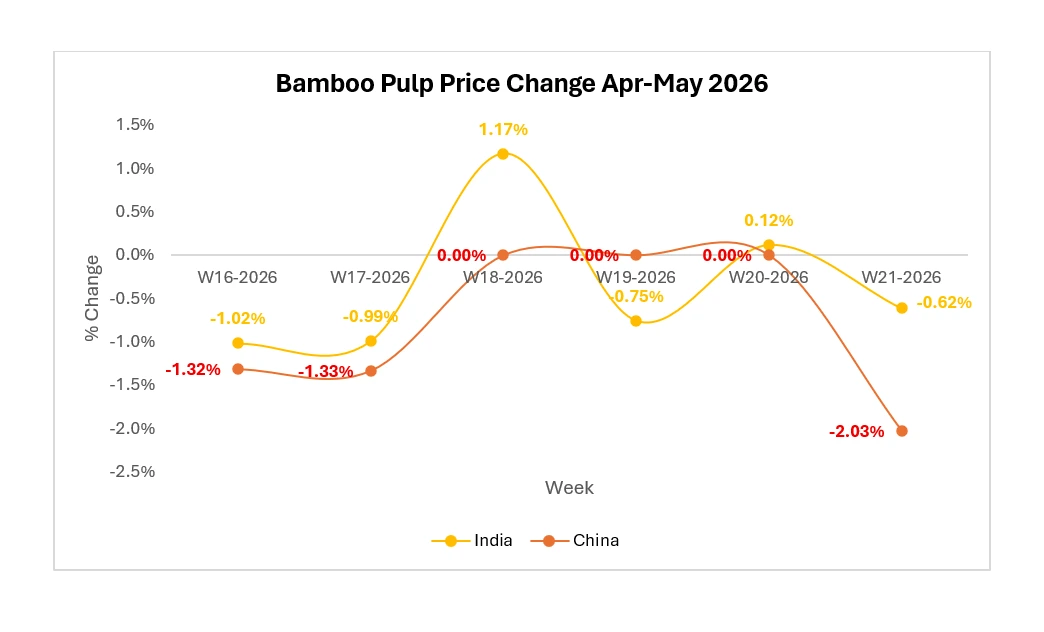
The global Bamboo Pulp market is gradually shifting toward a softer pricing environment as supply conditions improve and downstream demand remains moderate across major importing regions. After several months of elevated pricing activity, bamboo pulp prices in China and import prices in India have started easing due to improving export availability and the normalization of earlier supply disruptions.
Demand from the paper and packaging sectors has also remained cautious, limiting aggressive procurement activity and contributing to weaker market sentiment across Asia.
Before the decline: Why Bamboo Pulp Pricing Increased
Earlier in 2026, bamboo pulp prices surged sharply due to disruptions in the global pulp supply chain. One of the major developments impacting market sentiment was the week-long strike at Spain’s ENCE Energía y Celulosa Navia mill, which operates with an annual production capacity of nearly 685,000 tons. The disruption tightened hardwood pulp availability globally and shifted buying interest toward alternative fiber grades such as bamboo pulp supplied from China.
At the same time, Indonesia revoked permits for 22 forestry companies covering nearly one million hectares, reducing regional hardwood pulp output and increasing supply concerns across Asian markets.
Geopolitical tensions, freight uncertainties, and elevated shipping costs further intensified supply pressure, especially for Indian importers that rushed to secure cargoes during the tight supply phase.
Source: Price-Watch™ Bamboo Pulp Prices
Bamboo Pulp Price Trend Turns Softer
The market has now started correcting as operations at Spain’s Navia mill normalized and alternative sourcing arrangements helped offset Indonesia’s forestry restrictions.
Chinese suppliers are currently offering improved export availability, while Indian paper manufacturers remain cautious and continue purchasing primarily for immediate requirements rather than inventory accumulation.
Lower freight costs, stable logistics, and softer global pulp sentiment are collectively placing downward pressure on bamboo pulp prices across the region.
Outlook For Bamboo Pulp Prices in India and China
Looking ahead, Bamboo Pulp prices in China and India are expected to remain under pressure in the near term due to comfortable supply availability and restrained downstream demand.
However, the market will continue closely monitoring geopolitical developments, freight movement, and global pulp production trends, as any fresh disruption could quickly tighten supply conditions again.
Follow Price-Watch™ on LinkedIn for real-time raw material insights, pricing trends, supply chain intelligence, and market updates shaping global commodity markets.