

Caprolactam prices in the Chinese market remained under pressure, with Caprolactam Flakes Ex-Shanghai continuing their downward trend as weak downstream demand outweighed support from feedstock and energy markets.
Caprolactam Demand Weakness Outweighs Earlier Feedstock Support
Earlier concerns surrounding the U.S.-Iran conflict and potential disruptions to shipping through the Strait of Hormuz had strengthened sentiment, with market participants anticipating tighter benzene and Cyclohexanone availability alongside higher production costs.
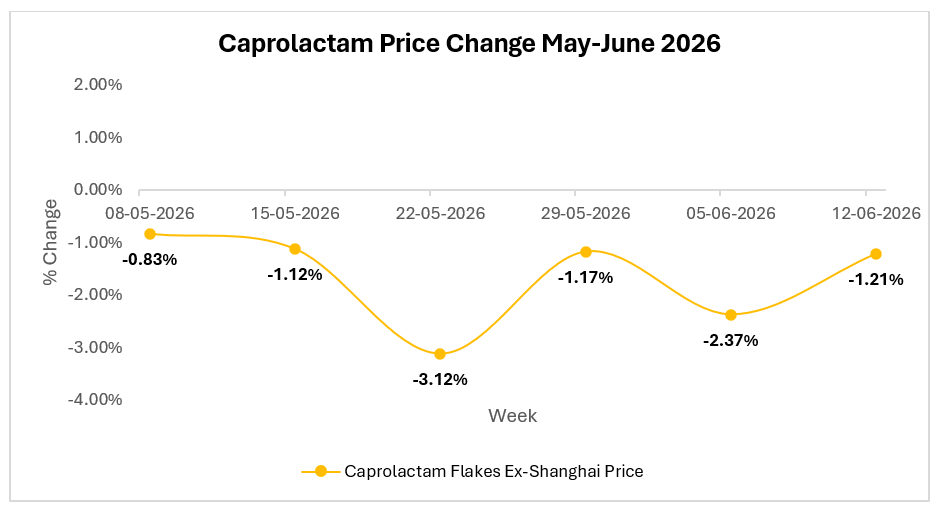 Source: Price-Watch™ | Caprolactam Prices
However, the anticipated bullish impact failed to materialize. As ceasefire developments eased concerns over Middle Eastern energy flows, crude oil prices weakened, reducing cost-side support for the Caprolactam market.
Cyclohexanone Availability Keeps Cost Pressure Limited
The feedstock landscape remained largely unsupportive for producers. While Cyclohexanone, a key raw material used in Caprolactam production, avoided major supply disruptions, market conditions remained balanced enough to prevent significant upward pressure on manufacturing costs.
China continued to source Cyclohexanone from major Asian suppliers, particularly South Korea, Japan, and Taiwan, helping maintain adequate feedstock availability despite geopolitical uncertainties.
Weak Nylon-6 Consumption Limits Buying Interest
Despite fluctuations in feedstock markets, Caprolactam prices in China continued to face pressure from sluggish demand across the Nylon-6 chain. Producers of Nylon-6 chips, filament yarns, and engineering plastics maintained cautious procurement strategies as order inflows remained below expectations.
Rather than actively replenishing inventories, many buyers focused on consuming existing stocks while delaying non-essential purchases. This cautious procurement strategy reduced spot market activity and intensified competitive pressure among suppliers, contributing to the continued decline in Caprolactam prices.
Inventory Control Replaces Aggressive Procurement
Comfortable inventory levels across the Nylon-6 value chain reduced urgency among buyers, while the absence of significant supply disruptions encouraged many participants to delay fresh purchases. The decline in speculative buying activity further weighed on sentiment, with sellers facing increasing resistance when attempting to secure higher offers.
As a result, the Caprolactam price trend in China remained bearish despite periodic volatility in benzene, crude oil, and Cyclohexanone markets.
Outlook: Can Demand Recovery Stabilize the Market?
The near-term outlook for Caprolactam remains cautious as market participants continue monitoring Nylon-6 operating rates, textile demand, benzene movements, and Cyclohexanone market fundamentals. While geopolitical developments may continue to influence feedstock costs, a sustained recovery in downstream demand will remain the key factor determining market direction.
The bigger question is this: Is the current weakness merely a result of cautious inventory management, or does it signal a broader demand adjustment across the Nylon-6 value chain?
Price-Watch™ continues tracking weekly movements across the Caprolactam and Nylon-6 value chain.
Follow Price-Watch™ on LinkedIn for real-time raw material insights, pricing trends, supply chain intelligence, and market updates shaping global commodity markets.