

The global ethylene market is witnessing a pronounced structural shift, driven by simultaneous outages in key production hubs across Asia. The unexpected combination of force majeure events in Singapore and South Korea, coupled with planned maintenance in China, is reshaping supply flows and intensifying near-term pricing pressures.
Ethylene Supply Disruptions Across Key Hubs
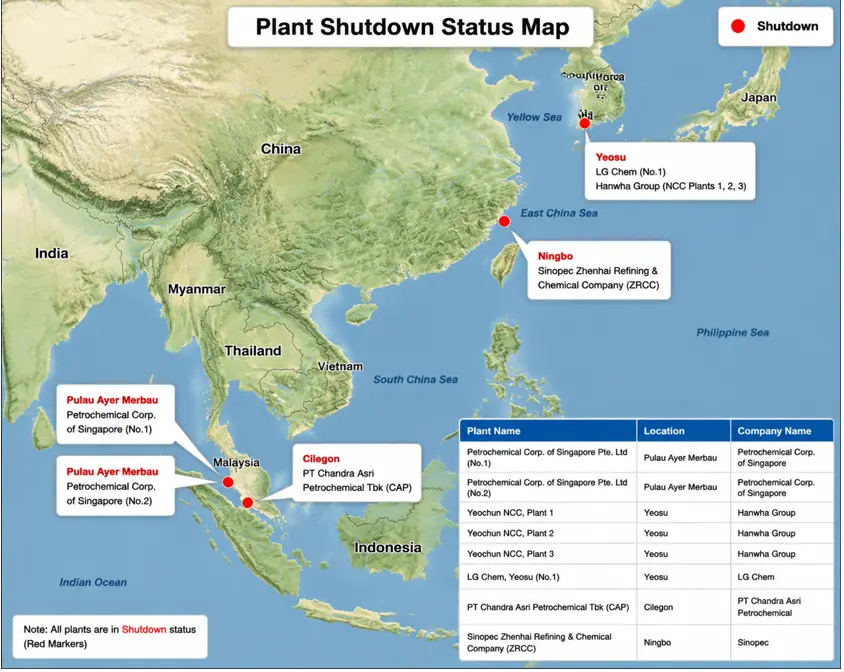
Production at the Petrochemical Corp. of Singapore’s No.1 and No.2 plants in Pulau Ayer Merbau has been halted under force majeure since early March, impacting a combined 1.1 million tons per annum of ethylene capacity. Meanwhile, Hanwha Group’s Yeochaun NCC plants in South Korea are offline, removing an additional 2.285 million tons per annum from the market starting early March.
The situation in China is equally notable, with LG Chem’s Yeosu Plant No.1 (1.2 million tons per annum) and Sinopec’s ZRCC plant in Ningbo (2.2 million tons per annum) entering planned shutdowns in early March. Indonesia’s PT Chandra Asri Petrochemical Tbk (CAP) also faces a force majeure disruption affecting 860 KTPA.
Collectively, these outages removed a significant portion of Asia’s ethylene supply at a time when inventories were already under pressure due to tight feedstock availability and broader geopolitical uncertainties. This multi-regional production vacuum is exerting upward pressure on spot prices, reflecting both immediate shortages and anticipated logistical constraints.
Source: Price-Watch™
Ethylene Price Implications and Market Mechanics
Ethylene prices have surged as buyers scramble to secure cargoes amid constrained availability. The combination of geopolitical tensions, particularly trade frictions affecting feedstock import routes, and concentrated shutdowns in major producing the tight supply-demand dynamic.
Traders are noting increased premiums in spot markets for cargoes from unaffected plants in the region, while longer-term contract negotiations are likely to reflect higher risk premiums and potential supply volatility.
A lesser-discussed factor is the compounded logistical challenge posed by these outages. Ports in South Korea and Singapore are adjusting schedules, while storage capacities in China are under strain due to coordinated maintenance. These hidden bottlenecks further accentuate price volatility and shorten reaction times for downstream buyers, from polyethylene producers to industrial end-users.
Short-Term Ethylene Market Outlook
As geopolitical situations gradually ease, the market could see a moderate correction in ethylene prices over the coming months. While immediate supply constraints have driven spot prices higher, a combination of resumed production and stabilized trade flows may ease pressure, leading to slightly lower price levels. Buyers should, however, remain vigilant, as unexpected extensions of outages or feedstock fluctuations could quickly reverse this trend.
Strategic Takeaways
The convergence of plant shutdowns and geopolitical tensions marks a pivotal juncture in the ethylene market. Beyond immediate price spikes, these developments underscore structural vulnerabilities in the global supply chain. Decision makers should prioritize scenario-driven strategies, maintain flexible supply arrangements, and monitor regional operational updates closely.
For detailed analysis, real-time updates on supply disruptions, and strategic market intelligence, subscribe to Price Watch G.I.O. Tracker your essential tool to navigate volatility and make informed procurement decisions in the evolving ethylene landscape.
Follow Price-Watch™ on LinkedIn for real-time raw material insights, pricing trends, supply chain intelligence, and market updates shaping global commodity markets.