

Rising geopolitical tensions in the Middle East are creating fresh uncertainty across the global Halobutyl Rubber supply chain. Concerns over crude oil supply, shipping routes, freight costs, and petrochemical feedstock availability are increasing replacement costs for producers while forcing buyers to reassess inventory and procurement strategies.
The impact is particularly relevant for Halo butyl Rubber, where production economics remain closely linked to the broader petrochemical chain.
How Middle East tensions are affecting Halo butyl Rubber production costs
The Middle East remains critical to global energy and petrochemical markets. Any escalation involving major regional producers or disruption risks around key shipping routes can quickly affect crude oil and related feedstock prices.
Higher crude values can increase the cost of upstream petrochemical materials and raise the replacement cost of isobutylene, a key feedstock for Butyl Rubber production.
According to Price Watch™ analysis, rising energy and feedstock costs are encouraging Halo butyl Rubber suppliers to reassess export offers. Producers are also monitoring freight movements closely as higher shipping premiums can further increase delivered costs for international buyers.
Why supply chain uncertainty is changing buyer behavior
Geopolitical uncertainty is having a broader impact beyond production costs. Buyers in the tire, pharmaceutical, automotive, and industrial rubber sectors are becoming more cautious about inventory management as transportation risks and replacement costs remain difficult to predict.
Two key value chain impacts are emerging:
- Higher crude oil and petrochemical feedstock costs are increasing Halo butyl Rubber production and replacement costs.
- Rising freight risks are increasing landed costs and encouraging buyers to secure material earlier to reduce exposure to supply disruptions.
While downstream tire demand remains an important pricing factor, supply chain uncertainty is increasingly influencing procurement decisions and regional price negotiations.
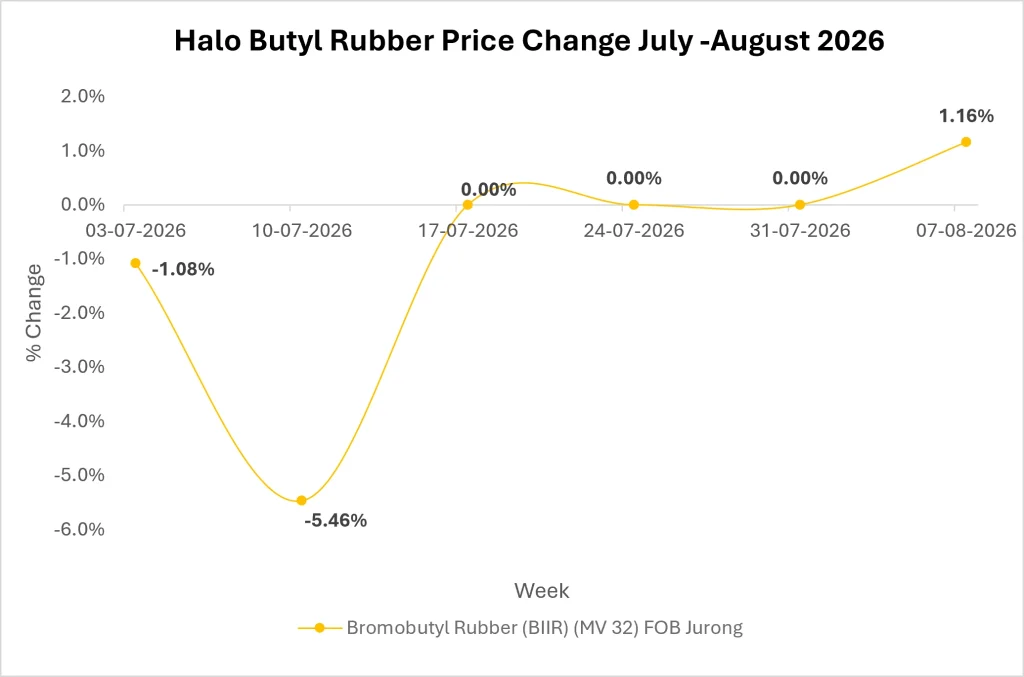
Source: Price Watch™ Halo Butyl Rubber
Halo Butyl Rubber Market Outlook
The global Halo Butyl Rubber market is expected to remain sensitive to Middle East geopolitical developments, crude oil movements, freight rates, and feedstock availability over the next one to three months.
A further escalation could increase production and logistics costs, while improved regional stability could ease energy and transportation premiums.
According to Price Watch™ analysis, buyers should closely monitor crude oil, isobutylene availability, shipping costs, and supplier operating rates when planning near term procurement. The key question is whether geopolitical risks will continue to raise replacement costs, or whether improving supply chain conditions will allow Halo butyl Rubber prices to stabilize.
Follow Price Watch™ on LinkedIn for real-time Halo butyl Rubber market insights, Halobutyl Rubber price trends, supply chain intelligence, and global commodity updates.