

India’s fertilizer sector is gradually moving from reacting to supply shortages to planning ahead. Recent data shows three major trends, higher fertilizer stocks before the Kharif season, increased domestic production capacity, and a wider range of import suppliers.
Together, these steps are helping improve the country’s fertilizer security, although some challenges still remain.
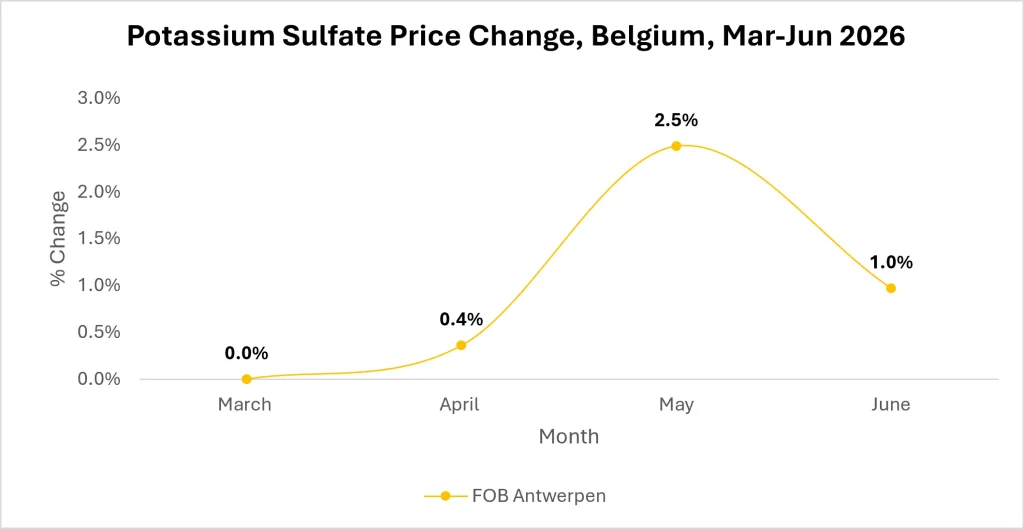
Source: Price Watch™ Potassium Sulfate Prices
Strong fertilizer stocks before Kharif
By mid-July 2026, India had 319.66 lakh metric tons (LMT) of fertilizer available against a monthly requirement of 73.93 LMT. After sales of 157.71 LMT, the country still had 161.95 LMT in stock. This is one of the strongest stock positions before the Kharif season in recent years.
This is important because Kharif sowing started slowly due to delayed monsoon rains. Instead of waiting for demand to increase, the government ensured that enough fertilizer was already available to avoid shortages once planting picked up.
The same trend can be seen across major fertilizers. Urea, which accounts for nearly half of India’s fertilizer use, had 150.92 LMT available against a total Kharif requirement of 190.32 LMT, with 69.30 LMT still in stock. This was almost twice the July requirement.
DAP presented a different situation. Opening stocks were 11.78 LMT lower than the previous year, but total availability still reached 36.51 LMT against a July requirement of about 12 LMT. This shows that imports were used to make up for lower domestic availability.
Since India depends heavily on imports for DAP and potash, maintaining adequate stocks of these fertilizers remains a priority.
Higher production, but imports are still important
The government has also increased domestic urea production. Under the 2012 investment policy, six new urea plants added 76.2 LMT per year of production capacity. As a result, India’s installed urea capacity increased from 207.54 LMT in 2014-15 to 269.42 LMT in 2026-27.
Urea production reached a record 314.07 LMT in 2023-24, although it declined slightly to 293.30 LMT in 2025-26. To further strengthen domestic production, the government approved the New Investment Policy for Urea (NIPU-2026) on 15 July 2026.
Despite these improvements, imports continue to play an important role. During the first quarter of FY 2026-27, India imported 25.08 LMT of urea and 7.11 LMT of DAP, while domestic production totaled 115.72 LMT.
This shows that imports remain an essential part of meeting fertilizer demand, especially for DAP, where domestic production is limited.
Diversifying imports to reduce risk
India is also reducing its dependence on a few suppliers by expanding its import network. The country has signed long-term agreements for around 31 LMT of DAP each year from Saudi Arabia, 26.50 LMT of DAP and NPK fertilizers from Russia, and 4.80 LMT of MOP from Russia, Germany, and Turkmenistan.
India has also increased imports of specialty fertilizers from Belgium, Egypt, Germany, Morocco, and the United States, especially after China’s export restrictions affected global supplies. This wider supplier base helps reduce the risk of supply disruptions caused by geopolitical tensions, export restrictions, or shipping delays.
Fertilizer Market Outlook
Overall, India’s fertilizer strategy is becoming stronger through three key measures
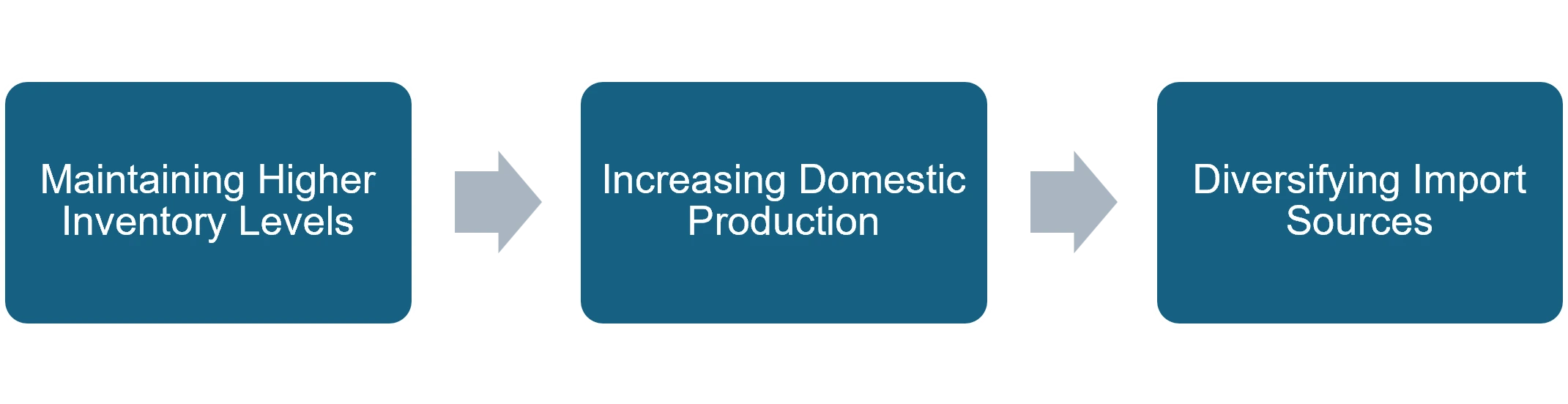
These steps improve the country’s ability to handle supply disruptions and meet seasonal demand. However, one important challenge remains.
Having enough fertilizer at the national level is only part of the solution. Fertilizers must also reach farmers on time, especially in rain-fed areas where the sowing season is short.
While India has strengthened its overall fertilizer supply, improving last-mile distribution will be essential to ensure fertilizers are available where and when farmers need them most.
Follow Price Watch™ on LinkedIn for real-time fertilizer market insights, price trends, supply chain intelligence, and global commodity updates covering Urea, DAP, Ammonia, Sulphur, Ammonium Nitrate, SSP, TSP, Potassium Sulphate, and more.