

India’s decision to abruptly ban sugar exports until September 30, 2026, has significantly shifted global sugar market sentiment and strengthened bullish price trends across international markets. The government moved sugar exports from the “restricted” category to “prohibited” with immediate effect, reflecting rising concerns over domestic supply security, inflationary pressures, and future production risks.
Policy Rationale: More Than Just Current Stocks
Although India currently maintains comfortable sugar availability, policymakers remain focused on avoiding potential supply tightness ahead of the next crushing season. A key concern is the possible return of El Niño conditions later in 2026, with forecasts of weaker monsoon rainfall and higher temperatures raising risks for sugarcane planting and yields in major producing states such as Maharashtra and Uttar Pradesh. These weather concerns have already started supporting medium-term bullish sugar price trends globally.
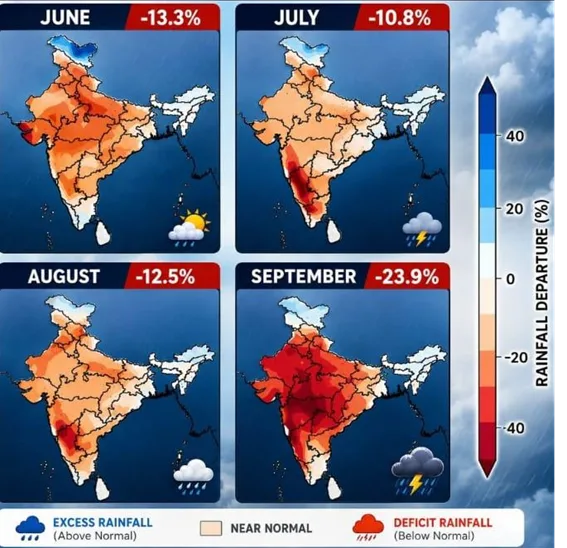
Input Cost Pressures Compound Production Risks
At the same time, the ongoing West Asia supply crisis has disrupted fertilizer supply chains and elevated transportation and energy costs, further tightening the agricultural input market. Since sugarcane cultivation is highly dependent on fertilizer usage and irrigation, rising input costs and limited fertilizer availability could negatively impact cane productivity in the coming season.
Higher crude oil prices have also supported ethanol economics globally, especially in Brazil, where mills continue diverting more cane toward ethanol production instead of sugar, adding further upward pressure to global sugar price trends.
Another concern behind the export restriction is uncertainty surrounding actual domestic sugar stock levels. Authorities remain cautious about discrepancies in mill-reported inventories, increasing fears of a possible supply imbalance during India’s peak festive demand period later this year.
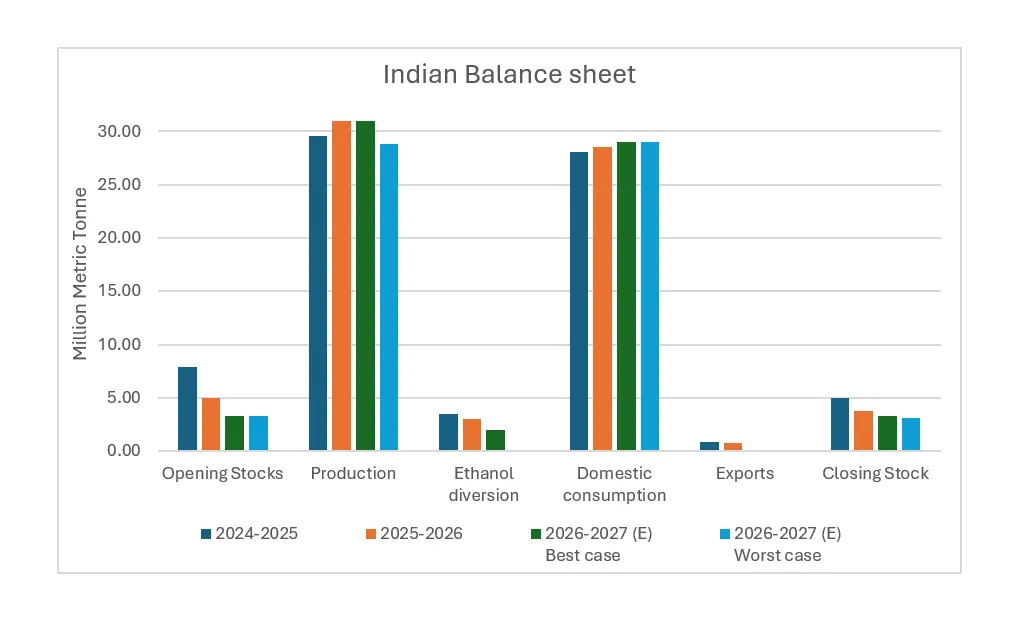
India Sugar Balance Sheet Trend
Below graph explains why the government acted despite comfortable current stocks.
The announcement immediately impacted global sugar prices, with international raw sugar futures trending higher following expectations of reduced export availability from India, one of the world’s largest sugar exporters. The bullish momentum was further supported by weather-related production concerns across Asia and tightening global trade flows.
Global Market Impact: Brazil Steps into the Void
Brazil continues to dominate global sugar exports, strengthening its position as the primary supplier to the international market following India’s export ban. With India effectively stepping away from global trade flows for the remainder of the season, buyers are expected to increasingly rely on Brazilian supplies. However, strong ethanol economics in Brazil continue encouraging mills to divert cane toward ethanol production, limiting the pace of sugar supply growth and maintaining firm global sugar price trends.
The Domestic India Picture is Different
In contrast, domestic sugar price trends in India remained relatively stable with only marginal movement, as export restrictions are expected to keep additional volumes within the local market. The improved domestic availability is likely to limit near-term upside in Indian sugar prices despite firm global market sentiment.
Overall, India’s export ban highlights growing concerns around climate risks, supply-chain disruptions, and food inflation. While the move may help stabilize domestic sugar availability in the short term, it has intensified global concerns over future supply tightness and strengthened bullish sentiment across the broader sugar market.
The Bigger Picture
In a rapidly changing sugar market environment, timely market intelligence has become increasingly critical for buyers, traders, refiners, and procurement teams. As a price reporting and commodity intelligence platform, Price-Watch™ provides real-time spot market prices, key market insights, and forward-looking price trend analysis across major sugar-producing and trading regions.
Our coverage includes key Indian markets such as Maharashtra, Karnataka, and Uttar Pradesh, along with international benchmarks and export markets including Brazil, Thailand, and Vietnam. We also track global futures indicators such as Sugar No. 11 and Sugar No. 5, helping market participants better understand price movements, supply-demand shifts, and future market trends before they impact procurement and trading decisions.
Follow Price Watch™ on LinkedIn for real-time raw material insights, pricing trends, supply chain intelligence, and market updates shaping global commodity markets.