

In an unusual twist for a typically steady market, Iso Butyric Acid (IBA) in China has swung sharply over the past six weeks, catching the attention of downstream buyers and suppliers alike.
After a modest 5% uptick in W16-2026, prices fell 6% in W17-2026, stabilized through W18, then surged 10% in W19, before flattening again in W20 and W21. Such erratic movement is notable in a market usually characterized by slow, incremental changes.
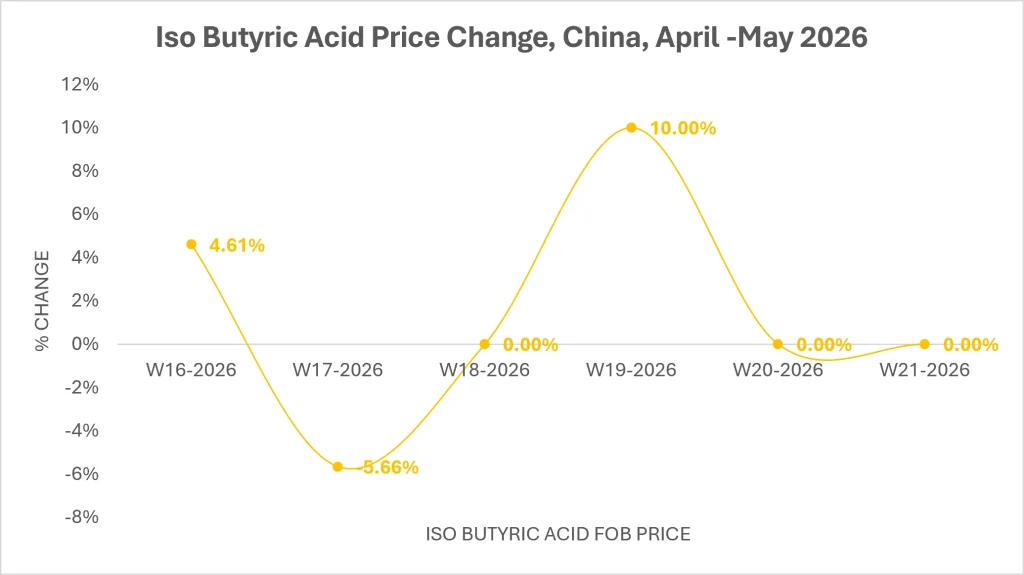
Source: Price Watch™ Iso Butyric Acid Prices
Why this matters:
The volatility suggests that short term supply constraints possibly linked to regional production disruptions or export logistics are having a disproportionate effect on pricing.
For downstream players in the flavour, fragrance, and specialty chemicals sectors, this unpredictability translates into inventory and sourcing challenges, forcing buyers to reconsider contract timing and hedging strategies.
- Upstream: Feedstock suppliers may see intermittent spikes in demand as manufacturers scramble to secure capacity during price jumps.
- Downstream: Flavor and fragrance formulators could face cost pressures if volatility persists, potentially passing on higher prices to consumers.
Near term, the market shows signs of cautious optimism. If supply stabilizes, the recent 10% spike may prove an isolated reaction, suggesting a sideways or mildly bullish trend over the next 1 to 3 months. However, any fresh disruptions port congestion, regulatory inspections, or energy cost fluctuations could reignite volatility.
Could this be the start of a new pricing paradigm for a product long considered stable?
For buyers keeping an eye on their margins, staying flexible and monitoring weekly FOB China movements remains critical. Price Watch updates may provide actionable insight for tactical purchasing decisions.
Follow Price Watch™ on LinkedIn for real-time raw material insights, pricing trends, supply chain intelligence, and market updates shaping global commodity markets.