

The Israel–Iran conflict has created major uncertainty in the global LPG market, directly affecting propane and butane trade across Asia, Africa, and Europe. LPG currently accounts for nearly 25% of household cooking fuel demand across developing economies, while global LPG consumption exceeds 340 million metric tonnes annually.
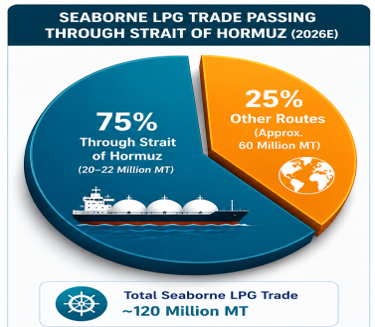
Since the Middle East contributes around 35–40% of global LPG exports, geopolitical instability near the Strait of Hormuz immediately triggered fears over supply disruptions and shipping security.
Why did LPG Markets React So Quickly?
Global LPG markets reacted sharply because nearly 20–22 million metric tonnes of LPG pass through the Strait of Hormuz every year. As tensions intensified, freight rates on key Middle East-to-Asia shipping routes reportedly surged by over 50–60% due to rising insurance premiums and vessel risk exposure.
Asian buyers rushed to secure cargoes, tightening spot availability across regional markets. Unlike crude oil, LPG storage infrastructure is limited, with most import terminals carrying only a few weeks of inventory coverage, making the market highly vulnerable to short-term disruptions.
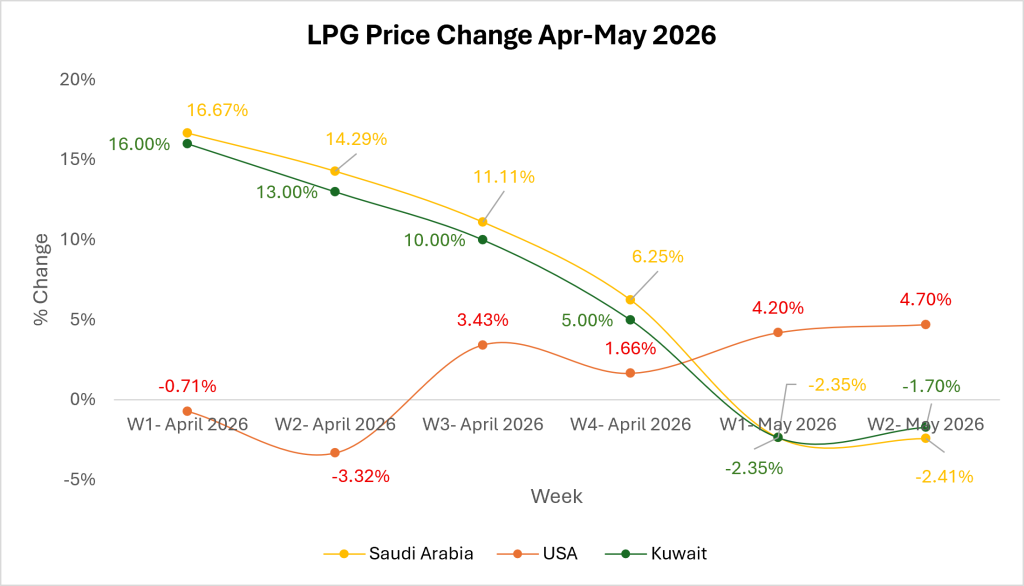
Source: Price Watch™ LPG Prices
Which Countries Faced the Biggest Impact?
Why Is the Strait of Hormuz So Important?
What Could Shape the Future LPG Market?
The future LPG market will largely depend on Middle East shipping stability, Asian petrochemical demand, and export expansion from the United States and Australia. Although diplomatic efforts helped ease immediate concerns, buyers remain cautious due to continuing geopolitical uncertainty. The crisis has reinforced the importance of long-term supply diversification and strategic energy planning for importing nations worldwide.
LPG Market Outlook
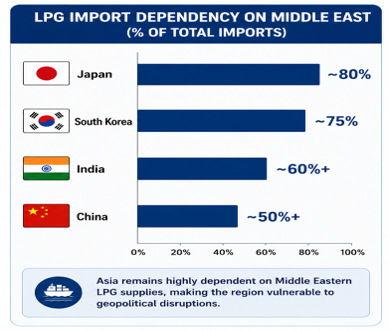
The global LPG market is expected to remain highly volatile in the coming months as geopolitical tensions near the Strait of Hormuz, rising freight costs, tanker availability, and shifting propane-butane trade flows continue influencing market sentiment. Future LPG prices will largely depend on shipping stability, Middle East export flows, refinery demand across Asia, and seasonal consumption trends in China, India, Japan, South Korea, and Europe.
Any disruption in major shipping routes could tighten delivered cargo availability despite stable global production. Price Watch™ helps businesses monitor LPG market trends, freight risks, supply disruptions, and procurement opportunities through real-time market intelligence and forecasting analysis.
Follow Price Watch™ on LinkedIn for real-time raw material insights, pricing trends, supply chain intelligence, and market updates shaping global commodity markets.